


See more of our articles in your search results.
The cereal aisle is forty feet long. You stand in front of it holding a basket and a phone with 12 percent battery, trying to choose a breakfast for a Tuesday. Granola with almonds, granola without almonds, granola with “ancient grains,” granola for people who have stopped trusting regular granola. Eleven minutes later you leave with the same box you bought last week, vaguely irritated, vaguely uncertain that it was the right one. Nobody warned you that abundance could feel like a chore. Yet somewhere in a university library, a psychologist is nodding.
The idea that more choice can make us worse off has become one of psychology’s most quoted stories. It comes with a famous book, The Paradox of Choice, a famous jam stall and a slogan: less is more. Plenty of people now cite it to explain why they can’t pick a streaming show, a phone plan or a partner.
The story is half right, which is the most irritating way to be right.
This article follows the research behind Barry Schwartz’s less-is-more argument: the jam experiment, the maximizer studies, the large reviews that complicated the picture, and what actually helps when options pile up.
The scene may be ordinary, but the question it raises is serious: does an abundance of options help us, or does it quietly tax our happiness? The answer, as you will see, has two halves.
How many of these have you been "meaning to read" for months?
- 1
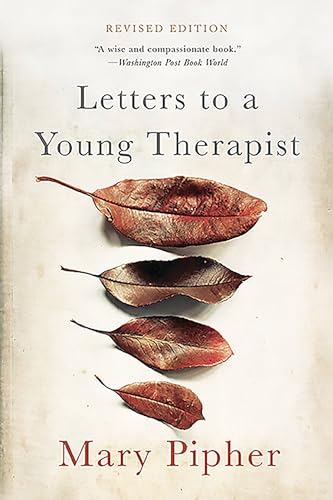 Mary PipherLetters to a Young TherapistWarm wisdom on boundaries, longevity, and clinical self-careListen Free On Audible
- 2
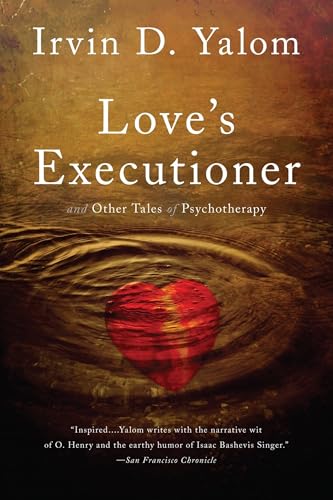 Irvin D. YalomLove's ExecutionerRadically honest case studies on existential dread and changeListen Free On Audible
- 3
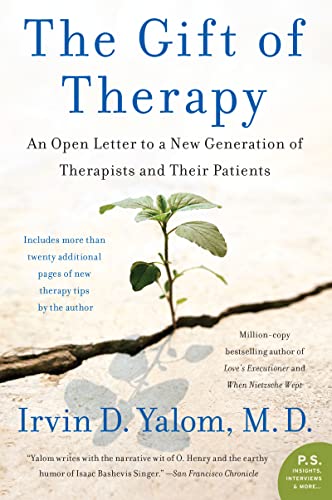 Irvin D. YalomThe Gift of Therapy85 practical, warm clinical insights from a master therapistListen Free On Audible
One correction at the start: the jam study was not run by Schwartz himself. It was run by two other psychologists. His own experiments and arguments built on theirs, and the difference matters for how much weight each claim can carry.
Did Barry Schwartz run the famous jam experiment?
No. The jam study belongs to psychologists Sheena S. Iyengar and Mark R. Lepper, who published it in 2000 in the Journal of Personality and Social Psychology under the title “When choice is demotivating: Can one desire too much of a good thing?” Barry Schwartz, a psychologist at Swarthmore College, popularized the idea in his 2004 book The Paradox of Choice: Why More Is Less and contributed his own research on how people choose, but the jam stall is Iyengar and Lepper’s.
Their first field experiment took place in an upscale grocery store in California. Researchers set up a tasting booth for gourmet jams, with either a limited display of 6 flavors or an extensive display of 24. Shoppers could taste and receive a coupon for a dollar off any jam. The results became famous. The larger display drew more attention: 60 percent of passing customers stopped at the 24-jam booth, versus 40 percent at the 6-jam booth. But the people who stopped did not sample more flavors in the larger display, and the purchasing data went the other way. Nearly 30 percent of those who saw the limited display later bought a jar, whereas only about 3 percent of those who saw the extensive display did.
The paper reported further experiments, in the laboratory, with chocolates and with optional extra-credit essays. Students offered a limited set of six chocolates were more satisfied with their selection, and more likely to choose chocolate as payment, than those offered thirty. Students given six essay topics were more likely to write the optional essay, and wrote better ones, than those given thirty. The authors concluded that, although extensive choice is initially attractive, it can undermine people’s later motivation and satisfaction.
That was a striking claim, and it spread. The phrase “choice overload” entered business schools, marketing books and conversations about dating apps. Still, a single set of experiments can mislead. The jam result involved one store, one product, a tasting booth and a short window. The authors themselves framed it as evidence that a large assortment can demotivate, not as a law that it always does.
Think of the jam study as a vivid demonstration, not a definitive measurement. Later sections show how it fared when other researchers tried to repeat it.
Picture Lena, 34, in a bakery that offers six pastries. She picks one in ten seconds and enjoys it. The next week, in a bakery with thirty, she hovers, picks a croissant and wonders whether the pistachio one would have been better. The scenario is ordinary. Whether it generalizes is the research question.
What did Schwartz and his colleagues add with the maximizer studies?
They shifted the question from “how many options?” to “what kind of chooser are you?” In a 2002 paper, Barry Schwartz and colleagues, including Andrew Ward, John Monterosso, Sonja Lyubomirsky, Katherine White and Darrin R. Lehman, proposed that people differ in their tendency to maximize, meaning to search for the best possible option, versus to satisfice, meaning to settle for one that is good enough. The paper, “Maximizing versus satisficing: Happiness is a matter of choice,” appeared in the Journal of Personality and Social Psychology.
The term “satisficing” comes from economist and psychologist Herbert A. Simon, who argued in a 1956 article in Psychological Review that real decision makers, with limited information and limited time, do not search for the optimal choice. They look until they find one that meets a threshold of acceptability. Schwartz’s team turned the idea into an individual-difference variable and built a Maximization Scale to measure it.
The studies reported several findings across four studies. Across seven samples, higher maximization was associated with lower happiness, optimism, self-esteem and life satisfaction, and with higher depression, perfectionism and regret. Maximizers were less satisfied than satisficers with consumer decisions and were more likely to engage in social comparison. They were more adversely affected by upward social comparison. And they were more sensitive to regret and less satisfied in an ultimatum bargaining game. The authors suggested that the interaction between maximizing and abundant choice is explained by regret, adaptation and self-blame.
These results are important for the “less is more” story, because they relocate the problem. If maximizers suffer in a world of options and satisficers do not, then the real culprit is a strategy, not a number. Maximizers invest effort in comparing every alternative, imagine the roads not taken and feel responsible for any shortfall.
Caveats are significant. The maximization findings are correlational, which means they cannot show that maximizing causes unhappiness; unhappy or perfectionist people may simply be more likely to maximize. The samples were largely US students and adults, and the Maximization Scale has been criticized by other researchers for mixing several different traits, such as high standards, alternative search and decision difficulty. Some later studies found that high standards by themselves are not harmful, and that the damaging element is the difficulty in deciding and the regret that follows.
Picture two friends choosing a laptop. Sam, 29, reads forty reviews, builds a spreadsheet and regrets the purchase the day it arrives, since another model had a better screen. Dee, 31, sets three requirements, buys the first match and never thinks about it again. They have the same laptop and very different weekends.

Does looking for the best job really make you less happy?
It can, according to one of the more striking applications of the maximizer idea. In a 2006 paper in Psychological Science titled “Doing better but feeling worse: Looking for the best job undermines satisfaction,” Sheena S. Iyengar, Rachael E. Wells and Barry Schwartz followed graduating university seniors through their job searches. The students were surveyed during their search and again afterward, and the researchers compared maximizers and satisficers.
The result was a paradox. Maximizers landed jobs with starting salaries about 20 percent higher than those of satisficers, a significant advantage. Yet maximizers were less satisfied with the jobs they took, and they felt more negative emotions throughout the search, including stress, anxiety, worry, overwhelm, fatigue and depression. In other words, they did better by an objective measure and felt worse by a subjective one. The authors proposed that maximizers set a high bar, consider more options and compare themselves more with others, so that even a good outcome seems less good.
The finding illustrates something that the jam study cannot: abundance is not just about quantity. It is about the mental process of comparing, imagining, anticipating regret and comparing yourself with peers. A job search is a high-stakes, high-ambiguity decision with many attributes (pay, location, culture, prospects), and these are the conditions under which regret thrives.
It also complicates the slogan. “Less is more” would suggest that maximizers should have been better off with fewer options. The data say that they did better with the outcome and worse with the feeling. For some people and some decisions, extensive search genuinely produces better results; the cost is emotional.
There are limits. The sample was university seniors during one period, the job market has changed, and the study shows an association between maximizing and satisfaction, not proof that a different strategy would have produced both better outcomes and better feelings. Some critics note also that the personal traits behind maximizing, such as ambition and perfectionism, may themselves drive both salary and dissatisfaction.
It does suggest a practical trade-off: if you must choose among many options, decide in advance how much extra benefit is worth the extra misery, and when to stop looking.
Take Priya, 22, who applies for forty jobs and accepts the best offer. Her salary is high. Her dread each Sunday night is higher than her friend Joel’s, who took the first good fit and loves his Mondays. Neither choice was wrong. They cost different things.
What happened when other researchers tried to replicate “choice overload”?
The picture got much messier. A large 2010 meta-analysis by Benjamin Scheibehenne, Rainer Greifeneder and Peter M. Todd, published in the Journal of Consumer Research as “Can there ever be too many options?”, pooled 63 conditions from 50 published and unpublished experiments with a total of 5,036 participants. They found a mean effect size of virtually zero, but with considerable variance between studies.
That second part is essential. Some experiments found strong choice overload. Others found no effect, and some found that more choice increased satisfaction. The authors concluded that adverse consequences do not necessarily follow from an increase in the number of options, and that, on average, having many options does not decrease satisfaction or motivation to choose. They could not identify any sufficient condition that reliably produces overload, though they proposed several moderators that might matter, including how easily options can be categorized, whether trade-offs are difficult, whether the decision maker has clear prior preferences, and whether they need to justify the choice.
A related series of studies by the same group found similar results. In a paper in Psychology & Marketing, Scheibehenne and colleagues ran experiments with 598 participants manipulating choice set size, option attractiveness and justification, and found no overall too-much-choice effect, with only the need to justify a choice emerging as a moderator.
A fair reading, then, is not that choice overload is a myth. It is that it is conditional. It appears under some circumstances, disappears under others and sometimes reverses. Published studies also tended to report somewhat larger effects than unpublished ones, a pattern that may reflect publication bias.
Researchers sometimes compare the situation to a drug that helps some patients, harms others and shows no average effect. The average hides the interesting action. That is why the more accurate summary is “sometimes less is more, and sometimes more is more.”
It also suggests humility about slogans. Phrases like “24 jams is too many” travel better than the careful conclusion, and they fix a number on an effect that depends on context. There is no magic number of options past which people freeze.
Imagine two shoppers at a music streaming service with millions of songs. One, who loves jazz, happily explores for hours. The other, who has no idea what she wants, closes the app after twenty minutes. The size of the catalog is the same. The experience is not.

When does too much choice actually hurt? The conditions that matter
Choice seems to hurt most when options are many and hard to compare, when you do not know what you want, when you must choose under time pressure, and when you expect to regret a mistake. A 2015 review and meta-analysis by Alexander Chernev, Ulf Böckenholt and Joseph Goodman in the Journal of Consumer Psychology tried to organize the evidence by examining the factors that make overload more or less likely.
They proposed that choice overload has multiple antecedents, so searching for a single main effect is misguided. Their analysis identified four groups of factors: choice set complexity, decision task difficulty, preference uncertainty and decision goal. Once these moderators were taken into account, the effect of assortment size was significant, with larger assortments tending to produce more overload under conditions of high complexity, high difficulty, high preference uncertainty and a goal of choosing the best option instead of just any option.
| Factor | More likely to produce overload | Less likely to produce overload |
|---|---|---|
| Complexity of the set | Many similar, hard-to-compare options with many attributes | Options that are easy to categorize or differ on few attributes |
| Task difficulty | Time pressure, high stakes, hard trade-offs | Low stakes, ample time |
| Preference clarity | You do not know what you want | You have clear prior preferences or expertise |
| Decision goal | Finding the single best option | Finding a good-enough option or browsing |
| Need to justify | You must defend the choice to others | Private choice with no justification |
This framework is consistent with the findings of the earlier meta-analysis, which also pointed to preferences and justification. It also fits an experiment showing that a too-much-choice effect appeared when alternatives differed on many attributes but not when they differed on few. The number of options matters less than what you have to do with them.
A caveat applies to the 2015 analysis: it combined heterogeneous studies, and some of its conclusions have been debated, including by other meta-analysts. The framework should be read as a plausible organizing map, not as a settled formula.
For daily life, the map gives simple guidance. If you know what you want, a big selection is a gift, since you can find the thing quickly. If you do not know what you want, a big selection is a maze, and you may need to decide your criteria before you enter. If the decision is easily reversible, relax. If it is not, give it proportionally more thought and then stop.
Think of Hamid, 45, shopping for a good chef’s knife. He has used one for twenty years, knows exactly what he wants, and finds the right one in five minutes among a hundred. His daughter, buying her first apartment furniture, drowns in the same range of choices. Same store, different preference clarity.
Do real-world choices show the same pattern, such as retirement plans and online dating?
Sometimes, though the evidence is as mixed as in the lab. The best-known field example concerns retirement plans. Sheena S. Iyengar, Gur Huberman and Wei Jiang analyzed data on about 800,000
employees across some 647 employer-sponsored retirement plans in a 2004 paper, “How much choice is too much? Contributions to 401(k) retirement plans.” They found that participation rates were highest in plans with the fewest investment funds, and that adding funds was associated with lower participation: roughly a drop of one to two percentage points for every ten funds added, with participation falling from the mid-70s percent in plans with two funds to the high 60s in plans with nearly sixty.
The authors interpreted this as evidence that too many options can deter people from deciding at all. As with the jam study, the finding is correlational: plans with many funds may differ in other ways, such as the types of employers and workers. Other researchers have found different results with different designs, including studies in which more options did not reduce enrollment and automatic enrollment, which removes the choice altogether, raised participation much more than reducing the number of funds ever did.
That last point suggests a practical lesson: defaults and good structure can matter more than counting options. Many people do not struggle with having many funds; they struggle with not knowing what to pick, and a sensible default solves that.
The search for a romantic partner has also been argued to resemble a maximizer’s nightmare. Dating apps present an unending stream of profiles, and users can feel pressure to keep looking for someone better. Researchers have examined how the number of options affects romantic outcomes, and some experiments suggest that having too many options, particularly reversible ones, can reduce commitment and satisfaction, but the field is young, and results vary by design. A general, careful claim is that abundance can raise standards and doubt, which may cost satisfaction in some contexts.
Taken together, the real-world cases support a modest version of the thesis. Where choices are complex, high-stakes and ambiguous, abundance can be costly. Where there are good defaults, clear preferences or easy reversibility, abundance is often harmless or beneficial.
Consider Tomás, 58, in a workplace with sixty retirement funds and no default. He puts off the decision for a year, then picks a target-date fund that a colleague mentions. The delay cost him real money. The sixty funds were not the villain; the absence of guidance was.

Why does having more options make us feel regret and higher expectations?
Because every option you choose implies options that you did not, and because abundance raises the standard of what a good choice should be. Barry Schwartz emphasized several psychological mechanisms that help explain why “more” can feel like “less,” even if the data on overload are mixed.
The first is opportunity costs. Choosing one item means giving up the others, and when there are many, the forgone options are numerous and attractive. The second is escalation of expectations. If dozens of options exist, you reason that one of them must be perfect, so anything less than perfect is your fault. The third is regret and self-blame. In a world of limited choices, a poor result can be blamed on circumstances. In a world of abundance, you could have chosen better. The fourth is adaptation: people get used to what they have, which lowers the pleasure that a choice delivers after the first few weeks, and maximizers may notice this more.
These ideas have intuitive appeal and some experimental support, especially for people high in maximizing, but they should be treated as hypotheses about particular kinds of decisions, not proven laws. The 2002 paper reported that maximizers were more sensitive to regret and more affected by social comparison, which fits the account. Evidence that abundance itself raises expectations for everyone is thinner.
Another factor is social comparison. When others can see what you chose, and when you can see what they chose, abundance creates more opportunities to feel that someone else did better. Social media amplifies this, with constant displays of other people’s apparently perfect choices.
It is worth stressing how reversibility interacts with these mechanisms. When a decision can be undone, such as an item that can be returned, people tend to keep considering alternatives, and sometimes feel less committed to their choice. When a decision is final, people often rationalize and feel more satisfied. That is one reason why generous return policies can paradoxically reduce satisfaction with purchases in some studies.
For readers prone to regret, these mechanisms suggest where to intervene: limit comparisons, decide in advance what counts as good enough, and avoid revisiting choices once they are made.
Imagine Aiko, 27, who buys a winter coat and returns it twice for slightly different ones, then keeps scrolling coat photos after settling on the third. A friend asks if she likes the coat. “It’s fine,” she says, “but the other one might have been warmer.” The coat is not the problem.
What practical strategies help you choose well when options pile up?
Set criteria first, limit your search, accept good enough for low-stakes decisions and use defaults. These strategies are consistent with the research on maximizing and on choice complexity, and they are low-cost to try. They do not require you to give up high standards where they matter.
- Decide what matters before you look. Write down your top three criteria and a deal-breaker or two. This reduces preference uncertainty, one of the main drivers of overload.
- Sort decisions by stakes. Spend serious effort on a few important decisions, such as a job, a home or a partner, and adopt a good-enough rule for everyday choices like cereal, a restaurant or a streaming show.
- Cap the search. Set a time limit or a number of options to compare, such as three or five, and stop when you reach it. Satisficing means choosing the first option that meets your criteria.
- Use filters and defaults. Narrow the field using categories and sort tools, or accept a recommended default when the choice is low-stakes or when you lack expertise.
- Make decisions final when you can. If an option is reversible, pretend that it is not, at least for a trial period, to reduce second-guessing.
- Limit comparison with others. Skip reviews and social posts once you have chosen, and avoid asking whether your friends chose better.
- Practice gratitude. Write down one thing you like about what you chose. Research on gratitude suggests it can improve well-being, and it counters the habit of focusing on what you gave up.
Psychologists also suggest that maximizing tendencies can be tamed rather than eliminated. Some people value the thorough search and enjoy it, and nothing says they should change. The test is whether the search improves your outcomes enough to be worth the stress. For many everyday choices, the answer is no.
Barry Schwartz’s own recommendations in The Paradox of Choice follow a similar spirit: choose when to choose, be a chooser and not a picker, satisfice more and maximize less, and make your decisions nonreversible where you can. His book presents these as practical suggestions drawn from the research, not as results of controlled trials of the advice itself, so it is worth treating them as sensible experiments.
It also helps to design environments. If you are a manager, a teacher or a parent, offer a handful of well-chosen options with a sensible default, instead of dozens. Groups like retirement plan providers and health insurers increasingly do so.
Imagine Rosa, 22, who decides in advance that her next phone must have a good camera, last two years and cost under a set amount. She looks at four models, picks one and stops. Her friends ask how she is so calm. She says that she decided what to ignore.

When does the search for the best option become a problem worth getting help for?
When indecision, regret or constant comparison starts to interfere with daily life or relationships, or comes with signs of anxiety, depression or obsessive-compulsive symptoms. Having trouble choosing is normal. Being unable to decide, to the point of avoiding decisions or being consumed by regret, deserves attention.
Signs that a conversation with a professional may be useful include:
- Chronic indecision: delaying or avoiding important decisions for weeks or months.
- Persistent regret and rumination about choices already made, interfering with sleep or concentration.
- Perfectionism that causes distress or loss of function, such as inability to complete tasks because they are never good enough.
- Low mood, hopelessness or constant anxiety that go beyond ordinary stress.
Cognitive behavioral therapy is a well-studied approach for perfectionism, anxiety and unhelpful thinking patterns such as catastrophizing the cost of a wrong choice, and acceptance and commitment therapy can help with acting on values despite uncertainty. A primary care doctor, psychologist or licensed counselor can assess whether depression, anxiety or obsessive-compulsive disorder is playing a role. If you ever feel hopeless or have thoughts of harming yourself, contact local emergency services or a crisis line right away.
Context matters too. Choosing is harder when you are tired, stressed or grieving. If a big decision feels impossible during a rough patch, it may be wise to delay it, if possible, until your energy returns, and to ask a trusted friend to help narrow the field.
Culture and circumstances matter as well. Choice is a privilege for those who have resources, and many people face too few options, not too many. The research on overload applies to the narrow band of situations with abundant, affordable choices. For people with limited choices, expanding them may be what matters.
A sensible takeaway is not that choice is bad, but that how we choose matters. Freedom to choose is valuable, and it is easier to enjoy when we have a strategy for it.
Consider Elena, 35, who has spent a year unable to choose between two job offers and is losing sleep over the decision. In a few sessions with a therapist, she realizes that she is trying to eliminate any possibility of regret. She sets a decision date, chooses, and then allows herself to feel loss for the other job. She says the loss was much smaller than the dread.
FAQs about Barry Schwartz’s Experiments and the Less-Is-More Idea
What is the paradox of choice?
It is the idea, popularized by psychologist Barry Schwartz in his 2004 book, that having more options can make people less satisfied, more anxious and more prone to regret, even though freedom of choice is generally seen as a good thing. The argument draws on research such as the jam experiment by Sheena Iyengar and Mark Lepper and on Schwartz’s own studies of maximizers and satisficers. Later research found that the effect is conditional: it appears in some situations and not in others, so the paradox is better seen as a risk than a rule.
Did Barry Schwartz run the jam experiment?
No. The jam study was conducted by Sheena Iyengar and Mark Lepper and published in 2000. In a California grocery store, shoppers who saw 24 jams were more likely to stop at the booth than those who saw 6, but only about 3 percent of them bought a jar, compared with nearly 30 percent of those who saw 6. Barry Schwartz popularized the broader idea in his book and ran related research on maximizing and satisficing, which is why the findings are often attributed to him.
What is the difference between a maximizer and a satisficer?
A maximizer tries to find the best possible option, comparing many alternatives and often worrying about missing something better. A satisficer looks for an option that meets their criteria and stops once they find it. The term satisficing comes from Herbert Simon. In a 2002 paper, Schwartz and colleagues found that maximizers reported lower happiness, optimism and life satisfaction and higher regret and depression, though the findings are correlational and the scale used has been criticized for mixing different traits.
Is choice overload real, or has it been debunked?
Neither. A 2010 meta-analysis of 50 experiments with more than 5,000 participants found an average effect of virtually zero, but with large differences between studies: some found overload, some found none, and some found that more choice helped. A later review argued that overload depends on factors such as how complex the options are, how hard the decision is, how clear your preferences are and whether you want the single best option. So it is a conditional effect, not a universal one.
How many options are too many?
There is no magic number. The jam study compared 6 with 24, but later research found no threshold that works across situations. Overload seems more likely when options are numerous, similar and difficult to compare, when you lack clear preferences, when you are under time pressure and when you expect to regret a mistake. If you know what you want, a large selection can be helpful. If you do not, even a modest number of options can feel confusing, so it helps to clarify criteria first.
Does having more choices make you less happy?
Not for everyone. Schwartz’s research suggests that the effect depends on whether you are a maximizer, and a study of job seekers found that maximizers earned salaries about 20 percent higher but felt worse about the job and the search. Satisficers tend to cope with abundance better. For many people and many decisions, more options are harmless or beneficial. The risk is greatest for complex, high-stakes, ambiguous decisions, where regret and social comparison are strong.
How can I make decisions with less regret?
Decide your criteria before you search, set a limit on time or number of options, accept good enough for low-stakes choices, use filters and defaults, and treat decisions as final once you have made them. Avoid comparing your choice with other people’s, and note one thing you like about what you chose. Reserve extra effort for the few decisions that really matter. If regret or indecision begins to affect your sleep, mood or relationships, a therapist can help, particularly with cognitive behavioral approaches.
Is perfectionism the same as maximizing?
They overlap but are not identical. Maximizing concerns a tendency to search for the best option, while perfectionism concerns very high standards for oneself and fear of mistakes. Research has found that maximizing is associated with perfectionism, but some studies suggest that high standards alone are not harmful, and that the damaging part is difficulty deciding and the regret that follows. A person can have high standards, be satisfied with a good result and still choose efficiently, which is a healthy version of ambition.
Bibliography
- Chernev, A., Böckenholt, U., & Goodman, J. (2015). Choice overload: A conceptual review and meta-analysis. Journal of Consumer Psychology, 25(2), 333-358.
- Iyengar, S. S., Huberman, G., & Jiang, W. (2004). How much choice is too much? Contributions to 401(k) retirement plans. In O. S. Mitchell & S. P. Utkus (Eds.), Pension design and structure: New lessons from behavioral finance (pp. 83-95). Oxford University Press.
- Iyengar, S. S., & Lepper, M. R. (2000). When choice is demotivating: Can one desire too much of a good thing? Journal of Personality and Social Psychology, 79(6), 995-1006.
- Iyengar, S. S., Wells, R. E., & Schwartz, B. (2006). Doing better but feeling worse: Looking for the “best” job undermines satisfaction. Psychological Science, 17(2), 143-150.
- Scheibehenne, B., Greifeneder, R., & Todd, P. M. (2010). Can there ever be too many options? A meta-analytic review of choice overload. Journal of Consumer Research, 37(3), 409-425.
- Schwartz, B. (2004). The paradox of choice: Why more is less. Ecco.
- Schwartz, B., Ward, A., Monterosso, J., Lyubomirsky, S., White, K., & Lehman, D. R. (2002). Maximizing versus satisficing: Happiness is a matter of choice. Journal of Personality and Social Psychology, 83(5), 1178-1197.
- Simon, H. A. (1956). Rational choice and the structure of the environment. Psychological Review, 63(2), 129-138.
Use this citation format to reference the article clearly and help readers find the original source.
PsychologyFor. (2026). Barry Schwartz’s Experiments: Less is More. PsychologyFor. https://psychologyfor.com/barry-schwartzs-experiments-less-is-more/