


See more of our articles in your search results.
Beauty has always been a significant part of human culture and society. From the ancient world to modern times, the idea of what is considered beautiful has shaped individuals’ self-perception, influenced their daily lives, and impacted how they interact with the world around them. But what exactly are beauty standards? And how do they affect individuals and society at large? These are questions that are more relevant than ever, as the way we define beauty continues to evolve in the context of social, cultural, and technological changes.
Beauty standards are the societal expectations regarding physical appearance that dictate how individuals are perceived in terms of attractiveness. These standards vary across cultures, time periods, and social settings, but they generally establish a narrow definition of what is considered “beautiful” and, conversely, what is not. In today’s world, beauty standards are pervasive—dictating everything from what clothes we wear to how we style our hair, our body shapes, and even the color of our skin.
The influence of beauty standards extends far beyond mere aesthetic concerns. It impacts self-esteem, shapes identity, and even plays a role in how individuals are treated in their professional, social, and romantic lives. In this article, we’ll explore the nature of beauty standards, their historical roots, the consequences they have on individuals and society, and how these standards are shifting in modern times.
What Are Beauty Standards?
Beauty standards refer to the societal norms or ideals that dictate the traits, physical features, and aesthetics that are considered attractive or desirable within a given culture or society. These standards can be highly specific and tend to include attributes such as body shape, skin tone, hair texture, facial features, and overall appearance.
For example, in many Western cultures, tall, slim women with fair skin and symmetrical facial features have traditionally been regarded as the epitome of beauty. These standards are often perpetuated by the media, including movies, television, advertisements, and social media platforms.
How many of these have you been "meaning to read" for months?
- 1
 TarcherThe Artist's Way30th Anniversary EditionListen Free On Audible
 - 2
 New Harbinger PublicationsThe Dialectical Behavior Therapy Skills WorkbookPractical DBT Exercises for Learning Mindfulness, Interpersonal Effectiveness, Emotion Regulation...Listen Free On Audible
 - 3
 New Harbinger PublicationsAdult Children of Emotionally Immature ParentsHow to Heal from Distant, Rejecting, or Self-Involved ParentsListen Free On Audible
While beauty standards can vary across cultures, they are often shaped by deeply ingrained historical, cultural, and economic factors. They can serve as a way for societies to establish a sense of uniformity and idealization, but they also have a tendency to create divisions and marginalize individuals who do not fit the mold.
Who do beauty standards affect?
As we have already stated in the previous section, when we refer to beauty standards we normally talk about people’s physical appearance, since they are the ones who are really affected by these assessments of the beauty ideal. Likewise, although currently man is also influenced by how his body should be and the ideal appearance of it, women have always been the most affected and criticized for their physical appearance.
The problem with these patterns or characteristics of beauty is that they are unattainable and that they don’t allow anyone to ever be satisfied, since it can always be improved or perfected. They thus create slaves to these unreal aesthetics.
It is surprising to see how an image imposed by society, which may not be in accordance with our tastes, can impact our self-esteem and mean that we are never satisfied; we enter a vicious circle in which we will always want more beauty influenced by society that also teaches us to never settle and that we can always be better.
These beauty demands marked by society are a great burden that affect increasingly younger ages, giving greater importance to the physique with respect to any other characteristic. We must be careful, because the consequences of these ideals can be very dangerous, even affecting the mental health of the subject.

Evolution of beauty canons in History
Beauty standards are not stable over time, but rather vary depending on the era. The speed with which they have been changing has also been different, and currently we find ourselves with a more accelerated pace of change.
Likewise, the way of making the canons known and conveyed to society has also changed. Before it was common to find them represented in paintings or sculptures or described in novels, that is, in art, but currently new technologies allow them to quickly reach everyone, making it easier for everyone to show their image.
1. Prehistoric era
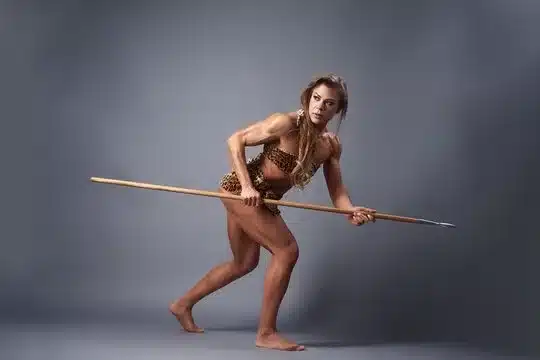
Thanks to different archaeological discoveries such as the famous Venus of Willendorf, a small statue of a woman discovered in Austria and dating from 22,000 to 24,000 years ago, we can deduce that beauty in women was represented with large and round bodies with voluminous breasts and wide hips, characteristics that were linked to fertility and a greater probability of not having complications during childbirth.
2. Middle Ages
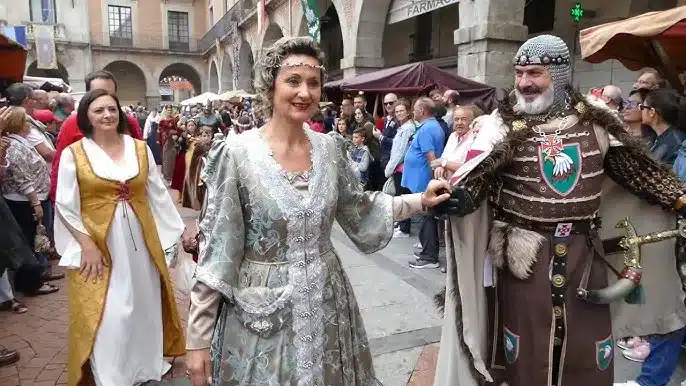
In the Middle Ages the ideal of beauty was influenced by the belief in God. With the emergence of the Christian faith, people conceive the creation of the human being at the hands of God, the latter being the one who gives rise to beauty At this time, another type of beauty also begins to be valued, such as inner beauty, the spiritual part of the subject.
In the paintings of this historical period we observe that attractive women were represented with white skin, long blonde hair, small nose and eyes, rosy cheeks, slim body, small breasts and narrow hips. Nor was much makeup used, since natural beauty was sought, just as it had been created by God.
Regarding the male sex, the ideal man was represented as virile and with a military physique, prepared for combat. Thus, athletic and strong men were painted, with broad shoulders and narrow hips, long and thin legs and with developed calves.
3. Renaissance
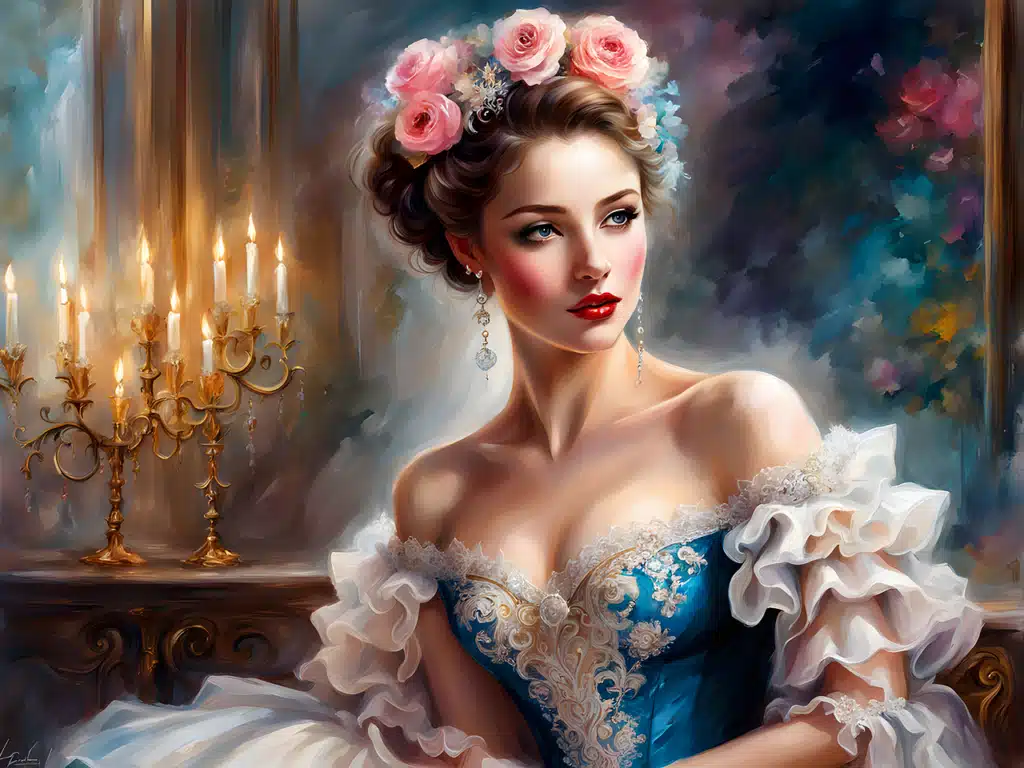
The Renaissance (15th-16th century), despite showing some differences with the previous era, maintained some characteristics in the beauty style such as white skin, although in this historical period women were shown with slightly more rounded bodies and hips. Also, we find differences in the dresses, these being more ostentatious.
Although there is still the influence of religion and the previous era, lightly clothed, naked bodies are beginning to be represented, both in paintings and sculptures; This is the case of Michelangelo’s David or the birth of Venus and Leonardo da Vinci’s Vitruvian Man. It is curious how these authors begin to consider measurements and proportions typical of mathematics to create an attractive aesthetic.
4. Baroque
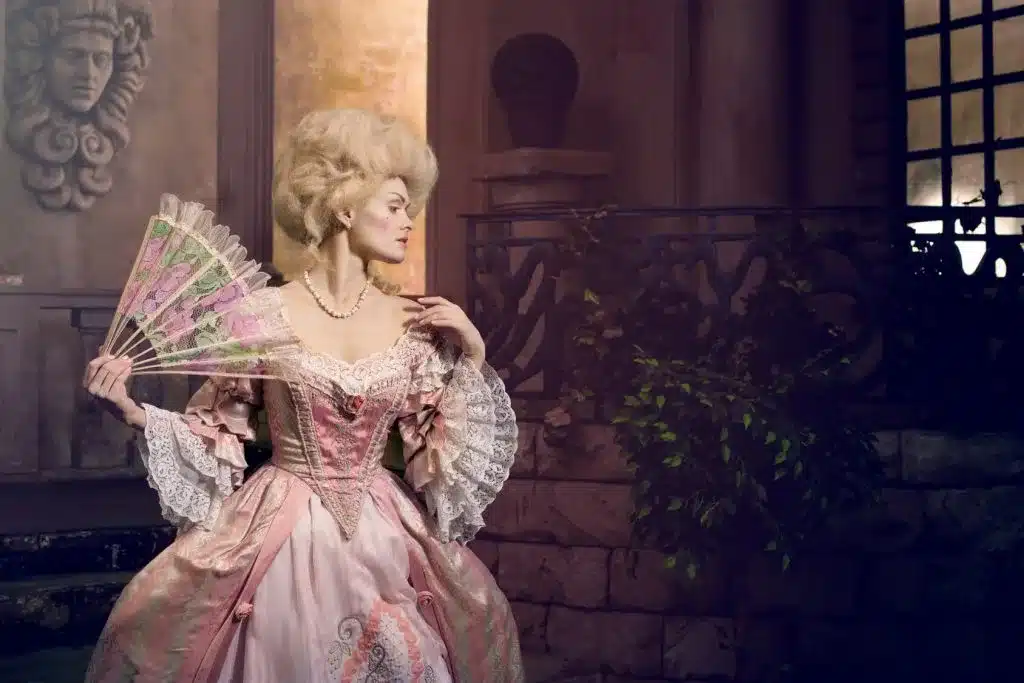
During the Baroque (XVII-XVIII) the characteristics of the Renaissance were mostly maintained, but a more pompous aesthetic was introduced, in the same way as the decoration at that time, which was more ornate. It was typical to use wigs, corsets and powerful perfume and makeup began to be used more. It was common for both men and women to paint a mole.
A notable painter was Peter Paul Rubens, who depicted women in a sensual manner and men with muscular bodies, although in both cases they were not thin bodies but fleshy and curvy.
5. Victorian Era
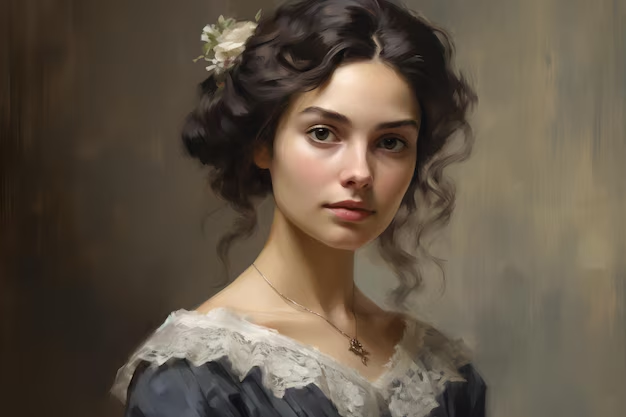
In the Victorian era (1837-1901) the beauty traits sought by women were white skin with a sickly face, watery and bulging eyes. At this time, men no longer used makeup, and women’s use was also reduced, as it was associated with prostitution and vulgarity.
To achieve the desired appearance, people begin to use creams and natural remedies of dubious effectiveness that could even harm their health, such as drinking vinegar to preserve and further mark the sickly and fragile appearance or putting Belladonna in the eyes, which was a poison they used to keep the eyes red. In reference to hair, it was also common to use oils to keep it shiny and long, and it was normally worn up in curls and braids.
An important figure at this time was the writer Jane Austen, who featured strong, natural-looking women as protagonists of her works. Women appear more liberated not only aesthetically but also in the social sphere, although as we have said they were still slaves to aesthetics, since they decreased makeup, but increased the use of cosmetic products or the use of corsets.
6. 20th century
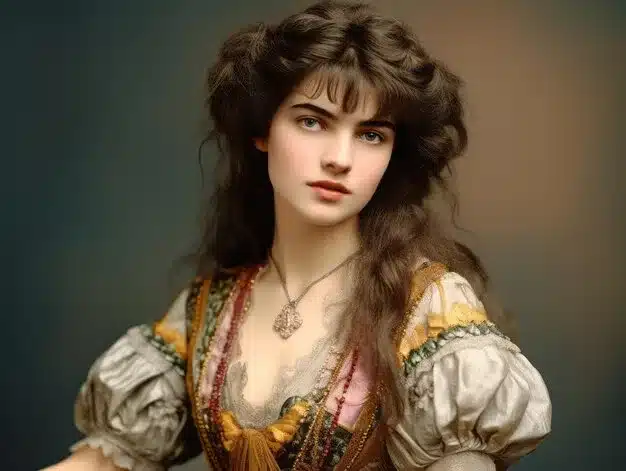
During the 1920s, corsets lost popularity and women showed a simpler appearance. It was common to have short hair and straight-waisted clothes. As for makeup, dark tones were used on both the eyes and lips and they maintained a preference for white skin, with straight or drooping eyebrows.
In the 30s, a more feminine aesthetic is sought, with more marked eyes, cheekbones, more arched and thinner eyebrows, start using eyeliner and she continues to keep her hair short but of a lighter color. Regarding the dresses, these are more fitted, hugging the figure more.
The 40s are marked by the Second World War; In this way, physical appearance loses importance and given the scarcity of raw materials, many women make their own clothes. The eyeliner becomes thicker, as does the lipstick, which aims for a fuller appearance. The hair is usually worn up in waves.
In the 1950s, the exemplary image of women consisted of being a good wife, a good mother capable of keeping the house well organized and clean, always maintaining an impeccable appearance. Also the first “sex symbols” appear, as is the case with Marilyn Monroe at the end o
f this year. The marked eyeliner remains, although thicker eyebrows were common.
During the 60s, a youthful aesthetic was characteristic, with marked eye makeup, long eyelashes (often false) and soft lips. Hair with volume is promoted (it was also typical to use hairpieces) and long bangs. In terms of fashion, miniskirts and bell-shaped dresses combined with boots were common.
In the 70s there was an expansion of the different fashion trends, with various trends appearing such as rock, punk or hippie. The fight for women’s rights, sexual liberation and a more natural and spiritual conception of beauty begins.
In the 80s, the diversification of styles continued, giving rise to more urban tribes, such as heavy metal or new forms of punk. There is beginning to be an influence from the United States, typical of television series, with a very colorful image of both the clothes and the makeup and the hair with a lot of volume using hairspray.
During the 90s, aesthetic diversity was maintained, but clothing was sought to be more comfortable, simpler and less flashy. Hair could be worn either down or in a high ponytail and blonde highlights were typical.
7. News
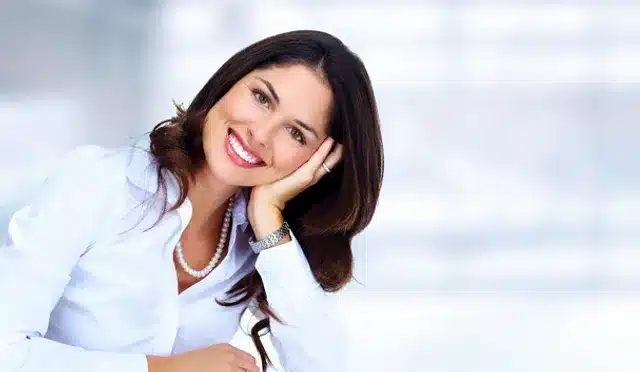
Currently, beauty standards present us with an athletic and slim body that is achieved with good nutrition and physical exercise, that is, with a healthy life. The physically ideal woman is tall, thin and with long legs and a flat stomach, a small waist and large but firm breasts, the typical measurements 90-60-90. If we focus on the face, we are looking for a youthful appearance without wrinkles, large eyes, full lips, small nose, tanned skin and long hair.
As for men, they are also beginning to care more about their appearance, seeking to be muscular, without a belly, giving equal importance to hair and body hair removal.
How Beauty Standards Are Formed
Beauty standards are not static; they evolve over time and are shaped by a variety of factors:
Cultural Influences
Different cultures have unique ideals of beauty that are deeply rooted in their traditions and values. For instance, in some cultures, a fuller figure is celebrated as a sign of wealth and prosperity, while in others, a slim physique might be preferred.
Media and Pop Culture
The media plays a significant role in shaping and perpetuating beauty standards. s, movies, and social media platforms often highlight certain body types and facial features as the epitome of beauty. This media influence can reinforce specific beauty ideals and pressure individuals to conform.
Fashion Industry
The fashion industry also plays a crucial role in defining beauty standards. Runway models and celebrities often set trends that are emulated by the public. The industry’s emphasis on certain body types and styles can impact how people perceive beauty and themselves.
Historical Context
Historical periods have their own beauty ideals that reflect societal changes. For example, the Renaissance era valued fuller bodies, while the 20th century saw a shift towards slimmer figures as beauty standards.
How Beauty Standards Influence Society
Beauty standards have a profound impact on both individuals and society. They influence everything from personal identity to social interactions and even professional success. Here are a few key ways beauty standards shape our world:
1. Self-Esteem and Body Image
One of the most significant consequences of beauty standards is their effect on self-esteem and body image. Individuals who do not meet societal beauty ideals may struggle with feelings of inadequacy, leading to low self-esteem and even depression. Studies have shown that women, in particular, are often more vulnerable to the pressure of beauty standards, with many striving to achieve an ideal that is impossible to reach.
For instance, body dysmorphic disorder (BDD), a mental health condition where individuals obsess over perceived flaws in their appearance, has become more prevalent as the media continues to promote unattainable beauty ideals. Young people, in particular, may internalize these ideals, resulting in long-term negative impacts on their body image and self-worth.
2. Social and Professional Discrimination
Beauty standards not only affect how we feel about ourselves, but they also influence how others perceive and treat us. Attractiveness has been shown to impact everything from job interviews to career progression, with individuals deemed more “beautiful” often receiving more opportunities and higher pay.
This is known as the “halo effect,” where individuals who fit within the narrow definition of beauty are perceived as more competent, intelligent, and capable. On the flip side, those who fall outside these standards may face discrimination or be unfairly judged. Fat-shaming, ageism, and racism are all part of this complex issue, where physical appearance can dictate access to opportunity, social acceptance, and even love.
3. Cultural and Racial Implications
Beauty standards can be highly exclusionary, often marginalizing groups that do not fit within the prescribed ideals. People of color often face beauty standards that prioritize whiteness, where fair skin, straight hair, and European features are considered more desirable. This has led to the phenomenon of colorism, where people with darker skin tones are seen as less attractive or less valuable.
Moreover, Eurocentric beauty standards have been globally dominant due to the cultural exportation of Western media. However, beauty standards are beginning to evolve in response to globalization, as people of different ethnic backgrounds push for greater representation and inclusivity.
Changing Beauty Standards: A More Inclusive Future?
In recent years, there has been a growing movement toward redefining beauty standards. Influenced by social movements such as body positivity, feminism, and cultural diversity, people are beginning to challenge the narrow beauty ideals that have dominated for so long.
1. Body Positivity and Inclusivity
The body positivity movement encourages people to embrace their bodies, regardless of size, shape, or appearance. The goal is to promote self-love, self-acceptance, and diversity in beauty. More and more, people are pushing for representation of all body types, from curvy to plus-size models, in the fashion and entertainment industries.
2. Diverse Representation
There is also a push for more diverse representation in media, where people of different races, ages, abilities, and gender identities are celebrated. Campaigns for more inclusive beauty standards, such as those seen with brands like Fenty Beauty, have been revolutionary in providing a platform for individuals who previously felt excluded from mainstream beauty ideals.
3. Redefining Masculinity
There is also a growing acknowledgment of the need to expand our understanding of masculinity and beauty standards for men. The rise of men’s grooming, skincare, and body care products demonstrates that beauty and self-care are not solely feminine concerns. Society is gradually moving toward a broader, more inclusive definition of beauty that recognizes the diversity of human experience.
How to Navigate Beauty Standards
Focus on Self-Acceptance
One of the most effective ways to navigate beauty standards is to focus on self-acceptance. Embrace your unique features and understand that beauty comes in many forms. Developing a positive self-image can help counteract the negative effects of societal pressures.
Be Critical of Media Messages
It’s important to be critical of media messages and understand that they often promote unrealistic ideals. Recognize that media portrayals are often curated and edited, and that real beauty is diverse and imperfect.
Support Diversity
Support and celebrate diversity in beauty by following and promoting voices that challenge traditional standards. Encourage brands and media outlets to feature a more inclusive range of beauty representations.
Beauty standards are powerful forces that shape how we view ourselves and others. Understanding their origins and impacts can help us navigate their influence more effectively and foster a more inclusive and accepting perspective on beauty. By embracing diversity and challenging narrow ideals, we can work towards a society where everyone feels valued and represented.
FAQs about Beauty Standars
How do beauty standards affect mental health?
Beauty standards can have a significant impact on mental health by promoting unrealistic expectations of appearance. Individuals who feel they do not meet these standards may experience low self-esteem, body dysmorphia, eating disorders, and even depression.
What is the body positivity movement?
The body positivity movement advocates for the acceptance of all body types and challenges traditional beauty norms. It promotes self-love and inclusivity, celebrating diverse forms of beauty.
How can social media influence beauty standards?
Social media can influence beauty standards by showcasing a broader range of looks and body types. However, it can also perpetuate unrealistic ideals, so it’s important to be critical of media messages.
Why is diversity important in beauty representation?
Diversity in beauty representation is important because it helps challenge stereotypes and promotes inclusivity. It reflects the true spectrum of human beauty and ensures that everyone feels valued and represented.
What steps can I take to develop a positive self-image?
To develop a positive self-image, focus on self-acceptance, be critical of unrealistic media portrayals, and support diversity. Embrace your unique features and understand that beauty comes in many forms.
Why are beauty standards so pervasive in society?
Beauty standards are perpetuated through media, advertising, and cultural norms. They serve to establish uniformity and social hierarchy, but they can also marginalize individuals who do not conform to these ideals. As a result, beauty standards have become deeply ingrained in societal values.
Can beauty standards be changed?
Yes, beauty standards are constantly evolving. Movements like body positivity, diversity in media, and the embracing of natural beauty are challenging traditional ideals and encouraging people to embrace a broader, more inclusive definition of beauty.
Use this citation format to reference the article clearly and help readers find the original source.
PsychologyFor. (2025). Beauty Standards: What Are They and How Do They Influence Society?. PsychologyFor. https://psychologyfor.com/beauty-standards-what-are-they-and-how-do-they-influence-society/