

See more of our articles in your search results.
Imagine locking your most disturbing visions, the voices, the impossible figures, the dreams that felt more real than waking life, into a hand-painted manuscript and hiding it in a bank vault for nearly a century. That is essentially what happened to Carl Jung’s Red Book. Jung’s family guarded the original volume so closely that scholars speculated about its contents for decades, sometimes wildly, before anyone outside a small circle had actually read a page. It is not exaggeration to call it the most famous unpublished psychological document of the twentieth century.
The secrecy made sense once the book finally appeared in 2009. Liber Novus, its actual Latin title, records Jung’s deliberate confrontation with his own unconscious mind during a period so disorienting that he later admitted he feared losing his grip on sanity altogether. He kept working. He kept a full-time psychiatric practice running, raised his children, and somehow also produced page after page of calligraphic text and elaborate painted imagery depicting encounters with figures like Philemon and Salome. That combination, functioning adult and visionary experimenter at the same time, is part of what makes this Red Book review such an unusual one to write.
Is Jung’s most personal, most visually strange book actually worth your time, or is it more psychological myth than substance?
This review breaks down the history, core concepts, and reading experience of Carl Gustav Jung’s Red Book, along with the specific editions and companion books worth buying alongside it.
What Is Carl Jung’s Red Book, and What Am I Actually Reviewing?
The Red Book, formally titled Liber Novus, is a large, hand-illustrated folio manuscript Jung produced between roughly 1914 and 1930, transcribing and elaborating material drawn from a set of working notebooks now known as the Black Books. It records visions, dialogues with inner figures, and reflections Jung experienced after his painful 1913 split from Sigmund Freud.
How many of these have you been "meaning to read" for months?
- 1
 TarcherThe Artist's Way30th Anniversary EditionListen Free On Audible
 - 2
 New Harbinger PublicationsThe Dialectical Behavior Therapy Skills WorkbookPractical DBT Exercises for Learning Mindfulness, Interpersonal Effectiveness, Emotion Regulation...Listen Free On Audible
 - 3
 New Harbinger PublicationsAdult Children of Emotionally Immature ParentsHow to Heal from Distant, Rejecting, or Self-Involved ParentsListen Free On Audible
Jung considered the material so central to his life’s work that he continued returning to it, on and off, for decades, even though he never formally published it during his lifetime. His descendants finally authorized publication in 2009, working with Jung scholar Sonu Shamdasani, after roughly eighty years of the manuscript sitting almost entirely unseen. Every major concept for which Jung later became famous, archetypes, the collective unconscious, individuation, active imagination, traces its roots directly back to the experiences documented in these pages, which is exactly why reviewing it means reviewing the seed of an entire school of psychology.
- Liber Novus was written and illustrated by Jung himself between approximately 1914 and 1930.
- The manuscript remained unpublished until 2009, when editor Sonu Shamdasani brought it to print with W. W. Norton.
- Its content forms the experiential basis for Jung’s later theories of archetypes and individuation.
The History Behind the Red Book: From the Break With Freud to Publication
Jung’s split from Sigmund Freud in 1913 was not a quiet professional disagreement. It was closer to a psychological earthquake, and Jung himself later described the following years as a period of profound disorientation.
Freud had positioned Jung as his intellectual heir, and their falling out over theoretical differences, particularly Freud’s insistence on the primacy of sexual drives against Jung’s broader view of the psyche, left Jung professionally isolated and personally destabilized. He began experiencing vivid waking visions and disturbing dreams, worried at times that he might be developing a psychosis. Rather than suppress the material, Jung made an unusual choice. He decided to engage the visions deliberately, recording them first in the working journals now called the Black Books, then transcribing an elaborated, calligraphic version into what became the Red Book itself.
The manuscript stayed private for the rest of Jung’s life and for nearly fifty years after his death in 1961. Jung’s family worried about how the visionary, deeply personal material might affect his scientific reputation, and honestly, that concern was not unreasonable given how strange some of the imagery reads even today. It took until 2000 for Jung’s descendants to authorize serious scholarly work toward publication, a project that fell to historian Sonu Shamdasani, who spent nearly a decade translating and annotating the text before W. W. Norton released the facsimile edition in October 2009.
- Jung’s 1913 break with Sigmund Freud triggered the psychological crisis that produced the Red Book material.
- Working notebooks called the Black Books contain the original, less polished record of Jung’s visions.
- Publication was delayed nearly a century, finally arriving in 2009 through the work of Sonu Shamdasani.
What Is Active Imagination, and How Does the Book Demonstrate It?
Active imagination is the disciplined technique Jung developed specifically to produce the material in the Red Book, and it remains a core tool in Jungian analysis today.
Unlike free association or ordinary daydreaming, active imagination requires the participant to stay consciously present while letting an image, figure, or scene arise from the unconscious on its own terms. Jung would allow a character, like the wise figure he called Philemon, to appear and speak, then respond to it directly, almost as though conducting a real conversation with another person. Crucially, both sides of the exchange, the conscious ego and the unconscious content, were treated as equally real during the process. That distinction matters enormously.
Passive fantasy lets the mind wander without engagement. Active imagination does not. Jung insisted on maintaining enough conscious control to record, question, and even challenge the figures he encountered, rather than simply observing a stream of imagery pass by. This is part of why the Red Book reads less like a dream journal and more like a series of genuine psychological dialogues, sometimes tense, sometimes strange, between Jung and characters his own psyche produced. Practicing analysts still teach variations of this method to clients today, usually in far more contained, therapeutically supervised forms than Jung’s original, largely unsupervised experiment.
- Requires maintaining conscious awareness while engaging unconscious material, unlike passive daydreaming.
- Treats both the ego and the arising figures as equally real during the active imagination exercise.
- Forms the technical foundation for dialogue-based exercises still used in Jungian analysis today.
Which Archetypes and Figures Make the Book Worth Studying?
Several recurring characters populate Liber Novus, and each one later became a template for a formal psychological concept Jung developed in his academic writing, which is arguably the strongest reason to review this book seriously rather than dismiss it as private mysticism.
The most important is Philemon, an old man with the wings of a kingfisher who appeared to Jung as a guiding, almost prophetic figure. Jung considered Philemon a genuine psychic reality rather than a mere symbol, and this figure became a prototype for what Jung later called the Wise Old Man archetype. Salome, a seductive, blind woman who appears alongside a serpent, represents an early exploration of the feminine principle within the male psyche, a concept Jung would eventually formalize as the anima. A serpent and a lion also appear repeatedly, tied to instinctual and transformative themes running throughout the manuscript.
None of these figures behave like simple allegories. They argue with Jung. They contradict him. At one point Philemon essentially instructs Jung on how psychological understanding actually differs from religious belief, a distinction that would shape Jung’s later, more careful separation of psychology from theology. Marie-Louise von Franz, Jung’s close collaborator and one of the most respected analysts to work directly under him, spent decades helping formalize how figures like these map onto universal archetypes shared across cultures, rather than being unique to Jung’s individual psyche alone.
- Philemon appears as a winged old man who becomes the prototype for the Wise Old Man archetype.
- Salome represents an early, unfiltered exploration of what Jung later formalized as the anima.
- Marie-Louise von Franz’s later scholarship helped connect these personal figures to universal archetypal patterns.
How Does the Book Explain Jung’s Concept of Individuation?
Individuation is Jung’s term for the lifelong process of integrating conscious and unconscious material into a coherent, whole personality, and the Red Book is essentially a firsthand record of that process happening in real time, which is exactly what elevates this review beyond a simple summary of strange visions.
Rather than presenting individuation as abstract theory, Liber Novus shows it as lived, occasionally messy experience. Jung confronts figures representing parts of himself he had not consciously acknowledged, works through conflicts between opposing psychic forces, and gradually integrates material that had previously felt foreign or threatening. In a 1914 talk to close colleagues, delivered within weeks of the visionary experiences that produced much of the Red Book, Jung described individuation as a process involving the absolute condensation of libido as it seeks to become personal. That is dense phrasing, admittedly. The underlying idea is simpler: psychic energy wants to organize itself around an authentic, integrated self rather than staying scattered across disowned fragments.
This connects directly to what Jung called the shadow, the parts of personality a person represses or refuses to acknowledge, often projecting them onto other people instead. Confronting shadow material honestly, rather than avoiding it, is treated throughout the Red Book as essential to genuine psychological growth. It is uncomfortable work. Jung never pretends otherwise, and several passages describe real distress during these confrontations rather than tidy resolution.
- Individuation describes integrating conscious and unconscious material into a coherent whole self.
- The Red Book documents this individuation process as genuinely lived experience rather than abstract theory.
- Confronting the shadow, disowned parts of personality, is treated as essential to authentic growth.
Is the Red Book Actually a Good Read? A Direct Verdict
Yes, but with real caveats worth stating plainly. The Red Book rewards patience and prior grounding in Jungian psychology far more than it rewards curiosity alone, and readers expecting a conventional narrative will likely find the pacing strange and occasionally frustrating.
What genuinely earns the book its reputation is the sheer honesty of the material. Jung does not present himself as a wise guide dispensing settled truths. He argues with his own visions. He gets things wrong, revises his interpretations, and openly admits confusion in several passages, a vulnerability rarely found in psychological writing from this era. The visual dimension adds something words alone cannot; the paintings feel less like illustrations and more like a second, parallel language running beside the prose.
Where the book struggles is accessibility. Dense, occasionally biblical prose combined with unfamiliar figures and looping, non-linear structure makes it genuinely hard to follow without some outside guidance, whether from an introduction, a study companion, or a knowledgeable reading group. Readers hoping for a tidy self-help takeaway will likely feel let down, since the Red Book resists that kind of simplification almost on principle.
- Rewards patient readers already familiar with basic Jungian psychology vocabulary.
- Offers unusual honesty and vulnerability rarely seen in early twentieth-century psychological writing.
- Struggles with accessibility due to dense prose and a genuinely non-linear structure.
Which Edition Should You Buy: Facsimile, Reader’s Edition, or a Companion First?
Choosing where to start matters more than most reviewers admit, since the full facsimile edition is expensive, physically enormous, and not always the friendliest entry point. The following selection covers both official editions of Liber Novus along with companion works that make the material considerably easier to review and understand in context.
1. The Red Book: Liber Novus (Facsimile Edition) — C. G. Jung, edited by Sonu Shamdasani
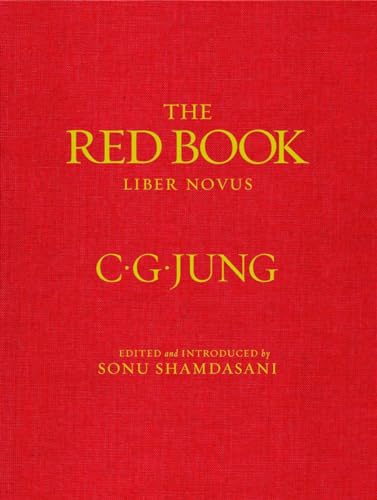
The Red Book: Liber Novus, edited by Jung scholar Sonu Shamdasani, is the full facsimile edition, meaning it reproduces Jung’s original calligraphic pages and paintings alongside the English translation. This is the version to buy if the visual, almost illuminated-manuscript quality of the original document matters to you as much as the text itself.
It is large, heavy, and genuinely expensive compared to most books in this review. Few readers finish it cover to cover in one sitting, and that is fine, since it was arguably never meant to be read that way in the first place, given its origins as a private visionary record.
- Reproduces Jung’s original calligraphic manuscript pages alongside the translated text.
- Includes Shamdasani’s extensive scholarly introduction and over 1,500 editorial notes.
- Best suited to readers who want the full visual experience of the original Liber Novus.
2. The Red Book: A Reader’s Edition — C. G. Jung
The Red Book: A Reader’s Edition strips away the facsimile pages and delivers the complete translated text in a more portable, considerably more affordable format. For most first-time readers, this is genuinely the better entry point into Liber Novus.
You still get Shamdasani’s introduction and notes, just without needing a side table sturdy enough to hold a folio-sized art book. Most people who eventually want the full facsimile edition read this one first.
- Contains the complete translated text of Liber Novus without the oversized facsimile pages.
- Includes Shamdasani’s introduction, making it easier to follow the historical context.
- Recommended as the practical starting point before attempting the full facsimile edition.
3. Memories, Dreams, Reflections — C. G. Jung

Memories, Dreams, Reflections, Jung’s autobiography compiled with his colleague Aniela Jaffé, gives essential biographical context for understanding why Jung began the confrontation with the unconscious that produced the Red Book in the first place. It covers his childhood, his relationship with Freud, and the breakdown years directly.
Reading it alongside the Red Book helps ground the visionary material in an actual human life, rather than treating it as an abstract mystical text detached from Jung’s day-to-day reality.
- Provides biographical context for the 1913 break with Freud that preceded the Red Book period.
- Describes Jung’s own account of the visions later recorded in Liber Novus.
- Works well as a companion read for understanding the man behind the active imagination experiments.
4. Man and His Symbols — C. G. Jung

Man and His Symbols, the last project Jung supervised before his death, was written explicitly for general readers rather than clinicians. It introduces archetypes, dream symbolism, and the structure of the unconscious in far more accessible language than most of his academic writing.
Anyone who finds the Red Book beautiful but genuinely confusing on a first read should probably start here instead, then circle back to Liber Novus once the vocabulary feels less foreign.
- Explains archetypes and dream symbolism in accessible, non-clinical language.
- Serves as the gentlest possible introduction before attempting the denser Red Book material.
- Includes extensive illustrations that make abstract concepts like the collective unconscious easier to grasp.
5. The Archetypes and the Collective Unconscious — C. G. Jung

The Archetypes and the Collective Unconscious, volume nine of Jung’s Collected Works, lays out the formal theoretical scaffolding behind figures like the Wise Old Man, the Anima, and the Shadow that first appeared informally in the Red Book visions.
It reads more like an academic text than a narrative one, so pace yourself. Several essays here directly reference the kind of material Jung first encountered during his Liber Novus period.
- Formalizes the theory behind archetypes that first appeared as Red Book visions.
- Explains the collective unconscious as a shared psychic structure beneath individual experience.
- Best read after some exposure to Jung’s more accessible work, given its academic density.
6. Jung: A Biography — Deirdre Bair
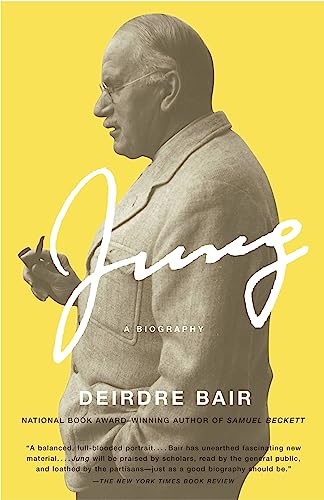
Jung: A Biography by biographer Deirdre Bair offers a thoroughly researched, occasionally unflattering look at Jung’s life, including the controversies around his relationships and wartime conduct that more devotional accounts tend to soften.
It is a long book, nearly a thousand pages, but it gives essential outside perspective on a figure whose own writing, especially in the Red Book, can otherwise feel self-mythologizing if read in isolation.
- Provides an independent, well-researched account of Jung’s life beyond his own self-narrated visions.
- Addresses controversies that devotional biographies often minimize, including his wartime conduct.
- Offers useful outside context for readers who want more than Jung’s own autobiographical framing.
7. Jung’s Red Book for Our Time: Searching for Soul Under Postmodern Conditions, Vol. 1 — Murray Stein and Thomas Arzt (Eds.)
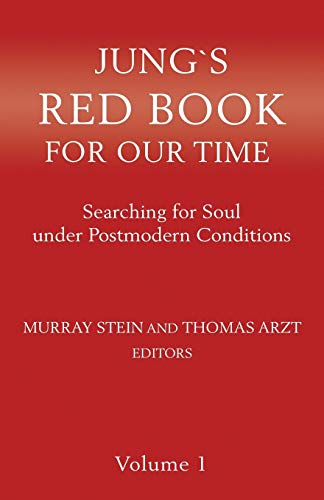
Jung’s Red Book for Our Time, edited by analysts Murray Stein and Thomas Arzt, collects scholarly essays exploring what Liber Novus means for contemporary psychology, culture, and clinical practice, written by practicing Jungian analysts rather than historians alone.
It works best as a third read, after the Reader’s Edition and a general overview like Man and His Symbols, once you already have the raw material fresh enough in mind to engage with academic interpretation.
- Collects essays from practicing Jungian analysts interpreting the Red Book for modern readers.
- Explores contemporary relevance of Jung’s visions rather than only historical context.
- Suited to readers who have already finished the Reader’s Edition and want deeper clinical interpretation.
How to Read the Red Book Without Getting Overwhelmed
Most people who attempt the Red Book cold, without any prior grounding in Jung’s basic vocabulary, find the experience disorienting rather than illuminating. That is avoidable with a bit of sequencing.
Start with something accessible. Man and His Symbols introduces archetypes and dream symbolism in plain language before you encounter Jung’s own denser, more visionary prose. From there, Shamdasani’s Reader’s Edition works better as a first direct encounter with Liber Novus than the full facsimile, since it strips away the manuscript’s visual weight and lets you focus purely on the narrative and dialogue. Read slowly. This is not a book meant for a single weekend, and treating it that way tends to produce confusion rather than insight.
Keep a journal nearby while reading. Jung’s own process involved writing down and responding to what arose, and readers often find it helpful to note their own reactions to specific passages, particularly the more unsettling ones involving Salome or the descent into the underworld chapters. Some readers benefit from discussing the material with a Jungian-informed therapist or a reading group rather than processing it entirely alone, since the content can stir up genuinely strong emotional responses.
- Begin with an accessible overview like Man and His Symbols before attempting Liber Novus directly.
- Choose the Reader’s Edition over the facsimile for a first pass through the narrative content.
- Keep a personal journal alongside your reading to track your own emotional reactions to the material.
Common Misconceptions This Review Wants to Correct
A surprising amount of popular writing about the Red Book gets its basic framing wrong, and clearing up a few misconceptions changes how the material lands for a new reader.
The most persistent myth claims Jung was genuinely psychotic during this period, sometimes framed almost sensationally as “the years Jung went mad.” Biographer Deirdre Bair‘s research complicates this considerably. Jung maintained a full clinical practice, published academic work, and functioned as a husband and father throughout these years, none of which is typical of untreated psychosis. Most contemporary scholars describe the period instead as a severe but managed psychological crisis, one Jung navigated with unusual deliberateness rather than losing control entirely.
A second misconception treats the Red Book as a religious or mystical text meant to be believed literally, rather than a psychological document. Jung himself was careful about this distinction, and Philemon reportedly told him directly that psychological understanding differs fundamentally from religious faith. A third misconception assumes the book offers a step-by-step self-help method anyone can safely replicate at home. It does not, and analyst James Hillman‘s later work with Shamdasani on The Lament of the Dead specifically addresses how disorienting, and occasionally destabilizing, unsupervised engagement with this kind of material can become without proper support.
- Jung functioned professionally throughout this period, which complicates the popular “Jung went mad” myth.
- The Red Book is a psychological document, not a religious text meant for literal belief.
- Unsupervised attempts to replicate Jung’s process can be destabilizing without proper clinical support.
Should You Try Active Imagination Yourself After Reading This Review?
Curiosity about active imagination is completely understandable after finishing the Red Book, but attempting Jung’s exact process alone carries real psychological risk that popular summaries rarely mention.
Jung himself worked through this material during a period of significant personal instability, and he later cautioned students against undertaking similarly deep unconscious exploration without adequate psychological grounding. Contemporary Jungian analysts generally recommend practicing structured active imagination only under the guidance of a trained clinician, particularly for anyone with a history of dissociation, psychosis, or significant trauma. Marie-Louise von Franz, who trained directly under Jung, spent much of her career emphasizing that this kind of unconscious work requires a stable, well-supported ego structure before it becomes genuinely productive rather than overwhelming.
If reading the Red Book stirs up intense distress, intrusive imagery, or a sense of losing your grip on ordinary reality, that is a signal to pause and talk to a mental health professional rather than push further alone. There is nothing weak about that choice. Jung had colleagues, correspondence, and a clinical practice grounding him throughout his own process; most readers today do not have that same infrastructure built in by default.
- Attempting deep active imagination unsupervised carries real psychological risk for some readers.
- Analysts trained under Jung, including Marie-Louise von Franz, emphasized the need for a stable ego structure first.
- Intense distress while reading is a reasonable signal to consult a licensed mental health professional.
FAQs about Carl Gustav Jung’s Red Book
What is Carl Jung’s Red Book actually about?
The Red Book, formally titled Liber Novus, is Jung’s personal record of a series of visions and imagined dialogues he experienced after his 1913 break with Sigmund Freud. It documents his deliberate confrontation with his own unconscious mind through a technique he later called active imagination, featuring recurring figures like Philemon and Salome. The material became the experiential foundation for concepts Jung developed later in his career, including archetypes, the collective unconscious, and individuation. It reads as part memoir, part visionary narrative, and part early psychological research conducted entirely on himself.
Why did it take so long for the Red Book to be published?
Jung never formally published the manuscript during his lifetime, and his family kept it largely inaccessible for decades after his death in 1961 out of concern that the intensely personal, visionary content might damage his scientific reputation. It was not until 2000 that Jung’s descendants authorized serious scholarly work toward publication, a project led by historian Sonu Shamdasani. The translation, annotation, and preparation took nearly a decade, and W. W. Norton finally released the facsimile edition in October 2009, almost a century after Jung began writing it.
Should beginners start with the facsimile edition or the Reader’s Edition?
Most readers get more out of starting with the Reader’s Edition rather than the full facsimile. The Reader’s Edition contains the complete translated text and Shamdasani’s introduction without the oversized, expensive facsimile pages reproducing Jung’s original artwork. It is more portable, considerably cheaper, and easier to focus on narratively. Readers who fall in love with the material often go back and purchase the facsimile edition afterward specifically to see the original calligraphy and paintings, once they already understand the story and concepts well enough to appreciate the visual presentation.
Is it safe to try active imagination without a therapist?
Attempting light, low-intensity active imagination exercises is generally considered lower risk, but deep, sustained engagement similar to what Jung practiced carries real psychological risk without professional support, particularly for people with a history of trauma, dissociation, or psychotic episodes. Contemporary Jungian analysts typically recommend working with a trained clinician before attempting deeper unconscious exploration. If you notice intense distress, intrusive imagery, or difficulty distinguishing the exercise from ordinary reality, that is a clear signal to stop and consult a licensed mental health professional rather than continue alone.
Was Carl Jung mentally ill when he wrote the Red Book?
This is debated, but most contemporary scholars reject the popular framing that Jung was simply psychotic during this period. He maintained a full clinical practice, continued publishing academic work, and functioned as a husband and father throughout the years he was producing this material, which is atypical for untreated psychosis. Biographer Deirdre Bair’s extensive research describes the period as a severe, disorienting psychological crisis that Jung navigated with unusual deliberateness rather than a complete break from functioning. Framing it as pure madness oversimplifies a genuinely complex psychological episode.
How does the Red Book relate to Jung’s other, more academic books?
The Red Book functions as the raw experiential material behind concepts Jung later formalized in more academic works like The Archetypes and the Collective Unconscious. Figures and themes that first appeared informally as visions in Liber Novus, the Wise Old Man, the anima, the shadow, became structured theoretical concepts in his subsequent Collected Works. Reading the Red Book alongside a more academic title helps readers see how Jung’s personal, visionary experience gradually transformed into the formal psychological theory that shaped analytical psychology as a discipline for the rest of the twentieth century.
Is the Red Book worth buying if I am new to Jung entirely?
It can be, but going in completely cold is not the smoothest path. Newcomers generally have a better experience starting with a more accessible title like Man and His Symbols to absorb basic vocabulary around archetypes and the unconscious before tackling Liber Novus directly. Once that foundation exists, the Reader’s Edition of the Red Book becomes far more rewarding rather than confusing. Think of it less as a beginner’s book and more as a rich, strange payoff for readers who already have some grounding in Jung’s broader ideas.
Bibliography
- Bair, D. (2004). Jung: A Biography. Back Bay Books.
- Jung, C. G. (2009). The Red Book: Liber Novus (S. Shamdasani, Ed.). W. W. Norton & Company.
- Jung, C. G. (2012). The Red Book: A Reader’s Edition (S. Shamdasani, Ed.). W. W. Norton & Company.
- Jung, C. G. (1989). Memories, Dreams, Reflections (A. Jaffé, Ed.). Vintage Books.
- Jung, C. G. (1968). Man and His Symbols. Dell Publishing.
- Jung, C. G. (1981). The Archetypes and the Collective Unconscious (Collected Works, Vol. 9, Part 1). Princeton University Press.
- Shamdasani, S., and Hillman, J. (2013). Lament of the Dead: Psychology After Jung’s Red Book. W. W. Norton & Company.
- Stein, M., and Arzt, T. (Eds.). (2017). Jung’s Red Book for Our Time: Searching for Soul Under Postmodern Conditions, Vol. 1. Chiron Publications.
- Von Franz, M.-L. (1964). The Process of Individuation. In C. G. Jung (Ed.), Man and His Symbols. Dell Publishing.
Use this citation format to reference the article clearly and help readers find the original source.
PsychologyFor. (2026). Carl Gustav Jung’s Red Book. PsychologyFor. https://psychologyfor.com/carl-gustav-jungs-red-book/