

See more of our articles in your search results.
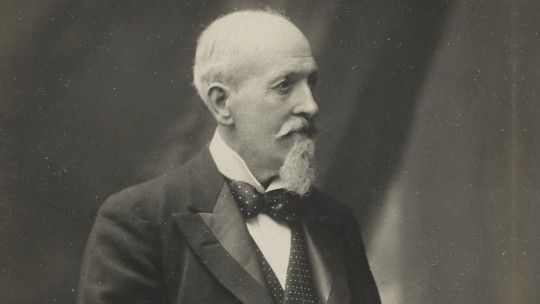
Modern psychology and, especially, its experimental branch, would not be the same if it had not been for the great contributions of Charles Spearman
This English psychologist is widely known in the field of research for his statistical contributions to the study of psychological processes, in addition to being the author of one of the best-known theories on human intelligence in the field.
Let’s take a deeper look at the life of Charles Spearman whose life, through turns of events, went from being aimed at defending his country to focusing on the intellectual abilities of human beings.
Charles Spearman Biography
Charles Edward Spearman was born in London, United Kingdom, on September 10, 1863, and died in the same city on September 17, 1945, at the age of 82.
A late start
Spearman’s beginnings in the field of psychology could be considered late, because he began his studies in 1898, when he was 34 years old and after having been part, for 15 years, as an officer in the second battalion of the Royal Munster Fusiliers in India (1885-1897).
How many of these have you been "meaning to read" for months?


His decision to begin studies in experimental psychology was possibly influenced by the fact that, while he was in the Indian subcontinent, he researched this discipline in his free time.
At that time, British psychology was characterized by being considered a branch of philosophy. That is why Charles Spearman preferred to go abroad, specifically to Leipzig, Germany, to be able to study experimental psychology, which had a certain independence with respect to the field of philosophy.
Spearman had the opportunity to receive knowledge from Wundt himself, however, he did not share his taste in focusing on basic psychological processes, both cognitive and perceptual, the British feeling a predilection for more complex situations that occur in real life, such as, for example. For example, school performance.
After spending two years studying psychology at the University of Leipzig, he was called up to serve Britain in the Second Boer War (1899-1902). He returned from the conflict, finally graduating in psychology in 1907.
Publications and fame
Spearman’s popularity is, above all, due to the publication of two articles in the American Journal of Psychology in 1904, when he was still studying psychology. To this day, these two articles continue to have an impact, receiving more than 2,000 citations each.
The first, ‘The proof and measurement of association between two things’, sought to expand Galton’s idea about the correlation coefficient.
Spearman, despite considering the findings made by Galton and other notable researchers such as Pearson and Bravais as important, did not consider them as useful for the field of experimental psychology, believing that they should be reformulated and adapted to the demands of the discipline.
In that same article, Spearman introduces the concept of partial correlation as a way to control extraneous variables.
The other article, ‘general intelligence, objectively determined and measured’, Charles Spearman criticizes previous experimental research, in addition to trying to demonstrate the strength of the correlation coefficient.
He read about previous studies that had failed to find correlations, and pointed out possible methodological flaws, along with a lack of motivation of the participants and errors in measuring and analyzing the results.
Influence on psychology
Following the publication of the two aforementioned articles, Spearman was offered a position at University College London to be in charge of the experimental psychology program at that university, in addition to working as a professor at the institution.
This was the seed for the emergence of what was called ‘the London school of individual differences’, in which the likes of Raymond Cattell, Hans Eysenck and Cyril Burt, among others, were members for about 30 years. Spearman and his students continued to address human intelligence and its nature, publishing ‘The Abilities of Man’ in 1927.
Spearman’s two main contributions to psychology are explained in more detail below, especially in the field of the study of intelligence and the use of statistics in psychological research.
Intelligence theory
Spearman presented his two-factor theory of intelligence, according to which the execution of any mental activity depends on two different factors.
First, there is the general factor or ‘g’, which is the common basis of intelligence and that, although it occurs in a variable way depending on the individual, it remains stable in the individual for any situation.
Secondly are the specific factors or ‘s’, which are all the specific abilities, which not only show up differently between individuals, but also vary between abilities of the same person.
Thus, according to the vision of intelligence proposed by Spearman, This construct is understood in such a way that there is a general factor that is stable in the person and a series of specific factors which are independent of each other, which manifest themselves in the form of varied aptitude strengths and weaknesses.
This proposal by Spearman did not leave anyone indifferent, in addition to being one of the first investigations in which he applied factor analysis and provided the correlation coefficient that bears his same surname.
In 1938, Thurstone criticized what Spearman observed, given that he defended the idea of the existence of multiple intelligences or intellectual aptitudes, which occurred in a variety of ways.
This author initially claimed that there were at least seven: numerical, reasoning, spatial, perceptual, memory, verbal fluency and verbal comprehension.
Later, Thurstone himself agreed with Spearman in relation to the existence of a general factor among the measures of abilities. Years later, in 1963, Cattell also supported Spearman’s ideas, but with changes when defining the factors behind intelligence.
Cattell proposed the existence of two types of factors, which differ depending on age: fluid intelligence, more or less similar to Spearman’s ‘g’ factor, and crystallized intelligence, more related to knowledge in a more cultural sense of the word.
Today there is still debate about whether or not there are different qualities in terms of intelligence, although the majority position is that there are.
Spearman’s great contribution, the existence that at least one factor is present in all actions in which the use of intelligence is required, continues to be considered one of the great discoveries within experimental psychology.
Factor analysis and Spearman correlation coefficient
Factor analysis is a statistical method that is used to find relationships between multiple measures considered correlated. Spearman contributed significantly to the refinement of this method. It was he who coined the term factor analysis and used it to measure multiple cognitive aspects.
In fact, It was the results obtained through factor analysis that allowed Spearman to postulate the concepts of general factor and specific factor
Spearman applied mathematical procedures while conducting his research in experimental psychology, trying to describe and explore psychological phenomena from a statistical perspective, something that has significantly influenced the discipline of mind and behavior to this day.
The Spearman correlation coefficient allows two variables to be correlated by ranks instead of measuring their performance separately.
Use this citation format to reference the article clearly and help readers find the original source.
PsychologyFor. (2024). Charles Spearman: Biography of This Experimental Psychologist. PsychologyFor. https://psychologyfor.com/charles-spearman-biography-of-this-experimental-psychologist/