


See more of our articles in your search results.
Before archaeology had a name, before it had a methodology, before universities offered degrees in it or museums enshrined its findings behind climate-controlled glass, there was a restless Italian merchant from the Adriatic coast who could not stop writing down what he saw. Ciriaco de’ Pizzicolli — known to history as Ciriaco of Ancona, or Cyriacus of Ancona in its Latinized form — was born in 1391 into a prosperous commercial family in the maritime republic of Ancona, and he died in 1452 in Cremona, having spent the intervening decades doing something that no one before him had done with such systematic, sustained, and passionate purpose: recording the physical remains of the ancient world.
He climbed scaffolding to read inscriptions on Roman arches. He sailed to Egypt and stood before the Great Pyramid, correcting centuries of medieval fantasy about what it actually was. He visited Athens and produced the first drawing of the Parthenon to reach Western Europe since antiquity — a drawing that became, after Venetian cannons partially destroyed the building in 1687, one of the most historically irreplaceable documents in the history of classical architecture. He copied nearly a thousand Greek and Latin inscriptions, many of them from monuments that have since disappeared entirely, making his notes the only surviving record of their existence.
For all of this, he has been called the Father of Archaeology — a title that is contested by some and qualified by many, but that captures something genuinely true about what Ciriaco accomplished. He was not an archaeologist in the modern scientific sense. He had no excavation methodology, no stratigraphic analysis, no institutional framework. But he was the first person in the Western tradition to treat the physical remnants of antiquity as primary evidence of historical truth — to go and look, and measure, and draw, and record — and in doing so, he invented an intellectual practice that modern archaeology would eventually systematize. This is his story.
Ancona in the Fifteenth Century: The World That Shaped Ciriaco
To understand Ciriaco, you have to understand the city that made him. Ancona in the early fifteenth century was not Venice — it was smaller, less glamorous, less politically powerful — but it occupied a remarkably strategic position in the commercial and cultural geography of the late medieval Mediterranean. Situated on the Adriatic coast of the Italian peninsula, it served as one of the principal ports for trade with the Eastern Mediterranean, maintaining active commercial relationships with the Byzantine Empire, the Ottoman Empire, and the markets of the Levant that Venetian commercial dominance elsewhere tended to monopolize. This meant that Ancona was, by its geographical nature, a crossroads city — a place where East met West in the most literal commercial sense, where Greek merchants arrived alongside Ottoman traders, where the remnants of Byzantine culture were not exotic abstractions but living presences in the docks and counting houses of everyday commercial life.
The Pizzicolli family was well-positioned within this mercantile world. They were not aristocrats — their wealth came from trade rather than land — but they were prosperous and connected, with commercial contacts extending across the Mediterranean basin through the network of trading posts and merchant consulates that linked the major ports of the era. This mercantile inheritance would prove to be Ciriaco’s passport to the ancient world. His travels were initially justified, at least in part, by commercial purpose — and the relationships his family’s business connections had established across the Eastern Mediterranean gave him access to courts, monasteries, and ruins that a purely private scholar would have found much harder to penetrate.
How many of these have you been "meaning to read" for months?
- 1
 831 StoriesThe Overthinker's Guide to Making DecisionsHow to Make Decisions without Losing Your Mind (Books By Joseph Nguyen)Listen Free On Audible
 - 2
 New Harbinger PublicationsThe Dialectical Behavior Therapy Skills WorkbookPractical DBT Exercises for Learning Mindfulness, Interpersonal Effectiveness, Emotion Regulation...Listen Free On Audible
 - 3
 MajostaDon't Believe Everything You ThinkWhy Your Thinking Is The Beginning & End Of Suffering (Beyond Suffering)Listen Free On Audible
But the other force shaping Ciriaco was the broader intellectual climate of early fifteenth-century Italian humanism. The Renaissance was not yet the fully formed cultural movement it would become by the century’s end, but its essential impulse — the recovery, study, and celebration of Greco-Roman antiquity as a model and inspiration for contemporary culture — was already generating extraordinary intellectual energy in the courts and academies of the Italian city-states. The passion for classical antiquity that would eventually produce Botticelli and Michelangelo, Machiavelli and Erasmus, was already well underway when Ciriaco came of age. He absorbed that passion deeply and personally — and then, characteristically, he decided to go and actually look at the things themselves.
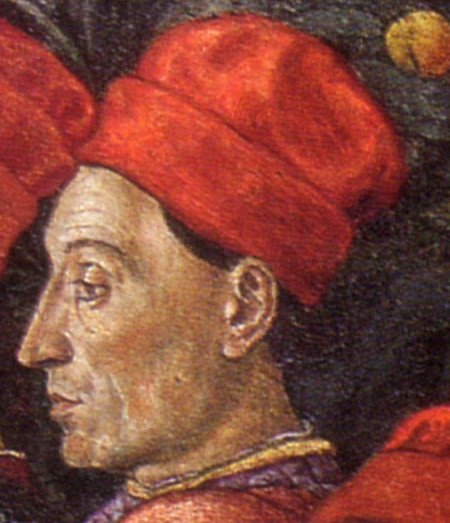
A Self-Made Scholar: The Formation of an Autodidact
One of the most remarkable things about Ciriaco is that he was essentially self-educated. He had no university training, no formal academic mentor, no institutional affiliation. What he had was an insatiable intellectual appetite and the practical intelligence to find his own paths toward the knowledge he wanted. His early commercial work — he began working in his family’s business at a young age, apparently by the time he was nine — took him on his first Mediterranean voyages and exposed him to the ancient remains of the classical world before he had the scholarly tools to fully understand what he was seeing.
The decisive turning point in his intellectual formation came in 1421, when he was thirty years old. Scaffolding had been erected around the Arch of Trajan in Ancona for restoration work — the great triumphal arch, built in 115 AD to celebrate the emperor Trajan and still standing today as one of Ancona’s most prominent landmarks. Ciriaco climbed that scaffolding. What he found at the top changed his life. The harmonious proportions of the marble, the precision of the carving, the Latin inscriptions running across the attic — all of it struck him with the force of a revelation. He tried to reconstruct in his mind the arch’s original appearance, hypothesized from the inscriptions the presence of gilded bronze statues of Trajan, his wife Plotina, and his sister Marciana — statues long since lost. The experience ignited something in him that would never go out.
From that moment, he devoted himself to the systematic study of classical Latin, which he taught himself largely through direct engagement with inscriptions and classical texts. Later, during his first extended visit to Constantinople, he would add ancient Greek to his repertoire — again, substantially through self-directed study and direct engagement with the living Greek-speaking culture of the Byzantine capital. By the mid-1420s, Ciriaco had transformed himself from a commercially successful merchant-traveler into something new and strange: a self-made humanist scholar whose primary field of study was not the library but the landscape.
The Grand Voyages: Thirty Years of Discovery Across the Ancient World
Between roughly 1421 and his death in 1452, Ciriaco undertook a series of voyages that, taken together, represent one of the most extraordinary programs of personal exploration and documentation in the history of Western scholarship. The itinerary alone is staggering. He traveled through southern Italy and Dalmatia; visited Rhodes, Beirut, Damascus, Cyprus, Mytilene, and Thessalonica; sailed to Egypt and up the Nile to the Giza plateau; voyaged through the Greek archipelago to Athens and the Peloponnese; explored the coasts of Anatolia; spent extended periods in Constantinople; and visited the ancient sites of Epirus, Thrace, and Macedonia. Along every route, at every stop, he was observing, measuring, drawing, and writing.
His instrument was the Commentaria — a day-book or journal that eventually filled seven volumes and constituted his life’s work. In its pages he recorded detailed descriptions of ancient monuments and ruins, careful transcriptions of Greek and Latin inscriptions, sketches and architectural drawings of buildings and sculptures, notes on the geography and history of the sites he visited, and observations on the contemporary cultures he encountered alongside the ancient remains. It was, in the most literal sense, archaeology before archaeology existed — the systematic on-site documentation of the material culture of the ancient world, carried out with a consistency and rigor that would not be surpassed for generations.
The following table gives a sense of the geographic and thematic scope of his major voyages:
| Period / Voyage | Principal Destinations and Discoveries |
|---|---|
| 1412–1421 (early commercial travels) | First Mediterranean voyages; Constantinople; initial exposure to ancient remains; studies Latin |
| 1421 (the Arch of Trajan moment) | Ancona; climbs scaffolding on the Arch of Trajan; intellectual conversion to antiquarian study |
| 1423–1432 (Italian peninsula and Greece) | Rome, southern Italy, Dalmatia, Rhodes, Beirut, Damascus, Cyprus, Thessalonica; studies Greek in Constantinople |
| 1435–1438 (Egypt and the Levant) | Egypt and the Giza plateau; identifies the true nature of the Great Pyramid; first European drawings of the pyramids |
| 1436 (Athens and Greece) | First post-antique description of the Parthenon; identifies and names it correctly; rediscovers Delphi |
| 1437–1447 (eastern Mediterranean) | Anatolia, Morea, Chios, northern Aegean; records hundreds of inscriptions, many now lost |
| Post-1447 (final years) | Northern Italy; patronage of Cosimo de’ Medici, the Visconti; Padua, Ferrara; death in Cremona, 1452 |
The Parthenon: Seeing What Others Had Forgotten to See
Of all Ciriaco’s discoveries and contributions, the one that perhaps most vividly illustrates his singular importance to the history of Western culture is his encounter with the Parthenon in 1436. By the time Ciriaco arrived in Athens, the great temple of Athena on the Acropolis had been a Christian church — the Church of the Virgin Mary — for nearly a thousand years. It had been reconsecrated, modified, partially transformed, and thoroughly incorporated into the medieval landscape of the city. To the travelers and pilgrims who visited it, it was simply a church. No one called it the Parthenon. No one connected it to the classical tradition with anything like historical precision.
Ciriaco changed that in a single visit. Armed with his reading of Pausanias and other ancient authors who had described the Acropolis in antiquity, he walked up the hill, looked at the building, recognized it from the textual descriptions he had studied, and identified it correctly — naming it the Parthenon, describing it as the temple of the goddess Athena, and producing the first drawing of the monument to reach Western Europe in the post-antique period. His sketch recorded the building’s proportions, its column arrangement, its sculptural program, and its overall condition with a precision that subsequent scholars found remarkably reliable. When the Parthenon was partially destroyed in 1687 — when a Venetian mortar round ignited the Ottoman powder magazine stored inside and blew apart the central section of the building — Ciriaco’s drawing became something incalculably more valuable than a traveler’s sketch. It became the only surviving record of how the building had looked before the explosion. That drawing has been studied, reproduced, and debated by classicists ever since.
The same visit to Greece brought another discovery of lasting importance: the rediscovery of Delphi. In March 1436, Ciriaco arrived at the ancient sanctuary of Apollo, identified it correctly from his reading of Pausanias, stayed for six days, and systematically recorded every visible archaeological remain — the stadium, the theatre, sculptures, and, most valuably, numerous inscriptions, many of which have since been lost. He was the first Western European in the post-antique period to recognize Delphi for what it was and to document it as the site described in the classical texts he had studied.
Egypt and the Great Pyramid: Correcting a Medieval Myth
The story of Ciriaco and the Great Pyramid of Giza is, in some ways, an even more striking demonstration of his intellectual method — because what he accomplished there was not simply discovery but correction. Medieval European tradition had persistently misidentified the pyramids of Giza as the biblical granaries of Joseph — the structures in which, according to Genesis, Joseph stored grain during the seven years of plenty before the seven years of famine. This identification had circulated in European literature for centuries, giving the pyramids a scriptural identity that made it easy to stop looking at what they actually were.
Ciriaco arrived at Giza in 1435, having sailed up the Nile from Alexandria. He brought with him his reading of Herodotus’s Histories, which describes the pyramids in considerable detail in its second book. Standing before the Great Pyramid, comparing what he saw with what Herodotus had written, he recognized immediately and unambiguously that the structure before him was a royal tomb — not a granary, not a biblical monument, but the funerary monument of an ancient Egyptian king, built on a scale and with a sophistication that matched every detail of Herodotus’s account. He definitively refuted the Joseph’s Granaries identification and documented the pyramids with drawings and written descriptions that constituted the first reliable European account of the monuments since antiquity. It would still take centuries — and Napoleon’s Egyptian campaign, and the decipherment of the Rosetta Stone — before European understanding of ancient Egypt caught up with what Ciriaco had already established by direct observation.

The Commentaria: A Monument That Did Not Survive
The great tragedy of Ciriaco’s legacy is the fate of the Commentaria — the seven-volume day-book that was the vessel of everything he had seen, drawn, and recorded over thirty years of travel. He never published it himself; it circulated in manuscript form among the humanist scholars and powerful patrons who had followed his work with admiration. Cosimo de’ Medici was among its admirers. Pope Eugenius IV had been a patron of Ciriaco’s work. The Commentaria was recognized by those who read it as something unique and irreplaceable.
And then, in 1514, the library of Alessandro Sforza and Costanza Varano in Pesaro burned. The primary manuscripts of the Commentaria were kept there. They were destroyed entirely. A further collection of Ciriaco’s manuscripts about Ancona was lost in a fire at the city’s archives in 1532. Thirty years of work, the records of a thousand inscriptions and hundreds of monuments, the drawings and descriptions and historical analyses that Ciriaco had spent his life producing — reduced to ash in two accidents separated by less than two decades.
What survives is fragmentary but still remarkable. Some materials had been copied before the fires — individual manuscripts, fragments of the Commentaria, collections of inscriptions and drawings that had circulated among humanist readers. The Vatican Library holds some of the most significant surviving pieces. Later printed editions compiled surviving fragments: Epigrammata reperta per Illyricum (Rome, 1664), Cyriaci Anconitani nova fragmenta (Pesaro, 1763), and the Itinerarium (Florence, 1742). For modern scholars, the project of reconstructing what Ciriaco actually recorded — piecing together the surviving fragments to understand what was lost — has been a significant area of Renaissance scholarship for over a century. Even the fragments that survive have proven historically indispensable: for many of the inscriptions he copied and the monuments he described, Ciriaco’s record is the only one that exists.
Ciriaco as Epigraphist: The Near-Thousand Inscriptions
Among scholars of classical antiquity, Ciriaco’s most technically significant contribution may be his work as an epigraphist — a recorder of ancient inscriptions. Over the course of his travels, he copied nearly a thousand Latin and Greek inscriptions from monuments, buildings, tombs, and other structures across the Eastern Mediterranean. For many of these inscriptions, his copy is the only surviving record: the stone was subsequently destroyed, the building demolished, the site lost, the original text buried or dispersed beyond recovery.
The nineteenth-century epigraphist Giovanni Battista de Rossi — himself one of the founding figures of modern classical epigraphy — praised the accuracy of Ciriaco’s inscription copies, which is high praise given that de Rossi was working from a much more developed methodological tradition and had every reason to find fault with a fifteenth-century autodidact’s transcriptions. The consensus among modern classical scholars is that while Ciriaco occasionally made errors — misreading a worn letter, miscopying a complex text, or occasionally embellishing where the stone was illegible — his overall accuracy was remarkable for a self-taught traveler working without the systematic tools of modern epigraphy. More importantly, the errors that do appear are relatively identifiable and correctable in cases where partial corroborating evidence exists. The descriptions of Ciriaco as “the most enterprising and prolific recorder of Greek and Roman antiquities, particularly inscriptions, in the fifteenth century” and as “the founding father of modern classical archaeology” that appear in the scholarly literature are not mere hagiography — they reflect a genuine assessment of his technical contribution.

The Patrons and the Networks: Ciriaco in the Humanist World
Ciriaco did not operate in isolation. One of the things that makes his career particularly interesting from an intellectual-historical perspective is the way in which he navigated the humanist networks of the Italian Renaissance, both drawing on and contributing to the broader cultural project of classical recovery that was reshaping European thought. His patrons were among the most powerful figures of the age. Pope Eugenius IV, who had been Papal legate in the March of Ancona during the years when Ciriaco was beginning his antiquarian work, became a significant supporter. Cosimo de’ Medici, the dominant figure in Florentine cultural and political life and one of the great Renaissance patrons, was an admirer of Ciriaco’s work and a recipient of materials from his travels. The Visconti of Milan also provided patronage at various points in his career.
Perhaps the most evocative episode of Ciriaco’s networking is his role as guide to the Holy Roman Emperor Sigismund during Sigismund’s visit to Rome for his imperial coronation. Ciriaco, who knew the ancient monuments of Rome with the intimacy of someone who had studied them intensively on extended visits to the city, served as the Emperor’s personal guide through the antiquities of the ancient capital. The image of Ciriaco of Ancona — self-taught merchant’s son, autodidact humanist, restless traveler — guiding the Holy Roman Emperor through the ruins of ancient Rome while explaining their historical significance says something important about the cultural moment he inhabited: a moment when knowledge of classical antiquity had become a form of power and prestige that transcended birth and formal education.
Ciriaco also moved in the company of other humanist scholars, corresponding with and influencing figures like Francesco Filelfo, Ambrogio Traversari, and Leonardo Bruni. His Commentaria circulated among these networks, shaping how Italian humanists understood and engaged with the ancient sites that were so central to their intellectual project. In this sense, Ciriaco was not only a discoverer but a transmitter — the person who brought the physical reality of the ancient world back to the scholars who were busy theorizing about it from the relative safety of their libraries.
Constantinople: Witness to the End of an Era
Ciriaco’s repeated visits to Constantinople — the capital of the Byzantine Empire, the direct institutional and cultural heir of the Roman Empire, and one of the great cities of the medieval world — place him at one of the most dramatic crossroads of European history. He visited the city multiple times over his career, studying its ancient monuments, copying its inscriptions, documenting its extraordinary collection of classical antiquities. Through a drawing made for Ciriaco, we have a record of the Column of Justinian as it appeared before it was dismantled by the Ottomans. His documentation of Constantinople’s ancient remains is historically precious precisely because much of what he saw would soon cease to exist.
When Constantinople fell to the Ottoman forces of Mehmed II on May 29, 1453 — just one year after Ciriaco’s death — it marked the end of the Byzantine Empire and the beginning of the transformation of the city into Istanbul. Many of the monuments Ciriaco had documented were subsequently altered, repurposed, or destroyed. His records became, in those cases, primary historical evidence. There is a poetic dimension to the timing: Ciriaco spent his life documenting a world that was in the process of disappearing. The ancient monuments he recorded were, in many cases, already in decline when he saw them; the political and cultural world in which they were embedded was approaching its own end. He arrived, in a sense, just in time.
The Legacy: How Ciriaco Shaped the Future of Archaeology and Classical Studies
The title “Father of Archaeology” is, as most such honorifics are, an oversimplification. Johann Joachim Winckelmann, working in the eighteenth century, is more conventionally credited with founding modern art history and archaeological methodology on a systematic scientific basis. Real archaeological practice as we understand it — with stratigraphic excavation, systematic artifact classification, and rigorous publication standards — developed primarily in the nineteenth and twentieth centuries. Ciriaco had none of these tools and used none of these methods.
What Ciriaco did — and what makes the “Father of Archaeology” title at least partially apt — was something that had not been done before in the Western tradition with such systematic purpose: he went to the places where the ancient world had existed, looked at what was actually there, and wrote it down. He treated the physical remains of antiquity as primary sources of historical knowledge rather than as mere backdrops to the texts he had read about them. He understood, before anyone had formulated the principle, that a building, an inscription, a sculpture, or a coin could tell you things about the past that no manuscript could — and he acted on that understanding with extraordinary energy and consistency over three decades.
The influence of his work rippled forward in several specific ways. His documentation of Greek and Roman inscriptions formed part of the foundation of the corpus of classical epigraphy that later scholars would systematize. His drawings and descriptions of Greek monuments — the Parthenon, Delphi, the ancient walls of Eretria — were consulted by Renaissance and early modern scholars attempting to understand the architecture of antiquity. The collector culture that he helped inspire — the passion for owning and studying ancient objects that he spread through his connections with Italian humanist networks — eventually generated the private collections that became the first public museums. The Uffizi, the Vatican Museums, the British Museum — all of them trace a genealogy back, in part, to the collecting impulse that figures like Ciriaco helped to legitimize and disseminate.
Perhaps most importantly, Ciriaco demonstrated that the past was accessible through direct physical engagement with its remains — that you could learn things about antiquity by going to look at it that you could not learn by staying home and reading about it. That demonstration, made through thirty years of restless, passionate, often uncomfortable travel, is the essential intellectual contribution that earns him his honorific. He showed what archaeology would eventually become before anyone had invented the word.
FAQs About Ciriaco of Ancona
Why is Ciriaco of Ancona called the “Father of Archaeology”?
Ciriaco of Ancona is called the Father of Archaeology — or more precisely, the founding father of modern classical archaeology — because he was the first person in the Western tradition to systematically treat the physical remains of the ancient world as primary historical evidence and to document them with sustained rigor and consistency. Over roughly thirty years of travel across the Eastern Mediterranean, he recorded nearly a thousand Greek and Latin inscriptions, produced architectural drawings and descriptions of major ancient monuments, and compiled his findings in a seven-volume day-book called the Commentaria. His approach — going to the places where antiquity had existed, looking at what was actually there, and writing it down with as much accuracy as possible — anticipates the fundamental intellectual commitment of modern archaeology, even though he lacked the systematic methodological tools that the discipline would develop centuries later.
What was Ciriaco of Ancona’s real name?
His full Italian name was Ciriaco de’ Pizzicolli, also spelled Ciriaco Pizzecolli. He was known by his contemporaries as “Ciriaco d’Ancona” — Ciriaco of Ancona — after the city of his birth, and by the Latin form Kyriacus Anconitanus. His contemporaries also called him Anticuarius — “the antiquarian” — a nickname that captures both his passion and his vocation. In modern scholarly literature he appears most frequently as Cyriacus of Ancona, using the Latinized spelling that was standard in Renaissance scholarly usage.
What happened to his major work, the Commentaria?
The Commentaria — Ciriaco’s seven-volume day-book containing his inscriptions, drawings, descriptions, and historical analyses — was never published during his lifetime. It circulated in manuscript form among humanist scholars and patrons, but the primary manuscripts were destroyed in the fire of 1514 that devastated the library of Alessandro Sforza and Costanza Varano in Pesaro, where they were being kept. A further collection of his manuscripts about Ancona was lost in a fire at Ancona’s city archives in 1532. What survives are fragments that had been copied before the fires and scattered across various collections — most significantly in the Vatican Library. Some of these surviving fragments were eventually published in printed editions in the seventeenth and eighteenth centuries, and modern scholarship has continued the work of assembling and studying what remains.
What did Ciriaco discover about the Parthenon?
When Ciriaco visited Athens in 1436, the Parthenon had been serving as a Christian church — the Church of the Virgin Mary — for nearly a thousand years. No Western traveler had identified it as the ancient temple described in classical texts, and it was simply not known in Western Europe by its ancient name. Using his knowledge of Pausanias and other ancient authors who had described the Acropolis, Ciriaco correctly identified the building as the Parthenon, the temple of the goddess Athena, and produced the first drawing of the monument to reach Western Europe since antiquity. This drawing became historically invaluable after the Venetian bombardment of 1687 partially destroyed the building, making Ciriaco’s sketch the most detailed surviving record of the Parthenon’s pre-explosion appearance.
Did Ciriaco of Ancona have formal academic training?
No — he was essentially self-educated, which makes his achievements all the more remarkable. He began working in his family’s commercial business at a very young age and received no formal university training. He taught himself classical Latin largely through direct engagement with inscriptions and ancient texts, and later added ancient Greek through self-directed study during his visits to Constantinople. His intellectual formation was fundamentally practical: he learned by doing, by traveling, by copying inscriptions, and by comparing what he saw in the field with what he had read in classical texts. His patrons — Pope Eugenius IV, Cosimo de’ Medici, and others — recognized and supported the value of his work despite, or perhaps partly because of, the direct empirical approach that his outsider status encouraged.
What did Ciriaco discover about the Egyptian pyramids?
When Ciriaco visited the Giza plateau in 1435, the pyramids were widely misidentified in European tradition as the biblical granaries of Joseph — the structures in which, according to the Book of Genesis, grain was stored during the seven years of plenty. Ciriaco brought with him his reading of Herodotus’s Histories, which describes the pyramids as royal tombs in considerable detail. Comparing the actual monuments before him with Herodotus’s account, he correctly identified the Great Pyramid as a royal funerary monument rather than a granary, definitively refuting the biblical misidentification that had circulated in European literature for centuries. He documented his findings with drawings and written descriptions that constituted the first reliable European account of the pyramids since antiquity, though European Egyptomania would not fully arrive until Napoleon’s Egyptian campaign some three and a half centuries later.
Who were Ciriaco’s most important patrons?
Ciriaco’s most significant patrons included Pope Eugenius IV, who had been Papal legate in the March of Ancona during the years when Ciriaco was beginning his antiquarian work and who became an important supporter; Cosimo de’ Medici, the dominant figure in Florentine cultural and political life and one of the most significant Renaissance patrons; and the Visconti of Milan. He was also welcomed at the court of Sigismund, Holy Roman Emperor, whom he guided through the ancient monuments of Rome during the imperial coronation visit. These connections placed Ciriaco at the center of the humanist networks of the Italian Renaissance and ensured that his work and discoveries circulated among the most intellectually influential figures of the era.
Why is so little of Ciriaco’s work available today?
The scarcity of surviving material from Ciriaco’s life’s work is one of the great losses in the history of Renaissance scholarship. His primary manuscripts were concentrated in two collections that were subsequently destroyed by fire: the library of Alessandro Sforza and Costanza Varano in Pesaro, which burned in 1514, destroying the main manuscripts of the Commentaria; and the city archives of Ancona, which burned in 1532. Ciriaco never published his work during his lifetime, relying instead on manuscript circulation — which meant that survival depended entirely on whether individual copies had been made before the fires. Some had been, and the fragments preserved in the Vatican Library and other collections remain the subject of active scholarly study. The continuing project of identifying, analyzing, and contextualizing these surviving materials has produced significant scholarship over the past century and continues to refine our understanding of what Ciriaco actually found and recorded.
How accurate were Ciriaco’s recordings of ancient inscriptions?
More accurate than one might expect from a self-taught traveler working in the fifteenth century, though not without errors. The nineteenth-century epigraphist Giovanni Battista de Rossi, himself one of the founders of modern classical epigraphy and therefore in a position to evaluate Ciriaco’s work with high professional standards, praised the general accuracy of his inscription copies. Modern scholars have found that while Ciriaco occasionally misread worn letters, miscopied complex texts, or filled gaps with conjecture, his overall record is sufficiently reliable to be used as primary evidence for inscriptions that no longer survive. For the roughly one thousand Latin and Greek inscriptions he copied — many of them from monuments subsequently destroyed — his records are in many cases the only surviving documentation, making whatever inaccuracies exist a small price for the preservation of material that would otherwise be entirely lost.
Use this citation format to reference the article clearly and help readers find the original source.
PsychologyFor. (2026). Ciriaco of Ancona: Biography of the ‘first Archaeologist’ in History. PsychologyFor. https://psychologyfor.com/ciriaco-of-ancona-biography-of-the-first-archaeologist-in-history/