

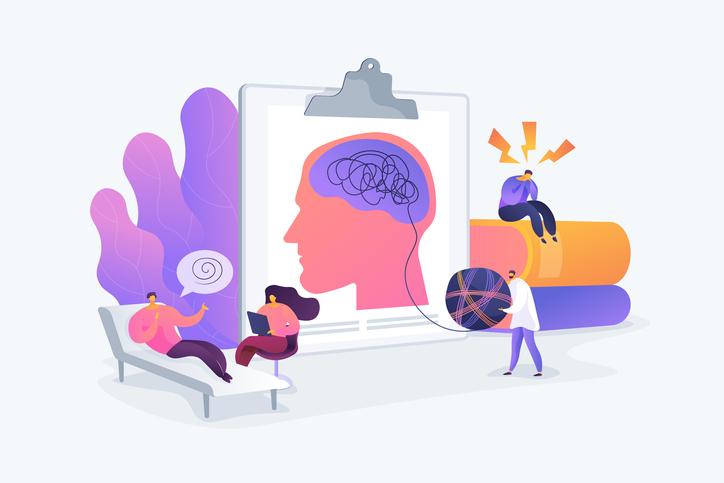
Cognitive psychology focuses on how we perceive, process, store, and retrieve information. Cognitive theories seek to explain how people think, learn, remember, and solve problems. These theories play a fundamental role in education, therapy, artificial intelligence, and neuroscience, as they help us understand the mechanisms of thought and decision-making.
This article will explore what cognitive theories are, their main types, and examples of how they apply to real-life situations.
What Are Cognitive Theories?
Cognitive theories attempt to describe how people acquire knowledge and develop mental processes such as perception, memory, language, and reasoning. Unlike behavioral theories, which emphasize observable behavior, cognitive theories focus on internal thought processes and how they influence behavior.
These theories emerged in response to behaviorism, which dominated psychology in the early 20th century and argued that human actions were shaped purely by external stimuli. Cognitive psychology, however, argues that humans are active processors of information, not just passive responders to their environment.
Key Principles of Cognitive Theories
Cognitive theories share several fundamental principles:
- Mental processes influence behavior: Our thoughts, memories, and perceptions shape how we respond to different situations.
- Learning is an active process: People do not just absorb information; they actively process and organize it.
- Knowledge is constructed: Individuals create mental representations of the world rather than just reacting to stimuli.
- Cognitive development occurs in stages: Many cognitive theorists believe that thinking ability changes over time, particularly in childhood.
Types of Cognitive Theories
There are several major types of cognitive theories, each offering a different perspective on how people think and learn.
1. Piaget’s Theory of Cognitive Development
Jean Piaget developed a stage-based theory that explains how children’s thinking evolves as they grow. According to Piaget, cognitive development occurs through four distinct stages:
- Sensorimotor Stage (0-2 years): Infants learn through direct experiences, such as touching and seeing. They develop object permanence, understanding that objects exist even when out of sight.
- Preoperational Stage (2-7 years): Children begin using language and symbols but struggle with logical thinking and perspective-taking (egocentrism).
- Concrete Operational Stage (7-11 years): Logical thinking develops, and children become capable of understanding concepts like conservation (e.g., the idea that the amount of liquid in a glass remains the same even if poured into a differently shaped container).
- Formal Operational Stage (12+ years): Abstract and hypothetical thinking become possible, allowing for advanced reasoning and problem-solving.
Example of Piaget’s Theory in Action
A child in the preoperational stage may not understand that cutting a sandwich into four pieces does not increase the amount of food, while a child in the concrete operational stage would grasp this concept.
2. Vygotsky’s Sociocultural Theory
Lev Vygotsky proposed that social interaction and culture play a crucial role in cognitive development. Unlike Piaget, who emphasized individual discovery, Vygotsky believed that learning is shaped by interactions with more knowledgeable individuals (parents, teachers, peers).
A key concept in Vygotsky’s theory is the Zone of Proximal Development (ZPD), which refers to the range of tasks a child can complete with assistance but not yet independently.
Example of Vygotsky’s Theory in Action
A child struggling to complete a puzzle alone may succeed with guidance from a parent or teacher. Over time, as they gain confidence, they will be able to solve similar puzzles independently.
3. Information Processing Theory
This theory compares the human mind to a computer, emphasizing how information is encoded, stored, and retrieved. It breaks cognition down into steps, such as:
- Sensory input: Receiving information from the environment.
- Short-term memory (working memory): Holding small amounts of information temporarily.
- Long-term memory: Storing information permanently for later use.
Example of Information Processing Theory in Action
When studying for an exam, a student might use repetition to transfer information from short-term memory to long-term memory, improving recall during the test.
4. Cognitive Behavioral Theory (CBT)
Developed by Aaron Beck and Albert Ellis, Cognitive Behavioral Theory (CBT) suggests that thoughts, emotions, and behaviors are interconnected. It is widely used in therapy to treat conditions such as anxiety and depression by helping individuals change negative thought patterns.
Example of CBT in Action
A person with social anxiety may believe, “Everyone will judge me if I speak in public.” Through CBT, they learn to challenge this belief and replace it with a more balanced thought like, “Most people are too focused on themselves to judge me harshly.”
5. Schema Theory
Proposed by Frederic Bartlett and later expanded by Jean Piaget, Schema Theory suggests that the brain organizes knowledge into mental frameworks (schemas) that help process and interpret new information.
- Assimilation: Incorporating new experiences into existing schemas.
- Accommodation: Modifying schemas to fit new information.
Example of Schema Theory in Action
A child who has only seen domestic cats might initially call a tiger a “big cat” (assimilation). Eventually, they learn to differentiate between house cats and wild cats (accommodation).
6. Gestalt Theory
Gestalt psychology focuses on how we perceive patterns and whole forms rather than just individual elements. It is summarized by the phrase “The whole is greater than the sum of its parts.”
Some key Gestalt principles include:
- Figure-Ground: We separate objects from their background.
- Similarity: We group similar objects together.
- Closure: We fill in missing parts of an incomplete image.
Example of Gestalt Theory in Action
When looking at an incomplete drawing of a circle, our brain automatically fills in the missing parts, allowing us to perceive it as a full shape.
Real-World Applications of Cognitive Theories
Cognitive theories influence multiple fields, including:
- Education: Teachers use cognitive theories to develop more effective learning strategies.
- Therapy: Cognitive-behavioral techniques help people manage mental health disorders.
- Artificial Intelligence (AI): Understanding human cognition helps develop smarter AI systems.
- User Experience (UX) Design: Websites and apps are designed based on how people process information.
Cognitive theories have transformed our understanding of human thought and behavior. By exploring how we learn, process, and apply information, these theories have shaped education, therapy, and artificial intelligence. From Piaget’s developmental stages to CBT’s practical applications, cognitive psychology continues to be a cornerstone of modern science.
FAQs About Cognitive Theories
What is the difference between cognitive theories and behavioral theories?
Cognitive theories focus on internal thought processes, while behavioral theories emphasize observable behaviors and external rewards or punishments.
Which cognitive theory is most widely used in education?
Piaget’s theory of cognitive development and Vygotsky’s sociocultural theory are widely used to design age-appropriate learning strategies in schools.
How does cognitive-behavioral theory (CBT) help with mental health?
CBT helps people identify negative thought patterns and replace them with more constructive thinking, leading to improved mental well-being.
Can cognitive theories explain memory loss?
Yes, theories like the Information Processing Theory and Schema Theory help explain how memory works and why people may experience forgetfulness or memory distortion.
Why are cognitive theories important?
Cognitive theories provide insight into how people think, learn, and problem-solve, influencing fields like psychology, education, and technology.
Bibliography
- Cantelmi, T., Costantini, B. (2016). Love is not letting go of a feeling. Psychology of emotions and moral behavior. Milan: Franco Angeli.
- Galimberti, U. (2002). Psychology Dictionary</i. Coyoacán: Siglo XXI Editores.
- Ghislandi, P. (et al.) (1995). Other multimedia</i. Milan: Franco Angeli.
- Mecacci, L. (2019). History of psychology. Give oggi novecento</i. Bari: Editori Laterza.
- Pierlorenzi, M. (2015). Strategic learning. How to use and enhance our laugh with innovative methods to learn</i. Lulu.com
- Tartari, F. (2017). Motivation</i. Retrieved from: https://www.federicotartari.it/motivazione/
Use this citation format to reference the article clearly and help readers find the original source.
PsychologyFor. (2025). Cognitive Theories: What They Are, Types and Examples. PsychologyFor. https://psychologyfor.com/cognitive-theories-what-they-are-types-and-examples/