

See more of our articles in your search results.
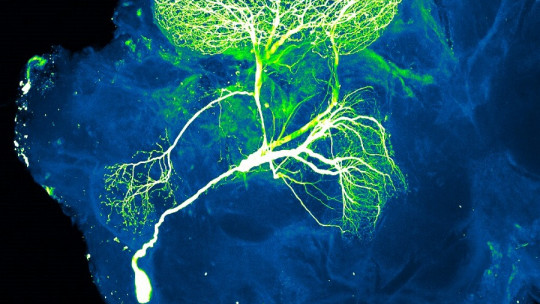
Imagine you’re handed a single neuron, tiny beyond imagining, with a long cable of an axon that branches into hundreds of fine endings. Each ending touches a different target: one a muscle fiber, another a neighbor in the spinal cord, another a cell in a distant corner of the brain. A natural question comes to mind. Does that neuron say the same thing at every ending? Or can it whisper one chemical message to one partner and shout a different one at another? For about ninety years, the textbook answer was a confident, simple one. The cell speaks with a single voice. That claim has a name, Dale’s principle, and it shaped how generations of scientists drew the brain’s wiring diagrams.
Here’s the twist. The principle is both extremely useful and, in its original form, wrong, and the way it went wrong is more interesting than a clean confirmation would have been. Neurons, it turns out, often release more than one chemical messenger, sometimes including both excitatory and inhibitory ones, and the old slogan “one neuron, one transmitter” has quietly been retired. What survived is subtler and still matters for neuroscience, computer models of the brain and drug design. The history is also a small case study in how scientific shorthand hardens into dogma, and then gets gently, necessarily taken apart.
So what exactly did Dale say, and what do we say now?
This guide explains what Dale’s principle is, where it came from, how it’s been revised, and what it says about neurons today.
What is Dale’s principle?
Dale’s principle is the idea that a neuron releases the same chemical messenger, or the same set of messengers, at all of its axon terminals. In its older, stricter form it was often summarized as “one neuron, one neurotransmitter.” Modern neuroscience keeps a revised version: a neuron releases the same set of transmitters at its endings, which may include more than one.
How many of these have you been "meaning to read" for months?
- 1
 TarcherThe Artist's Way30th Anniversary EditionListen Free On Audible
 - 2
 New Harbinger PublicationsThe Dialectical Behavior Therapy Skills WorkbookPractical DBT Exercises for Learning Mindfulness, Interpersonal Effectiveness, Emotion Regulation...Listen Free On Audible
 - 3
 New Harbinger PublicationsAdult Children of Emotionally Immature ParentsHow to Heal from Distant, Rejecting, or Self-Involved ParentsListen Free On Audible
Both versions say something about the neuron’s chemical identity. A neuron isn’t a blank switch that can be set to different chemicals depending on its target; it manufactures, packages and releases particular substances, and that repertoire is a stable feature of the cell. That’s why neuroscientists describe cells as “glutamatergic” (releasing glutamate), “GABAergic” (releasing GABA), “cholinergic” (acetylcholine), “dopaminergic” (dopamine) and so on. The labels assume that a cell has a characteristic transmitter identity.
It’s worth separating what the principle says from what people sometimes assume it says. It concerns the presynaptic neuron, the sender. It does not claim that a transmitter has the same effect everywhere. The effect depends on the receptors on the receiving cell. A transmitter can excite one cell and inhibit another, as acetylcholine does at skeletal muscle and at the heart. Britannica’s summary puts it plainly: Dale’s principle refers only to the presynaptic neuron, since the responses of different postsynaptic receptors to a single neurotransmitter can vary.
The principle also isn’t a law of physics. It started as a cautious inference about how cells work, got hardened into a rule by textbook repetition, and was later pried open by new methods. A recent commentary in the Journal of Neurophysiology even titled itself “What Dale never said,” pointing out that the rigid “one-neuron-one-neurotransmitter” version attributed to Dale was a later simplification.
Why does a century-old idea about chemistry still matter? Because the way we classify neurons shapes how we understand circuits, disease and treatments. If neurons have stable chemical identities, you can map the brain in terms of excitatory and inhibitory cells and design drugs that target particular systems. If they can switch identities or release multiple transmitters, that map becomes more complicated, and some simple stories about brain chemistry need caution.
Think of a restaurant kitchen as an analogy, with the usual caveat that analogies bend. The old view says each cook makes one dish and sends it out every door. The modern view says each cook has a signature set of dishes, sometimes a main and a side, and mostly sends the same combination to every table, though occasionally to different tables in different proportions.
Now for the history, which is a story about a frog heart, a British pharmacologist and a Nobel Prize.
Who was Henry Dale, and how did the principle get its name?
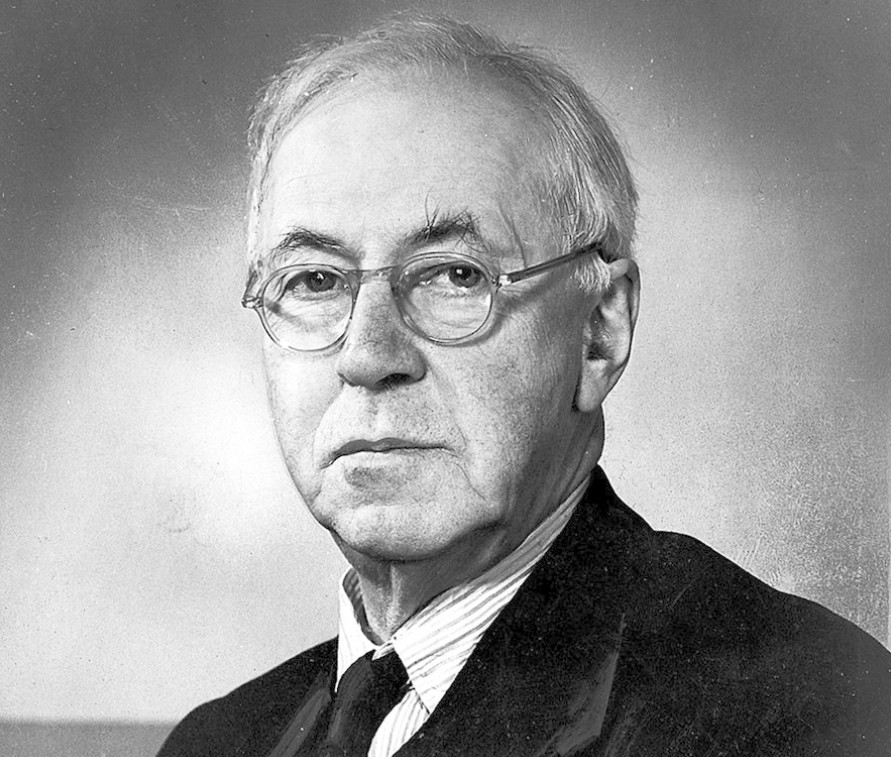
Sir Henry Dale was a British pharmacologist who shared the 1936 Nobel Prize in Physiology or Medicine for discoveries on the chemical transmission of nerve impulses. The principle that bears his name was suggested by Dale in the 1930s but formalized and named by the neurophysiologist John Eccles in the 1950s.
Start with the discovery that made the idea possible: neurons talk to their targets with chemicals. In 1921, Otto Loewi reported a famous experiment on frog hearts. He stimulated the vagus nerve of one heart, which slowed it, then transferred the fluid bathing that heart to a second heart, which slowed too. Something released by the nerve, which he called “Vagusstoff,” carried the message. It was later identified as acetylcholine. Loewi’s own account claimed that the idea for the experiment came to him in a dream, a story that scientists enjoy retelling.
Henry Dale had been studying acetylcholine since 1914, when he characterized its effects and distinguished its “muscarine-like” and “nicotine-like” actions, which we now understand as acting on two different families of receptors. He went on to show, with colleagues, that acetylcholine is released at the junctions between motor nerves and skeletal muscle. Dale and Loewi shared the 1936 Nobel Prize for this work on chemical transmission, which helped settle a long argument between those who thought nerves communicate by electricity and those who thought they communicate by chemicals.
The step toward the “principle” came in the 1930s. Dale reasoned that a neuron is a single metabolic unit, with its machinery for making chemicals in the cell body, so it would be strange if one neuron used different transmitters at different endings. In a 1935 article, he suggested that if a transmitter had been identified at one terminal of a neuron, it was probably also the transmitter at its other terminals. For example, if the substance released by sensory nerve endings in the skin was identified, he thought it would probably prove to be the transmitter at the central terminals too. It was an inference, offered cautiously.
The term “Dale’s principle” came later. In 1954, John Eccles and colleagues studied how motor neuron branches in the spinal cord excite small cells called Renshaw cells. They found that acetylcholine mediated the excitation at these collateral branches, just as it does at the muscle. They wrote that this was in conformity with Dale’s principle that the same chemical transmitter is released from all the synaptic terminals of a neuron, and the name stuck. Eccles later helped popularize it in his 1957 book on nerve cells. Note that his formulation, in some of its wording, spoke of “the same transmitter substance or substances,” leaving room for more than one.
Many later texts compressed this into the cleaner, stricter “one neuron, one transmitter.” That compression is why some historians say that the strong version was never quite what Dale or even Eccles had claimed, and why the principle has been “revised” as new data came in.
Consider a neuroscience student, Aisha, an illustrative composite, memorizing the rule for an exam. She’ll probably write “one neuron, one transmitter.” A good instructor will add a footnote that begins with the word “except.”
What does Dale’s principle say about neurons?
It says that a neuron has a stable chemical identity: what it makes and releases is a characteristic of the cell, not something that changes ending by ending. That idea underlies how neuroscientists classify cells, trace circuits and interpret drugs.
Here are the main implications that follow when the principle holds, even in its softened form:
- Neurons can be classified by transmitter: glutamatergic, GABAergic, cholinergic, dopaminergic, serotonergic and so on, a classification that appears in nearly every neuroscience textbook.
- Circuit diagrams can carry signs: if you know a neuron’s transmitter, you can often predict whether it will excite or inhibit its targets, which makes wiring diagrams interpretable. In the cortex, glutamate neurons are typically excitatory, and GABA neurons inhibitory.
- The cell body predicts the terminals: finding out what a neuron’s soma makes tells you something about what its far-flung endings release, which is practical for researchers who can’t observe every branch.
- Pathways can be targeted by drugs: drugs that act on a transmitter system will affect the neurons that use that transmitter, which is the logic behind much of psychopharmacology.
- Developmental identity matters: neurons acquire a transmitter identity during development under genetic control, and it’s mostly maintained for life.
In the cortex, about four out of five neurons are excitatory pyramidal cells that release glutamate, and the rest are mostly inhibitory interneurons that release GABA, a ratio often cited as roughly 80 to 20, though it varies by region and species. The balance between excitation and inhibition is central to healthy brain function, and imbalances are implicated in epilepsy, autism and other conditions. Dale’s principle helped make it possible to speak of neurons as “excitatory” or “inhibitory,” a shorthand that still guides research and computational modeling.
It’s easy to see why the principle was attractive. It simplified a bewildering system. If every neuron used one transmitter at every ending, then understanding the brain became a matter of mapping which cell type connects to which. And for many neurons, it holds up well: spinal motor neurons release acetylcholine at the muscle and at their collateral branches; many cortical neurons release only glutamate or only GABA.
But simplicity has a price, and the cost was paid when neuroscientists began looking more closely. The “one neuron, one transmitter” idea was an assumption implied by the principle, not a direct consequence of it, and as methods improved, scientists found neurons that violated it. Britannica puts it directly: the discovery of more than one type of neuroactive substance in one set of axon terminals disproved the assumption that a single neuron synthesizes and secretes a single neurotransmitter.
The next sections trace how that happened and what remains.
How strict is Dale’s principle: the strong form versus the revised form?
The strong form, “one neuron, one transmitter,” is false. The revised form, in which a neuron releases the same set of transmitters at all of its terminals, is a better description of many neurons but has its own exceptions. The distinction matters because many textbooks and websites still state the strong version.
| Version of the principle | What it claims | Status today |
|---|---|---|
| Strong form (one neuron, one transmitter) | Each neuron makes and releases only one transmitter, at all endings | Disproved by cotransmission |
| Eccles’ formulation (same substance or substances) | A neuron releases the same transmitter, or the same set of transmitters, at all its terminals | Widely used; challenged by evidence of segregation |
| Modern working view | Neurons have a characteristic repertoire of transmitters, often more than one; proportions and release can vary by terminal | Current consensus, with ongoing refinement |
The Italian neuroscientist Piergiorgio Strata and the physiologist Robin Harvey wrote a short 1999 note simply titled “Dale’s principle” in Brain Research Bulletin, recounting its origins. Like several later reviews, the account treats the rule as an interpretation of Dale’s lectures and writings, tightened over time, and not as a verbatim statement from Dale, and it recognizes that the principle has to be restated in light of evidence for coexisting transmitters. The “principle” is, in other words, a historical label for a loosely worded inference, not a precisely stated law.
How should we handle a rule that’s partly right? Scientists generally treat it as a useful default, not a guarantee. When you meet a new neuron type, Dale’s principle is a good first guess about its chemistry, and if it’s wrong, you’ve discovered something interesting. In that sense, it’s a heuristic that helps organize research.
Another subtlety: the revised version assumes that neurons send the same set of transmitters from all terminals. But there are cases in which different terminals of the same neuron appear to release different combinations, a phenomenon sometimes called transmitter segregation. For example, work from the laboratory of Tomas Hökfelt reported that certain peptides are sorted into some endings but not others. Evidence like this suggests that even the softened principle isn’t universal.
It also helps to separate three concepts that often get mixed up. Co-localization means that two substances are found in the same cell or terminal. Co-release means that both are actually released. Co-transmission means that both have functional effects on the target. Finding two chemicals in a terminal doesn’t prove either of the others, a caution that careful reviews of the field repeat. A transmitter may be present but not released, or released but without effect.
Imagine a researcher, Leo, an illustrative composite, who stains a neuron and finds two markers in its terminals. Before writing “co-transmission” in his paper, he’d need to show release and an effect on the postsynaptic cell. That’s why the phrase “Dale’s principle is wrong” is too blunt: the evidence varies by neuron type, brain region and transmitter, and some neurons do follow the original rule neatly.
The next section looks at the first big challenge to the strong form, and it began with an unexpected molecule: ATP.
What is co-transmission, and who discovered that neurons release more than one chemical?
Co-transmission is the release of two or more signaling molecules from the same neuron. The idea was proposed in 1976 by the pharmacologist Geoffrey Burnstock and then supported by studies in the late 1970s and 1980s showing that peptides coexist with classical transmitters in the same cells.
Geoffrey Burnstock, a British-Australian scientist who spent much of his career studying the autonomic nervous system, published a commentary in 1976 with the title “Do some nerve cells release more than one transmitter?” He reviewed experiments suggesting that certain nerves release ATP, the molecule better known as the cell’s energy currency, together with a classical transmitter such as noradrenaline or acetylcholine. The idea sounded heretical to many, because ATP seemed too ordinary a molecule to be a messenger. Burnstock argued that the strict reading of Dale’s principle needed re-examination and proposed the term “cotransmission” for the phenomenon. His later work on purinergic signaling, in which ATP and its relatives act as extracellular messengers, helped establish a whole field, and it became widely accepted that many nerves use ATP as a co-transmitter.
At about the same time, Tomas Hökfelt and colleagues in Sweden were using a new technique, immunohistochemistry, which uses antibodies to visualize particular molecules in tissue. In a 1980 paper in Nature, they showed that neuropeptides, small protein-like messengers, occur in the same neurons as classical transmitters such as noradrenaline, serotonin and acetylcholine. Over the next decades, many more combinations were found, so that co-localization of transmitters became, as one review put it, the norm and not the exception.
What do co-transmitters do? In several systems, they act on different timescales. A fast classical transmitter might produce a rapid, brief effect through ion channels, while a co-released peptide acts slowly, through receptors that trigger longer-lasting changes. A neuron firing at a low rate might release mostly the fast transmitter, while a high-frequency burst might release the peptide too, because peptide-containing vesicles often need stronger stimulation. That gives a single neuron a richer vocabulary: the message depends on how it fires.
Consider the sympathetic nerves that control blood vessels, an example from physiology. Stimulation releases noradrenaline, which produces a sustained constriction, along with ATP, which produces a quick one, and neuropeptide Y, which adds a slow, long-lasting effect. A single nerve ending carries three signals at once. This isn’t an exotic oddity; it’s a standard feature of the autonomic nervous system.
The discovery didn’t refute Dale’s insight about metabolic unity, which is the idea that a neuron uses the same machinery throughout. It refuted a narrow reading of it. The revised principle, that neurons release the same set of transmitters at all their endings, fits much of the early co-transmission data, since the same combination was often found at all terminals.
But the story didn’t stop there. In the central nervous system, scientists discovered something more surprising: neurons that release transmitters with opposite effects.

Can one neuron be both excitatory and inhibitory?
In some cases, yes. A growing body of research shows that certain neurons co-release excitatory and inhibitory transmitters, such as glutamate and GABA, or dopamine together with glutamate or GABA. This strongly challenges the idea that a neuron is either “excitatory” or “inhibitory.”
A key example involves dopamine neurons. In 2010, Thomas Hnasko and colleagues, including Robert Edwards, used genetic tools to remove the vesicular glutamate transporter VGLUT2 specifically from dopamine neurons in mice. In normal mice, dopamine neurons that project to a region called the nucleus accumbens can release glutamate as well as dopamine, producing fast excitatory responses in their targets. When VGLUT2 was deleted, that glutamate signal disappeared. The finding indicated that midbrain dopamine neurons use glutamate as a co-transmitter, in a pattern that varies by projection: those going to the nucleus accumbens shell co-release glutamate, while those going to the dorsal striatum mostly release dopamine alone.
Other work showed that dopamine neurons can also release GABA, producing fast inhibition of striatal cells, in a manner that doesn’t depend on the usual GABA-making machinery. The release of dopamine and GABA tends to occur on different timescales, with dopamine outlasting GABA by seconds, suggesting that the two may be packaged in largely separate vesicle populations. Other populations that were once thought to release only glutamate, acetylcholine or histamine have been found to release GABA as well.
In 2012, Hnasko and Edwards reviewed the field in the Annual Review of Physiology, in an article on neurotransmitter co-release. They described how common combinations include glutamate with GABA, with dopamine, with acetylcholine and with serotonin, and discussed the mechanisms by which a single neuron can package two transmitters into the same vesicles or into separate ones. They also stressed that co-release isn’t just a curiosity: it may let a neuron fine-tune the balance between excitation and inhibition at its targets, and it may be regulated by activity and development.
More recent studies using sensitive electrophysiology suggest that co-release of glutamate and GABA may be widespread in the brain, appearing in many areas and in different cell types. In some terminals, the two are released from the same vesicles; in others, they come from separate vesicles, and the properties of the two signals differ in ways that allow frequency-dependent filtering of inputs.
Does this “break” Dale’s principle? It depends on which version you hold. It certainly breaks the strong form and the idea that neurons are strictly excitatory or inhibitory. It’s compatible with the Eccles-style version that says the same set of transmitters is released at every terminal, as long as the set is the same. But if different terminals of the same neuron release different mixtures, as some of the dopamine data suggest, then even the softer version is stretched. A 2011 review of dopamine-glutamate co-transmission concluded that Eccles’s version of the principle still holds in some, but not all, neuromodulatory projections.
Think of a thermostat that sometimes both heats and cools, depending on how fast it receives the signal. That sounds odd, until you realize the brain isn’t a thermostat. It’s a system that keeps itself in balance on millisecond timescales, and a neuron that can add a little excitation and a little inhibition at once is a refined tool for that job.
If one chemical can excite and inhibit, how can Dale’s principle be useful at all?
Because the principle is about the sender, not the receiver, and a good deal of the “excitatory or inhibitory” question is decided on the receiving end. The same transmitter can have opposite effects depending on which receptor it meets, so the neuron’s chemical identity and the effect on its target are related but not identical.
Return to Dale’s own early work. In 1914, Henry Dale described two actions of acetylcholine and related compounds, one resembling the effects of muscarine (a mushroom toxin) and one resembling those of nicotine. We now know that these correspond to two families of receptors. Nicotinic receptors are ion channels that produce fast excitation, for instance at the neuromuscular junction, where acetylcholine makes muscles contract. Muscarinic receptors are G-protein-coupled receptors with slower, more varied effects. In the heart, muscarinic receptors mediate the slowing effect of vagus nerve stimulation, which is exactly what Loewi saw in his frog hearts. So the same transmitter, acetylcholine, excites muscle and inhibits the heart rate, without any inconsistency.
The same applies in the brain. Glutamate is excitatory at most of its receptors, but it can also act through metabotropic receptors to produce slower, modulatory effects, and in some circumstances those can reduce excitability. GABA is generally inhibitory in adult neurons, but in immature neurons or in certain pathological states it can be depolarizing, because of differences in chloride balance inside the cell. Dopamine, serotonin and noradrenaline have different effects at different receptor subtypes, some excitatory and some inhibitory, even within the same brain region.
So a statement like “dopamine is the pleasure chemical” or “glutamate is the excitatory transmitter” is shorthand, useful for orientation and risky as a literal rule. The effect of a neuron’s signal is the product of several factors: which transmitters are released, in what amounts, at which synapses, onto which receptors, with what timing. Dale’s principle helps with only the first part.
That’s also why the question “Is this neuron excitatory or inhibitory?” is best answered by looking at what it does to its targets, not just by naming its transmitter. For glutamate and GABA neurons in the cortex, the shorthand works very well. For neuromodulatory neurons, such as those releasing dopamine, serotonin or acetylcholine, the effect on a target depends heavily on the receptor and the circuit.
A practical way to use the principle, then: treat transmitter identity as a strong clue, not a verdict. Ask, “What does this neuron release? What receptors does its target express? What else does it co-release?” Those three questions capture most of what a modern neuroscientist would want to know.
It’s a bit like reading a person’s mail. Knowing the sender tells you a lot, and the content, the recipient and the context tell you the rest.

Why does Dale’s principle matter for brain models and artificial intelligence?
Because it constrains how realistic models of the brain should be built. In biological networks, a given neuron is generally either excitatory or inhibitory in its outputs, whereas most artificial neural networks let a unit send positive weights to some targets and negative weights to others. Imposing Dale’s principle on models makes them more brain-like, with consequences for how they learn.
In computational neuroscience, models of recurrent networks that obey the principle are called excitatory-inhibitory (E-I) networks. In a paper published in 2016 in PLoS Computational Biology, H. Francis Song, Guangyu Robert Yang and Xiao-Jing Wang introduced a flexible framework for training recurrent neural networks with separate excitatory and inhibitory units to perform cognitive tasks. Their networks obeyed Dale’s principle, with each unit’s outgoing connections having a single sign, and they could be trained to carry out tasks such as perceptual decisions and working memory, producing activity patterns that resembled those recorded from real neurons in animals. The point was practical: if you want a model to say something about how the brain solves problems, it helps if the model respects the constraints of the brain’s hardware.
Why is this not trivial? Standard machine-learning training methods adjust each connection weight freely and can easily flip a weight’s sign. Enforcing Dale’s principle means that the weights from a given unit must stay positive or negative, which constrains learning and can make it harder. Researchers have studied how to train such networks and how the constraint affects performance, and the findings so far are mixed: in some tasks, E-I constraints cost little, and in others they limit performance or change the solutions the network finds. This remains an active area of research.
The constraint has other implications. In a network with excitatory and inhibitory units, stability becomes a challenge: strong excitation can run away, and inhibition must balance it. Real brains maintain a delicate “E-I balance,” and models that respect Dale’s principle naturally face the same problem, which helps explain phenomena like oscillations and the effects of disrupted inhibition. Modeling studies have used such networks to explore how epilepsy-like activity might arise when inhibition fails.
A word of caution is needed. Even when a model obeys Dale’s principle in its simplest form, the real brain adds co-release, neuromodulation, dendritic computation and many cell types. A model that respects the principle isn’t automatically realistic; it’s just more constrained in one way. The “one sign per neuron” rule is a convenient simplification that captures a lot of cortical circuitry, but it can’t handle the cases where neurons release both kinds of transmitter.
Picture a graduate student, Maya, an illustrative composite, building an E-I network. She notes that the rule makes her model less flexible but more interpretable: she can read off which units excite and which inhibit. That interpretability is a real benefit, and one reason many neuroscientists favor Dale-constrained models even when they cost some performance.
So the old principle has found a new life in the computer lab, which Dale could hardly have anticipated.
What does Dale’s principle mean for mental health and drug treatment?
It underlies the way drugs are designed and described: many medications target a particular transmitter system, on the assumption that neurons using that transmitter form a coherent pathway. But the discovery of co-transmission is a reminder that “chemical” stories about mental illness are simplifications, and that effects of drugs on circuits are more complicated than a single transmitter label suggests.
The standard story goes like this: antidepressants such as SSRIs act on serotonin systems, antipsychotics on dopamine receptors, stimulants on dopamine and noradrenaline, benzodiazepines on GABA receptors. Dale’s principle supports a certain tidy logic: if you alter a transmitter system, you alter the pathways that use that transmitter. This logic has produced effective treatments, and it explains many drug effects and side effects.
Co-transmission adds complications. If dopamine neurons also release glutamate and GABA, then drugs that change dopamine signaling might also change those co-transmitters’ effects, and the contribution of each to behavior or symptoms is hard to disentangle. Some researchers suggest that glutamate co-release from dopamine neurons may help transmit rapid, reward-related signals in circuits implicated in motivation and addiction, while GABA co-release from dopamine neurons may shape the activity of striatal cells. These are active research questions. The details haven’t yet been translated into specific treatments, and anyone claiming otherwise is running ahead of the evidence.
It’s also a caution against the popular “chemical imbalance” explanation of conditions like depression, which implies that a single transmitter is too low or too high. Current research doesn’t support such a simple account. Mood disorders involve many systems, including multiple transmitters, circuits, stress hormones, inflammation and life circumstances. Antidepressants can help many people, but the fact that a drug acts on serotonin doesn’t prove that low serotonin caused the problem, just as aspirin relieving a headache doesn’t prove the headache was caused by low aspirin.
For people taking medication, the practical takeaways are modest but real:
- Drug effects are circuit effects: medications change how networks behave, which is why they can take weeks to work and can have varied side effects.
- Individual response varies: because transmitter systems overlap and interact, two people with the same diagnosis can respond differently to the same drug.
- Don’t self-adjust: decisions about starting, switching or stopping a medication belong with a prescriber, since abrupt changes can cause withdrawal or relapse.
- Be wary of simple chemical stories: supplements or products marketed as “boosting” a single neurotransmitter usually go far beyond what evidence supports.
If you’re curious about how your own treatment works, a good question for a doctor or pharmacist is, “What does this medication act on, and what do we know and not know about why it helps?” A thoughtful clinician will give a candid answer, including the parts that are still uncertain.
Dale’s principle is a piece of basic science with real consequences at the bedside. That’s one reason it deserves to be taught accurately, caveats included.
What is the best way to remember Dale’s principle today?
Remember it as a useful default with a long list of interesting exceptions: neurons usually have a characteristic chemical identity and tend to release the same set of messengers at their endings, but that set can include more than one chemical, and the effect on the receiving cell depends on its receptors.
If you’re a student preparing for an exam, a safe version to write is something like this: “Dale’s principle states that a neuron releases the same neurotransmitter or set of neurotransmitters at all of its synaptic terminals; the original ‘one neuron, one transmitter’ formulation has been superseded by evidence for co-transmission.” That sentence will satisfy most instructors, and it shows that you know the history.
It helps to keep a short mental checklist:
First, Dale’s principle concerns the sender, not the receiver. Second, the strict one-transmitter version is outdated. Third, co-localization, co-release and co-transmission are different things, and each needs separate evidence. Fourth, some neurons release both excitatory and inhibitory messengers, which complicates the simple “excitatory or inhibitory” labels. Fifth, the principle is still valuable as a guide to classification and modeling. And sixth, as the title of a recent commentary reminds us, much of what is attributed to Dale was a later simplification of what he actually said.
There’s a wider lesson as well. Scientific principles have life cycles. They begin as careful inferences, harden into slogans, get tested against better tools and then settle into something more nuanced. Dale’s principle has gone through all of these stages, and it’s still doing useful work. That arc, from “a neuron has one voice” to “a neuron has a repertoire,” is also a reminder of why it pays to ask what a rule actually claims and what evidence supports it.
If you’d like to go further, three directions are worth exploring: the history of chemical transmission and the “soup versus spark” debate that preceded it; the molecular machinery that packages transmitters into vesicles, and how some transporters allow mixing; and the modern work on neuromodulator co-release in motivation and learning. Each starts from a simple question: what exactly is a neuron saying, and to whom?
And if you ever find yourself staring at a diagram that shows neurons as neat green and red arrows, excitatory and inhibitory, remember that the picture is a useful map, not the territory. The territory is messier, more interesting, and still being mapped.
FAQs about Dale’s Principle
What is Dale’s principle in simple terms?
It’s the idea that a neuron uses the same chemical messenger, or the same set of messengers, at all of its endings. The older version said “one neuron, one transmitter.” The modern version allows a neuron to release more than one chemical, as long as it releases the same combination at its terminals. It describes the sender, the neuron releasing the chemical, and says nothing about how the receiving cell will respond, which depends on its receptors.
Who discovered Dale’s principle?
Sir Henry Dale, a British pharmacologist who shared the 1936 Nobel Prize with Otto Loewi, suggested in the 1930s that a neuron is likely to release the same transmitter at all its terminals. The name “Dale’s principle” came from John Eccles, who used it in 1954 while describing acetylcholine release from motor neuron branches in the spinal cord. Historians point out that Dale’s own statements were more cautious than the strict “one neuron, one transmitter” rule later attributed to him.
Is Dale’s principle still true?
Partly. The strong form, one transmitter per neuron, is false, because many neurons release more than one chemical. The revised form, that a neuron releases the same set of transmitters at all its terminals, holds for many neurons but has exceptions, such as cases in which different terminals release different mixtures. Most neuroscientists treat it as a useful default and a starting hypothesis, not an exceptionless law.
What is co-transmission?
Co-transmission is the release of two or more signaling molecules from the same neuron, each of which can affect the receiving cell. Geoffrey Burnstock proposed it in 1976, suggesting that ATP is released along with classical transmitters, and Tomas Hökfelt and colleagues showed in 1980 that neuropeptides coexist with classical transmitters in the same cells. Co-transmitters often act on different timescales, with fast and slow effects, which gives a neuron a richer repertoire of signals.
Can a neuron be both excitatory and inhibitory?
Some can, by releasing both excitatory and inhibitory transmitters. Studies led by Thomas Hnasko and Robert Edwards showed that dopamine neurons can co-release glutamate, which is excitatory, and other work shows they can also release GABA, which is inhibitory. The same transmitter can also excite one cell and inhibit another, depending on the receptor, as acetylcholine does at muscle and at the heart. So the labels “excitatory” and “inhibitory” are best seen as tendencies rather than absolute categories.
Why does Dale’s principle matter for artificial neural networks?
Standard artificial networks let a unit send positive and negative weights, which real neurons mostly can’t do. Models that obey Dale’s principle give each unit outputs of a single sign, making them more brain-like and more interpretable. A 2016 paper by H. Francis Song and colleagues showed how to train recurrent networks with separate excitatory and inhibitory units on cognitive tasks. The constraint can make training harder, but it helps researchers compare models with real brain activity.
Does Dale’s principle explain how psychiatric drugs work?
Only in part. It underlies the idea that drugs acting on a transmitter system affect the pathways using that transmitter, which has guided drug design. But co-transmission and receptor diversity mean that drug effects on circuits are more complicated than a single-transmitter story. It’s also why simple explanations such as “depression is a chemical imbalance” overreach: many systems are involved. Questions about a specific medication are best discussed with a prescriber.
What is the difference between co-release and co-localization?
Co-localization means two substances are found in the same neuron or terminal. Co-release means both are actually released. Co-transmission means both are released and have functional effects on the target cell. Finding two chemicals in a terminal doesn’t prove release, and release doesn’t prove an effect, so researchers need separate evidence for each step before concluding that a neuron uses more than one transmitter to signal.
Bibliography
- Burnstock, G. (1976). Do some nerve cells release more than one transmitter? Neuroscience, 1(4), 239-248.
- Dale, H. H. (1914). The action of certain esters and ethers of choline, and their relation to muscarine. Journal of Pharmacology and Experimental Therapeutics, 6(2), 147-190.
- Dale, H. H. (1935). Pharmacology and nerve-endings. Proceedings of the Royal Society of Medicine, 28(3), 319-332.
- Eccles, J. C., Fatt, P., & Koketsu, K. (1954). Cholinergic and inhibitory synapses in a pathway from motor-axon collaterals to motoneurones. The Journal of Physiology, 126(3), 524-562.
- Hnasko, T. S., Chuhma, N., Zhang, H., Goh, G. Y., Sulzer, D., Palmiter, R. D., Rayport, S., & Edwards, R. H. (2010). Vesicular glutamate transport promotes dopamine storage and glutamate corelease in vivo. Neuron, 65(5), 643-656.
- Hnasko, T. S., & Edwards, R. H. (2012). Neurotransmitter corelease: Mechanism and physiological role. Annual Review of Physiology, 74, 225-243.
- Hökfelt, T., Johansson, O., Ljungdahl, A., Lundberg, J. M., & Schultzberg, M. (1980). Peptidergic neurones. Nature, 284(5756), 515-521.
- Loewi, O. (1921). Über humorale Übertragbarkeit der Herznervenwirkung. Pflügers Archiv für die gesamte Physiologie des Menschen und der Tiere, 189, 239-242.
- Song, H. F., Yang, G. R., & Wang, X.-J. (2016). Training excitatory-inhibitory recurrent neural networks for cognitive tasks: A simple and flexible framework. PLoS Computational Biology, 12(2), e1004792.
- Strata, P., & Harvey, R. (1999). Dale’s principle. Brain Research Bulletin, 50(5-6), 349-350.
Use this citation format to reference the article clearly and help readers find the original source.
PsychologyFor. (2026). Dale’s Principle: What it is and What it Says About Neurons. PsychologyFor. https://psychologyfor.com/dales-principle-what-it-is-and-what-it-says-about-neurons/