

See more of our articles in your search results.
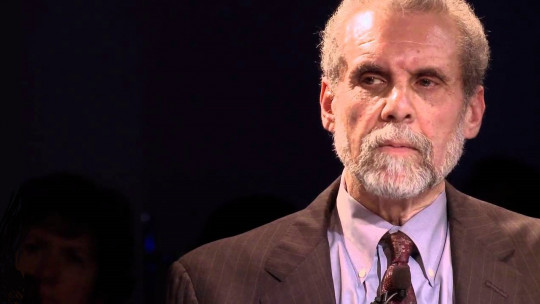
Pick up any business book from the last thirty years and you’ll probably encounter references to “emotional intelligence” or “EQ.” Walk into any corporate training session on leadership and someone will inevitably mention self-awareness, empathy, or emotional regulation. Ask a teacher about social-emotional learning and they’ll have curriculum designed around these concepts. All of this—the entire framework that redefined how we think about intelligence, success, and human capability—traces back to one person: Daniel Goleman.
Before 1995, intelligence meant IQ. Period. You were born with a certain cognitive capacity, and that number pretty much determined your potential. Emotions? Those were obstacles to rational thinking, things smart people learned to suppress or ignore. Success came from being the smartest person in the room, not the most emotionally aware one.
Then Goleman published a book that fundamentally changed the conversation. Not because the ideas were entirely new—researchers had been studying emotional and social competencies for years—but because Goleman synthesized decades of research into an accessible framework and made a compelling case that these “soft skills” weren’t soft at all. They were critical determinants of success in life, work, and relationships. IQ might get you in the door, but emotional intelligence determines how far you go once you’re inside.
The book became a phenomenon. It sat on the New York Times bestseller list for a year and a half. It’s been translated into over forty languages. TIME magazine listed it as one of the most influential business books ever written. And suddenly, everyone was talking about emotional intelligence—Fortune 500 companies, schools, therapists, parents, coaches. The concept went from academic obscurity to cultural ubiquity within a few years.
But who is Daniel Goleman? How did a science journalist with a PhD in psychology become one of the most influential voices in how we think about human potential? What shaped his thinking? What drove him to spend years researching meditation and consciousness before turning his attention to emotions? And what’s he been up to since that landmark 1995 book made him famous?
How many of these have you been "meaning to read" for months?


What I want to do here is tell you Goleman’s story—not just the Wikipedia facts, but the arc of a life spent exploring what makes humans tick, from his unconventional education studying with Hindu teachers in India to his years reporting on brain science for the New York Times to his current work helping organizations build emotionally intelligent cultures. Because understanding where Goleman came from helps you understand why emotional intelligence resonated so powerfully and why his work continues shaping how we think about ourselves.
Early Life: Growing Up in an Academic Family
Daniel Goleman was born March 7, 1946, in Stockton, California, a small city tucked away in California’s Central Valley, far from the coastal urban centers. His parents were both college professors at the University of the Pacific, a small private university in Stockton. His father Irving taught literature and writing, his mother Fay taught sociology, and both had worked hard to secure their own educations and were deeply committed to teaching. This wasn’t a family where education was just valued—it was central to their identity and purpose.
Growing up in an academic household shapes you. Dinner conversations revolve around ideas. Books are everywhere. Intellectual curiosity is modeled daily. Goleman’s parents believed passionately in providing top-notch educational opportunities to the widest possible range of people, a value that would later influence Goleman’s own work making psychological research accessible beyond academia.
Goleman was a voracious reader from an early age and excelled academically. He received an endowed scholarship to attend Amherst College in Massachusetts, one of the country’s elite liberal arts institutions. There he thrived, excelling in both humanities and sciences courses and graduating magna cum laude in 1968. He was clearly destined for academic success, but what path would he take?
He wanted to study the brain, but he didn’t want to approach it purely through reductionist neuroscience. Coming from a humanities background through his father, Goleman sensed that the brain—and consciousness, and human experience—was far more complicated than what laboratory science alone could capture. This tension between scientific rigor and humanistic breadth would define his career.
The India Years: Eastern Philosophy Meets Western Psychology
After graduating from Amherst, Goleman made a decision that was unconventional for an aspiring psychologist in the late 1960s: he went to India. Not for a semester abroad, but for an extended immersion in studying Eastern mysticism and meditation practices. He studied under Neem Karoli Baba, a Hindu teacher and mystic who had a profound influence on several Westerners who would go on to bridge Eastern contemplative practices with Western psychology.
This wasn’t casual tourism or superficial exploration. Goleman dove deep into meditation practice and Eastern philosophical traditions, trying to understand consciousness from the inside out through direct experience rather than just through external observation and measurement. This period fundamentally shaped his thinking about the mind, awareness, and the possibility of intentionally cultivating mental and emotional capacities.
The experience would eventually lead to his first book, “The Varieties of Meditative Experience” (later republished as “The Meditative Mind”), where he surveyed and compared roughly a dozen different meditation systems from various traditions. The book’s central insight—that all meditation systems involve retraining attention through either concentration or mindfulness—anticipated later neuroscience research showing meditation’s effects on brain structure and function.
This India period also connected Goleman with a network of fellow Westerners exploring contemplative science, creating relationships that would last throughout his career. Many of his later collaborators and friends came from this community of people trying to understand Eastern wisdom through Western scientific lenses.
Harvard and the Path to Psychology
Goleman returned from India and entered Harvard’s PhD program in clinical psychology and personality development. At Harvard, he was a Ford Foundation Fellow, studying under some of the leading psychologists of the era. He completed both his MA and PhD there, focusing on clinical psychology while maintaining his interest in consciousness and meditation.
Harvard in the late 1960s and early 1970s was an intellectually vibrant place, with psychology beginning to incorporate insights from cognitive science, neuroscience, and even contemplative traditions. Goleman was positioned at the intersection of these converging streams, studying clinical applications while remaining curious about consciousness, meditation, and human potential.
After completing his doctorate, Goleman taught briefly at Harvard as a visiting lecturer. But academic psychology wasn’t quite the right fit. The academic world’s focus on narrow specialization and methodological rigor, while valuable, felt constraining to someone with Goleman’s broad interests in connecting ideas across disciplines. He wanted to explore the full range of human psychology—emotion, consciousness, social behavior, contemplative practices—and translate research findings for broader audiences.
This tension between academic depth and public accessibility would resolve itself in an unexpected direction: journalism. Rather than choosing between being a pure researcher or a pure popularizer, Goleman would become a bridge, reporting on cutting-edge psychological and neuroscience research for general audiences while maintaining enough rigor to be taken seriously by the scientific community.
The New York Times Years: Science Journalism as a Calling
Goleman started his journalism career at Psychology Today before being hired by the New York Times in 1984 as a science writer covering brain and behavioral sciences. This position turned out to be perfect for his particular mix of interests and talents. He could explore the full breadth of psychological research—cognition, emotion, social behavior, neuroscience, consciousness—and explain it to intelligent lay readers without dumbing it down.
For twelve years, Goleman wrote for the Times, producing probing, incisive essays on cutting-edge brain research. His work was good enough to earn two Pulitzer Prize nominations for general nonfiction—a remarkable achievement for science journalism. He had found his voice: taking complex research and making it accessible and relevant without losing accuracy or nuance.
This journalism work was more than just a job; it was an education. Goleman interviewed hundreds of researchers, read thousands of studies, and developed expertise across the entire landscape of psychology and neuroscience. He was positioned to see patterns and connections that researchers focused on narrow specialties might miss. He could see how emotion research connected to neuroscience research connected to social psychology research connected to workplace performance studies.
And he was noticing something interesting: a growing body of research suggesting that emotional and social competencies—self-awareness, emotional regulation, empathy, social skills—predicted life outcomes as much or more than traditional measures of intelligence. Different researchers were studying different pieces of this puzzle, but nobody had put it all together into a coherent framework.
The Book That Changed Everything: Emotional Intelligence
While still working at the Times, Goleman began writing what would become “Emotional Intelligence: Why It Can Matter More Than IQ.” Published in 1995, the book synthesized decades of research from multiple fields into an accessible framework. Goleman wasn’t claiming to have discovered emotional intelligence—researchers like Peter Salovey and John Mayer had coined the term years earlier. But he did something arguably more important: he made the concept understandable, compelling, and applicable to everyday life.
The book’s core argument was revolutionary for its time: IQ, the traditional measure of intelligence, explained only about 20 percent of life success. The other 80 percent came from other factors, many of which could be grouped under the umbrella of emotional intelligence. These weren’t innate, fixed traits—they were learnable skills that could be developed throughout life. Self-awareness, managing your own emotions, reading others’ emotions, handling relationships—these competencies mattered enormously for success in work, relationships, and life generally.
Goleman organized emotional intelligence into four domains: self-awareness (recognizing your own emotions and their effects), self-management (controlling disruptive impulses and adapting to change), social awareness (understanding others’ emotions and perspectives), and relationship management (influencing, inspiring, and developing others while managing conflict). This framework was clear enough to be useful while complex enough to capture real human behavior.
The book exploded. It stayed on the New York Times bestseller list for a year and a half. It sold millions of copies worldwide and was translated into over forty languages. Business leaders loved it because it explained why some technically brilliant people failed at leadership while others with less impressive credentials excelled. Educators loved it because it validated their intuitions that social-emotional learning mattered as much as academic skills. Therapists loved it because it provided language for skills they’d been trying to teach clients for years.
Beyond the Bestseller: Expanding the Framework
Goleman could have retired on the success of “Emotional Intelligence” and spent the rest of his life giving speeches about that one book. Instead, he spent the next decades expanding, refining, and applying the framework across different domains. In 1998, he published “Working with Emotional Intelligence,” focusing specifically on workplace applications and making the case that emotional intelligence competencies could be measured and developed in organizational settings.
This wasn’t just theory. Goleman co-founded the Collaborative for Academic, Social and Emotional Learning at Yale University’s Child Studies Center (now at the University of Illinois at Chicago) with the mission of helping schools implement emotional literacy programs. The impact has been substantial—thousands of schools worldwide now have social-emotional learning curricula, and meta-analyses of these programs show they improve both academic performance and behavior.
In “Primal Leadership” (2001), co-authored with Richard Boyatzis, Goleman explored emotional intelligence in leadership specifically. The book argued that the fundamental task of leaders is emotional—they set the emotional tone for their organizations, and their ability to manage their own emotions and understand others’ emotions determines their effectiveness more than strategic brilliance or technical expertise.
“Focus: The Hidden Driver of Excellence” (2013) examined attention as the hidden ingredient in effectiveness. Goleman identified three types of focus: inner focus (self-awareness), other focus (empathy and social skills), and outer focus (understanding larger systems and contexts). High performers, he argued, master all three types of attention.
Return to Meditation: Altered Traits
In 2017, Goleman came full circle to where he started: meditation and consciousness. “Altered Traits: Science Reveals How Meditation Changes Your Mind, Brain, and Body,” co-authored with neuroscientist Richard Davidson, represented the culmination of decades of research—both his own early exploration in India and subsequent neuroscience studies using brain imaging and other technologies. The book distinguished between “altered states” (temporary changes during meditation) and “altered traits” (lasting changes in how the brain functions and how people behave).
This wasn’t the speculative theorizing of his first meditation book. This was hard neuroscience showing structural brain changes from meditation practice. Regular meditation actually alters brain circuits involved in attention, emotional regulation, and empathy—it creates lasting changes in who you are, not just how you feel during practice. For Goleman, this validated what he’d intuited decades earlier studying in India: that contemplative practices represented technologies for intentionally cultivating emotional and cognitive capacities.
The book also examined which meditation practices produced which effects, finding that different techniques activate different neural networks and produce different benefits. This specificity mattered because it moved meditation from vague wellness trend to precise intervention with measurable outcomes.
Legacy and Ongoing Impact
Today, Goleman continues lecturing, writing, and consulting with organizations on building emotional intelligence and contemplative practices into workplace culture. He’s co-director of the Consortium for Research on Emotional Intelligence in Organizations and has developed online learning programs for building emotional intelligence competencies. In 2023, he received the Centennial Medal from Harvard’s Graduate School of Arts and Sciences for “excellence in communicating science” and his influence on education, business, and society.
His impact is hard to overstate. Walk into any major corporation and you’ll find emotional intelligence integrated into leadership development programs. Visit schools and you’ll see social-emotional learning curricula. Talk to therapists and they’ll reference emotional intelligence frameworks in their work with clients. The concept has so thoroughly penetrated our culture that it’s easy to forget there was a time—not that long ago—when emotions were seen as obstacles to effectiveness rather than core competencies.
Goleman lives in the Berkshires of Massachusetts with his wife Tara Bennett-Goleman, herself a psychotherapist and author. He has two grown sons and grandchildren. He remains active, writing, speaking, and continuing to explore the intersection of psychology, neuroscience, and contemplative practice.
Criticisms and Controversies
Not everyone has embraced emotional intelligence uncritically. Some psychologists argue that Goleman popularized concepts that weren’t scientifically rigorous enough, that emotional intelligence as he defined it is too broad and poorly measured. Critics note that while emotional intelligence competencies clearly matter, the exact relationship between these skills and success is more complex and contextual than popular presentations suggest.
Others argue that emotional intelligence has been co-opted by corporate culture as a tool for managing workers rather than genuinely empowering them. The concern is that “emotional intelligence” can become a euphemism for conformity—learning to manage your emotions to fit organizational expectations rather than authentically experiencing and expressing your feelings. When companies emphasize emotional intelligence training while maintaining toxic cultures, it can feel like teaching people to tolerate mistreatment rather than addressing the mistreatment itself.
Goleman himself has acknowledged that emotional intelligence can be used manipulatively—psychopaths often score high on some emotional intelligence dimensions because they’re skilled at reading and manipulating others’ emotions. The framework doesn’t automatically lead to ethical behavior; it’s a set of capabilities that can be used for good or ill.
There’s also debate about whether emotional intelligence is truly distinct from personality traits and traditional intelligence, or whether it’s just repackaging existing constructs under a catchier name. Some research suggests overlap between emotional intelligence and traits like conscientiousness, agreeableness, and cognitive ability.
FAQs About Daniel Goleman
What is Daniel Goleman’s background and education?
Goleman was born in 1946 in Stockton, California, to college professor parents. He graduated magna cum laude from Amherst College in 1968, then spent a formative year studying meditation and Eastern philosophy in India before returning to earn his MA and PhD in clinical psychology from Harvard University. He taught briefly at Harvard before beginning a journalism career, eventually becoming a science writer for the New York Times where he worked for twelve years covering brain and behavioral sciences. His diverse background—combining rigorous academic psychology training with deep immersion in contemplative practices and extensive science journalism—positioned him uniquely to synthesize research across disciplines and communicate it effectively to general audiences.
Did Daniel Goleman invent the concept of emotional intelligence?
No, Goleman didn’t invent emotional intelligence. Psychologists Peter Salovey and John Mayer first coined the term “emotional intelligence” in academic papers in 1990, and other researchers had been studying related concepts for decades before that. What Goleman did was popularize the concept and create an accessible framework that resonated beyond academia. His 1995 book synthesized diverse research streams into a coherent model and made a compelling case for why emotional and social competencies matter as much as traditional intelligence for life success. So while Goleman didn’t discover emotional intelligence, he’s largely responsible for bringing it into mainstream consciousness and showing its practical applications across education, business, and personal development.
What are the main components of Goleman’s emotional intelligence model?
Goleman organizes emotional intelligence into four main domains. First is self-awareness—recognizing your own emotions, understanding their triggers and effects, and accurately assessing your strengths and limitations. Second is self-management—controlling disruptive emotions and impulses, maintaining integrity, adapting to change, and maintaining drive toward goals. Third is social awareness—sensing others’ emotions and perspectives, understanding group dynamics, and reading organizational politics. Fourth is relationship management—inspiring and influencing others, managing conflict, building bonds, and working toward collective goals. Within these four domains are various specific competencies like empathy, emotional self-control, adaptability, and teamwork. The model emphasizes that these aren’t fixed traits but learnable skills that can be developed through practice and feedback.
What other books has Daniel Goleman written besides Emotional Intelligence?
Goleman has written or co-authored numerous books beyond his 1995 bestseller. His first book was “The Varieties of Meditative Experience” (1977, later republished as “The Meditative Mind”), examining different meditation systems. “Working with Emotional Intelligence” (1998) applied the EI framework specifically to workplace success. “Primal Leadership” (2001) focused on emotional intelligence in leadership. “Social Intelligence” (2006) extended his thinking to how we understand and navigate social relationships. “Focus: The Hidden Driver of Excellence” (2013) examined attention and concentration as critical but undervalued skills. “Altered Traits” (2017), co-authored with neuroscientist Richard Davidson, examined how meditation creates lasting brain changes. He’s also written books on topics ranging from ecological awareness to leadership styles to the science of self-deception.
How has Goleman’s work influenced education?
Goleman’s impact on education has been substantial and lasting. He co-founded the Collaborative for Academic, Social and Emotional Learning (CASEL), which has helped thousands of schools worldwide implement social-emotional learning programs. These programs teach students skills like emotional awareness, self-regulation, empathy, relationship skills, and responsible decision-making. Research shows these programs improve not just social outcomes but academic performance—students in schools with strong SEL curricula show better grades, test scores, attendance, and behavior while experiencing less anxiety and depression. The concept that schools should educate the whole child, not just deliver academic content, has become mainstream partly because Goleman’s work demonstrated that social-emotional competencies are learnable, measurable, and critical for life success. Many states now include SEL standards in their educational frameworks.
What is Goleman doing now?
Goleman remains active in his late seventies. He lectures frequently to business, professional, and educational audiences. He’s co-director of the Consortium for Research on Emotional Intelligence in Organizations, working with companies to implement evidence-based emotional intelligence development programs. He’s developed online learning experiences and coaching certifications focused on building emotional intelligence competencies. He continues writing and has published a series of primers on specific EI competencies for leaders. In 2023, he received Harvard’s Centennial Medal recognizing his contributions to science communication and his broad influence on education, business, and society. He lives in the Berkshires of Massachusetts with his wife Tara Bennett-Goleman and remains engaged with ongoing research in emotional intelligence, leadership, and contemplative science.
Has emotional intelligence been scientifically validated?
The answer is complex and somewhat controversial. The broad concept that emotional and social competencies matter for success has strong research support—studies consistently show that skills like emotional regulation, empathy, and relationship management predict important life outcomes. However, there’s debate about whether “emotional intelligence” as Goleman defines it represents a coherent, measurable construct distinct from personality traits and traditional cognitive intelligence. Some researchers argue the concept is too broad and that specific competencies (like empathy or emotional regulation) should be studied separately rather than grouped under one umbrella. Measurement is also challenging—self-report measures of EI often correlate strongly with personality traits, while ability-based measures show different patterns. Despite these scientific debates, the practical applications of emotional intelligence concepts in education, business, and therapy have shown clear benefits, which is partly why the framework has remained influential even as researchers continue refining how we conceptualize and measure these competencies.
How did Goleman’s interest in meditation influence his work on emotional intelligence?
Goleman’s early immersion in meditation practice and Eastern philosophy fundamentally shaped his thinking about the mind’s malleability and the possibility of cultivating emotional and cognitive capacities intentionally. Meditation traditions had understood for millennia what Western psychology was just beginning to discover—that attention, emotional regulation, and self-awareness are trainable skills, not fixed traits. This perspective informed his emotional intelligence framework, which emphasized that these competencies could be developed through practice rather than being genetically determined. His later book “Altered Traits” connected this circle explicitly, showing how meditation practice creates lasting changes in brain circuits involved in emotional regulation, attention, and empathy—providing neuroscientific validation for what he’d intuited decades earlier. The meditation background also gave Goleman tools for his own emotional intelligence development, which he’s discussed openly, noting he works on being more mindful and empathic in his own relationships.
Why did Emotional Intelligence become such a huge bestseller?
Several factors converged to make “Emotional Intelligence” a cultural phenomenon. First, timing—the book arrived when both neuroscience and workplace culture were ready for it. Brain imaging was beginning to reveal emotion’s role in decision-making and rationality, undermining the old dichotomy between “rational” and “emotional” thinking. Meanwhile, businesses were realizing that technical skills alone didn’t predict leadership success. Second, the concept filled an explanatory gap—it explained why some very smart people failed while others with less impressive credentials thrived. Third, the framework was optimistic—unlike IQ, which seems fixed, emotional intelligence suggested you could develop these competencies throughout life. Fourth, Goleman wrote accessibly without dumbing down the science, making complex research understandable without losing nuance. Finally, the concept had broad applicability across education, business, parenting, and personal development, giving it lasting relevance beyond any one domain. It was the right idea, presented compellingly, at exactly the right cultural moment.
What criticisms has Goleman faced regarding emotional intelligence?
Critics have raised several concerns about how Goleman popularized emotional intelligence. Some psychologists argue he oversimplified complex research and made claims stronger than the evidence supported, particularly about how much emotional intelligence predicts success compared to other factors. Others contend that emotional intelligence as Goleman defines it overlaps too much with existing personality constructs like conscientiousness and agreeableness, questioning whether it’s truly a distinct construct. There’s concern that in corporate settings, emotional intelligence training can become a tool for making employees more compliant rather than genuinely empowering them—teaching people to manage their emotions to fit organizational demands rather than creating healthier workplace cultures. Some note that emotional intelligence skills can be used manipulatively, with no inherent ethical component ensuring they’re used for good. Finally, measurement challenges persist—different EI assessments often don’t correlate well with each other, raising questions about whether we’re measuring a coherent construct or a loose collection of different skills. Despite these criticisms, the practical impact of EI concepts in education and organizations has been substantial.
Daniel Goleman’s journey from studying meditation in India to reporting on brain science for the New York Times to publishing a book that transformed how we think about human capability represents an unusual career arc. But it’s precisely that breadth—combining contemplative practice, rigorous psychology, neuroscience, and accessible communication—that positioned him to see what specialists might miss: that emotional and social competencies aren’t peripheral to success and wellbeing but central to them.
The impact of that insight continues reverberating decades after “Emotional Intelligence” first appeared. Schools teach social-emotional learning. Companies invest in emotional intelligence development for leaders. Therapists integrate emotional intelligence frameworks into their work. Parents recognize that raising emotionally intelligent children matters as much as academic achievement. The language Goleman gave us—self-awareness, emotional regulation, empathy, relationship management—has become standard vocabulary for discussing human effectiveness.
Whether emotional intelligence as Goleman defined it represents a perfectly coherent scientific construct remains debatable. But the core insight—that managing yourself and relating to others effectively requires specific competencies that can be learned and developed—has proven both true and transformative. That insight didn’t originate with Goleman, but he deserves credit for synthesizing diverse research streams, creating an accessible framework, and communicating it so compellingly that it changed how millions of people think about themselves and human potential.
At nearly eighty, Goleman continues exploring the terrain he’s mapped for decades: the intersection of psychology, neuroscience, and contemplative practice, always asking how we can intentionally develop our capacities for awareness, emotional wisdom, and connection. His career represents a model of intellectual breadth combined with deep expertise, of bridging academic research and public understanding, of following curiosity across conventional boundaries. The kid from Stockton whose professor parents valued education ended up educating millions about dimensions of intelligence that traditional education largely ignored. That’s a legacy worth examining.
Use this citation format to reference the article clearly and help readers find the original source.
PsychologyFor. (2025). Daniel Goleman: Biography of the Author of Emotional Intelligence. PsychologyFor. https://psychologyfor.com/daniel-goleman-biography-of-the-author-of-emotional-intelligence/