


See more of our articles in your search results.
You’re about to send an angry email to a colleague when something makes you pause. You re-read what you’ve written, recognize it’s too harsh, and delete the whole thing. A few hours later, you craft a measured response that addresses the issue without burning bridges. What just happened in your brain during those hours? Popular psychology would tell you that your “emotional brain” wanted to lash out while your “rational brain” intervened with logic and restraint. This narrative feels intuitively correct and appears everywhere—self-help books, management training, even neuroscience popularizations. There’s just one problem: the emotional and rational brain aren’t separate entities fighting for control. They’re deeply interconnected systems that evolved together, communicate constantly, and function most effectively when working in concert rather than in opposition.
The myth of separate emotional and rational brains persists because it offers a compelling, simple explanation for internal conflicts we all experience. It gives us a framework for understanding why we sometimes do things we later regret, why feelings sometimes override logic, and why deliberate thinking can modify emotional responses. The reality, however, is far more fascinating and useful than the myth. Modern neuroscience reveals that emotion and cognition represent different aspects of integrated processing systems rather than competing forces. Your amygdala—often called the emotional center—doesn’t operate independently from your prefrontal cortex, the supposed seat of rationality. Instead, they’re in constant communication, with emotion providing rapid assessments that inform reasoning, and reasoning providing context that shapes emotional responses. Neither system alone produces optimal decisions or adaptive behaviors. Emotion without cognition is reactive and potentially dangerous. Cognition without emotion is slow, disconnected from motivation, and surprisingly ineffective at guiding behavior. As a psychologist who studies how people make decisions, regulate emotions, and navigate complex situations, I’ve learned that the most adaptive responses come not from rational override of emotion but from sophisticated integration of both systems. This article will explore what neuroscience actually reveals about emotional and cognitive brain systems, how they differ in function and timing, why they evolved to work together, and most importantly, how understanding their true relationship helps you make better decisions, regulate emotions more effectively, and leverage both systems’ strengths.
The Myth of the Triune Brain
Much of the confusion about emotional versus rational brains stems from an outdated model called the triune brain theory, proposed by neuroscientist Paul MacLean in the 1960s. MacLean suggested that the human brain contains three distinct layers that evolved sequentially: the reptilian brain (brainstem and cerebellum) controlling basic survival functions, the paleomammalian brain (limbic system) controlling emotions, and the neomammalian brain (neocortex) controlling higher reasoning.
This model was elegant, intuitive, and almost completely wrong. Modern neuroscience has thoroughly debunked the triune brain theory, yet it persists in popular understanding because it provides such a tidy explanation for human behavior. The problems with this model are numerous and fundamental. Brain regions don’t function independently—every complex behavior involves coordinated activity across multiple regions. The limbic system isn’t purely emotional, and the cortex isn’t purely rational. Emotion and cognition aren’t separate processes but rather interdependent aspects of information processing.
Evolution didn’t build brains in distinct layers but rather expanded and modified existing structures. The cortex isn’t “newer” in an evolutionary sense—even reptiles have cortical structures. More importantly, brain connectivity patterns show extensive communication between regions supposedly dedicated to different functions. The amygdala, often called the emotion center, connects directly to the prefrontal cortex. The prefrontal cortex, supposedly the rational center, integrates emotional information into every decision.
How many of these have you been "meaning to read" for months?
- 1
 TarcherThe Artist's Way30th Anniversary EditionListen Free On Audible
 - 2
 New Harbinger PublicationsThe Dialectical Behavior Therapy Skills WorkbookPractical DBT Exercises for Learning Mindfulness, Interpersonal Effectiveness, Emotion Regulation...Listen Free On Audible
 - 3
 New Harbinger PublicationsAdult Children of Emotionally Immature ParentsHow to Heal from Distant, Rejecting, or Self-Involved ParentsListen Free On Audible
Abandoning the triune brain model doesn’t mean emotion and cognition are identical. Real differences exist in how different brain systems process information, but these differences reflect specialization rather than separation. Some neural pathways respond rapidly to emotionally significant stimuli while others engage in slower, more deliberate analysis. The key insight is that these systems evolved to complement each other, not to compete.
Key Brain Structures and Their Actual Functions
While we can’t neatly divide the brain into emotional and rational sections, certain structures are more involved in specific types of processing. The amygdala, a small almond-shaped structure deep in the temporal lobe, plays a crucial role in detecting and responding to emotionally significant stimuli, particularly threats. It processes sensory information rapidly, triggering physiological responses before conscious awareness occurs. This is why you can jump at a sudden noise before realizing what caused it.
However, the amygdala isn’t purely emotional. It’s involved in learning, memory consolidation, attention, and decision-making—functions that require cognitive processing. The amygdala doesn’t generate emotion independently but rather contributes to emotional experiences through its connections with other brain regions. Damage to the amygdala doesn’t eliminate emotion; it impairs the ability to recognize certain emotions in others and to learn from emotionally significant experiences.
The prefrontal cortex (PFC), located behind the forehead, is involved in executive functions including planning, decision-making, impulse control, and emotional regulation. This region can modulate amygdala activity, helping control emotional responses. But the PFC isn’t purely rational—it integrates emotional information into decisions and uses feelings as guides for behavior. People with PFC damage don’t become more logical; they make poor decisions precisely because they can’t properly incorporate emotional information.
The anterior cingulate cortex (ACC) monitors for conflicts between different response options and helps regulate behavior. It’s activated both during emotional experiences and during cognitive tasks requiring attention or error detection. This structure exemplifies how supposed emotional and rational systems overlap—the ACC is simultaneously involved in detecting emotional significance and in cognitive control.
The insula processes interoceptive information—awareness of internal body states. It contributes to emotional awareness by representing physical sensations associated with feelings. But it’s also involved in empathy, self-awareness, and decision-making under uncertainty. Once again, a structure central to emotional experience also participates in cognitive processes.
The hippocampus, famous for memory formation, also contextualizes emotional experiences. It helps distinguish genuinely threatening situations from those that merely resemble past threats. This function requires both cognitive processing (memory, context analysis) and emotional processing (threat assessment, stress response). The hippocampus demonstrates that sophisticated responses require integration of multiple information types.
The Two Pathways: Fast and Slow Processing
While the emotional/rational division is oversimplified, neuroscience does identify meaningful differences in processing speed and pathways. Joseph LeDoux’s research revealed two routes for processing emotionally significant stimuli: the “low road” and the “high road.”
The low road represents rapid, automatic processing. Sensory information travels from the thalamus directly to the amygdala, bypassing cortical processing. This pathway processes information in approximately 12 milliseconds—faster than conscious awareness. The low road enables split-second responses to potential threats. If you encounter something that might be a snake, the low road triggers defensive reactions before you consciously identify what you’re seeing.
This rapid processing has obvious survival advantages. Our ancestors who could respond to threats before conscious recognition had better survival odds than those who paused to carefully analyze every rustling bush. The speed comes at a cost, however: the low road makes errors. You might jump at a stick that resembles a snake or startle at harmless sounds. Speed trades accuracy for response time, which makes evolutionary sense when the cost of a false negative (missing a real threat) exceeds the cost of a false positive (responding to a non-threat).
The high road involves slower, more thorough processing. Sensory information travels from the thalamus to sensory cortex, then to prefrontal regions, and finally to the amygdala. This pathway takes 30-40 milliseconds—more than twice as long as the low road but still very fast. The high road allows for nuanced evaluation: Is this situation actually dangerous? What specific response is appropriate? What are the likely consequences of different actions?
These two pathways don’t represent emotional versus rational processing but rather quick versus thorough assessment. Both pathways involve emotion and cognition—the low road isn’t pure emotion any more than the high road is pure logic. They represent different strategies for balancing speed against accuracy. The low road gets you moving quickly; the high road determines whether you should keep moving and in which direction.
Importantly, the prefrontal cortex can modulate amygdala activity through top-down regulation. When you consciously reinterpret a situation (cognitive reappraisal) or deliberately shift attention away from emotional triggers, prefrontal regions inhibit amygdala responses. This isn’t rational override of emotion but rather one processing system providing feedback to another, allowing for more sophisticated responses than either system could produce alone.
How Emotion and Cognition Actually Interact
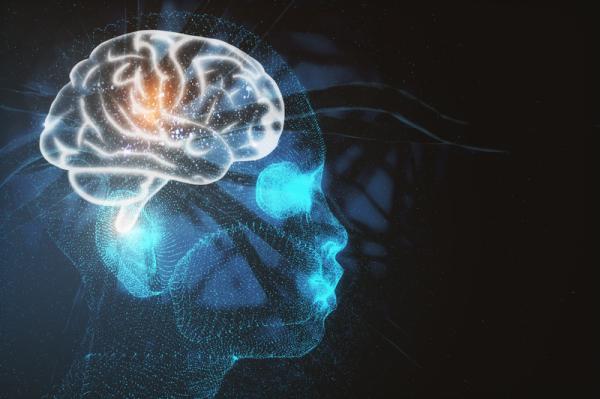
Rather than competing forces, emotion and cognition represent complementary information processing modes that enhance each other when properly integrated. Emotion provides rapid evaluation of situations based on their relevance to your goals, needs, and wellbeing. It flags situations as good or bad, safe or dangerous, approach or avoid. This evaluative function happens automatically and influences attention, memory, and decision-making.
Emotional arousal captures attention more effectively than neutral information. This is why emotional headlines grab your eye and why you remember emotionally significant events more vividly than mundane ones. Attention is a limited resource, so the brain uses emotion as a relevance detector to focus cognitive resources on information that matters. Without this emotional guidance, attention would be overwhelmed by the constant flood of sensory information.
Memory consolidation is enhanced by emotional arousal. When you experience something emotionally significant, stress hormones facilitate memory formation, making the event more likely to be remembered. This isn’t an accident—remembering emotionally significant events provides survival advantages. Remembering where you found food or encountered danger helps you make better decisions in the future. The enhanced memory for emotional events represents emotion facilitating cognitive function rather than interfering with it.
Decision-making requires emotional input more than most people realize. Antonio Damasio’s somatic marker hypothesis proposes that emotions serve as guides in decision-making by providing bodily feedback about potential outcomes. When considering options, you experience subtle emotional reactions that reflect past experiences with similar situations. These “gut feelings” aren’t irrational—they’re compressed wisdom from previous learning, helping you avoid lengthy analysis of every decision.
People with damage to brain regions integrating emotion and cognition make poor decisions despite intact logical reasoning. Damasio studied patients with ventromedial prefrontal cortex damage who could logically analyze options but couldn’t choose effectively because they lacked emotional guidance. They got stuck in endless analysis or made choices clearly contrary to their interests. Effective decision-making requires both analytical evaluation and emotional intuition.
Conversely, cognition shapes emotional experiences through appraisal and reinterpretation. How you think about situations profoundly affects how you feel about them. Cognitive appraisal theory proposes that emotions arise from how you evaluate situations rather than from situations themselves. Two people experiencing the same event may have completely different emotional responses based on how they interpret what’s happening.
This is why cognitive approaches to therapy work: changing thought patterns changes emotional experiences. Cognitive reappraisal—deliberately reinterpreting situations to change their emotional impact—effectively regulates emotions by recruiting prefrontal regions to modulate limbic activity. This isn’t suppression or denial; it’s using cognitive processing to provide different context for emotional responses.
The Lateralization Question: Left Brain, Right Brain?
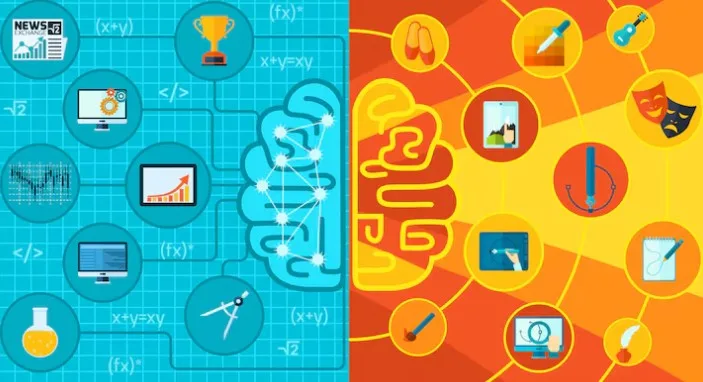
Popular psychology often conflates the emotional/rational distinction with left brain/right brain differences, suggesting the right hemisphere is emotional while the left is logical. Like the triune brain theory, this is oversimplified to the point of inaccuracy. Both hemispheres contain limbic structures involved in emotion. Both hemispheres participate in reasoning and language processing.
There are hemispheric differences in emotional processing, but they don’t align with an emotional/rational divide. Research suggests the right and left frontal cortex show different patterns related to approach and withdrawal motivation rather than emotion versus reason. The left frontal cortex shows greater activation during positive emotions and approach behaviors—moving toward rewarding stimuli. The right frontal cortex shows greater activation during negative emotions and withdrawal behaviors—moving away from threats.
This pattern relates to motivational direction rather than emotional versus rational processing. Both hemispheres process both emotions and cognition. Studies attempting to localize emotional processing to one hemisphere have produced inconsistent results, largely because emotional experiences involve distributed networks across both hemispheres and multiple brain regions.
The amygdala exists in both hemispheres, and while there may be subtle differences in their contributions, neither is “the emotional side.” The prefrontal cortex exists bilaterally, with both sides contributing to executive function and emotional regulation. The simple left/right, rational/emotional dichotomy doesn’t match the neurological reality of how brains actually process information.
When the System Breaks Down
While emotion and cognition normally work together effectively, various conditions disrupt their integration. Anxiety disorders involve amygdala hyperactivity and reduced prefrontal regulation. The amygdala interprets neutral situations as threatening, triggering physiological arousal disproportionate to actual danger. Prefrontal regions struggle to inhibit these responses, leaving the person feeling anxious despite logically knowing they’re safe.
This isn’t emotion overwhelming reason—it’s a dysregulated threat detection system providing inaccurate information that reasoning struggles to override. The amygdala’s rapid processing triggers responses before cortical regions can provide context. Treatment often focuses on strengthening prefrontal regulation through cognitive techniques while also reducing amygdala reactivity through exposure and other interventions.
Depression involves altered connectivity between limbic and prefrontal regions. People with depression show reduced prefrontal activity and heightened activity in regions processing negative emotion. This creates biased attention toward negative information, difficulty disengaging from negative thoughts, and impaired ability to experience positive emotions. Again, this isn’t reason failing to control emotion but rather dysregulation of interconnected systems.
Addiction demonstrates how repeated drug use alters the balance between rapid, automatic responses and deliberate control. Addiction hijacks motivational circuits, creating powerful automatic responses to drug-related cues while simultaneously impairing prefrontal control. The person may clearly understand the negative consequences of use but still struggle with overwhelming urges because the balance between automatic and controlled processing has shifted.
Chronic stress impairs prefrontal function while sensitizing the amygdala. This creates a state where emotional reactivity increases while regulatory capacity decreases. The stressed brain shows reduced connectivity between the prefrontal cortex and amygdala, making emotional regulation more difficult. This explains why stress makes people more emotionally reactive and less able to think clearly—it’s not moral failure but rather neurological impact of sustained stress hormones.
Practical Applications for Daily Life
Recognizing that emotion and cognition work together rather than competing changes how you approach decision-making and emotional regulation. Instead of trying to eliminate emotion from decisions, acknowledge emotional input as valuable information while also engaging analytical thinking. Your gut feelings reflect pattern recognition from past experiences. They deserve consideration, but they shouldn’t be the only factor in important decisions.
For major decisions, deliberately engage both systems. Notice your emotional reactions to different options—approach or avoidance, excitement or dread. These reactions contain information. Then analyze options systematically—list pros and cons, consider consequences, evaluate alignment with values. The best decisions usually involve both emotional resonance and logical analysis pointing in the same direction.
When facing emotional overwhelm, recognize that you’re experiencing amygdala hyperactivation that can be modulated through prefrontal engagement. Strategies that work with this system include cognitive reappraisal (reinterpreting situations), attention deployment (shifting focus), and response modulation (changing physiological state through breathing or movement). You’re not suppressing or denying emotion—you’re using one system to regulate another.
Building emotional regulation skills means strengthening connections between prefrontal and limbic regions. Regular practices like mindfulness meditation enhance this connectivity. Mindfulness involves observing emotions without immediately reacting, which exercises the prefrontal cortex’s modulatory capacity. Over time, this practice makes regulation easier and more automatic.
Recognize that stress, sleep deprivation, hunger, and illness all impair prefrontal function while sensitizing limbic regions. This shifts the balance toward more reactive, less regulated responses. When possible, avoid making important decisions or having difficult conversations when these factors are present. You’re not operating with full capacity, and you’ll likely perform poorly and regret the outcome.
FAQs About Emotional and Rational Brain Systems
Is the emotional brain really faster than the rational brain?
Yes, but this framing is misleading. The low road pathway through the amygdala processes information in approximately 12 milliseconds, while the high road through cortical regions takes 30-40 milliseconds. However, both pathways involve emotion and cognition—they represent quick versus thorough processing rather than emotional versus rational. The faster pathway enables rapid responses to potential threats, while the slower pathway allows more nuanced evaluation and appropriate response selection. Optimal functioning uses both: quick initial assessment followed by more deliberate evaluation when time permits.
Can you train your rational brain to control your emotional brain?
The premise is flawed—the goal isn’t control but integration. You can strengthen prefrontal cortex regulatory capacity through practices like mindfulness meditation, cognitive reappraisal training, and emotion regulation skills. These approaches enhance connectivity between prefrontal and limbic regions, making regulation easier. However, eliminating emotional input would be counterproductive. Emotion provides crucial information for decision-making, motivation, and social connection. The objective is sophisticated integration of emotional and cognitive processing rather than one system dominating the other.
Why do emotions sometimes override logic even when I know better?
This happens when amygdala activation is strong enough that prefrontal regions struggle to modulate responses. During intense emotional arousal, the amygdala can essentially hijack processing resources. Additionally, the low road pathway triggers responses before conscious awareness, meaning you’re already physiologically activated before cortical regions process what’s happening. Chronic stress, sleep deprivation, and certain mental health conditions reduce prefrontal regulatory capacity while sensitizing the amygdala, making this imbalance more likely. It’s not weakness or irrationality—it’s how interconnected brain systems function under particular conditions.
Are some people more emotional-brained and others more rational-brained?
Individual differences exist in baseline amygdala reactivity and prefrontal regulation, creating variation in emotional intensity and control. Some people naturally experience stronger emotional reactions while others respond more calmly. However, everyone uses both systems constantly. The notion of purely emotional or rational people is oversimplified. Differences reflect where individuals fall on continuums of reactivity and regulation rather than fundamentally different brain organizations. Additionally, these characteristics are somewhat malleable—regulation skills can be developed, and chronic stress can shift anyone toward more reactive patterns.
Does making decisions based on emotion versus logic lead to different outcomes?
Research shows that purely analytical decisions without emotional input often produce poor outcomes, particularly for complex decisions with uncertain outcomes. People with impaired emotional processing due to brain damage make notoriously bad decisions despite intact logical reasoning. Conversely, impulsive decisions based solely on immediate emotional reactions without analytical evaluation also tend to produce poor outcomes. The best decisions typically integrate both systems—emotional reactions provide rapid evaluation and motivational direction, while analytical thinking considers consequences, alternatives, and alignment with values. The question isn’t emotion versus logic but rather how to effectively integrate both.
What happens in the brain during an emotional hijack?
The term “amygdala hijack” describes situations where intense emotional arousal overwhelms regulatory capacity. During extreme stress or threat, the amygdala shows heightened activity while prefrontal cortex function decreases. Blood flow shifts toward limbic regions and away from frontal regions. Stress hormones like cortisol and adrenaline further impair prefrontal function while enhancing amygdala responses. This creates a state where you’re highly reactive, focused on immediate threat or emotion, and unable to engage in deliberate thinking or perspective-taking. The physiological state typically resolves within minutes to hours as stress hormones metabolize and normal connectivity patterns resume.
Can you be too rational and not emotional enough?
Absolutely. People with reduced emotional processing due to brain damage, certain psychiatric conditions, or extreme emotional suppression show significant impairments. They struggle with decision-making, particularly in social and personal domains. They have difficulty maintaining relationships because they can’t respond appropriately to others’ emotions. They lack motivation because emotion drives goal-directed behavior. Emotion isn’t interference with optimal functioning—it’s essential for adaptive behavior. The cultural valorization of pure rationality represents a misunderstanding of how effective cognition actually works. Healthy functioning requires both emotional awareness and cognitive reflection, with neither dominating at the expense of the other.
How does emotional intelligence relate to emotional versus rational brain systems?
Emotional intelligence involves effectively integrating emotional and cognitive processing rather than favoring one over the other. People with high emotional intelligence recognize emotions in themselves and others, understand what emotions signal, and can regulate emotional responses when appropriate. This requires both systems working together: emotional awareness relies on limbic processing, while emotion regulation requires prefrontal involvement. Emotional intelligence isn’t about being more emotional or more rational—it’s about sophisticated coordination between these systems, using emotional information wisely while also engaging analytical thinking when needed. Brain imaging shows that emotionally intelligent individuals demonstrate stronger connectivity between prefrontal and limbic regions, exactly what we’d expect for effective integration.
Use this citation format to reference the article clearly and help readers find the original source.
PsychologyFor. (2025). Differences Between the Emotional and Rational Brain. PsychologyFor. https://psychologyfor.com/differences-between-the-emotional-and-rational-brain/