


If you have ever wondered how psychologists measure not just overall intelligence but the specific cognitive abilities that predict success in particular fields, the Differential Aptitudes Test is one of the most important tools the discipline has developed. The Differential Aptitudes Test (DAT) is a multi-aptitude battery designed to measure an individual’s capacity to learn and perform effectively across a range of cognitive areas, from verbal reasoning and abstract thinking to mechanical comprehension and perceptual speed. Unlike general intelligence tests that produce a single global score, the DAT generates a detailed profile of distinct abilities — a kind of cognitive fingerprint that reveals where a person’s natural strengths lie and where effort and training might be most productive.
The test was created in 1947 by George K. Bennett, Harold G. Seashore, and Alexander G. Wesman, and it is widely regarded as the first true multiple-aptitude battery in the history of psychological assessment. That historical distinction is worth pausing on. Before the DAT, intelligence testing was largely dominated by the idea of a single, unified mental capacity — the famous g factor. Bennett, Seashore, and Wesman proposed something more nuanced and, ultimately, more useful: that human cognitive ability is composed of distinct, relatively independent aptitudes that can be separately measured and separately applied to real-world decisions about education and career.
Decades later, the DAT remains in active use in schools, universities, vocational guidance centers, and organizational settings around the world. Its most recent major iteration, the DAT-5, maintains the core structure of the original battery while incorporating updated norms, revised items, and adaptations for contemporary populations. The DAT Next Generation (DAT NG), developed by Pearson, has further modernized the instrument for digital administration and broader occupational application. Understanding what the DAT measures, how it works, and what its results actually tell us is valuable not only for psychologists and educators but for anyone who has taken the test or is preparing to do so.
What Is an Aptitude and Why Does It Matter?
Before exploring the specific tests that make up the DAT battery, it is worth clarifying what the word “aptitude” actually means in this context — because it is slightly different from how the word is used in everyday language.
In psychological assessment, an aptitude is defined as the capacity to learn something — a potential for acquiring knowledge or skill in a particular domain, rather than a measure of what has already been learned. This distinction is important. An achievement test measures what a person already knows or can already do. An aptitude test measures something more fundamental: the underlying cognitive capacity that makes learning in a particular domain more or less likely to succeed.
This is why the DAT is described as a test of “potency” or potential rather than performance. When it measures verbal reasoning, it is not asking how much vocabulary a person has accumulated — it is trying to assess the underlying capacity to work with verbal concepts, draw analogies, and think abstractly in linguistic terms. When it measures numerical reasoning, it is not testing knowledge of arithmetic formulas — it is assessing the capacity to reason with quantities and relationships between numbers.
Aptitudes are relatively stable cognitive traits that develop through the interaction of genetic endowment and accumulated experience, but they are not fixed in place. They can be developed through sustained engagement with relevant material — though they tend to be more resistant to change than specific knowledge or skill. This combination of stability and developability is what makes aptitude testing useful for both diagnosis and guidance.
History and Development of the DAT
The DAT was born in a specific historical moment — postwar America, a society in the process of rapidly expanding its educational system and reorganizing its workforce. The urgent practical need was for tools that could help students and workers find their place in an increasingly complex and specialized economy. General intelligence tests could predict broad academic success but said relatively little about whether a particular student would thrive as an engineer, a linguist, a mechanic, or a graphic designer.
Bennett, Seashore, and Wesman addressed this need directly. Their goal was to create a battery of tests that would produce a differential profile — a set of scores across distinct aptitude domains that could be compared within the individual and used to guide educational and vocational decisions with more precision than a single IQ score allowed.
The 1947 original battery consisted of eight subtests, each targeting a specific cognitive domain. Subsequent revisions — the DAT-4 in 1966, the DAT-5 in 1990, and the DAT NG in the 2000s — updated the norms, refined the items, and in some cases modified the structure of the battery, but the fundamental architecture of the original has remained remarkably durable. This durability is itself evidence of the battery’s validity: the aptitude domains it identified in 1947 have continued to show predictive value across decades of research and application.
The DAT-5, which is the version most widely used today in educational and vocational settings, can be administered individually or collectively, is applicable from approximately age 12 upward, and consists of two sections with a combined administration time of around two and a half hours. Materials include test booklets, answer sheets, scoring keys, a pencil, and a stopwatch — a relatively straightforward toolkit for a psychometric instrument of considerable depth.

The Eight Tests of the DAT Battery
The heart of the DAT is its battery of specific subtests. Each is designed to be independently interpretable — a score on any single test provides meaningful information about the corresponding aptitude — while the full profile of scores across all eight tests provides the differential picture that gives the battery its name and its power.
1. Verbal Reasoning (VR)
The Verbal Reasoning test measures the capacity to understand concepts expressed in words, to work with verbal analogies, and to think abstractly and constructively with linguistic material. Items take the form of analogies in which the first and last words of a sentence are missing, and the examinee must select from five options the pair of words that best completes the analogy. A classic example follows the pattern: “… is to right as west is to …”
This test is one of the best predictors of academic success across disciplines, because the capacity to work with verbal concepts underlies comprehension, argumentation, and communication in virtually every field of study. High scores on Verbal Reasoning are consistently associated with success in literature, law, social sciences, education, and any field that requires sustained engagement with complex written or spoken material.
2. Numerical Reasoning (NR)
The Numerical Reasoning test assesses the capacity to reason with numbers — not to perform mechanical arithmetic calculations, but to understand numerical relationships, identify patterns in number sequences, and apply mathematical logic to problem-solving. A typical item might ask which number logically continues a given sequence, or present a mathematical relationship that the examinee must complete.
Numerical reasoning is distinct from mathematical knowledge in the same way that verbal reasoning is distinct from vocabulary size — it measures the underlying cognitive capacity rather than accumulated learning. This aptitude is strongly predictive of success in mathematics, science, engineering, economics, and any field that involves quantitative reasoning and data analysis.
3. Abstract Reasoning (AR)
The Abstract Reasoning test evaluates the non-verbal dimension of reasoning capacity — the ability to identify the rules governing the transformation of geometric figures and to apply those rules to predict what comes next in a sequence. Items present a series of diagrams that change according to a particular logical principle, and the examinee must identify which diagram logically follows from the series.
This test is particularly valuable because it measures reasoning capacity that is relatively independent of language and educational background. A person who has had limited access to formal education in verbal or mathematical domains can still show high abstract reasoning ability — which makes this test especially useful for identifying potential that existing educational disadvantage might otherwise obscure.
4. Mechanical Reasoning (MR)
The Mechanical Reasoning test assesses the capacity to understand basic mechanical and physical principles as they operate in everyday situations. Each item presents an illustrated mechanical scenario — a lever, a pulley system, a gear arrangement, a pressure problem — accompanied by a simple question. The scenarios are deliberately chosen from common, everyday mechanisms rather than specialized technical equipment, so that no prior engineering knowledge is required.
Mechanical reasoning is a particularly useful aptitude for vocational guidance in technical and industrial fields. It predicts success in engineering, construction, automotive work, industrial maintenance, and any occupation that requires understanding how physical systems and mechanical devices work. Research consistently shows that this aptitude is not simply a function of prior exposure to mechanical objects — there is a genuine underlying reasoning capacity that accounts for much of the variance in scores.
5. Spatial Relations (SR)
The Spatial Relations test evaluates the capacity to mentally manipulate two-dimensional and three-dimensional objects — to visualize how a flat pattern would look when folded into a three-dimensional shape, or to determine which three-dimensional form could be constructed from a given flat template. Items present a model shape and ask the examinee to identify which of several options represents the correctly assembled three-dimensional form.
Spatial reasoning is a cognitive aptitude of remarkable practical breadth. It underlies success in architecture, engineering, surgery, dentistry, design, visual arts, navigation, and any field that requires working with physical space and three-dimensional form. It also correlates with performance in certain areas of mathematics, particularly geometry and topology. Spatial reasoning is one of the aptitude domains where gender differences have historically been reported in research literature, though the gap has narrowed significantly in recent decades, likely reflecting changing patterns of educational and recreational engagement with spatial tasks.
6. Spelling (SP)
The Spelling test, unlike most of the other subtests in the DAT battery, functions more as an achievement test than a pure aptitude test — it measures current performance in a specific skill area rather than an underlying reasoning capacity. Items present groups of four words, one of which is misspelled, and the examinee must identify the incorrectly spelled word.
Spelling ability is practically relevant for occupations requiring written communication, administrative work, and any role in which the accurate production of written text matters. It is worth noting that this test is sensitive to educational background and language exposure in ways that the reasoning tests are not — which is why its scores should always be interpreted in the context of the examinee’s educational history.
7. Language Use (LU)
The Language Use test assesses the capacity to recognize correct and incorrect grammatical, punctuational, and stylistic usage in written English. Like the Spelling test, it bridges the aptitude-achievement boundary, measuring both developed skill and underlying sensitivity to linguistic structure. The two language tests are sometimes scored and interpreted together to provide a combined estimate of overall language competence.
Language use ability predicts success in any field requiring sophisticated written communication — journalism, law, education, management, and research, among many others. Together with Verbal Reasoning, the Language Use score provides a robust picture of an individual’s overall verbal capacity across both receptive and productive dimensions.
8. Perceptual Speed and Accuracy (PS)
The Perceptual Speed and Accuracy test — sometimes called the Speed and Accuracy test — differs from the other subtests in an important way: it is a timed test of speed rather than a power test of maximum capacity. The examinee must locate combinations of letters and numbers on an answer sheet that match marked combinations in the test booklet, working as quickly and accurately as possible within a strictly enforced time limit of three minutes per part.
This test measures how rapidly and accurately a person can process simple perceptual information — a cognitive capacity that is relevant to occupations requiring rapid data processing, clerical work, quality control, administrative tasks, and any role in which the accurate handling of large quantities of routine information matters. It is worth noting that this aptitude is relatively independent of the reasoning aptitudes measured by the other subtests — a person can score high on Verbal and Numerical Reasoning while scoring modestly on Perceptual Speed, or vice versa.

The DAT Score Profile: Reading and Interpreting Results
One of the most important features of the DAT is the way its results are presented and interpreted. Rather than producing a single composite score, the battery generates eight separate scores that are converted to percentile ranks and plotted on a profile chart. This profile is the instrument’s primary interpretive output, and understanding how to read it is essential for anyone using DAT results for guidance or selection purposes.
The use of percentile ranks — rather than raw scores or standard scores — makes the profile directly comparable across subtests, because all eight percentile scores are derived from the same normative population. This means that a score at the 75th percentile on Verbal Reasoning genuinely means the same thing as a score at the 75th percentile on Mechanical Reasoning — both indicate performance superior to 75% of the reference population on that specific aptitude.
| DAT Subtest | Primary Domain Assessed |
|---|---|
| Verbal Reasoning | Conceptual and analogical thinking with verbal material |
| Numerical Reasoning | Logical and relational reasoning with numbers |
| Abstract Reasoning | Non-verbal pattern recognition and logical inference |
| Mechanical Reasoning | Understanding of basic physical and mechanical principles |
| Spatial Relations | Mental manipulation and visualization of 2D and 3D forms |
| Spelling | Accuracy in written word production |
| Language Use | Recognition of correct grammatical and stylistic usage |
| Perceptual Speed and Accuracy | Rapid and accurate processing of simple perceptual information |
The interpretive value of the profile lies not only in the absolute level of any individual score but in the pattern of relative strengths and weaknesses across the full battery. A profile that shows high Verbal Reasoning and Language Use alongside modest Numerical Reasoning and Spatial Relations tells a very different story from one that shows the reverse pattern — and each profile has distinct implications for educational and vocational guidance.
Key Characteristics of the DAT
Beyond the specific content of its subtests, the DAT is defined by a set of psychometric and practical characteristics that have made it one of the most enduring instruments in the history of psychological assessment.
Independence of subtests is a fundamental design principle. Each test in the battery is intended to function as an independent measure of its target aptitude — that is, scores on one subtest should not be primarily a function of performance on another. In practice, correlations between subtests are moderate rather than negligible — there is a general reasoning factor that runs through most of the battery — but the subtests are sufficiently differentiated to produce meaningfully distinct profiles. This independence is what makes the differential interpretation possible.
Dual applicability — for both educational and vocational guidance — is another defining characteristic. The DAT was explicitly designed from the outset to serve both purposes, and research has validated it in both contexts. In educational settings it informs subject selection, learning support, and academic planning. In vocational and organizational settings it informs selection, placement, and career development.
The battery’s flexibility of administration is also practically significant. While the full eight-subtest battery provides the richest differential profile, individual subtests can be administered separately when the assessment question is focused on a specific aptitude domain. This modularity makes the DAT adaptable to a range of practical assessment contexts without compromising the integrity of any individual subtest.
Reliability and validity have been extensively documented across all versions of the battery. Internal consistency coefficients for individual subtests are generally high, test-retest reliability is strong, and predictive validity against academic achievement and occupational performance criteria has been demonstrated in numerous independent studies across different populations and cultural contexts.

Applications of the DAT in Educational and Vocational Settings
The DAT’s practical applications fall into two broad categories that correspond directly to its design intentions: educational guidance and vocational selection and guidance.
In educational settings, the DAT is most commonly used during the secondary school years, typically from age 12 onward, as part of the academic and vocational orientation process. The profile of aptitude scores provides a rich basis for conversations between students, parents, and guidance counselors about subject selection, academic planning, and early thinking about career directions. A student with a strong Abstract Reasoning and Numerical Reasoning profile relative to Verbal Reasoning and Language Use might be well-advised to invest more heavily in science and mathematics; a student with the reverse profile might find greater success and satisfaction in humanities and social science directions.
In vocational settings, the DAT is used for selection, placement, and development purposes across a wide range of occupational contexts. Different roles have different aptitude requirements, and matching candidates to roles on the basis of relevant aptitude profiles can significantly improve both selection accuracy and employee satisfaction. Engineering roles typically require strong Numerical, Abstract, and Spatial scores; administrative roles benefit from high Perceptual Speed and Language Use; technical and trades roles predict from strong Mechanical Reasoning scores.
It is important to emphasize, however, that aptitude test results should never be the sole basis for educational or vocational decisions. The DAT provides one valuable source of information among many — including academic history, personal interests, values, personality characteristics, and practical experience. A skilled guidance professional uses DAT results as a starting point for dialogue, not a final verdict.
The DAT-5 and the DAT Next Generation
The current standard version, the DAT-5, was published in 1990 and represents the most comprehensively validated iteration of the battery. It maintains the eight-subtest structure of the original while incorporating updated norms based on contemporary populations, revised items that eliminate dated cultural references and potential bias, and improved scoring procedures. The DAT-5 is applicable from age 12 through adult, can be administered individually or in groups, and produces the full differential profile that has been the instrument’s signature contribution to psychological assessment.
The DAT Next Generation (DAT NG), developed by Pearson, represents a more substantial departure. It is a shorter, digitally administered version designed primarily for organizational and personnel selection contexts, consisting of 15 items that measure General Mental Ability (GMA), Verbal Reasoning, Numerical Reasoning, and Spatial Awareness. The DAT NG sacrifices the differential richness of the full battery for brevity and digital convenience — which makes it more practical for high-volume selection contexts but less suitable for the detailed educational and vocational guidance purposes that the original battery was designed to serve.
Both versions have their place in contemporary practice, and the choice between them depends on the specific assessment context: the full DAT-5 for comprehensive educational and vocational guidance, the DAT NG for efficient cognitive screening in organizational selection.
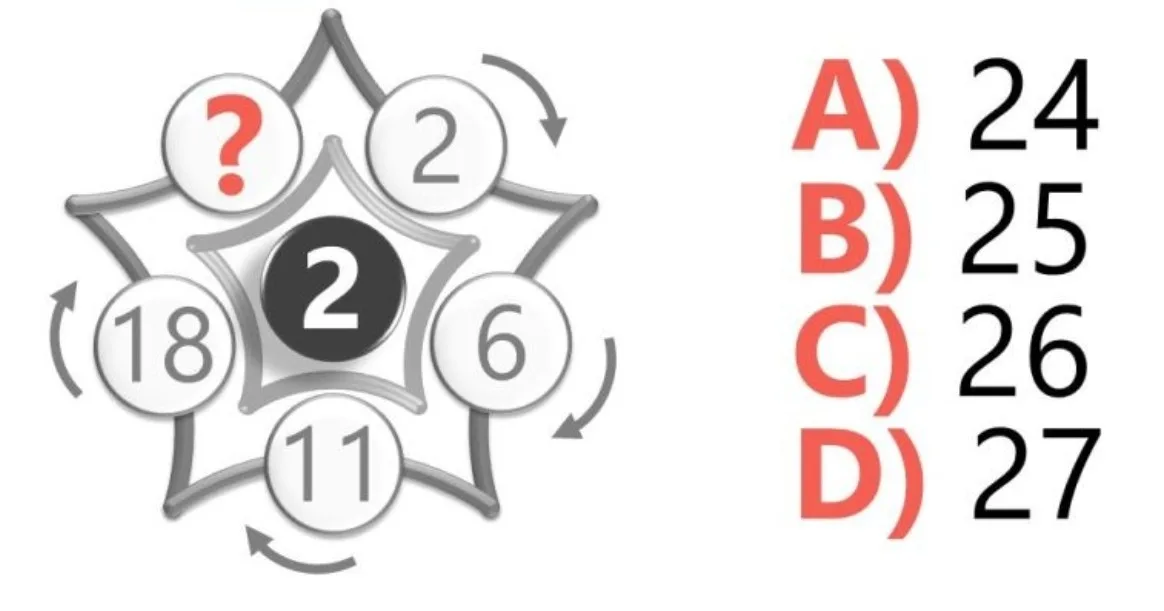
What the DAT Can and Cannot Tell Us
Any serious discussion of the DAT must include an honest account of its limitations alongside its genuine strengths — because misunderstanding what aptitude tests can and cannot tell us is one of the most common sources of harm in psychological assessment.
What the DAT can tell us is considerable. It provides a reliable, valid, and differentially informative picture of a person’s cognitive strengths across eight distinct aptitude domains. It predicts academic and vocational performance with demonstrated accuracy. It generates information that is genuinely useful for guidance and selection decisions when interpreted by a qualified professional in conjunction with other relevant data.
What the DAT cannot tell us is equally important to understand. Aptitude scores do not determine destiny. They describe current capacity and likely learning trajectories, not fixed ceilings. Motivation, persistence, quality of instruction, access to opportunity, and the development of specific skills all matter enormously and can substantially affect outcomes regardless of initial aptitude levels. A person with modest Numerical Reasoning scores can become a competent mathematician through sustained effort and good teaching; a person with high Spatial Relations scores can fail as an architect if they lack the motivation, creativity, and interpersonal skills the role requires.
The DAT also does not measure everything that matters cognitively. Emotional intelligence, creativity, practical wisdom, metacognitive awareness, and the capacity for sustained focused attention — all of which predict real-world success in important ways — are not captured by the DAT’s eight subtests. A complete picture of any individual’s cognitive and personal resources requires a much broader assessment than any single battery can provide.
The DAT and Psychological Wellbeing
For many young people, taking the DAT — particularly in the context of educational or vocational guidance — is associated with real psychological stakes. The test occurs at a developmental moment when questions of identity, capability, and future direction feel both urgent and uncertain, and a set of numerical scores can feel like a verdict rather than a data point.
It is worth saying clearly that this is not how DAT results should be experienced or communicated. Aptitude profiles describe tendencies and potentials, not fixed limitations. A person who scores modestly on Mechanical Reasoning has not been told they cannot work in technical fields — they have been given information that suggests they may need to invest more effort in developing relevant knowledge and skills, and that certain roles may require more sustained development from them than from people with higher initial aptitude in that domain.
If you have received DAT results that feel discouraging or confusing, speaking with a qualified psychologist or guidance counselor is genuinely valuable. These professionals are trained to interpret aptitude profiles in their full complexity, to integrate them with other information about your strengths and interests, and to help you make sense of results in a way that supports rather than constrains your development. Seeking that kind of support is a sign of self-awareness and initiative — both of which, incidentally, predict success in virtually any domain more reliably than any aptitude score alone.
FAQs About the Differential Aptitudes Test
What exactly does the Differential Aptitudes Test measure?
The DAT measures eight distinct cognitive aptitudes: Verbal Reasoning, Numerical Reasoning, Abstract Reasoning, Mechanical Reasoning, Spatial Relations, Spelling, Language Use, and Perceptual Speed and Accuracy. Each subtest targets a specific cognitive capacity — the ability to reason with verbal concepts, numerical relationships, abstract patterns, mechanical principles, spatial forms, and linguistic conventions, as well as the speed and accuracy of perceptual processing. Together these eight scores produce a differential profile that reveals the individual’s pattern of cognitive strengths and relative challenges.
Who can take the Differential Aptitudes Test?
The DAT-5 is designed for individuals aged 12 and above, making it applicable across late childhood, adolescence, and adulthood. It is most commonly administered during secondary school as part of the academic orientation and vocational guidance process, but it is also used with adult populations in organizational selection and career development contexts. The test can be administered individually or in groups, which makes it practical for both clinical and educational settings.
How long does it take to complete the DAT?
The full DAT-5 battery requires approximately two and a half hours of testing time, divided across two sections. Individual subtests vary in duration: Verbal Reasoning takes 30 minutes, Numerical Reasoning 30 minutes, Abstract Reasoning 25 minutes, Spatial Relations 25 minutes, Mechanical Reasoning 25 minutes, and Perceptual Speed and Accuracy 6 minutes total (3 minutes per part). The battery can also be administered selectively, with only the subtests most relevant to the specific assessment question, which reduces total administration time accordingly.
What is the difference between the DAT and an IQ test?
An IQ test typically produces a single composite score intended to represent overall general intelligence — the famous g factor. The DAT, by contrast, produces eight separate scores that together form a differential cognitive profile, revealing relative strengths and weaknesses across distinct aptitude domains rather than a single general ability estimate. This makes the DAT considerably more informative for guidance purposes: knowing that someone is generally intelligent tells us less than knowing that their verbal reasoning is at the 85th percentile while their mechanical reasoning is at the 40th percentile — information that has direct implications for educational and vocational decision-making.
Can you prepare for or practice the DAT?
Because the DAT measures aptitudes rather than learned knowledge, traditional studying in the conventional sense is not the most effective preparation strategy. However, familiarizing yourself with the format and item types of each subtest can meaningfully reduce test anxiety and ensure that scores accurately reflect underlying ability rather than confusion about instructions or unfamiliarity with item formats. Practice with analogical reasoning, number series, spatial visualization, and perceptual matching tasks can help individuals perform closer to their genuine capacity. The important thing is that preparation aims to remove barriers to accurate performance, not to inflate scores beyond actual aptitude levels.
How are DAT results used in vocational guidance?
In vocational guidance, DAT results are used to identify the aptitude profile of a particular individual and compare it with the aptitude requirements of different occupational fields. Different occupations have different aptitude demands — engineering requires strong Numerical, Abstract, and Spatial scores; law and writing benefit from high Verbal Reasoning and Language Use; technical trades predict from Mechanical Reasoning; administrative roles benefit from high Perceptual Speed. A guidance professional uses the DAT profile alongside information about interests, values, and personal history to help an individual explore career directions where their natural capacities are most likely to support success and satisfaction.
Are DAT results permanent or can aptitudes change over time?
Aptitudes are relatively stable compared to specific knowledge and skills, but they are not permanently fixed. Sustained engagement with material relevant to a particular aptitude domain can produce measurable improvement in that aptitude over time — though the rate of change tends to be slower than for specific skill or knowledge acquisition. This means that modest aptitude scores in a particular domain should be understood as a current description rather than a permanent ceiling. Motivation, quality of instruction, and deliberate practice all matter — and a person with strong drive and good support can develop competence in areas where initial aptitude is not their strongest suit.
Should DAT results determine educational or career choices?
No — and this cannot be emphasized too strongly. DAT results are one valuable source of information among many, not a deterministic prescription. They describe cognitive tendencies and likely learning trajectories, but they do not account for motivation, personal values, creative capacity, emotional intelligence, practical experience, or the many other factors that shape real-world success and satisfaction. A student with modest Verbal Reasoning scores who loves literature and is willing to invest sustained effort in developing their writing should not be steered away from humanities on the basis of a single subtest score. DAT results are most valuable when used as a starting point for reflective conversation with a qualified guidance professional — not as a final verdict on what a person can or should become.
Use this citation format to reference the article clearly and help readers find the original source.
PsychologyFor. (2026). Differential Aptitudes Test: Its Tests and Characteristics. PsychologyFor. https://psychologyfor.com/differential-aptitudes-test-its-tests-and-characteristics/