

See more of our articles in your search results.
Most common mistakes of coaches
Collective sports at a formative age have a fundamental importance in the physical and psychosocial development of the person. Competitive practice may well be a stimulus for the child to grow hand in hand with values such as effort, friendship or personal improvement; it may well be a limiting element if the training methods are not appropriate.
Both in youth sport and in the maturity stage, the style and techniques used by the coach affect both the sporting performance itself and personal areas such as self-esteem, belonging to the group or self-perception of competencies Consequently, one of the main objectives of Sports Psychology is to detect which practices are positive or negative for athletes in order to modulate them and obtain better performance.
In this article I will detail a total of three errors in the management of sports teams that are usually observed in competitive sports practice. These errors are usually based on strategies and methodologies that do not understand the psychological reality of athletes in certain game circumstances. Thanks to the continued study in this field of sports psychology, sports professionals now have the guidelines to reorient training strategies in search of the best results, both in sports and in group cohesion.
1. Hot Hand/Cold Hand
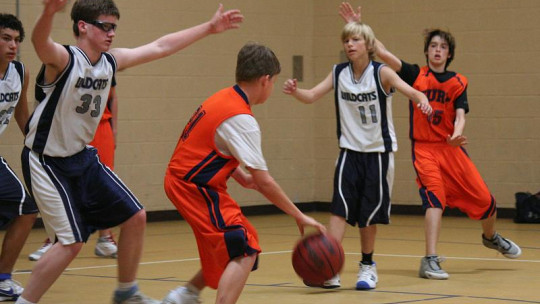
Highly studied in team sports such as basketball, Hot Hand Effect (hot hand) is the sporting aspect of the Gambler’s Fallacy in games of chance and cards.
What is the Hot Hand Effect about? When a player has a streak of three consecutive shots scored, the coach tends to give instructions to the other players so that it is the streaky player who takes the next shot. This is a common error because, although it may be counterintuitive, the probabilities of success in the present throw are not increased by past events
How many of these have you been "meaning to read" for months?
- 1
 TarcherThe Artist's Way30th Anniversary EditionListen Free On Audible
 - 2
 New Harbinger PublicationsThe Dialectical Behavior Therapy Skills WorkbookPractical DBT Exercises for Learning Mindfulness, Interpersonal Effectiveness, Emotion Regulation...Listen Free On Audible
 - 3
 Simon & SchusterThe Green WitchYour Complete Guide to the Natural Magic of Herbs, Flowers, Essential Oils, and More (Green Witch...Listen Free On Audible
Beyond a positive scoring streak, the challenge for the coach is to keep a cool head and understand to what extent the streaky player can maintain that level of success, whether due to his ability to grow under pressure or, on the other hand, , this can be affected by excess pressure and euphoria, forcing shots with the added handicap of defenders more attentive to their movements.
In short, the Hot Hand Effect is nothing more than a cognitive fallacy The decision to continue betting on the streaky player should not be based on the support that past events misleadingly provide.
2. Positive reinforcement
Many of the athletes who read this second point will identify with the following phrase: “Guys, if we win the next three games, I’ll invite you to dinner.” This offer, made by the coach, may have a minimal positive effect on the extrinsic motivation of the players. However, intrinsic motivation ends up decreasing, due to two reasons:
to) The reward by which victories are reinforced does not enhance the value of the process of sporting and group growth but rather the simple achievement of goals This is interpreted by the athlete in the following way: “Learning to play doesn’t matter, ethics doesn’t matter, respect for my teammates and rivals doesn’t matter. The only thing that matters is winning.” Consequently, the final score (also dependent on external circumstances such as the quality of the rivals) is prioritized with respect to the process of technical, tactical, psychological improvement and group cohesion.
b) The award is shown as something unrelated to the sport; Sport is interpreted not as an end but as a means. This circumstance also has the effect of reducing the intrinsic motivation of the players.
Positive reinforcement, as we see, should be applied as an extra, and taking the sport itself as motivation. For example, you can try to increase the extrinsic motivation of the group by inviting them to watch a game of a top team of that same sport (award not external to the sport) if they manage to train with good intensity and make a learning play during the games. (the process is rewarded, not the result).
3. Authoritarian coach
There is a coach profile that barely concedes feedback to his players; if only the star player. It is only capable of offering negative reinforcement when players fail or do not understand a tactical concept, but it is difficult to see them in the task of correcting with precise and calm instructions.
These practices cause the team everything from tactical confusion (such as not knowing why a specific play is used in a specific circumstance of the match), to problems of lack of confidence, which ultimately cause the players’ potential to be significantly diminished.
How can the coach anticipate these problems? Establishing a climate of trust and communication with players; trying to use corrections in a positive tone if someone makes a mistake, without pointing fingers and in general maintaining an egalitarian and constructive group dynamic.
Use this citation format to reference the article clearly and help readers find the original source.
PsychologyFor. (2024). Discover the 3 Blunders That Sports Coaches Make. PsychologyFor. https://psychologyfor.com/discover-the-3-blunders-that-sports-coaches-make/