


See more of our articles in your search results.
In this PsychologyFor article, we will talk about dissociative disorders one aspect of a person’s psychological makeup is that is dissociated (separated) from the others. A commonality among most people diagnosed with these disorders is their susceptibility to trance states, hypnosis, and suggestion. Hans Eysenck’s research also suggests that they are more likely to be extraverted and nervous.
Different types of dissociative disorder
dissociative amnesia is the “inability to remember important personal information, usually of a traumatic or stressful nature,” (DSM IV) but more than what we would characterize as an ordinary lack of memory. It is not due, of course, to physical trauma, drug use, or illness. Instead, it is due to the ability these people have to focus from afar on certain memories that bother them.
It has been increasingly common for people to report when under the care of certain therapists that they forgot childhood traumas, especially sexual abuse. Recent researchers believe that the “recovered memories ” that these patients show are actually implanted in their suggestible minds by the over-enthusiasm of their therapists. It is not yet known whether all recovered memories must be dubious or not, although memory research suggests that trauma is normally remembered good, not bad.
The escape is amnesia accompanied by a sudden trip away from a person’s refuge. The time away can vary from a few hours to months. When these people return to their normal state, they often do not remember what happened while they were away. Some adopt a completely new identity while they are “on the road.”
Dissociative identity disorder – formerly known as multiple personality – implies someone who develops two or more “separate identities” that take over the person’s behavior from time to time. The personality “usually” does not remember what happens when an alternate personality takes over. Dissociative identity disorder is not the same as schizophrenia, but it has some similarities. In schizophrenia, voices and impulses are seen as coming from outside oneself, while in dissociative identity disorder, they are seen as coming from within, in the form of these alternate personalities.
How many of these have you been "meaning to read" for months?
- 1
 S&S/Simon ElementProtocolsAn Operating Manual for the Human BodyListen Free On Audible
 - 2
 Undercover Publishing HouseStop Letting Everything Affect YouHow to break free from overthinking, emotional chaos, and self-sabotage.Listen Free On Audible
 - 3
 Grand Central PublishingIn the Shadow of EightSurviving the Reality of My ChildhoodListen Free On Audible
One of the first cases to reach the public was the story of Eva Blanco. Eva Blanco (a pseudonym, of course), was a gentle woman with a domineering husband. She found herself waking up with garish makeup, a hangover, and other signs that she had been on a bender all night. This alternate personality that took over from time to time was called Black Eva. Over time, the two personalities were reunited, and Eve’s story was made into a film with actress Joanne Woodward called “The Three Faces of Eve.” The second film was much more popular – “Sybil”. This was the true story of a woman who had been seriously abused by her schizophrenic mother, and she developed (supposedly) 26 personalities.
People with multiple personalities are generally easy to hypnotize, so it is likely that this disorder may be caused or at least aggravated by therapists, intentionally or unintentionally, as memories are recovered. It is viewed with skepticism by many psychologists.
On the other hand, it can also be understood as a modern version of a fairly common occurrence in the non-Western, pre-modern world: spirit possession. In cultures where the powers of gods, ghosts, and demons are taken for granted, people sometimes feel possessed by these outside personalities. In more modern societies, which lack the explanation of possession, people assume that the alternate personality is internal.
The depersonalization is “the persistent or recurring feeling of being separated from your mental processes or your body…” (DSM IV) the world often seems strange too, and is called derealization. Physical objects may appear distorted and people may appear mechanical. Again, these people can be particularly easy to hypnotize, and the sensation can be induced even in normal people under hypnosis. Half of all adults may have experienced a brief episode of depersonalization or derealization in their lifetime, but it is more common in people who have suffered abuse, the loss of a loved one, or seen war. It is also common under the influence of hallucinogens such as LSD.
Dissociative trance disorder (currently in Appendix B of the DSM-IV-TR) It is an unofficial category often referred to by psychologists and psychiatrists working in premodern, non-Western societies. The trance is the reduction of attention in which some things (such as sight, movement, or even external reality) are placed outside of awareness.
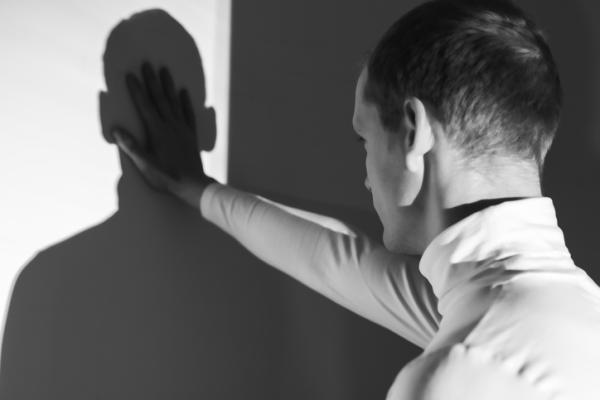
Cultural interpretations of dissociative disorder
The intercultural therapist Richard Castillo, in his book Culture and mental illness, says that trance is “an adaptation with great value for the survival of the individual and the species.” It is not far from non-pathological states such as hypnosis and meditation.
Castle da numerous examples:
- The Amok It is found in Malaysia and Indonesia. The word comes from Sanskrit “there is no freedom.” It involves a person losing his sense of self, grabbing a weapon such as a machete, and going through town slashing people. Afterwards, he doesn’t remember anything he’s done and as usual makes excuses for any harm caused, even if his actions resulted in someone being killed!
- Grisi Siknis They are found among adolescents and young women of the Miskito Indians in Nicaragua. They also run wild with machetes, assaulting people or mutilating themselves from time to time. They have no memory of their actions.
- Pibloktoq or arctic hysteria is found among the Eskimos. For a few minutes to a few hours, a person takes off their clothes and runs screaming through the snow and ice, in response to a sudden fright.
- Latah (in Malaysia) involves violent movements of the body, taking unusual postures, dancing in a trance, imitating other people, throwing things, and so on.
- The “Fall” (in the Bahamas) involves falling to the ground, seemingly comatose, but listening and understanding what is happening around you.
- The “Indisposition” (in Haiti) it is a possession trance understood as a response to fear.
- ¡“Fit” (in India) it is a crisis response of some women to family tension, curable by exorcism or simply telling her husband to protect her from her in-laws!
In the West, these kinds of behaviors are often classified as impulse control disorders, along with trichotillomania, compulsive gambling, pyromania, and kleptomania (discussed with anxiety disorders). One of these – intermittent explosive disorder – is basically the same as amok in operation, and is commonly known as “Go mad “.
This article is merely informative, at PsychologyFor we do not have the power to make a diagnosis or recommend a treatment. We invite you to go to a psychologist to treat your particular case.
If you want to read more articles similar to Dissociative Disorders we recommend that you enter our Clinical Psychology category.
Use this citation format to reference the article clearly and help readers find the original source.
PsychologyFor. (2024). Dissociative Disorders. PsychologyFor. https://psychologyfor.com/dissociative-disorders/