

See more of our articles in your search results.
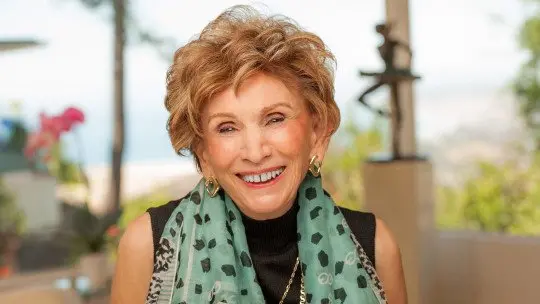
Dr. Edith Eva Eger is a Hungarian-American clinical psychologist, internationally renowned author, and Holocaust survivor who was born on September 29, 1927, in Košice, Slovakia, and at just 16 years old was deported to Auschwitz concentration camp in May 1944 where she endured unimaginable horrors including forced labor, starvation, and being made to dance for Dr. Josef Mengele, the infamous “Angel of Death” who sent her mother to the gas chambers during the selection process. After being liberated barely alive from Gunskirchen Lager in May 1945 by American soldiers who found her hand moving slightly in a pile of corpses, Eger struggled for decades with severe survivor’s guilt, post-traumatic stress disorder, and suicidal thoughts before finally pursuing her education in psychology at the University of Texas, El Paso, earning her degree in 1969 at age 42 and ultimately becoming a specialist in treating trauma and PTSD. Her journey from victim to survivor to healer led her to develop her own therapeutic approach called “Choice Therapy,” which emphasizes that while suffering is universal and inevitable, we always have the power to choose how we respond to our circumstances—a philosophy born from her realization that even in Auschwitz, she maintained the freedom to choose her attitude and perspective. At 97 years old, Dr. Eger continues to practice psychology in La Jolla, California, and has become a bestselling author with her memoir “The Choice: Embrace the Possible” (2017) and follow-up book “The Gift: 12 Lessons to Save Your Life” (2020), both of which have inspired millions worldwide and earned praise from figures like Oprah Winfrey, Bill Gates, and Archbishop Desmond Tutu. Her life story demonstrates that healing from even the most severe trauma is possible, that seeking help is a profound act of courage and strength, and that forgiveness and finding meaning in suffering can transform unimaginable pain into a source of wisdom and compassion that serves others.
Imagine being a teenage girl with dreams of becoming a professional ballerina, your whole life ahead of you, and then suddenly finding yourself stripped naked on a selection line while a Nazi doctor decides with a casual gesture whether you live or die. That was Edith Eger’s reality.
But here’s what makes her story so extraordinary: she didn’t just survive. She didn’t just endure. She transformed her suffering into a lifetime of helping others heal from their own traumas. She became living proof that our worst experiences don’t have to define us—they can refine us.
Dr. Eger’s life spans nearly a century of remarkable transformation. From a young gymnast and ballet dancer in 1930s Czechoslovakia, to a starving prisoner watching people die around her in Auschwitz, to a struggling immigrant in America battling severe PTSD, to finally becoming an internationally celebrated psychologist and author whose wisdom has touched millions. Her journey wasn’t linear or easy. It was messy, painful, and took decades of difficult inner work.
What makes Edith Eger particularly compelling isn’t just that she survived the Holocaust—though that alone is remarkable. It’s that she spent the second half of her life studying, understanding, and teaching others about trauma, resilience, forgiveness, and the fundamental human capacity for choice even in the most impossible circumstances. She turned her greatest tragedy into her life’s purpose.
How many of these have you been "meaning to read" for months?
- 1
 TarcherThe Artist's Way30th Anniversary EditionListen Free On Audible
 - 2
 New Harbinger PublicationsThe Dialectical Behavior Therapy Skills WorkbookPractical DBT Exercises for Learning Mindfulness, Interpersonal Effectiveness, Emotion Regulation...Listen Free On Audible
 - 3
 New Harbinger PublicationsAdult Children of Emotionally Immature ParentsHow to Heal from Distant, Rejecting, or Self-Involved ParentsListen Free On Audible
This is her story. Not just of survival, but of what comes after survival. Of how we heal. Of how we reclaim our lives from trauma. Of how we help others do the same.
Early Life: A Childhood Cut Short
Edith Eva Elefánt was born into a Jewish family in Košice, a city in what was then Czechoslovakia. Her childhood, by all accounts, was relatively normal and happy. She had two sisters—Magda, who was older, and Klara—and parents who loved their daughters and tried to give them opportunities.
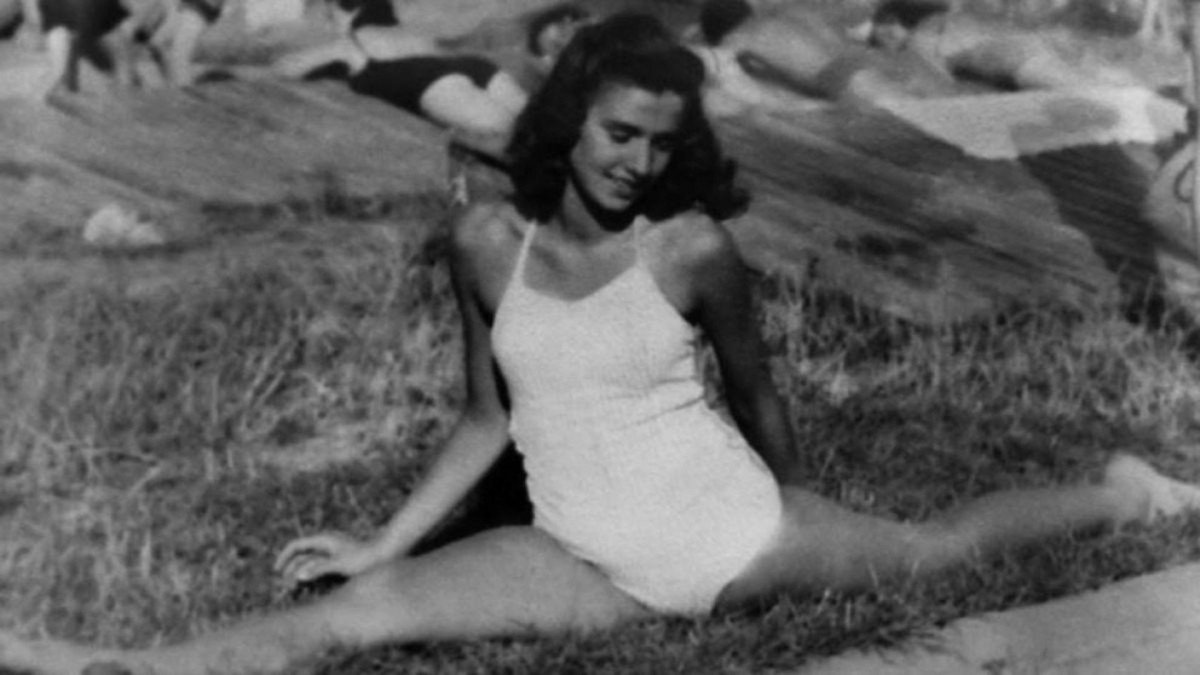
From a young age, Edith showed exceptional talent in athletics, particularly in ballet and gymnastics. She trained seriously, harboring dreams of becoming a professional dancer or gymnast. This physical discipline, this connection to her body and its capabilities, would later become crucial to her survival in ways no one could have predicted.
Her family was Jewish, but like many assimilated European Jews of that era, they considered themselves citizens first—Czechoslovakian, then Hungarian after 1938 when Košice came under Hungarian rule. They participated in their community. They had non-Jewish friends and neighbors. They believed they belonged.
History had other plans. As Nazi influence spread across Europe and Hungary aligned itself with the Axis powers, life for Jewish families became increasingly restricted and dangerous. By 1944, the situation had deteriorated catastrophically. Jews were being rounded up across Hungary and its territories.
In May 1944, when Edith was just 16 years old, her entire family—her parents, her sisters, herself—were forced into the Košice ghetto. The transition from normal life to imprisonment happened with terrifying speed. One day you’re a teenager with hopes and dreams. The next, you’re being herded onto cattle cars with no idea where you’re going or what awaits you.
Except they did know, at some level. By 1944, rumors about concentration camps, about mass murders, about atrocities beyond comprehension, had filtered through Jewish communities. But the human mind resists such knowledge. It’s too monstrous to fully believe. Surely it can’t be that bad. Surely they won’t kill everyone. Surely somehow we’ll be okay.
This is how genocide works—not just through physical violence, but through the psychological impossibility of believing that human beings could do such things to other human beings. Until you experience it yourself, part of you refuses to accept it’s real.
Arrival at Auschwitz: The Selection
The journey to Auschwitz was itself traumatic—crammed into cattle cars with no sanitation, little air, no food or water, for days. People died during the journey. When the doors finally opened, confusion and terror greeted them.
Edith recalls hearing an orchestra playing at their arrival—a surreal, nightmarish detail. The Nazis forced prisoners who could play instruments to perform as new arrivals disembarked, creating a grotesque parody of normalcy that disoriented and confused people who were already exhausted and terrified.
Then came the selection. This is where Dr. Josef Mengele, the “Angel of Death,” stood casually deciding who would live and who would die. Left meant immediate death in the gas chambers. Right meant temporary survival as a slave laborer.
Edith stood there with her mother. Mengele pointed her mother to the left—death. In her confusion and fear, Edith started to follow her mother. She was 16. She wanted to stay with her mother. Mengele stopped her and threw her to the right—life, at least for now.
“You’ll see your mother very soon,” he told her. He didn’t elaborate. She wouldn’t understand until later that “very soon” meant she’d see her mother’s ashes rising from the crematorium chimneys.
That was the last time Edith saw her mother alive. No goodbye. No embrace. Just a gesture from a Nazi doctor and her mother was gone. Her father, too, was sent to the gas chambers immediately. In a matter of minutes, Edith lost both parents and her childhood ended forever.
What she didn’t lose was her sister Magda, who was also selected for labor. This would prove crucial. Having someone to survive for, someone to care for, someone who cares for you—this relational bond became a lifeline in the camp.
Survival in Hell: Life in the Camps
What followed were months of unspeakable horror. Edith and Magda endured conditions designed to dehumanize, degrade, and ultimately destroy them. Starvation, brutal labor, disease, constant violence, and the ever-present reality of death surrounded them every moment.
They slept in cramped, filthy barracks with hundreds of other prisoners. They were beaten for any perceived infraction. They watched people die every day—from execution, from disease, from starvation, from giving up. They never knew when stepping into a shower whether water or poison gas would come from the pipes.
One particularly horrific incident stands out in Edith’s story. Dr. Mengele, who had seen her during selection, came to her barracks one evening. He had learned about her background in ballet and gymnastics. He ordered her to dance for him, there in the camp, starved and brutalized as she was.
What do you do in such a moment? Refuse and risk immediate death? Comply and somehow maintain your humanity while performing for a monster? Edith made a choice. She closed her eyes and imagined she was dancing for her family. She transported herself mentally away from Auschwitz, away from Mengele, to a place where beauty still existed.
This mental escape, this ability to choose where her mind went even when her body was imprisoned, became a survival strategy. She couldn’t control what happened to her externally. But internally, she discovered, she maintained some fragment of freedom.
She and Magda supported each other. “Magda will tell you she took care of me, and I will tell you I took care of her,” Edith would later say. This mutual caregiving, this looking beyond the “me, me, me” to commit to each other, gave them both reasons to continue. When one wanted to give up, the other provided hope. When one was despairing, the other found strength.
They developed strategies for survival. They told each other: “If I can survive today, then tomorrow I will be free.” Not “survive for months” or “survive until the war ends”—goals too distant and overwhelming. Just today. Get through today. Tomorrow will take care of itself.
Remarkably, even in this hell, Edith found ways to maintain something resembling compassion. She prayed for the guards, recognizing they too were prisoners of the Nazi ideology, their humanity stolen from them through indoctrination. “They had been brainwashed,” she later reflected. “Their own youth had been taken away from them. What kind of life was that for them? They were spending their days murdering people.”
This isn’t to excuse what the guards did. But Edith discovered that turning hatred into pity protected her own humanity. Hatred would have consumed her from within. Pity allowed her to maintain her sense of self as someone who could still feel for others, even her oppressors.
Liberation: Freedom Without Peace
Toward the end of the war, as Allied forces advanced, the Nazis moved prisoners between camps. Edith and Magda were transferred to Gunskirchen Lager in Austria, where conditions were even worse than Auschwitz. By May 1945, they were barely clinging to life.
On May 4, 1945, American soldiers liberated the camp. A young soldier noticed a hand moving slightly in a pile of corpses. That hand belonged to Edith. He quickly summoned medical help, and she was pulled from death’s doorstep and given emergency medical treatment.
Liberation. Freedom. The war was over. She had survived. This should have been the happy ending, right? The triumphant moment when suffering ends and life begins again?
It wasn’t. Not even close. In many ways, what came next was almost as difficult as the camps themselves, just in different ways. Because physical freedom doesn’t automatically mean psychological freedom.
Edith and Magda were reunited with their sister Klara, who had survived by being hidden by her teacher. But their parents weren’t coming back. The reality of their deaths, which Edith had known intellectually, now hit emotionally with full force.
“When the reality hit me that my parents were not coming back, I became suicidal,” Edith later revealed. “I would get up in the morning and say ‘what for?’ I had nothing and I wanted to die.”
She had survived the camps only to be destroyed by grief and survivor’s guilt. Why did she live when so many died? Why did she deserve survival when her parents didn’t? What was the point of going on without them? These questions tormented her.
This is a crucial part of Edith’s story that often gets overlooked. Survival isn’t the end of the story—it’s the beginning of a different struggle. The struggle to make meaning of what happened. To integrate unspeakable experiences into a coherent sense of self. To find reasons to keep living. To heal.
Building a New Life: Immigration and Family
After the war, Edith moved to Prague, Czechoslovakia. There she met a man named Béla Eger, and they married. In 1949, they immigrated to the United States, seeking a fresh start far from the devastation of Europe.
They settled in America and had three children. To the outside world, Edith was building a normal life. She was a wife, a mother, an immigrant working to create stability for her family. She tried desperately to put the past behind her, to not burden her children with the horror she’d experienced.
But trauma doesn’t cooperate with such plans. Even though she tried to shield her children from her past, she suffered from severe post-traumatic stress disorder. Something as simple as getting on a bus could trigger a panic attack. Loud noises—sirens, bangs—would send her into automatic shaking and fear responses.
She was physically in America, in safety, with her family. But psychologically, part of her remained trapped in Auschwitz. The camp had ended, but it hadn’t released its hold on her mind and nervous system.
“Even though I was free physically, I didn’t know how to take responsibility for my freedom,” she later explained. This is a profound insight. Freedom isn’t just the absence of oppression or imprisonment. It’s an active state of mind that requires claiming your own agency, making your own choices, living according to your own values rather than continuing to be controlled by past trauma.
For years, Edith lived in this liminal state—free but not free, alive but not fully living. She functioned, but she didn’t thrive. She loved her family, but tremendous shame and guilt shadowed everything.

The Path to Healing: Becoming a Psychologist
The turning point came in the 1960s when Edith’s family moved to El Paso, Texas. She was in her late 30s and early 40s—an age when many people feel their paths are already set. But Edith had a growing realization: she needed to understand what had happened to her. She needed to do something meaningful with her survival.
“I wanted to be ‘for’ something, rather than ‘against’ something,” she explained. This shift from opposition to purpose, from victimhood to meaningful contribution, became central to her healing and her later therapeutic approach.
She decided to study psychology. In 1969, at age 42, she received her degree in psychology from the University of Texas, El Paso. She then pursued her doctoral internship at the William Beaumont Army Medical Center at Fort Bliss, Texas, working with soldiers returning from Vietnam who were struggling with trauma.
The parallels were obvious. These young men had experienced horrors in war and were now trying to reintegrate into normal life while haunted by what they’d seen and done. Edith understood this struggle intimately. She could meet them in their trauma with authentic compassion because she had been there herself.
Her academic success in psychology gave her tools and frameworks for understanding her own experience and those of others. But despite this professional progress, she still carried tremendous shame and guilt. She still hadn’t fully confronted what Auschwitz meant to her.
She realized that to truly heal and to truly help others heal, she would need to do something terrifying: return to Auschwitz itself.
Returning to Auschwitz: Confronting the Past
In the 1980s, decades after her liberation, Edith decided she needed to return to Auschwitz. Her sister Magda thought she was crazy. “She said I was an idiot and a masochist,” Edith recalled. “We went through the same experience but we had different approaches to healing. Everybody has to find their own way.”
This is important. There’s no single “right” way to heal from trauma. What Edith needed for her healing wasn’t what Magda needed for hers. Healing is deeply personal, and we must each find our own path, even when that path seems incomprehensible to others.
With her husband Béla by her side for support, Edith traveled back to Poland and walked through the gates of Auschwitz again. This time as a visitor, not a prisoner. This time with a passport in her pocket and the knowledge that she could leave whenever she wanted.
The experience was intensely painful. At one point, a museum guard frightened her, and in her mind, he became a Nazi soldier again. She had to breathe through the panic, ground herself in the present moment, feel the passport in her pocket, remind herself: “I can leave. I am free!”
But she also achieved something profound through this return. She confronted her oppressor—not the physical guards who were long gone, but the psychological hold that Auschwitz still had on her. She looked the lion in the face and survived the looking.
“I needed to reclaim my innocence and assign the shame and guilt to the perpetrators,” she explained. “That’s what going back to the camp did for me.” She had been carrying shame that wasn’t hers to carry. The shame belonged to those who created and operated the camps, not to those who suffered in them.
This visit became a cornerstone of her therapeutic philosophy. She realized that healing often requires going toward the pain rather than away from it. “If you don’t feel, you don’t heal,” became one of her core teachings.
She began taking her own patients, literally or metaphorically, to the sources of their pain. Taking their “precious hands” and leading them to confront what they’d been avoiding. Not to retraumatize them, but to help them move through the trauma to the other side where freedom lives.

Choice Therapy: A New Approach to Healing
Over the years, Dr. Eger developed her own distinctive therapeutic approach, which she calls “Choice Therapy.” It draws on various psychological traditions but is deeply rooted in her personal experience and the insights she gained from it.
The core premise is elegantly simple but profoundly challenging: While suffering is inevitable and universal, we can always choose how we respond. Even in the most constrained circumstances, we maintain some degree of choice about our attitude, our perspective, our values, and our actions.
This isn’t about positive thinking or denying reality. It’s about recognizing that external circumstances, no matter how terrible, don’t completely determine our internal experience. Even in Auschwitz, Edith discovered, she could choose whether to hate or to pray. She could choose whether to give up or to survive one more day. She could choose where her mind went when Mengele forced her to dance.
“Freedom is fundamentally about choice,” she teaches. “While suffering is inevitable and universal, we can always choose how we respond.” This means that true freedom is internal rather than external. You can be physically imprisoned yet psychologically free. You can be physically free yet psychologically imprisoned.
Choice Therapy emphasizes several key concepts that come directly from Dr. Eger’s experience and healing journey. First, the importance of confronting rather than avoiding pain. Most people instinctively try to escape from emotional pain, but avoidance usually makes trauma more powerful. Healing requires feeling, processing, and integrating painful experiences.
Second, the power of forgiveness—not for the perpetrator’s benefit, but for your own freedom. “Forgiveness has given me the ultimate spiritual freedom,” Dr. Eger says. Holding onto hatred and resentment keeps you psychologically connected to your oppressor. Forgiveness isn’t saying what happened was okay—it’s releasing the hold that the past has on your present.
Third, the practice of shifting from victim to survivor. Victims are defined by what happened to them. Survivors are defined by how they respond to what happened. “Everybody can choose to be a victim or a survivor,” Dr. Eger teaches. This isn’t about blame—it’s about reclaiming agency.
Fourth, the importance of being realistic rather than idealistic. Dr. Eger emphasizes seeing things as they are, not as we wish they were. This clear-eyed realism actually enables more effective action because you’re working with reality rather than fantasy.
Finally, the practice of finding joy within rather than seeking happiness externally. “I’ve learned not to look for happiness, because that is external,” Dr. Eger explains. “You were born with love and you were born with joy. That’s inside. It’s always there. That’s what I learned at Auschwitz, how can you find joy within you.”
A Life of Service: Working with Trauma Survivors
For the past several decades, Dr. Eger has worked with people struggling to overcome traumatic events—violent relationships, child sexual abuse, PTSD, addiction, grief, and countless other forms of suffering. She brings to this work not just professional training but lived experience of trauma and healing.
Her patients often come to her after trying other forms of therapy without success. There’s something about knowing that your therapist has endured unimaginable trauma and emerged not just intact but thriving that creates a unique therapeutic bond. She doesn’t just know about trauma academically—she knows it intimately.
When working with survivors, Dr. Eger often tells them: “Whatever happened, you made it. You could have killed yourself.” She reminds them that their survival itself is evidence of strength they may not recognize in themselves. The fact that they’re still alive, still seeking help, still trying—this is already success.
She challenges the narrative that healing means returning to who you were before trauma. You can’t un-experience what happened. But you can integrate it, learn from it, and become someone new who carries the experience differently. The goal isn’t to forget or to pretend it didn’t happen. The goal is to free yourself from being controlled by it.
Dr. Eger still maintains a practice in La Jolla, California, and at 97 years old, she continues to see patients regularly. “These are the happiest days of my life,” she says. “I work every day, I see my patients and I talk about choices.”
This is remarkable. After everything she endured, after all the years of struggling with PTSD and survivor’s guilt, she can genuinely say these are her happiest days. Not because she’s forgotten the past or minimized it, but because she’s found purpose and meaning in serving others through her unique wisdom.
Author and International Voice
For most of her life, Dr. Eger kept her Holocaust experience largely private. She had told her family and her patients when relevant, but she hadn’t shared her story widely. Then, in her late 80s, she decided it was time to write her memoir.
“The Choice: Embrace the Possible” was published in 2017 when Dr. Eger was 90 years old. The book chronicles her journey from Auschwitz to healing, interweaving her personal story with the stories of patients she’s treated and the therapeutic insights she’s gained over decades of practice.
The book became an international bestseller, selling more than 350,000 copies worldwide. High-profile figures including Oprah Winfrey, Bill Gates, and Archbishop Desmond Tutu praised it publicly. Readers around the world connected deeply with Dr. Eger’s message about choice, resilience, forgiveness, and finding freedom within.
What makes “The Choice” so powerful isn’t just the Holocaust narrative, though that’s compelling. It’s the way Dr. Eger draws connections between her experience and everyday suffering. She shows how the same principles that helped her survive Auschwitz can help someone survive a difficult marriage, overcome an addiction, or heal from childhood abuse.
She doesn’t minimize anyone’s suffering by comparing it to the Holocaust. Instead, she recognizes that all suffering matters and all healing requires similar psychological work—confronting pain, making choices, reclaiming agency, finding meaning, practicing forgiveness.
In 2020, at age 92, Dr. Eger published her second book, “The Gift: 12 Lessons to Save Your Life.” While “The Choice” was primarily memoir, “The Gift” is more of a practical guide, offering concrete tools and exercises for identifying mental prisons and developing psychological freedom.
Most recently, she adapted her story for young readers in “The Ballerina of Auschwitz,” recognizing that her message of resilience and choice has particular relevance for teenagers and young adults facing their own challenges and searching for meaning and agency in their lives.
Through her writing, speaking, and continued clinical work, Dr. Eger has become one of the most prominent voices on trauma, healing, resilience, and post-traumatic growth. Her life stands as testimony that healing is possible even from the most severe trauma, and that our suffering, when integrated and understood, can become a source of wisdom and service to others.
Legacy and Lessons
What can we learn from Dr. Edith Eger’s remarkable life? Her story offers profound insights that apply far beyond the Holocaust context.
First, trauma doesn’t have to be the end of your story. For decades after liberation, Dr. Eger struggled with PTSD, survivor’s guilt, and suicidal thoughts. She didn’t heal quickly or easily. But she did heal, gradually, through deliberate effort and the courage to confront her pain rather than avoid it. Healing is possible, even when it seems impossible.
Second, seeking help is strength, not weakness. Dr. Eger became a psychologist partly to understand her own trauma, and her willingness to study her suffering rather than just suppress it transformed not only her own life but countless others. Professional support, therapy, and education about trauma aren’t signs of inadequacy—they’re tools for growth and healing.
Third, we have more choice than we think we have. Even in the most constrained circumstances, we retain some agency over our attitudes, perspectives, and responses. Recognizing this agency, rather than feeling completely powerless, helps us navigate difficult circumstances more effectively.
Fourth, forgiveness liberates the forgiver. Dr. Eger’s ability to forgive her oppressors wasn’t about excusing what they did or pretending it was acceptable. It was about releasing the psychological hold that hatred and resentment had on her. Forgiveness is a gift you give yourself.
Fifth, healing often requires going toward pain rather than away from it. Dr. Eger’s return to Auschwitz exemplifies this principle. We instinctively avoid what hurts, but avoidance often strengthens trauma’s hold on us. True healing requires feeling, confronting, and processing pain.
Sixth, meaning and purpose can be found even in terrible suffering. Dr. Eger transformed her trauma into her life’s work, using her experience to help others heal. This doesn’t mean suffering is good or necessary, but it does mean that when suffering happens, we can choose to extract meaning from it rather than letting it be purely destructive.
Finally, joy and vitality come from within, not from external circumstances. Dr. Eger learned in Auschwitz that external conditions, however terrible, couldn’t completely control her internal experience. Now, in her late 90s, she experiences profound joy not because her circumstances are perfect but because she’s cultivated inner freedom.
FAQs About Edith Eger
How old was Edith Eger when she was sent to Auschwitz?
Edith Eger was just 16 years old when she and her family were deported to Auschwitz in May 1944. She was a teenager with dreams of becoming a professional ballerina or gymnast when her life was suddenly and violently disrupted by the Holocaust. Her youth made the experience particularly traumatic—she lost her childhood, her parents, and her innocence all at once during what should have been formative years filled with normal adolescent experiences.
The fact that she was sent to forced labor rather than immediately killed was partly due to her age—she was young and strong enough to work. However, her youth also meant she had fewer psychological resources to process the trauma, and the developmental stage she was in when the trauma occurred shaped how it affected her throughout her life. Many Holocaust survivors who were children or teenagers during their imprisonment face unique challenges in healing because the trauma interrupted critical developmental periods.
Did Edith Eger’s entire family survive the Holocaust?
No, tragically, both of Edith’s parents were murdered in Auschwitz. Her father and mother were both sent directly to the gas chambers during the selection process when the family arrived at the camp in May 1944. Edith never saw them again after that initial selection, though she didn’t fully understand what had happened to them until later.
However, Edith’s two sisters did survive. Her older sister Magda survived Auschwitz alongside Edith, and the two supported each other throughout their imprisonment, which was crucial to both of their survival. Their younger sister Klara survived by being hidden by her teacher and did not go to the camps. The three sisters were reunited after liberation in Prague. The loss of her parents while her sisters survived contributed significantly to Edith’s severe survivor’s guilt in the years following liberation.
What is Choice Therapy and how did Edith Eger develop it?
Choice Therapy is Dr. Eger’s therapeutic approach centered on the principle that while we cannot always control what happens to us, we can always choose how we respond. She developed this approach over decades of clinical practice, drawing heavily on her personal experience of discovering that even in Auschwitz, she maintained some degree of choice about her attitude, her mental focus, and her values.
The therapy emphasizes several key practices: confronting pain rather than avoiding it (“if you don’t feel, you don’t heal”), practicing forgiveness for your own liberation rather than the perpetrator’s benefit, shifting from victim identity to survivor identity, being realistic about circumstances while recognizing your agency within them, and finding joy within yourself rather than depending on external circumstances for happiness.
Dr. Eger developed this approach gradually through her own healing journey—studying psychology formally, working with trauma patients (particularly Vietnam veterans), returning to Auschwitz to confront her past, and integrating insights from various psychological traditions with her lived experience. Choice Therapy isn’t just academic theory—it’s wisdom earned through surviving and healing from severe trauma.
Why did Edith Eger wait so long to write her memoir?
Dr. Eger didn’t publish “The Choice” until 2017, when she was 90 years old, more than 70 years after her liberation. Several factors contributed to this delay. First, for many years she was focused on surviving her own trauma rather than sharing it publicly. She struggled with severe PTSD, survivor’s guilt, and suicidal thoughts for decades after liberation, and simply getting through each day took all her energy.
Second, like many Holocaust survivors, she initially tried to protect her children from her traumatic past and didn’t speak openly about it even within her family. Many survivors remained silent for years or decades, either because the memories were too painful, because they feared others wouldn’t believe them or would judge them, or because they wanted to move forward rather than dwell on the past.
Third, Dr. Eger’s healing was a gradual process that took decades. It wasn’t until she had done extensive personal work, returned to Auschwitz, developed her therapeutic philosophy, and helped many other trauma survivors that she felt ready to share her complete story publicly. By waiting until her 90s, she could offer not just her survival story but also her wisdom about healing, which makes the memoir far more valuable.
Finally, there’s a practical consideration: she was busy throughout her professional life seeing patients, raising her family, and living her life. Writing a memoir requires time, energy, and emotional bandwidth that she may not have had until she was older and more settled.
Does Edith Eger still experience PTSD symptoms?
Yes, even in her late 90s, Dr. Eger still experiences certain trauma triggers. She has openly discussed that loud noises—particularly sirens or sudden bangs—automatically make her start shaking. Her body goes into an immediate fear response even though her mind knows she’s safe.
However, her relationship with these symptoms has changed dramatically over the decades. “If I hear sirens or loud bangs, I automatically start shaking,” she has said. “However, these days, it actually helps me to realize that I’m here. I’m here, now.” Rather than being overwhelmed by the symptoms, she uses them as grounding reminders that she’s in the present, not the past.
This illustrates an important point about trauma recovery: healing doesn’t necessarily mean all symptoms disappear forever. It means developing a different relationship with those symptoms—recognizing them, understanding them, not being controlled by them, and having tools to manage them effectively. Dr. Eger’s continued experience with occasional PTSD symptoms decades after her trauma actually makes her more credible and relatable as a therapist—she’s not claiming perfect healing but rather demonstrating ongoing management and integration of trauma.
Her openness about still experiencing symptoms also sends an important message: you can live a full, joyful, meaningful life even if trauma has left permanent marks. Complete erasure of all trauma effects isn’t the goal—functional integration and finding joy despite occasional symptoms is.
How can I apply Edith Eger’s teachings to my own life if I haven’t experienced severe trauma?
Dr. Eger’s principles apply to all forms of suffering, not just extreme trauma. Her message is that all of us face prisons—some are external but most are internal, created by our own limiting beliefs, fears, resentments, and avoidance patterns. You don’t need to have survived a concentration camp to benefit from her wisdom about choice, forgiveness, and freedom.
Start by examining where you feel trapped or stuck in your life. What beliefs or patterns keep you from living according to your values? Where do you tell yourself you “have no choice” when actually you’re choosing the familiar over the uncomfortable? What pain are you avoiding that needs to be confronted? Who do you need to forgive—including yourself—to move forward?
Practice noticing where you do have choice, even in constrained circumstances. You might not be able to change your boss, but you can choose how you respond to them. You might not be able to prevent illness, but you can choose your attitude toward it. This isn’t about positive thinking—it’s about recognizing genuine agency where it exists.
Work on shifting from victim language to survivor language. Instead of “this happened to me and it ruined everything,” try “this happened to me and here’s how I’m working with it.” This doesn’t minimize what happened—it centers your response and reclaims your power.
Finally, consider seeking professional support. Dr. Eger’s own journey included becoming a psychologist and learning tools for understanding and processing trauma. If you’re struggling, working with a therapist is a sign of strength and wisdom, not weakness. You don’t have to figure everything out alone.
What happened to Dr. Mengele, and how does Edith Eger feel about him now?
Dr. Josef Mengele, the Nazi doctor who selected Edith’s mother for death and forced Edith to dance for him, escaped prosecution after World War II. He fled to South America and lived in Argentina, Paraguay, and Brazil under false identities. Despite extensive efforts to capture him, he was never brought to justice and died in 1979 in Brazil, drowning while swimming. His body was identified through forensic testing in 1985.
As for Dr. Eger’s feelings about Mengele, she has done profound work around forgiveness that demonstrates extraordinary emotional and spiritual development. She doesn’t excuse what he did or claim it was acceptable. Instead, she has chosen to release the hold that hatred would have on her by viewing him and other Nazi guards through the lens of pity rather than pure rage.
“The Nazi guards were prisoners too. I prayed for them. I turned hatred into pity,” she has explained. She recognized that the guards had been brainwashed, their humanity stripped away through ideology, and were spending their days committing atrocities—”What kind of life was that for them?” This perspective isn’t about absolving them of responsibility but about freeing herself from being consumed by hatred.
This doesn’t mean she wasn’t angry or that anger isn’t appropriate. It means she chose not to let that anger define her life decades later. Her forgiveness work was for her own liberation, not for Mengele’s benefit. This represents perhaps the most advanced form of psychological freedom—the ability to release resentment toward those who genuinely harmed you, not because they deserve it but because you deserve to be free.
Use this citation format to reference the article clearly and help readers find the original source.
PsychologyFor. (2026). Edith Eger: Biography of This Psychologist Who Survived Auschwitz. PsychologyFor. https://psychologyfor.com/edith-eger-biography-of-this-psychologist-who-survived-auschwitz/