

See more of our articles in your search results.
You feel a wave of nausea before a big exam, or your stomach clenches into a knot the moment an argument starts, even though nothing you’ve eaten explains it. Maybe you’ve spent years being told your chronic bloating, cramping, or irregular digestion is “just stress” or “all in your head,” without anyone ever explaining the actual biological system connecting your emotions to your gut. Or perhaps you’ve noticed that anxiety seems to hit your stomach before it hits anywhere else, leaving you exhausted from managing two problems that feel like they should be separate but clearly aren’t. All of these experiences trace back to a remarkable, semi-independent network tucked into the walls of your digestive tract: the enteric nervous system.
It’s genuinely frustrating to be told a very real physical symptom is “just in your head,” especially when the discomfort is undeniable and disruptive to daily life. This dismissiveness often stems from a lack of awareness that the gut contains its own extensive, semi-independent nervous system, capable of both operating on its own and communicating constantly with the brain and emotions. For people living with chronic digestive symptoms, anxiety-related stomach upset, or conditions like irritable bowel syndrome, this gap in understanding can be isolating, making it harder to get taken seriously by others or even to make sense of their own symptoms. Understanding how this system works can validate these experiences and open the door to more effective, whole-body approaches to managing them.
So how does the digestive tract end up with what scientists sometimes call a second brain, and what does that mean for how emotions and digestion are connected?
This article explains the parts, structure, and functions of the enteric nervous system, along with how it relates to digestion, emotion, and overall gut health.
What Is the Enteric Nervous System and Why Is It Called the Second Brain?
The enteric nervous system, often abbreviated as the ENS, is a complex network of neurons embedded directly within the walls of the gastrointestinal tract, stretching from the esophagus all the way to the anus. It is considered a distinct division of the autonomic nervous system, alongside the sympathetic and parasympathetic branches, though it stands apart in one crucial way: it can function independently, without direct instructions from the brain.
How many of these have you been "meaning to read" for months?
- 1
 TarcherThe Artist's Way30th Anniversary EditionListen Free On Audible
 - 2
 Atria BooksThe Courage to Be DislikedThe Japanese Phenomenon That Shows You How to Change Your Life and Achieve Real HappinessListen Free On Audible
 - 3
 Hay HouseBecoming SupernaturalHow Common People Are Doing the UncommonListen Free On Audible
Physician and researcher Michael Gershon popularized the term second brain to describe this system, drawing attention to its sheer scale and complexity; the human gut contains somewhere between four hundred and six hundred million neurons, a number roughly comparable to the entire spinal cord and far more than most people would expect to find outside the brain itself. His research helped establish the enteric nervous system as a legitimate, semi-autonomous neural network in its own right, rather than a simple extension of the central nervous system.
This independence is not absolute; the ENS still receives regulatory input from the central nervous system through the vagus nerve and other autonomic pathways, allowing for constant, bidirectional communication between the gut and the brain. However, experiments have repeatedly shown that isolated segments of intestine can continue performing coordinated digestive movements even when completely disconnected from the spinal cord and brain, a striking demonstration of the ENS’s genuine functional autonomy.
Understanding that the gut possesses its own extensive, semi-independent nervous system helps explain why digestive symptoms can appear even when no obvious structural problem exists, since enteric nervous system dysfunction itself can produce very real physical symptoms without visible tissue damage.
What Are the Main Parts of the Enteric Nervous System?
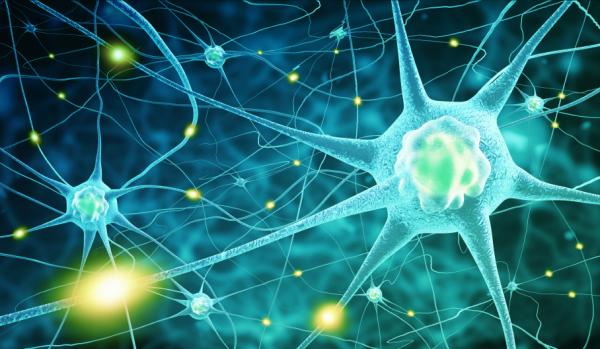
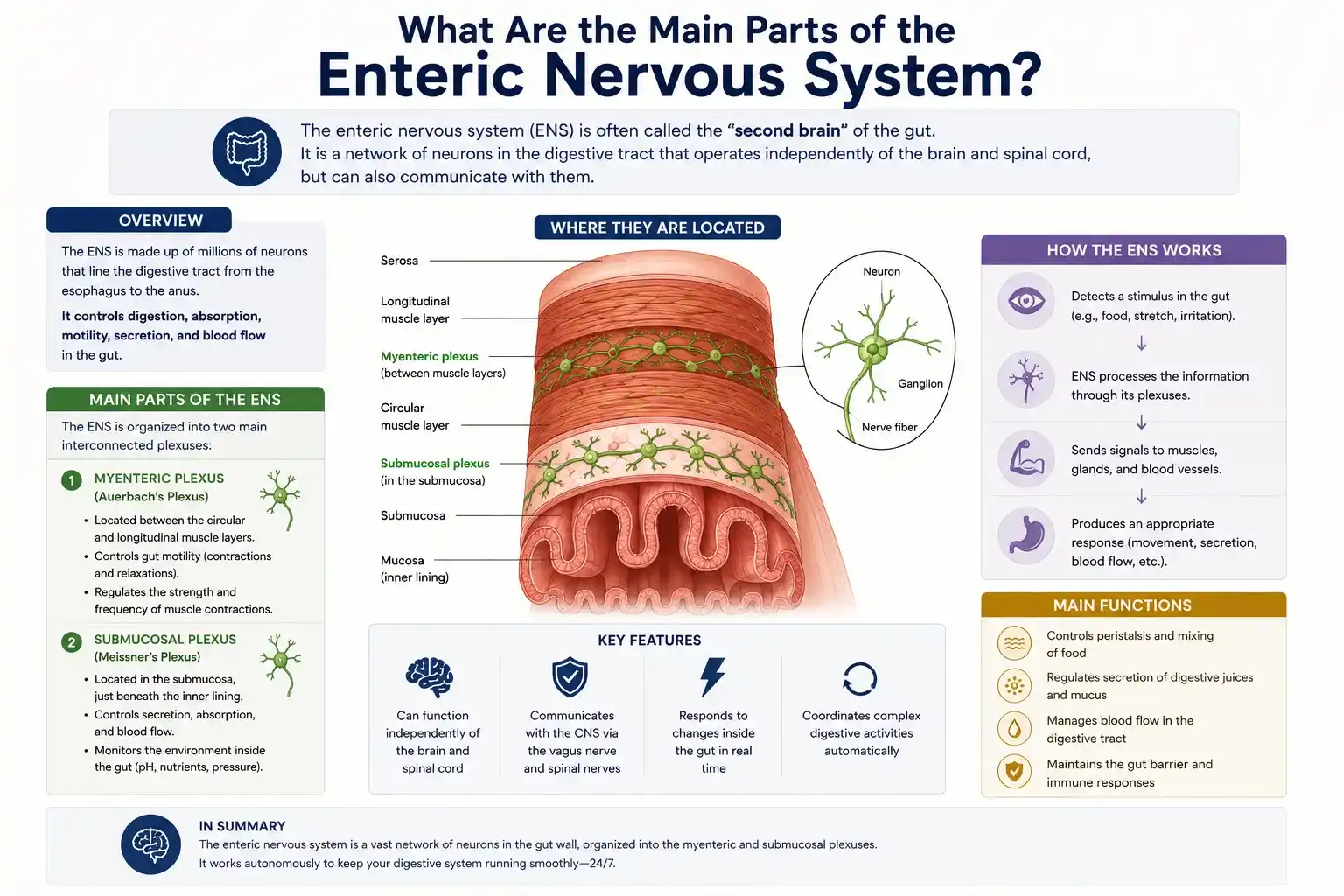
The enteric nervous system is organized into two primary networks of neurons, called plexuses, embedded within different layers of the gut wall. Each plexus specializes in a distinct set of digestive functions.
- The myenteric plexus, also called Auerbach’s plexus, sits between the muscle layers of the gut and primarily controls motility and movement.
- The submucosal plexus, also called Meissner’s plexus, sits closer to the gut lining and primarily regulates secretion and blood flow.
- Smaller, less extensively studied plexuses also exist, contributing additional local regulation of gut wall.
- The ENS extends continuously along the gastrointestinal tract, from the esophagus through the stomach, intestines, and down to the anus.
These two major plexuses work together but handle largely separate responsibilities. The myenteric plexus focuses on the mechanical, muscular side of digestion, coordinating the contractions that physically move food along the digestive tract. The submucosal plexus, positioned closer to the gut’s inner lining, focuses more on sensing the chemical and mechanical environment within the gut and regulating the glandular secretions and blood flow needed to support digestion and absorption.
This dual-plexus structure allows the enteric nervous system to manage an extraordinarily complex set of tasks simultaneously, from physically propelling food forward to sensing nutrient content to regulating local blood supply, all within the confines of the gut wall itself, largely independent of ongoing input from the brain.
How Does the Myenteric Plexus Control Digestive Movement?
The myenteric plexus is the enteric nervous system’s primary control center for gut motility, coordinating the muscle contractions that physically move food through the digestive tract. Without it, digestion would grind to a halt regardless of how well other digestive processes were functioning.
This plexus sits between the circular and longitudinal muscle layers of the gut wall, positioning it perfectly to coordinate the rhythmic, wave-like muscle contractions known as peristalsis. These contractions must be precisely timed and directionally coordinated, since disorganized or absent contractions can cause food to move too slowly, too quickly, or not at all. Interestingly, specialized pacemaker cells called interstitial cells of Cajal, named after neuroscientist Santiago Ramón y Cajal, who first identified this distinct cell type in gut tissue, generate the rhythmic electrical activity that helps coordinate this muscular movement, working in close partnership with myenteric plexus neurons.
When the myenteric plexus is damaged or its neurons are absent, serious digestive disorders can result. Hirschsprung’s disease, for example, occurs when a segment of the myenteric plexus fails to develop properly in a portion of the colon, leaving that section of intestine unable to relax and allow stool to pass, a condition that requires surgical treatment, particularly in newborns where it can become life-threatening if left untreated.
A practical takeaway: because myenteric plexus function depends partly on consistent digestive rhythm, maintaining regular meal timing and adequate fiber intake genuinely supports healthy motility by giving this system predictable, consistent input to coordinate around.
How Does the Submucosal Plexus Regulate Secretion and Blood Flow?
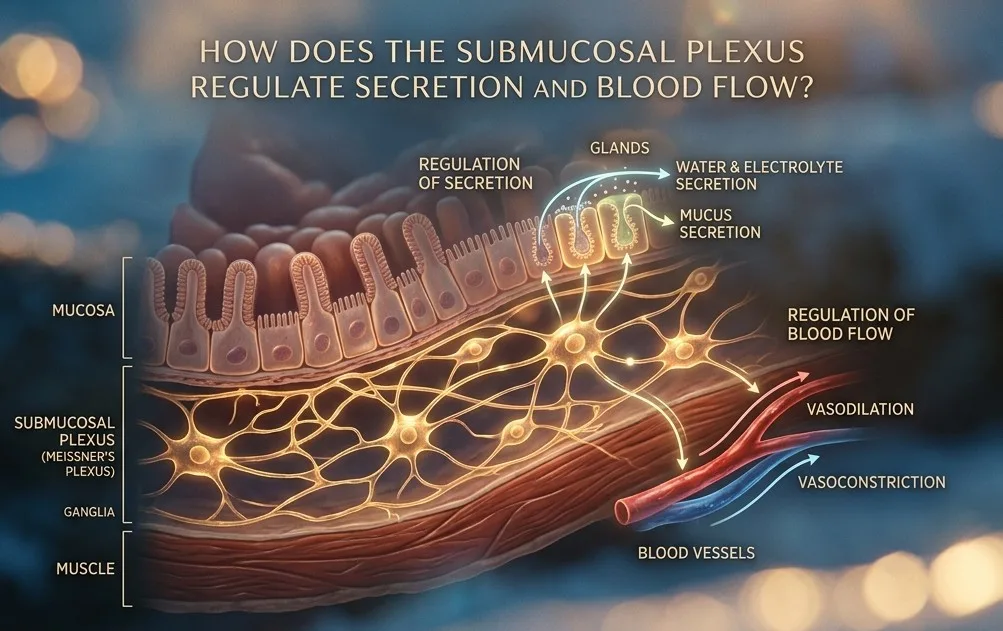
The submucosal plexus manages the gut’s secretory and sensory functions, regulating fluid secretion, nutrient absorption, and local blood flow. It works as the enteric nervous system’s sensing and support network, positioned closer to the gut’s inner lining than its motility-focused counterpart.
Neurons within the submucosal plexus detect chemical and mechanical changes within the gut lumen, such as the presence of nutrients, changes in acidity, or physical stretching of the intestinal wall. This sensory information then triggers appropriate responses, including the secretion of digestive enzymes, mucus, and fluids needed to properly process food, along with adjustments to local blood flow to support increased digestive activity after a meal.
This plexus also plays an important role in maintaining the gut’s protective barrier function, helping regulate the tight junctions between intestinal cells that control what substances can pass from the gut into the bloodstream. Disruption to this regulatory system has been studied in relation to increased intestinal permeability, sometimes informally described as a “leaky gut,” a condition of ongoing scientific interest regarding its potential connections to broader inflammatory and digestive health issues.
Recognizing that gut secretion and absorption depend on this specialized, sensing nervous system helps explain why conditions affecting the submucosal plexus can produce symptoms like malabsorption or altered bowel habits, even when the physical structure of the intestine appears otherwise normal on standard testing.
What Types of Neurons Make Up the Enteric Nervous System?
The enteric nervous system contains several distinct types of specialized neurons, each contributing a specific function to the overall digestive process. Understanding these categories clarifies how such a complex, semi-independent system can operate with so little ongoing input from the brain.
Intrinsic primary afferent neurons act as the system’s sensory detectors, monitoring chemical and mechanical conditions within the gut lumen, such as nutrient content or stretching of the intestinal wall. Interneurons integrate this sensory information and coordinate the appropriate response, functioning much like a local processing center within the gut wall itself. Motor neurons then carry out the final response, either stimulating or inhibiting smooth muscle contraction, or triggering glandular secretion, depending on what the current digestive situation requires.
- Intrinsic primary afferent neurons detect chemical and mechanical stimuli within the digestive tract.
- Interneurons integrate sensory information and coordinate an appropriate digestive response.
- Motor neurons control smooth muscle contraction and glandular secretion throughout the gut.
- Enteric glial cells support and protect enteric neurons while also contributing to gut barrier function.
This local, self-contained processing loop, sensing conditions, integrating information, and generating a response, all within the gut wall itself, is precisely what allows the enteric nervous system to manage complex digestive reflexes without waiting for input from the distant central nervous system, a genuinely remarkable feat of biological engineering.
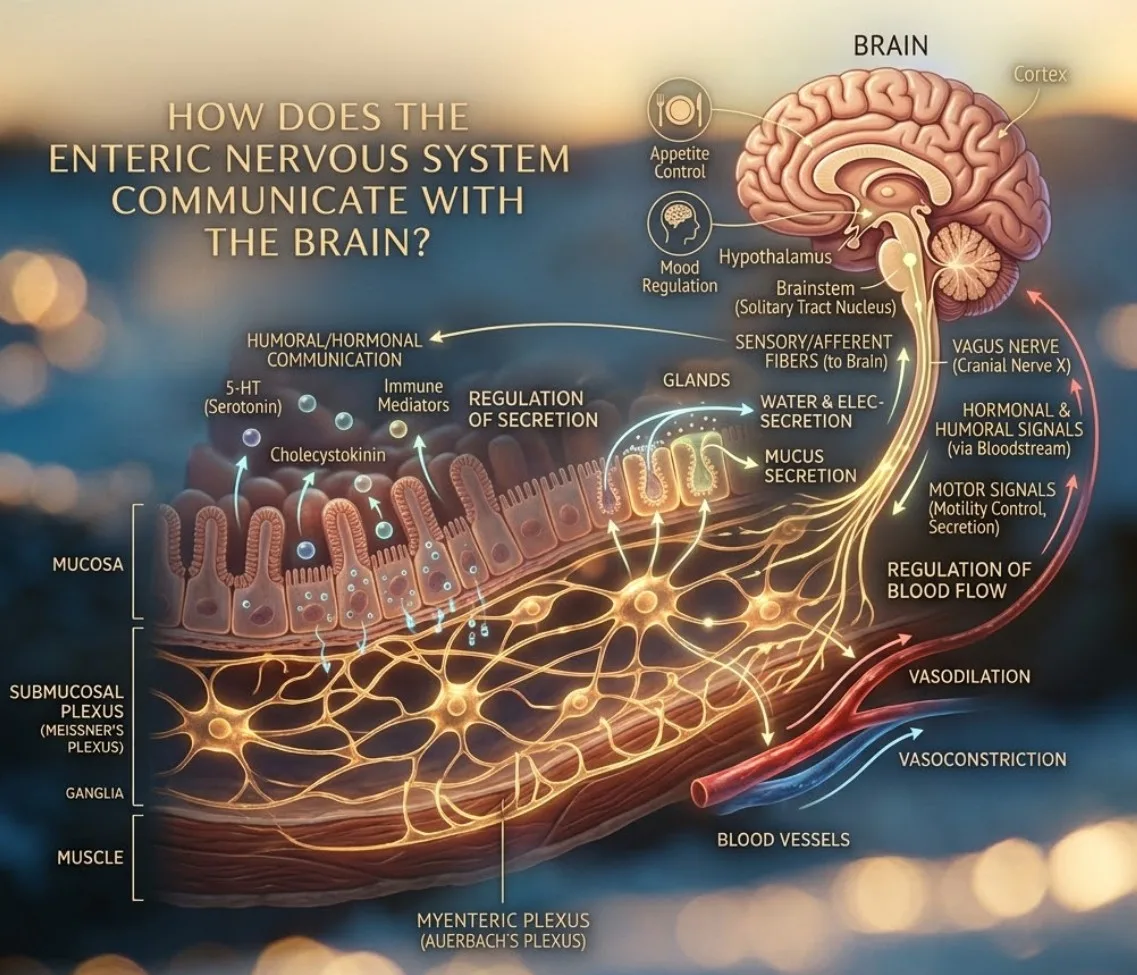
How Does the Enteric Nervous System Communicate With the Brain?
Despite its impressive independence, the enteric nervous system remains in constant, bidirectional communication with the brain, primarily through the vagus nerve. This connection, often called the gut-brain axis, explains why emotional states and digestive symptoms are so closely intertwined.
The vagus nerve carries an enormous amount of sensory information from the gut toward the brain, in fact carrying more signals from the gut to the brain than the reverse direction, which helps explain why digestive discomfort can so powerfully affect mood, and why emotional states can so quickly translate into physical gut sensations. Physician and researcher Emeran Mayer’s extensive work on the mind-gut connection has explored how this bidirectional communication influences not just digestion but also mood, stress resilience, and even certain aspects of cognitive function, framing gut health as genuinely relevant to overall mental wellbeing rather than a separate, unrelated concern.
Psychiatrist and researcher Stephen Porges’s polyvagal theory adds further context to this connection, describing how vagal nerve activity contributes to the body’s broader capacity for emotional regulation and stress recovery, suggesting that the same nerve pathway connecting brain and gut also plays a meaningful role in shifting between states of stress and calm. This helps explain why techniques that calm the nervous system more broadly, such as slow breathing, sometimes produce noticeable improvements in digestive symptoms as well.
A practical takeaway: because the gut-brain connection runs so strongly from gut to brain, addressing digestive health directly, alongside broader stress management, can be a genuinely important part of supporting overall emotional wellbeing, not merely a side benefit.
How Does the Enteric Nervous System Relate to the Gut Microbiome?
The enteric nervous system exists in close, ongoing dialogue with the trillions of bacteria living within the digestive tract, collectively known as the gut microbiome. This relationship represents one of the most actively researched areas in modern gastrointestinal science.
Gut bacteria produce a wide range of chemical byproducts, including certain neurotransmitters and short-chain fatty acids, that can directly influence enteric neuron activity and, through the vagus nerve, potentially influence brain function and mood as well. Enteric neurons, in turn, help regulate the intestinal environment in ways that shape which bacterial species thrive, creating a continuous feedback loop between the nervous system and the microbial community living within the gut.
Disruptions to this delicate balance, sometimes called dysbiosis, have been studied in relation to a range of digestive and even mood-related symptoms, though researchers caution that this remains a complex, actively evolving area of science rather than one with simple, fully established cause-and-effect answers. Still, this research underscores that digestive health, nervous system function, and the gut microbiome are far more interconnected than previously understood.
A practical, evidence-supported takeaway: dietary patterns rich in fiber and diverse plant foods support a healthier gut microbiome, which in turn may support healthier enteric nervous system signaling, offering a genuinely actionable strategy for supporting overall digestive and possibly emotional wellbeing.
What Happens When the Enteric Nervous System Malfunctions?
Enteric nervous system dysfunction can produce a wide range of digestive symptoms, from altered motility to abnormal secretion and pain sensitivity, even when standard structural testing shows no visible abnormality. This is part of why certain digestive conditions can be so frustrating to diagnose and explain.
Irritable bowel syndrome is one of the most common conditions linked to enteric nervous system dysfunction, involving altered gut sensitivity and motility that produces symptoms like abdominal pain, bloating, and irregular bowel habits, without any visible structural damage to the intestine. Gastroparesis, a condition involving delayed stomach emptying, can result from damage to the nerves controlling stomach motility, often associated with long-standing diabetes. Hirschsprung’s disease, discussed earlier in relation to the myenteric plexus, represents a more severe, congenital form of enteric nervous system dysfunction present from birth.
- Irritable bowel syndrome involves altered gut sensitivity and motility without visible structural damage.
- Gastroparesis results from nerve damage affecting stomach motility, often linked to diabetes.
- Hirschsprung’s disease involves congenital absence of myenteric plexus neurons in part of the colon.
- Functional dyspepsia can reflect disrupted enteric nervous system sensory processing in the upper digestive tract.
Because these conditions often don’t show up clearly on standard imaging or blood tests, patients sometimes go years without a clear diagnosis, which is precisely why increased awareness of enteric nervous system function matters both for patients seeking validation and for clinicians pursuing accurate diagnosis.

How Are Enteric Nervous System Disorders Diagnosed and Treated?
Diagnosing enteric nervous system disorders typically requires specialized functional testing, since standard imaging often appears normal even when significant dysfunction is present. This distinction matters enormously for patients who have been told repeatedly that “nothing is wrong” despite persistent, real symptoms.
Gastric emptying studies can assess motility problems like gastroparesis, while specialized manometry testing measures the pressure and coordination of muscle contractions throughout the digestive tract. In cases of suspected Hirschsprung’s disease, a rectal biopsy can directly confirm the absence of myenteric plexus neurons in the affected segment. For conditions like irritable bowel syndrome, diagnosis often relies on a careful symptom history combined with ruling out other structural or inflammatory causes, since no single definitive test currently exists.
Treatment approaches vary considerably depending on the specific condition but often include dietary modifications, medications targeting gut motility or sensitivity, and, increasingly, therapies addressing the gut-brain connection directly, such as gut-directed cognitive behavioral therapy or specific relaxation techniques shown to reduce digestive symptom severity. Surgical intervention remains necessary for structural conditions like Hirschsprung’s disease.
- Seek specialized testing when digestive symptoms persist despite normal standard imaging results.
- Track symptom patterns related to stress, diet, and timing, since this information helps guide diagnosis and treatment.
- Consider gut-brain focused therapies, since addressing stress and emotional regulation can meaningfully improve digestive symptoms.
- Support gut microbiome health through a fiber-rich, varied diet, which may positively influence enteric nervous system function.
How Does Enteric Nervous System Function Change Across the Lifespan?
The enteric nervous system develops early in fetal life and continues maturing through infancy, while also showing measurable changes in older adulthood. Recognizing this trajectory helps distinguish typical development and aging from patterns that deserve closer medical attention.
In infancy, the enteric nervous system is still refining its coordination, which is part of why digestive irregularities like colic and reflux are relatively common in the first months of life before settling as the system matures further. Congenital conditions like Hirschsprung’s disease, resulting from incomplete enteric nervous system development before birth, are typically identified and treated during this early period. In older adulthood, gradual, natural changes in enteric neuron density and function can contribute to slower gut motility and an increased likelihood of constipation, distinct from any specific disease process, though conditions like diabetes and certain neurodegenerative diseases can accelerate these changes further.
Practical strategies for supporting enteric nervous system health across the lifespan include maintaining a fiber-rich, varied diet, staying adequately hydrated, managing chronic conditions like diabetes proactively, engaging in regular physical activity, and addressing chronic stress through evidence-based relaxation techniques, all of which support healthier gut-brain communication and digestive function over time.
FAQs about the Enteric Nervous System
What is the main function of the enteric nervous system?
The enteric nervous system’s primary role is regulating digestion, including motility, secretion, blood flow, and nutrient sensing, largely independently of the brain. It coordinates the rhythmic muscle contractions that move food through the digestive tract, called peristalsis, while also managing the secretion of digestive enzymes and fluids needed to properly process food. Despite this independence, it remains in constant communication with the central nervous system through the vagus nerve, forming the basis of the gut-brain axis. This combination of independent function and brain connectivity makes it one of the most unique divisions of the entire nervous system.
Why is the enteric nervous system called the second brain?
The enteric nervous system earned the nickname “second brain” largely through the work of physician and researcher Michael Gershon, who highlighted both its enormous scale, containing several hundred million neurons, and its genuine capacity for independent function. Unlike most peripheral nerve networks, the ENS can coordinate complex digestive reflexes without requiring ongoing instructions from the brain, a capacity demonstrated even in isolated segments of intestine. This independence, combined with its close, bidirectional communication with the brain, gives it a uniquely brain-like status among the body’s peripheral nervous system structures. It remains formally classified as a division of the autonomic nervous system, alongside the sympathetic and parasympathetic branches.
What are the two main plexuses of the enteric nervous system?
The enteric nervous system’s two primary networks are the myenteric plexus, also called Auerbach’s plexus, and the submucosal plexus, also called Meissner’s plexus. The myenteric plexus sits between the gut’s muscle layers and primarily controls motility, coordinating the muscle contractions that move food through the digestive tract. The submucosal plexus sits closer to the gut lining and primarily regulates secretion, absorption, and local blood flow. Together, these two plexuses allow the enteric nervous system to manage the mechanical and chemical sides of digestion simultaneously.
Can stress and anxiety affect the enteric nervous system?
Yes, stress and anxiety can significantly affect enteric nervous system function through the close, bidirectional connection between the gut and brain, known as the gut-brain axis. Because the vagus nerve carries more signals from the gut to the brain than in the opposite direction, digestive discomfort can strongly influence mood, while emotional stress can just as powerfully affect digestion, sometimes triggering symptoms like nausea, cramping, or altered bowel habits. This connection is part of why conditions like irritable bowel syndrome often worsen during periods of significant stress. Addressing stress through evidence-based techniques can meaningfully improve digestive symptoms for many people.
What conditions are linked to enteric nervous system dysfunction?
Several digestive conditions are linked to enteric nervous system dysfunction, including irritable bowel syndrome, which involves altered gut sensitivity and motility, and gastroparesis, which involves delayed stomach emptying often related to nerve damage from diabetes. Hirschsprung’s disease represents a congenital condition in which myenteric plexus neurons fail to develop in part of the colon, requiring surgical treatment, particularly in newborns. Functional dyspepsia, involving upper digestive discomfort without clear structural cause, has also been linked to disrupted enteric nervous system sensory processing. These conditions often require specialized functional testing for accurate diagnosis, since standard imaging frequently appears normal.
How does the gut microbiome interact with the enteric nervous system?
The gut microbiome and enteric nervous system exist in close, ongoing communication, with gut bacteria producing chemical byproducts that can directly influence enteric neuron activity and, through the vagus nerve, potentially affect brain function and mood. In turn, enteric neurons help regulate the intestinal environment in ways that shape which bacterial species thrive, creating a continuous feedback loop between the nervous system and the gut’s microbial community. Disruptions to this balance, called dysbiosis, have been studied in relation to various digestive and mood-related symptoms, though this remains an actively evolving area of research. Supporting a healthy, diverse gut microbiome through diet may help promote healthier enteric nervous system function.
Bibliography
- Purves, D., Augustine, G. J., Fitzpatrick, D., et al. (2001). The Enteric Nervous System. Neuroscience, 2nd Edition. Sinauer Associates.
- Queensland Brain Institute. (2018). Enteric Nervous System.
- Gershon, M. D. (1998). The Second Brain: A Groundbreaking New Understanding of Nervous Disorders of the Stomach and Intestine. HarperCollins.
- Ramón y Cajal, S. (1911). Histologie du Système Nerveux de l’Homme et des Vertébrés. Maloine.
- Langley, J. N. (1921). The Autonomic Nervous System, Part 1. W. Heffer & Sons.
- Mayer, E. A. (2016). The Mind-Gut Connection: How the Hidden Conversation Within Our Bodies Impacts Our Mood, Our Choices, and Our Overall Health. Harper Wave.
- Porges, S. W. (2011). The Polyvagal Theory: Neurophysiological Foundations of Emotions, Attachment, Communication, and Self-Regulation. W.W. Norton & Company.
- National Center for Biotechnology Information. (2020). The Enteric Nervous System and Its Emerging Role as a Therapeutic Target. PMC, National Institutes of Health.
Use this citation format to reference the article clearly and help readers find the original source.
PsychologyFor. (2026). Enteric Nervous System: Parts and Functions. PsychologyFor. https://psychologyfor.com/enteric-nervous-system-parts-and-functions/