

See more of our articles in your search results.
An ethical dilemma is a complex situation requiring a choice between two or more alternatives where no option is clearly right or wrong, and each choice involves violating some ethical principle or causing harm in some way. These situations force us to confront competing moral values, question our deepest beliefs, and make decisions where every available option has significant ethical costs. Unlike straightforward moral choices where right and wrong are clear, ethical dilemmas present scenarios where reasonable people can disagree about the best course of action, even when sharing similar values.
What makes ethical dilemmas particularly challenging is that they often pit fundamental moral principles against each other. You might face a situation where telling the truth causes harm, where saving one life requires sacrificing another, or where respecting autonomy conflicts with protecting someone from danger. These aren’t simply difficult decisions—they’re situations where traditional moral frameworks provide conflicting guidance, leaving individuals to navigate murky ethical waters without a clear compass.
Ethical dilemmas appear throughout human experience, from everyday personal decisions to high-stakes professional choices to societal policy debates. Healthcare professionals face dilemmas about resource allocation and end-of-life care. Business leaders confront conflicts between profitability and social responsibility. Parents navigate tensions between protecting children and fostering independence. Journalists balance truth-telling against potential harm. Citizens weigh individual freedom against collective safety. These dilemmas reveal the complexity of moral reasoning and the inadequacy of simplistic ethical rules for navigating real-world situations.
Understanding ethical dilemmas matters because how we approach these challenges reflects and shapes who we are as individuals and societies. The way we reason through difficult choices, the values we prioritize when conflicts arise, and the principles we’re willing to compromise (or refuse to compromise) define our moral character. Moreover, ethical dilemmas are becoming increasingly prevalent in our interconnected, technologically advanced world, where decisions often have far-reaching consequences and affect people we’ll never meet. Developing sophisticated frameworks for approaching these challenges isn’t just an intellectual exercise—it’s an essential life skill.
What Defines an Ethical Dilemma
Not every difficult decision constitutes an ethical dilemma. To qualify as a true ethical dilemma, a situation must meet specific criteria that distinguish it from ordinary moral choices or practical problems.
How many of these have you been "meaning to read" for months?
- 1
 TarcherThe Artist's Way30th Anniversary EditionListen Free On Audible
 - 2
 New Harbinger PublicationsThe Dialectical Behavior Therapy Skills WorkbookPractical DBT Exercises for Learning Mindfulness, Interpersonal Effectiveness, Emotion Regulation...Listen Free On Audible
 - 3
 New Harbinger PublicationsAdult Children of Emotionally Immature ParentsHow to Heal from Distant, Rejecting, or Self-Involved ParentsListen Free On Audible
Competing Moral Obligations
A genuine ethical dilemma involves two or more moral obligations, principles, or values that conflict with each other. You’re not choosing between right and wrong but between right and right, or between two wrongs where inaction isn’t an option. For example, a doctor might face conflicting obligations to preserve life and to respect a patient’s autonomous choice to refuse treatment. Both obligations are ethically valid, yet satisfying one necessarily violates the other.
No Clearly Superior Option
Ethical dilemmas lack obvious solutions that satisfy all moral considerations. Each available choice involves genuine moral costs—either violating a principle, causing harm, or failing to fulfill an obligation. If one option is clearly superior from all ethical perspectives, you’re facing a difficult choice but not a true dilemma. The hallmark of a dilemma is that reasonable, well-intentioned people applying sound moral reasoning can disagree about which option is ethically preferable.
Necessity of Choice
Ethical dilemmas require action or decision; avoiding the choice is either impossible or itself constitutes a morally significant choice. You cannot simply walk away or postpone indefinitely. The situation demands engagement, even though every action involves moral compromise. This necessity creates the moral tension that defines dilemmas—you must act, but every action involves moral compromise.
Significant Consequences
True ethical dilemmas involve stakes that matter. The consequences of your choice affect important values, rights, wellbeing, or principles. Trivial decisions, however difficult practically, don’t constitute ethical dilemmas if the moral implications are minimal. The significance of consequences explains why dilemmas generate such intense deliberation and emotional distress—the choice genuinely matters in meaningful ways.
Major Types of Ethical Dilemmas
Ethicists have identified several distinct categories of ethical dilemmas based on the nature of the conflict and the principles involved.
Justice vs. Mercy Dilemmas
These dilemmas pit fairness, rules, and equal treatment against compassion, forgiveness, and individual circumstances. Justice requires consistent application of standards and consequences for violations, while mercy considers context, intent, and the possibility of redemption. A judge sentencing a first-time offender who committed a crime due to desperate circumstances faces this dilemma—strict application of law versus leniency based on mitigating factors. Teachers face similar tensions when deciding whether to enforce rules strictly or make exceptions for students facing difficult situations.
Individual Rights vs. Common Good
Many ethical dilemmas involve conflicts between protecting individual freedoms and promoting collective welfare. Public health measures like mandatory vaccinations, surveillance for security purposes, or restrictions during pandemics exemplify this tension. Individual autonomy is a fundamental right, but unlimited individual freedom can harm collective wellbeing. These dilemmas become particularly acute when the harm to individuals is certain and specific while benefits to the collective are probabilistic and diffuse.
Short-Term vs. Long-Term Consequences
Some dilemmas require choosing between immediate benefits or harm avoidance and long-term outcomes. A company might face a choice between cost-cutting that preserves immediate jobs but undermines long-term competitiveness, or investing in innovation that requires current layoffs but ensures future sustainability. Parents face similar tensions between giving children what they want now versus what will benefit them in the future. These dilemmas are complicated by uncertainty about long-term outcomes and the psychological reality that immediate consequences feel more compelling than distant ones.
Truth vs. Loyalty
These dilemmas involve conflicts between honesty and maintaining relationships, protecting others, or honoring commitments. Whistleblowers face this dilemma acutely—tell the truth about organizational wrongdoing or remain loyal to colleagues and institutions. Friends confront it when they know information that would hurt someone they care about. Healthcare providers encounter it when patients’ families request withholding diagnoses. The tension lies between the moral value of truthfulness and the moral value of loyalty, protection, and relationship preservation.
Self-Interest vs. Altruism
Many dilemmas pit personal welfare, success, or survival against helping others or upholding principles at personal cost. A student who witnesses cheating faces this dilemma—report it and face social consequences, or stay silent and maintain relationships while compromising academic integrity. Professionals encounter it when ethical behavior threatens career advancement. These dilemmas test character by forcing choices between what benefits you and what’s right by broader standards.
Competing Loyalties
Sometimes ethical dilemmas involve conflicting obligations to different people or groups. A manager might receive confidential information about impending layoffs, creating tension between loyalty to the organization requiring confidentiality and loyalty to employees who could benefit from advance warning. Children of divorced parents often face competing loyalties. Dual-role relationships create these dilemmas frequently—the therapist who’s also a friend, the boss who’s also a relative, the teacher who’s also a parent in the school.

Ethical Frameworks for Approaching Dilemmas
Different philosophical traditions offer distinct approaches to resolving ethical dilemmas, each with strengths and limitations.
Utilitarianism: Greatest Good for Greatest Number
Utilitarian ethics focuses on consequences, advocating choices that maximize overall wellbeing and minimize suffering. When facing a dilemma, utilitarians calculate the likely outcomes of each option and choose whichever produces the greatest net good. This approach provides clear decision criteria and emphasizes impartial consideration of all affected parties. However, it can justify sacrificing individuals for collective benefit, struggles with measuring and comparing different types of wellbeing, and can conflict with intuitions about rights and justice.
Deontological Ethics: Rules and Duties
Deontological approaches, most famously articulated by Immanuel Kant, emphasize moral rules, duties, and principles rather than consequences. Certain actions are inherently right or wrong regardless of outcomes. Deontologists facing dilemmas identify which moral rules apply and prioritize absolute prohibitions (like “never lie” or “never use people merely as means”). This framework protects individual rights and maintains moral absolutes, but can seem inflexible when rules conflict and may produce seemingly cruel outcomes when rigid adherence to principle causes preventable suffering.
Virtue Ethics: Character and Excellence
Virtue ethics, rooted in Aristotelian philosophy, focuses on character rather than rules or consequences. When facing dilemmas, virtue ethicists ask “What would a virtuous person do?” and consider which choice develops moral character and human flourishing. This approach emphasizes practical wisdom (phronesis) in navigating particular situations rather than applying universal rules. It’s flexible and recognizes moral complexity, but provides less specific guidance and can be criticized for circular reasoning—virtuous people make good choices, and good choices are what virtuous people make.
Care Ethics: Relationships and Context
Care ethics, developed significantly by feminist philosophers, emphasizes relationships, context, and responsibilities that arise from connections to others. Rather than abstract principles, care ethics prioritizes maintaining relationships, responding to particular needs, and recognizing the situated nature of moral problems. This framework captures important moral dimensions often overlooked by more abstract approaches, particularly in personal relationships. However, it can struggle with situations involving strangers, may bias toward those we’re connected to over more distant others, and can have difficulty articulating general principles.
Rights-Based Ethics: Protecting Autonomy
Rights-based approaches emphasize protecting fundamental human rights—life, liberty, autonomy, dignity. When facing dilemmas, this framework prioritizes respecting and protecting rights, viewing them as moral constraints on action. Rights provide strong protections for individuals against collective demands. However, rights can conflict with each other, and rights-based thinking can struggle when all options violate someone’s rights or when prioritizing rights produces outcomes that seem intuitively wrong.

Five Thought-Provoking Ethical Dilemmas
Example 1: The Trolley Problem
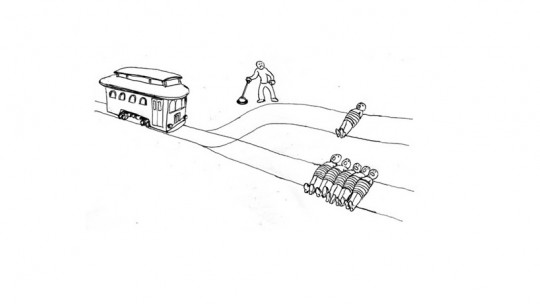
Perhaps the most famous ethical dilemma in philosophy, the trolley problem presents this scenario: A runaway trolley is heading down tracks toward five workers who will be killed if it continues. You’re standing by a lever that can divert the trolley to a side track where it will kill one worker instead. Do you pull the lever, actively choosing to kill one person to save five?
Most people’s intuition says yes—saving five lives at the cost of one seems clearly better from a utilitarian perspective. But the dilemma deepens with variations: What if instead of pulling a lever, you must push a large person off a bridge to stop the trolley (same outcome—one dies, five saved)? Most people find this version morally worse, revealing tensions between consequentialist reasoning (outcomes are what matter) and deontological intuitions (there’s a moral difference between allowing deaths and actively causing them, or between treating someone as a side-effect versus using them as a means).
The trolley problem illuminates fundamental questions about moral reasoning: Does intention matter more than consequences? Is there a moral difference between action and inaction? Between killing and letting die? Are some means impermissible even for good ends? These questions aren’t merely theoretical—they arise in medical triage, autonomous vehicle programming, warfare ethics, and resource allocation.
Example 2: The Lifeboat Dilemma
A ship has sunk, and 11 people are in a lifeboat designed for 10. The boat will sink unless one person leaves, killing everyone. No one volunteers. The situation allows several possible responses: draw lots randomly to determine who leaves; select the weakest or sickest person; do nothing and let everyone die; have the strongest person sacrifice themselves; consider factors like whether anyone has dependents who need them.
This dilemma forces confrontation with questions about fairness in life-or-death situations. Random selection seems fairest procedurally but feels wrong when it might eliminate someone with greater contributions to make or responsibilities to fulfill. Selection based on “value” or “merit” preserves more lives effectively but requires impossible judgments about whose life matters more. Considering dependents or social roles seems pragmatic but violates the principle that all human lives have equal intrinsic worth.
The lifeboat dilemma isn’t merely hypothetical—it mirrors real decisions about organ transplant priorities, vaccine distribution during shortages, triage in mass casualty events, and rescue operations with limited capacity. How societies resolve these dilemmas reveals fundamental commitments about human equality, justice, and the limits of utilitarian reasoning.
Example 3: The Honest Recommendation
Your close friend and colleague asks you to write a recommendation letter for a prestigious position. You’ve worked together for years and value the friendship. However, you know this person is not a good fit for the role—they lack key skills, had performance issues in similar work, and you believe they would struggle and potentially fail. An honest assessment would likely prevent them from getting the job. A positive letter would help your friend but potentially mislead the employer and possibly set your friend up for failure.
This dilemma pits honesty and professional integrity against loyalty and the desire to help someone you care about. Writing an honest negative assessment honors truth-telling and protects the employer from making a poor hiring decision, but damages your friendship and possibly your friend’s career prospects. Writing a dishonestly positive letter helps your friend in the short term but violates professional ethics, potentially harms the employer, and might ultimately harm your friend by placing them in a role where they’ll struggle.
Options include writing an honest letter and accepting friendship consequences, declining to write the letter at all, writing a carefully worded letter that’s honest but emphasizes positives, or privately advising your friend that you’re not the best reference. Each choice involves moral costs, and the “right” answer depends on how you weigh competing values of honesty, loyalty, professional responsibility, and friendship.
Example 4: The Terminal Diagnosis Truth
You’re a physician whose patient has received a terminal diagnosis with approximately six months to live. The patient is currently feeling well and is planning an expensive dream vacation and making long-term business investments. The patient’s adult children, who hold medical power of attorney, request that you not disclose the diagnosis yet, believing their parent will “give up” if they know and that delaying the news will give them a few more happy months. However, the patient is asking you directly about test results and is making decisions that might be different if they knew their prognosis.
This scenario creates tension between patient autonomy (the right to know about one’s own health and make informed decisions), beneficence (doing what’s medically best for the patient), non-maleficence (avoiding harm, which the family argues the truth would cause), and family relationships (respecting family wishes and dynamics). Telling the truth honors autonomy and enables informed decision-making but might cause psychological harm and create family conflict. Withholding information protects the patient from distress temporarily but violates autonomy, enables potentially regrettable decisions, and involves the doctor in active deception.
Contemporary medical ethics strongly favors patient autonomy and truth-telling, but cross-cultural perspectives and individual circumstances complicate this. In some cultures, family-based medical decision-making is normative rather than individual autonomy. Some patients genuinely prefer not to know certain information. The dilemma reveals tensions between universal ethical principles and culturally-situated values, between individual rights and family systems, and between different interpretations of what “protecting” someone means.
Example 5: The Whistleblower’s Choice
You work for a company and discover that your department has been systematically falsifying safety data for a product that could potentially cause harm to consumers. You’ve reported this through internal channels, but nothing has changed. Your options are: stay silent and keep your job, knowing people might be harmed; publicly reveal the wrongdoing (whistleblowing), which will likely end your career in the industry, damage colleagues’ livelihoods, and possibly bankrupt the company where many innocent people work; or resign quietly without saying anything public, preserving your integrity without directly causing harm to colleagues.
This dilemma involves competing loyalties and obligations. You have obligations to public safety, to truth and integrity, to colleagues who depend on the organization, to your own family who depends on your income, and to the principle that wrongdoing should be exposed. Speaking out protects potential victims and upholds ethical principles but causes certain harm to many innocent parties including yourself. Staying silent avoids causing direct harm to colleagues and yourself but makes you complicit in potential consumer harm.
Real whistleblowers face exactly these tensions. Edward Snowden, Jeffrey Wigand, and countless others have confronted choices where all options involve serious moral costs. Legal protections for whistleblowers reflect society’s recognition that exposing wrongdoing serves important values, but such protections are often inadequate to prevent career destruction. The dilemma highlights questions about individual moral responsibility for collective wrongdoing, whether personal costs can ever justify staying silent about harm, and where loyalties should lie when organizational and public interests conflict.
| Ethical Dilemma Type | Core Conflict | Example Scenario |
| Justice vs. Mercy | Fairness and rules vs. compassion and context | Judge sentencing a single parent for crime committed from desperation |
| Individual vs. Collective | Personal freedom vs. common good | Mandatory vaccination policies during pandemic |
| Short-term vs. Long-term | Immediate needs vs. future consequences | Environmental choices between current costs and future sustainability |
| Truth vs. Loyalty | Honesty vs. protecting relationships | Witnessing friend’s infidelity—tell their spouse or stay loyal to friend |
| Self-Interest vs. Altruism | Personal benefit vs. helping others | Accepting promotion that requires moving and leaving aging parent |
| Competing Loyalties | Conflicting obligations to different parties | Lawyer whose duty to client conflicts with duty to justice system |
How to Approach Ethical Dilemmas
While ethical dilemmas lack perfect solutions, systematic approaches can improve the quality of moral reasoning and decision-making.
Identify All Stakeholders and Interests
Begin by clearly identifying everyone affected by your decision and what interests or values are at stake. Ethical errors often stem from overlooking stakeholders or failing to consider important values. Cast a wide net initially—who is directly affected? Indirectly affected? What long-term consequences might emerge? What principles or values are involved? Comprehensive stakeholder analysis ensures you’re not inadvertently ignoring important considerations.
Clarify the Ethical Dimensions
Articulate precisely what makes the situation an ethical dilemma. Which principles or values conflict? What are your competing obligations? Why is no option clearly superior? Making the ethical structure explicit helps distinguish genuine moral dilemmas from practical problems, clarifies exactly what’s at stake, and enables more focused reasoning.
Consider Multiple Ethical Frameworks
Apply different ethical lenses to the dilemma. What would a utilitarian approach suggest? What about deontological principles? What virtues are relevant? What do rights-based considerations indicate? Examining the situation through multiple frameworks reveals different aspects of the moral problem and prevents over-reliance on a single mode of thinking that might miss important considerations.
Identify Creative Alternatives
Before accepting that you must choose between available options, search for creative alternatives that might address multiple values more successfully. Can you reframe the problem? Are there time-buying strategies? Can you find ways to honor both competing principles partially? Sometimes dilemmas persist because we’ve prematurely narrowed options. While some dilemmas truly offer no satisfying resolution, others benefit from creative problem-solving that finds previously unseen alternatives.
Consult Others and Seek Diverse Perspectives
Moral reasoning improves through dialogue. Consult with people who bring different perspectives, experiences, and values. Ethics committees, mentors, colleagues, or trusted friends can offer insights you’ve missed, challenge unexamined assumptions, and help you think through consequences. Be especially attentive to voices representing stakeholders different from yourself—those directly affected, people from different cultural backgrounds, or those with relevant expertise.
Consider Precedent and Consistency
Ask what principle your decision embodies and whether you could consistently apply that principle to similar cases. If your reasoning in this situation would lead to conclusions you find unacceptable in analogous situations, this suggests your analysis needs refinement. Consistency doesn’t mean rigidity—relevant differences can justify different responses—but ensuring principled consistency helps avoid ad hoc reasoning that merely rationalizes desired outcomes.
Make a Decision and Take Responsibility
At some point, analysis must yield to decision and action. Ethical dilemmas rarely offer certainty, and continued deliberation can become a form of avoidance. Make the best decision you can with available information, guided by careful reasoning and good faith effort to honor important values. Then take full responsibility for your choice, including its negative consequences, without self-deception or excuse-making.
Reflect and Learn
After resolution, reflect on the experience. What did you learn about your values and priorities? What would you do differently if faced with a similar situation? How did actual consequences compare to your predictions? This reflection builds moral wisdom and prepares you to navigate future dilemmas more skillfully.

Ethical Dilemmas in Contemporary Society
Modern technology and globalization create ethical dilemmas at unprecedented scales and complexity.
Artificial Intelligence and Automation
AI development presents dilemmas about autonomous weapons systems, algorithmic bias and discrimination, privacy versus security, job displacement, and whether machines should make life-or-death decisions. Self-driving cars must be programmed with ethical decision rules for unavoidable accidents—essentially encoding trolley problem solutions in software. These decisions affect millions yet are made by small groups of engineers and executives.
Climate Change and Environmental Ethics
Climate change creates profound dilemmas balancing present economic needs against future environmental catastrophe, developed nations’ responsibilities versus developing nations’ right to industrialize, individual freedom versus collective action requirements, and human interests versus ecosystem preservation. Solutions that adequately address the crisis require sacrifices that democracies struggle to impose, yet delay guarantees severe harm to future generations.
Healthcare Resource Allocation
Healthcare systems constantly face dilemmas about how to allocate limited resources. Who receives organ transplants when demand exceeds supply? How should pandemic vaccines be distributed when initial supplies are insufficient? Should expensive treatments be funded for rare diseases when the same resources could help more people with common conditions? How should societies balance expenditures on life-extension for the elderly against healthcare for children?
Privacy and Security
Digital technology creates dilemmas balancing privacy rights against security needs. Government surveillance might prevent terrorism but enables mass monitoring of citizens. Social media companies must balance free expression against preventing harmful content. Contact tracing apps could control disease spread but enable unprecedented tracking of individuals. Each technological capability creates new ethical terrain requiring navigation without established guideposts.
Genetic Engineering and Enhancement
Biotechnology enables genetic modification that could eliminate diseases but also raises dilemmas about “designer babies,” human enhancement, fairness and access, and unintended consequences. Should parents be allowed to select embryos for intelligence or physical traits? Should gene therapy be used only for diseases or also for enhancement? Who decides what characteristics are “defects” requiring correction? These questions involve deeply held values about human nature, equality, and the limits of parental autonomy.

Teaching Ethical Reasoning
Developing moral reasoning abilities is increasingly recognized as essential education, yet approaches vary significantly.
Exposure to Diverse Perspectives
Moral development benefits from encountering perspectives different from one’s own. This includes exposure to different cultural values, philosophical traditions, religious worldviews, and lived experiences. Such exposure challenges ethnocentrism, reveals the contingency of one’s own values, and builds capacity for moral imagination—the ability to see situations from multiple viewpoints.
Practice with Concrete Cases
Abstract ethical principles come alive through engagement with concrete dilemmas. Case-based learning using real or realistic scenarios allows practice in moral reasoning, reveals the complexity of applying principles to particular situations, and helps develop practical wisdom alongside theoretical knowledge. Professional education in medicine, law, business, and journalism increasingly incorporates ethics cases for this reason.
Development of Moral Sensitivity
Beyond reasoning about dilemmas once identified, ethical competence requires recognizing moral dimensions of situations—knowing when you’re facing an ethical issue in the first place. This “moral sensitivity” develops through attention to how decisions affect others, awareness of power dynamics and vulnerability, and cultivation of empathy. Many ethical failures stem not from poor reasoning but from failure to recognize situations as ethically significant.
Emphasis on Deliberation and Justification
Ethics education should emphasize the quality of reasoning process rather than arriving at “correct” answers. Good ethical thinking involves articulating principles, considering consequences, weighing competing values, examining assumptions, seeking consistency, and providing justifications that others could evaluate. The goal is developing moral autonomy—the capacity to reason through ethical challenges independently rather than merely following authority or convention.
FAQs About Ethical Dilemmas
Is there always a “right” answer to an ethical dilemma?
This question itself divides moral philosophers. Some ethical theories maintain that there is always a correct answer even if we cannot determine it with certainty—moral truth exists objectively even when obscured by complexity or uncertainty. Other perspectives, particularly moral pluralism, argue that genuine dilemmas involve incommensurable values that cannot be reduced to a single scale, making some situations genuinely irresolvable with no objectively “right” answer. From a practical standpoint, what matters most is the quality of reasoning used to reach a decision rather than the illusion of certainty. Even if an objectively correct answer exists, we must make decisions with imperfect information and limited certainty. Focus on systematic analysis, good-faith engagement with competing considerations, and principled reasoning rather than searching for guaranteed correctness. Some dilemmas may have better and worse responses rather than a single right answer, and reasonable people applying sound ethical reasoning can disagree. What’s crucial is avoiding both moral relativism (the claim that any choice is equally valid) and false certainty (claiming absolute correctness when genuine ambiguity exists).
How do cultural differences affect ethical dilemmas?
Culture profoundly shapes ethical reasoning, affecting which values are prioritized, how dilemmas are framed, and what solutions seem acceptable. Individualistic cultures emphasize personal autonomy, rights, and individual welfare, while collectivist cultures prioritize community harmony, family obligations, and group welfare. These differences create distinct ethical sensibilities that can lead to divergent conclusions about the same dilemma. For example, Western medical ethics strongly emphasizes patient autonomy and informed consent, while many Asian and traditional cultures favor family-based decision-making with less emphasis on full disclosure to patients. Neither approach is inherently superior; each reflects coherent value systems. Cultural relativism—the idea that ethics are entirely culturally determined with no universal standards—is controversial. Most ethicists recognize both culturally variable ethical norms and some universal values (prohibitions on murder, value of truth-telling, concern for human welfare). The challenge is distinguishing culturally specific applications from truly universal principles. When navigating cross-cultural ethical situations, important practices include recognizing your own cultural assumptions, seeking to understand others’ ethical frameworks on their own terms, looking for common ground in underlying values even when specific practices differ, and showing humility about claims to universal truth while still maintaining that some practices (genocide, torture, slavery) are wrong regardless of cultural context.
What’s the difference between an ethical dilemma and a moral temptation?
This distinction is crucial but often overlooked. A moral temptation involves a clear conflict between right and wrong, where you know what’s ethical but face temptation to do otherwise for personal benefit. For example, keeping money you found when you know you should return it, or cheating on an exam when you know it’s wrong. The ethical course is clear; the challenge is weakness of will or self-interest. An ethical dilemma, in contrast, involves conflict between competing ethical principles where reasonable people could disagree about the right course. The challenge isn’t weakness of will but genuine moral complexity. You’re not tempted away from what’s right; you’re uncertain what right means in this context. Many situations people call “ethical dilemmas” are actually moral temptations in disguise—the person knows what’s right but frames it as a dilemma to avoid feeling guilty about doing what’s wrong. Genuine dilemmas create moral distress even when you choose carefully and act with integrity because every option involves violating some legitimate value. Temptations, once succumbed to, generate guilt because you’ve failed to do what you knew was right. The distinction matters because different responses are appropriate: temptations call for strengthening moral resolve and self-control, while dilemmas call for wisdom, careful reasoning, and acceptance that perfect solutions may not exist.
Can ethical dilemmas cause psychological harm?
Yes, ethical dilemmas can cause significant psychological distress, particularly when stakes are high and choices involve serious harm regardless of decision. The term “moral injury” describes psychological damage resulting from perpetrating, failing to prevent, or witnessing actions that violate one’s moral code. This differs from PTSD (which involves fear-based trauma) in that it involves shame, guilt, and damage to moral identity. Healthcare workers facing triage decisions during resource scarcity often experience moral distress. Military personnel ordered to act in ways conflicting with their values suffer moral injury. Whistleblowers face psychological consequences even when choosing courageously. This distress stems from several sources: the weight of responsibility for consequential decisions, violation of deeply held values regardless of choice, inability to prevent harm, and lack of external validation when doing the right thing causes suffering. Some degree of moral distress when facing genuine dilemmas is actually ethically healthy—it reflects appropriate recognition of moral weight and prevents the danger of making serious choices too easily. However, excessive distress without support can lead to burnout, depression, or moral disengagement. Organizations should provide ethical consultation, create spaces for moral deliberation, offer psychological support for those facing dilemmas, and establish systems that prevent individuals from bearing impossible moral burdens alone. Recognition that some situations have no good options, only less-bad choices, can help prevent the self-blame that worsens moral injury.
How should businesses approach ethical dilemmas?
Organizations face ethical dilemmas frequently and require systematic approaches rather than ad hoc responses. Effective organizational ethics begins with clearly articulated values and principles that guide decision-making before specific dilemmas arise. These shouldn’t be mere aspirations but genuine commitments embedded in culture and reinforced through leadership behavior, policies, and incentive structures. When dilemmas arise, organizations should establish clear decision-making processes including ethics committees, stakeholder consultation, and transparent deliberation rather than leaving individuals to navigate alone. Many organizational ethical failures occur when responsibility is too diffused (everyone’s responsibility becomes no one’s responsibility) or too concentrated (individuals face impossible burdens without institutional support). Best practices include appointing ethics officers or ombudspersons who can provide consultation, creating protected channels for raising ethical concerns without career risk, conducting regular ethics training that goes beyond legal compliance to genuine moral reasoning, and implementing stakeholder engagement processes that bring affected parties’ voices into decisions. Organizations should recognize that short-term financial costs of ethical behavior often yield long-term benefits through reputation, employee morale, customer loyalty, and reduced regulatory or legal risk. When faced with dilemmas pitting profitability against ethics, leadership must be willing to prioritize values over immediate returns. Companies should also conduct post-hoc reviews of significant ethical decisions to improve future reasoning and create organizational learning. Perhaps most importantly, organizational culture must support speaking up about ethical concerns and reward moral courage rather than punishing those who raise difficult questions.
Are some ethical dilemmas unsolvable?
Some philosophers argue that certain situations create genuine moral dilemmas where every available option violates legitimate ethical obligations, making “resolution” in the sense of finding a choice that satisfies all moral demands impossible. These “tragic dilemmas” force choices between evils where you will necessarily do something wrong regardless of which option you choose. For example, Sophie’s Choice (forced to choose which child will die) represents an unsolvable dilemma—every choice involves an appalling moral violation. Other philosophers argue that while decisions may be extremely difficult, there’s always a “least wrong” option that represents the ethically superior choice even if it’s still regrettable. From a practical standpoint, what matters is recognizing that some situations don’t have “good” solutions, only less-bad ones, and that even when you’ve reasoned carefully and chosen as well as possible, you may still have done something morally problematic. This recognition is important for several reasons: It prevents the false comfort of thinking every dilemma has a “right answer” that absolves us of moral remainder. It acknowledges the genuine moral weight of difficult choices rather than pretending choice makes the unchosen option unproblematic. It validates the moral distress people feel even after making the best decision available. It highlights the importance of creating social structures that prevent individuals from facing impossible choices when possible. Whether “unsolvable” in a philosophical sense or simply deeply tragic, some dilemmas remind us that morality sometimes demands choosing between competing goods or lesser evils while bearing responsibility for the costs of even our best choices.
Use this citation format to reference the article clearly and help readers find the original source.
PsychologyFor. (2026). Ethical Dilemmas: What They Are, Types and 5 Examples That Will Make You Think. PsychologyFor. https://psychologyfor.com/ethical-dilemmas-what-they-are-types-and-5-examples-that-will-make-you-think/