


In modern psychology, sociology, and cultural studies, the concept of Eurocentrism plays a crucial role in understanding how perspectives, values, and knowledge systems are shaped by historical power dynamics. At its core, Eurocentrism refers to the tendency to interpret the world primarily through European or Western frameworks, often presenting them as universal truths while minimizing or disregarding contributions from non-European societies. This worldview, while subtle in some cases and overt in others, has influenced everything from education and science to art, politics, and even psychology itself.
For centuries, Europe positioned itself not just as a geographical region but as the epicenter of human progress, rationality, and culture. This positioning was not accidental; it was cultivated during the eras of colonialism, imperialism, and the Enlightenment. As European nations expanded their global reach, they also expanded their narratives, constructing hierarchies of culture and knowledge that privileged Western thought. This process has left deep marks on how history is told, how societies are compared, and how identities are shaped in a globalized world.
For psychologists and cultural scholars, Eurocentrism is especially significant because it affects how we define “normal,” “healthy,” or “developed.” Psychological theories, diagnostic frameworks, and even therapeutic practices often stem from Western models, which may not be appropriate or relevant across different cultural contexts. By examining Eurocentrism historically and conceptually, we begin to see how Western dominance in knowledge production has limited diversity in thought and sometimes perpetuated systemic inequality.
This article explores the definition of Eurocentrism, its historical development, and its implications in psychology and beyond. By doing so, we shed light on the necessity of decentering European perspectives to make room for a truly global, inclusive understanding of human behavior and culture.
What Is Eurocentrism?
Eurocentrism can be defined as a worldview that privileges European culture, history, and thought systems as superior, universal, or normative. It manifests in education, literature, politics, and science, presenting Western models as benchmarks for all societies. When history textbooks describe European civilization as the pinnacle of progress or when psychology theories from Europe and North America are generalized to all humans, Eurocentrism is at work.
This bias can be explicit, such as claims of European superiority, or implicit, such as the assumption that Western values like individualism are universally applicable. In both cases, Eurocentrism obscures the diversity of cultural experiences and marginalizes voices from Asia, Africa, Latin America, and Indigenous communities.
From a psychological standpoint, Eurocentrism can reinforce stereotypes and create structural barriers to understanding human behavior in different cultural contexts. For example, when intelligence tests are standardized using Western norms, non-Western populations may be unfairly judged, not because of lack of ability but because of cultural bias in measurement.
Historical Origins of Eurocentrism
Eurocentrism did not appear overnight; it developed gradually as Europe gained political, economic, and intellectual dominance. Several historical phases shaped its emergence:
- Ancient and Medieval Roots: Early European societies admired Greek and Roman traditions, which later came to be seen as the “foundation of civilization.” While medieval Europe interacted with Islamic and Asian cultures, much of this influence was minimized or erased in later historical narratives.
- The Age of Exploration (15th–17th centuries): As European explorers reached Africa, Asia, and the Americas, they began constructing hierarchies of culture. Indigenous peoples were often portrayed as “primitive” compared to Europeans, laying the groundwork for racialized thinking.
- Colonialism and Imperialism (16th–20th centuries): Colonial expansion allowed European powers to impose their language, religion, and systems of governance on colonized populations. This period firmly established the idea that European ways of knowing were more advanced.
- The Enlightenment (18th century): European philosophers celebrated reason, science, and progress, but often within a Eurocentric frame. They positioned Europe as the center of rationality and dismissed non-European traditions as “irrational” or “mythical.”
- Modern Globalization: Even after the formal end of colonial empires, Eurocentric ideas persist in education, international relations, and scientific research. English and European languages dominate academia, and Western theories often overshadow local knowledge systems.
Through these stages, Eurocentrism became deeply embedded in global consciousness, shaping how history was written and how cultures were ranked.
Eurocentrism in Education
Education has been one of the most powerful vehicles of Eurocentrism. For decades, school curricula around the world presented European history, literature, and science as the central narrative of human progress. Students often learned about Greek philosophers, the Renaissance, or the Industrial Revolution while receiving minimal exposure to African kingdoms, Indigenous philosophies, or Asian scientific innovations.
This imbalance creates knowledge hierarchies, where students internalize the idea that European contributions are inherently more valuable or important. For children in non-European societies, this can foster cultural alienation and reduce pride in local heritage. In psychology, this impacts identity formation, as students may learn to devalue their own cultural narratives.
Today, efforts to decolonize education aim to broaden curricula by integrating diverse perspectives, ensuring that history and science are presented as truly global achievements. This is not about erasing European contributions but about placing them in context alongside equally valuable traditions.

Eurocentrism in Psychology
Psychology, as an academic discipline, has long been dominated by Eurocentric frameworks. Most psychological theories—whether Freud’s psychoanalysis, Piaget’s stages of development, or Erikson’s psychosocial model—emerged from European or North American contexts. These models were then exported globally, often treated as universally applicable despite being rooted in specific cultural settings.
Research shows that up to 90% of psychology studies come from Western countries, yet their findings are generalized to describe all humans. This issue, often described as the “WEIRD problem” (Western, Educated, Industrialized, Rich, and Democratic), highlights how psychology relies heavily on samples from Western populations while claiming universal insights.
This Eurocentric dominance can lead to misdiagnosis, ineffective treatment, and cultural misunderstandings. For example, Western diagnostic categories may not capture expressions of distress in other cultures, where symptoms might be communicated through physical complaints rather than emotional language. Similarly, Western therapy models emphasizing individualism may clash with collectivist cultural values.
A growing movement in psychology now emphasizes cultural psychology and indigenous psychologies, which prioritize local traditions, values, and practices. This shift seeks to balance the field and dismantle Eurocentric assumptions.
Eurocentrism in History Writing
History as a discipline has also been profoundly shaped by Eurocentrism. Many traditional accounts emphasize European milestones—such as the Renaissance, the Scientific Revolution, and the Enlightenment—while downplaying or ignoring contributions from other regions. For example, the achievements of ancient African civilizations like Mali or Nubia, or the technological advancements of China and India, often receive minimal attention in mainstream history.
This selective storytelling reinforces the myth that Europe was the driver of global progress, erasing centuries of cross-cultural exchange. It also perpetuates stereotypes of non-European societies as stagnant or underdeveloped. From a psychological lens, this impacts collective memory and shapes national identities, especially in formerly colonized regions.
Modern historians are now reexamining these narratives, highlighting the interconnectedness of world history and restoring marginalized voices to the global story.

The Psychological Impact of Eurocentrism
Eurocentrism not only affects knowledge systems but also has profound psychological consequences. When people internalize Eurocentric values, they may experience cultural alienation, low self-esteem, or identity conflict. For example, individuals from colonized societies may come to view their traditions as inferior, leading to internalized oppression.
In therapy, Eurocentrism may also create barriers to trust. Clients from diverse backgrounds may feel misunderstood if their cultural norms are pathologized or dismissed. This is why culturally competent care, which validates and integrates cultural identity, is essential in modern psychology.
At a societal level, Eurocentrism fosters systemic inequalities by positioning Western values as the default standard. This can influence immigration policies, international relations, and even global media representations.

Moving Beyond Eurocentrism
Addressing Eurocentrism requires intentional efforts across education, psychology, and social policy. Some key strategies include:
- Decolonizing curricula to include diverse perspectives.
- Supporting indigenous research methods that reflect local knowledge.
- Promoting cultural competence in psychology and mental health care.
- Encouraging critical thinking about whose voices are amplified and whose are silenced in history and science.
By taking these steps, societies can move toward a more inclusive, accurate, and psychologically healthy worldview.
Eurocentrism and the “universal development model”
Eurocentrism is, therefore, a way of universalization. As Samir Amin states in his book Eurocentrism. Criticism of an ideology, this ethnocentric vision of Europe “proposes to everyone the imitation of the Western model as the only solution to the challenges of the time.” In other words, according to the Eurocentric concept, only through the European model can the rest of the world’s societies adapt and advance. In this way, the myth of a “redemptive”, paternalistic Europe is constructed, whose only intention is to “save” the rest of the cultures from their “barbarism”.
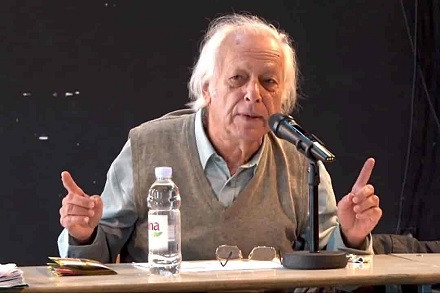
Samir Amin, in the book already cited, emphasizes that the roots of this European universalist concept are found in the Renaissance of the 15th century. Later, during the 19th century, the concept was massively disseminated. Both historical moments coincide with European colonialist expansions, whether European colonialism towards America in the 15th century or European colonialism in Africa, which occupied the entire 19th century and part of the 20th.
These colonialisms exported the idea of “higher culture”, and they tried to assimilate native cultural realities with European ones. Thus, according to Amin, the birth of Eurocentrism coincides with the birth of the modern capitalist world, which the author places in the 15th century. On the other hand, its rise coincides with the explosion of capitalism in the world, in the midst of the colonial era.
This theory involves several errors. To begin with, it is inaccurate to call 15th century European society capitalist, since, at best, we can refer to it as a mercantilist society. In no way can the 15th century be identified with capitalism or, at least, it is not the same capitalism as that which prevailed from the 18th century onwards and which effectively coincides with the European colonialism of the 19th century. However, it is true that, prior to the 15th century, we did not find a solidly constructed Eurocentric discourse.
Eurocentrism affirms its supposed superiority based on several aspects. First, the claim that capitalism is the evolutionary apex of societies and which is, according to this theory, the best way to build a society. And the second, the presumption of historical continuity that, according to Samir Amin, is non-existent.
The Enlightenment and the “invention” of European history
Indeed, Eurocentrism draws an evolutionary line that goes from Greek and Roman antiquity to the present day. And, as Samir Amin, Enrique Dussel and other authors point out, this line is completely artificial and imposed. Let’s see it below.
For a start, The Europe of antiquity does not correspond to the Europe of today. What was later established as the “only Europe” was, in Greek and Roman times, a barbaric and “uncivilized” territory. The cultures that shone in ancient times were Egyptian and Near Eastern cultures, such as Persian or Babylonian. The Greeks admired these eastern cultures, and did not consider them “barbarian” cultures, as they did call the cultures of the rest of Europe. Therefore, first point: what after the 18th century was called Europe and was considered a model of civilization, was initially considered the periphery of the ancient cultural center.
What do we mean by this? Simply, the construction of Europe as a civilizing axis is a myth that was born in the Enlightenment. This axis did not exist as such in ancient times. The cultural center of antiquity passed through Egypt and the Middle East, not through what we consider Europe today. However, European historical discourse has traditionally introduced these cultures in its evolutionary line, thus establishing a Mesopotamia-Egypt-Greece-Rome-Europe axis that is absolutely artificial with the sole intention of including these civilizations as part of European history.
Furthermore, prior to this European universalist discourse, there was no “universal history.” Each region, each geographical reality had its own history and evolution. We thus found a multiplicity of cultural realities that simply coexisted with each other and, yes, influenced each other. But in no case can we speak of a common history.
Therefore, we can conclude that it was the European need to construct a history that facilitated the emergence of this “universal history”, which has monopolized textbooks for centuries A “universal history” that, in reality, has very little that is universal.

European culture is not a single block
The aforementioned Enrique Dussel, in his work Europe, modernity and Eurocentrism, defends with arguments this idea of the invention of the linear history of Europe. Dussel demonstrates that what has traditionally been seen as the “opposite” of Europe (that is, everything that was not Greco-Roman culture and Christianity) is, in reality, a complement, not an opposition. Let’s analyze it in more detail.
Traditionally, European culture has been seen as a fusion between Greco-Roman culture and Christianity. Based on this definition, everything that does not fit these characteristics has tended to be “removed” from European reality.
Dussel gives clear examples of the Muslim world and the Byzantine East. The latter, despite being based, obviously, on classical culture and Christianity, has been separating itself from what has traditionally been called Europe.
However, the reality is very different. The Muslim Arab world, for example, drank from classical philosophy. In fact, the work of many Greek thinkers, such as Aristotle, reached Europe thanks to the Muslim conquests. On the other hand, and as we have already commented, the Byzantine world was heir to the Roman world; in fact, they called themselves “Romans,” not Byzantines.
What does all this mean? That European cultural uniformity, limited to the geographical area that we currently know and that would coincide, more or less, with the European Union, is an idea that does not entirely correspond to reality. Therefore, and following Dussel again, it is only from the 18th century onwards, with the Enlightenment (and, above all, with German Romanticism) that Hellenistic culture is “abducted” and labeled as exclusively European We have already seen how this is not the case, since worlds far from what we call Europe today, such as the Arab world and the Byzantine world, also drank from Greek culture.
Eurocentrism and historical “stageism”
We have already said that every culture is, to a certain extent, ethnocentric, which means placing its own cultural reality as a place from which to analyze, interpret and, often, judge other cultures. This is what is called “peripheral cultures”, that is, the realities that are beyond culture itself, which is situated as the central axis.
We have also commented that, in the case of Europe, this ethnocentrism is the only one that is identified with universality. We have, then, European culture (self) considered as the model to follow, an idea driven by the rise of colonialism and capitalism. It is this supposed European cultural “superiority” that believes it justifies this colonialism, relying on a fictitious paternalism that considers other peoples as underdeveloped, primitive realities and, therefore, in need of protection. In other words: the justification for colonialism and the atrocities that are related to it is a “civilizing” intention, a desire to show the “correct” path for other peoples.
From this idea of Europe as a model of civilization, the concept called “stageism” appears, which conceives the historical process as a succession of stages Karl Marx picks it up in his Prologue to the Contribution to the Critique of Political Economy (1858), where he states that: “Broadly speaking, we can designate as so many epochs of progress, in the economic formation of society, the Asian, ancient, feudal and modern bourgeois mode of production.” Thus, based on this Marxist concept, the progress of history is linear, and culminates in socialism, which would come after capitalism (which he calls the “bourgeois mode of production”). This concept is nothing more than another Eurocentric vision of history, since it establishes the evolution of societies based on this “invented history” that takes Europe as its central axis. What happens, then, with the economic and cultural realities of other geographical points? Where is imperial China, or pre-Columbian America, in all this process?

Thus, we can affirm that: first, the so-called “universal history” in reality is not, since it has only the European reality as its central axis, around which the so-called peripheral cultures “revolve.” We immediately verify this if we analyze the nomenclature of the different historical periods, which take, without exception, European reality as a reference.
For example, can we talk about the Middle Ages in China, or in India? Strictly speaking, of course not, since the beginning of the Middle Ages has been established (also quite arbitrarily) with the fall of the Roman Empire, and both China and India have little or nothing to do with this historical event.
Second, that what has been considered European history, does not exactly coincide with reality either since, as we have seen, since the Enlightenment a linear history is “forced” that encompasses cultures that are not specifically European, such as Egyptian or Mesopotamian.
Third, that the cultural realities that have traditionally been considered “non-European” (namely, the Muslim Arab world or the Byzantine world) also draw on classical culture, which makes us ask the following question: where does it begin and where? ends Europe?
Eurocentrism is based, above all, on an economic element, since it is from Eurocentrism that Europe has justified its dominance of other cultural realities and has expanded the capitalist system. At this point, we see that phenomena such as globalization, which seems so natural to us today, also arise from this Eurocentric (and economic) perspective of the world.
Fortunately, little by little in academic fields this linear progression that emerges from Eurocentrism is being overcome. During recent years, a significant change has been observed in subjects such as history or art, and works are appearing (not without difficulty) that present history and artistic creation from the points of view of those that, in the past, were considered the “peripheral cultures” of Europe.
FAQs about Eurocentrism
What does Eurocentrism mean in simple terms?
Eurocentrism is the tendency to view the world primarily through European perspectives, often presenting them as superior or universal.
How did Eurocentrism develop historically?
Eurocentrism developed through colonization, imperialism, and the Enlightenment, which positioned Europe as the center of rationality and progress while marginalizing other cultures.
Why is Eurocentrism important in psychology?
Because many psychological theories are based on Western populations, they may not apply universally. Recognizing Eurocentrism helps psychologists adapt methods to diverse cultural contexts.
How does Eurocentrism affect education?
It creates biased curricula that emphasize European achievements while minimizing contributions from Africa, Asia, the Americas, and Indigenous peoples.
Can Eurocentrism be unlearned?
Yes. Through inclusive education, cultural awareness, and critical thinking, individuals and institutions can challenge Eurocentric narratives and embrace diverse perspectives.
Use this citation format to reference the article clearly and help readers find the original source.
PsychologyFor. (2025). Eurocentrism: Definition and History. PsychologyFor. https://psychologyfor.com/eurocentrism-definition-and-history/