


See more of our articles in your search results.
The family life cycle refers to the series of predictable changes and transitions that families typically go through over time. These transitions can involve emotional, financial, and social adjustments as families grow and evolve. Understanding the family life cycle helps individuals, couples, and families navigate these changes effectively, promoting healthier relationships and stronger family dynamics.
In this article, we’ll explore what the family life cycle is, the different stages it encompasses, and the transitions that families experience. We’ll also discuss how family dynamics shift over time, providing valuable insights into family relationships and growth.
What Is the Family Life Cycle?
The family life cycle refers to the stages and transitions that families go through as they develop over time. Similar to the human life cycle, which includes stages like infancy, adolescence, and adulthood, the family life cycle outlines key periods that each family typically experiences. The cycle is influenced by various factors, including culture, socioeconomic status, and personal choices, but most families will go through similar stages of growth.
Each stage in the family life cycle involves new roles, responsibilities, and challenges. As families transition from one stage to the next, they must adapt to new circumstances and work together to maintain balance. Understanding these stages can help families better manage changes and support each other through difficult times.
Stages of the Family Life Cycle
The family life cycle is generally broken down into several distinct stages. While every family’s journey is unique, the following stages are commonly recognized:
How many of these have you been "meaning to read" for months?
- 1
 MajostaDon't Believe Everything You ThinkWhy Your Thinking Is The Beginning & End Of Suffering (Beyond Suffering)Listen Free On Audible
 - 2
 Saad, NadimHappy Confident MeDaily JOURNAL - Gratitude and Growth Mindset Journal that boosts children's happiness, self-estee...Listen Free On Audible
 - 3
 HarperPOPSelf-LoveGirl Therapy Coloring Book: A Cozy Coloring Book full of Girl Power and Self-CareListen Free On Audible
1. Single Young Adult Stage
The first stage of the family life cycle is that of the single young adult, who is typically leaving home and becoming more independent. During this stage, young adults focus on establishing their identity, pursuing education or a career, and developing social relationships. This is often the time when individuals start to live on their own and may even begin dating or forming long-term relationships.
2. Coupling or Marriage Stage
The next stage involves the coupling or marriage phase, where two individuals come together to form a partnership. This stage is marked by adjusting to married life, combining financial responsibilities, and creating shared goals. In some cases, couples may also experience challenges as they work to balance individual desires with the needs of the relationship. The transition to this stage can sometimes involve changes in living arrangements, social circles, and family expectations.
3. Parenting: Babies and Toddlers
Once a couple decides to have children, they enter the parenting stage. This stage is divided into two parts:
- The infant stage, where parents adjust to the physical, emotional, and financial demands of raising a baby.
- The toddler stage, which includes dealing with the emotional and developmental changes that come with raising a growing child, including increased responsibilities, sleepless nights, and major lifestyle changes.
4. Parenting: School-Age Children
The next stage involves raising school-age children, which typically spans from ages 6 to 12. In this stage, children become more independent, and parents often navigate the challenges of balancing family life with work, school, and extracurricular activities. The family dynamic shifts as children grow in their own identities and begin to form friendships outside the home. Parents may also experience greater pressures from work-life balance, which can test their relationship.
5. Adolescence Stage
As children reach their teenage years, the family transitions into the adolescence stage. Adolescents are becoming more independent, and parents face the challenge of giving their children more freedom while maintaining boundaries. This stage can be marked by increased emotional struggles, including conflicts between parents and teens over issues such as curfew, identity, and autonomy. Parents often find themselves adjusting their roles to allow their children to experience independence while still offering guidance and support.
6. Launching Adult Children
When children reach adulthood and leave the home, parents enter the launching stage. This is a time of transition for both parents and children, as the family structure changes. Parents may experience feelings of emptiness or loss as their children leave home, while adult children are embarking on their own journeys toward independence. Both parents and children have to adjust to new roles, and communication becomes key during this phase.
This stage often includes challenges such as handling the financial and emotional support needed by adult children who may return home temporarily or need guidance as they transition into full adulthood.
7. The Empty Nest Stage
The empty nest stage occurs after the children have left home. During this time, parents often face a new phase of life in which their primary responsibilities are no longer centered around caring for their children. This can be both a freeing and challenging time, as parents redefine their identities, roles, and relationships. It’s common for couples to experience both a sense of liberation as well as a feeling of loss or sadness as they adjust to a quieter household.
8. Retirement and Old Age
The final stage of the family life cycle involves retirement and old age, when parents begin to face the challenges of aging, including health issues and the need for financial security. This stage is often marked by a shift in focus from work to family, hobbies, and community involvement. Family dynamics may also shift as adult children step in to care for elderly parents or grandparents, while grandparents may take on a more active role in their grandchildren’s lives.
This stage can bring up issues of generational caregiving, legacy, and the continuation of family traditions and values.
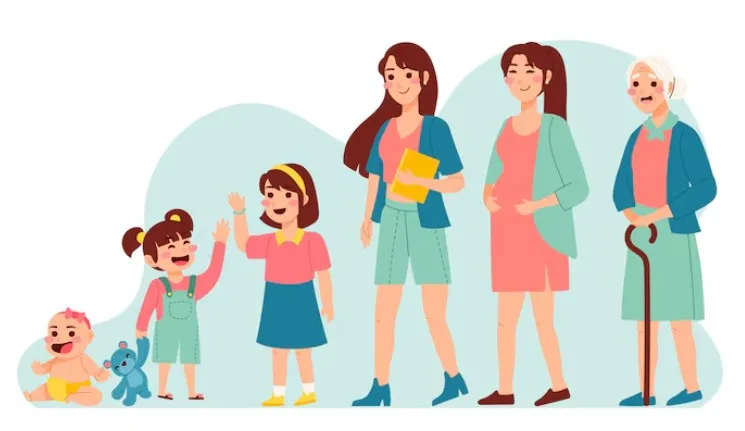
Transitions and crises
Throughout their life cycle, families go through different crises and problems that, although they are not usually serious or cause the family nucleus to disintegrate, imply changes in family life.
Over the years all families have to deal with various natural events, such as births, deaths and the growth of their children, situations that can involv
e greater stress if there is an economic crisis or underlying relational problems. They are events that alter the structure of the family and test its adaptability.
Next, and taking Duvall’s model as a reference, we can see what crises and stressors that a cisheteronormative family can encounter throughout its existence:
1. Newlywed couple
This is the stage in which everything begins, as long as the relationship prospers. It is that moment when two people meet, establish a loving relationship, make life plans and get married.
In itself, the stage involves several identity crises, since both members of the couple have to accept that they are no longer single, but the “half” of a whole. Both members of this new couple must negotiate what beliefs and expectations to adopt to create a new identity as a couple and as a future family.
2. Families in initial upbringing
At this stage the crisis occurs when two people who are in a relationship are going to become three (or four) because the woman is pregnant. New parents have to adapt to their new roles as parents, establish a bond with their child, and coordinate tasks related to parenting.
- You may be interested: “How to enjoy family vacations“
3. Families with preschool children
In this case the crisis is related to childhood, moment when first-born children acquire a little autonomy and become difficult to control for their parents, especially if the children are curious and want to explore the world around them. Additionally, at this stage there may be tensions due to imbalances in work and family roles.
- Related article: “Children’s therapy: what it is and what are its benefits“
4. Families with school-age children
The crisis occurs because of the start of school. The child has to learn to relate to other children and other authority figures other than their parents, while parents have to interact with other parents and the center’s teachers. It is a stage in which homework, extracurricular activities, failures and passes, parent meetings…

5. Families with teenagers
The main reason for crisis in families with adolescents is related to identity conflicts typical of adolescence. The family has to adjust to the onset of puberty and sexual maturity, deal with her son’s desire for independence and rebellion, and discussions that will continue with him or her due to various disagreements.
6. Families as a launching pad
Here the crisis occurs with the imminent departure of the children. Parents have to accept that their little ones have grown up, that they seek to become masters of their own lives greater independence and making their own decisions about their non-compulsory training and profession to practice.
7. Middle-aged parents
There are no more children at home. Parents have to readjust their identity since for many years a large part of their routine consisted of taking care of their children and, now that they are gone, that empty space has to be filled, the space left by not being a parent 24/7.
Now, without children at home, they have to assume different roles, including serving as grandparents to their newborn grandchildren or facing retirement.
8. Family with elderly members
Finally, the last stage of the family life cycle is established with a crisis caused by the perception that one has lost one’s youth, vitality, health, and a partner, in case he has already died. Both members of the couple or the widower prepare psychologically to face the last stage of their lives before the inevitable arrival of death.
Weak points of classic models
The family life cycle models we just talked about were conceptualized around the 1960s. Since then, the concept of family has been changing, in addition to several social changes that make it necessary to propose new models of stages of the family life cycle so that they can adapt to new realities.
Throughout the last half of the last century and so far in the current century, there has been an increase in life expectancy, a lower birth rate, changes in the social roles of women, a higher rate of divorces and second marriages, in addition to the appearance of more single-parent families and homosexual marriages.
The family life cycle is a dynamic and multifaceted journey that encompasses the various stages and transitions families experience over time. From formation and expansion to midlife and later life stages, each phase presents unique opportunities for growth, adaptation, and resilience. By understanding the developmental tasks and challenges associated with each stage of the family life cycle, individuals and families can navigate transitions more effectively, cultivate healthy relationships, and foster well-being across the lifespan.
FAQs About the Family Life Cycle
What is the family life cycle?
The family life cycle is a series of stages that families typically go through as they grow and change over time. These stages include the single young adult stage, coupling or marriage, parenting children, adolescence, launching adult children, empty nest, and retirement and old age.
How do transitions affect the family life cycle?
Transitions in the family life cycle, such as the birth of a child or the departure of adult children, can bring about significant changes in family roles, responsibilities, and relationships. Navigating these transitions requires open communication, flexibility, and support from both family members and external resources.
Why is the family life cycle important?
Understanding the family life cycle helps families anticipate and prepare for changes, manage difficult transitions, and maintain healthy relationships over time. It provides a framework for addressing common challenges and supporting family members as they navigate different life stages.
How do family roles change in the family life cycle?
Family roles evolve as children grow and as parents age. For example, during the parenting stage, parents may take on roles as caregivers, educators, and providers, while their children take on roles as students or dependents. In the empty nest stage, parents may return to more of a couple-focused role, while adult children may become more independent. As parents age, adult children may take on caregiving roles.
Can the family life cycle differ across cultures?
Yes, the family life cycle can vary across cultures. Different cultures may have unique customs, traditions, and expectations for each stage of the life cycle. For instance, in some cultures, extended families may live together through multiple stages of the family life cycle, while in others, families may experience greater independence during various stages.
Use this citation format to reference the article clearly and help readers find the original source.
PsychologyFor. (2025). Family Life Cycle: What it Is, Stages, and Transitions. PsychologyFor. https://psychologyfor.com/family-life-cycle-what-it-is-stages-and-transitions/