


Festinger’s Social Comparison Theory proposes that human beings have a fundamental drive to evaluate their own opinions and abilities — and that when objective measures are unavailable, they do so by comparing themselves to other people. If you have ever felt a quiet pang scrolling through someone else’s seemingly perfect life on social media, felt a small flush of pride after outperforming a colleague, or found yourself wondering whether your salary, your parenting, or your political opinions are “normal” — you have experienced social comparison in action. Leon Festinger gave a name and a framework to something humans have always done instinctively, and in doing so created one of the most enduring and practically relevant theories in the history of psychology.
First published in 1954 in the journal Human Relations, Festinger’s theory has expanded enormously since its original nine hypotheses. What began as a tightly argued framework for understanding how people evaluate opinions and abilities has grown into a vast body of research spanning self-esteem, motivation, mental health, group dynamics, consumer behavior, and — perhaps most urgently today — the psychological effects of social media. Some researchers estimate that as much as ten percent of our daily thoughts involve some form of social comparison. This is not a quirk of neurotic personalities. It is a feature of the species.
Understanding this theory is not merely an academic exercise. It is a genuinely useful lens for making sense of why certain interactions leave us feeling inadequate, why some environments drain our confidence while others strengthen it, and what we can do — practically, concretely — to develop a healthier relationship with the endless measuring we do, usually without even noticing we are doing it.
Who Was Leon Festinger?
Leon Festinger (1919–1989) was an American social psychologist whose career produced two of the most influential theories in twentieth-century psychology: Social Comparison Theory in 1954 and Cognitive Dissonance Theory in 1957. Born in New York City and educated at the City College of New York, he completed his doctoral work at the University of Iowa under Kurt Lewin, one of the founding architects of modern social psychology.
Festinger was drawn to questions about motivation and belief — specifically, how people form and defend their sense of who they are and where they stand. His thinking was rigorous and often counterintuitive. He had a gift for identifying processes that were happening constantly in human experience but had never been precisely named or systematically examined.
His 1954 paper on social comparison was not a response to an observed social crisis. It was a theoretical exercise in precision — an attempt to describe, with formal clarity, the mechanisms by which people come to know themselves when the world does not offer them a clear mirror. The framework he built has proven remarkably durable across more than seven decades and several technological revolutions in how human beings interact.
The Central Idea — Why We Compare Ourselves to Others
The engine of Social Comparison Theory is a deceptively simple premise: people need to evaluate themselves. Not out of vanity — out of necessity. Accurate self-knowledge is functionally essential. Knowing how capable you are, whether your beliefs hold up, where you stand relative to others in domains that actually matter — all of this shapes your decisions, your goals, your behavior, and your sense of what is possible for you.
Festinger argued that people prefer objective, non-social evaluation when it is available. If you want to know how fast you can run, you time yourself. If you want to know whether a structure is safe, you consult engineering data. Objective reality provides clear answers that do not depend on anyone else’s performance or judgment.
But here is the problem: for a vast range of the things that matter most to people — am I intelligent? Am I successful? Are my political opinions reasonable? Am I a good parent? — no objective, non-social measure exists. There is no instrument that produces a readout of your social intelligence, no impartial scale that measures your worth as a person, no universal standard against which to check whether your career is going well. In the absence of objective measurement, people turn to other people.
This is the foundational insight. Social comparison is not a weakness or a cognitive error to be corrected. It is a rational response to the genuine limits of objective self-assessment. We compare because, in the domains we care about most, comparison is often the only measurement tool we have.
Festinger’s Nine Hypotheses — The Formal Structure of the Theory
Festinger did not simply assert that people compare themselves to others. He constructed a formal theoretical architecture with nine specific hypotheses that describe when comparisons occur, with whom, and with what consequences.
| Hypothesis | Core Claim |
|---|---|
| I | Humans have a basic drive to evaluate their opinions and abilities |
| II | Without objective means, people evaluate themselves by comparing to others |
| III | The tendency to compare with a specific person decreases as the difference between them grows |
| IV | For abilities, there is a unidirectional upward drive — we want to improve; opinions lack this drive |
| V | Non-social constraints make it harder to change abilities than opinions |
| VI | Cessation of comparison with others leads to hostility or derogation toward those people |
| VII | Comparisons within groups create pressure toward uniformity |
| VIII | When group membership is valued, motivation to conform to group norms increases |
| IX | People compare themselves to those who are similar, not radically different, from themselves |
Several of these hypotheses deserve particular attention because they are where the most important and counterintuitive findings live.
Hypothesis III — the similarity principle — is foundational to the entire theory. Festinger proposed that we prefer to compare ourselves to people who are close to us in ability or opinion, not to people who are radically different. A beginning runner does not primarily evaluate their pace against elite marathon athletes. The gap is too vast to be informative. Relevant calibration requires proximity. We seek people who are meaningfully similar to us because only similar others give us real information about where we actually stand.
Hypothesis IV introduces an important asymmetry between abilities and opinions. For abilities, there is a unidirectional drive upward — we want to improve, to become more capable, to be better than we currently are. This gives ability comparisons an inherently motivational quality. For opinions, no equivalent “better” exists. What matters for opinion comparison is not improvement but accuracy and social validation — confirmation that our beliefs are reasonable and shared. This distinction has significant consequences for how comparison functions differently across different life domains.
Hypothesis VI is perhaps the most sociologically provocative. Festinger observed that when a person’s opinion or ability diverges too far from the group’s, they become an unsuitable comparison target — too different to be useful. The group’s response, he argued, is not indifference but active derogation: the divergent person is rejected precisely because their continued presence implicitly challenges the group’s self-evaluation. This single hypothesis anticipates decades of subsequent research on social exclusion, in-group conformity, and the psychology of ostracism.
Upward, Downward, and Lateral Social Comparison
While Festinger’s original theory centered on comparisons with similar others, subsequent research — particularly the influential work of Thomas Wills (1981) and Joanne Wood (1989) — expanded the framework to describe three directional types of social comparison, each with distinct emotional functions and psychological consequences.
Upward social comparison involves measuring oneself against someone perceived as better, more successful, or more capable. You look at a colleague who received the promotion you wanted. You read about someone your age who has built something remarkable. You scroll past photographs of lives that seem aspirationally superior to your own. The emotional outcome is not fixed. Upward comparison can motivate — it shows what is achievable, provides a concrete target, energizes effort. It can also diminish — generating envy, inadequacy, and a sense that the gap between where you are and where you want to be is too large and too permanent to bridge.
The direction of comparison does not determine the emotional outcome. The meaning the person assigns to the comparison does. “They did it, so perhaps I can too” produces very different feelings than “they did it, and I never will” — even when the exact same comparison triggered both thoughts.
Downward social comparison involves measuring oneself against someone perceived as worse off. The immediate psychological function is typically self-enhancement — a temporary boost in self-esteem through the experience of relative advantage. Festinger’s student Thomas Wills documented this extensively, showing that people in distress actively seek downward comparisons to restore threatened self-esteem. But the emotional picture is more complicated than simple reassurance. Research on patients with serious illness has shown that downward comparison can trigger not comfort but fear — a vivid reminder that one could end up in the worse position being observed.
Lateral comparison — comparing to those perceived as roughly equal — was the type Festinger himself focused on most closely. It is the most informationally accurate form of comparison and the most common in everyday social life. When you compare your salary to peers in the same field, your child’s milestones to those of children the same age, or your opinions to those of your social circle, you are engaging in lateral comparison — seeking calibration rather than motivation or self-enhancement.
The Similarity Principle — Why Your Friend’s Success Stings More Than a Celebrity’s
The similarity principle is one of the most practically consequential aspects of Festinger’s framework, and it explains a phenomenon many people have felt but struggled to articulate: why a close friend’s achievement can sting far more sharply than the success of someone genuinely famous.
A celebrity’s life is not a meaningful comparison target. The gap between your circumstances and theirs is so vast, so obviously shaped by factors entirely outside your control — luck, timing, connections, resources — that the comparison carries very little evaluative weight. You do not actually believe that their success tells you something specific and personal about your own capabilities or worth.
A friend’s success is different. A sibling’s. A classmate’s. Someone who started from a similar position, had broadly similar opportunities, faced recognizably similar obstacles. When someone similar to you achieves something you have not, the comparison is informative in a way that a celebrity’s achievement simply is not. It implies something about what is possible and about why you have not achieved it — and that implication, whether accurate or not, is what gives the comparison its emotional power.
This is also why similarity is multidimensional. People compare along lines of age, gender, education, background, career stage, life circumstances, and perceived ability — often drawing on several dimensions simultaneously to determine whether a comparison target is relevant enough to feel meaningful. The more dimensions of similarity you share with someone, the more their achievements and failures function as commentary on your own potential.
Social Comparison, Self-Esteem, and Mental Health
The relationship between social comparison and self-esteem is one of the most extensively researched areas in the theory’s seventy-year history, and the findings are consistent, nuanced, and clinically important.
People with higher self-esteem tend to engage with social comparison differently from those with lower self-esteem. They compare more selectively, preferentially notice comparisons that reflect favorably on them, and are considerably more resilient when confronted with unfavorable comparisons. Crucially, they have more cognitive flexibility — more ability to discount comparisons that feel threatening by deciding the domain is not personally important, the target is not a fair reference point, or the comparison simply does not apply to their particular situation.
People with lower self-esteem show a more reactive pattern. They tend to engage in more frequent upward social comparisons, to be more emotionally affected by unfavorable comparisons, and to have less flexibility in reframing or dismissing threatening comparisons. Their self-concept is more dependent on external calibration — requiring more frequent social feedback because the internal sense of worth is less stable and less self-sustaining.
This creates a cycle that is important to name clearly, because naming it is the first step toward interrupting it. Low self-esteem drives more comparison; more frequent upward comparison tends to erode self-esteem further; reduced self-esteem drives more comparison. Breaking this cycle often requires working on the underlying self-concept, not just the comparisons themselves — and that is work that benefits enormously from professional support.
It is worth being direct about this: struggling with painful social comparison patterns is a common human experience, not a personal failing. Depression is strongly associated with frequent upward comparison and a chronic tendency to evaluate oneself unfavorably relative to others. Social anxiety involves hypervigilance to being evaluated by others, which is essentially a continuous, involuntary social comparison process. Eating disorders and body image difficulties are powerfully shaped by appearance-focused social comparison, particularly the kind now amplified by social media. These are recognized, treatable conditions, and seeking help for them is a sign of strength, not weakness.

Social Comparison in the Age of Social Media
Festinger built his theory in 1954, when the primary comparison contexts were one’s immediate social circle, workplace, and community. He could not have imagined a technological environment that gives people continuous, frictionless access to carefully curated images of thousands of other people’s bodies, achievements, relationships, and lifestyles — available at any moment, including moments of loneliness, vulnerability, or self-doubt.
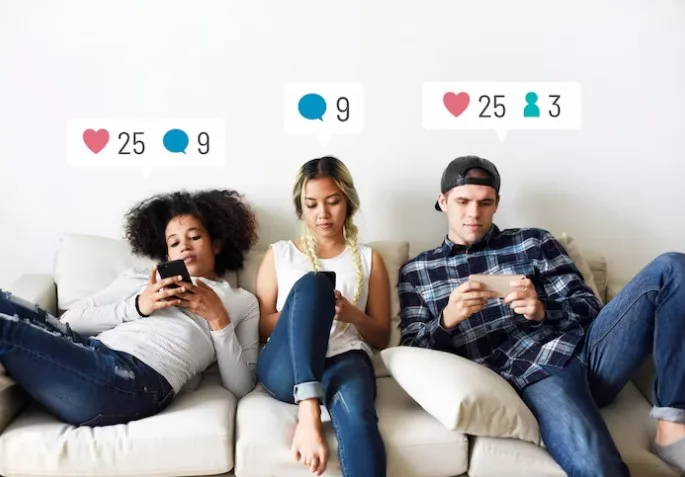
Social media platforms are, in many respects, social comparison engines by design. They are architecturally structured to surface highlights — the best photographs, the exciting announcements, the enviable holidays — in a continuous stream optimized for engagement. The comparison targets available are simultaneously numerous, similar enough to feel relevant (peers, people in the same demographic, people with comparable starting points), and idealized enough to function as a relentless upward pull.
Research on social media use and social comparison has produced findings that are consistent and concerning. Higher passive social media consumption — scrolling without actively creating or connecting — is associated with more frequent upward comparison, lower self-esteem, increased body dissatisfaction, and elevated rates of depression and anxiety symptoms. The effects are strongest among adolescents, whose developing sense of self is most dependent on external social calibration, and most pronounced in domains — appearance, social popularity, lifestyle — where visual platforms provide the richest and most easily comparable content.
The crucial distinction is between passive consumption and active connection. Using social media to maintain genuine relationships, share authentically, and engage in reciprocal interaction is associated with neutral or positive effects. Using it primarily to scroll through curated highlights of others’ lives and measure yourself against them is where the damage accumulates — quietly, incrementally, and often without the person fully recognizing what is happening.
Practical Strategies for Healthier Social Comparison
The goal is not to eliminate social comparison — that is neither possible nor desirable, since it serves genuine psychological functions. The goal is to develop a more conscious, deliberate, and compassionate relationship with the comparison process.
- Name it when it happens. The simple act of noticing — “I am comparing myself to this person right now” — creates a small but meaningful space between the comparison and your emotional reaction to it. You cannot choose not to compare, but you can choose what you do with the comparison once you have noticed it.
- Evaluate the relevance of your comparison targets. Ask honestly: is this person similar enough to me, in the domains that actually matter, to provide useful information? Or am I comparing myself to a curated highlight, an idealized projection, or someone in a fundamentally different life situation? Not all comparison targets are equally informative.
- Reframe upward comparisons as informational rather than evaluative. Instead of “why am I not where they are?” — which implicitly treats their position as a verdict on your worth — try “what does their path tell me about what might be possible?” The comparison target becomes a source of information rather than a measuring stick.
- Build an internal reference frame. Social comparison is most damaging when it is the primary source of self-evaluation. Developing clarity about your own values, your own definition of a meaningful life, and your own standards for success provides an internal anchor that reduces the power of external comparisons to destabilize you.
- Audit your social media environment. The comparison targets your feed delivers are not random. They are the result of choices you have made and can revise. Following accounts that consistently trigger painful comparisons with no corresponding benefit is a choice you can change today.
- Practice what researchers call “social comparison awareness.” This simply means developing the habit of asking, after a social comparison, how you feel — and whether that feeling is giving you useful information or simply eroding your sense of worth without offering anything in return.

Why Festinger’s Theory Still Matters
More than seven decades after its original publication, Social Comparison Theory remains one of the most cited and empirically supported frameworks in social psychology. It has been extended, refined, and integrated with research on identity, motivation, emotion regulation, and group dynamics — but never superseded. Each generation of researchers finds new domains where Festinger’s basic mechanisms play out with remarkable fidelity.
Contemporary extensions have added motivational complexity: comparison can serve not just evaluative functions but self-improvement goals and self-enhancement needs simultaneously, depending on the person, the domain, and the context. The theory has been applied to consumer behavior, organizational psychology, health decision-making, and political polarization — everywhere, essentially, that humans measure themselves and their lives against the lives of others.
But the core insight remains intact and remains important: we know ourselves, in large part, through our awareness of how we stand relative to others. That is not a design flaw. It is a feature of a profoundly social species that has always relied on group membership for survival, for meaning, and for the basic orientation of knowing who and where we are.
The challenge — and the opportunity — lies in bringing more awareness, more discernment, and more self-compassion to a process that will happen regardless of whether we are paying attention to it.
FAQs About Festinger’s Social Comparison Theory
What is the main idea of Festinger’s Social Comparison Theory?
The central idea is that humans have a fundamental drive to evaluate their opinions and abilities, and that when objective, non-social means of evaluation are unavailable, they do so by comparing themselves to other people. Other people function as a social measuring instrument — the primary means by which we assess where we stand in domains that cannot be measured objectively. Festinger formalized this in nine hypotheses that describe when comparisons happen, with whom, and with what consequences — laying the foundation for decades of research on self-evaluation, group dynamics, and social behavior.
Upward social comparison involves measuring yourself against someone perceived as better, more capable, or more successful than you. It can be motivating when framed as inspiration, but can reduce self-esteem when experienced as evidence of personal inadequacy. Downward social comparison involves measuring yourself against someone perceived as worse off — a process that typically produces temporary self-esteem enhancement through a sense of relative advantage, but which can also generate guilt or anxiety. Lateral comparison — with similar others — is the most informationally accurate form and the most common in everyday life.
Why do we compare ourselves to similar others rather than very different people?
Because comparisons with similar others are more informative. A meaningful comparison requires sufficient similarity in the dimension being evaluated for the other person’s standing to tell you something real about your own. Comparing yourself to someone in a radically different situation — different resources, different starting point, different life context — yields very little useful information. The closer the similarity, the more precise the calibration — and the more emotionally powerful the comparison becomes. This explains why a peer’s achievement often affects us more deeply than a celebrity’s, even when the celebrity’s achievement is objectively greater.
Social comparison patterns are closely linked to several mental health conditions. Depression is associated with both more frequent comparison and a persistent tendency toward unfavorable upward comparisons in domains central to the person’s self-concept. Social anxiety involves heightened sensitivity to being evaluated by others — essentially, a continuous involuntary comparison process filtered through imagined others’ eyes. Eating disorders and body image difficulties are powerfully shaped by appearance-focused comparison, particularly in environments where such comparisons are frequent and easily triggered. Painful social comparison is a common human experience, not a personal failing — and when it is causing significant distress, professional support can be genuinely and meaningfully helpful.
Social media platforms create environments that are unusually well-structured for triggering frequent upward social comparison, because they surface curated highlights of other people’s lives in a continuous stream available at any moment. Research consistently links passive social media consumption — scrolling without active engagement — to more frequent upward comparison, lower self-esteem, greater body dissatisfaction, and higher rates of depression and anxiety. The key variable is passive consumption versus active connection. Using platforms to maintain genuine relationships and engage authentically is associated with neutral or positive effects. Using them primarily to scroll through others’ edited highlights and measure yourself against them is where the harm accumulates.
No — and it is important not to draw that conclusion. Social comparison is universal, unavoidable, and genuinely useful. It serves real psychological functions: accurate self-assessment, identification of realistic goals, understanding of social norms, and motivation to improve. Upward comparison can inspire. Lateral comparison calibrates. Even downward comparison, engaged with thoughtfully, can generate gratitude rather than smugness. The harm arises from specific patterns — chronic upward comparison in domains central to self-worth, comparison with non-representative or idealized targets, and a self-concept so dependent on external calibration that any unfavorable comparison feels like a verdict. Developing awareness of your own comparison habits is the first practical step toward a healthier relationship with a process that is not going away.
How can I apply Social Comparison Theory to improve my wellbeing?
Start by developing awareness of when and with whom you are comparing. Notice the direction of your comparisons and their emotional effects. Evaluate whether your comparison targets are genuinely similar and relevant enough to provide useful information — or whether you are measuring yourself against curated projections or idealized representations. Build an internal reference frame based on your own values and standards, so that your sense of worth is not entirely dependent on external calibration. Curate your social media environment deliberately. And when comparison patterns are causing persistent distress — when the cycle of comparison, diminished self-esteem, and more comparison is affecting your daily life — reaching out for professional support is a sign of genuine strength and self-awareness, not a sign of weakness. These patterns respond well to psychological intervention, and you deserve that support.
By citing this article, you acknowledge the original source and allow readers to access the full content.
PsychologyFor. (2026). Festinger’s Social Comparison Theory. https://psychologyfor.com/festingers-social-comparison-theory/