

See more of our articles in your search results.
A small red dot sits in the corner of an icon. You didn’t ask for it. You weren’t even thinking about the app until your eyes caught the color, the way they’d catch a flash of movement in tall grass. Two seconds later your thumb is already moving. A like from someone you barely know. A story from the friend who “couldn’t make it” to your birthday. An ad for a sofa you looked at once. Twenty minutes pass. You close the app, open it again, and notice, with a faint wince, that you have no idea what you were hoping to find.
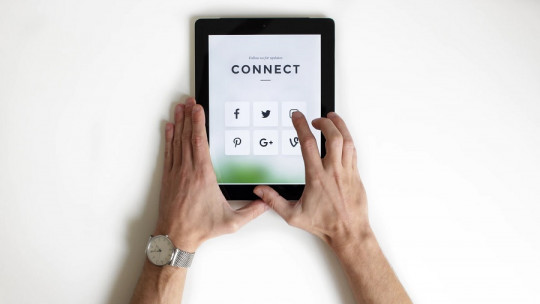
That reflex is the working heart of FOMO and social media. The fear of missing out supplies the worry: something good is happening, and I’m not in it. The platform supplies the opportunity to check, over and over, for free, in your pocket. Together they form a loop that feels like staying informed and often feels like being tired. Millions of people describe being hooked on the networks without being able to explain why, since most of what they scroll past isn’t even interesting.
The explanation isn’t a character flaw. It’s a design problem meeting an old instinct, and both can be adjusted.
This article explains how FOMO keeps you hooked on social media, what the science says about attention, reward and comparison, how large the harm really is, and how to loosen the grip without deleting your life.
It also pushes back on two lazy stories: that phones are poisoning everyone, and that none of this matters. The evidence sits somewhere in between.
How many of these have you been "meaning to read" for months?
- 1
 CrosswayDust to DustAging Wisely in an Anti-Aging WorldListen Free On Audible
- 2
 THOUGHT CATALOGThe Mountain Is YouTransforming Self-Sabotage Into Self-MasteryListen Free On Audible
- 3
 Thomas NelsonBreath as PrayerCalm Your Anxiety, Focus Your Mind, and Renew Your Soul (80+ Breath Prayers and Devotional Medita...Listen Free On Audible
How does FOMO keep you hooked on social media?
Through a loop. FOMO makes you anxious about what you’re missing; checking relieves that anxiety for a moment; the content you see then raises new worries, so you check again. The relief is short and the cue is permanent, which is the recipe for a habit.
The research that gave FOMO its scientific footing points the same way. Psychologist Andrew K. Przybylski and colleagues reported in 2013 that people with higher FOMO tended to engage more with social media, including at moments when it was unsafe or inappropriate, such as while driving, in class or at meals. They also tended to have lower mood and life satisfaction. The data were correlational, which means the study could not prove that FOMO causes heavy use. But the pattern fits a common clinical account: the people who most need to feel connected are the ones who check most, and checking doesn’t deliver the connection they want.
Think of the sequence in miniature. A stray feeling of being out of the loop arises. You open the app to settle it. You see a friend’s gathering, a colleague’s announcement, a stranger’s holiday. The feeling returns, sharper, with a specific image attached. You scroll to find reassurance. There isn’t any, only more material.
The loop has an exit only if something interrupts it from outside: a meal, a conversation, a decision to put the phone in another room. It rarely ends by itself, because the platform never runs out of new posts and your mind never runs out of questions.
Consider Imani, 26, who works in an open-plan office and checks her phone every time a colleague laughs at something she can’t hear. She isn’t curious about their joke. She’s checking whether her phone contains the thing everyone else seems to know. Her working day is cut into fifty-second pieces.
It helps to see that the habit often feeds on boredom and unease as much as on genuine interest. People report reaching for social apps in moments of waiting, awkwardness, loneliness or fatigue. The app is an emotion-regulation tool that works badly: it numbs the mood for a minute and worsens it for an hour.
A good diagnostic question is this: what was I feeling right before I opened it?
Why do feeds feel so hard to put down?
Because the rewards arrive unpredictably. Psychologist B. F. Skinner and his colleague Charles Ferster showed in their 1957 work on schedules of reinforcement that behavior followed by rewards on an irregular schedule is more persistent than behavior rewarded every time. A feed is a variable-reward machine: most scrolls give you nothing, some give you a delight, and you can never tell which is which.
Skinner worked with pigeons and rats, and extending his findings to humans on phones requires care. People are not pigeons, and a social post is not a food pellet. But the principle, that unpredictable payoffs keep behavior going, has been replicated widely and fits how many people describe their own scrolling. “Just one more” is the sentence of someone on a variable schedule.
Social media layers three kinds of unpredictable rewards. Social approval: likes, comments and shares arrive in bursts. Novelty: the next post might be funny, shocking or personally relevant. Information: a message might contain news you need. Each check carries a small chance of a payoff, and the chance itself becomes motivating.
FOMO sharpens it. When you’re worried about missing something, the possible payoff isn’t only pleasure but relief from worry, which raises the stakes of each check. The reward is “I’m not left out,” and the absence of reward feels like evidence that you might be.
Notifications act as the cue that starts the cycle. Badges, banners and buzzes pull attention to the app even when you had no intention of opening it. Many people find that turning off non-essential alerts cuts their checking more than any act of willpower.
Picture Luis, 49, a manager who prided himself on never being distracted. He turned off every notification for a week as a lark. The first two days he reached for the phone about as often, hand moving before thought. By day five the reflex had faded. He told his wife he felt “like someone had turned down the volume on a radio I hadn’t known was playing.”
Habits built on variable rewards don’t vanish when you recognize them, but they do weaken when the cues are removed and the checking goes unrewarded. That’s the practical lever.
Is it addiction, or wanting without liking?
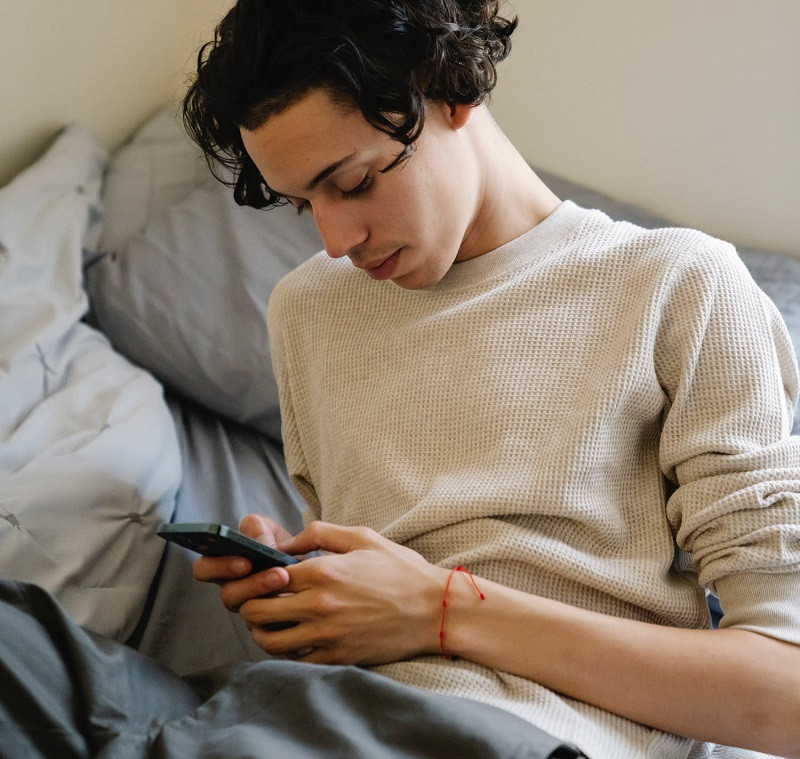
Strictly speaking, it isn’t a recognized addiction, but the science of “wanting” explains why it feels like one. Neuroscientists Kent C. Berridge and Terry Robinson proposed the incentive-sensitization theory, built on a distinction between wanting and liking. In their account, brain dopamine systems drive incentive “wanting,” the motivational pull toward a cue, whereas the actual pleasure of enjoying something, “liking,” depends on separate and more fragile systems. In addiction to drugs, they argue, wanting becomes amplified without liking increasing.
Their theory was developed for substance addiction, and the evidence for applying it to social media is indirect. Still, it offers a vivid metaphor for an experience many people report: strong urges to check without much enjoyment once they do. You can want the feed intensely and feel flat when you’re in it.
It also corrects a popular myth. Dopamine is often described as the “pleasure chemical.” In the Berridge and Robinson framework, it’s closer to a motivation chemical, the thing that makes cues feel urgent. That’s why a notification can pull at you more than the content that follows pleases you.
What about “social media addiction” as a diagnosis? It is not an official diagnosis in the major manuals, and researchers disagree about whether heavy use should be considered a behavioral addiction at all. Some prefer terms such as problematic social media use, describing loss of control, preoccupation, withdrawal-like irritability when unable to check, and continued use despite harm. Measurement varies, and prevalence estimates swing widely depending on the scale used.
That uncertainty matters for how you think about yourself. You don’t need a diagnosis to have a problem, and you don’t have a disorder merely because you scroll a lot. The practical test is function: is the use interfering with sleep, work, relationships or mood, and can you cut back when you try?
Imagine Aisha, 21, in a shared student apartment, who notices she opens Instagram within seconds of waking, often before she’s fully conscious. She doesn’t enjoy it much. She just can’t start the day without it. That mismatch, strong pull and thin payoff, is the pattern the wanting-liking distinction describes.
Does your own checking feel more like pleasure or more like itch?
How are social apps designed to feed FOMO?
With features that create gaps, deadlines and social stakes. Writer and psychologist Adam Alter argued in his 2017 book Irresistible that many modern products borrow the ingredients of behavioral addiction: compelling goals, unpredictable positive feedback, a sense of incremental progress, escalating challenges, unresolved tension (cliffhangers) and social interaction. Social platforms combine several at once. Alter’s account is a synthesis for general readers, drawing on research and industry accounts, and the strength of its causal claims varies. It’s a useful lens, not a controlled trial.
Look at familiar features through that lens:
- Disappearing content: stories that vanish in 24 hours turn checking into a deadline, since you must look now or lose it.
- Streaks and counters: a running number turns a casual habit into a loss you’re afraid to take.
- Infinite scroll: no natural stopping point means the decision to stop must come from you, every few seconds.
- Read receipts and “last seen” markers: they make other people’s availability visible and your own delay observable.
- Algorithmic feeds: content is ordered to hold attention, not to finish, so the best post is always one scroll away.
Several of these turn the abstract worry “am I missing out?” into a concrete, measurable thing with a timer. That’s not an accident of design but an output of attention-driven business models, where more time on the platform means more advertising revenue. Designers don’t need ill intent for the effect to be real; they only need to optimize for engagement.
Social features add their own pressure. Seeing who’s online, who’s attending, who’s tagged in a photo, who viewed your post and didn’t respond, gives constant material for comparison and speculation. Humans evolved to monitor group standing, and these platforms put that monitoring on tap.
Think of Ben, 17, who keeps a 400-day streak with a friend in a messaging app. Neither of them enjoys the daily exchange of blank photos. Neither wants to be the one who breaks it. The streak has stopped being about friendship and become a small hostage situation.
Changing the settings turns the dials back. Remove badges, switch to grayscale, set time limits, and log out after each session. These steps add friction, and friction, at the right moment, is often enough to give you a choice.
Does passive scrolling hurt more than active use?
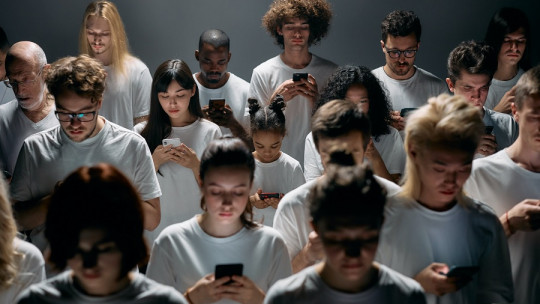
Often, yes. How you use social media seems to matter more than how long you use it. In a pair of studies published in 2015, Philippe Verduyn and colleagues tested active and passive use of Facebook. In the laboratory experiment, participants who were cued to use Facebook passively, browsing without interacting, felt worse afterward than those who used it actively. A second study using experience sampling in daily life found that passive use predicted declines in affective well-being, and that the link was explained by increases in envy.
The relationship held even after the researchers controlled for active Facebook use, other online social network use and direct social interactions, which suggests that passive scrolling had its own specific effect. The authors also found that the more people interacted directly with others offline, the more their moods improved from one moment to the next.
That fits an intuitive picture. Active use means conversation: you write, respond, plan, share. You’re in a relationship with someone. Passive use means observation: you watch others’ lives pass by, and the main emotional response available is comparison.
| Feature | Passive use | Active use |
|---|---|---|
| What you do | Scroll, watch, read without responding | Message, comment, plan, create |
| Main emotional pull | Comparison and envy | Connection and exchange |
| Link with well-being in studies | More often negative | Neutral to positive |
| FOMO trigger | Strong: you see what you are missing | Weaker: you are part of the activity |
Caveats are in order. The 2015 samples were fairly small, mostly young adults, and the research concerned Facebook specifically. Later studies on other platforms and populations have produced mixed results, and the active-passive distinction is blurry in practice, since many people alternate within minutes. The pattern should be read as plausible and consistent, not settled.
Take Marta, 38, who spends her evening browsing a friend’s holiday album. She feels a dull ache. The next day she sends the friend a message with three questions about the trip, and they chat for half an hour. The same album, handled differently, produces a different feeling.
The practical rule: if you open an app, do something with it. Message a person, make a plan or post something of your own. If you can’t find anything to do, that’s a sign the scroll is purely passive, and it may be time to close it.
How big is the effect of social media on mental health, really?
Smaller than the headlines suggest, on average, though averages can hide real harm to some people. The most careful large-scale analyses find a small negative association between digital technology use and well-being.
Psychologists Amy Orben and Andrew K. Przybylski analyzed three large datasets, with a combined sample of about 355,000 adolescents, using a method called specification curve analysis that tests many reasonable ways of analyzing the same data. Their 2019 paper in Nature Human Behaviour found that the association between technology use and adolescent well-being was negative but small, explaining at most 0.4% of the variation in well-being. For perspective, they noted that other everyday factors showed associations of comparable size, with eating potatoes, for instance, showing a small negative association too. They concluded that these effects were too small to warrant policy change.
That finding has been contested. Critics argue that average effects across millions of adolescents can mask serious harm in a vulnerable subgroup, that crude measures of “screen time” miss what people actually do online, and that cross-sectional data can’t distinguish cause from effect. Defenders reply that bold claims need bold evidence and the evidence for large effects is thin. The honest summary is that the debate is unresolved.
What can be said with reasonable confidence? First, the relationship between social media and well-being varies by person. Second, how you use it appears to matter, as the passive-active work suggests. Third, specific problems, such as cyberbullying, sleep disruption and exposure to harmful content, have their own evidence and shouldn’t be lumped in with “screen time.”
Also worth saying: small average effects do not mean no one is struggling. If you notice your mood drop after using an app, your own experience is relevant data, whatever the average across 355,000 adolescents suggests.
Picture two friends, Kai and Noor, both 19, who spend three hours a day on the same platform. Kai uses it to coordinate a hiking club and chat with cousins overseas. Noor uses it to check on people who have excluded her. The hours match. The experiences don’t.
So skip the question “how many hours is too many?” and ask “what is this hour doing for me?”
Are we trading real connection for the feeling of it?
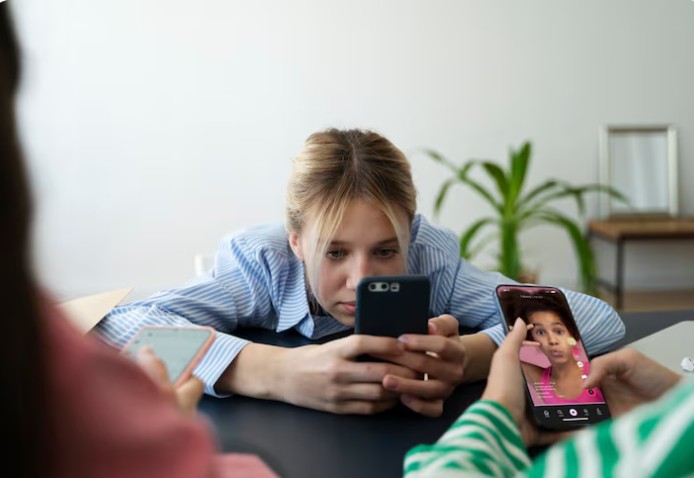
Some thinkers worry that we are, and some evidence suggests the risk. Psychologist and MIT professor Sherry Turkle argued in Alone Together (2011) that people increasingly expect more from technology and less from one another, and that being constantly connected can leave us feeling more isolated. Her work draws on interviews and observation over many years, and it offers a thoughtful, qualitative critique, not a measured effect size.
Her central worry is that digital connection offers a kind of companionship that skips the demands of friendship. Texting lets us edit and control; face-to-face conversation requires patience with silence, mess and surprise. If we get used to the first, the second may feel harder.
FOMO sits right in the middle of this. It arises from wanting connection, and the networks promise it, but the form they deliver can be thin. You can watch a hundred lives and speak to none. You can send forty reactions and feel unseen.
Daily life supplies small symptoms. Dinner tables with phones beside the plates. Conversations that pause so someone can check a notification. Parents scrolling at the playground. Researchers sometimes call this “phubbing,” snubbing someone in favor of a phone, and studies have linked being phubbed with lower relationship satisfaction, though the findings are mostly correlational.
It would be too easy to turn this into nostalgia. Online contact does help many people: those who live far from relatives, who have disabilities, who belong to small communities or who find it easier to express themselves in writing. Connection that happens through a screen is still connection.
The useful distinction isn’t online versus offline. It’s whether an interaction involves real attention to a real person. A thoughtful message to a friend counts. An endless stream of strangers’ images, less so.
Imagine Daniel, 63, whose grandchildren live abroad. He and his granddaughter play word games on a phone app every morning and send voice notes. For him, the screen is a lifeline. The same screen, used to scroll old classmates’ holiday pictures, leaves him gloomy. Same device, different act.
A question for your own life: after your last hour online, did you feel closer to anyone?
What happens when you cut back on social media?
For many people, mood improves, at least modestly. The best-known test came from psychologist Melissa G. Hunt and colleagues, who ran a randomized trial published in 2018 with 143 undergraduates at the University of Pennsylvania. After a week of baseline monitoring, one group was asked to limit Facebook, Instagram and Snapchat to 10 minutes per platform per day for three weeks, while a control group continued as usual.
The limited-use group showed significant reductions in loneliness and depression compared with the control group. Interestingly, both groups showed decreases in anxiety and in FOMO from baseline, which the authors suggested might reflect a benefit of simply monitoring one’s own use. They concluded that limiting social media to about 30 minutes a day may lead to significant improvement in well-being.
Look at the limits as carefully as the headline. The sample was small and made up of students at one university. The study ran three weeks, and it relied on self-reported mood and on phone screenshots of usage. It’s unclear how long the benefits last, and not every later experiment on reduced use has found the same effect. Randomized trials of social media breaks as a group tend to show small to modest benefits, with a lot of variation between people.
What makes the trial valuable isn’t a magic number of minutes. It shows that changing behavior can change feelings in a short time, and that observing yourself is itself an intervention. People who tracked their use, even without a limit, felt less FOMO afterward.
Some people report a rocky first week when they cut back: boredom, restlessness, an urge to check and a feeling of being out of touch. That period is common, and for most people it eases within days to a couple of weeks as the cues weaken.
Consider Rafael, 28, who set a daily timer and deleted the apps from his home screen. The first weekend he caught himself opening his phone ten times to check nothing. By the second weekend, he’d finished a book he’d been carrying around since spring.
Not everyone needs to cut back. If your use is active, enjoyable and doesn’t crowd out sleep, work or people, a limit may add little. The goal is to find the level at which the app serves you, and a trial period is a good way to find out.

How can you take back control from the feed?
Change the environment first and rely on willpower last. Habits driven by cues and variable rewards respond best to friction, structure and substitutes. Try the following steps for three weeks before judging.
- Measure honestly. Use your phone’s screen-time report for a week. Note which apps take the most time and when you open them. Awareness alone lowered FOMO in the control group of Hunt’s trial.
- Turn off non-essential notifications. Keep calls and messages from close contacts. Switch off badges, banners and “someone posted” alerts. Fewer cues, fewer automatic checks.
- Add friction. Move social apps off your home screen, log out after each session, use a grayscale display, or set app limits that require a deliberate override.
- Set phone-free zones and times. The bedroom, the dinner table and the first thirty minutes of the morning are good starting points. Buy an alarm clock if your phone is the alarm.
- Curate your feed. Mute or unfollow accounts that reliably trigger envy or anxiety. Follow people who inform or amuse you without leaving a residue.
- Swap passive for active. When you feel the urge, message one person, plan one meeting or leave a thoughtful comment. If there’s nobody to contact, close the app.
- Name the feeling. When the urge hits, say to yourself: “That’s FOMO.” Wait ten minutes. Many urges fade on their own, which teaches you that the discomfort is survivable.
Use cognitive behavioral therapy techniques for the thinking part. Write down the automatic thought (“everyone is out having fun without me”), ask what evidence supports and contradicts it, and replace it with a more balanced statement (“some people are out, others are home like me, and I only see the posts that get shared”). Acceptance-based approaches add another tool: let the feeling be there while you do what matters to you.
Replace the time, not just remove it. If you cut an hour of scrolling and leave a hole, the hole will be refilled by the phone. Plan something specific: a walk, a class, a call, a hobby with your hands.
Slips will happen. A bad day, a lonely weekend or a stressful week can pull the old habit back. Treat a slip as information about what you were feeling, not as proof that the plan failed.
Take Hana, 35, who followed these steps over a month. She says the most surprising result wasn’t the hours saved but the quiet in her head on the train, where she’d previously been rehearsing other people’s lives.
What about teens, parents and workplaces, and when is it time to get help?
Young people face the strongest version of the problem. Adolescents are at a stage when peer standing matters intensely, and group chats, stories and tagged photos make exclusion visible in real time. Parents can help by keeping devices out of bedrooms at night, modeling their own habits and asking about feeds with curiosity, not suspicion. Blunt bans often backfire, particularly when the phone is also the teenager’s main social space.
Adults feel it too. Parents watching other families’ perfect weekends, remote workers seeing colleagues’ office photos, people in midlife looking at friends’ achievements. At work, constant chat channels create a mini version of the same fear: if I’m not online, I’ll miss something important. Teams can reduce it by stating clearly which channels require a response and when, and by not rewarding instant replies.
Signs that it may be time to talk to a professional include:
- Persistent low mood, anxiety or irritability that tracks with social media use and lasts several weeks.
- Loss of control, meaning repeated failed attempts to cut down and neglect of sleep, school, work or relationships.
- Withdrawal from real-world contact in favor of screens, or intense distress when unable to check.
A therapist or licensed counselor can assess whether anxiety, depression, social anxiety or another problem is driving the pattern. Cognitive behavioral therapy and acceptance-based approaches are common, well-studied options, and a primary care doctor can be a first stop if sleep or mood has suffered. If a young person is being bullied or harassed online, or you worry about their safety, contact the school, the platform’s reporting tools and, if there is any risk of harm, local emergency services or a crisis line.
A word on proportion. Most people who use social media a lot are not in crisis. They are distracted, a little tired, and sometimes wistful. For them, the small changes above are likely enough. The more serious end of the spectrum deserves attention, but it shouldn’t be allowed to define everyone’s experience.
Imagine Chloe, 16, whose mother noticed that she looked miserable after dinner each night, phone in hand. They agreed to keep phones in the kitchen overnight and to try a month with the stories feature muted. Chloe grumbled for a week. By the end she said, “I didn’t realize how much I was watching other people’s lives instead of having mine.”
The aim isn’t to disconnect from everyone. It’s to choose your connections with your eyes open.
FAQs about FOMO and Social Media
Does social media cause FOMO?
It can trigger and intensify it, but it isn’t the only source. The fear of missing out existed before smartphones, rooted in humans’ need to belong and to monitor what the group is doing. Social platforms make other people’s activities continuously visible and reward frequent checking, which feeds comparison and worry. Research links higher FOMO with heavier social media use, although the relationship probably runs both ways: anxious or lonely people may turn to social media, and social media may heighten the anxiety. Most evidence is correlational, so it cannot prove which factor comes first.
Why can’t I stop checking my phone for fear of missing something?
Several forces combine. Rewards on social media arrive unpredictably, and behavioral research shows that unpredictable rewards produce persistent checking. Notifications act as cues that pull attention even when you had no plan to look. FOMO adds an emotional charge, since each check promises relief from the worry that something is happening without you. Boredom, loneliness and stress make the pull stronger. Reducing cues by switching off notifications, adding friction by moving apps off the home screen, and replacing the habit with another activity tends to work better than willpower alone.
Is passive scrolling worse than active use?
Studies suggest that it often is. Experimental and daily-life research on Facebook found that passive use, such as browsing without interacting, was linked with declines in mood, largely through increased envy, while active use, such as messaging and commenting, was not. The samples were fairly small and mostly young adults, and later work on other platforms has been mixed, so it is not a universal rule. A practical takeaway is to use apps to interact with people when you can, and to close them when you notice you are only watching other people’s lives go by.
How much social media is too much?
There is no single number that works for everyone. Large analyses find that the average link between technology use and well-being is small, which means hours alone are a weak guide. What matters more is what you do, how you feel afterward and what the time displaces. One randomized trial of students found benefits from limiting use to about 30 minutes a day, but it was a small, short study. A better test is functional: is your use interfering with sleep, work, relationships or mood, and can you cut back when you try?
Is social media addiction a real diagnosis?
Not in the major diagnostic manuals. Researchers disagree about whether heavy social media use should be classified as a behavioral addiction, and many prefer the term problematic use. It describes loss of control, preoccupation, irritability when unable to check, and continued use despite harm. Estimates of how common it is vary widely depending on how it is measured. You do not need a diagnosis to have a problem, and you do not have a disorder simply because you spend a lot of time online. If your use feels out of control, a therapist can help assess it.
Will deleting social media apps get rid of FOMO?
It can reduce it, but it rarely removes it. Removing the apps cuts down the cues and the constant exposure to others’ highlights, and in a randomized trial limiting use reduced loneliness and depression. People often report a rough first week of boredom and urges to check. Still, FOMO also comes from unmet needs for connection and from comparison habits that can follow you offline, through group chats, emails or conversations. Combining reduced use with real-world contact and a more balanced way of thinking about what you see usually works better than deletion alone.
How can I help my teenager with FOMO and social media?
Start with curiosity, not confiscation. Ask what they enjoy, what bothers them and what they feel they would miss. Keep devices out of bedrooms overnight, model your own habits, and agree on realistic limits together. Talk about how feeds are curated and why everyone’s life looks better online. Make sure there are offline activities and friendships that give them real connection. Heavy-handed bans often fail because the phone is also their social world. If you notice persistent sadness, withdrawal, sleep problems or signs of bullying, involve the school or a mental health professional.
Can social media also be good for mental health?
Yes. For many people it supports friendships across distance, access to communities that are hard to find locally, creative expression and practical help. Active, interactive use is generally associated with better outcomes than passive scrolling. Large-scale studies find that the average effect on well-being is small, which means that for many users the net impact is neutral or mildly positive. The key is how you use it, whether it replaces face-to-face contact, and how you feel afterward. Paying attention to your own responses is more reliable than following general rules.
Bibliography
- Alter, A. (2017). Irresistible: The rise of addictive technology and the business of keeping us hooked. Penguin Press.
- Berridge, K. C., & Robinson, T. E. (2016). Liking, wanting, and the incentive-sensitization theory of addiction. American Psychologist, 71(8), 670-679.
- Ferster, C. B., & Skinner, B. F. (1957). Schedules of reinforcement. Appleton-Century-Crofts.
- Hunt, M. G., Marx, R., Lipson, C., & Young, J. (2018). No more FOMO: Limiting social media decreases loneliness and depression. Journal of Social and Clinical Psychology, 37(10), 751-768.
- Orben, A., & Przybylski, A. K. (2019). The association between adolescent well-being and digital technology use. Nature Human Behaviour, 3(2), 173-182.
- Przybylski, A. K., Murayama, K., DeHaan, C. R., & Gladwell, V. (2013). Motivational, emotional, and behavioral correlates of fear of missing out. Computers in Human Behavior, 29(4), 1841-1848.
- Turkle, S. (2011). Alone together: Why we expect more from technology and less from each other. Basic Books.
- Verduyn, P., Lee, D. S., Park, J., Shablack, H., Orvell, A., Bayer, J., Ybarra, O., Jonides, J., & Kross, E. (2015). Passive Facebook usage undermines affective well-being: Experimental and longitudinal evidence. Journal of Experimental Psychology: General, 144(2), 480-488.
Use this citation format to reference the article clearly and help readers find the original source.
PsychologyFor. (2026). FOMO: Being Hooked on the Networks for Fear of Missing Something. PsychologyFor. https://psychologyfor.com/fomo-being-hooked-on-the-networks-for-fear-of-missing-something/