


See more of our articles in your search results.
Frida Kahlo is one of the most iconic artists of the 20th century, but her legacy extends far beyond her vibrant, surrealist paintings—she represents the triumph of the human spirit over devastating physical and emotional adversity, transforming a life marked by chronic pain, disability, heartbreak, and loss into a body of work that celebrates resilience, identity, and the raw honesty of the human experience. Born on July 6, 1907, in Coyoacán, Mexico, Magdalena Carmen Frida Kahlo y Calderón faced challenges that would have broken many people: she contracted polio at age six, leaving her with a lifelong limp and feelings of being different; at eighteen, she was nearly killed in a catastrophic bus accident that shattered her spine, pelvis, and numerous other bones, leaving her in excruciating pain for the rest of her life; she endured more than thirty surgeries attempting to repair the damage to her broken body; she suffered multiple miscarriages and was never able to have the children she desperately wanted; her marriage to famed muralist Diego Rivera was passionate but turbulent, marked by mutual infidelities, divorce, and remarriage; and in her final years, her right leg was amputated due to gangrene, plunging her into severe depression before her death at just forty-seven years old. Yet Frida didn’t merely survive these traumas—she transformed suffering into art that speaks to millions, using her easel as a mirror to explore her pain, her body, her Mexican heritage, her complex identity, and the full spectrum of human emotion with unflinching honesty and extraordinary creativity. Her hundreds of paintings, particularly her intimate self-portraits, became a form of psychological survival, allowing her to process trauma, assert her existence despite a body that felt like a prison, and create beauty from brokenness. Frida Kahlo’s story teaches us that adversity doesn’t have to destroy us—it can refine us, deepen us, and become the very fuel that drives our most meaningful contributions to the world, and that seeking ways to express and process our pain, whether through art, writing, or other creative outlets, is not self-indulgence but profound self-care and even healing.
Imagine being a vibrant, athletic teenager with dreams of becoming a doctor, and in a single moment—a bus collision—having your entire future rewritten by pain. Your spine shattered. Your pelvis crushed. A metal handrail piercing through your abdomen. Your body broken in ways that will never fully heal.
This was Frida Kahlo’s reality at eighteen. The accident didn’t just injure her body—it redirected the entire course of her life. She would never become a doctor. She would never have the children she longed for. She would spend decades in chronic agony, undergoing surgery after surgery, wearing painful corsets to support her damaged spine, often confined to bed.
But here’s what makes Frida’s story so extraordinary: she refused to let trauma have the last word. Bedridden and isolated during her recovery, she asked for painting supplies and a mirror. She began creating self-portraits—not from narcissism, but from necessity. She was the subject available to her. And through painting, she discovered a way to survive.
Frida Kahlo became one of the most celebrated artists in history not despite her suffering but by honestly confronting it, transforming it, and channeling it into work that continues to move people decades after her death. Her life is a testament to resilience, creativity, and the indomitable human capacity to find meaning in suffering.
How many of these have you been "meaning to read" for months?
- 1
 THOUGHT CATALOGThe Mountain Is YouTransforming Self-Sabotage Into Self-MasteryListen Free On Audible
 - 2
 New Harbinger PublicationsThe Dialectical Behavior Therapy Skills WorkbookPractical DBT Exercises for Learning Mindfulness, Interpersonal Effectiveness, Emotion Regulation...Listen Free On Audible
 - 3
 TarcherperigeeSet Boundaries, Find PeaceA Guide to Reclaiming YourselfListen Free On Audible

Early Life: The First Challenges
Frida’s struggles began long before the famous bus accident. She was born into a middle-class family in Coyoacán, a suburb of Mexico City. Her father, Guillermo Kahlo, was a German-born photographer; her mother, Matilde Calderón y González, was of Indigenous Mexican and Spanish descent. This mixed heritage would later become central to Frida’s artistic identity and her fierce embrace of Mexican culture and Indigenous roots.
At age six, Frida contracted polio, a devastating disease that left her right leg thinner and shorter than her left. She developed a pronounced limp that made her the target of teasing from other children. They called her “Frida pata de palo” (Frida peg-leg), cruel taunts that wounded the young girl deeply.
Her father, perhaps recognizing his daughter’s pain, encouraged her to participate in sports that were unusual for girls at the time—soccer, swimming, boxing, and wrestling. He wanted to build her physical strength, but he also gave her something more important: the message that she wasn’t fragile or limited despite her disability. She could be strong, athletic, and capable.
This early experience with illness and difference shaped Frida’s psychology. She learned young what it felt like to be marked as “other,” to have a body that didn’t cooperate, to face social stigma for being different. These experiences created both vulnerability and strength—vulnerability to feeling isolated and damaged, but strength in developing fierce determination and refusal to be defined by others’ perceptions.
Frida was intellectually gifted and ambitious. In 1922, she was accepted to the prestigious National Preparatory School in Mexico City, one of only thirty-five girls among two thousand students. She joined a group of intellectually rebellious students called “Los Cachuchas” who discussed philosophy, literature, and politics. She had dreams of studying medicine and becoming a doctor.
Her future seemed bright. She was smart, politically engaged, romantically involved, and pursuing education at Mexico’s finest school. Then, on September 17, 1925, everything changed in an instant.
The Accident That Changed Everything
Frida was riding a bus home from school with her boyfriend, Alejandro Gómez Arias, when a streetcar crashed into the bus. The collision was catastrophic. The bus was crushed. Passengers were killed. Frida’s injuries were so severe that witnesses thought she couldn’t possibly survive.
The details are horrifying. A steel handrail pierced completely through her pelvis, entering through her left hip and exiting through her vagina. Her spinal column was broken in three places. Her collarbone was broken. Her right leg suffered eleven fractures. Her right foot was crushed and dislocated. Three ribs were broken. Her left shoulder was permanently dislocated.
Alejandro later recalled that someone at the accident scene had been carrying a bag of gold powder, which burst open and covered Frida’s bloody body. He said she looked like a bizarre work of art—covered in gold dust and blood. It was a grotesque preview of how Frida would later turn her traumatized body into art.
Doctors didn’t expect her to survive the night. When she did, they didn’t expect her to walk again. When she did walk, they knew she would live with chronic, severe pain for the rest of her life. They were right about that.
Frida spent a month in the hospital, then months more confined to bed at home, encased in a full-body plaster cast. For an active, social, intellectually engaged eighteen-year-old, this forced immobility was its own kind of torture. She was isolated, in pain, and watching her dreams of becoming a doctor disappear.
Depression is a natural response to such trauma. Frida experienced not just physical pain but existential crisis. Who was she now? What was her life worth if she couldn’t pursue her ambitions? How could she bear this pain, this limitation, for the rest of her life?
Her parents, trying to help, rigged a special easel that allowed her to paint lying down. They installed a mirror above her bed so she could see herself. They brought her paints and brushes. Initially, painting was just something to pass the endless hours. But gradually, it became something more—a lifeline, a purpose, a way to survive.
Painting as Survival
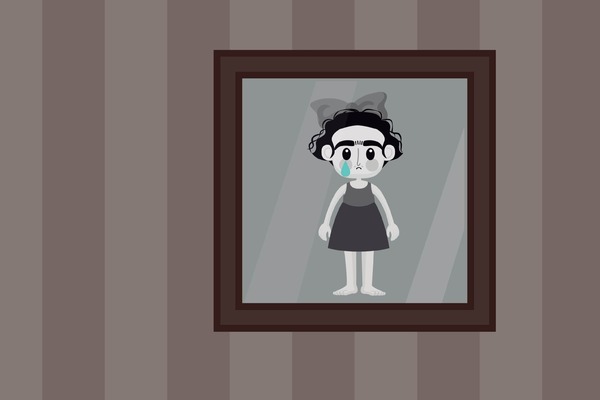
Frida began painting self-portraits. “I paint self-portraits because I am so often alone, because I am the subject I know best,” she later explained. This wasn’t egotism—it was pragmatism. She was bedridden, isolated, and the mirror showed her the one subject always available.
But these self-portraits became much more than technical exercises. They became psychological explorations and emotional catharsis. Through painting, Frida could express the pain, anger, grief, and isolation she felt. She could assert her existence—”I am here, I am real, I matter”—despite a body that felt broken and betrayed her.
Art therapists now recognize what Frida discovered intuitively: creative expression can be profoundly therapeutic for processing trauma. When words fail to capture the intensity of suffering, images can speak. When emotional pain feels overwhelming, externalizing it onto canvas provides distance and control. When you feel powerless over your body and circumstances, creating something is an act of agency.
Frida’s paintings didn’t shy away from her suffering. She painted herself in medical corsets, with broken spinal columns, with tears streaming down her face, with her body opened up to reveal internal organs. She painted the physical reality of her pain with unflinching honesty. But she also painted herself strong, dignified, defiantly alive, surrounded by symbols of Mexican identity and culture that anchored her sense of self.
Her style developed into something unique—a blend of Mexican folk art, surrealism, and raw personal symbolism. She painted on small canvases, often working from bed when pain prevented her from standing at an easel. Each painting was intimate, intense, and deeply personal, yet somehow spoke to universal human experiences of suffering, identity, and resilience.
Painting gave Frida purpose when her body limited everything else. It gave her a sense of control when she had little control over her physical condition. It gave her a way to transform suffering into something beautiful and meaningful. This transformation—from passive victim to active creator—was itself a form of overcoming.
Love and Turbulence: Diego Rivera
In 1928, Frida sought out Diego Rivera, Mexico’s most famous muralist, to get his opinion on her paintings. She wanted to know if she had real talent or if she was deluding herself. Diego, twenty years her senior and already established, was impressed not just by her work but by her fierce personality, her intelligence, and her striking appearance.
They began a relationship and married in 1929. Frida was twenty-two; Diego was forty-two. People called them “the elephant and the dove” because of Diego’s large size and Frida’s petite frame. The marriage would be passionate, creative, politically engaged, and deeply troubled.
Both had affairs—Diego compulsively, Frida partly in response and partly from her own desire. Diego’s infidelity with Frida’s younger sister Cristina particularly devastated her. The betrayal by both her husband and sister cut deep, triggering all her early feelings of being damaged and unlovable.
Yet Frida remained deeply attached to Diego. Their relationship was codependent, intense, and creative. They shared political commitments (both were communists), artistic sensibilities, and deep Mexican cultural pride. Despite the pain they caused each other, they couldn’t seem to stay apart. They divorced in 1939, only to remarry in 1940. Neither was particularly good at conventional monogamy or marriage, yet they were somehow essential to each other.
Frida processed the turbulence of her marriage through her art. One of her most famous paintings, “The Two Fridas” (1939), painted during their divorce, shows two versions of herself sitting side by side—one in traditional Tehuana dress with intact heart, one in Victorian dress with exposed, bleeding heart. The painting captures her internal division and pain.
Diego gave Frida validation as an artist, introducing her to important figures in the art world and supporting her work. But he also caused tremendous pain through his infidelities. The relationship was paradoxically both healing and harmful. For someone with Frida’s history of abandonment and feeling damaged, Diego’s inability to be faithful reinforced her deepest fears about being unlovable while simultaneously providing the artistic partnership and passionate connection she craved.

The Grief of Childlessness
Perhaps no aspect of Frida’s story is more heartbreaking than her inability to have children. The bus accident had damaged her uterus and pelvis so severely that doctors warned pregnancy would be dangerous. But Frida desperately wanted to be a mother. She became pregnant at least three times but suffered miscarriages or had to terminate the pregnancies for medical reasons.
The grief of this loss permeates her work. She painted “Henry Ford Hospital” (1932) after a particularly devastating miscarriage, depicting herself naked on a hospital bed, bleeding, with umbilical-cord-like ribbons connecting her to floating images—a fetus, medical instruments, anatomical drawings—all symbols of her lost motherhood.
For Frida, this inability to carry a child represented another way her body had failed her. It connected to her earliest experiences with polio—her body was different, damaged, incapable of what other women’s bodies could do naturally. The psychological pain of childlessness compounded her physical pain, creating layers of loss and grief.
She channeled maternal feelings in other directions—she doted on pets, cultivated elaborate gardens, and mentored young artists. But these substitutes never fully satisfied her longing. In her diary, she wrote poignantly about her lost children, expressing profound sadness at this absence in her life.
This aspect of Frida’s story reminds us that overcoming doesn’t mean escaping all pain or achieving everything you want. Sometimes resilience means living with permanent loss, finding ways to survive grief that never fully resolves. Frida didn’t overcome her childlessness in any conventional sense—she carried that sorrow throughout her life. But she continued creating, loving, and living despite it.
Mexican Identity and Cultural Pride
Central to Frida’s sense of self and her art was her fierce embrace of Mexican identity and Indigenous heritage. She rejected European beauty standards and fashions, instead wearing traditional Tehuana dresses from Oaxaca—long, colorful skirts and embroidered blouses. She styled her hair in elaborate braids woven with ribbons and flowers. She cultivated her distinctive connected eyebrows and slight mustache rather than conforming to conventional femininity.
This wasn’t just aesthetic choice—it was political and psychological. In post-revolutionary Mexico, there was a cultural movement to reclaim Indigenous identity and reject colonial influences. Frida participated actively in this nationalism. But for her personally, embracing Mexican Indigenous identity also provided a powerful sense of belonging and rootedness that countered feelings of being damaged or different.
If her disabled body made her feel like an outsider in some contexts, her Mexican identity provided community and pride. The elaborate traditional clothing also served practical purposes—long skirts concealed her thin leg and surgical scars. But more importantly, dressing this way made her feel beautiful, powerful, and connected to something larger than her individual suffering.
Her paintings are filled with Mexican symbolism—pre-Columbian imagery, Catholic iconography, folk art styles, native plants and animals. She painted monkeys, parrots, and deer. She incorporated Aztec and Maya symbols. She referenced Mexican history and revolution. Through this cultural anchoring, Frida created an artistic identity that was distinctly Mexican rather than derivative of European traditions.
This cultural pride gave meaning to her suffering. She wasn’t just an individual in pain—she was connected to the suffering and resilience of Mexican people, particularly Indigenous communities who had survived colonization. Her pain became part of a larger narrative of survival and resistance.

International Recognition and Continued Suffering
During the 1930s and 1940s, Frida gained increasing recognition. She exhibited in the United States and Europe. In 1938, André Breton, the father of Surrealism, declared Frida a Surrealist, though she rejected the label, insisting “I never painted dreams. I painted my own reality.” In 1939, she had a solo exhibition in Paris, where the Louvre purchased one of her paintings—the first work by a 20th-century Mexican artist acquired by the museum.
Despite this growing success, Frida struggled financially. Diego was the famous one; Frida was often seen as “Diego’s wife who also paints.” She sold few paintings during her lifetime and relied partly on teaching and Diego’s income. Recognition came, but financial security and full appreciation of her genius wouldn’t arrive until after her death.
More challenging than financial struggle was her declining health. The 1940s brought increased pain, more surgeries, and worsening complications. She wore 28 different supportive corsets between 1940 and 1954—steel, leather, and plaster constructions designed to support her damaged spine but which were themselves painful to wear. She painted one of these corsets with imagery, turning a medical device into art.
She developed infections. Her spine continued deteriorating. Her leg worsened. Doctors prescribed increasingly strong painkillers, and Frida became dependent on them. She drank alcohol heavily, partly to manage pain, partly to cope with depression. Her diary from this period shows both continued creative vitality and deepening despair.
Yet she kept painting. Even when bedridden, even when pain made holding a brush difficult, she continued creating. Painting was no longer just catharsis or career—it was how she asserted she was still alive, still here, still fighting. Each finished painting was a victory over the forces trying to destroy her.
The Final Years: Amputation and Death
By 1950, Frida’s health had deteriorated severely. She was diagnosed with gangrene in her right foot—the leg damaged by childhood polio and further injured in the bus accident. She spent nine months mostly bedridden, undergoing multiple surgeries attempting to save the leg. But in August 1953, doctors amputated her right leg below the knee.
This amputation devastated Frida psychologically. Her leg had been compromised her entire life, but it was hers. Its loss felt like a final defeat. She wrote in her diary: “They amputated my leg six months ago, they have given me centuries of torture and at moments I almost lost my reason.”
She became severely depressed and suicidal. She attempted suicide by overdose. Her dependence on painkillers escalated. Yet somehow, she continued creating. She attended her first solo exhibition in Mexico in 1953, arriving on a stretcher because she couldn’t stand. The exhibition was a triumph—Mexico finally celebrated her fully—but Frida was too ill to truly enjoy it.
She made her last public appearance in July 1954, joining Diego in a political protest despite being confined to a wheelchair. It was characteristic of Frida—sick, dying, but still politically engaged, still showing up, still refusing to disappear.
Frida Kahlo died on July 13, 1954, at age forty-seven. The official cause was pulmonary embolism, though some suspected overdose given her depression and pain. Her last diary entry read: “I hope the exit is joyful—and I hope never to return.”
She was cremated, her ashes placed in a pre-Columbian urn at Casa Azul, her childhood home in Coyoacán. Her final painting, unfinished on her easel, showed watermelons—vibrant, colorful, full of life even as her own was ending.

Legacy: What Frida Teaches Us About Overcoming
Frida Kahlo’s story isn’t a simple triumph narrative. She didn’t “overcome” her disability, her pain, or her suffering in the sense of transcending or escaping it. She lived with chronic pain every day of her adult life. She struggled with depression, addiction, and suicidal thoughts. She experienced profound losses—of health, of children, of bodily integrity, and ultimately of her life far too young.
But she did overcome in a more profound sense: she refused to let suffering be the only thing her life meant. She transformed pain into art that speaks to millions. She found ways to live with vitality, passion, creativity, and fierce self-expression despite circumstances that could have destroyed her spirit.
Her story teaches several important lessons about resilience and overcoming adversity. First, creative expression can be powerfully therapeutic. Frida discovered that painting allowed her to process emotions too intense for words, assert her existence when her body felt like a prison, and create beauty from brokenness. You don’t need to be a professional artist to benefit from creative expression—journaling, music, dance, photography, or any creative outlet can serve similar functions.
Second, meaning can be found even in suffering. Frida didn’t minimize her pain or pretend it was good, but she found ways to make it meaningful by channeling it into art that resonated with others. When suffering feels meaningless, it’s unbearable. When we can extract some meaning or purpose from it, we can survive it.
Third, identity and community provide anchoring when everything else feels unstable. Frida’s embrace of Mexican cultural identity gave her a sense of belonging and pride that helped counter feelings of being damaged or different. Finding communities—whether cultural, creative, or based on shared experiences—provides resilience.
Fourth, seeking help is strength, not weakness. Frida had doctors, therapists at times, and creative collaborators. She didn’t suffer in isolation by choice. She sought whatever support was available, though in her era, pain management and mental health treatment were far less advanced than today.
Finally, overcoming doesn’t mean achieving perfect happiness or resolution. Frida’s life was complicated, messy, often painful until the end. But she lived fully within those limitations. She loved passionately, created prolifically, engaged politically, and refused to disappear or diminish herself despite every reason to give up.
Frida’s Enduring Influence
Today, Frida Kahlo has achieved iconic status that far exceeds her fame during her lifetime. Her image appears on everything from museum walls to t-shirts to coffee mugs. Casa Azul, her childhood home, is now a museum dedicated to her life and work, attracting hundreds of thousands of visitors annually.
But beyond commercial appropriation, Frida’s work and story continue to resonate deeply with people facing their own struggles. People with disabilities, chronic illness, and chronic pain see themselves in her unflinching depictions of physical suffering. Women dealing with infertility or miscarriage find their grief reflected in her paintings. LGBTQ+ individuals connect with her fluid sexuality and refusal to conform to conventional femininity. People from marginalized communities appreciate her fierce cultural pride and political engagement.
Her work has inspired countless other artists, particularly women and people of color, to create art that’s personal, political, and unflinchingly honest. She demonstrated that you don’t have to paint pretty things or conform to artistic conventions to create powerful work. Your pain, your body, your identity, your reality—these are worthy subjects for art.
Mental health professionals often reference Frida’s story when discussing creative approaches to processing trauma and the importance of self-expression in healing. Art therapists use her work to help clients understand that creative expression can externalize internal pain in ways that promote healing and understanding.
Perhaps most importantly, Frida’s story gives hope to people facing overwhelming adversity. If she could create such beauty and meaning from so much suffering, maybe we can too. If she could survive decades of pain and loss while still loving, creating, and living vibrantly, maybe we’re stronger than we think. Her life says: suffering doesn’t have to be the end of your story; it can be the material from which you build something meaningful.
FAQs About Frida Kahlo
What caused Frida Kahlo’s disability and chronic pain?
Frida Kahlo faced two major health crises that shaped her life. At age six, she contracted polio, which left her right leg thinner and shorter than her left and gave her a permanent limp. Then at eighteen, she was in a catastrophic bus accident that shattered her spine in three places, broke her collarbone, crushed her pelvis and right leg (which suffered eleven fractures), broke three ribs, and caused other severe injuries. This accident left her in chronic pain for the rest of her life and required more than thirty surgeries throughout her lifetime.
The spinal damage was particularly debilitating. Her spine never healed properly, causing constant pain and requiring her to wear various supportive corsets—28 different ones between 1940 and 1954—made of steel, leather, and plaster. These medical devices were themselves painful but necessary to support her damaged spine. The accident also damaged her reproductive organs, making it impossible for her to carry pregnancies to term despite multiple attempts.
In her final years, gangrene developed in her right leg (the one damaged by childhood polio), and it was amputated below the knee in 1953, just a year before her death. This final loss devastated her psychologically, contributing to severe depression and her death the following year at age forty-seven.
How did painting help Frida Kahlo cope with her trauma?
Painting became Frida’s primary coping mechanism and form of psychological survival after the bus accident left her bedridden for months. Her parents set up a special easel that allowed her to paint lying down and installed a mirror above her bed, which enabled her to see herself and begin creating self-portraits.
Art served multiple psychological functions for Frida. First, it provided catharsis—a way to express and externalize intense emotions that were difficult to put into words. By depicting her pain, broken body, grief, and anger on canvas, she could process these overwhelming feelings rather than being consumed by them. Second, painting gave her a sense of agency and control when her body felt like a prison she couldn’t escape. Creating art was something she could control even when she couldn’t control her pain or physical limitations.
Third, her art allowed her to assert her existence and identity. Through painting, she could say “I am here, I matter, I exist” despite a body that society saw as damaged or broken. Her self-portraits were declarations of selfhood. Fourth, painting eventually became her career and purpose, giving meaning to her survival. Each completed painting was a victory, proof that suffering hadn’t destroyed her creative spirit.
Modern art therapists recognize what Frida discovered intuitively: creative expression can be profoundly therapeutic for processing trauma and finding meaning in suffering.
What was Frida Kahlo’s relationship with Diego Rivera like?
Frida’s relationship with muralist Diego Rivera was passionate, turbulent, creative, and deeply codependent. They married in 1929 when Frida was twenty-two and Diego was forty-two. Despite a twenty-year age difference and very different temperaments, they shared political commitments (both were communists), artistic sensibilities, and fierce pride in Mexican culture.
However, the marriage was troubled by mutual infidelity. Diego had compulsive affairs, including one with Frida’s younger sister Cristina that devastated her. This betrayal by both her husband and sister was particularly painful, reinforcing her fears of being unlovable and damaged. Frida also had affairs, both with men and women, partly in response to Diego’s infidelity and partly from her own desires.
They divorced in 1939, with Frida painting “The Two Fridas” during this period to express her pain and internal division. But they couldn’t stay apart and remarried in 1940, continuing their complicated relationship until Frida’s death in 1954. Despite the pain they caused each other, they were creatively and emotionally essential to each other. Diego supported Frida’s work and introduced her to important artistic circles, while Frida provided Diego with intellectual companionship and emotional intensity.
Their relationship embodied both healing and harm—it gave Frida artistic validation and passionate connection while also causing profound emotional pain that she processed through her art.
How many self-portraits did Frida Kahlo paint and why so many?
Frida Kahlo painted approximately 55 self-portraits out of her total 143 paintings—nearly 40% of her entire body of work. This extraordinary focus on self-portraiture wasn’t narcissism but arose from practical and psychological necessity.
Practically, Frida was often bedridden or isolated due to her health conditions, making herself the most accessible subject. As she explained: “I paint self-portraits because I am so often alone, because I am the subject I know best.” Her parents installed a mirror above her bed after the bus accident, enabling her to see herself while painting lying down.
Psychologically, self-portraits served deeper purposes. They allowed her to explore and assert her identity during times when her body felt alien or broken. Through painting herself, she could control how she was seen and represented. She could depict not just her physical appearance but her internal emotional states, her pain, her Mexican identity, and her complex relationship with her body.
Her self-portraits weren’t realistic depictions but rather psychological explorations. She painted herself with broken spinal columns, bleeding hearts, thorns piercing her skin, surrounded by monkeys and parrots, wearing traditional Mexican dress—each element symbolic of her internal experience. These self-portraits were a way of processing trauma, asserting existence, and creating meaning from suffering. They allowed her to transform from passive victim of her circumstances to active creator and interpreter of her own life story.
Did Frida Kahlo consider herself a Surrealist?
No, Frida Kahlo explicitly rejected the label of Surrealist despite André Breton, the founder of Surrealism, declaring her a Surrealist after seeing her work in 1938. Breton was impressed by her dreamlike imagery, symbolic elements, and unconventional compositions, which seemed to align with Surrealist principles of accessing the unconscious mind.
But Frida famously stated: “They thought I was a Surrealist, but I wasn’t. I never painted dreams. I painted my own reality.” This distinction was crucial to her. Surrealists deliberately sought to tap into dreams and the unconscious, creating fantastical imagery disconnected from literal reality. Frida, by contrast, was depicting her actual lived experience—the physical sensation of pain, the emotional reality of grief, the psychological experience of having a broken body.
What looked surreal or dreamlike to viewers was, to Frida, simply accurate representation of her reality. A painting showing her spine as a broken classical column wasn’t surreal metaphor—it was how her spine actually felt to her. A painting with her heart exposed and bleeding wasn’t dream imagery—it was depicting the visceral emotional pain of heartbreak.
This insistence on painting “reality” rather than dreams reflects Frida’s commitment to honesty and truth-telling through her art. She wasn’t interested in escapist fantasy or symbolic abstraction. She wanted to make visible the invisible experiences of pain, disability, grief, and resilience that society preferred not to see.
What can we learn from Frida Kahlo about coping with chronic illness or disability?
Frida Kahlo’s life offers profound lessons about living with chronic illness and disability, though it’s important to remember her experience was shaped by her historical context, with pain management and mental health treatment far less advanced than today.
First, she demonstrated that creative expression can be powerfully therapeutic. Finding outlets—whether art, writing, music, or other forms—to process and externalize pain helps us cope with what feels overwhelming internally. You don’t need to be a professional artist; the therapeutic value comes from the expression itself, not the final product’s quality.
Second, Frida showed that disability doesn’t negate beauty, sexuality, creativity, or worth. She refused to hide or minimize her disabled body. Instead, she incorporated it into her art and identity, wearing elaborate traditional clothing that made her feel beautiful and powerful. Finding ways to feel attractive and valuable despite societal messages about disabled bodies is crucial for psychological wellbeing.
Third, she teaches us that asking for help is strength, not weakness. Frida had doctors, wore medical devices, took pain medication, and accepted assistance when needed. She didn’t suffer stoically in silence but actively sought whatever relief was available, though she also struggled with medication dependence later in life.
Fourth, meaning and purpose can be found even in suffering. Frida transformed her pain into art that resonated with millions, giving her suffering purpose beyond just personal tragedy. Finding ways to make our struggles meaningful—whether through helping others, creative work, advocacy, or other contributions—helps us survive them.
Finally, Frida reminds us that living fully doesn’t require being pain-free or “overcoming” disability completely. Despite chronic pain until her death, she loved passionately, created prolifically, maintained friendships, engaged politically, and lived with intensity and vitality. Quality of life isn’t about eliminating all suffering but about finding meaning, connection, and joy alongside it.
Use this citation format to reference the article clearly and help readers find the original source.
PsychologyFor. (2026). Frida Kahlo, a Story of Overcoming. PsychologyFor. https://psychologyfor.com/frida-kahlo-a-story-of-overcoming/