

See more of our articles in your search results.
What if everything you were ever told about intelligence was only half the story? What if the child who struggled to read but could dismantle and rebuild a bicycle engine by age nine was, in fact, deeply intelligent — just not in the way anyone thought to measure? What if the girl who never scored well on math tests but could walk into a room of strangers and within minutes understand exactly what each person needed was exercising a form of brilliance that no standardized test had ever bothered to capture? These are not hypothetical provocations. They are the kinds of observations that led Harvard psychologist Howard Gardner to one of the most influential — and most debated — theories in modern psychology.
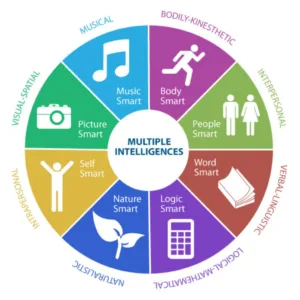
Gardner’s Theory of Multiple Intelligences, first published in his 1983 book Frames of Mind, proposed something that felt almost radical at the time: that human intelligence is not a single, fixed, measurable quantity but rather a constellation of at least eight distinct, relatively independent capacities that each person possesses in a unique profile. Linguistic, logical-mathematical, spatial, musical, bodily-kinesthetic, interpersonal, intrapersonal, and naturalistic — each representing a genuine way of being intelligent, each with its own developmental arc, its own neural basis, its own cultural expression.
The theory did not simply add nuance to existing ideas about intelligence. It challenged the entire architecture of how Western psychology and education had been thinking about human capability for over a century. And whether you are an educator trying to reach a student who doesn’t fit the mold, a parent watching a child’s particular brilliance go unrecognized, or simply someone who has always sensed that the word “smart” was never quite big enough to contain everything a person can be — this framework offers something genuinely valuable: a more honest, more expansive, and more human account of what intelligence actually looks like in the wild.

The Origins and Development of MI Theory
Howard Gardner didn’t arrive at his theory of multiple intelligences in a flash of inspiration. It emerged from years of rigorous, interdisciplinary work at Harvard University’s Project Zero — an educational research group — during the late 1970s and early 1980s. His starting point was frustration: a deep dissatisfaction with the prevailing psychological consensus that treated intelligence as a single, general cognitive ability — the so-called “g factor” — measurable through standardized testing and expressible as a single number.
How many of these have you been "meaning to read" for months?
- 1
 TarcherThe Artist's Way30th Anniversary EditionListen Free On Audible
 - 2
 New Harbinger PublicationsThe Dialectical Behavior Therapy Skills WorkbookPractical DBT Exercises for Learning Mindfulness, Interpersonal Effectiveness, Emotion Regulation...Listen Free On Audible
 - 3
 New Harbinger PublicationsAdult Children of Emotionally Immature ParentsHow to Heal from Distant, Rejecting, or Self-Involved ParentsListen Free On Audible
Gardner looked around at the world and found that picture unconvincing. Traditional IQ tests predicted academic success with reasonable accuracy but failed spectacularly to capture the full range of human competencies that cultures across history have valued and cultivated. So he went broader. His methodology drew from developmental psychology, neuroscience, anthropology, cross-cultural studies, and — crucially — observations of exceptional populations: child prodigies, individuals with savant syndrome, and people who had suffered specific brain injuries.
That last group proved particularly revealing. Gardner observed repeatedly that specific brain damage could devastate one capacity while leaving others completely intact. A stroke affecting Broca’s area might eliminate a person’s ability to speak while their musical ability remained untouched. Another injury might wipe out mathematical reasoning while interpersonal sensitivity stayed perfectly preserved. These striking dissociations suggested something important: different cognitive capacities operate through distinct neural systems that can be independently damaged. That is not what you would expect if all intelligence were a single unified faculty. It is exactly what you would expect if intelligence were genuinely plural.
Gardner published his conclusions in 1983, initially identifying seven intelligences. He added an eighth — naturalistic intelligence — in the 1990s, and has since discussed the possibility of existential intelligence, though he remains cautious about whether it meets his criteria. The theory spread rapidly, particularly through educational communities, where teachers recognized in Gardner’s framework an explanation for something they had been watching for years: students who failed conventional tests but demonstrated unmistakable brilliance in domains those tests never thought to measure.
The Eight Criteria for Identifying an Intelligence
One of the most intellectually serious aspects of Gardner’s work — and one that is often overlooked in popular summaries — is that he didn’t simply generate a list of human abilities and call them intelligences. He developed eight specific criteria that any candidate ability must substantially meet before earning that designation. This rigor matters. It is what distinguishes MI theory from the kind of pop-psychology lists that classify everything from “emotional intelligence” to “street smarts” without any evidentiary framework.
| Criterion | What It Requires |
|---|---|
| Potential isolation by brain damage | The capacity can be selectively impaired or preserved by specific brain injuries |
| Existence of savants and prodigies | Some individuals show extraordinary ability in this domain while being average or impaired in others |
| Identifiable core operations | The intelligence involves specific, describable information-processing mechanisms |
| Distinctive developmental history | The ability follows a characteristic developmental trajectory from novice to expert |
| Evolutionary plausibility | The capacity has roots in human evolutionary history and serves adaptive purposes |
| Support from experimental psychology | Research tasks can measure the capacity independently of other abilities |
| Encodability in a symbol system | The intelligence can be captured and transmitted through cultural symbol systems |
| Cross-cultural value | Different societies recognize and cultivate the capacity, though in varied forms |
The evolutionary plausibility criterion reflects Gardner’s view that intelligences are biopsychological potentials that emerged because they solved real problems for human survival and flourishing. Spatial intelligence helps navigate terrain. Interpersonal intelligence enables cooperation. Naturalistic intelligence supports identifying safe food sources and recognizing dangerous organisms. Each intelligence exists, in this framing, because it served something real — not because it was convenient for a taxonomy.
The encodability criterion is equally fascinating. Symbol systems — language, musical notation, mathematical symbols, maps, dance notation — allow intelligences to be preserved, taught, and elaborated across generations. This is what makes intelligences cultural as well as biological. The potential may be neurological, but its expression is always shaped by what a given society decides to cultivate, value, and pass on.

The Eight Primary Intelligences
Gardner’s framework identifies eight distinct intelligences — each representing a different way humans process information, solve problems, and create meaning. Everyone possesses all eight to some degree. What varies is the profile: which are stronger, which are less developed, and how they interact in a particular person’s mind and life. Understanding each one in depth is not just an academic exercise — it is an invitation to see human capability with genuinely new eyes.
1. Linguistic Intelligence

Linguistic intelligence is the intelligence of language in its fullest sense — not simply the ability to speak or read, but a deep, intuitive sensitivity to the structure, rhythm, meaning, and power of words. People with strong linguistic intelligence don’t just use language as a tool; they think in it. They notice when a sentence is structured badly in the same way a musician notices when a note is off-key. They remember conversations verbatim, recall passages they read years ago, and find the right word for something in a moment when everyone else is still searching.
This intelligence encompasses both the technical dimensions of language — grammar, syntax, phonology — and the pragmatic dimensions: understanding how language functions differently in different social and cultural contexts, how tone shifts meaning, how the same words can reassure or wound depending on delivery. It is among the most culturally celebrated of the intelligences, which is part of why those who lack it tend to feel most keenly excluded by conventional educational systems.
Poets, novelists, lawyers, teachers, journalists, and therapists typically demonstrate high linguistic intelligence — but so does anyone who has ever found exactly the right word for something no one else could name, or who can tell a story that holds a room completely still. In educational contexts, students strong in this intelligence tend to excel at reading comprehension, written expression, and verbal reasoning, and often learn best through reading, discussion, debate, and storytelling rather than visual or kinesthetic approaches.
Interestingly, linguistic intelligence is one of the earliest to show clear individual differences in children. A toddler who loves being read to, who asks what words mean, who begins narrating their own experience at an unusually early age — these are signs of linguistic intelligence in early development, long before formal schooling begins to measure it.
2. Logical-Mathematical Intelligence

This intelligence is what most people picture when they say someone is “analytically smart” — but the reality is considerably richer than the stereotype of the math whiz. Logical-mathematical intelligence is fundamentally the capacity to reason: to detect patterns, think abstractly, construct and evaluate arguments, and approach problems with systematic, step-by-step precision. Numbers are one expression of it, but far from the only one.
A mathematician doing proofs is using it. So is a programmer debugging recursive code, a philosopher dismantling a fallacious argument, a detective constructing a chain of evidence, or a chef scaling a recipe across different batch sizes without losing proportional balance. What these activities share is the requirement to hold abstract relationships in mind and reason about them carefully — to follow a logical thread wherever it leads, even when the destination is surprising.
Logical-mathematical intelligence also underlies scientific thinking more broadly — the ability to form hypotheses, design experiments that could falsify them, interpret data without wishful thinking, and update beliefs in response to evidence rather than emotion. In a world saturated with misinformation and motivated reasoning, this form of intelligence carries particular social value that extends well beyond academic performance.
In children, early signs include a fascination with puzzles and patterns, persistent “why” and “how” questions that go several levels deep, a preference for rules and systems over ambiguity, and unusual comfort with abstraction. These children often enjoy strategy games, love finding exceptions to rules, and are not satisfied with explanations that rely on authority rather than logic.
3. Spatial Intelligence

Spatial intelligence is the capacity to perceive the visual world accurately, to mentally transform and manipulate spatial representations, and to imagine how things look from perspectives other than your own. It operates across a wide range of scales — from the vast spatial reasoning of a sailor navigating by stars to the intricate, millimeter-precise spatial problem-solving of a surgeon or a jeweler.
What all these expressions have in common is the ability to think in three dimensions, to hold a mental model of space and manipulate it fluidly — rotating objects mentally, imagining how a flat blueprint becomes a three-dimensional room, understanding how pieces of a puzzle relate to each other before physically moving them. Architects, chess grandmasters, sculptors, and pilots all depend on spatial intelligence at its most developed, but it shows up in anyone who navigates intuitively without GPS, packs a trunk with geometric elegance, or can look at a tangled ball of wire and see how it should be straightened.
It is worth noting that spatial intelligence has two somewhat distinct dimensions: large-scale spatial navigation (knowing where you are in relation to the wider environment, finding your way through unfamiliar spaces) and small-scale spatial manipulation (mentally rotating objects, visualizing three-dimensional forms from two-dimensional representations). Some individuals show strength in both; others demonstrate clear specialization in one over the other.
In educational settings, students strong in spatial intelligence often find conventional verbal and text-based instruction frustrating — not because they lack intellectual capacity, but because their native cognitive language is visual and spatial rather than linguistic. Providing diagrams, models, maps, charts, and opportunities for visual expression allows these students to demonstrate understanding that written tests may systematically underestimate.
4. Musical Intelligence

Musical intelligence involves the capacity to recognize, create, reproduce, and appreciate musical patterns — with sensitivity to rhythm, pitch, meter, tone, melody, timbre, and the emotional content that these elements convey. It is, in some ways, the intelligence most resistant to the conventional definition of the term, which is part of why Gardner’s insistence on calling it intelligence rather than talent has generated both resistance and genuine recognition.
The key insight is that musical intelligence is not simply the product of training. Long before a musically intelligent child receives any formal instruction, they are already doing something cognitively sophisticated: they are organizing sound into meaningful patterns, noticing when something is rhythmically or tonally wrong, responding to musical structure emotionally with a depth that others do not share. Musical intelligence involves real cognitive work — the mental representation of pitch relationships, rhythmic structures, and emotional contour that allows a musician to hear a complex piece once and reproduce it, or to improvise within a style without violating its internal logic.
Gardner suggests that musical intelligence may have among the deepest evolutionary roots of the eight, rooted in the role of sound in emotional communication and social bonding. Every human culture that has ever been studied has music — not as entertainment or decoration but as a core feature of collective life. Lullabies, work songs, ritual chant, celebratory dance: the universality of music across human cultures suggests that musical intelligence is not a cultural luxury but a genuine biological endowment.
In everyday life, musical intelligence shows up in people who learn better when information has rhythm and cadence, who use music to regulate their emotional states with unusual precision, who are moved by sound in ways they often find difficult to explain, and who experience certain pieces of music as something closer to a direct emotional communication than a sensory input. These experiences are not less real for being non-verbal. They are differently real — which is exactly Gardner’s point.
5. Bodily-Kinesthetic Intelligence

Of all Gardner’s intelligences, bodily-kinesthetic is perhaps the one that most consistently meets skepticism when first encountered. Intelligence, surely, lives in the mind — not the body. The idea that a dancer or an athlete might be exercising something that deserves the word “intelligence” can feel, to people raised within a tradition that sharply separates mind from body, like a category error. Gardner’s response to that skepticism is both philosophically and neurologically grounded: the mind does not stop at the neck.
Bodily-kinesthetic intelligence is the capacity to use one’s body — or parts of it — to solve problems, create products, and express meaning. It includes physical coordination, balance, dexterity, strength, flexibility, and speed, but also — crucially — proprioception (the felt sense of one’s body in space) and the ability to mentally plan and represent physical movement before executing it. This last dimension is where the cognition lives: a surgeon planning a complex procedure is doing something cognitively demanding before a single incision is made. A dancer choreographing a piece is solving a complex problem in movement rather than in language or numbers. The intelligence is genuine; its medium is simply the body rather than words or symbols.
People with strong bodily-kinesthetic intelligence often struggle in conventional educational settings that require sustained sitting and primarily verbal or written engagement. They think through doing. They understand things better when they can physically handle or enact them. They are often labeled as restless, disruptive, or inattentive when the more accurate description is that their primary cognitive channel is being systematically ignored. Recognizing bodily-kinesthetic intelligence as genuine — rather than as a distraction from “real” learning — has direct implications for how schools design learning environments and what kinds of engagement they consider legitimate.
Beyond education, this intelligence underlies every skilled trade, every athletic achievement, every surgical advance, and every performance art. The carpenter who can feel whether a joint is true before measuring it, the goalkeeper who moves before they have consciously processed where the ball is going, the potter whose hands know the clay in ways language cannot fully capture — these are all expressions of bodily-kinesthetic intelligence at work.
6. Interpersonal Intelligence

Interpersonal intelligence is the capacity to understand other people — their intentions, motivations, desires, fears, and emotional states — and to use that understanding to navigate social situations effectively. It is the intelligence that underlies genuine human connection: the ability to read the room, to sense what someone needs before they say it, to respond to emotional signals with accuracy and care, and to influence social dynamics in ways that serve the group rather than just the self.
This intelligence operates through multiple channels simultaneously. Facial expressions, tone of voice, body posture, the rhythm of conversation, the silences between sentences — all of these carry social information that the interpersonally intelligent person processes rapidly and accurately, often without conscious effort. It is less like a skill and more like a perceptual capacity: a sensitivity to the social world that others may simply not experience at the same resolution.
Therapists, teachers, counselors, effective managers, skilled negotiators, and community leaders typically demonstrate high interpersonal intelligence. But it shows up just as genuinely in the parent who always knows which of their children is struggling before anyone has said a word, in the friend who always seems to call at exactly the right moment, or in the colleague who can defuse a tense meeting with a single well-chosen phrase. These are not soft skills in the dismissive sense of that term. They are sophisticated cognitive achievements — real intelligence operating in the social domain.
Interpersonal intelligence is also deeply related to ethical and moral development. The capacity to genuinely understand other people’s perspectives and to feel the weight of one’s impact on them is not separate from moral reasoning — it is one of its foundations. This is why Gardner’s theory has had resonance not just in education and organizational contexts but in moral philosophy and the psychology of prosocial behavior.
7. Intrapersonal Intelligence

Intrapersonal intelligence is the mirror of interpersonal intelligence — turned inward. It is the capacity to understand oneself: to have accurate, nuanced access to one’s own emotions, motivations, values, fears, strengths, and limitations, and to use that self-knowledge effectively in navigating life. Self-awareness, self-regulation, metacognition, and the ability to create honest mental models of who you are and why you do what you do all fall within its scope.
This is a quieter intelligence than most. It doesn’t produce public performances or visible products. It doesn’t show up on standardized tests. It rarely wins awards or generates applause. And yet it may be among the most consequential of the eight for how a life actually unfolds — because the quality of every decision, every relationship, every vocational choice, and every response to difficulty is shaped by how accurately and honestly a person understands their own inner life.
People with strong intrapersonal intelligence know what triggers them before they are triggered. They understand their own patterns — why they tend to react in certain ways, what their genuine values are as opposed to the values they have been taught to claim, where their real limitations lie and where they have been falsely told they are limited. This self-knowledge is not comfortable — it requires a willingness to see oneself clearly, including the parts that are inconvenient or unflattering. But it is enormously useful, and its absence is among the most consistent predictors of avoidable suffering in adult life.
In educational contexts, intrapersonal intelligence is often the most underdeveloped and least systematically cultivated of the eight — despite its foundational importance for wellbeing, learning, and relational health. Practices that build it include reflective journaling, self-assessment, structured contemplative activities, and any educational environment that treats students’ inner lives as legitimate subjects of inquiry rather than noise to be managed.
8. Naturalistic Intelligence

The youngest of Gardner’s eight, naturalistic intelligence was added in the 1990s based on evolutionary reasoning and cross-cultural observation. It is the capacity to recognize, classify, and engage meaningfully with the natural world — plants, animals, geological formations, weather patterns, ecological systems, and the relationships among living things. It is, in short, the intelligence of a person who sees the living world in high resolution when others see it in blur.
The evolutionary rationale for its inclusion is compelling. For the overwhelming majority of human evolutionary history, the ability to distinguish a medicinal plant from a poisonous one, a dangerous predator from a harmless one, a safe water source from a contaminated one, or an approaching storm from clear weather was not a hobby or an interest — it was survival. Naturalistic intelligence represents one of the oldest and most adaptive cognitive capacities in the human repertoire, even if modern urban life has reduced the contexts in which it is systematically demanded.
Today, naturalistic intelligence shows up in biologists, ecologists, farmers, veterinarians, environmental scientists, wildlife rangers, and anyone who possesses the kind of deep, pattern-based knowledge of the natural world that comes from sustained, attentive observation rather than rote memorization. It also shows up less formally in the person who immediately notices a new bird in the garden, who can identify a tree species from a hundred meters away, or who reads the behavior of animals with an accuracy that seems almost uncanny to others.
Some researchers extend the concept of naturalistic intelligence to pattern recognition in human-made environments — the person who can classify car models from distant silhouettes, distinguish fashion eras at a glance, or categorize musical genres with effortless precision. Whether this extension is warranted is debated, but the underlying capacity — sensitive, accurate pattern recognition organized into meaningful classifications — is consistent with the core cognitive operations Gardner identifies. Children who demonstrate this intelligence often show intense interest in collecting and categorizing natural objects, deep curiosity about living things, and an almost compulsive attentiveness to the natural world that adults sometimes struggle to share or even to fully see.

How MI Theory Transformed Educational Practice
The place where Multiple Intelligences theory has had the most immediate and widespread impact is the classroom — and for understandable reasons. Educators have always known, in an intuitive way, that students learn differently and shine in different contexts. Gardner gave them a theoretical language for that observation, and permission to act on it.
One of the most concrete applications is designing lessons with multiple entry points. A teacher explaining the water cycle doesn’t have to confine the lesson to lecture and textbook. They can draw diagrams (spatial), incorporate movement activities (bodily-kinesthetic), discuss the human stories behind drought (interpersonal and linguistic), have students journal about their relationship with water (intrapersonal), observe weather patterns outside (naturalistic), or analyze precipitation data (logical-mathematical). No single approach is right for everyone, and offering varied pathways increases the likelihood that each student connects with the material through a strength — while also developing less dominant intelligences in the process.
Assessment has shifted in MI-influenced schools as well. Rather than relying exclusively on written tests — which systematically favor linguistic and logical-mathematical intelligence — educators increasingly offer students choices in how they demonstrate mastery. A student who struggles to articulate understanding in essay form might convey the same depth of knowledge through a design project, a presentation, a performance, or a portfolio. This isn’t about lowering standards. It’s about recognizing that demonstration of competence can legitimately take many forms, and that forcing all students through the same narrow output channel reveals less about what they know than it does about how well they match a particular measurement format.
Career counseling has also been transformed by MI frameworks. Rather than funneling students toward futures based solely on academic performance, advisors can help them map their intelligence profiles against possible career paths — opening possibilities for students whose strengths were never captured by their GPA. A student with exceptional bodily-kinesthetic and spatial intelligence who barely passed algebra may have exactly the cognitive profile to thrive as a skilled craftsperson, an architect’s technician, a physical therapist, or an emergency room surgeon.

The Scientific Debates: Where Critics Push Back
It would be intellectually dishonest to present MI theory as settled science, because it isn’t — and Gardner himself would be the first to acknowledge the ongoing debate. The theory has generated substantial and legitimate criticism from cognitive psychologists and neuroscientists that deserves honest engagement.
The most persistent challenge comes from psychometric research. Studies of cognitive abilities consistently find positive correlations among different capacities — people who score high on one type of cognitive test tend to score relatively high on others. This pattern, sometimes called the “positive manifold,” is the empirical foundation for the concept of general intelligence. Critics argue that this pervasive correlation suggests a single underlying cognitive factor rather than genuinely independent intelligences, and that what Gardner calls separate intelligences may be better described as distinct talents or domain-specific skills operating within a more unified cognitive architecture.
The absence of standardized measurement instruments is another significant limitation. Without widely accepted tests for each of the eight intelligences, the theory’s core claims are difficult to subject to the kind of rigorous empirical testing that would allow it to be confirmed, refined, or falsified. Gardner has argued that standardized testing is poorly suited to assessing intelligences best observed in real-world contexts — but this position, while philosophically coherent, does make systematic scientific validation considerably harder.
Neuroscientific evidence presents a more mixed picture. A 2017 neuroimaging study by Branton Shearer found distinct neural networks associated with different intelligences — visual networks with spatial, somatomotor networks with kinesthetic, auditory networks with musical — offering some support for neural distinctiveness. On the other hand, complex cognitive tasks consistently activate networks across multiple brain regions, which complicates strong claims about neurological independence. The brain is deeply interconnected in ways that resist clean categorical divisions.
MI Theory vs. Traditional Intelligence: A Direct Comparison
The contrast between Gardner’s pluralistic framework and the traditional psychometric tradition reflects deeper philosophical differences about what intelligence is for, what it means to be capable, and whose forms of brilliance our social institutions choose to recognize and reward.
| Traditional IQ Perspective | Multiple Intelligences Perspective |
|---|---|
| Intelligence is a single general ability (g-factor) | Intelligence comprises multiple relatively independent capacities |
| Best measured through standardized tests | Best observed through real-world performance and products |
| Emphasizes linguistic and logical-mathematical abilities | Includes musical, spatial, bodily, interpersonal, intrapersonal, and naturalistic capacities |
| Intelligence is relatively fixed and stable across contexts | Intelligences can be developed through education, practice, and environment |
| Strong predictor of academic and certain professional outcomes | Broader view of competence across diverse domains and cultures |
| Focuses on individual cognitive capacity in isolation | Emphasizes the interaction between individual potential and cultural context |
Traditional intelligence testing has a real and defensible record. IQ scores do predict academic achievement, performance in cognitively demanding occupations, and certain life outcomes with moderate accuracy. That validity is not illusory. But Gardner’s critique is precise: what IQ tests predict well is success in environments that were specifically designed to reward the capacities those tests measure. The question is whether that system captures the full range of what human intelligence can be — and the evidence across cultures, across development, and across neuroscience suggests that it does not.

Intelligence as a Cultural Phenomenon
One of the most distinctive and underappreciated aspects of MI theory is its insistence that intelligence is never purely biological. Culture shapes which intelligences are developed, which are celebrated, and which are effectively invisible. What counts as “being smart” varies across societies in ways that are profound rather than superficial.
Some cultures prioritize interpersonal intelligence — the ability to navigate complex social relationships, maintain community harmony, and read unspoken social dynamics. Others center naturalistic intelligence, valuing deep knowledge of plants, animals, seasons, and ecosystems as the pinnacle of human expertise. Western educational systems have historically privileged linguistic and logical-mathematical intelligences — not because these are objectively superior, but because they are useful for the specific professional and academic environments those systems were designed to produce.
Gardner describes intelligences as becoming “crystallized and mobilized” through interaction with cultural symbol systems and practices. Innate neurological potential requires environmental stimulation to fully develop. A child with high musical potential who grows up surrounded by instruments and instruction will develop very differently from a child with the same potential in an environment where music is treated as background noise. The intelligence was real in both cases. What differed was whether the culture gave it room to grow.
This has uncomfortable implications for how we interpret educational test results across different populations. If standardized assessments measure the intelligences that a particular cultural tradition has chosen to cultivate and formalize, then performance differences across cultural groups may reflect differences in opportunity and cultural emphasis as much as — or more than — differences in innate capacity.

Practical Applications Beyond the Classroom
MI theory’s influence extends well beyond educational settings, touching domains from organizational management to therapeutic practice to personal development.
In the workplace, recognizing diverse intelligences offers a more sophisticated approach to team composition and task assignment. A project team that includes members with complementary intelligence profiles — strong spatial intelligence for design work, interpersonal intelligence for client relationships, logical-mathematical intelligence for data analysis, and intrapersonal intelligence for strategic planning — is likely to outperform a team homogeneous in one type of cognitive strength. Cognitive diversity, in this sense, is a genuine organizational asset.
In therapeutic and counseling contexts, MI frameworks can guide the tailoring of interventions to individual clients. Someone with strong intrapersonal intelligence may respond powerfully to journaling and reflective practices. A person with dominant bodily-kinesthetic intelligence might process emotional experience more effectively through somatic approaches. Musical intelligence can be accessed through music therapy; spatial intelligence through art-based approaches. The principle is the same one Gardner applied to education: one-size-fits-all is rarely the most effective approach when the people you are serving have genuinely diverse cognitive profiles.
Perhaps most personally significant: MI theory offers a framework for honest self-understanding that many people find genuinely liberating. If you struggled in school, received discouraging feedback about your capabilities, or spent years feeling like intelligence was something other people had — recognizing that your particular profile of strengths may simply not have been measured by the instruments your educational system chose to use is not a consolation prize. It is an accurate correction of a genuinely mistaken picture.

What Current Research Reveals
Research on Multiple Intelligences continues to evolve, occupying a somewhat unusual position — enormously influential in practice, still contested in academic cognitive science. The 2017 neuroimaging work by Branton Shearer provided some of the most direct empirical support for MI theory to date, identifying distinct neural networks associated with different intelligences. But those same studies also found significant network overlap across intelligences, reinforcing the view that the brain is more integrated than any clean categorical framework can fully capture.
Educational research on MI-based interventions yields mixed results — partly because “MI-based education” is not a single defined intervention but a broad family of varied practices. Schools implementing superficial versions of the theory — simply telling students which type of learner they are and teaching accordingly — show limited benefit. Schools implementing richer, more differentiated approaches show more promising outcomes, particularly for students who struggled under more conventional instructional models.
Research at the intersection of MI theory and related frameworks — emotional intelligence, practical intelligence, social intelligence — remains particularly active. How does interpersonal intelligence relate to what Daniel Goleman called emotional intelligence? Is there a meaningful distinction between intrapersonal intelligence and the self-regulatory capacities that positive psychology researchers study? These questions don’t threaten MI theory so much as they complicate and enrich it, pushing toward a more integrated account of the remarkable diversity of human cognitive life.
FAQs About Gardner’s Theory of Multiple Intelligences
Is Multiple Intelligences theory scientifically proven?
The honest answer is: it’s more complicated than a yes or no. Gardner developed the theory through rigorous interdisciplinary research drawing on neuroscience, developmental psychology, and anthropology — providing substantial theoretical grounding. Recent neuroimaging studies have identified distinct neural networks associated with different intelligences, offering some empirical support. However, the theory lacks the kind of psychometric validation that traditional intelligence research rests on — there are no widely accepted standardized tests for the eight intelligences, which makes systematic empirical testing difficult. Mainstream cognitive psychologists generally remain skeptical, pointing to the consistent positive correlations among cognitive abilities as evidence for general intelligence rather than independent capacities. MI theory is best understood as a powerful, empirically informed framework for thinking about human cognitive diversity — not a definitively settled scientific model, but one with meaningful theoretical and practical value.
Can someone be strong in all eight intelligences?
Everyone possesses all eight intelligences to varying degrees — that’s a core feature of the theory. Whether someone can develop genuinely high levels across all eight simultaneously is a different question. Reaching expert-level performance in any single intelligence requires substantial time and practice; doing so across all eight simultaneously requires an enormous investment that very few people have the circumstances or opportunity to make. Additionally, culture and education tend to develop certain intelligences while leaving others relatively dormant — so even people with broad potential often end up with uneven profiles. The more useful takeaway is not “can I maximize everything?” but “what does my particular profile look like, and how can I leverage it while deliberately developing areas I want to strengthen?”
How is MI theory different from learning styles?
This distinction matters enormously, and Gardner has been explicit about it: Multiple Intelligences theory is fundamentally different from learning styles theories, and he does not endorse conflating them. Learning styles theories claim that individuals have preferred modalities for receiving information — visual, auditory, kinesthetic — and that teaching should match these preferences. MI theory is about the content of intelligence and what kinds of problems a person is best equipped to solve, not about the sensory channel through which they prefer to receive information. Furthermore, the research base for learning styles matching is weak; studies consistently fail to find that matching instruction to supposed learning styles improves outcomes. MI theory has stronger theoretical foundations and a different practical implication: engage multiple intelligences to offer richer, more varied access to important content — not to match a preferred style.
Does MI theory mean everyone is equally intelligent?
No — and this is an important clarification. The theory doesn’t claim that all people have equivalent cognitive capacity. It claims that intelligence is multidimensional rather than a single quantity that people have more or less of. Someone might have a high level of musical and interpersonal intelligence while being average in logical-mathematical intelligence; another person might show the reverse. The framework validates diverse forms of competence rather than eliminating meaningful differences. It does not claim that cognitive differences disappear when you measure more broadly — only that the differences look more varied and more interesting than a single IQ score can represent.
How can parents identify their child’s intelligence strengths?
Observation across diverse contexts is the most reliable approach — and it requires genuine breadth of opportunity, because you cannot identify a strength that has never been given a chance to appear. Linguistic strength shows up in a child who loves stories and plays with language. Logical-mathematical capacity appears as fascination with puzzles and patterns. Spatial intelligence shows in three-dimensional building and strong visual memory. Musical strength manifests in naturally keeping rhythm and remembering tunes after a single hearing. Bodily-kinesthetic capacity shows in physical coordination and a preference for hands-on learning. Interpersonal intelligence appears as social ease and accurate reading of others’ emotional states. Intrapersonal strength shows as self-awareness and reflective thinking. Naturalistic capacity appears as detailed attention to the natural world and fascination with living things. Use these observations to provide opportunities — not to assign labels.
Can adults develop intelligences that aren’t naturally strong?
Yes — neuroplasticity, the brain’s capacity to form new connections, continues throughout adulthood, though it is generally more rapid in childhood. An adult who has never developed musical intelligence can learn to play an instrument, develop musical literacy, and build genuine musical understanding through sustained practice. The same applies to logical-mathematical, interpersonal, bodily-kinesthetic, or any other intelligence. Adults bring advantages that children lack: metacognitive awareness, clearer motivation, and the ability to seek targeted instruction. Many people discover capacities in adulthood they had no idea they possessed. The key is approaching development with realistic expectations and sustained effort.
How do I use MI theory to choose a career?
MI theory can be a useful lens for career exploration when used as one tool among several rather than a deterministic formula. Strong linguistic intelligence aligns with writing, teaching, law, and journalism. Logical-mathematical strength fits science, engineering, programming, and data analysis. Spatial intelligence suits architecture, design, and surgery. Musical intelligence aligns with performance, composition, and audio production. Bodily-kinesthetic capacity fits athletics, dance, skilled trades, and crafts. Interpersonal intelligence works well in counseling, teaching, and management. Intrapersonal strength benefits entrepreneurship and research. Naturalistic intelligence fits environmental science, biology, and veterinary medicine. Most careers draw on combinations of intelligences — think about the profile a role requires rather than seeking a single match, and layer your values and lifestyle preferences on top.
What is the difference between intelligence and talent in Gardner’s theory?
Gardner made a deliberate linguistic choice in using the word “intelligence” for all eight capacities — and it was intentional and consequential. In everyday language, “talent” implies something secondary or less serious than “intelligence.” Calling something a talent suggests it is admirable but not quite the real thing. Gardner rejected this hierarchy. His claim is that the capacity to understand and influence other people, to coordinate complex bodily movement in service of meaning-making, or to recognize intricate patterns in living systems represents genuine cognitive achievement — as real and as serious as logical reasoning or linguistic competence, just operating in different content domains. The broader and more honest account of human intelligence that MI theory offers is not simply more generous. It is more accurate.
Use this citation format to reference the article clearly and help readers find the original source.
PsychologyFor. (2026). Gardner’s Multiple Intelligence Theory. PsychologyFor. https://psychologyfor.com/gardners-multiple-intelligence-theory/