

See more of our articles in your search results.
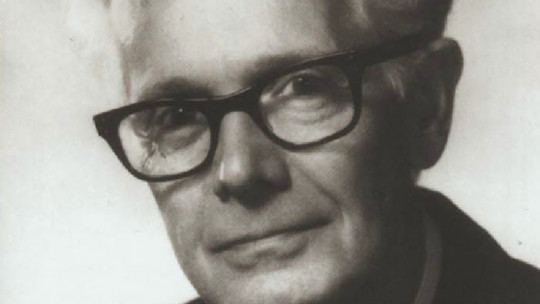
A man walks into a lecture hall in Chicago in the 1960s, still wearing the title the press had hung on him: “Mr. Psychoanalysis.” He is a pillar of the establishment, the elected president of the American Psychoanalytic Association, a loyal guardian of Freud’s theories. Fifteen years later he is dead, and the theory he spent his last decade building has quietly dismantled a good part of what he once defended. That’s an odd arc for any career. It’s stranger for a man who began as a neurologist, was turned away by the very institute he later helped lead, and fled Vienna with little more than a medical degree.
Heinz Kohut (1913 to 1981) is the psychoanalyst behind self psychology, the school that moved empathy from a pleasant bedside manner to the center of how therapists listen. His ideas about narcissism, mirroring and the damaged self still shape how many clinicians think about shame, grandiosity and the hunger to be seen. Yet he’s often reduced to a single word, “narcissism,” or confused with other post-Freudian thinkers. Ask ten therapists what “self psychology” means and you’ll get ten shrugs and one long lecture. The real story is more interesting, and it contains a few genuine disputes that biographers still argue about.
Great teachers rarely start as rebels.
This article follows the biography and professional career of Heinz Kohut, from Vienna to Chicago, and explains what he changed, what critics say, and what is left today. His story doubles as a short history of how twentieth-century psychotherapy changed its mind about what listening is for.
Who was Heinz Kohut?
Heinz Kohut was an Austrian-born American psychoanalyst, born in Vienna on May 3, 1913, who died in Chicago on October 8, 1981, at age 68. He founded self psychology, the first major psychoanalytic school to originate in the United States, and his work on narcissistic personality disorders changed how therapy treats people who feel empty, fragile or chronically unseen.
How many of these have you been "meaning to read" for months?
- 1
 TarcherThe Artist's Way30th Anniversary EditionListen Free On Audible
 - 2
 Atria BooksThe Courage to Be DislikedThe Japanese Phenomenon That Shows You How to Change Your Life and Achieve Real HappinessListen Free On Audible
 - 3
 Hay HouseBecoming SupernaturalHow Common People Are Doing the UncommonListen Free On Audible
Some quick coordinates help before the detail. He trained as a physician, worked in neurology and psychiatry, qualified as an analyst at the Chicago Institute for Psychoanalysis, and held senior posts in both American and international psychoanalytic bodies. Late in life he published the books that made him famous. Most of his fame arrived after the age of fifty, which should comfort anyone who thinks they’ve missed their window.
A short timeline of his life:
- 1913: born in Vienna, an only child in a Jewish family.
- 1938: finished his medical studies at the University of Vienna.
- 1939 to 1940: left Austria after the Nazi takeover, going first to England and then to the United States.
- 1950: qualified as a psychoanalyst at the Chicago Institute for Psychoanalysis.
- 1964 to 1965: served as president of the American Psychoanalytic Association; he became vice president of the International Psychoanalytic Association in 1965.
- 1971 and 1977: published The Analysis of the Self and The Restoration of the Self.
- 1981: died in Chicago; How Does Analysis Cure? appeared posthumously in 1984.
Two features of the man matter for everything that follows. First, he was a convinced Freudian for much of his career, which makes his later departure more meaningful, not less. Second, he insisted that his theory grew out of listening to patients, not out of abstract argument. Whether that’s entirely true is one of the debates in the sections below.
What makes him worth reading now, rather than as a museum piece? Mostly the central question he asked: what does a person need from other people in order to feel like a coherent self?
What was Heinz Kohut’s childhood and education in Vienna like?
He grew up as an only child in a cultured Jewish family in Vienna, taught at home until age eleven. Then came school, a medical degree, and an analysis of his own. The picture that emerges from his biographer Charles B. Strozier, in Heinz Kohut: The Making of a Psychoanalyst, is of a gifted only child who spent much of his early life among adults.
Biographical accounts describe Heinz Kohut entering the Gymnasium in Grinzing at eleven and excelling in languages, especially French and Greek. A classical education left a visible mark: his later writing is dense with literary and artistic reference, and he drew freely on literature, music and classical themes as sources of psychological insight. He would eventually contrast “Guilty Man” (Freud’s figure, driven by conflict) with “Tragic Man” (struggling to realize a self), a distinction that sounds much more at home in a humanities seminar than in a medical clinic.
In 1932 he enrolled in medicine at the University of Vienna. Interest in psychoanalysis grew during those years, and he undertook his own analysis with August Aichhorn, a respected figure known for his work with delinquent youth and a member of Freud’s circle. That is worth pausing on. A man who later built a theory around empathic failure had his first therapeutic experience with a clinician famous for reaching difficult adolescents.
Then history interrupted. Kohut received his medical degree in 1938, the year Nazi Germany annexed Austria. As a Jewish physician in Vienna, he had no future there. He left in 1939, spending time in England before reaching the United States and settling in Chicago.
Take a moment to picture it, in a composite. Imagine a 26-year-old doctor with a new diploma, a suitcase, and a language he reads better than he speaks, standing on a dock and wondering whether his credentials will be recognized at all. They weren’t, at first.
Strozier’s biography is the standard source, and it’s worth knowing its character. It’s sympathetic yet frank, and it raises questions about how Kohut remembered and narrated his own past. Autobiographical statements from analysts, as from anyone, can be shaped by later theory. Treat early-life details, including some famous anecdotes, as plausible but not always fully verified.
How did Kohut become a leading Chicago psychoanalyst?
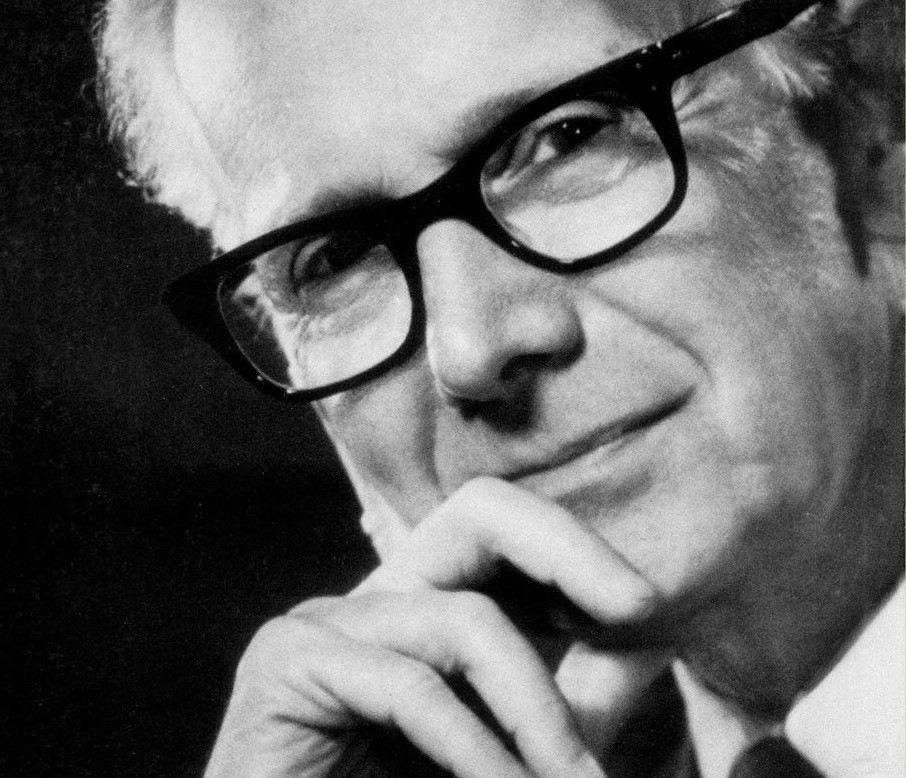
Through an unglamorous route: neurology first, then psychiatry, then a long apprenticeship. Myth says Heinz Kohut arrived in America as a ready-made star. Fact: he worked hospital jobs, was refused entry to analytic training, and did not qualify as an analyst until he was 37.
After arriving in Chicago, he took a first position at South Shore Hospital. In 1941 he began a residency in neurology at the University of Chicago’s Billings Hospital, where he worked until the end of the 1940s. In late 1942 he applied to the Chicago Institute for Psychoanalysis, an institution founded by Franz Alexander in 1932. He was not accepted, and by most accounts the rejection stung and stuck. He moved from neurology into psychiatry in 1944, and in 1947 was appointed an associate professor of psychiatry at the University of Chicago.
The Institute accepted him in 1946. He began coursework right away, took his first supervised “control” cases in 1947, and began seeing patients on a permanent basis in 1949. In October 1950 he passed his examinations and became officially an analyst. By 1953 he was a training and supervising analyst and a member of the Institute’s staff, and he went on to help rewrite the curriculum and teach its two-year theory course for about a decade.
Why did colleagues call him “Mr. Psychoanalysis”? Because he was a gifted teacher and a defender of classical Freudian theory, and because he moved into organizational leadership. He served as president of the American Psychoanalytic Association in 1964 and as vice president of the International Psychoanalytic Association beginning in 1965.
The detail I find most telling is the gap between status and uncertainty. Kohut had everything an analyst could want, rank, students, a seat at the table, and by several accounts he was still puzzled by some patients who weren’t getting better with the classical method. Those puzzles, rather than any love of rebellion, pushed him toward new ideas.
Consider Elena, an illustrative composite client of the kind that bothered him. She’s a gifted architect, praised everywhere, who says she feels hollow within an hour of any compliment. Interpreting her “unconscious conflicts” kept producing intellectual agreement and no change. Cases like that are where self psychology started.
Why did Kohut break with Freud?
Because he came to believe that classical drive theory couldn’t explain a particular group of patients, whose problem was a fragile sense of self rather than a battle between impulses and conscience. The break was gradual, partly reluctant, and never total.
For background: Sigmund Freud‘s 1914 essay On Narcissism treated narcissism as libido invested in the self, a stage that normally gives way to love for others. Later classical analysts largely treated adult narcissism as a defense or a developmental arrest. Meanwhile Heinz Hartmann, a leader of ego psychology, introduced into psychoanalysis a concept of the self as distinct from the ego, and Kohut borrowed that idea and gradually built it into something quite different.
The earliest seed of the break was methodological. In a 1959 paper, Heinz Kohut argued that psychoanalysis is defined by its method of introspection and empathy, which he called “vicarious introspection”: the analyst sensing what an experience is like from the patient’s point of view. Many readers took this as a refinement. Over time he treated it as a foundation, and it eventually separated him from colleagues who saw empathy as merely a way to collect data.
Three clinical observations followed. Some patients developed an odd transference, an intense need for admiration or for a figure to idealize, that didn’t fit the usual pattern of unconscious conflict. Interpretations that felt accurate to the analyst landed as humiliations. And improvement seemed to come when the patient felt understood, not when the patient was told what was wrong.
That’s a heresy by classical lights. Freud’s structural model had id, ego and superego fighting for control. Kohut described a self that could be cohesive or fragmenting, nourished or starved by the responses of others.
It’s worth being fair to the other side. Classical analysts objected that Kohut was abandoning the heart of Freud, replacing conflict and aggression with deficit and need. Kohut replied that he was supplementing, not discarding, and that the classical model remained valid for patients whose difficulty really was conflict. The two positions are still debated.
The break, then, was less a rupture than a slow lean in a different direction until the lean became a new school.

What is self psychology in plain language?
Self psychology is a psychoanalytic theory holding that a stable, vital sense of self develops through responsive relationships with other people, called selfobjects, and that psychological suffering often reflects failures in that process. In Heinz Kohut‘s view, we never stop needing such relationships; we simply need them in more mature forms.
Start with the selfobject. It’s a person (or a thing, or a role) experienced as part of one’s own sense of self, since it performs functions that the self can’t yet perform alone: soothing, affirming, giving direction. A parent beaming at a toddler’s first drawing is a selfobject. So, years later, might be a mentor, a best friend, a choir, or a therapist.
The key ideas, in order of how often they come up:
- Cohesive self: a sense of being a continuous, worthwhile person, which can wobble under stress.
- Grandiose self: an early, healthy exhibitionism, the wish to be admired. Kohut originally called this the “narcissistic self” and renamed it in 1968.
- Idealized parental imago: the child’s image of a calm, powerful parent whose strength can be borrowed.
- Empathic failure: a caregiver’s repeated misattunement, which can leave the self fragile.
- Transmuting internalization: the gradual taking in of a selfobject’s functions, through small, tolerable disappointments.
- Fragmentation: the temporary falling apart of the self-feeling after a blow, which can look like rage, emptiness or panic.
- Healthy narcissism: ambition and ideals that anchor adult life.
One idea is hugely clarifying. Kohut disliked the everyday use of “narcissistic” as an insult. In his model, the wish for admiration isn’t a moral defect; it’s a developmental need that was left unmet and so remains urgent.
Think of Marcus, a composite. He’s a junior analyst who attaches to his first manager as if she were a lighthouse. When she dismisses an idea in a meeting, he’s devastated for days, far beyond what seems reasonable. In Kohut’s terms, he hasn’t just been criticized. His borrowed source of strength flickered.
Pause for a moment on the word “borrowed.” The theory doesn’t treat dependence as pathology. It treats it as the normal fuel of a self, and asks whether the fuel was ever adequate.
What are the three selfobject transferences?
Kohut described three main selfobject transferences that show up when a patient with a vulnerable self begins therapy: the mirroring transference, the idealizing transference, and the twinship (or alter ego) transference. Each repeats an old need for a particular kind of response.
| Transference | The need | What it can look like | What the therapist tries to do |
|---|---|---|---|
| Mirroring | To be seen and affirmed in one’s worth | Seeking praise, fishing for approval, crushed by indifference | Receive the exhibitionism without mocking it or inflating it |
| Idealizing | To merge with someone strong and calm | Seeing the therapist as wise and flawless, then crashing when disappointed | Tolerate being idealized; let small disillusionments happen in a survivable way |
| Twinship (alter ego) | To feel essentially like others | Eager for sameness, “me too” moments, discomfort with being different | Acknowledge likeness and shared experience |
The twinship category came later in Heinz Kohut‘s work than the first two, and some followers developed it further. It’s worth saying that the exact number of selfobject needs has been debated within the self-psychology community, and later writers have proposed additional ones.
Why this matters outside the consulting room: these needs are visible everywhere. The employee who glows after one compliment and sulks after a neutral email. The student who latches onto a charismatic professor and then turns bitter when she has a bad day. The new arrival in a dorm who attaches to the one other person who shares their accent, their music, their weird sense of humor.
Take Nadia, an illustrative composite, who moved abroad for work. She meets another transplant at a Friday gathering, and the relief of recognition is so strong that she cancels other plans for a month. That’s a twinship need in action, and it isn’t pathology. It’s a person finding a mirror in a place where mirrors are scarce.
What turns these needs into a clinical problem is intensity and rigidity. A person who requires constant admiration, or can only function when attached to someone seen as powerful, or can’t tolerate difference, may be struggling with a self that has never had enough steady support. The treatment goal isn’t to crush the need. It’s to let it be felt and answered, then gradually outgrown in the sense of becoming internally supplied.
Quick caution: these categories describe patterns that therapists observe in a clinical setting, and research directly testing them is limited. They are useful lenses, not diagnostic tests.
What did Kohut say about narcissism, and why did Kernberg disagree?
Kohut argued that narcissism has its own developmental line, from infantile grandiosity to mature ambition and ideals, and that narcissistic personality disorder reflects arrested development caused by empathic failures in childhood. Otto Kernberg, his best-known contemporary rival, argued the opposite: that pathological narcissism is a defensive structure built out of aggression and distorted object relations.
Two views, then, of the same patient. Heinz Kohut saw the arrogant, entitled adult as a wounded child still searching for a mirror. Kernberg saw an inflated grandiose self used to ward off envy, rage and dependence. Kernberg laid out his account in Borderline Conditions and Pathological Narcissism (1975). The two men published roughly in parallel, and clinicians are still divided in how they treat the same behavior.
The difference has practical consequences. A Kohutian therapist might respond to a grandiose patient with sustained empathic attunement, trusting that the grandiosity will soften as needs are met. A Kernbergian therapist is more likely to confront the defensive pattern directly. Both can claim cases; neither side has won a clean empirical victory, and honest clinicians admit that.
Another Kohut contribution is narcissistic rage, his 1972 term for the intense, vengeful fury that follows a perceived injury to the self. It differs from ordinary anger. It’s relentless, disproportionate, and focused on undoing a humiliation. Anyone who has watched a colleague go cold and punitive after a public correction has seen a small version of it.
Modern critiques deserve space. Some psychoanalysts argue that Kohut’s concept of narcissism is too broad, that his diagnostic method based on selfobject transferences can over-attribute narcissism to people who simply haven’t developed a mature self, and that the theory underplays the defensive, aggressive side of narcissism. Others note that it’s difficult to test his claims about childhood from adult therapy alone.
My own view, for what it’s worth: the most useful reading holds both. Some people with narcissistic features are mostly wounded and hungry for recognition. Others are mostly defended and contemptuous. Many are both, on different days, in the same session.
Neither theory should be used to diagnose the difficult boss you can’t stand. That’s a different matter.

How does a Kohutian therapist actually work with a client?
By listening for what the experience feels like from the inside, naming it accurately, and being a steady selfobject long enough that the client can begin to build the missing structure for themselves. The method is quieter than people expect.
In the book How Does Analysis Cure?, edited after Heinz Kohut‘s death by Arnold Goldberg, with Paul Stepansky, Kohut sets out his late thinking on what actually produces change. His answer: understanding followed by explaining, grounded in empathy, with patients gradually internalizing the analyst’s selfobject functions.
A typical sequence looks like this:
- Empathic immersion. The therapist tries to take the client’s perspective, including when it seems exaggerated.
- Emerging transference. The client begins to relate to the therapist as a mirror, an ideal figure, or a twin.
- Inevitable empathic failure. Sooner or later the therapist is late, misses a feeling or says the wrong thing, and the client’s old injury shows up.
- Repair. The therapist acknowledges the miss and helps the client put words to the hurt.
- Transmuting internalization. Over many cycles the client takes in the soothing and affirming functions and relies less on the therapist for them.
Kohut called the tolerable disappointments in step three optimal frustration. A therapist who never fails would block growth; one who fails massively would repeat the original wound. The sweet spot is the small miss, noticed and repaired.
Compare it with the mirroring that Donald Winnicott described in his essay on the mirror-role of the mother and family in child development. Winnicott wrote that the infant looks at the mother’s face and sees himself. Kohut’s language differs, but the two thinkers share the idea that being reflected accurately is basic to selfhood.
Does it work? That depends on what you mean by “it.” Jonathan Shedler, in a widely cited 2010 review of studies, concluded that psychodynamic therapy produces substantial effects comparable to other evidence-based treatments, with benefits that tend to hold or grow after treatment ends. The review concerns psychodynamic therapy broadly, though, not self psychology specifically. Few trials test Kohut’s particular model on its own, so the evidence for his version is thinner than the evidence for the family it belongs to.
That’s a limit worth stating plainly. The clinical wisdom is rich; the controlled evidence is sparse.
What did Kohut publish, and what happened at the end of his life?
Heinz Kohut published three landmark books, The Analysis of the Self (1971), The Restoration of the Self (1977), and How Does Analysis Cure? (1984, posthumous), and died in Chicago on October 8, 1981. His public voice came late; he was in his late fifties when the first monograph appeared.
The Analysis of the Self, subtitled A Systematic Approach to the Psychoanalytic Treatment of Narcissistic Personality Disorders, was written in the late 1960s and early 1970s. It introduced the idealizing and mirroring transferences and argued that narcissistic patients could be analyzed with a method suited to them. Charles B. Strozier has called it a masterpiece, though it’s also a difficult, dense read that many students skip.
The Restoration of the Self, written between 1974 and 1976 and published in 1977, was the breakthrough. Its style is more accessible, and it places the self at the center of psychological experience and psychoanalytic theory. It contains the “Tragic Man” idea and a broader claim that self psychology is a full psychology of the self, not just a treatment for a single diagnosis.
In 1979 he published a paper titled “The Two Analyses of Mr. Z,” presenting a case in which he contrasted a classical analysis with a second analysis conducted from a self-psychological perspective. Strozier has argued that “Mr. Z” was Kohut himself in disguise, an interpretation that has generated controversy over what the case demonstrates and what it conceals. If true, it reframes the whole theory as, in part, a record of one man’s attempt to repair his own early losses.
Kohut was unwell in his last years and died in 1981. Colleagues completed and edited his remaining manuscripts, which is why How Does Analysis Cure? appears with an editor’s name. A last public talk, a few days before his death, is often described by people who attended as a kind of leave-taking, though accounts vary and it’s best treated as lore rather than record.
His death didn’t end the movement. Training programs, journals and professional organizations devoted to self psychology kept growing afterward, in the United States and elsewhere.
It’s a small irony: a theory about needing others outlasted its founder by working through a community of others.
What is Heinz Kohut’s legacy, and how do critics judge it?
His main legacy is the claim that empathy is both a way of knowing and a source of healing. Today you can see traces of this in relational psychoanalysis, in attachment-informed therapy, and in how many clinicians talk about shame, validation and repair.
Before praise, the objections. Critics make at least four recurring points:
- Vagueness: terms like “selfobject” and “cohesive self” are hard to define and measure.
- Environmental determinism: the theory leans heavily on parental empathy failures, which can feel blame-heavy toward caregivers and underplay temperament and biology.
- Underplayed aggression: Kernberg and others argue that destructiveness gets too little weight.
- Thin testing: most support comes from case reports and clinical consensus, not controlled trials.
I’d add a fifth, softer one. Heinz Kohut‘s followers sometimes wrote as if empathy were a cure-all. It isn’t. A therapist can be beautifully attuned and a client can still stay stuck, because change usually needs behavior, structure and time too.
On the credit side, Kohut changed the emotional temperature of therapy. Before him, an analyst’s neutrality could shade into coldness. After him, many practitioners saw that the stance of the clinician is part of the treatment. He also gave a respectable vocabulary to experiences that patients had long reported: feeling like a fraud, craving applause and despising the craving, falling apart after one criticism.
And the biography itself offers a lesson. A man who spent decades inside an orthodoxy, defending it with real conviction, was willing to change his mind after listening hard to people the orthodoxy had failed. That’s a rarer talent than brilliance.
If you’re a student, read the 1959 empathy paper and the opening chapters of The Restoration of the Self first, then Strozier’s biography for context, then Kernberg for the counterargument. Reading in that order keeps you from mistaking one school for the whole field.
Which of Kohut’s needs, to be mirrored, to look up to someone, to feel alike, do you recognize most in your own life?
FAQs about Heinz Kohut and His Career
Who was Heinz Kohut and what is he known for?
Heinz Kohut was an Austrian-born American psychoanalyst (1913 to 1981) best known for founding self psychology. He argued that a healthy sense of self develops through empathic responses from other people, called selfobjects, and that many psychological difficulties, especially those involving narcissism, arise when those responses are missing. He worked at the Chicago Institute for Psychoanalysis, led major professional associations, and wrote The Analysis of the Self (1971), The Restoration of the Self (1977) and, posthumously, How Does Analysis Cure? (1984). He is also remembered for introducing the term selfobject, for his concept of narcissistic rage, and for arguing that empathy is both a research method and part of the healing process. Critics say his terms are vague, but his influence on modern therapy is hard to deny.
When and where was Heinz Kohut born and when did he die?
Kohut was born in Vienna on May 3, 1913. He died in Chicago on October 8, 1981, at the age of 68. A small number of web pages give his birth year as 1903, which appears to be a typo; most scholarly and reference sources, including the standard biography, use 1913. He spent about four decades of his adult life in the United States after leaving Austria in 1939, and the majority of his professional career took place in Chicago. If you’re writing a paper or checking a reference, confirm the dates against a scholarly source such as Charles Strozier’s biography, which gives the fullest account of his early years in Vienna, his arrival in Chicago and his final months.
Did Kohut study with Sigmund Freud?
No. Kohut never trained with Freud. He grew up in Vienna and studied medicine there, and as a young man he underwent analysis with August Aichhorn, who belonged to Freud’s wider circle. Freud left Vienna for London in 1938 and died in 1939. Kohut later described himself as a classical Freudian for much of his career, and then built a theory that departed from Freud’s drive model. Stories of personal encounters between the two should be treated carefully unless backed by good documentation. It helps to remember the era: Vienna’s psychoanalytic community was scattered after 1938, and many members emigrated to Britain and the United States, which shaped who trained whom in the following decades.
What is a selfobject in simple terms?
A selfobject is someone or something that you experience as part of your own sense of self because it performs psychological functions you can’t yet perform alone. Think of a parent who calms a frightened child, a teacher whose belief in you keeps you going, or a friend who makes you feel less strange. The word sounds odd, but the idea is simple: we use other people to keep ourselves steady, and in Kohut’s view that’s healthy at every age, not just in childhood. Problems arise when those supports were unreliable early in life. Put another way, the selfobject is less a mystical idea than a name for something familiar: the people whose reactions you quietly rely on to feel like yourself.
How was Kohut’s view of narcissism different from Freud’s?
Freud described narcissism mainly as libido directed at the self, a normal stage that should move toward love of others, with excessive forms seen as developmental trouble. Kohut proposed that narcissism has its own healthy line of development, from infantile grandiosity to mature ambition and ideals, and that narcissistic personality disorders reflect arrested growth after the child’s needs for mirroring and idealization weren’t met. In practice this made Kohut’s therapist more empathic and less confrontational, which is exactly where critics like Otto Kernberg disagreed. Put simply, Freud asked what happens to the energy; Kohut asked what happens to the self-esteem. Both questions are still useful, and they point therapists toward quite different first moves with the same client.
Is self psychology still used in therapy today?
Yes, though often in blended form. Few clinicians practice a pure Kohutian model, but its ideas persist in psychodynamic and relational therapies, in training programs, and in everyday clinical language about empathy, attunement and repair. Professional societies and journals dedicated to self psychology continue to operate. Research support specifically for self psychology is limited; the strongest evidence is for psychodynamic therapy as a broad category. So it’s best seen as an influential approach with a thin evidence base of its own, rather than a proven stand-alone treatment. If you’re choosing a therapist, don’t worry much about the label. Ask how they work, how they handle ruptures in the relationship, and what evidence they draw on.
What is narcissistic rage?
Narcissistic rage is Kohut’s term for an intense, persistent anger that follows a perceived injury to a person’s self-esteem, such as being humiliated, ignored or exposed as flawed. It’s different from ordinary irritation because it tends to be disproportionate, vengeful, and driven by a need to undo the injury. Kohut described it as arising when a fragile self loses the support it relies on. The term is used in clinical writing, not as a formal diagnosis, and it shouldn’t be used casually to label someone you disagree with. People sometimes say they feel narcissistic rage after a bad performance review; usually that’s ordinary anger plus bruised pride, which is far milder.
What did Otto Kernberg criticize about Kohut?
Otto Kernberg, a leading psychoanalyst, argued that pathological narcissism is a defensive structure built around aggression, envy and distorted relationships with others, not a simple developmental arrest caused by missing empathy. He criticized Kohut for underplaying aggression and, in clinical terms, for relying too heavily on empathic support when direct confrontation of defenses might be needed. Kohut’s supporters answered that confrontation can retraumatize fragile patients. The disagreement helped shape two separate approaches to narcissistic personality disorder that clinicians still debate, often choosing between them case by case. In practice, many contemporary therapists blend both: they offer warmth and attunement while still naming defensive patterns once the relationship feels secure enough to bear it.
Bibliography
- Freud, S. (1957). On narcissism: An introduction. In J. Strachey (Ed. & Trans.), The standard edition of the complete psychological works of Sigmund Freud (Vol. 14, pp. 67-102). Hogarth Press. (Original work published 1914)
- Hartmann, H. (1950). Comments on the psychoanalytic theory of the ego. The Psychoanalytic Study of the Child, 5, 74-96.
- Kernberg, O. F. (1975). Borderline conditions and pathological narcissism. Jason Aronson.
- Kohut, H. (1959). Introspection, empathy, and psychoanalysis: An examination of the relationship between mode of observation and theory. Journal of the American Psychoanalytic Association, 7(3), 459-483.
- Kohut, H. (1971). The analysis of the self: A systematic approach to the psychoanalytic treatment of narcissistic personality disorders. International Universities Press.
- Kohut, H. (1977). The restoration of the self. International Universities Press.
- Kohut, H. (1984). How does analysis cure? (A. Goldberg & P. E. Stepansky, Eds.). University of Chicago Press.
- Shedler, J. (2010). The efficacy of psychodynamic psychotherapy. American Psychologist, 65(2), 98-109.
- Strozier, C. B. (2001). Heinz Kohut: The making of a psychoanalyst. Farrar, Straus and Giroux.
- Winnicott, D. W. (1971). Playing and reality. Tavistock Publications.
Use this citation format to reference the article clearly and help readers find the original source.
PsychologyFor. (2026). Heinz Kohut: Biography and Professional Career of This Psychoanalyst. PsychologyFor. https://psychologyfor.com/heinz-kohut-biography-and-professional-career-of-this-psychoanalyst/