

See more of our articles in your search results.
Our digestive system is one of the most important parts of our body, as it allows us to obtain the nutrients necessary for survival. One of the main organs of this system is the stomach, being the first of the digestive organs located entirely within the abdomen.
To reach it, food must pass through the esophagus, which must cross the diaphragm through an opening called the esophageal hiatus. However, in some cases problems occur. such as what is known as a hiatal hernia, in which part of the stomach passes through said hole and causes different problems and pain.
Hiatal hernia: concept and main symptoms
As we have commented, The esophageal hiatus is a small hole in the diaphragm that allows the esophagus to pass through it and reach the stomach, located below the diaphragm. Under normal conditions, it is the esophagus that passes through it, keeping the diaphragm separating the thoracic organs from the abdominal ones. However, sometimes a problem arises, what is known as a hiatal hernia.
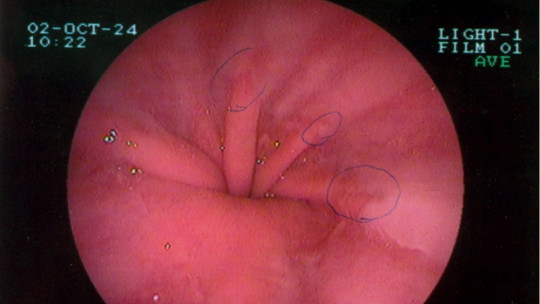
Hiatal hernia or hiatal hernia is a medical condition in which a part of the stomach protrudes through the esophageal hiatus, leaving a portion of it in the thorax. It is a relatively common problem that can cause different symptoms, although it can also occur asymptomatically. This medical condition is usually more common in people between forty and sixty years of age, although it can also appear at other ages.
In cases where symptoms appear Discomfort or a burning sensation is usually common. which can reach the throat known as heartburn, pain, dysphagia or difficulties swallowing, possible regurgitation of food, and gastroesophageal reflux. Breathing difficulties and obstructions in the esophagus may appear.
How many of these have you been "meaning to read" for months?


Although in many cases it is something mild that may not even cause symptoms, hiatal hernia can be dangerous if not treated, because certain complications may arise. These complications can be gastric perforation, the death of digestive tract tissue due to necrosis, respiratory complications or even the lungs absorbing part of the stomach contents. Sometimes bleeding also occurs, visible in black or red stools or vomiting blood, which is also worrying.
Finally, a weakening of the walls of the esophagus and stomach can occur, which can culminate in Barrett’s esophagus, a condition that can increase the likelihood of suffering from cancer.
Types of hiatal hernia
They have been prepared several classifications regarding different subtypes of hiatal hernia observing different types.
1. Sliding or sliding hernias
This is the most common type of hiatus hernia. This subtype is characterized by the gastroesophageal junction (the part where the esophagus and stomach join) and a part of the stomach called the cardia (the uppermost part connected to said junction) They protrude and cross the diaphragm, becoming located in the thorax because the ligament that should hold the gastroesophageal junction in place is not strong enough.
2. Paraesophageal or rolling hernia
In this subtype of hiatal hernia, a part of the stomach other than the cardia protrudes through the hiatus, which is usually larger than usual. The cardia and gastroesophageal junction are in place, but part of the upper stomach protrudes through the hiatus, forming a small bulge parallel to the esophagus
3. Mixed hiatal hernia
This subtype of hiatal hernia represents the union of the characteristics of the previous two.
4. Type 4 hernia
This type of hernia appears when it is another viscera that protrudes through the hiatus, like the colon or spleen. They may or may not be accompanied by part of the stomach.
5. Inverted stomach
This condition is rare and extreme and can cause serious health problems. In it, the entire stomach is located in the thorax.
Causes of hiatal hernia
The reason why part of the stomach protrudes through the hiatus can vary greatly. In some cases it is possible to find that There are malformations or congenital conditions that cause or facilitate it (for example, some people have a much larger hiatus than usual).
However, this type of problem is mostly considered to have an acquired cause. A possible explanation is found in the loss of flexibility and strength of the ligaments and muscles of the diaphragm with age.
Another possible cause is found in the performing excessive efforts on the abdominal muscles or the diaphragm itself. For example, people with digestive problems who have to make great efforts to defecate or people with a persistent, strong and chronic cough can cause movement and protrusion of the stomach.
Also performing certain surgeries can cause the hiatus to expand. It can also occur with obesity or pregnancy if the pressure on the abdominal muscles increases.
Treatment
The treatment to be applied in each case of hiatal hernia will depend largely on the situation of each individual. If there is gastroesophageal reflux (a disorder with which comorbidity is usually common), this condition must also be treated.
In some cases, treatment may not be required, although it is advisable to follow a diet in which small meals are eaten, avoiding fried foods, fats, spicy foods, alcohol and products that increase acidity or produce gas. time, low-fat foods and products that regulate PH are increased, such as yogurt and some types of dairy.
Some individuals require the use of different types of drugs such as antacids to reduce heartburn, histamine-2 inhibitors or proton pump inhibitors.
In the most serious cases It may be necessary to perform surgery to relocate the affected organs At the same time, the hiatus is reconstructed and measures are created to regulate intra-abdominal pressure.
Use this citation format to reference the article clearly and help readers find the original source.
PsychologyFor. (2024). Hiatal Hernia: Types, Symptoms, Causes and Treatment. PsychologyFor. https://psychologyfor.com/hiatal-hernia-types-symptoms-causes-and-treatment/