

See more of our articles in your search results.
Now that Spain is beginning to have greater freedom of movement, it is necessary to take measures, given that the main protection measure, social distance, is no longer guaranteed.
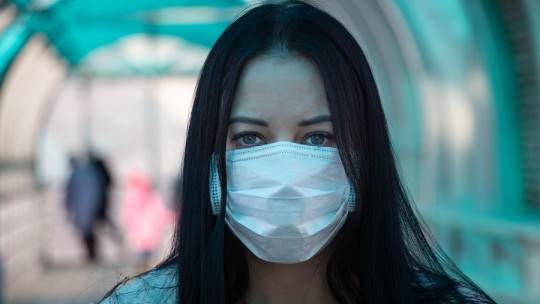
As sad as it may sound, staying with family and friends increases the chances of being infected by the virus. Fortunately, the widespread use of masks helps reduce the risk of contagion, as long as they meet the proper requirements.
Next we will learn how masks are washed, which ones can be washed, why and the importance of good hygiene in these preventive instruments.
How are masks washed to disinfect them?
Right now in Spain we have areas that are in phase 1 or phase 2. There is greater freedom of movement, being able to go out for longer and do activities that until a few weeks ago were prohibited, such as going to bars or seeing family and friends.
Although it is a relief to be able to go out a little and try to lead a normal life, the truth is that there are also greater possibilities of becoming infected, given that with more people on the streets there are no longer guarantees of respecting the main anti-contagion measure. of COVID-19: the social distance of 2 meters. This is especially difficult when we see family and friends.
How many of these have you been "meaning to read" for months?
- 1
 American GirlThe Care and Keeping of You 1The Body Book for Younger Girls (American Girl® Wellbeing)Listen Free On Audible
 - 2
 New Harbinger PublicationsThe Dialectical Behavior Therapy Skills WorkbookPractical DBT Exercises for Learning Mindfulness, Interpersonal Effectiveness, Emotion Regulation...Listen Free On Audible
 - 3
 Penguin Random HouseAtomic HabitsAn Easy & Proven Way to Build Good Habits & Break Bad OnesListen Free On Audible
It is for all this that the use of the mask has been made mandatory, with the clear intention of reducing infections in case social distance cannot be respected, which, at the moment, is almost always the case. By using it for everyone, those people who are infected without knowing it will be less likely to transmit the virus to others, while others will be less likely to catch it. However, not transmitting it or not getting COVID-19 does not depend only on whether we use a mask or not, but on its quality and the responsible use we make of this protection.
Masks have a useful life. There are those that are single use and there are those that can be cleaned several times to reuse them, in addition to the quality of their materials making them have different effectiveness. For this reason, health and risk personnel should preferably use PPE protection masks (N95, FFP2 or FFP3), while the rest of the population should be responsible towards health professionals and use surgical or hygienic masks. , “more of the street.”
Homemade masks are highly contraindicated, since there is no guarantee that they protect against anything and, in fact, they could contribute to becoming infected more easily given their high perspiration. They are not safe nor can they be considered hygienic, in addition to entailing more risks than benefits, reasons for which the WHO has advised against their use at all times.
Washable masks are “reusable hygienic masks” These must indicate that they comply with the UNE 0065:2020 specification, which indicates that they can withstand at least five washing cycles. If they can withstand more than five washes, you must specify how many exactly. This means that they have demonstrated that after that number of washes, the minimum filtration and breathability required by the standard are maintained.
It is very important to understand that non-reusable surgical or hygienic masks, as their name suggests, are not reusable: they cannot be washed.
Ways to wash them
As we have seen, reusable hygienic masks are those that can be washed, complying with the UNE 0065:2020 specification. The Ministry of Health, Consumer Affairs and Welfare has indicated three methods with which these masks can be disinfected
Method 1. Washing in normal washing machine cycle
The first is to wash and disinfect this type of barrier protections with normal detergent and water, at a temperature between 60 and 90 ºC which would correspond to the normal cycle of the washing machine.
As it is a protection that goes to the face, a high temperature is recommended to destroy all possible pathogens. It is washed just like bed linen or towels. Detergent is what is responsible for eliminating the coronavirus, as normal when we wash our hands with soap, eliminating its protection
Method 2. Immersion in a solution of bleach in cold water
The second option is Soak the masks in a bleach dilution (20 ml bleach, 980 ml water or 30 ml per liter) with warm water for 30 minutes, inactivating the coronavirus by contact. Afterwards, wash with soap and water, rinsing to remove any trace of bleach.
Method 3. Use of virucides
The last option is similar to method 2, which consists of Treat the mask with any virucidal agent authorized by the Ministry of Health for textile and environmental use always following the manufacturer’s instructions.
This third option has been considered by the Ministry of Health given the exceptional nature of the health crisis and the urgency of having disinfectant products with virucidal activity for the disinfection of reusable hygienic masks.
Precautions
It is very important to keep in mind in these last two methods that It should be rinsed with plenty of water and/or washed with soap to remove any remaining product This will prevent damage to the skin due to residues of the cleaning product. Also in both cases, the masks should be left drying in ambient air, not in the dryer.
These instruments should not be disinfected in the oven, microwave, or steamed, given that as sanitary instruments they require a specific disinfectant treatment, they should not be cooked as if they were pastries. Any of these methods can generate aerosols carrying viruses that can be inhaled, in addition to contaminating kitchen utensils and compromising the integrity of the mask.
What is filtration and breathability of masks?
The differences between masks, whatever type they are, are due to their filtration capacity and breathability, which depend directly on the materials with which they have been made. Among the non-reusable masks, that is, the hygienic and the surgical ones, the latter are the ones that have the best degree of breathability and filtration.
The filtration
The bacterial filtration test (BFE) is a process by which it is determined how many aerosol particles a bacterial inoculum contains. Staphylococcus aureus They go through the masks. These bacteria are used instead of the virus because the size of the aerosols in which both pathogens travel are similar.
In the case of surgical masks, the fabric with which they are made must retain at least 95% of the aerosols while in hygienic ones the criterion is a little less strict, at least 90%.
Breathability
The breathability test determines the difference in inlet and outlet air pressure This is measured in units of pressure per surface (Pa/cm2)
The material of surgical masks must be less than 40 Pa/cm2, while for hygienic masks 60 Pa/cm2. This means that with surgical masks you breathe better.
Masks stop being useful if we are not responsible
Although hygienic, surgical and PPE protection masks are designed to reduce the possibilities of contagion, it is important to understand that Their use is of little use if they are not used with due responsibility These instruments should not be touched, used as a necklace or beard cover, worn backwards and not cleaned or used for longer than they should. Although it is sometimes difficult to breathe in them, they should cover the chin, mouth and nose, especially if a distance of two meters cannot be respected.
Taking these recommendations lightly, no matter how reusable and disinfected the masks are, makes us susceptible to infection. The virus can lodge on the outside of the mask. If we constantly touch it, lower it and touch our nostrils for a millisecond, we will have been infected with COVID-19. Also It is possible to become infected with a mask that is in poor condition, homemade, or used more than necessary Let’s be responsible and not let our guard down, for our own good and that of others.
Use this citation format to reference the article clearly and help readers find the original source.
PsychologyFor. (2024). How Are Masks Washed? Precautions to Avoid Infections. PsychologyFor. https://psychologyfor.com/how-are-masks-washed-precautions-to-avoid-infections/