

ASD is reliably diagnosed from the age of 2, but the reality is that babies already show small differences. Enter to find out what they are.

See more of our articles in your search results.
He autism spectrum disorder (TORCH ) can be reliably diagnosed from two years of age. However, the average age at which this disorder is usually diagnosed is between three and six years old. This happens mainly due to difficulties in detection since many of the symptoms tend to change with age and difficulties in social interaction are difficult to detect until the child begins to interact with peers his or her age.
Although it can be diagnosed reliably from the age of two, the reality is that small differences can be observed in the social sphere and in behavior before that age that could indicate the need to go to a professional to rule out other problems and guide us. In fact, early detection of the TORCH with the aim of being able to promote the child’s adaptation to his/her environment and, if this diagnosis is ruled out, evaluate whether other difficulties arise that can be addressed through early attention For this reason, it is important to know what signs could indicate the need to consult with a professional.
What is autism spectrum disorder?
It should be noted that an independent diagnosis was previously known as autism. However, after the update of the DSM-5 (Diagnostic and Statistical Manual of Mental Disorders), various disorders that previously had an independent diagnosis were united, such as, for example, Asperger, childhood disintegrative disorder, etc. in the same diagnostic category called autism spectrum disorder.
He autism spectrum disorder (or ASD) is a type of neurodevelopmental disorder that is, it is a disorder that occurs at the beginning of the development period, therefore, symptoms are seen before the child begins primary school.
How many of these have you been "meaning to read" for months?
- 1
 Oliver SacksThe Man Who Mistook His Wife for a HatUnforgettable clinical case studies on perception and identityListen Free On Audible
- 2
 Irvin D. YalomThe Gift of Therapy85 practical, warm clinical insights from a master therapistListen Free On Audible
- 3
 Lori GottliebMaybe You Should Talk to SomeoneA bestselling memoir on the shared humanity of therapist and clientListen Free On Audible

Symptoms:
The symptoms of autism spectrum disorder They mainly focus on:
- Difficulties in social communication: Persistent difficulties in social communication and social interaction that occur in different social contexts, such as, for example, difficulties in maintaining and understanding relationships, difficulties in initiating social interactions, etc.
- Inflexibility: Excessive inflexibility in routines or behavioral patterns such as, for example, the need to go to a certain place by a specific route, eating the same foods every day, intense anxiety when faced with very small changes in routine, etc.).
- Stereotypical behavior: Repetitive or stereotyped movements, use of objects or speech. The stereotypes They are mainly involuntary movements that are repetitive and rhythmic. Some examples could be lining up toys, echolalia (repetition of words or phrases), etc.
- Very limited and fixed interests: They show interest in very specific topics, unusual objectives, etc. and this is excessive and persevering.
- Hyper- or hyporeactivity to stimuli: They show hypersensitivity or hyposensitivity to environmental stimuli, such as, for example, little response to pain, excessive palpation of objects, etc.
The severity of autism spectrum disorder is not the same for all people with this diagnosis, but according to the DSM-5 it can be differentiated into three degrees different depending on the help you need in your daily life.
How to identify autism early? Signs before 24 months
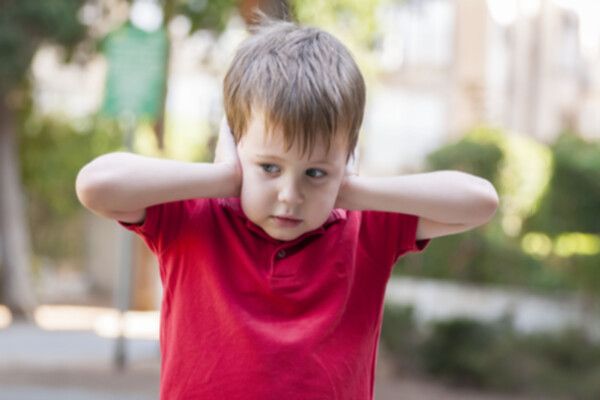
Before indicating the signs it is important to keep in mind that children’s development is not always the same, each child follows their own pace and the presence of some of the following signs may indicate, for example, visual deficiencies and do not have to be synonymous with a ASD diagnosis Therefore, you should always consult a qualified professional. That being said, these are the signs of ASD in babies children under 24 months:
In communication:
- Sometimes he doesn’t seem to hear what is being said to him.
- He doesn’t wave his hand to say goodbye.
- He doesn’t respond to his name. Example: the child is called by her name and does not turn her head.
- It is difficult for you to express what you want.
- He doesn’t use his finger to point out what he wants. Has language delays. At 12 months he does not babble, does not point nor does he make communicative gestures, at 18 months the child should be able to say single words and at 24 months two-word phrases.
- He often does not use pronouns correctly. For example, he uses “he/she” to refer to himself and “I” to refer to others.
- There seems to be a loss of the language already acquired.
In socialization:
- Does not smile or respond to other people’s facial expressions.
- Does not show eye tracking when another person points their finger at objects, situations, etc.
- He does not look or speak at other people.
- He does not bring objects (such as toys, etc.) that his parents are interested in to show them.
- He does not show interest in others, he seems to be in his own world (he takes things by himself, he does not show interest in parents or other children, etc.).
- Maintains little eye contact.
In behavior:
- Sample inflexibility to small changes in routines and prefers order and rituals. This inflexibility can be seen in tantrums, non-cooperation, lining up toys, etc.
- He seems to become obsessed with some activities, doing them repetitively throughout the day.
- Shows a lot or very little sensitivity to stimuli such as noises, smells, contact, etc.
- Has movements that seem unusual, such as walking on tiptoe, swaying, flap with your hands etc.
- Shows an unusual attachment to certain objects/toys and uses them in an unusual way (focuses on specific parts of the toy and not on the entire toy).
Development follows similar patterns in all boys and girls, however, each child follows their own pace in development. In this sense, the fact that a child has not acquired a certain learning at the established age does not have to indicate that the child has problems in its development. However, if you are concerned about your child’s development because you detect some type of problem, it is necessary that you speak with his or her pediatrician in order to evaluate the case and offer him or her the specialized care he or she needs.
Use this citation format to reference the article clearly and help readers find the original source.
PsychologyFor. (2024). How Do I Know if My Baby Has Autism? Early Signs of ASD. PsychologyFor. https://psychologyfor.com/how-do-i-know-if-my-baby-has-autism-early-signs-of-asd/