


Maybe you’ve watched someone else walk into a room full of strangers and effortlessly strike up a conversation, while you stood frozen near the snack table, rehearsing an opening line that never quite left your mouth. Or perhaps you’ve made a new friend, only to spend the following days anxiously wondering if you talked too much, seemed too eager, or somehow ruined it before it even began. These moments reveal something deeper than simple social awkwardness; they point directly to how self-esteem quietly shapes nearly every step of forming and keeping meaningful friendships, often without us even realizing it’s happening.
This struggle deserves real understanding rather than a quick pep talk about “just being confident,” because self-esteem operates far beneath the surface of any single social interaction. It shapes whether you approach a potential friend in the first place, how you interpret their response, and whether you can tolerate the inevitable small disappointments that come with any real relationship. Someone with a fragile sense of self-worth might avoid initiating contact entirely, terrified of rejection, while someone with an inflated sense of superiority might unintentionally dominate conversations in ways that quietly push others away. Both patterns, despite looking completely different on the surface, trace back to the same underlying issue: a distorted relationship with one’s own worth that makes genuine, reciprocal connection feel harder than it needs to be.
So how exactly does this internal sense of self-worth shape our external social world?
This article explores how self-esteem influences making friends, examining the psychological mechanisms behind both healthy connection and common social struggles.
What is the psychological link between self-esteem and friendship?
Self-esteem and friendship share a genuinely reciprocal relationship, meaning each one shapes and reinforces the other over time, according to a major meta-analysis examining decades of longitudinal research across the entire human lifespan.
Psychologist Ulrich Orth, whose research has significantly shaped this field alongside colleague M. Brent Donnellan, has helped establish that people’s self-esteem and their social relationships influence each other in a genuine feedback loop, rather than one simply causing the other in isolation. This research, published through collaboration with the American Psychological Association, followed people from as young as four years old through their seventies, finding that positive relationships tend to build self-esteem over time, while healthier self-esteem simultaneously makes it easier to build and sustain positive relationships. Importantly, this loop can also spiral downward; when self-esteem or relationship quality drops, the other tends to follow, which is precisely why clinical attention to this pattern matters so significantly.
This reciprocal dynamic helps explain why struggling with friendships and struggling with self-worth so often appear together, even though it can feel unclear which problem came first. A person with genuinely low self-esteem, developed perhaps through earlier experiences of rejection or criticism, might unconsciously avoid the very social risks needed to build new connections, which then reinforces isolation and, in turn, further erodes their sense of self-worth. Recognizing this cycle as bidirectional, rather than assuming friendship problems always stem from poor social skills alone, opens up a more compassionate and accurate way of understanding social struggles.
| Self-Esteem Level | Common Friendship Pattern |
|---|---|
| Healthy self-esteem | Initiates contact confidently, tolerates minor social setbacks without spiraling. |
| Low self-esteem | Avoids initiating contact, fears rejection disproportionately. |
| Fragile or inflated self-esteem | May dominate interactions to compensate for insecurity underneath. |
How does high self-esteem affect the ability to form new friendships?
People with healthy self-esteem tend to initiate social contact more readily, communicate with greater confidence, and recover more easily from minor social setbacks, all of which meaningfully increase their chances of successfully forming new friendships.
Research examining friendship formation among university students found that self-esteem was specifically linked to an increased willingness to continue developing relationships, even when early interactions felt somewhat uncertain or imperfect. This matters enormously in the earliest stages of friendship, when ambiguity is high and small awkward moments are nearly inevitable. Someone with a stable sense of self-worth tends to interpret a friend’s distracted response or delayed text reply as simply circumstantial, rather than as damning proof of personal unworthiness. This capacity to tolerate ambiguity without spiraling into anxious rumination gives healthy self-esteem a significant practical advantage in the often messy, imperfect early stages of getting to know someone new.
Confident nonverbal behavior also plays a meaningful, often underappreciated role here. Researchers examining relationship-building behaviors have identified specific actions, like maintaining warm eye contact, offering a genuine smile, listening attentively, and sharing personal stories or feelings, as behaviors that people with higher self-esteem tend to engage in more naturally and consistently. These behaviors signal genuine warmth and openness, making others feel more comfortable and welcomed in return. This creates a self-reinforcing cycle: confident, open behavior invites positive responses from others, and those positive responses further reinforce the original sense of self-worth, gradually building an increasingly robust foundation for future social connection.
- Initiating contact more readily, since fear of rejection carries less weight against an already stable sense of self-worth.
- Interpreting ambiguous social cues generously, rather than assuming the worst about a friend’s intentions or feelings.
- Engaging in warm, open nonverbal behavior like genuine eye contact and attentive listening.
- Recovering from minor social setbacks quickly, without excessive rumination about a single awkward moment.

How does low self-esteem interfere with making and keeping friends?
Low self-esteem often creates significant barriers to friendship by fueling a persistent fear of rejection, encouraging social withdrawal, and generating a pattern of seeking constant reassurance that can, paradoxically, strain the very relationships a person is desperately trying to build.
One of the clearest patterns involves avoidance itself. Someone who deeply doubts their own worth may talk themselves out of approaching a potential friend entirely, convinced in advance that rejection is inevitable, which means the friendship never even gets the chance to develop. Research on individual factors in friendship formation has found that shyness, which frequently overlaps with low self-esteem, directly predicts having fewer friends, largely because the anxious anticipation of rejection prevents the very initiating behaviors that friendship requires in its earliest stages. This creates a frustrating, self-fulfilling prophecy: the fear of not being liked becomes the exact obstacle preventing anyone from getting close enough to actually like them.
When friendships do form despite this pattern, low self-esteem can still create ongoing strain through excessive reassurance-seeking or heightened sensitivity to perceived slights. Clinical research on self-esteem and relationships has found that people with lower self-worth often experience increased feelings of jealousy and insecurity, sometimes misreading a friend’s need for independent space as evidence of waning affection. This dynamic can exhaust even well-meaning friends over time, not because they don’t genuinely care, but because the constant need for reassurance can feel like an unsustainable emotional demand within an otherwise healthy relationship. Additionally, research on defensive pessimism, a strategy of expecting the worst to protect against disappointment, has found this pattern leads to genuine fatigue from constantly overthinking and managing other people’s reactions.
- Notice avoidance patterns that prevent initiating contact, rather than assuming a simple lack of interest in socializing.
- Watch for excessive reassurance-seeking that may unintentionally strain existing friendships over time.
- Recognize when ambiguous social cues get interpreted through a negative, self-critical lens by default.
- Identify defensive pessimism, or expecting rejection preemptively, as a pattern worth gently challenging.
Why does low self-esteem sometimes cause people to choose unhealthy friendships?
Low self-esteem can paradoxically lead people to select and remain in unhealthy or one-sided friendships, since a diminished sense of self-worth often lowers a person’s expectations for how they deserve to be treated by the people closest to them.
This pattern connects closely to what psychologist Mark Leary has termed sociometer theory, which proposes that self-esteem functions essentially as an internal gauge monitoring how accepted or rejected we feel by others. When that internal gauge has been calibrated low, whether through early rejection, harsh criticism, or inconsistent caregiving, a person may unconsciously seek out relationships that confirm their existing, negative self-beliefs, even when those relationships are genuinely unhealthy. Settling for a friendship where reciprocity is consistently absent can feel, at some unconscious level, more familiar and therefore more comfortable than the unfamiliar territory of being treated with genuine warmth and respect.
This dynamic often intertwines with a fear that healthier relationships require a level of assertiveness or vulnerability the person doesn’t yet feel equipped to offer. Someone with low self-esteem might avoid setting boundaries within a one-sided friendship, worrying that any assertion of their own needs will drive the other person away entirely, leaving them with no friend at all rather than an imperfect one. This fear, though understandable, often perpetuates a cycle where the person’s genuine needs go consistently unmet, further reinforcing the underlying belief that they aren’t worthy of reciprocal, respectful treatment. Breaking this pattern typically requires deliberately practicing small acts of boundary-setting, allowing the nervous system to build evidence that healthier relationships don’t actually lead to the abandonment that anxious predictions suggest.
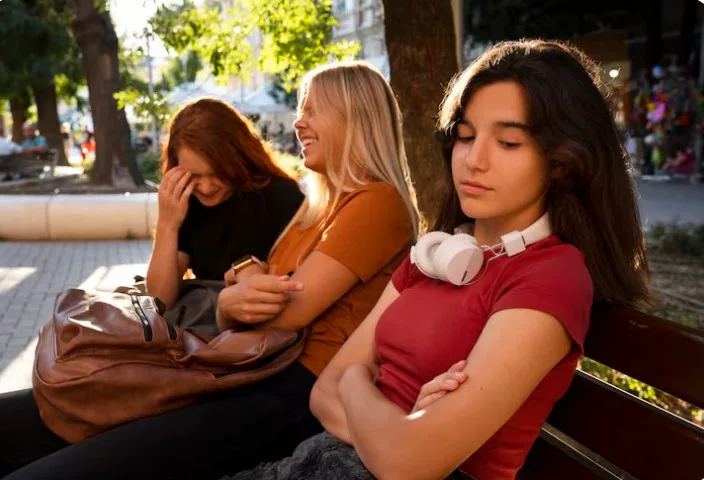
Can making good friends actually help improve someone’s self-esteem?
Yes, genuinely positive friendships can meaningfully boost self-esteem over time, particularly when those relationships provide consistent acceptance, social support, and the specific experience of feeling valued exactly as one is, according to substantial longitudinal research spanning multiple decades.
Research led by psychologist M. Brent Donnellan and colleagues found that self-esteem reliably predicted increasing levels of social support quality over time among adolescents, while lower-quality social bonds predicted acute drops in self-esteem within just a ten-week period. This finding illustrates just how sensitive self-esteem can be to the actual quality of one’s relationships, not merely their existence; having many acquaintances provides considerably less benefit than having even one or two friendships characterized by genuine warmth and mutual investment. This is an important distinction, since someone struggling with self-worth might assume the solution is simply having more friends, when the deeper need is actually for higher-quality, more emotionally supportive connection.
The specific mechanism behind this improvement appears to involve feeling genuinely seen and accepted, rather than merely tolerated. When friends offer support during difficult moments, celebrate genuine successes without envy, and simply enjoy someone’s company without any transactional expectation, this consistently communicates a powerful, corrective message: you are inherently worth spending time with. Over repeated positive interactions, this message can gradually recalibrate an internal sociometer that had previously been set too low, though researchers studying this process have also noted that the effect tends to be modest and gradual rather than dramatic, suggesting that improving self-esteem through friendship alone rarely happens quickly or in isolation from other supportive factors.
What practical steps can help someone build self-esteem to make friends more easily?
Building genuine self-esteem for the purpose of easier friendship formation generally requires practicing small, manageable social risks, challenging harsh self-critical thoughts directly, and gradually accumulating evidence that contradicts existing negative beliefs about one’s own social worth.
Cognitive behavioral approaches, closely associated with psychiatrist Aaron Beck, offer a particularly useful starting point here, encouraging people to notice and challenge automatic negative thoughts like “no one wants to be friends with me” before they translate into avoidant behavior. Rather than accepting these thoughts as established fact, examining the actual evidence, previous friendships that did work out, compliments genuinely received, moments of real connection, can help build a more balanced, accurate self-assessment over time. This cognitive work matters because self-esteem isn’t simply a feeling that arrives on its own; it’s substantially shaped by the ongoing internal narrative a person maintains about their own worth and likability.
Behavioral experimentation also plays a genuinely important role in this process. Taking small, low-stakes social risks, initiating a brief conversation, suggesting a casual coffee meetup, responding honestly rather than performing a persona, allows a person to gather real evidence about how others actually respond, rather than relying solely on anxious predictions. Self-compassion researcher Kristin Neff’s work adds an important complementary dimension here, emphasizing that treating oneself with genuine kindness after an awkward or unsuccessful social attempt, rather than harsh self-criticism, makes it considerably more likely that someone will try again rather than retreating entirely into isolation after a single setback.
- Challenge automatic negative thoughts about social worth before they translate into complete avoidance behavior.
- Take small, low-stakes social risks to gather real evidence rather than relying on anxious predictions alone.
- Practice genuine self-compassion after awkward moments, rather than harsh self-criticism that discourages future attempts.
- Prioritize the quality of connection over the sheer number of acquaintances or social contacts pursued.
- Notice and gently interrupt patterns of settling for one-sided friendships that reinforce low self-worth.
FAQs about Self-Esteem and Making Friends
Does self-esteem cause friendship quality, or does friendship quality cause self-esteem?
Research consistently shows this relationship moves in both directions simultaneously, rather than one clearly causing the other. A comprehensive meta-analysis examining decades of longitudinal studies found that self-esteem and relationship quality reciprocally predict each other across the entire lifespan, with roughly equal effect sizes in both directions. Some studies have found that the effect of relationship satisfaction on later self-esteem tends to be slightly stronger than the reverse, suggesting that having genuinely satisfying relationships may have a somewhat larger impact on how we feel about ourselves than our existing self-esteem has on our relationship satisfaction, though both directions of influence remain genuinely significant and worth addressing.
Can someone with very low self-esteem still successfully make close friends?
Yes, absolutely, though it may require more deliberate, conscious effort than it does for someone with an already stable sense of self-worth. Low self-esteem tends to create specific obstacles, like avoidance and fear of rejection, rather than making genuine connection fundamentally impossible. Many people successfully build meaningful friendships while still actively working on their self-esteem, particularly when they practice small, manageable social risks and surround themselves with patient, accepting people. Over time, these positive relationship experiences themselves can become a meaningful part of building healthier self-worth, creating a positive cycle rather than requiring perfect self-esteem before any social connection becomes possible.
Why do some people with seemingly high confidence still struggle to make genuine friends?
This often reflects a distinction between genuine, stable self-esteem and a more fragile or defensive form of confidence that masks underlying insecurity. Someone who appears highly confident on the surface but actually harbors significant self-doubt may unconsciously dominate conversations, struggle to show authentic vulnerability, or react defensively to any perceived criticism, all of which can create genuine distance in relationships despite an outwardly self-assured presentation. Genuine friendship generally requires a degree of authentic vulnerability and reciprocal interest that defensive overconfidence can actually inhibit, since true connection depends on both people feeling safe enough to be genuinely seen, imperfections included.
How does social media affect the relationship between self-esteem and friendship?
Social media introduces additional complexity into this dynamic, since it provides constant opportunities for social comparison that can meaningfully affect self-esteem independent of actual friendship quality. Someone might have several genuinely supportive friendships offline, yet still experience declining self-esteem after scrolling through curated posts suggesting everyone else has a more exciting social life. This can create a confusing disconnect between one’s actual relationship quality and one’s perceived social adequacy. Being mindful of this comparison effect, and recognizing that curated online presentation rarely reflects the full complexity of anyone’s real friendships, can help protect self-esteem from being unfairly measured against an inaccurate, idealized standard.
Is it possible to have too much self-esteem when it comes to making friends?
Yes, research suggests that extremely high or unstable self-esteem, sometimes described as narcissistic or defensive, can actually create its own friendship challenges. People with inflated self-regard may struggle with genuine reciprocity, dominate conversations, or react with disproportionate anger or withdrawal to any perceived criticism, all of which can push potential friends away over time. The healthiest form of self-esteem for friendship formation tends to be stable and secure rather than either excessively low or excessively inflated, allowing a person to engage confidently without needing constant validation or feeling threatened by normal interpersonal give-and-take, including occasional disagreement or feedback.
Can therapy help address self-esteem issues that are affecting my friendships?
Yes, therapy can be genuinely effective for addressing the specific self-esteem patterns interfering with friendship formation and maintenance. Cognitive behavioral therapy can help identify and challenge the automatic negative thoughts driving social avoidance or excessive reassurance-seeking, while approaches informed by attachment theory can address deeper, often unconscious patterns rooted in earlier relational experiences. A therapist can also provide a genuinely safe space to practice the kind of authentic vulnerability that healthy friendship requires, building confidence gradually before applying those same skills to relationships outside the therapeutic setting. This support can be particularly valuable for people who recognize a long-standing pattern rather than a temporary, situational struggle.
Bibliography
- Harris, M. A., & Orth, U. (2020). The link between self-esteem and social relationships: A meta-analysis of longitudinal studies. Journal of Personality and Social Psychology.
- Donnellan, M. B., Trzesniewski, K. H., & Robins, R. W. (2014). Is self-esteem a cause or consequence of social support? A 4-year longitudinal study. Child Development.
- Leary, M. R. (1999). Making sense of self-esteem. Current Directions in Psychological Science.
- Beck, A. T. (1979). Cognitive Therapy of Depression. Guilford Press.
- Neff, K. (2011). Self-Compassion: The Proven Power of Being Kind to Yourself. William Morrow.
- American Psychological Association (APA). (2019). Positive Relationships Boost Self-Esteem, and Vice Versa. American Psychological Association.
Use this citation format to reference the article clearly and help readers find the original source.
PsychologyFor. (2026). How Does Self-esteem Influence Making Friends?. PsychologyFor. https://psychologyfor.com/how-does-self-esteem-influence-making-friends/