


See more of our articles in your search results.
You walk into a room and completely forget why you’re there, then five minutes later the reason pops back into your head while you’re doing something completely unrelated. How does the human mind work when it can misplace a thought that existed thirty seconds ago yet effortlessly recall a song lyric from fifteen years back? It’s genuinely strange once you stop to notice it. Your mind runs an entire hidden operation behind every decision, memory, and emotional reaction, and most of that operation happens without your conscious permission or awareness at all.
This gap between how the mind actually functions and how we assume it works creates real everyday friction. You might beat yourself up for forgetting something trivial, not realizing that forgetting is a normal, even useful, feature of a healthy memory system rather than a personal failing. You might make a snap judgment about someone and later wonder where that instant reaction even came from. Understanding the mechanics behind thought, memory, and emotion doesn’t just satisfy curiosity; it changes how you relate to your own mistakes, moods, and mental blind spots.
So what’s actually happening beneath the surface of conscious thought when you think, remember, decide, or feel something?
This guide breaks down how the human mind works, covering the science of perception, memory, decision-making, and emotion in terms that connect directly to your daily experience.
What Is “The Mind,” and How Is It Different from the Brain?
The brain is a physical organ; the mind is the pattern of activity that organ produces, encompassing thought, emotion, memory, and consciousness itself. That distinction sounds abstract until you realize how much it actually matters for understanding mental processes.
How many of these have you been "meaning to read" for months?
- 1
 Sounds TrueHow to Carry What Can't Be FixedA Journal for GriefListen Free On Audible
 - 2
 AzujosThe Zen Monkey and the Lotus Flower52 Stories to Relieve Stress, Stop Negative Thoughts, Find Happiness, and Live Your Best LifeListen Free On Audible
 - 3
 MajostaDon't Believe Everything You ThinkWhy Your Thinking Is The Beginning & End Of Suffering (Beyond Suffering)Listen Free On Audible
Neuroscientists and philosophers still debate exactly how physical neurons generate subjective experience, a puzzle sometimes called the “hard problem of consciousness.” What’s less debated is that mental activity emerges from roughly eighty-six billion neurons communicating through trillions of synaptic connections, each capable of strengthening or weakening based on experience. Psychologist Donald Hebb, whose foundational work on neural plasticity gave rise to the phrase “neurons that fire together wire together,” demonstrated that repeated activation patterns physically reshape the brain’s wiring over time.
This matters practically because it means the mind isn’t a fixed, unchangeable thing you’re simply stuck with. It’s a living, adaptable system. Every new skill you practice, every habit you repeat, and every emotional pattern you reinforce literally changes your brain’s physical structure, which is either encouraging or unsettling depending on which habits you’ve been reinforcing.
| The Brain | The Mind |
| Physical Organ: Tissue, neurons, and biochemical processes you could technically hold in your hand. | Emergent Activity: Thoughts, memories, emotions, and consciousness produced by that tissue. |
How the Brain’s Structure Supports Different Mental Functions
Different regions of the brain specialize in distinct mental functions, though they work together far more than the old “left brain, right brain” myth suggests. Understanding this architecture helps explain why certain experiences, like intense emotion, can temporarily override rational thought.
The prefrontal cortex, positioned just behind your forehead, handles planning, impulse control, and long-term decision-making — essentially the part of your mind capable of resisting a tempting shortcut in favor of a better outcome later. The amygdala, buried deeper in the brain’s limbic system, processes threat detection and emotional intensity, often firing before the prefrontal cortex has a chance to weigh in rationally. That’s not a design flaw. It’s a survival mechanism built for split-second reactions rather than careful deliberation.
The hippocampus plays a central role in forming new memories and organizing them spatially and temporally, which is why damage to this region can leave someone unable to form new long-term memories while their older memories stay intact. These regions constantly communicate, meaning no single brain area works in true isolation from the others, despite how popular science sometimes oversimplifies the picture.
- The prefrontal cortex supports executive function, including planning, self-control, and weighing long-term consequences against short-term impulses.
- The amygdala drives rapid emotional processing, especially fear and threat detection, often faster than conscious awareness can catch up.
- The hippocampus handles memory consolidation, transferring short-term experiences into more durable, long-term storage over time.
System 1 and System 2: How the Mind Actually Makes Decisions
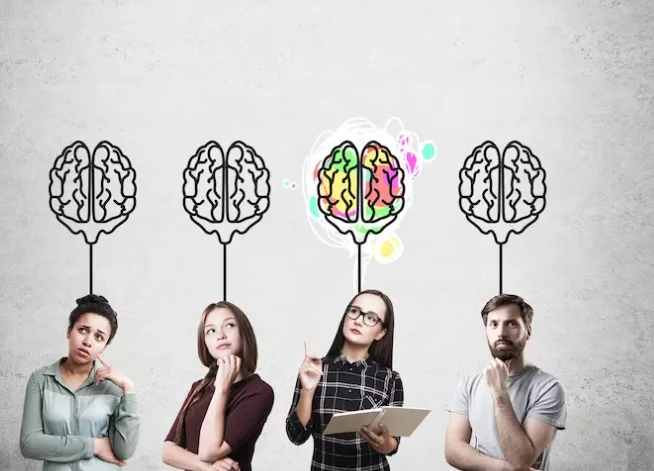
Most decisions happen fast, automatic, and largely outside conscious awareness, while a smaller subset get genuine deliberate analysis. Nobel laureate Daniel Kahneman described this split as System 1 and System 2 thinking, and it explains an enormous amount of everyday human behavior.
System 1 operates quickly, intuitively, and effortlessly — it’s what lets you catch a falling object without thinking, recognize a friend’s face instantly, or feel immediately uneasy in a sketchy parking lot. System 2 is slower, more effortful, and deliberate, the mode you use to solve a math problem or carefully weigh a major financial decision. Here’s the catch: System 2 is lazy. It defers to System 1’s snap judgments constantly, even in situations that genuinely deserve careful thought, which is exactly how cognitive biases sneak into decisions that feel perfectly rational at the time.
This dual-process framework explains why you can know intellectually that a decision is unwise and still make it anyway. Willpower alone rarely overrides an automatic system built over years of reinforcement. Recognizing which system is driving a particular choice, in the moment, is genuinely one of the more useful mental skills a person can develop.
- Notice when a decision feels instant rather than reasoned, since that’s usually a signal System 1 is running the show.
- Pause before high-stakes choices to deliberately engage System 2’s slower, more analytical processing.
- Question snap judgments about people, since first impressions are frequently System 1 shortcuts rather than accurate assessments.
How Memory Actually Works, and Why It Fails So Often
Memory isn’t a video recording you can rewind and replay accurately; it’s a reconstructive process, rebuilt slightly differently every single time you recall it. That single fact explains most of the confusing, frustrating ways memory seems to betray us.
Psychologist George Miller’s classic research on working memory found that people can typically hold only about seven items, plus or minus two, in active conscious awareness at once, a limitation that shapes everything from how phone numbers get chunked to how overwhelmed you feel juggling multiple tasks simultaneously. Long-term memory works completely differently, storing vastly more information but requiring active retrieval cues to access it, which explains that maddening feeling of a memory being “on the tip of your tongue.”
Psychologist Elizabeth Loftus conducted decades of research demonstrating that memories are genuinely malleable, capable of being subtly altered or even entirely fabricated through suggestion, leading questions, or simple repeated retelling. This isn’t lying. It’s how the reconstructive nature of memory actually operates, and it’s precisely why eyewitness testimony, despite feeling completely certain to the witness, has proven unreliable in a documented number of criminal justice cases.
Forgetting itself serves a genuine function too, clearing out irrelevant details so the mind can prioritize information that actually matters for future decisions. You’re not broken for forgetting things. Your memory system is doing exactly the selective work it evolved to do.

The Role of the Unconscious Mind in Everyday Behavior
A significant portion of mental activity happens entirely outside conscious awareness, silently shaping preferences, reactions, and even decisions that feel deliberate and fully chosen, forming the unconscious mind. This isn’t mysticism. It’s measurable cognitive processing that simply never reaches the spotlight of conscious attention.
Sigmund Freud’s early theories about the unconscious mind, though heavily revised and often criticized by modern psychology, correctly identified that much of mental life operates beneath conscious awareness, even if his specific mechanisms haven’t held up well under empirical scrutiny. Contemporary cognitive science has replaced Freud’s model with more evidence-based concepts, including implicit memory, automatic processing, and priming effects, all of which demonstrate that prior experiences influence current behavior without your explicit awareness of that influence happening at all.
Practical examples show up constantly. You might feel inexplicably drawn to or repelled by someone within seconds of meeting them, a reaction shaped by unconscious pattern-matching against past experiences you can’t consciously recall. These automatic processes aren’t inherently untrustworthy, though they do require occasional conscious double-checking, particularly in situations involving bias or high emotional stakes where a snap unconscious judgment could cause real harm.
How Emotions Shape Thought and Decision-Making
Emotions aren’t obstacles to rational thinking; they’re actually essential components of decision-making, providing the value-weighting system that pure logic alone can’t supply. Remove emotion entirely, and decision-making doesn’t become more rational. It often collapses altogether.
Neuroscientist Antonio Damasio’s research on patients with damage to emotion-processing brain regions revealed something counterintuitive: these patients retained normal logical reasoning abilities yet struggled enormously with even simple everyday decisions, like choosing what to eat or wear. Damasio’s somatic marker hypothesis proposed that emotional signals, often felt as subtle bodily sensations, guide decision-making by flagging options as good or bad before conscious reasoning even engages. Without that emotional flagging system, choices become paralyzingly abstract.
This explains why purely emotionless “logical” decision-making, often idealized in popular culture, isn’t actually how healthy human cognition operates. Emotions provide crucial data. The goal isn’t eliminating feeling from decisions; it’s learning to notice when a particular emotion, like acute anxiety or anger, is distorting judgment disproportionately rather than informing it appropriately.

How Attention and Focus Actually Work in the Mind
Attention functions as a filtering mechanism, selecting which of the countless stimuli bombarding your senses at any given moment actually reaches conscious processing. Without this filter, the sheer volume of sensory information would be completely overwhelming.
Psychologist Anne Treisman’s feature integration theory of attention proposed that the mind processes basic sensory features, like color and shape, in parallel across the visual field, but combining those features into a coherent, recognized object requires focused attention operating one item at a time. This explains why you can notice a red object instantly among a field of blue ones, yet searching for a specific red circle among many red squares and blue circles takes noticeably longer. Attention is doing real, measurable work behind the scenes.
This filtering system has real limits, which is precisely why genuine multitasking is largely a myth. What feels like doing two things simultaneously is usually rapid attention-switching, and each switch carries a small but real cognitive cost in accuracy and speed. Sustained, undivided attention remains one of the mind’s most valuable and most frequently squandered resources in an environment engineered specifically to fragment it.
How Sleep and Stress Affect the Mind’s Everyday Performance
Sleep isn’t a passive shutdown period; it’s an active process during which the mind consolidates memories, clears metabolic waste, and resets emotional regulation systems for the next day. Skimp on it, and nearly every cognitive function measurably suffers.
Neuroscientist Matthew Walker, whose extensive research on sleep and cognition has shaped modern understanding of its role in mental health, has shown that even a single night of significantly reduced sleep impairs memory consolidation, emotional regulation, and decision-making the following day. During deep sleep stages, the brain actively transfers information from short-term hippocampal storage into more stable long-term cortical networks, essentially filing away the day’s experiences for future retrieval. Skip that stage repeatedly, and the filing system backs up.
Chronic stress compounds this problem considerably. Elevated cortisol over extended periods can actually shrink hippocampal volume, impairing the very memory system stress was supposed to help protect through heightened alertness. The mind under chronic stress essentially trades long-term cognitive flexibility for short-term threat readiness, a reasonable trade during an actual emergency but a genuinely costly one when maintained for months on end without relief.
- Consistent sleep deprivation measurably impairs memory consolidation, making it harder to retain and organize new information effectively.
- Chronic elevated cortisol from prolonged stress can shrink hippocampal volume, affecting memory and emotional regulation over time.
- Prioritizing consistent sleep and stress management directly supports better cognitive performance across nearly every mental domain.

How the Mind Develops and Changes Across the Lifespan
The mind doesn’t arrive fully formed; it develops through distinct, observable developmental stages, each building cognitive capacities that weren’t available before. Understanding this developmental arc helps explain why children think so differently from adults, and why the mind keeps changing well into old age.
Developmental psychologist Jean Piaget mapped out stages of cognitive development, showing that young children reason concretely and struggle with abstract logic, gradually developing more sophisticated reasoning capacities through adolescence and into early adulthood. A four-year-old genuinely cannot grasp certain abstract concepts an adult takes for granted, not because they’re being difficult, but because the underlying cognitive machinery simply hasn’t matured yet.
Adult minds keep changing too, contrary to the old assumption that cognitive development simply stops after adolescence. Neuroplasticity persists throughout life, allowing new skills, languages, and habits to physically reshape neural pathways well into old age, even if the process generally slows somewhat with time. Cognitive decline in aging is real for some functions, particularly processing speed, but it’s far from universal, and certain capacities, like accumulated wisdom and emotional regulation, often actually improve with age rather than deteriorating.
Common Myths About How the Human Mind Works
Popular culture is full of confident claims about the mind that simply don’t hold up against actual neuroscience research. Clearing these up matters, since inaccurate beliefs about your own cognition can shape unhelpful expectations about your capabilities.
- The claim that “we only use ten percent of our brains” is entirely false; brain imaging consistently shows activity across virtually the entire brain, even during rest.
- “Left-brained” versus “right-brained” personality typing has no solid scientific basis, since most cognitive tasks recruit both hemispheres working together simultaneously.
- Multitasking doesn’t actually mean doing two things at once; the mind is rapidly switching attention, and each switch carries a measurable cognitive cost.
- Memory is not a perfect recording device, contrary to popular assumption, but a constantly reconstructed narrative that shifts slightly with each recall.
These myths persist partly because they’re intuitive and simple, while the actual science is messier and more nuanced. Letting go of oversimplified models of the mind actually opens up a more accurate, and honestly more interesting, picture of how thinking really happens.
How Understanding Your Mind Can Improve Daily Life
Knowing how your mind actually operates isn’t just academically interesting; it translates into practical benefits for everyday decision-making you can apply almost immediately. Small shifts in awareness often produce outsized improvements in decision quality and emotional regulation.
Recognizing that willpower is a limited System 2 resource explains why decision fatigue is real, and why scheduling important choices earlier in the day, before mental resources deplete, tends to produce better outcomes than deciding everything at 11 p.m. Understanding memory’s reconstructive nature helps you hold personal recollections, and other people’s, with appropriate humility rather than absolute certainty, particularly during conflicts where two people confidently remember an event completely differently.
Appreciating the unconscious mind’s influence encourages a healthy habit of pausing before snap judgments about people, giving conscious reasoning a chance to check automatic bias before it drives behavior. None of this requires becoming a neuroscientist. It just requires holding your own certainty a little more loosely, especially in moments of strong emotion or rapid judgment.
- Schedule important decisions earlier in the day when System 2 resources for careful deliberation are less depleted.
- Question strong first impressions of new people, recognizing they often reflect automatic pattern-matching rather than accurate assessment.
- Treat your own memories with reasonable humility, especially during disagreements about shared past events.
FAQs about How the Human Mind Works
Is the mind the same thing as the brain?
Not exactly, though the two are inseparable in practice. The brain is the physical organ made of neurons, blood vessels, and tissue, while the mind refers to the mental activity that organ produces, including thoughts, emotions, memories, and consciousness itself. Scientists and philosophers still debate exactly how physical brain activity gives rise to subjective experience, a question sometimes called the hard problem of consciousness. For everyday purposes, it helps to think of the brain as the hardware and the mind as the ongoing activity running on that hardware, though this analogy oversimplifies a genuinely complex relationship that researchers are still working to fully understand.
Why do I forget things so easily even when I’m paying attention?
Forgetting is a normal and even useful feature of memory rather than a sign that something is wrong with you. Working memory has a limited capacity, generally holding only a handful of items at once, so information not actively rehearsed or connected to existing knowledge tends to fade quickly. Long-term memory also requires proper encoding and retrieval cues, meaning information you paid attention to might still be difficult to recall later without the right trigger. This selective forgetting actually helps the brain prioritize relevant information over an overwhelming flood of every detail you’ve ever encountered, which would otherwise make efficient thinking nearly impossible.
What’s the difference between conscious and unconscious thinking?
Conscious thinking involves mental processes you’re actively aware of, like deliberately solving a problem or making a decision you can explain step by step. Unconscious thinking happens outside your awareness yet still influences behavior, preferences, and even decisions that feel fully deliberate. Examples include automatic skills like typing without looking at the keyboard, implicit biases shaped by past experience, and gut reactions to people or situations that arrive before conscious reasoning has time to engage. Both types of thinking are constantly active, and most everyday behavior actually involves some blend of the two working together rather than one operating in complete isolation from the other.
Can I actually train my brain to think differently?
Yes, through a well-documented process called neuroplasticity, where repeated practice physically strengthens certain neural connections while weaker, unused pathways gradually fade. This is why consistent practice improves skills over time, whether that’s learning a language, managing anxiety more effectively, or breaking an unhelpful thought pattern. Change typically requires sustained repetition rather than a single insight or decision, since the brain adapts gradually based on what gets reinforced consistently over weeks and months. This capacity for change persists throughout the entire lifespan, though it may require somewhat more repetition in older age compared to childhood or adolescence.
Why do emotions sometimes override logical thinking?
Emotional processing centers in the brain, particularly the amygdala, can react to perceived threats or strong stimuli faster than the slower, more deliberate reasoning centers in the prefrontal cortex. This isn’t a design flaw; it reflects an evolved survival mechanism built for quick reactions to genuine danger rather than careful, unhurried analysis. Additionally, research shows that emotions aren’t simply obstacles to rational decision-making but actually provide essential information that guides choices, meaning some emotional influence on decisions is normal and even necessary. Problems arise specifically when an emotional reaction becomes disproportionate to the actual situation, which is where developing better emotional regulation skills genuinely helps.
Is it true that we only use ten percent of our brains?
No, this is one of the most persistent myths about the mind, and it has no support in modern neuroscience. Brain imaging studies consistently show activity distributed across virtually the entire brain, even during rest or simple tasks, with different regions activating depending on what specific function is being performed at that moment. Damage to almost any brain region produces some noticeable effect on functioning, which wouldn’t be the case if ninety percent of the brain were genuinely inactive or unnecessary. The myth likely persists because it’s an appealing idea suggesting untapped human potential, but the actual science paints a very different, more accurate picture of full-brain engagement.
Does poor sleep really affect thinking as much as people say?
Yes, and the effect is well documented across decades of sleep research. Even one night of significantly shortened sleep measurably impairs memory formation, emotional regulation, and decision-making the following day, since deep sleep stages play an active role in transferring information into stable long-term storage. Chronic sleep deprivation compounds these effects over time, contributing to difficulties with concentration, mood regulation, and even physical health outcomes. Prioritizing consistent, adequate sleep is genuinely one of the most effective, low-cost interventions available for supporting overall cognitive function, arguably more impactful than many popular productivity techniques that get far more attention.
Can I actually improve my attention span, or is it fixed?
Attention can be improved somewhat through deliberate practice, though it has real biological limits that no amount of training will completely eliminate. Techniques like meditation have shown measurable effects on sustained attention in research studies, and reducing environmental distractions, such as notifications and multitasking demands, helps attention function closer to its natural capacity rather than being constantly fragmented. That said, claims about dramatically expanding fundamental attentional capacity through brain-training apps haven’t held up particularly well under rigorous scientific scrutiny. Realistic expectations involve modest, genuine improvement through consistent practice rather than a dramatic transformation of your basic cognitive architecture.
Bibliography
- Kahneman, D. (2011). Thinking, Fast and Slow. Farrar, Straus and Giroux.
- Miller, G. A. (1956). The magical number seven, plus or minus two: Some limits on our capacity for processing information. Psychological Review, 63(2), 81-97.
- Loftus, E. F. (1979). Eyewitness Testimony. Harvard University Press.
- Damasio, A. (1994). Descartes’ Error: Emotion, Reason, and the Human Brain. Putnam Publishing.
- Hebb, D. O. (1949). The Organization of Behavior: A Neuropsychological Theory. Wiley.
- Piaget, J. (1952). The Origins of Intelligence in Children. International Universities Press.
- Freud, S. (1900). The Interpretation of Dreams. Franz Deuticke.
- American Psychological Association. (2023). Understanding the Brain and Behavior. APA Publications.
- Walker, M. (2017). Why We Sleep: Unlocking the Power of Sleep and Dreams. Scribner.
- Treisman, A., & Gelade, G. (1980). A feature-integration theory of attention. Cognitive Psychology, 12(1), 97-136.
Use this citation format to reference the article clearly and help readers find the original source.
PsychologyFor. (2026). How Does the Human Mind Work. PsychologyFor. https://psychologyfor.com/how-does-the-human-mind-work/