


See more of our articles in your search results.
I remember sitting with a bright teenager who’d scored surprisingly low on the perceptual reasoning section of his IQ test. His parents were baffled. This kid could argue philosophy, write beautifully, charm anyone with words. But show him a puzzle requiring spatial manipulation? He’d freeze. “I just don’t see it,” he told me, frustration evident in his voice. “Everyone else looks at these block designs and knows what to do. I look at them and see… nothing.” His experience isn’t unusual. While we talk endlessly about verbal intelligence and emotional intelligence, perceptual reasoning often gets overlooked, dismissed as something you either have or don’t.
That’s nonsense, by the way. Like most cognitive abilities, perceptual reasoning can be developed, strengthened, and refined with the right approach. But first, we need to understand what we’re actually talking about. When psychologists assess perceptual reasoning skills, we’re looking at your ability to take in visual information, organize it mentally, identify patterns, understand spatial relationships, and solve problems—all without relying on language. It’s the intelligence that lets you assemble furniture without instructions, navigate a new city with a map, play Tetris, pack a car trunk efficiently, or look at abstract art and understand the relationships between shapes and colors.
In our increasingly visual world, these skills matter more than ever. User interfaces, data visualization, architectural plans, medical imaging, engineering designs—professional success in countless fields depends on strong visual-spatial abilities. Yet many people never deliberately work to improve this aspect of their cognition. They assume it’s fixed, like eye color. Meanwhile, research consistently shows that targeted practice can significantly enhance perceptual reasoning capacity at any age. The brain’s visual processing systems remain remarkably plastic throughout life.
What fascinates me most is how perceptual reasoning intersects with other aspects of psychology. Children with autism sometimes show spiky profiles—average or below-average verbal skills alongside exceptional pattern recognition and visual analysis. Adults with dyslexia often excel at three-dimensional thinking and spatial problem-solving despite struggles with written language. These patterns remind us that intelligence isn’t monolithic. Your brain has multiple systems for understanding the world, and verbal/linguistic thinking is just one of them. Strengthening your perceptual reasoning doesn’t just help you score better on IQ tests—it opens up entirely new ways of processing information and solving problems.
The Cognitive Science Behind Visual Processing
What happens in your brain when you solve a visual puzzle? The process is more complex than most people realize. Visual information enters through your eyes and travels to the primary visual cortex at the back of your brain. But that’s just the beginning. From there, the information splits into two major pathways that neuroscientists call the “what” pathway and the “where” pathway.
How many of these have you been "meaning to read" for months?
- 1
 TarcherThe Artist's Way30th Anniversary EditionListen Free On Audible
 - 2
 New Harbinger PublicationsThe Dialectical Behavior Therapy Skills WorkbookPractical DBT Exercises for Learning Mindfulness, Interpersonal Effectiveness, Emotion Regulation...Listen Free On Audible
 - 3
 New Harbinger PublicationsAdult Children of Emotionally Immature ParentsHow to Heal from Distant, Rejecting, or Self-Involved ParentsListen Free On Audible
The ventral stream, or “what” pathway, runs along the bottom of your brain toward the temporal lobe. This system helps you recognize objects, identify shapes, and distinguish colors. When you look at a puzzle piece and recognize it as a triangle or identify it as blue, your ventral stream is working. The dorsal stream, or “where” pathway, runs along the top toward the parietal lobe. This system processes spatial relationships, motion, and depth. It’s what tells you that one object is above another, or that a piece needs to be rotated ninety degrees to fit.
Perceptual reasoning requires both pathways working together seamlessly. You need to identify what you’re seeing and understand where it fits in space. The parietal lobe plays an especially crucial role, integrating information from multiple senses and creating mental representations of spatial relationships. When this region is damaged, people develop deficits in spatial awareness and manipulation—they might struggle to dress themselves or navigate familiar environments.
But here’s what makes this relevant for improvement: these neural pathways strengthen with use. Neuroplasticity isn’t just for children. When adults engage in activities requiring visual-spatial thinking, brain imaging shows increased activation in relevant regions and even structural changes over time. The connections between neurons multiply. The myelin sheathing around neural pathways thickens, speeding up signal transmission. Your brain literally reorganizes itself around the tasks you practice regularly.
Working memory interfaces critically with perceptual reasoning too. To solve complex visual problems, you need to hold multiple pieces of information in mind simultaneously while manipulating them mentally. Someone with weak working memory might understand individual elements of a puzzle but struggle to keep track of multiple relationships at once. This is why many interventions targeting perceptual reasoning also incorporate working memory training.
Why These Skills Matter More Than You Think
Perceptual reasoning shows up everywhere in daily life, often in ways we don’t consciously recognize. Every time you parallel park, you’re using spatial reasoning to judge distances and angles. When you rearrange furniture to make a room feel more spacious, you’re mentally manipulating three-dimensional objects. Loading the dishwasher efficiently? That’s perceptual reasoning. Following a recipe that requires you to visualize how ingredients combine? Same thing.
Professionally, these abilities open doors. Architects and engineers obviously need strong spatial skills, but so do surgeons navigating three-dimensional anatomy, mechanics diagnosing problems by visualizing how systems connect, graphic designers composing visual layouts, and data scientists creating meaningful visualizations. Many of the highest-paying technical careers demand excellent visual-spatial thinking.
The educational implications are significant too. Students with strong perceptual reasoning often excel in geometry, chemistry, physics, and computer science—subjects requiring visualization of abstract concepts. They can look at a chemical equation and mentally picture molecular structures. They can understand calculus by visualizing rate of change graphically. These aren’t just “smart kids”; they’re students who’ve developed particular cognitive strengths that align with how these subjects are taught.
Social and emotional benefits emerge too. Perceptual reasoning contributes to reading nonverbal cues—noticing subtle changes in facial expressions or body language that signal emotional states. While emotional intelligence and perceptual reasoning aren’t identical, they overlap in interesting ways. Being able to perceive and interpret visual information quickly helps you navigate social situations more effectively.
For aging adults, maintaining and improving perceptual reasoning offers protective benefits. Research links strong visual-spatial abilities with better outcomes in activities of daily living as we age. People who stay cognitively engaged with spatial tasks show slower decline in overall cognitive function. It’s not a magic bullet against dementia, but it’s part of a healthy cognitive portfolio.
Assessment and Baseline Measurement
Before improving something, it helps to know where you’re starting. The gold standard for assessing perceptual reasoning remains the Wechsler intelligence scales—the WAIS for adults and WISC for children. These tests include specific subtests measuring different aspects of visual-spatial thinking.
Block Design presents you with red and white blocks and asks you to recreate specific patterns shown in pictures. Sounds simple, right? It’s deceptively challenging. You need to mentally rotate the blocks, understand how two-dimensional images translate to three-dimensional objects, and execute a plan efficiently. Performance on this subtest correlates strongly with overall intelligence and with success in fields requiring spatial manipulation.
Matrix Reasoning shows you a grid of abstract designs with one piece missing. You select which option completes the pattern. This measures abstract reasoning and pattern recognition—your ability to identify underlying rules governing visual relationships. It’s less about spatial manipulation and more about logical analysis of visual information.
Visual Puzzles combine elements of both. You see a completed puzzle and must identify which pieces from a selection would combine to create it. This requires mental rotation, spatial relationship understanding, and systematic analysis. Picture Completion asks you to identify what’s missing from images, testing visual attention to detail and conceptual understanding.
Outside formal IQ testing, online tools and apps can provide baseline assessments. Many are gamified, making them engaging rather than anxiety-inducing. The key is choosing assessments that actually measure what you want to improve, not just hand-eye coordination or reaction time.
Puzzle-Based Training Methods
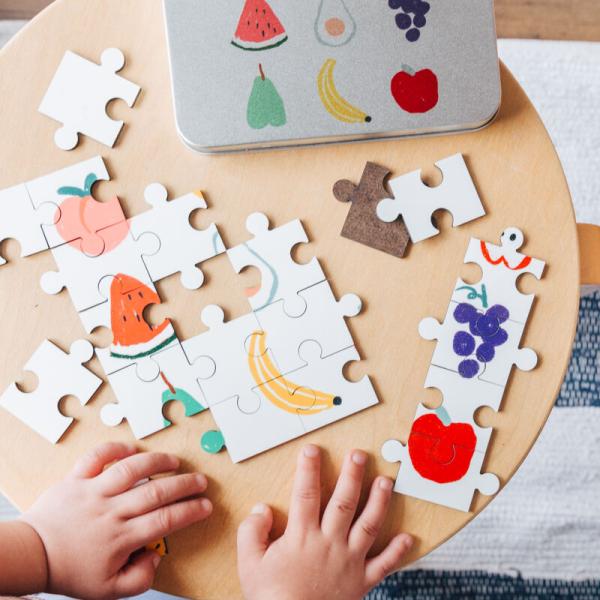
Puzzles offer one of the most accessible and enjoyable ways to develop perceptual reasoning. Jigsaw puzzles force you to analyze shapes, colors, and patterns while mentally rotating pieces and testing spatial relationships. Start with puzzles appropriate to your current level—attempting something too complex leads to frustration rather than growth.
As your skills develop, increase difficulty gradually. Move from 500-piece puzzles to 1000 pieces, then to puzzles with subtle color gradations or repetitive patterns that remove easy visual cues. Three-dimensional puzzles add another layer of complexity, requiring you to visualize how flat pieces combine to create volume and depth.
Rubik’s Cube and similar mechanical puzzles provide exceptional training. Solving these requires understanding spatial relationships, planning multiple moves ahead, and recognizing patterns. Don’t be intimidated if you’ve never solved one—numerous tutorials break down the process into learnable algorithms. The goal isn’t speed but developing the cognitive processes involved in spatial manipulation.
Tangrams, those ancient Chinese puzzles using seven geometric pieces, excel at training shape recognition and spatial visualization. You’re given a silhouette and must figure out how to arrange the pieces to match it. This simple activity engages multiple aspects of perceptual reasoning simultaneously. Origami does something similar—transforming a flat sheet into a three-dimensional object requires visualizing multiple steps ahead and understanding how folds create new spatial relationships.
Logic grid puzzles like Sudoku, while primarily numerical, train pattern recognition and systematic analysis. Crosswords engage verbal reasoning, but their visual layout requires spatial awareness too—tracking which words intersect where and how answers relate spatially on the grid.
Digital Tools and Video Games
Modern technology offers unprecedented opportunities for targeted cognitive training. Tetris remains one of the most effective games for developing perceptual reasoning. Research actually shows that regular Tetris play increases cortical thickness in areas associated with spatial reasoning. The game demands rapid mental rotation, spatial planning, and pattern recognition under time pressure.
Monument Valley and similar perspective-based puzzle games train your ability to understand how viewpoint affects spatial relationships. These games play with impossible geometry and optical illusions, forcing your brain to think flexibly about space. The Portal series requires players to visualize how objects move through space and how entering one portal affects exit from another—high-level spatial reasoning in an engaging package.
Minecraft’s creative mode offers open-ended spatial learning. Building complex structures requires planning in three dimensions, understanding how components fit together, and visualizing finished projects from incomplete beginnings. Many educators have recognized Minecraft’s potential for developing spatial skills, geometry understanding, and architectural thinking.
Apps specifically designed for cognitive training, like Lumosity or Peak, include modules targeting visual-spatial abilities. While debate continues about how well improvements transfer to real-world tasks, these apps provide structured, progressive training that adapts to your performance level. The key is consistency—brief daily practice outperforms occasional marathon sessions.
Virtual reality platforms are beginning to offer immersive spatial training. When you physically move through and interact with three-dimensional environments, your brain processes spatial information more deeply than with traditional screen-based activities. As VR becomes more accessible, expect increasingly sophisticated tools for developing these cognitive abilities.

Real-World Practice Strategies
The most effective training integrates perceptual reasoning into daily activities. Navigation provides excellent practice. Instead of relying on GPS turn-by-turn directions, study a map before traveling and navigate using spatial memory and landmark recognition. This forces you to create mental maps, understand cardinal directions, and visualize routes from a bird’s-eye perspective.
Take up drawing or sketching, even if you have no artistic aspirations. Drawing requires careful observation of shapes, proportions, and spatial relationships. When you try to capture a three-dimensional scene on two-dimensional paper, you’re engaging the same cognitive processes assessed in perceptual reasoning tests. Life drawing classes especially challenge spatial perception by requiring you to understand human anatomy’s complex three-dimensional forms.
Learn a musical instrument, particularly one requiring reading musical notation. Music reading involves spatial reasoning—notes higher on the staff represent higher pitches, timing is represented spatially along the horizontal axis, and complex pieces require tracking multiple simultaneous lines of music. Playing piano or other keyboard instruments adds another layer, as you must map abstract symbols to specific spatial locations on the instrument.
Photography and cinematography develop visual analysis skills. Composing shots requires understanding how three-dimensional space translates to two-dimensional images, how perspective affects perception, and how visual elements relate to create meaning. Even casual photography practice with deliberate attention to composition strengthens relevant cognitive processes.
Cooking and baking, approached mindfully, engage spatial reasoning. Visualizing how ingredients combine, judging proportions, arranging food attractively on plates—these everyday activities provide practical training opportunities. Try following recipes that require precise spatial arrangements or decorative techniques.
Physical Activities That Build Spatial Intelligence
Movement and spatial cognition are deeply intertwined. Sports requiring spatial awareness provide cognitive benefits alongside physical ones. Rock climbing is exceptional for this—you must constantly evaluate distances, plan routes, visualize body positioning, and solve spatial problems in real-time. The proprioceptive feedback from your body moving through space strengthens the connection between physical action and spatial understanding.
Dance, particularly styles requiring precise positioning and pattern memorization, trains spatial intelligence. You’re not just moving your body; you’re tracking your position relative to others, visualizing formations from different perspectives, and understanding how movements translate across space. Ballet’s emphasis on precise positioning in three-dimensional space makes it particularly effective.
Martial arts develop spatial awareness of your body and your opponent’s position. Anticipating movements, controlling distance, and executing techniques from various positions all require sophisticated spatial processing. Team sports add social spatial cognition—tracking multiple players’ positions simultaneously while predicting movements and planning your own actions.
Yoga and Pilates enhance body awareness and spatial orientation. Many people think of these as flexibility or strength training, but they’re also cognitive practices. Holding complex positions requires understanding how your body occupies space, and flowing through sequences demands spatial planning and proprioceptive awareness.
Even simple activities like juggling provide cognitive benefits. Learning to juggle forces your brain to track multiple objects moving through three-dimensional space simultaneously, predict trajectories, and time motor actions precisely. Research shows juggling practice actually increases gray matter in brain regions associated with visual-motor coordination.
Developmental Considerations Across Ages
Children’s perceptual reasoning develops naturally through play, but can be enhanced with targeted activities. Building blocks aren’t just entertainment—they’re fundamental spatial learning tools. When children stack blocks, fit shapes into sorters, or build structures, they’re developing intuitions about balance, gravity, and three-dimensional relationships. Legos and similar construction toys extend these benefits with more complex possibilities.
For school-age children, board games offer disguised cognitive training. Chess obviously develops spatial reasoning—visualizing how pieces move across the board and planning multiple moves ahead. But even simpler games like Checkers, Connect Four, or Battleship train spatial thinking in age-appropriate ways.
Adolescents can tackle more abstract spatial challenges. Geometry becomes meaningful when connected to real-world applications. Having teenagers design and build something—a treehouse, a piece of furniture, a robot—makes spatial reasoning concrete. Video games popular with this age group often include sophisticated spatial elements that can be leveraged for development.
Adults sometimes assume their perceptual reasoning is fixed, but neuroplasticity continues throughout life. The key is providing sufficient challenge without overwhelming frustration. Adults benefit from understanding the purpose behind activities—knowing how puzzle-solving connects to real-world applications increases motivation and engagement.
Older adults particularly benefit from maintaining spatial cognitive abilities. Activities that combine physical movement with spatial thinking—like ballroom dancing or tai chi—offer comprehensive benefits. Continuing to engage with maps, puzzles, and spatial hobbies correlates with maintained cognitive function into later life.

Combining Approaches for Maximum Effect
The most effective improvement strategies combine multiple modalities. Your brain strengthens connections that are repeatedly activated across different contexts. Someone who does jigsaw puzzles, plays spatial video games, practices navigation without GPS, and takes a drawing class will likely see more substantial gains than someone who focuses on just one activity.
Vary the specific spatial challenges you encounter. If you only do jigsaw puzzles, you’ll get very good at jigsaw puzzles, but transfer to other spatial tasks may be limited. Mixing different types of challenges—mental rotation, pattern recognition, spatial planning, visual memory—develops more comprehensive abilities.
Incorporate deliberate practice principles. Simply engaging in spatial activities helps, but mindful attention to the cognitive processes involved accelerates improvement. After completing a puzzle or spatial task, reflect on your approach. What strategies worked? Where did you struggle? What would you do differently next time? This metacognitive awareness enhances learning.
Track your progress over time. Keep records of puzzle completion times, game scores, or subjective assessments of difficulty. Seeing measurable improvement provides motivation and helps you calibrate challenge levels. When tasks become too easy, it’s time to increase difficulty.
Ensure adequate rest and recovery. Cognitive skills strengthen during sleep as your brain consolidates learning. Pushing yourself to exhaustion with marathon practice sessions is less effective than consistent, moderate practice with proper rest between sessions.
FAQs about Perceptual Reasoning
Can adults really improve perceptual reasoning or is it fixed after childhood?
Adults can absolutely improve their perceptual reasoning abilities, though the trajectory differs slightly from children. While childhood represents a particularly plastic period for developing spatial skills, adult brains maintain significant neuroplasticity throughout life. Research demonstrates that adults who engage in targeted spatial training show measurable improvements on assessment tasks and structural changes in relevant brain regions. The key differences are that adults may need more repetitions to achieve similar gains and they benefit from understanding the cognitive processes involved rather than just implicit learning through play. Consistency matters more than intensity—regular practice over months yields better results than sporadic intensive sessions.
How long does it take to see improvement in perceptual reasoning skills?
Most people notice subjective improvements within weeks of consistent practice, but measurable gains on standardized assessments typically require several months of regular engagement. Research on cognitive training suggests that practicing spatial tasks for 30-45 minutes several times per week produces noticeable effects within 8-12 weeks. However, the timeline varies based on starting ability level, the intensity and variety of training, and individual differences in learning rate. Early improvements often come from learning strategies and becoming familiar with task types, while deeper cognitive changes requiring neural reorganization take longer. Setting realistic expectations prevents discouragement—think of this as building physical fitness for your visual-spatial brain systems.
Are video games actually effective for developing these cognitive abilities?
Certain video games can be highly effective for developing perceptual reasoning, but not all games provide equal benefits. Games requiring spatial navigation, mental rotation, pattern recognition, and visual problem-solving offer the most relevant training. Research has specifically documented cognitive benefits from games like Tetris, Portal, Monument Valley, and spatial strategy games. The effects appear to transfer to non-game spatial tasks, suggesting genuine cognitive improvement rather than just getting better at the specific game. However, passive gaming doesn’t help—the games must actually challenge your spatial thinking. Additionally, games work best as part of a varied training approach rather than the sole method. Balance digital gaming with real-world spatial activities for optimal development.
What’s the connection between perceptual reasoning and overall intelligence?
Perceptual reasoning represents one component of overall intelligence but doesn’t determine it entirely. Modern intelligence theories recognize multiple distinct cognitive abilities rather than a single “intelligence” factor. In the Wechsler intelligence scales, perceptual reasoning is assessed separately from verbal comprehension, working memory, and processing speed. Someone can have exceptional perceptual reasoning with average verbal skills, or vice versa. That said, perceptual reasoning correlates with overall IQ scores and predicts success in fields requiring spatial thinking. It also relates to fluid intelligence—the ability to solve novel problems—because visual-spatial reasoning often involves identifying patterns and relationships in unfamiliar contexts.
Do people with learning disabilities struggle with perceptual reasoning?
The relationship between learning disabilities and perceptual reasoning is complex and varies by specific diagnosis. Some individuals with dyslexia actually show strengths in perceptual reasoning despite difficulties with verbal processing—they may excel at three-dimensional visualization and spatial tasks. People with nonverbal learning disabilities often show the opposite pattern—strong verbal skills with significant perceptual reasoning challenges. Individuals on the autism spectrum display diverse profiles, with some showing exceptional pattern recognition and visual-spatial abilities. ADHD can affect perceptual reasoning performance not necessarily because of deficits in spatial thinking but because of difficulties with sustained attention and working memory required for complex spatial tasks. Assessment should always consider individual profiles rather than assumptions based on diagnostic labels.
Can improving perceptual reasoning help with everyday practical tasks?
Absolutely—enhanced perceptual reasoning translates directly to numerous practical benefits. Better spatial skills improve driving and navigation, making you less dependent on GPS and better able to understand traffic patterns. Packing suitcases or organizing storage becomes more efficient as you visualize how objects fit together. Home improvement and furniture assembly become less frustrating when you can mentally visualize how components relate. Some people report improved ability to follow diagrams and instructions. Reading maps and understanding floor plans becomes easier. Even social benefits emerge—better perception of nonverbal cues and improved ability to visualize other people’s perspectives. The key is that perceptual reasoning isn’t an abstract test score but a fundamental way your brain processes and understands the world around you.
Should I focus on my weaknesses or build on my strengths?
This depends on your goals and circumstances. If you need specific spatial skills for professional or educational requirements, targeted work on weaknesses makes sense. Someone struggling with geometry might focus specifically on mental rotation and spatial visualization tasks. However, many psychologists advocate a strengths-based approach where you identify and build on existing abilities rather than fixating on deficits. If you have strong verbal skills and weaker spatial abilities, you might look for careers and activities that leverage your strengths while maintaining adequate spatial function for daily life. For general cognitive health and development, a balanced approach works well—maintain and enhance strengths while gradually improving areas of relative weakness without frustration or discouragement. Remember that cognitive profiles vary naturally and not everyone needs to excel in every domain.
Use this citation format to reference the article clearly and help readers find the original source.
PsychologyFor. (2026). How to Improve Perceptual Reasoning. PsychologyFor. https://psychologyfor.com/how-to-improve-perceptual-reasoning/