

See more of our articles in your search results.
There’s this moment in grad school that still sticks with me. We were sitting in a seminar on cognitive development, and someone brought up IQ testing. The professor—older guy, very traditional—was explaining how intelligence testing had evolved over the decades. Standard stuff. Then this one student raised her hand and said, “But what about Howard Gardner’s work? Don’t we need to rethink all of this?” And I swear, you could feel the temperature in the room shift. The professor got this look, sort of annoyed but also… I don’t know, resigned? Like he knew this conversation was coming and couldn’t avoid it anymore.
Because that’s what Howard Gardner did to psychology and education. He walked in with this theory that blew up decades of assumptions about intelligence, and suddenly everyone had to reckon with it. Whether they loved it or hated it—and plenty of people fell into both camps—they couldn’t ignore it. The idea that intelligence isn’t just one thing you can measure with a test, that maybe the kid who struggles with math but can play any instrument by ear is just as intelligent as the one acing standardized exams… that was radical. Still is, in some circles.
Gardner’s been one of those figures in psychology who transcends the field itself. Teachers know his work. Parents reference it. Schools restructure curricula around it. And psychologists? We’re still arguing about whether he got it right. But here’s what you can’t argue with: the man fundamentally changed how we think about human cognitive abilities. Whether you buy into multiple intelligences theory completely, partially, or not at all, Gardner forced a conversation that needed to happen. He made us question our assumptions. And in science, that’s sometimes more valuable than being definitively right.
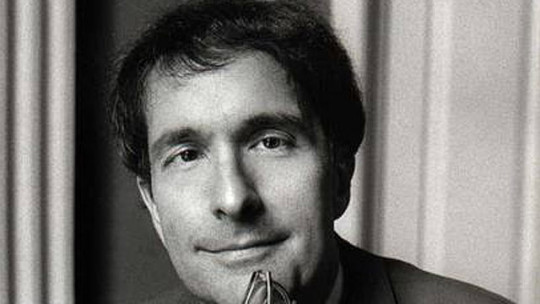
So who is Howard Gardner, really? Where’d he come from? How did a kid from Pennsylvania end up reshaping educational psychology? And what’s his story beyond the theory everyone knows him for? Because there’s always more to these intellectual giants than their most famous ideas. Gardner’s life and work span decades of research, collaboration, evolution in thinking, and honestly, some fascinating intellectual adventures that don’t always make it into the textbook summaries.
The Early Years: A Family Shaped by History
Howard Earl Gardner was born July 11, 1943, in Scranton, Pennsylvania. But to understand Gardner, you need to know what happened before he was born. His parents, Ralph and Hilde Gardner, were Jewish refugees who fled Nazi Germany in 1938. They’d left Nuremberg with their three-year-old son, Eric. Think about that timing—1938, right before things got truly catastrophic in Europe. They escaped. Made it to America. Started over.
How many of these have you been "meaning to read" for months?
- 1
 TarcherThe Artist's Way30th Anniversary EditionListen Free On Audible
 - 2
 Atria BooksThe Courage to Be DislikedThe Japanese Phenomenon That Shows You How to Change Your Life and Achieve Real HappinessListen Free On Audible
 - 3
 Hay HouseBecoming SupernaturalHow Common People Are Doing the UncommonListen Free On Audible
And then there was Howard, born five years later into this immigrant family carrying all that trauma and displacement. Eric, his older brother, died in a sledding accident before Howard was born. So Howard grew up as essentially an only child but with the ghost of a brother he never knew and parents who’d survived something most Americans couldn’t imagine. That kind of background shapes you. The combination of being from a family that valued education intensely—typical of many Jewish immigrant families—plus this underlying current of loss and survival… you can see how that might create someone driven to understand human potential and achievement.
Gardner was apparently a serious kid. Loved reading. Loved music—particularly the piano, which became a lifelong passion. His parents encouraged intellectual pursuits, though they were pretty traditional in their expectations. The path they envisioned was probably something like: good grades, prestigious university, stable professional career. Which, to be fair, is basically what happened. Just maybe not in the way they initially imagined.
Harvard Years: Finding His Intellectual Home
Gardner started at Harvard in 1961. Can you imagine? Harvard in the early 60s. The whole intellectual ferment of that era, the social changes brewing. He majored in something called Social Relations—which was this interdisciplinary program combining sociology, anthropology, and psychology. Already you can see him gravitating toward understanding humans from multiple angles rather than one narrow disciplinary lens.
While at Harvard, he studied under Erik Erikson. Yeah, that Erikson—the stages of psychosocial development guy. Pretty incredible mentor to have. Erikson’s influence on Gardner’s thinking about human development across the lifespan seems obvious in retrospect. Gardner graduated in 1965 with highest honors, which, okay, not surprising for someone who’d go on to become one of psychology’s most influential figures.
Here’s where it gets interesting though. After graduation, Gardner spent a year at the London School of Economics studying philosophy and sociology. Taking a break from psychology, exploring other ways of understanding human behavior and social systems. Then he came back to Harvard for his PhD in developmental psychology. His advisors? Roger Brown, a prominent psycholinguist. Jerome Bruner, who was revolutionizing thinking about cognitive development and education. And Nelson Goodman, a philosopher who’d become hugely important to Gardner’s trajectory.
The Bruner connection deserves special mention. Gardner has said he’d initially planned to go into clinical psychology after undergrad. But he met Bruner right before heading to England, and Bruner’s charisma and intellectual vision pulled Gardner toward cognitive and developmental psychology instead. Also, Bruner introduced Gardner to his future wife, Judy Krieger, who was also studying psychology. So basically, this chance meeting redirected both Gardner’s professional and personal life. They got married, and on their honeymoon in June 1966—because of course they did—they went to Geneva to meet Jean Piaget. Only psychology nerds honeymoon by visiting the godfather of developmental psychology, but I kind of love it.
Project Zero: Where Everything Started
While Gardner was still in graduate school, something happened that would define his entire career. In 1967, philosopher Nelson Goodman started this research project at Harvard called Project Zero. The name came from Goodman’s belief that essentially nothing—zero—was understood about how humans learn in the arts. The project focused initially on arts education, trying to understand artistic knowledge and creativity.
Gardner became one of the founding research assistants. And this is where his path diverged from typical psychology careers. Most developmental psychologists at the time were following in Piaget’s footsteps, studying how kids develop scientific and logical thinking. Gardner decided to zig where everyone else was zagging. He focused on artistic development instead. How do children’s artistic abilities evolve? How do we understand creativity and aesthetic knowledge?
He’d eventually co-direct Project Zero with David Perkins from 1972 to 2000. Twenty-eight years leading this research group that expanded way beyond its original arts focus to cover learning, thinking, creativity, ethics, and education across domains. Project Zero became this intellectual home base where Gardner could pursue questions that didn’t fit neatly into traditional psychology boxes. It gave him freedom to be interdisciplinary, to think big, to challenge conventional wisdom.
The Boston VA Hospital: When Brain Damage Reveals Mind
After finishing his PhD in 1971, Gardner did a postdoctoral fellowship at the Boston Veterans Administration Hospital from 1971-1972. This might seem like a detour from his work on child development and arts education, but it was actually crucial to what came later.
At the VA hospital, Gardner worked with brain-damaged patients under the mentorship of Norman Geschwind, a brilliant neurologist. Geschwind believed you could learn about how normal minds work by studying what happens when brains are damaged. Different types of brain injuries affect different abilities—someone might lose language but keep musical ability, or lose mathematical reasoning but maintain spatial skills.
This blew Gardner’s mind, apparently. Here was direct neurological evidence that the brain doesn’t work as one unified intelligence system. It’s modular. Different parts do different things. You can lose one ability while others remain intact. Those observations of brain-damaged patients planted the seeds for what would become the theory of multiple intelligences. If the brain can selectively lose different abilities based on where damage occurs, doesn’t that suggest intelligence itself isn’t unitary but rather composed of distinct capacities?
Frames of Mind: The Book That Changed Everything
So Gardner’s got all these pieces floating around in his head by the early 1980s. His work with kids and artistic development. His observations of brain-damaged patients. His dissatisfaction with how psychology and education treated intelligence as this single, measurable thing mostly determined by genetics. And in 1983, he published “Frames of Mind: The Theory of Multiple Intelligences.”
The book was revolutionary. Not because the ideas were entirely new—people had questioned IQ testing before. But Gardner presented a comprehensive alternative framework backed by evidence from neuroscience, child development, cross-cultural studies, and evolutionary psychology. He wasn’t just saying “IQ tests are limited.” He was proposing a whole new way to think about human cognitive abilities.
Originally, Gardner identified seven distinct intelligences. Linguistic—facility with language and words. Logical-mathematical—reasoning and numerical ability. Musical—sensitivity to rhythm, pitch, melody. Bodily-kinesthetic—control of body movements and handling objects skillfully. Spatial—visualizing and manipulating spatial relationships. Interpersonal—understanding other people. Intrapersonal—understanding yourself. Later he’d add naturalistic intelligence—recognizing and classifying patterns in nature. And he’s considered but not firmly added existential intelligence—grappling with big questions about existence and meaning.
What made this theory compelling was how it explained things traditional intelligence theory couldn’t. Why can someone be terrible at math but brilliant at music? Why do some people excel at understanding others but struggle with self-awareness? Why do certain brain injuries destroy one ability while leaving others untouched? Multiple intelligences provided a framework that made sense of these patterns.
The education world went nuts for this. Teachers had always known that kids learn differently, that the smart kid struggling in school might just be smart in ways the curriculum didn’t recognize. Gardner gave them theoretical backing and language for what they’d observed. Schools started restructuring curricula to engage different intelligences. Teachers designed lessons appealing to various learning styles.

The Controversy and Criticism
Of course, not everyone was thrilled. Actually, many psychologists were pretty skeptical. Some still are. The criticisms have been consistent: Where’s the empirical evidence? How do you test these intelligences reliably? Aren’t you just relabeling talents and abilities as intelligences? Don’t the intelligences correlate enough that maybe they’re really aspects of general intelligence after all?
Gardner’s never claimed to have definitive proof in the traditional empirical sense. He’s been pretty upfront that this is a framework, a way of organizing observations about human abilities. Critics say that’s not enough—that without rigorous measurement and testing, it’s more philosophy than science. Supporters argue that the theory’s value lies in its practical applications and its challenge to overly narrow conceptions of intelligence, not in meeting traditional psychometric standards.
The debate continues. I’ve been in conference sessions where people almost come to blows over multiple intelligences theory. Well, academic versions of blows, which means pointed questions and passive-aggressive citations. But that controversy is part of what makes Gardner significant. He forced psychology to grapple with fundamental questions about intelligence, measurement, and human diversity that we’d been avoiding.
Beyond Multiple Intelligences: The Rest of His Career
Here’s what a lot of people don’t realize: Gardner’s done way more than multiple intelligences theory. He’s written over thirty books on topics ranging from creativity to leadership to ethics to how minds change. He’s published hundreds of research articles. His work’s been translated into over thirty languages.
In 1981, he won the MacArthur Prize Fellowship—the so-called “genius grant.” That money allowed him to research full-time for years without teaching obligations. He’s won the Grawemeyer Award in Education. He’s been honored by governments and universities worldwide. In 2011, he received the Prince of Asturias Award in Social Sciences. The man’s collected more honors than most people have publications.
In the late 1990s, Gardner co-founded something called The Good Project, which examines how people do excellent work that’s also ethical and meaningful. He’s been deeply interested in questions beyond just cognitive ability—questions about character, ethics, responsibility, excellence. Books like “The Disciplined Mind,” “Five Minds for the Future,” “Truth, Beauty, and Goodness Reframed” explore how we should educate people not just to be smart but to be good.
In 2000, he helped establish the master’s degree program in Mind, Brain, and Education at Harvard—supposedly the first program of its kind integrating neuroscience, psychology, and education. Universities worldwide have since created similar programs.
He retired from teaching in 2019 but continues writing and researching. In 2020, he published an intellectual memoir called “A Synthesizing Mind” reflecting on his career and ideas. Even in retirement, the man can’t stop thinking, writing, questioning.

Personal Life and Working Style
Gardner married Judy Krieger in 1966. They had four children together and were married until her death. He later remarried. By all accounts, he’s collaborative rather than isolated genius stereotype. His work with Project Zero was always about teams and partnerships. He’s co-authored numerous books and projects.
People who’ve worked with him describe Gardner as intellectually generous, curious about everything, willing to engage with critics, constantly synthesizing ideas from diverse fields. That synthesizing mind he named his memoir after seems central to who he is—always connecting dots between disciplines, between research and practice, between theory and application.
Legacy and Impact
So what’s Gardner’s lasting impact? Hard to overstate, honestly. He fundamentally changed conversations about intelligence and education. Whether or not multiple intelligences theory is “correct” in some ultimate scientific sense, it shifted thinking. Schools approach learning differently. Teachers recognize diverse strengths. Parents understand their kids’ abilities more broadly.
He’s also modeled a way of doing psychology that’s deeply interdisciplinary and application-focused. Gardner’s never been content with just publishing for other academics. He’s always asked: How does this help actual people? How does this improve education? What are the practical implications? That public intellectual role, that commitment to making research matter beyond academia, that’s part of his legacy too.
Critics will keep criticizing. The debate about multiple intelligences isn’t resolved and probably never will be. But Gardner achieved something rare in psychology: he changed how ordinary people think about human ability. How many psychologists can say their work actually penetrated public consciousness that way? Not many.
FAQs About Howard Gardner: Biography of the American Psychologist
What is Howard Gardner most famous for?
Howard Gardner is best known for his theory of multiple intelligences, which he introduced in his 1983 book “Frames of Mind: The Theory of Multiple Intelligences.” This theory challenged the traditional view that intelligence is a single, measurable entity and instead proposed that humans possess distinct types of intelligence—originally seven, later expanded to eight or nine. These include linguistic, logical-mathematical, musical, spatial, bodily-kinesthetic, interpersonal, intrapersonal, and naturalistic intelligences. The theory has profoundly influenced education worldwide, encouraging teachers to recognize and nurture diverse learning styles and abilities in students.
Where did Howard Gardner study and work?
Gardner completed all his degrees at Harvard University, graduating with highest honors in Social Relations in 1965 and earning his PhD in developmental psychology in 1971. He spent one year between degrees at the London School of Economics. Gardner has spent essentially his entire career at Harvard, becoming a founding member of Harvard Project Zero in 1967 and serving as its co-director from 1972 to 2000. He held various professorships, ultimately becoming the John H. and Elisabeth A. Hobbs Research Professor of Cognition and Education at Harvard Graduate School of Education. He also held an adjunct professorship in neurology at Boston University School of Medicine from 1984 to 2005.
Has Howard Gardner’s theory of multiple intelligences been scientifically validated?
This remains controversial. Gardner’s theory hasn’t been validated through traditional psychometric methods, and many psychologists criticize it for lacking empirical support and rigorous measurement tools. Critics argue that the different “intelligences” Gardner identifies correlate with each other and might just be aspects of general intelligence. However, supporters contend that the theory’s value lies in its practical applications and its challenge to narrow conceptions of intelligence rather than in meeting traditional scientific standards. Gardner himself has acknowledged that his framework draws on diverse evidence from neuroscience, child development, and cross-cultural studies rather than relying solely on conventional psychological testing. The debate continues within the field.
What other contributions has Gardner made besides multiple intelligences theory?
Gardner has contributed extensively to psychology and education beyond multiple intelligences. He co-founded The Good Project, which examines excellence, ethics, and engagement in professional work. He’s written over thirty books on topics including creativity, leadership, how minds change, and the future of education. He helped establish Harvard’s master’s degree program in Mind, Brain, and Education in 2000. His work on Project Zero has influenced arts education and cognitive development research for decades. Books like “Five Minds for the Future” and “Truth, Beauty, and Goodness Reframed” explore how education should prepare people not just intellectually but ethically. His research spans developmental psychology, neuropsychology, education, creativity, and ethics.
Is Howard Gardner still alive and active?
Yes, as of 2025, Howard Gardner is alive and continues to be intellectually active despite retiring from teaching in 2019. He published his intellectual memoir “A Synthesizing Mind” in 2020 and continues writing, researching, and maintaining several blogs. He held leadership roles at Harvard Project Zero until 2023. Though no longer teaching courses, he remains engaged with psychological and educational issues through his writing and public intellectual work. He continues to reside in the Boston area and participates in conferences and discussions about education, intelligence, and ethics.
How did Gardner’s background influence his work?
Gardner’s background as the child of Jewish refugees who fled Nazi Germany in 1938 likely influenced his interest in human potential and achievement. Growing up in an immigrant family that valued education intensely, combined with the tragedy of losing an older brother before his birth, may have shaped his drive to understand diverse forms of human excellence. His early love of music, particularly piano, informed his recognition of musical intelligence as distinct from linguistic or logical abilities. His interdisciplinary education in social relations at Harvard, rather than narrow psychology training, prepared him to synthesize insights across fields. His work with both artistic children and brain-damaged adults gave him unique perspectives that traditional developmental psychologists didn’t have.
What awards and recognition has Gardner received?
Gardner has received numerous prestigious awards throughout his career. He won the MacArthur Prize Fellowship in 1981, often called the “genius grant,” which provided funding for years of uninterrupted research. He received the Grawemeyer Award in Education and a Guggenheim Fellowship. In 2011, he was awarded the Prince of Asturias Award for Social Sciences. He’s received honorary degrees from over thirty colleges and universities worldwide. His books have been translated into more than thirty languages. He’s been recognized by educational and psychological organizations across the globe. Despite these accolades, some of the highest honors in psychology—like the APA’s Distinguished Scientific Contribution Award—have eluded him, possibly reflecting ongoing controversy about his theoretical work within the discipline.
How has Gardner’s work influenced modern education?
Gardner’s multiple intelligences theory has profoundly impacted educational practice worldwide, though sometimes in ways he didn’t intend. Many schools have restructured curricula to address different intelligences, designing lessons that engage linguistic, spatial, musical, bodily-kinesthetic, and other abilities. Teachers use the framework to understand why students excel in some areas but struggle in others. The theory has encouraged movement away from purely academic, test-focused education toward recognition of diverse talents. However, Gardner has expressed concern about oversimplifications and misapplications of his work, such as labeling kids as having one particular intelligence type or using the theory to avoid teaching challenging material. The theory’s greatest educational impact may be cultural rather than methodological—shifting mindsets about what counts as intelligence and how we value different human abilities.
Did Gardner work with any other famous psychologists?
Yes, Gardner studied under and collaborated with several prominent figures in psychology and related fields. As an undergraduate, he studied with Erik Erikson, famous for his stages of psychosocial development. During his PhD, he worked with Roger Brown, a pioneering psycholinguist, and Jerome Bruner, whose work revolutionized understanding of cognitive development and education. Philosopher Nelson Goodman was crucial to Gardner’s career, founding Project Zero and mentoring Gardner’s interdisciplinary approach. Gardner studied brain-damaged patients under neurologist Norman Geschwind, whose insights about brain modularity influenced multiple intelligences theory. On his honeymoon, Gardner famously met Jean Piaget in Geneva. He’s also collaborated extensively with David Perkins, co-directing Project Zero for nearly three decades. These relationships shaped Gardner’s thinking and positioned him within broader intellectual movements in psychology and education.
Use this citation format to reference the article clearly and help readers find the original source.
PsychologyFor. (2025). Howard Gardner: Biography of the American Psychologist. PsychologyFor. https://psychologyfor.com/howard-gardner-biography-of-the-american-psychologist/