

Perhaps the aspect that generates the most controversy in relation to the couple is that of infidelity, ranging from gossip between neighbors to magazine covers. Thousands of songs, poems and letters have been filled with love disappointments. Infidelity has been debated and even legislated. exist affairs in all societies, cultures and countries, which makes us ask ourselves a fundamental question: if infidelity wreaks havoc on a couple, why is it such a widespread phenomenon? In this PsychologyFor article: I was unfaithful and I regret it we tell you:
Infidelity in marriage: differences between men and women
Traditionally, sexual infidelity, that is, one in which physical contact and sexual arousal predominates, has been associated with man’s infidelity; and the emotional one, in which emotional ties would prevail, woman’s infidelity In fact, this could actually be the case in most cases, since men and women are and think differently. This would also apply to affairs, so a man’s infidelity would tend to take different forms than a woman’s infidelity.
Generally, men don’t usually plan an affair and it just happens. They tend to differentiate between sex and emotional bonds, and both things do not have to happen at the same time. On the other hand, women are more likely to embark on an affair when they have spent time meditating on it and there is a certain emotional link with the third person.
It is also important to note that the number of women who have an affair is less than that of men, and younger women tend to have more affairs than older women. We find a possible explanation in hormonal aspects, since men have higher levels of testosterone, a hormone related to sexual drive. On the other hand, in women there are higher levels of oxytocin, a hormone related to childbirth, maternal behavior, breastfeeding and attachment. Another explanation would be found in the ways of upbringing and education differentiated treatment that men and women receive from childhood, through which in men bravery and stoicity would be rewarded, and in women tenderness and emotionality would be reinforced, which would contribute to directing both along such paths.
Causes of infidelity
Popular opinion often attributes infidelity to the personality of the cheater or a deficit in the relationship. According to these widely held beliefs, people would cheat because they are selfish or weak and would give in to temptation; They would be disloyal to their respective partners because their relationship would be damaged, stagnant, or unsatisfactory. Often, these explanations have some basis in reality. However, some people are reasonably emotionally healthy and in a satisfying and happy relationship, and even so, they commit infidelity. Why do happy people in their marriage allow themselves to be fooled by a affair?
Perel proposes four causes of infidelity four possible reasons why men and women around the world are unfaithful, risking their marriage, their home, their family, mutual friends, and in some cases, even their reputation:
- Self-exploration This is a recurring theme among infidels, for whom the adventure would be reformulated in terms of self-discovery: through the adventure they search for a lost identity, which remained in the past; or a new one, that is, that which they never were and that, for the first time, they have the opportunity to be. For these people, infidelity is less likely to be the result of a problematic relationship and would become a way of inquiring into parts of the self never experienced or repressed for long. Curiously, they do not usually want to change who they are, they simply want to escape from those limitations of everyday life for a short period of time: the duration of the encounters with their lover. Feeling young again, freeing yourself from certain family or work “burdens,” exploring and experimenting with new roles, immersing yourself in hiding. They are not looking for another person, they are looking for themselves, or at least, certain lost or ignored aspects.
- The seductive nature of transgression Sometimes, happy people who cheat report that they feel like teenagers. An adventure is something forbidden, and this gives it a great activating component. Thus, acts of transgression give an almost irresistible character to adventures for some people, who decide to embark on them.
- The illusion of lives not lived In this case, it is the missed opportunities that would act as gasoline on the fire. These are often people who remained faithful to their partners for long periods of time, until they begin to break up. wonder what your life could have been like As a consequence, they may feel confined by the path and relationship they chose or had to live, despite even reporting happiness in it. Thus, infidelity would become a way of exploring what could be, but never was.
- Feel new or banished emotions Finally, happy people who have an affair may do so to experience new or long-repressed sensations. Again, this is a form of self-exploration. Men are especially vulnerable to this reason, because culturally they tend to be taught to repress and not express their emotions. Unfortunately, in doing so they often mitigate joy and pain, pleasure and suffering; all of them emotions inherent to life. In this case, infidelity would act more as a emotional release than a sexual liberation.
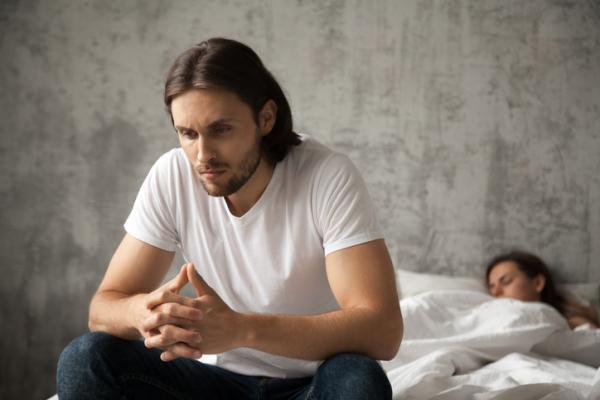
See more of our articles in your search results.
How many of these have you been "meaning to read" for months?
- 1
 Workman PublishingNo More Mr Nice GuyA Proven Plan for Getting What You Want in Love, Sex, and LifeListen Free On Audible
 - 2
 Sounds TrueNo Bad PartsHealing Trauma and Restoring Wholeness with the Internal Family Systems ModelListen Free On Audible
 - 3
 New Harbinger PublicationsThe Dialectical Behavior Therapy Skills WorkbookPractical DBT Exercises for Learning Mindfulness, Interpersonal Effectiveness, Emotion Regulation...Listen Free On Audible
Why are you unfaithful when you love?
Adventures have a lot to say about relationships, but ultimately, about ourselves. When a person is unfaithful to his partner, he opens a gap to his world of attitudes, beliefs and values; his thoughts and emotions; your hopes, expectations; and to what he feels he has the right to do.
Why is one unfaithful when one loves? The adventures, in the end, reflect the desire and need for external validation of whoever seeks them. That they admire your beauty, value your charisma, notice your perfume or your new haircut, miss your company… they can happen in many ways. Many people who never thought they could be unfaithful, were. Their stories are diverse, their personalities unique. But we can establish some recurring themes that occur in most infidelities.. In many cases, extramarital affairs are not so motivated by falling in love with another person. What they really fall in love with is this one new and fresh image of themselves, of the personal rediscovery that comes with finding admiration after several disappointments, perhaps failures. In the previous section we explained this desire, self-exploration. So, sometimes, when we look at another person, it is not our partner that we are distancing ourselves from, but rather who we have become.
To all of the above, we must add that adventures have another particular characteristic that makes them almost irresistible for those who immerse themselves in them. Conditions of partial satisfaction function as fuel for the one who yearns, so that each encounter with the lover contributes to anticipating, and therefore, wish more strongly for the next meeting This is because these encounters are usually kept secret, so a complete union with the lover never occurs. Thus, the brain is flooded with dopamine, a neurotransmitter that is also activated when we perform addictive behaviors, such as consuming nicotine or cocaine. This would explain the recurrence that occurs in some unfaithful people, sometimes even running the risk of being discovered.
I was unfaithful to my boyfriend or girlfriend
Infidelity is one of the hardest mishaps a couple goes through, and what happens immediately after its revelation is very volatile: it is loaded with emotions, perplexity, confusion, frustration A chill runs through our body, we feel that we do not know the person with whom we have shared the last months, years, with whom we have married, raised children. This is what is known as the “crisis phase”, in which the responsibility primarily falls on the person who had the affair. To resolve it, it is important that the person who has had an affair adopt an empathetic stance with your partner. In the following article you will find how to work on empathy in your couple.
It is essential not to try to minimize the slip or the pain caused. For this objective, it is important to carry out acts of repair, in which in addition to recognizing the damage, active efforts are made to progressively regain the trust of our partner. Infidelity can lead to the end of a relationship, but it can also give way to a new stage full of positive changes and renewed energy. In the next section we will tell you how.
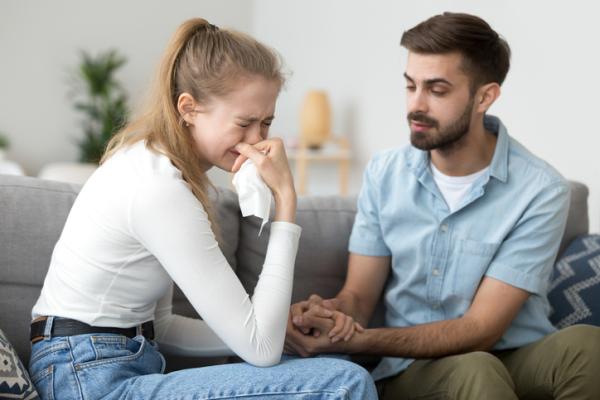
I was unfaithful and I regret it
After saying “I was unfaithful and I am sorry “, come the acts of reparation that we talked about in the previous section. These go beyond tell an infidelity: These are conscious efforts aimed at repairing the damage caused. Next, we propose 5 tips to try to recover your relationship and your partner:
- Give your partner time and space to express your emotions. They all have their role, and your partner needs time to heal and assimilate what has happened. It is understandable to want to alleviate the pain, but it is important not to rush or burn stages, they all have their function, and if we move on to the next one without having completed the previous one, we run the risk of accumulating errors.
- Be responsible It is very important to take responsibility for the actions carried out and show regret. Likewise, the willingness to never be unfaithful again is essential.
- Be sincere Explain to your partner the reasons why the affair occurred. It is not necessary for you to elaborate on the details, especially in relation to intimate acts with the third person, but for there to be true reparation and for you to be able to move on, it is necessary for your partner to understand why it happened. Poor communication, unmet needs and emotional difficulties are usually the most common causes.
- Cut it in the bud with everything related to infidelity. If you really don’t want to continue with the third person, it is very important that you cut off any type of communication with them. This is especially important for your partner’s recovery process, and so that he can trust you again.
- Be consistent with your partner Call when you said you would call, come home at the time you should have arrived.
This article is merely informative, at PsychologyFor we do not have the power to make a diagnosis or recommend a treatment. We invite you to go to a psychologist to treat your particular case.
If you want to read more articles similar to I was unfaithful and I regret it we recommend that you enter our Couples Therapy category.
Bibliography
- Morin, J. (1995). The erotic mind. London: Headline.
- Pease, B., & Pease, A. (2010). Why Men Want Sex and Women Need Love: Solving the Mystery of Attraction. Harmony.
- Perel, E. (2017). The state of affairs: Rethinking infidelity-A book for anyone who has ever loved. Hachette UK.
Use this citation format to reference the article clearly and help readers find the original source.
PsychologyFor. (2024). I Was Unfaithful and I Regret it. PsychologyFor. https://psychologyfor.com/i-was-unfaithful-and-i-regret-it/