

See more of our articles in your search results.
The word “transgenic” is stigmatized by many sectors of society Complex terms distance the most skeptical population from the disciplines that use them, since what is foreign, in many cases, generates fear and rejection in us. In a world in which we believe that almost everything we consume is transgenic, genetic modification has been called “unnatural,” “unethical,” and even sentences related to the existence of a superior being: “the being.” “human cannot play at being God.”
Before diving into complex issues of genetics and bioethics, we must establish an indisputable foundation: what is natural no longer exists in human society. You only need to observe a purebred dog, a park or a production farm. Our species has distanced itself from natural selection for centuries, taking with it a series of species and ecosystems in which, fortunately or unfortunately, naturalness is conspicuous by its absence.
Nature, defined as inert matter generated as part of processes without human intervention, is not part of the population in which we develop. Making this harsh but immovable reality clear, we invite you to answer the following question with us: Is genetic modification ethical?
What are transgenics?
On everyone’s lips, yes, but do you know what this term really means? A transgenic food is one that has been produced from a genetically modified organism, that is, genes from another living being have been incorporated to produce the desired characteristics This is achieved through transgenesis and cisgenesis processes, the insertion of one or several genes into the genetic information of the target species.
Based on this definition, we cannot include the majority of animal species that we consume within the term “transgenic.” For example, a laying hen is not transgenic as such: it is a product of genetic selection. In this process, differential reproduction between individuals is encouraged, so that the desired trait is amplified throughout generations. Like purebred dogs, chickens have been selected based on their reproductive capacity, but their genome has not been modified at any time on an individual level.
How many of these have you been "meaning to read" for months?
- 1
 CrosswayDust to DustAging Wisely in an Anti-Aging WorldListen Free On Audible
- 2
 THOUGHT CATALOGThe Mountain Is YouTransforming Self-Sabotage Into Self-MasteryListen Free On Audible
- 3
 Thomas NelsonBreath as PrayerCalm Your Anxiety, Focus Your Mind, and Renew Your Soul (80+ Breath Prayers and Devotional Medita...Listen Free On Audible
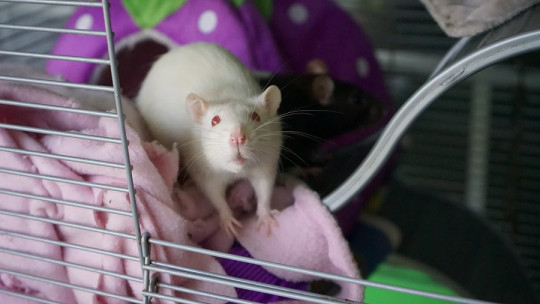
So, you will be shocked to know that 95% of the transgenic animals on Earth are rats and mice, whose purpose is to serve as experimental models to elucidate and learn to treat human pathologies. If you put a GMO in your mouth, in almost all cases it will be of plant origin. It is necessary to take this into account before raising the ethical dilemma.
Is it ethical to genetically modify living beings?
Perhaps the question is not whether it is ethical or not, since the real question is whether we could remain as a species over time without doing it. There are more than 7,500 billion inhabitants on this planet, a fact that cannot be explained without taking into account its consequences. According to UNHCR and WHO, almost 690 million people suffer from hunger on Earth, of which 20.5 million are children. This means that 45% of children under 5 years of age die from lack of food.
Once again, we lay the foundations clearly: the question is not whether we should resort to GMOs or not, since there really is no other way to meet global population demand without changing lifestyle habits. The question is, without a doubt, to what extent the ethics and morals of society are willing to cross the limits of biological impositions to solve the problems derived from clear overpopulation.
Benefits of GMOs
As we have said before, when we talk about GMOs we almost always refer to plants. The United States carries the flag when it comes to this issue, since the GMO surface area cultivated in this country corresponds to 69% of the total worldwide Argentina follows, with 20% more of the total.
Why do we turn to GMOs? According to the biannual publication Acta Bioethica, These are some of the benefits of GMOs in agricultural practice:
These data look good on a list, but, luckily, they can also be contrasted with reliable and observable facts in the environment. For example, the AGRObio foundation demonstrated that, In Colombia, 209 million liters of water were saved between 2003 and 2015 by growing transgenic plants This represents the annual water consumption of 4,780 people. Beyond this, diesel consumption in machinery was also reduced by 3.1 million liters and the environmental CO2 footprint was drastically reduced.
Genetic modification in non-human animals and humans: an ethical dilemma
The line of benefits and harms blurs when we enter the realm of animals We are no longer talking about plants, but about sentient beings with consciousness in many cases. Of course, at this point it is no longer optimal to focus solely on monetary and production benefits, since, for better or worse, animals feel and are aware of what surrounds us.
In the non-human animal field, the discussion is more or less settled in the professional field. When taking modules that train students for the manipulation and euthanasia of animals in a laboratory setting, the legislation is clear: an animal model cannot be used unless it is explicitly demonstrated that there is no other option On the other hand, all the criteria for the management of living beings in this environment are controlled at the European level, and research is not given the green light if it is not going to preserve the rights of the animals.
Things get much more complicated if we talk about human beings. We quote you a very important concept before continuing:
“A research, treatment or diagnosis in relation to the genome of an individual may only be carried out after a rigorous evaluation of the risks and benefits involved and in accordance with any other requirements of national legislation” (Universal Genome Declaration and Human Rights, article 4a).
For example, prenatal genetic analyzes (which are possible thanks to the knowledge of genetic modification) are only carried out today to determine if the fetus carries any disabling chromosomal abnormality and, if so, to prevent possible therapeutic actions in the future. In any case, in most cases the outcome is different: these analyzes are used to decide whether or not to have an abortion.
Here a range of questions, moral dilemmas and hypotheses open up. What would happen if an infant were allowed to be genetically modified before it was born? Would the birth of a “perfect” entity in the eyes of its parents be possible? What would be the social consequences of this type of tools? It is clear that, if these are the questions that arise in the general population, something is being done wrong at the level of scientific communication.
A final thought
Sometimes, those of us who have dedicated ourselves to research get lost in numbers and feasible data: “opinions don’t matter, because in the world of mathematics and statistics, only trends and reliability reign.” This is not like that at all. Research is a tool conceived by and for society, so when a person does not understand to what extent a discovery will affect them, clearly something has not worked at a communicative level.
Science is there to serve you and me, people who probably don’t wear a robe every day Therefore, it is necessary that research and culture remain in line. It may be possible to carry out genetic modifications beyond current limits, but if today’s society is not prepared for it, is it really worth stigmatizing a branch of knowledge for exploiting it prematurely?
In summary, genetic modification is a practically settled issue in the agricultural field, since in the future it will be impossible to live without it. On the other hand, in the animal and human world the issue becomes much more complex, especially because perhaps society is not yet ready to put certain issues on the table It is the job of researchers and disseminators alike to explain, pave the way, build bridges and always offer objective data so that the average citizen can understand what is happening around them. Only in that case will genetic modification beyond plants begin to be viewed favorably.
Use this citation format to reference the article clearly and help readers find the original source.
PsychologyFor. (2024). Is Genetic Modification Ethical?. PsychologyFor. https://psychologyfor.com/is-genetic-modification-ethical/