

See more of our articles in your search results.
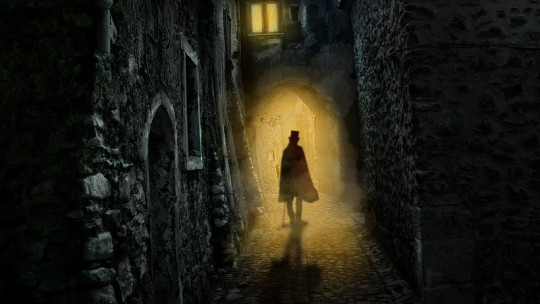
Fog, gaslight, a cobbled alley, a stranger’s footsteps that stop when yours do. That’s the Ripper as the movies sell him, and it’s almost entirely costume. Strip it away and what remains is a handful of murders in roughly ten weeks of 1888, a few thousand pages of inconsistent police paperwork, and a killer nobody ever named with certainty. Yet people still argue about his mind at dinner tables, in podcasts, in group chats at midnight, as if the answer were sitting in a drawer somewhere.
The trouble is that we want a psychological portrait more than the evidence can give us. Was he a “psychopath”? A butcher, a doctor, a lunatic, a royal? Each confident answer says more about the era or the storyteller than the man. Real forensic psychology works from behavior to probabilities, and with the Ripper the behavioral record is thin, contaminated by press hysteria, and more than a century old. Diagnosing the dead from newspaper clippings is a parlor game, not a science.
So what can be said honestly?
Quite a bit, as it turns out, as long as we keep guesses labeled as guesses.
This article examines Jack the Ripper’s psychology through Victorian medical opinion, modern profiling, psychopathy research, geography, and the limits of all of them.
How many of these have you been "meaning to read" for months?
- 1
 TarcherThe Artist's Way30th Anniversary EditionListen Free On Audible
 - 2
 New Harbinger PublicationsThe Dialectical Behavior Therapy Skills WorkbookPractical DBT Exercises for Learning Mindfulness, Interpersonal Effectiveness, Emotion Regulation...Listen Free On Audible
 - 3
 New Harbinger PublicationsAdult Children of Emotionally Immature ParentsHow to Heal from Distant, Rejecting, or Self-Involved ParentsListen Free On Audible
Who was Jack the Ripper, and what do we actually know?
We know very little about the man, and a fair amount about the crimes. Jack the Ripper is the name given to an unidentified killer active in Whitechapel, in London’s East End, in 1888. He was never caught, which is the single most important fact for anyone trying to discuss his psychology.
The so-called canonical five victims were Mary Ann Nichols (killed August 31), Annie Chapman (September 8), Elizabeth Stride and Catherine Eddowes (both September 30, in a single night), and Mary Jane Kelly (November 9). Some researchers add Martha Tabram, stabbed on August 6, and the wider set of Whitechapel murders includes several more killings that experts usually keep separate.
Notice what that list doesn’t contain: a suspect, a motive, a confession, or a reliable eyewitness description. The name “Jack the Ripper” itself comes from a letter signed “Jack the Ripper,” widely believed by historians to have been written by a journalist or hoaxer rather than the killer. A marketing label, in other words, born in 1888, that has stuck for more than a century.
Here’s the thing about the evidence. Victorian policing had no fingerprint database, no blood typing, no crime-scene photography beyond a few grim images, and no concept of a serial killer; that term wouldn’t exist for decades. Files were lost, letters were copied badly, and newspapers invented details to sell copies. Anyone claiming certainty about the Ripper’s character is working from a pile of rumor with a few solid bricks in it.
Those bricks include:
- Throat cuts first, suggesting the women were attacked in a way that silenced them quickly.
- Post-mortem mutilation that escalated sharply in the final case, which took place indoors.
- A tight geographic cluster inside Whitechapel and Spitalfields.
- Pauses of several weeks, then a two-murder night on September 30.
- No arrest, no conviction, and a trail that went cold after November.
That’s a thin foundation for a psychological reading, but not an empty one. Behavior leaves marks, and psychologists have been squinting at these marks for well over a century.
What did Dr. Thomas Bond’s 1888 profile get right?
Take the account of a Victorian police surgeon, who produced what many historians treat as the earliest surviving offender profile. In November 1888, after examining the Mary Jane Kelly crime scene and reviewing notes on the earlier killings, Thomas Bond wrote to Robert Anderson of the London CID with his opinion, dated November 10.
His letter contained several claims. All five murders, he thought, were by the same hand. The killer, he argued, had no scientific or anatomical knowledge, and wasn’t even likely to have a butcher’s technical skill. He judged the man physically strong, cool, and daring.
Then came the psychology. Bond described a man probably solitary and eccentric in his habits, likely without regular employment but perhaps with a small income or pension, and “quite likely” to be a quiet, inoffensive-looking person of middle age, neatly and respectably dressed. He suggested the killer might be subject to periodical attacks of “homicidal and erotic mania,” and floated the possibility of satyriasis. Those are Victorian medical terms and they’ve aged badly.
Historian Donald Rumbelow, whose book on the case reproduces much of the primary material, helped make the document widely accessible to modern readers. Without that kind of archival work, many of us would still be quoting Bond’s letter from memory and getting it wrong.
So how well does the profile hold up? Mixed, honestly.
What looks sensible:
- The idea that the murders were linked and probably by one person.
- The emphasis on nerve and control, since the attacker repeatedly worked in public areas near police patrols.
- The suggestion that the offender was an outwardly unremarkable man, which matches how many later killers were described by neighbors.
What looks shaky: “mania” as an explanation, the confidence about no anatomical skill (other medical examiners disagreed at the time), and the uncheckable hunch about income. Bond also built his portrait from a fairly small set of facts, and he couldn’t compare against any database of other offenders. He was a good doctor doing early inference without a method.
The deeper lesson is that even a skilled professional’s intuition is vulnerable to the culture he lives in. Bond described madness because Victorian doctors saw madness everywhere. We probably describe “psychopathy” for similar reasons.
Was Jack the Ripper a psychopath?
Nobody can say, and anyone who does is guessing. Myth: a profiler can look at gruesome crimes and infer a diagnosis. Fact: psychopathy is assessed through interview, history, and records on a living person, and a killer who was never identified can’t be assessed at all.
It helps to define the term. Psychopathy is a personality pattern marked by shallow emotion, lack of empathy, manipulativeness, impulsivity, and persistent antisocial behavior. It isn’t an official diagnosis in the major manuals; that role is filled by antisocial personality disorder, which overlaps but isn’t identical.
The best-known assessment tool is the Psychopathy Checklist-Revised (PCL-R), developed by Robert D. Hare, whose book Without Conscience brought the concept to general readers. The checklist scores 20 traits using a structured interview plus file review. It’s designed for trained clinicians working with real people, not for guessing from a crime scene photo or a century-old letter.
A few facts worth holding onto:
- Psychopathic traits are found in roughly 1 percent of the general population by most estimates, and in a much larger share of prison populations.
- Most people with high psychopathic traits never commit murder.
- Many killers, including many serial killers, don’t score as psychopaths at all. Some show other patterns such as severe trauma histories, psychosis, or sadistic sexual interests.
- Violent behavior at a crime scene is a poor stand-in for a personality test, since similar acts can come from very different minds.
Why does the label stick to the Ripper, then? Because it’s a satisfying shortcut. It sounds clinical, so it feels like science. It also provides a sort of moral comfort, the suggestion that evil like this is a distinct species, so ordinary people needn’t worry about resembling it.
What we can say, carefully, is that the case looks consistent with an offender who planned around risk, kept returning to the same few streets, and managed to avoid detection for ten weeks. That tells you something about control and opportunity. It doesn’t tell you whether he had a heartbeat that raced or one that stayed flat.
Honest answer to the headline question? Possible, unproven, and probably unprovable. And a hobbyist who says “obviously psychopath” is performing certainty, not demonstrating it.
Where did he live? What the map suggests
Geography is the closest thing to hard data in the Ripper file. The canonical murders took place within a compact area of the East End, a walk of perhaps a few minutes between some of the sites, and that pattern invites a question every modern profiler asks: where would an offender be based if he moved this way?
Environmental psychologist David Canter, who helped found investigative psychology, has applied this logic to the case. His book Mapping Murder uses the Ripper sites to show how location patterns can point to an offender’s likely base, and he framed the whole field around what he called the A to C equations: linking the actions at a crime (the As) to the characteristics of the offender (the Cs).
The related idea of geographic profiling was developed most extensively by Kim Rossmo, a former police detective turned academic, whose work centers on distance decay and the buffer zone. Distance decay means offenders tend to commit more crimes closer to home than farther away. The buffer zone suggests they often avoid offending right on their own doorstep, where they’d be recognized.
Applied to Whitechapel, that reasoning suggests an offender familiar with the maze of courts, lodging houses, and passages, probably living or working within or near the cluster. A stranger who didn’t know the streets would’ve had a harder time slipping away after Stride and Eddowes, killed less than an hour apart in different spots.
Picture the practical problem. You’ve just committed a murder in a district patrolled by police and vigilance committees, with blood on your hands and a crowd forming. You need a route, a place to wash, and a believable reason to be on the street. That requires local knowledge.
Now the caveats, because they’re substantial:
- Geographic models were built and tested on modern crime data, not on Victorian London.
- The victims were women in a district where street prostitution and casual lodging occurred, so the victim pool itself was concentrated in that area. Location might reflect where victims were, not where the killer lived.
- A 1888 East End is a dense, crowded environment with ten thousand ways to lose a pursuer.
So the map supports a modest claim: local familiarity is likely. It doesn’t pinpoint a house or a name. It narrows probability, which is all geographic profiling has ever claimed to do.
And it can’t tell you a single thing about how he felt.
Would the FBI call him organized or disorganized?
Probably “mixed,” which is precisely why the question exposes a weakness in the typology. The organized versus disorganized model was developed in the 1970s and 80s by FBI behavioral analysts, including Robert Ressler, who co-authored Sexual Homicide: Patterns and Motives with Ann Burgess and John Douglas.
In that scheme, an organized crime is premeditated and careful, leaving little evidence, and the offender is imagined as socially competent and calculating. A disorganized crime is impulsive and chaotic, with the offender pictured as socially isolated, perhaps mentally ill. Law enforcement liked the categories because they were quick to apply.
Try applying them to Whitechapel. Several features look organized: attacks in the dark, a weapon carried and removed, victims approached in a way that avoided raising alarm, escape without capture. Other features look disorganized: extreme mutilation, work done under time pressure at crime scenes in semi-public places, and escalating frenzy in Kelly’s room.
That clash isn’t unusual. Researchers have criticized the typology on several grounds:
- Small, biased samples, since the original work drew on a few dozen interviewed offenders.
- A lack of statistical validation, with categories not derived through multivariate methods.
- Real crime scenes that blend features of both types.
- No weighting of characteristics, which leaves interpretation to the individual analyst.
- Offenders whose behavior shifts across time as they gain experience or panic.
In 2004, Canter and colleagues tested the dichotomy on a large dataset of serial murders and found little statistical support for two clean types; most cases showed a mix of both. An APA overview of criminal profiling notes similar concerns, pointing out that the FBI agents behind the early work weren’t psychologists and that some psychologists found methodological flaws in it.
The Ripper therefore makes a decent teaching case. He’s a reminder that an offender isn’t a personality type, but a person making choices under changing conditions, with a night that went well and a night that didn’t. Labeling him “organized” or “disorganized” is comforting but sloppy.
Think of it like weather. “Sunny” and “stormy” are useful words until the sky does both in one afternoon.
Why did he mutilate the bodies?
Several explanations exist, none proven. The mutilation, which grew more extreme across the series, has been read as sexual sadism, rage, a ritual or fantasy enactment, a way to control the scene, or a display. Honestly, the evidence here is thinner than documentaries suggest, because we have no offender to interview.
Modern research on sexual homicide offers some useful frames. The FBI interviews that produced Ressler’s work found that many offenders in their sample reported rich violent fantasy lives developed long before the first killing, often rehearsed repeatedly. Fantasy, on that view, escalates until the real act is needed to match it, and the acts become more elaborate as the original thrill wears off.
A different but related lens is the trauma-control model described by criminologist Eric W. Hickey in his work on serial murderers. He proposed that early traumatic experiences and certain predisposing factors can combine with personality features, then be triggered by stressors and facilitators such as alcohol or opportunity, producing a compulsion to regain control through violence. It’s a model, a hypothesis about how pieces connect, not a verdict about any one person.
How do these frames fit the Ripper? Loosely. Escalation is consistent with fantasy-driven offending: the first cases show throat cuts and abdominal wounds, the later ones show more extensive damage, and the final case, indoors with hours of privacy, is by far the worst. Time and safety changed the behavior. That’s a pattern researchers expect to see when an offender finally has uninterrupted access.
But hold on. An escalation story is easy to see afterward. If the final murder had been interrupted and less damaging, we’d have told a different tale and found support for it too. This is how hindsight works.
A couple of things we shouldn’t do:
- Treat the mutilation as proof of surgical or anatomical expertise. Doctors at the time disagreed.
- Assume the killer hated women in a neat, theory-friendly way. Motive, from a century away, remains a guess.
What would a clinician want if this were a live case? Interviews, history, records, and a few years of data. We have none of that.
What do we know about the women he killed?
More than the legend admits. For well over a century the story was told through the killer, and the victims became background figures with one label attached. That distorted the psychology too, because assumptions about the women shaped assumptions about the man.
Historian Hallie Rubenhold, in The Five, argues that the “prostitute” label stuck largely because of how police and newspapers framed the case, and that the women’s lives were more varied: Polly Nichols, Annie Chapman, Elizabeth Stride, Catherine Eddowes, and Mary Jane Kelly lived hard, precarious lives of poverty, lost marriages, illness, and addiction, in lodging houses and on the margins. Reference sources still describe all five as prostitutes, so the point is contested, and some of Rubenhold’s reading is debated by other Ripper researchers.
Why does that matter for psychology? Because the common profile of a Ripper-style killer, a man who “hated prostitutes,” depends on that assumption. If several victims weren’t soliciting when attacked, then the neat moral-crusade theory weakens. Victim selection may have been about vulnerability and opportunity: women alone, outdoors, at night, intoxicated or without a safe bed.
That idea fits what we know about many predatory offenders. They don’t always pursue a symbolic type; they choose people who are easy to approach and unlikely to be missed or believed. It’s a colder, more practical reading and it’s less flattering to the myth.
Imagine a woman in her forties, out in the cold with no bed because she’s two pennies short, walking back toward the only street she knows. Nobody would call that a character in a gothic novel.
The Victorian press and public attitudes toward poverty also tinted how the murders were seen. Newspapers sold fear to wealthier readers, reformers pointed to the slums, and politicians argued about policing. Social conditions and psychology were tangled together from day one.
So when someone asks about the killer’s mind, it’s worth asking the neglected questions too. Who did he meet, where, and why were these women outside?
Why do Ripper theories keep falling apart?
Because of a toxic mix: missing evidence, hindsight bias, and an audience that rewards confident storytelling. Over 130 years, suspects have included a barber, a doctor, a lawyer, a painter, a royal, and a writer. Almost none survive close scrutiny.
The most recent headline claim came in 2019, when a Journal of Forensic Sciences study by Jari Louhelainen and David Miller tested a shawl said to have been found at the Catherine Eddowes scene. The authors reported mitochondrial DNA that they said matched the victim and a suspect, Aaron Kosminski, a Polish barber who was a police suspect in the 1880s. Louhelainen, the lead researcher, argued the results supported Kosminski.
Critics pushed back hard. Reporting in Science noted that key genetic details weren’t published, that mitochondrial DNA can be shared by many people in a population and is better at excluding a suspect than identifying one, and that there’s no solid evidence the shawl was ever at the crime scene. Chain of custody over more than a century is another problem. Kim Rossmo later wrote a detailed critique pointing to similar weaknesses and to flawed assumptions in how the links were built.
The point isn’t to dunk on one study. It’s that extraordinary identification claims need extraordinary documentation.
| Common claim | Why it appeals | Main problem |
|---|---|---|
| “He was a surgeon” | Explains the wounds | Contemporary doctors disagreed on skill; Bond saw none |
| “He was a psychopath” | Sounds clinical and settles the motive | No assessment is possible on an unidentified offender |
| “DNA proved who he was” | Feels like modern certainty | Unpublished data, mtDNA limits, doubtful provenance |
| “He hated prostitutes” | Gives a tidy motive | Victims’ lives may not fit the label |
Each theory shares the same flaw: it starts with a conclusion and collects only the facts that fit it.
Fair warning: this pattern is a decent mirror for everyday thinking. When you’ve decided a coworker is hostile or a stranger is dangerous, you’ll find “proof” everywhere. Case closed? Hardly.
How do modern forensic psychologists approach a case like this?
Carefully, and with a lot less romance than television suggests. Modern offender profiling has shifted away from the lone genius detective toward statistical comparison, behavioral evidence, and humility about what can be inferred.
Take Dana (an illustrative composite), a forensic psychologist consulting for a regional police unit. She’s handed a series of linked assaults and asked for a profile by Friday. She doesn’t write “he’s a loner who hates his mother.” She builds a behavioral summary, checks it against comparable solved cases, and writes up probabilities and uncertainty so detectives don’t chase a fantasy.
A sound modern process looks something like this:
- Link the cases. Compare behavior across crimes to judge whether one offender is responsible, using more than a similar weapon.
- Describe behavior, not personality. Record what the offender did, in what order, with what level of risk-taking, and what he chose to leave or take.
- Compare with data. Check patterns against databases of solved crimes to see which characteristics actually correlate with which actions.
- Add geography. Use spatial analysis to produce probable anchor points, without treating the output as an address.
- State limits. Spell out which inferences are strong, which are weak, and what would change the opinion.
This is the investigative psychology approach associated with David Canter, and it aims to put profiling on the same footing as any other empirical field. It’s far from perfect, yet it beats unfalsifiable storytelling.
Research on how much profiles actually help police is mixed. Detectives often report finding them useful, though controlled tests of accuracy are limited. A profile can narrow a suspect pool, but it can also push an investigation down the wrong road if it’s treated as fact.
Imagine the Ripper file handed to Dana today. She’d ask for scene data, victim histories, timelines, witness statements, and a map. Then she’d say what a century-old case sometimes can’t give: not enough.
Why are we so drawn to Ripper stories, and is it healthy?
Mostly yes, with a few caveats. Fascination with violent crime is common, and psychologists generally link it to threat curiosity: we’re wired to pay attention to danger, rehearsing in safety what we’d never want to face in reality. A well-told true crime story lets us feel fear from the sofa.
The Ripper has extra pull for several reasons. He’s anonymous, so every reader can project a face onto him. The setting is vivid, with its fog and lamplight. The case is unresolved, which keeps the puzzle alive. And it arrived at the birth of mass media, so the myth-making started immediately.
Picture a Sunday evening in a university dorm: six people, a laptop, a documentary, someone paused it three times to argue about the shawl. It’s social, it’s entertaining, and it’s mostly harmless.
But a few habits are worth watching:
- Doomscrolling grisly details late at night, which can feed sleep trouble and anxiety.
- Treating victims as props rather than real people with names and families.
- Letting the story shape how safe you feel in your own neighborhood, far beyond actual risk.
If a story leaves you jumpy, sleepless, or avoiding ordinary situations for days, that’s a signal to turn it off and talk to a therapist or your primary care doctor if it persists. For most people, though, it’s just curiosity doing what curiosity does.
There’s also a gentler path: shift attention from the killer to the women and the district. Learning how people actually lived in 1888 is more illuminating, and arguably more respectful, than another theory about who held the knife.
And isn’t that the better mystery? Not who he was, but why we still need him to have been somebody.
FAQs about Jack the Ripper’s Psychology
Was Jack the Ripper mentally ill?
Nobody knows. Victorian doctors like Thomas Bond spoke of “mania,” but those terms don’t map cleanly onto modern diagnoses. Violent acts alone don’t establish mental illness; most people with serious mental illness aren’t violent, and many violent offenders aren’t mentally ill in a diagnosable sense. Because the killer was never identified, no one assessed him, took a history, or examined records. Any claim that he was psychotic, psychopathic, or something else is speculation dressed up in clinical language. The honest position is that his behavior suggests planning and nerve, and that his inner life is unknowable.
Did Jack the Ripper have medical or surgical training?
Possibly, but the evidence is disputed. Some doctors who saw the bodies thought the cuts showed anatomical skill, while Thomas Bond, who reviewed the cases for the police, concluded the opposite and said the mutilations came from someone without scientific or anatomical knowledge. Medical opinion at the time was inconsistent, and the examinations were rushed, done in poor conditions. Later writers have used the “surgeon” idea to support particular suspects, which is a reason to treat it cautiously. It remains an open question rather than a settled one.
How many victims did Jack the Ripper have?
Five are usually called the canonical victims: Mary Ann Nichols, Annie Chapman, Elizabeth Stride, Catherine Eddowes, and Mary Jane Kelly, killed between August 31 and November 9, 1888. Some researchers include Martha Tabram, killed earlier in August. Other Whitechapel killings and later murders have been attributed to him at times, though experts generally treat them as separate. The real number may never be certain, because there was no unified investigation, the evidence was thin, and the boundaries of the “series” were drawn partly by newspapers and later by writers.
Why was Jack the Ripper never caught?
Several reasons stacked up. Police had limited forensic tools: no fingerprint system, no DNA, and crude crime-scene practice. The area was crowded, poorly lit, and full of people who moved around at night. Victims were often alone, and the killer attacked quickly. Information was fragmented between police divisions, and false leads, hoax letters, and public panic buried useful clues. The killings also stopped after November 1888, which removed any chance of a mistake that might have exposed him. It was a mix of bad tools, bad luck, and a good deal of chaos.
Can modern profiling identify the Ripper?
No. Profiling doesn’t identify individuals; it narrows possibilities and gives investigators ideas about where to look. Even in a modern case with fresh evidence, a profile is just one input, and studies of its accuracy are mixed. For the Ripper, the evidence base is too old and too incomplete. Researchers such as David Canter and Kim Rossmo have applied geographic and behavioral methods to the case, and their work is interesting as a demonstration of technique. It can suggest he knew the area well. It can’t produce a name.
Is the 2019 DNA study proof that Aaron Kosminski was the killer?
No. The study, published in the Journal of Forensic Sciences, reported mitochondrial DNA on a shawl that matched both a victim’s descendant and a relative of Kosminski. Critics argued that mitochondrial DNA can’t uniquely identify a person, that essential data weren’t published, and that the shawl’s link to the Eddowes scene is unproven after more than a century of handling. Geneticists and criminologists have called the conclusion unsupported. At best it’s an interesting hypothesis that hasn’t been independently replicated.
Why do people say Jack the Ripper was a psychopath?
Because it sounds like an answer. The brutality and apparent lack of remorse seem to fit popular ideas about psychopathy, which has become a catch-all label for cold, dangerous people. Robert Hare’s research shows that psychopathy is assessed with a structured checklist and detailed file review, and it can’t be diagnosed from afar. Most people with psychopathic traits don’t kill, and many killers don’t have them. The label is common in documentaries since it’s tidy. As science, it’s a guess.
Is it unhealthy to be obsessed with true crime like the Ripper case?
Usually not. Interest in crime tends to reflect curiosity about danger, moral questions, and puzzle-solving, and it’s common across ages and countries. It becomes a problem if it disrupts sleep, drives persistent fear, or crowds out normal activities. It’s worth noticing how you consume it too: stories centered on victims’ lives and on history tend to be more thoughtful than those fixated on gore. If you find yourself anxious or hypervigilant after a binge, taking a break often helps, and a therapist can help if the worry doesn’t ease.
Bibliography
- Canter, D. (1995). Criminal shadows: Inside the mind of the serial killer. HarperCollins.
- Canter, D. (2003). Mapping murder: The secrets of geographical profiling. Virgin Books.
- Canter, D. V., Alison, L. J., Alison, E., & Wentink, N. (2004). The organized/disorganized typology of serial murder: Myth or model? Psychology, Public Policy, and Law, 10(3), 293-320.
- Hare, R. D. (1999). Without conscience: The disturbing world of the psychopaths among us. Guilford Press.
- Hickey, E. W. (2016). Serial murderers and their victims (7th ed.). Cengage Learning.
- Louhelainen, J., & Miller, D. (2019). Forensic investigation of a shawl linked to the Jack the Ripper murders. Journal of Forensic Sciences, 65(1), 295-303.
- Ressler, R. K., Burgess, A. W., & Douglas, J. E. (1988). Sexual homicide: Patterns and motives. Lexington Books.
- Rossmo, D. K. (2000). Geographic profiling. CRC Press.
- Rubenhold, H. (2019). The five: The untold lives of the women killed by Jack the Ripper. Doubleday.
- Rumbelow, D. (2004). The complete Jack the Ripper (Rev. ed.). Penguin Books.
Use this citation format to reference the article clearly and help readers find the original source.
PsychologyFor. (2026). Jack the Ripper: Analyzing the Psychology of the Famous Criminal. PsychologyFor. https://psychologyfor.com/jack-the-ripper-analyzing-the-psychology-of-the-famous-criminal/