

See more of our articles in your search results.
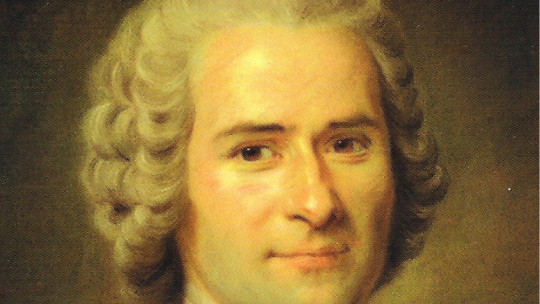
Jean-Jacques Rousseau, a prominent French philosopher from the 18th century, is widely known for his revolutionary ideas on human nature, society, and governance. One of his most famous and controversial theories is that of the “Noble Savage,” which he introduces in his work Discourse on the Origin and Basis of Inequality Among Men (1755) and further explores in his influential treatise The Social Contract (1762). The concept of the Noble Savage has had a lasting impact on philosophy, literature, and social theory. In this article, we will explore what Rousseau meant by the “Noble Savage,” the philosophical foundations of this theory, its implications, and its lasting influence on modern thought.
What is the Noble Savage?
At the heart of Rousseau’s theory is the idea that humans in their natural state—before the development of society and civilization—were inherently good, peaceful, and virtuous. Rousseau believed that human beings were born free and equal, living a simple, uncomplicated life in harmony with nature. He contrasted this idealized state of humanity with the corrupting influences of society and civilization, which he saw as responsible for inequality, greed, and violence.
The “Noble Savage” refers to this uncorrupted, pre-social man who lives in accordance with basic instincts, without the societal constraints and artificial constructs that Rousseau believed led to the degradation of human virtue. This notion does not imply that pre-civilized humans were “primitive” or “uncivilized” in the modern sense of the words. Instead, it suggests that they were more authentic, pure, and aligned with their natural instincts and desires. The term “noble” indicates that these people were, in some sense, morally superior to those who live in societies corrupted by inequality and self-interest.
The Philosophical Foundations of Rousseau’s Theory
Rousseau’s theory of the Noble Savage is rooted in several key ideas about human nature and society:
1. The State of Nature:
Rousseau distinguished between two types of “states” in human history: the state of nature and the civil state. The state of nature, according to Rousseau, was a time when humans lived independently of organized society, in isolation or small groups. Here, people were motivated by basic survival instincts—such as the need for food, shelter, and reproduction—and did not have the social complexities of civilization. Rousseau suggested that in this state, humans were peaceful, solitary, and uncorrupted.
How many of these have you been "meaning to read" for months?
- 1
 TarcherThe Artist's Way30th Anniversary EditionListen Free On Audible
 - 2
 New Harbinger PublicationsThe Dialectical Behavior Therapy Skills WorkbookPractical DBT Exercises for Learning Mindfulness, Interpersonal Effectiveness, Emotion Regulation...Listen Free On Audible
 - 3
 New Harbinger PublicationsAdult Children of Emotionally Immature ParentsHow to Heal from Distant, Rejecting, or Self-Involved ParentsListen Free On Audible
In contrast, the civil state is one where humans form complex societies, with structures of authority, inequality, and social norms. According to Rousseau, the rise of civilization led to the loss of equality and the emergence of competition, selfishness, and corruption, which ultimately degraded human virtue.
2. Natural vs. Artificial Needs:
Rousseau also argued that in the state of nature, humans had natural needs that were simple and easily satisfied—basic needs like food, safety, and companionship. These needs were limited, and human beings did not engage in excessive desires for wealth, power, or status.
However, in a civilized society, artificial needs are created—needs that go beyond survival and well-being and stem from social expectations. These artificial needs fuel competition and inequality, leading to frustration, jealousy, and unhappiness. Rousseau believed that these artificial desires distort the natural goodness of humans and contribute to social problems.
3. The Corruption of Society:
Rousseau’s social contract theory posits that civilization, by forming social contracts, led to the institution of laws, private property, and social hierarchies that perpetuate inequality. He suggested that the move from the state of nature to organized society introduced competition, private property, and class divisions, all of which contributed to human suffering and the corruption of virtue.
For Rousseau, the move from natural freedom to civil society meant that individuals were no longer truly free but were bound by the expectations of society, constantly measuring their worth against others. This corrupted their inner goodness and led them to prioritize wealth and power over communal harmony and moral integrity.
The Noble Savage in Rousseau’s Works
Rousseau’s exploration of the Noble Savage concept occurs primarily in his Discourse on Inequality and The Social Contract. In these works, he contrasts the natural, virtuous state of humans with the degrading effects of society and civilization. He did not idealize the savage in a simplistic or romanticized way but used the figure of the Noble Savage to critique European society and its moral decay.
1. Discourse on the Origin and Basis of Inequality Among Men (1755):
In this work, Rousseau examines the development of human society and the origins of inequality. He argues that the first steps toward civilization, such as the establishment of property, agriculture, and organized social structures, introduced inequalities that didn’t exist in the natural state.
Rousseau suggests that early human beings, living in isolated communities, were content with their simple lives, motivated primarily by their basic needs. The transition from this state to more organized forms of society led to the creation of private property, social hierarchies, and inequalities of wealth and power.
The Noble Savage symbolizes an idealized version of this pre-social state, where humans were innocent, untainted by greed, and lived in harmony with the natural world.
2. The Social Contract (1762):
In The Social Contract, Rousseau argues that modern society is based on a social contract in which individuals agree to give up certain freedoms in exchange for collective security and the common good. However, Rousseau remains critical of this contract, arguing that it often perpetuates inequality and oppresses individuals. He contends that the general will, which is meant to represent the collective interests of the people, is often corrupted by those in power.
Rousseau’s ideas in this work align with his notion of the Noble Savage by reinforcing his belief that civilized society has corrupted natural goodness, leading to the inequality and injustice that plague human existence.
The Noble Savage and Romanticism
Rousseau’s theory of the Noble Savage became a significant influence on Romanticism, a cultural and intellectual movement that emerged in the late 18th and early 19th centuries. Romantic writers, poets, and artists were often critical of industrialization, urbanization, and the social injustices brought about by capitalist society. They embraced nature, emotion, and individualism, often drawing on Rousseau’s idea of the Noble Savage as a symbol of unspoiled purity and virtue.
For example, poets like William Wordsworth and Lord Byron idealized the natural world and celebrated the idea of a simpler, purer life untainted by the corrupting forces of society. The idea of the Noble Savage served as a critique of the social order, emphasizing the innocence and moral superiority of those living closer to nature.
Criticism of the Noble Savage
While Rousseau’s Noble Savage has been highly influential, his theory has also faced criticism over the years:
1. Idealization of the Past:
Critics argue that Rousseau’s depiction of pre-social humanity as peaceful and virtuous is overly idealistic and unrealistic. Some anthropologists and historians suggest that early human societies were not always as harmonious as Rousseau envisioned and were often marked by violence, competition, and harsh survival struggles.
2. Romanticization of Primitive Life:
Rousseau’s idea of the Noble Savage has been criticized for romanticizing indigenous and tribal cultures. Critics argue that his portrayal ignores the complexities of these societies and the social dynamics that exist within them. By portraying indigenous people as inherently virtuous, Rousseau’s theory risks ignoring the real challenges they faced and the complexities of their cultures.
3. Over-Simplification of Civilization’s Impact:
Rousseau’s theory may also oversimplify the relationship between civilization and human behavior. While it is true that civilization has brought about inequality and social divisions, it has also led to advancements in art, science, and human rights. Some argue that Rousseau neglected the positive aspects of civilization and its potential to create a more just and equitable society.
The Legacy of Rousseau’s Noble Savage
Despite the criticisms, Rousseau’s theory of the Noble Savage has left a lasting mark on philosophy, social theory, and literature. His work has influenced a wide range of thinkers, including Karl Marx, Jean-Paul Sartre, and Michel Foucault, who each grappled with the relationship between freedom, society, and inequality.
In contemporary debates about the nature of human behavior and the role of society in shaping individuals, Rousseau’s ideas continue to be relevant. The notion of the Noble Savage still serves as a powerful symbol of unspoiled human nature and a reminder of the potential for humans to live more harmoniously with the world around them.
Jean-Jacques Rousseau’s theory of the Noble Savage remains one of the most fascinating and influential ideas in the history of philosophy. While his idealization of a pre-civilized, virtuous human has been criticized, it continues to provoke discussions on the nature of society, human freedom, and the consequences of civilization. His ideas about inequality, private property, and the corrupting influence of modern society resonate strongly in contemporary debates about social justice, human rights, and the role of government in ensuring the well-being of its citizens.
Use this citation format to reference the article clearly and help readers find the original source.
PsychologyFor. (2025). Jean-Jacques Rousseau’s Theory of the Noble Savage. PsychologyFor. https://psychologyfor.com/jean-jacques-rousseaus-theory-of-the-noble-savage/