

See more of our articles in your search results.
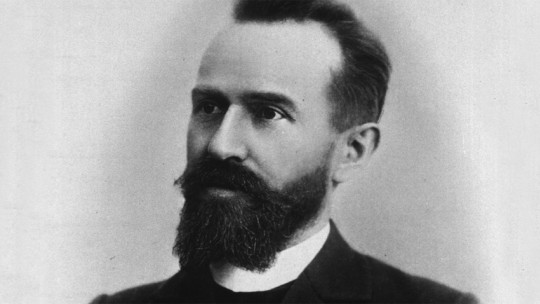
The physician and physiologist Josef Breuer He is best known for using the cathartic method for the first time in the famous case of Anna O., which would inspire his disciple Sigmund Freud to create psychoanalysis. However, Breuer’s conceptions differed from Freud’s in central aspects.
Breuer is a relevant figure in the history of neurophysiology and psychoanalysis. In this article we will review his biography, his contributions to these two fields and his relationship with Freud; For this it is necessary to also describe the prominent role of Anna O. in the field of hysteria
Biography of Josef Breuer
Josef Breuer (1842-1925) studied Medicine at the University of Vienna and during his first years of professional practice he worked as an assistant to Johann von Oppolzer and later to Karl Hering, a physiologist known for his studies on visual perception and eye movements.
Breuer made important contributions in the field of neurophysiology During his collaboration with Hering he described the role of the vagus nerve in the respiratory response; This would give rise to the concept of the “Hering-Breuer reflex”, which is still valid today.
He was also one of the first to propose that balance depends on the movement of fluid in the semicircular canals of the inner ear and the information that the brain receives in relation to these movements.
How many of these have you been "meaning to read" for months?
- 1
 American GirlThe Care and Keeping of You 1The Body Book for Younger Girls (American Girl® Wellbeing)Listen Free On Audible
 - 2
 New Harbinger PublicationsThe Dialectical Behavior Therapy Skills WorkbookPractical DBT Exercises for Learning Mindfulness, Interpersonal Effectiveness, Emotion Regulation...Listen Free On Audible
 - 3
 Penguin Random HouseAtomic HabitsAn Easy & Proven Way to Build Good Habits & Break Bad OnesListen Free On Audible
For much of his life, Breuer worked as a family doctor and as the personal physician of many intellectuals living in Vienna, including the philosopher and psychologist Franz Brentano. He was also a professor of physiology at the University of Vienna, where he instructed Sigmund Freud, with whom he would later collaborate
The case of Anna O.
In 1880 Breuer began treating Bertha von Pappenheim, a hysteria patient who played a fundamental role in the emergence of psychoanalysis. She would go down in history as “Anna O.” since this was the pseudonym that Breuer and Freud gave him in their joint work Studies on hysteriathe cornerstone of early psychoanalysis.
According to Breuer, Pappenheim had two personalities that became increasingly differentiated as the treatment progressed. While the first was sad and apprehensive, the second had a more childish and explosive character. This case is one of the first recorded examples of dissociative identity disorder (or “multiple personality”).
Breuer noticed that Pappenheim’s symptoms, which consisted mainly of paralysis, muteness, and partial blindness, temporarily subsided. when he talked about them under hypnosis and attributed a cause to them The patient also felt relieved when she talked about her dreams or her hallucinations, and it was her own preferences that guided Breuer.
Pappenheim called this type of intervention “speech cure” or “chimney cleaning”; Thus the cathartic method was born, consisting of hypnotizing the patient to remember the traumatic event that triggered the symptom (or to invent such a memory) and thus eliminate the associated negative emotions, and consequently the symptom.
Freud and the “Studies on Hysteria”
The case of Anna O. inspired Sigmund Freud to write the book Studies on hysteria in collaboration with his teacher Breuer. This work, which appeared in 1895, describes the treatment of Bertha von Pappenheim and four other women using hypnosis and the cathartic method.
On a theoretical level, Freud and Breuer defended two different hypotheses in the book: while the former believed that hysteria was always due to traumatic memories related to sexuality, according to Breuer there could also be neurophysiological causes.
Contrary to what is reported in “Studies on Hysteria”, Anna O. did not fully recover through Breuer’s treatment but ended up being hospitalized. However, her symptoms eventually eased and she became a prominent personality in German feminism of the time, as well as a staunch opponent of psychoanalysis.
The relationship between Breuer and Freud deteriorated rapidly. Freud not only showed a confidence in the cathartic method that Breuer considered unjustified, but he mythologized the case of Anna O. to promote what would become psychoanalysis. Towards the end of his life, Breuer saw Freud on the street and made a gesture of greeting him, but his disciple ignored him.
Breuer’s legacy
The “speaking cure” that Breuer developed with the invaluable collaboration of Bertha von Pappenheim would become the seed of Freud’s psychoanalysis and, consequently, of the conventional psychotherapy of the following century.
Breuer’s hypotheses regarding the case of Anna O. triggered interest in unconscious processes, especially around the etiology of hysteria and other neuroses However, Breuer distanced himself from Freud because he disagreed with his emphasis on psychosexual traumas as the sole cause of these disorders.
Breuer considered that hypnosis and the cathartic method could facilitate the creation of false memories, although these were felt by the patients as true. Many later critics of Freud would agree with Breuer and his more cautious approach.
Use this citation format to reference the article clearly and help readers find the original source.
PsychologyFor. (2024). Josef Breuer: Biography of This Pioneer of Psychoanalysis. PsychologyFor. https://psychologyfor.com/josef-breuer-biography-of-this-pioneer-of-psychoanalysis/