


See more of our articles in your search results.
Kitsch art is one of those concepts that almost everyone has encountered but few can precisely define — and that slipperiness is, in a way, part of its nature. Kitsch refers to art, design, and objects characterized by excessive sentimentality, naive imitation, garishness, and an appeal to immediate emotional gratification rather than intellectual engagement. The word itself is a loanword from German — derived from verkitschen, meaning to sell cheaply or to make something tacky — and it entered the vocabulary of art criticism in the Munich art markets of the 1860s and 1870s, where it described cheap, popular, and commercially motivated pictures produced to satisfy mass taste rather than serious artistic ideals.
What makes kitsch genuinely fascinating — and genuinely contested — is that it refuses to stay in the box its critics built for it. Dismissed for over a century as the aesthetic opposite of serious art, it was then enthusiastically embraced by Pop Art, rehabilitated by postmodern theory, deployed ironically by some of the most commercially successful artists of the late twentieth century, and eventually recognized as a legitimate lens through which to examine the relationship between art, popular culture, consumerism, and emotion. Today, kitsch occupies a uniquely ambiguous position in the cultural world: still sometimes used as an insult, but also celebrated, collected, theorized, and — in certain hands — transformed into something that genuinely challenges the boundaries between high and low culture.
Understanding kitsch means understanding not just a visual style but a whole philosophy of aesthetic experience. It raises uncomfortable questions about who gets to decide what counts as good taste, whose emotions deserve to be engaged, and whether art that makes people feel something simple and immediate is necessarily inferior to art that demands effort and conceptual distance. These are not trivial questions. They are questions about power, culture, and the very purpose of creative expression — which is why kitsch, despite its apparently frivolous surface, keeps generating serious intellectual attention.
The Origins and History of Kitsch Art
The story of kitsch is inseparable from the story of industrialization, mass production, and the emergence of a consumer middle class in nineteenth-century Europe. Before the industrial revolution, most decorative and visual objects were either handcrafted works of genuine artisanal skill or the exclusive possessions of aristocratic and wealthy patrons. The rise of industrial manufacturing changed this equation dramatically: for the first time in history, it became possible to produce large quantities of aesthetically appealing objects cheaply enough for ordinary working and middle-class households to afford them.
The Munich art market of the 1860s and 1870s was one of the first places where this dynamic became visible in the art world specifically. Dealers produced and sold cheap imitations of established artistic styles — reproductions that carried the emotional and aesthetic associations of serious art without its intellectual substance or original vision. The word kitsch attached itself to these products and to the broader category of commercially motivated, sentimentally appealing art they represented.
How many of these have you been "meaning to read" for months?
- 1
 TarcherThe Artist's Way30th Anniversary EditionListen Free On Audible
 - 2
 New Harbinger PublicationsThe Dialectical Behavior Therapy Skills WorkbookPractical DBT Exercises for Learning Mindfulness, Interpersonal Effectiveness, Emotion Regulation...Listen Free On Audible
 - 3
 New Harbinger PublicationsAdult Children of Emotionally Immature ParentsHow to Heal from Distant, Rejecting, or Self-Involved ParentsListen Free On Audible
By the early twentieth century, kitsch had become a central preoccupation of avant-garde critics who saw it as the primary cultural enemy of serious art. The influential critic Clement Greenberg made this argument most forcefully in his 1939 essay Avant-Garde and Kitsch, in which he argued that kitsch represented a cultural threat — a commercially produced, emotionally manipulative substitute for genuine aesthetic experience that catered to debased popular taste. Greenberg’s position was influential but also, in retrospect, deeply revealing about the class anxieties embedded in modernist aesthetics: the contempt for kitsch was partly contempt for the tastes of ordinary people who had not been trained in the appreciative frameworks of high culture.
The rehabilitation of kitsch began with Pop Art in the 1950s and 1960s, when artists like Andy Warhol and Roy Lichtenstein began treating mass-produced commercial imagery not as the enemy of art but as its subject and medium. By taking soup cans, comic strips, and celebrity photographs seriously as visual material, Pop Art fundamentally destabilized the hierarchy that placed fine art above popular culture — and in doing so, made kitsch not just acceptable but theoretically interesting.
What Makes Something Kitsch? Core Characteristics
Defining the characteristics of kitsch with precision is complicated by the fact that kitsch is partly a relational concept — something can be kitsch in one cultural context and not in another, and the same object can be experienced as kitsch by one viewer and as genuinely moving by another. That said, a set of recurring features emerges consistently across theoretical accounts.
Sentimentality and immediate emotional appeal are perhaps the most consistently identified characteristics of kitsch. The philosopher Walter Benjamin described it as offering “instantaneous emotional gratification without intellectual effort, without the requirement of distance.” This is the heart of the kitsch experience: it bypasses the cognitive distance that serious art typically demands and goes straight for the emotional response — the warm feeling, the nostalgic pang, the sentimental glow. A painting of puppies playing poker, a porcelain figurine of a child with oversized eyes, a snow globe, a sunset rendered in saturated colors — these produce immediate, accessible, uncomplicated emotional reactions. Whether that immediacy is a virtue or a failing depends entirely on what you think art is for.
Imitation and lack of originality are equally central to classical definitions of kitsch. The novelist Hermann Broch argued that the core of kitsch is mimicry: it imitates existing art without concern for the ethical or intellectual dimensions of what it is imitating, striving to reproduce what is attractive without engaging with what is true or authentic. Kitsch looks like art — it may be more overtly aesthetic than many works of genuine fine art — but it achieves that effect through established formulas rather than through original vision or authentic engagement with experience.
Mass production and commercial motivation have historically been defining features of kitsch, though this criterion has grown more complicated in the era of artist-produced kitsch. The classical kitsch object is designed to sell — engineered to appeal to the broadest possible market by deploying the most universally accessible emotional triggers in the most immediately legible visual language. Thomas Kinkade’s paintings, mass-reproduced on mugs and lithographs, are a canonical example: technically accomplished, immediately appealing, emotionally accessible, commercially calculated, and reproduced at industrial scale.
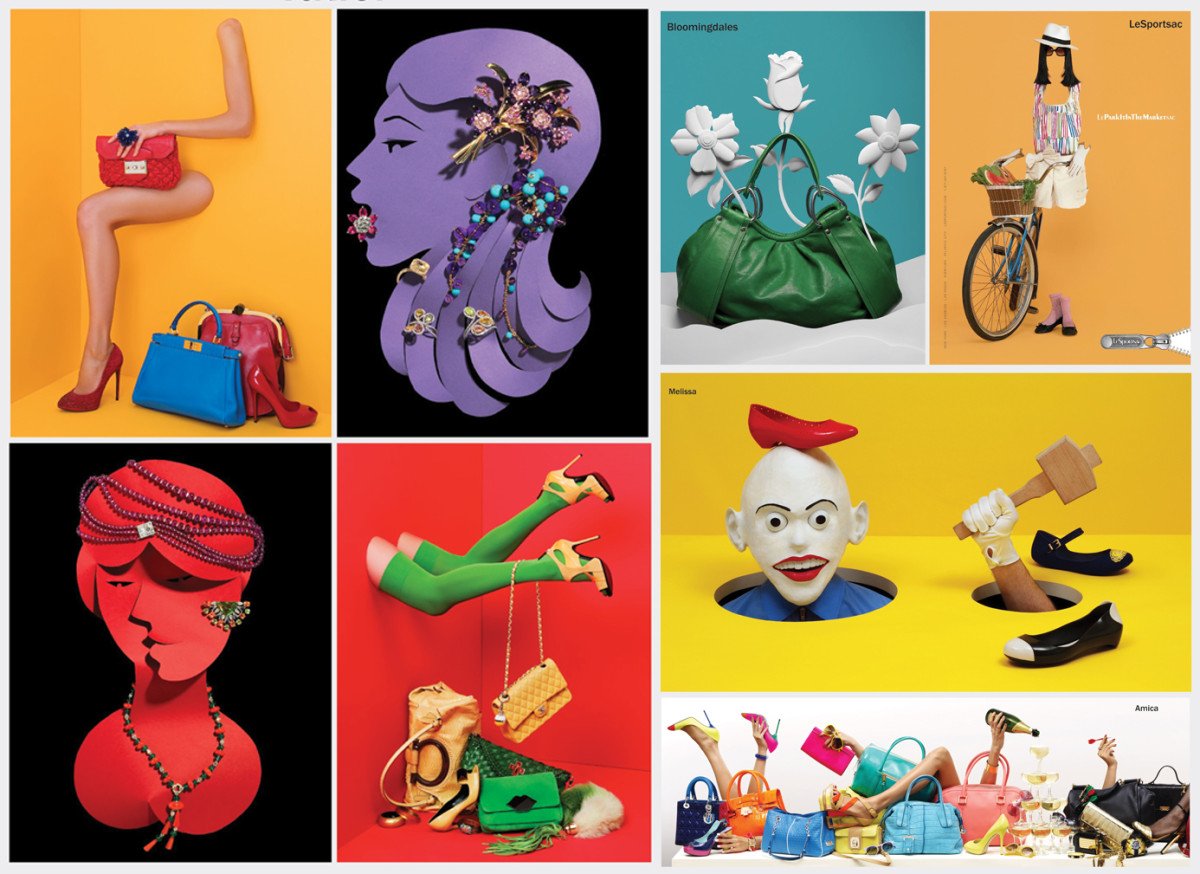
Excessive ornamentation and garishness are the visual signature of kitsch in its most recognizable forms. The aesthetic tends toward the overloaded rather than the restrained — too many colors, too much decoration, too much of everything at once. This excess is part of what gives kitsch its particular energy: the refusal of understatement, the embrace of more-is-more as a guiding principle.
Universal and clichéd themes recur throughout kitsch art with remarkable consistency. Love, childhood innocence, home, family, nature in its most reassuring forms, religious imagery stripped of theological complexity — these are the subjects that kitsch returns to compulsively, rendered in ways that confirm rather than challenge the viewer’s existing emotional associations. The kitsch image does not ask you to think differently about its subject; it asks you to feel what you already know how to feel.
Finally, nostalgia runs as a powerful undercurrent through much of kitsch art. It tends to look backward — toward an idealized past, a simpler time, a childhood world rendered in warmer colors than the present. This nostalgic orientation explains a great deal of kitsch’s enduring popularity: it offers a reliable emotional refuge from the complexity and uncertainty of contemporary experience.
| Characteristic | How It Manifests |
|---|---|
| Sentimentality | Immediate emotional appeal without intellectual effort |
| Imitation | Reproduces the surface of art without its depth or originality |
| Mass production | Designed for commercial reproduction and broad market appeal |
| Excessive ornamentation | Garish colors, over-decoration, visual excess |
| Clichéd themes | Love, childhood, nature, home — rendered without irony or complexity |
| Nostalgia | Idealized past, romanticized domestic imagery |
| Accessibility | No specialized knowledge or training required to appreciate it |
Kitsch and Its Relationship to High Art
One of the most interesting things about kitsch is what it reveals about the institutions and assumptions of high art. The contempt for kitsch that characterized modernist criticism was not simply an aesthetic judgment — it was a social and political one, embedded in assumptions about whose tastes and whose emotional experiences were worth taking seriously.
High art, in the modernist tradition, demanded educated appreciation: familiarity with art history, comfort with abstraction and ambiguity, the capacity to sustain intellectual engagement with works that withheld easy emotional gratification. These are not inherently unreasonable demands. But they are also demands that systematically excluded the majority of the population — people who lacked the educational background, the leisure, or the cultural capital to meet them. Kitsch, by contrast, demanded nothing except the willingness to feel. Its democratic accessibility was precisely what its critics found most objectionable.
The postmodern rehabilitation of kitsch challenged this hierarchy directly. If the boundary between high art and popular culture is arbitrary, historically contingent, and structured by class and power rather than objective aesthetic value, then the dismissal of kitsch tells us more about the social anxieties of those doing the dismissing than about the inherent quality of the work being dismissed. This argument has genuine force — and it explains why kitsch became so theoretically interesting to artists and critics in the second half of the twentieth century.
Jeff Koons is the figure who has most aggressively tested this argument through artistic practice. His large-scale sculptures of balloon animals, his ceramic Michael Jackson and Bubbles, his giant floral puppy sculpture outside the Guggenheim Bilbao — these works are simultaneously kitsch in their subject matter and impeccably realized in their execution, occupying a space that makes the very distinction between kitsch and high art seem unstable. Whether Koons is celebrating kitsch, critiquing it, or simply profiting from both possibilities at once is a question art critics have debated for decades — which is, from one angle, precisely the point.

Famous Kitsch Artists and Their Most Iconic Works
Kitsch has been produced, celebrated, and theorized by a remarkably diverse range of artists across different periods and cultural contexts. Getting to know a few of them is the fastest way to understand what kitsch actually looks and feels like in practice.
Cassius Marcellus Coolidge created his famous Dogs Playing Poker series in 1903 — eleven paintings commissioned as advertisements for cigars, depicting anthropomorphic dogs engaged in card games with all the trappings of human leisure. The series became one of the most reproduced images in American popular culture, and its canonical kitsch status — simultaneously ridiculous and oddly compelling — makes it a near-perfect illustration of what kitsch actually does: it produces genuine enjoyment and warm affection without making any serious artistic claims.
Margaret Keane became famous in the 1960s for her paintings of children and figures with enormous, luminous eyes — an immediately recognizable visual style that is simultaneously unsettling and sentimental. Her work was commercially enormously successful and critically despised in equal measure. Her story — including the long dispute over whether her husband Walter Keane was fraudulently claiming credit for her paintings — became the subject of Tim Burton’s 2014 film Big Eyes, which itself carries a certain kitsch quality in its melodramatic rendering of a genuinely strange true story.
Thomas Kinkade, who marketed himself as the “Painter of Light,” produced and licensed an industrial quantity of paintings depicting idealized cottages, landscapes, and seasonal scenes in warm, glowing colors. At its peak, it was estimated that one in twenty American homes contained a Kinkade reproduction. He was critically reviled and commercially extraordinary in equal measure — a combination that itself says something important about the gap between critical gatekeeping and actual popular experience.
Jeff Koons occupies the most theoretically interesting position: an artist who uses kitsch subject matter and sensibility in the context of institutional fine art, at prices that make his work among the most expensive produced by any living artist. His work is kitsch about being kitsch — which is either brilliant or deeply cynical, and probably both simultaneously.
The Kitsch Movement in Contemporary Fine Art
Distinct from the broader concept of kitsch as an aesthetic category, the Kitsch Movement refers to a specific artistic tendency that emerged in the late 1990s around the Norwegian painter Odd Nerdrum. Nerdrum and his associates deliberately embraced the kitsch label — which the art establishment had used pejoratively — and turned it into a proud self-identification.
The Nerdrum-influenced Kitsch Movement combined the technical virtuosity of the Old Masters — Rembrandt, Caravaggio, the great figurative painters of the seventeenth century — with emotionally charged, often melodramatic imagery drawn from mythological, historical, and romantic traditions. The movement explicitly rejected the conceptual and ironic modes that had dominated contemporary art since the 1960s in favor of direct, unashamed emotional expressiveness.
Nerdrum argued that the term “art” had been colonized by modernism and its successors in ways that excluded genuine emotional expression and technical skill. By calling his work kitsch rather than art, he was making a philosophical statement: that the emotional directness and technical mastery that contemporary art had abandoned were worth preserving — even, especially, under a name the establishment found embarrassing. It was a provocation, a reclamation, and an aesthetic argument all at once.

Kitsch in Everyday Life and Popular Culture
Beyond gallery walls and art criticism, kitsch is everywhere in contemporary material culture — so pervasive that it is easy to overlook. Snow globes, souvenir figurines, novelty mugs, decorative plates with pastoral scenes, garden gnomes, velvet paintings, religious icons rendered in bright plastic, greeting cards with puppies and sunsets — these are the ambient kitsch of everyday life, the objects through which ordinary people express affection, mark occasions, and decorate their immediate environments.
This ubiquity is significant. Kitsch in daily life is not consumed with the knowing irony or theoretical sophistication that characterizes its deployment in contemporary fine art — it is simply enjoyed, given as gifts, displayed on mantelpieces, and experienced as warm and pleasant. This genuine, unself-conscious enjoyment is one of the most interesting things about kitsch from a psychological perspective: it suggests that the immediate emotional gratification critics have always identified as kitsch’s central characteristic is not a failure but a feature — that there is real human value in objects that provide uncomplicated pleasure and emotional warmth without demanding anything more.
Kitsch also pervades cinema, music, television, and literature. The melodrama of soap operas, the sentimental resolution of romantic comedies, the reassuring predictability of holiday music — all of these draw on the same aesthetic logic as visual kitsch: immediate emotional accessibility, familiar emotional templates, the comfort of the expected rather than the challenge of the new. Is that a bad thing? Not necessarily. Sometimes what people need is not to be challenged but to be comforted — and kitsch, whatever its limitations, delivers that reliably.
The Psychology Behind Kitsch’s Enduring Appeal
If kitsch is so aesthetically problematic, why does it remain so persistently popular? The psychological answer is more interesting than the critical dismissal suggests — and it touches on some genuinely important aspects of human emotional life.
Kitsch provides emotional safety. In a world of genuine complexity, ambiguity, and uncertainty, it offers experiences whose emotional content is fully legible, completely non-threatening, and reliably pleasant. The puppies, the sunsets, the idealized families — these are images of a world without difficulty, and that imaginary world has genuine appeal precisely because the actual world contains so much difficulty. There is nothing shameful about wanting, occasionally, to inhabit that imaginary world for a while.
Kitsch triggers nostalgia — not necessarily for any specific personal memory, but for an idealized past that may never have existed. This kind of nostalgic feeling is psychologically powerful and deeply human. The desire to return to something simpler, warmer, and more innocent than the present is not a sign of intellectual weakness; it is a recognizable response to the pressures of contemporary life, and kitsch gives it a visual and emotional form.
Kitsch also serves a significant social function. The giving of kitsch objects — souvenirs, decorative gifts, seasonal cards — is a way of expressing affection and maintaining social bonds. The value of these objects is relational rather than aesthetic: what matters is not the object itself but what its giving communicates about the relationship between giver and recipient. Dismissing kitsch objects on aesthetic grounds misses this entirely.
Finally, kitsch democratizes aesthetic experience. It requires no training, no cultural capital, no specialized knowledge. This accessibility is not a flaw — it is a feature that allows people who have been excluded from the appreciation of fine art to participate in a form of aesthetic experience that, whatever its limitations, provides genuine pleasure and emotional engagement. The question of who gets to experience art — and on what terms — is not a trivial one, and kitsch’s radical accessibility has always been part of what makes it culturally significant.
Kitsch in Architecture and Design
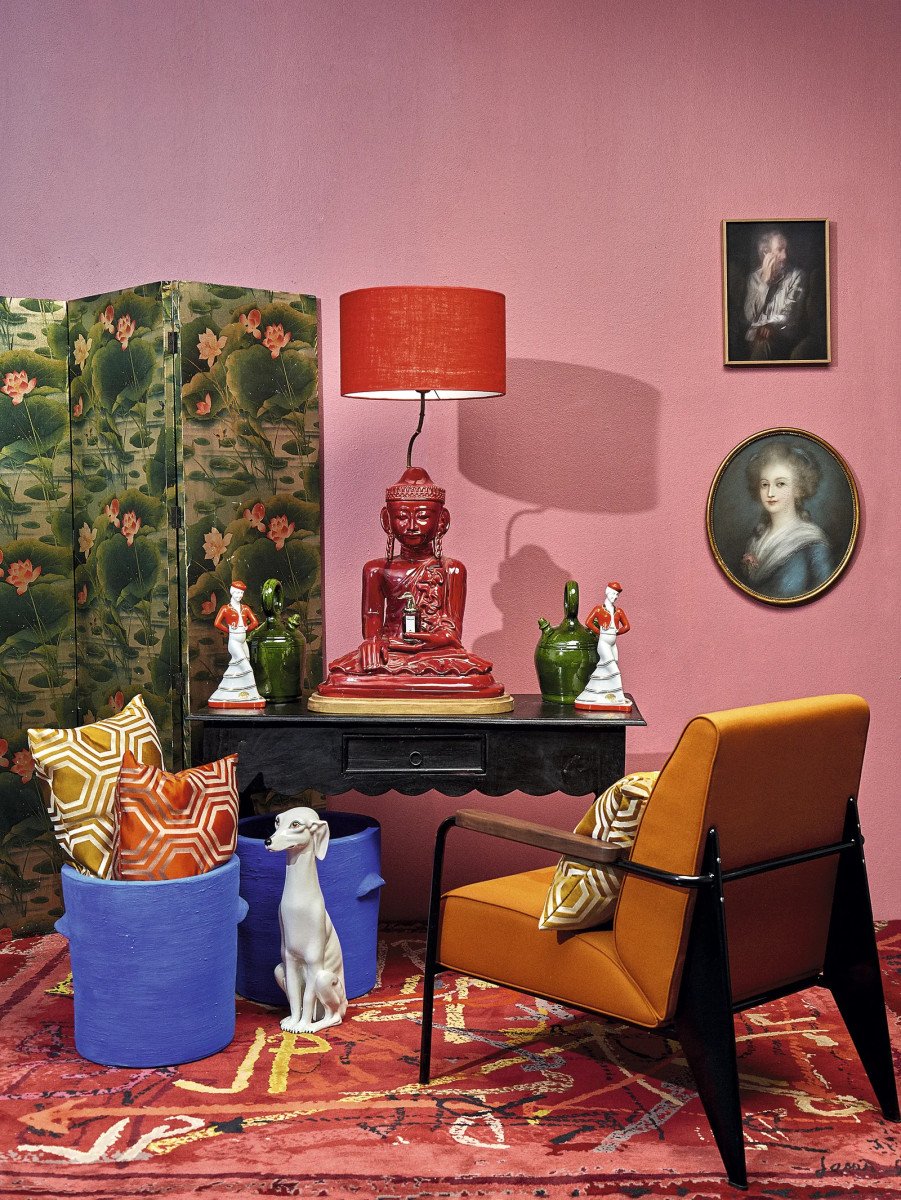
Kitsch is not confined to painting and sculpture — it extends powerfully into architecture and design, where it has produced some of its most spectacular and debated examples. The ornate mansions of newly wealthy communities in parts of Eastern Europe, Las Vegas casino architecture, the themed environments of global entertainment parks, the eclectic eclecticism of postmodern buildings that playfully combine historical styles without commitment to any — all of these exhibit the characteristic kitsch tendency to prioritize immediate visual impact and emotional effect over coherence, restraint, or conceptual depth.
Kitsch architecture tends to be ostentatious by design, combining architectural elements from different historical periods and styles in ways that signal wealth and aspiration rather than following any consistent aesthetic logic. It is the architecture of desire rather than discipline — buildings that want to impress, comfort, and delight rather than to embody any serious formal or conceptual vision. And for many people, that is exactly what they want from the spaces they inhabit.
The boundaries between kitsch architecture and postmodern architecture have never been entirely clear. Both play with historical reference, both embrace ornament over minimalism, and both are comfortable with a certain visual excess. What distinguishes kitsch architecture from postmodern architecture is partly irony: postmodern architects typically deploy historical reference with knowing self-awareness, while kitsch architecture deploys it in earnest. Which of those two approaches is more honest is a genuinely interesting question.
Can Kitsch Have Genuine Artistic Value?
This is the question that has animated debates about kitsch for the better part of a century, and it does not have a simple answer — which is, perhaps, the most honest thing that can be said about it.
The critical dismissal of kitsch rested on assumptions about what art is for and whose tastes are legitimate — assumptions that have been increasingly challenged over the past half-century. If something is created with aesthetic intention, produces an aesthetic experience, and is received as meaningful by its audience, the grounds for excluding it from the category of art become philosophically difficult to sustain. The fact that kitsch achieves its effects through sentimentality and familiarity rather than originality and challenge does not automatically disqualify those effects from being genuine.
What is certainly true is that kitsch and serious art operate differently and achieve different things. Serious art tends to produce more complex, more durable, and more potentially transformative experiences — it asks more of the viewer and, in doing so, offers more. Kitsch tends to produce simpler, more immediate, more comfortable experiences — it asks less and, accordingly, offers something different. Neither of those is worthless. The mistake is assuming they are in competition, rather than serving different human needs in different moments.
The most intellectually interesting kitsch — the work of Koons, the late paintings of Nerdrum, the most self-aware popular culture — manages to be both things at once: emotionally accessible and conceptually complex, immediately appealing and thoughtfully constructed. This is perhaps the most sophisticated artistic achievement kitsch can aspire to — not the naive production of sentimental objects, but the deliberate, self-aware deployment of sentimental aesthetics in service of something more searching.
FAQs About Kitsch Art
What does the word “kitsch” actually mean?
The word kitsch is a German loanword, derived from verkitschen, meaning to sell cheaply or to make something tacky or trashy. It entered the vocabulary of art criticism in the Munich art markets of the 1860s and 1870s, where it was used to describe cheap, commercially produced pictures designed to appeal to popular taste rather than express genuine artistic vision. In English, it was adopted as a term for art, design, and objects characterized by excessive sentimentality, garishness, and a lack of intellectual depth. Today it carries both pejorative and affectionate connotations depending on context — a flexibility that reflects the complexity of the concept itself.
Is kitsch art considered real art?
This depends entirely on how you define art — which is precisely the question kitsch forces into the open. Classical modernist criticism held that kitsch was, by definition, not art: it was a commercial substitute for art, designed to produce predictable emotional responses rather than genuine aesthetic experience. Contemporary and postmodern perspectives tend to be considerably more open. If something is created with aesthetic intention, produces an aesthetic experience, and is received as meaningful by its audience, the grounds for excluding it from the category of art become philosophically difficult to sustain. The real question kitsch raises is not whether it is art but what we think art is for — and whose aesthetic experiences count.
What is the difference between kitsch and camp?
Kitsch and camp are related but distinct aesthetic categories, and the distinction comes down largely to irony. Kitsch is characterized by sincere, unironic sentimentality and the earnest appeal to immediate emotional gratification. Camp, as defined most influentially by Susan Sontag in her 1964 essay Notes on Camp, involves a knowing appreciation of the exaggerated, artificial, or aesthetically extreme — an enjoyment of excess and artifice that is fundamentally ironic rather than sincere. The simplest way to put it: kitsch is experienced earnestly; camp is experienced with a wink. The same object can sometimes be experienced as either, depending on the self-awareness and cultural context of the person experiencing it.
Who are the most famous kitsch artists?
The most frequently cited kitsch artists include Jeff Koons, whose balloon sculptures and ceramic celebrity figurines have made him simultaneously the most commercially successful living artist and one of the most theoretically debated; Margaret Keane, known for her distinctive big-eyed figures; Thomas Kinkade, the mass-market “Painter of Light”; Cassius Marcellus Coolidge, creator of the Dogs Playing Poker series; and Odd Nerdrum, the Norwegian painter who founded the late-twentieth-century Kitsch Movement. Andy Warhol is also frequently associated with kitsch aesthetics, though his work operates in a more deliberately ironic register that places it closer to camp than to classic kitsch.
Can kitsch have genuine artistic value?
Yes — and this is one of the most interesting debates in contemporary aesthetics. The critical dismissal of kitsch rested on assumptions about what art is for and whose tastes are legitimate, assumptions that have been increasingly challenged over the past half-century. Kitsch that is created with genuine craft, deployed with ironic self-awareness, or received as genuinely meaningful by its audience has claims to artistic value that are difficult to dismiss on purely theoretical grounds. Moreover, the psychological functions that kitsch serves — providing emotional comfort, triggering nostalgia, democratizing aesthetic experience — are genuine human values, not trivial ones. The question is not whether kitsch can have value, but what kind of value it has and how that relates to what else we might ask of art.
What is the Kitsch Movement in fine art?
The Kitsch Movement refers specifically to a late-twentieth-century artistic tendency associated with the Norwegian painter Odd Nerdrum, who deliberately adopted the kitsch label as a form of resistance to the dominance of conceptual and abstract art in contemporary galleries. Nerdrum and his followers combined the technical virtuosity of the Old Masters with emotionally direct, romantically charged imagery — mythology, portraiture, landscape — rendered with a seriousness of craft and feeling that they argued had been excluded from contemporary fine art’s preference for concept over emotion. By calling their work kitsch, they were challenging the art establishment’s claim to define what counted as serious artistic endeavor — a provocative and genuinely thought-provoking gesture.
Why do people enjoy kitsch even when they know it is “low art”?
Because the enjoyment is real, and the label “low art” is less objective than it sounds. People enjoy kitsch because it provides emotional safety, triggers warm nostalgia, requires no special knowledge, and delivers uncomplicated pleasure — all of which are genuine human needs. The fact that critics trained in modernist aesthetics have historically dismissed those needs as insufficiently sophisticated does not make the pleasure less real or less valuable. Enjoying kitsch is not a failure of taste; it is a human response to the part of aesthetic experience that prioritizes feeling over thinking — and there is nothing wrong with that, as long as it coexists with an openness to more complex forms of experience as well.
How is kitsch different from pop art?
Both kitsch and Pop Art draw on mass-produced imagery and popular culture, but their relationship to that material is fundamentally different. Kitsch engages with popular imagery sincerely and without critical distance — it reproduces and amplifies the emotional appeal of mass culture without questioning it. Pop Art, by contrast, uses popular imagery as subject matter while maintaining an ironic, critical, or at least ambiguous distance from it — Warhol’s soup cans are about mass production and consumer culture, not simply expressions of appreciation for soup. Pop Art uses kitsch material to make fine art; kitsch simply is what it is, without the conceptual layer. The boundary between the two is not always sharp — which is part of what makes both of them interesting.
Use this citation format to reference the article clearly and help readers find the original source.
PsychologyFor. (2026). Kitsch Art: What is it and What Are Its Characteristics?. PsychologyFor. https://psychologyfor.com/kitsch-art-what-is-it-and-what-are-its-characteristics/