


See more of our articles in your search results.
Somewhere between the endless scroll of notifications and the mental to-do list that never quite empties, most of us have lost the simple ability to be fully present in our own lives. Mindfulness techniques offer a structured, evidence-based way back to that presence — not through eliminating stress or forcing the mind into silence, but through learning to observe experience, moment by moment, with openness rather than judgment.
Mindfulness is often misunderstood as simply “relaxing” or “clearing your mind.” In reality, it is something more precise and, in some ways, more demanding: a deliberate practice of paying attention to present-moment experience — thoughts, physical sensations, emotions, and the surrounding environment — while adopting a stance of curious, non-judgmental awareness rather than immediate reaction or avoidance. This distinction matters enormously, because it shapes how mindfulness actually works in the brain and body, and why it has become one of the most extensively researched approaches in contemporary psychology.
The techniques that fall under the umbrella of mindfulness are varied — ranging from structured meditation practices to brief exercises that fit into a few minutes of daily life. Some focus attention narrowly on the breath. Others systematically move awareness through the body. Still others cultivate compassion, or bring mindful attention into ordinary daily activities like eating or walking. What unites them all is the underlying skill they build: the capacity to notice what is happening, right now, without immediately being swept away by it.
This article walks through the main mindfulness techniques used in clinical and everyday practice, explains exactly how to practice each one, and outlines the psychological mechanisms and evidence-based frameworks — including Mindfulness-Based Stress Reduction (MBSR) — that make these practices genuinely effective.

How many of these have you been "meaning to read" for months?
- 1
 TajaTaja Large Spiral Lined Journal for Women and Men, Notebook for WorkLarge Spiral Notebook: Measuring 8.5" x 11" with standard 7mm college-ruled lines, this large spi...Listen Free On Audible
 - 2
 FINGERPRINT with FP logoMeditations (Deluxe Hardbound Edition)FINGERPRINT with FP logoListen Free On Audible
 - 3
 HarperOneMere Christianity (Deluxe Edition)Listen Free On Audible
What Is Mindfulness and How Does It Actually Work?
Mindfulness is the practice of intentionally directing attention to present-moment experience with an attitude of openness, curiosity, and non-judgment, rather than habitual reactivity or avoidance. Jon Kabat-Zinn, the researcher most responsible for bringing mindfulness into mainstream clinical psychology through the development of Mindfulness-Based Stress Reduction (MBSR), described mindfulness as “paying attention in a particular way: on purpose, in the present moment, and non-judgmentally.”
The mechanism behind mindfulness is rooted in how it changes our relationship to thoughts and sensations, rather than changing the thoughts and sensations themselves. Most psychological distress is intensified not simply by difficult thoughts or feelings, but by the automatic, reactive relationship we have with them — the tendency to fuse with a thought as though it were an objective fact, to immediately try to escape uncomfortable sensations, or to ruminate on past events and future worries rather than remaining anchored in the present. Mindfulness interrupts this automatic pattern by creating a small but meaningful gap between stimulus and reaction.
This concept closely parallels ideas central to Acceptance and Commitment Therapy (ACT), developed by Steven Hayes, particularly the concept of cognitive defusion — learning to observe thoughts as passing mental events rather than absolute truths that must be obeyed or fought. It also connects to Dialectical Behavior Therapy (DBT), developed by Marsha Linehan, which incorporates mindfulness as one of its four core skill modules, precisely because the capacity to observe internal experience without immediate reaction is foundational to emotional regulation.
Neuroscientific research on mindfulness has documented measurable changes associated with regular practice, including altered activity in brain regions associated with attention regulation, emotional processing, and self-referential thinking. These changes are consistent with the subjective experience many practitioners report: an increased capacity to notice difficult emotions arising without being immediately overwhelmed by them, and greater flexibility in choosing a response rather than reacting automatically.
Practical takeaway: Mindfulness is not about achieving a blank or perfectly calm mind — that expectation sets most beginners up for frustration. It is about noticing whatever arises, including a busy or wandering mind, with curiosity rather than criticism, and gently returning attention to the present moment each time it drifts.

How Do You Practice Breath-Focused Mindfulness Meditation?
Breath-focused meditation is one of the most foundational and widely practiced mindfulness techniques, involving sustained, gentle attention on the physical sensations of breathing as an anchor for present-moment awareness. It is often the first technique taught to beginners because the breath is always available, requires no special equipment, and provides a consistent, reliable point of focus.
The practice works by giving the mind a specific, neutral object of attention — the rise and fall of the chest or abdomen, the sensation of air passing through the nostrils — rather than allowing attention to be pulled reactively toward whatever thought or worry arises. When the mind wanders, as it inevitably and repeatedly does, the practice is simply to notice the wandering without self-criticism and gently guide attention back to the breath. This repeated redirection is not a failure of the practice; it is, in fact, the practice itself, and it is where the actual attentional training occurs.
To practice breath-focused mindfulness:
- Find a comfortable position, either seated with an upright but relaxed posture or lying down, in a space with minimal distraction.
- Close your eyes or lower your gaze, and take a few natural breaths to settle into the present moment.
- Locate where you feel the breath most clearly — the nostrils, the chest, or the rise and fall of the abdomen.
- Rest your attention there, simply observing each inhale and exhale without trying to control or change the breath’s natural rhythm.
- Notice when your mind wanders — to plans, memories, or sensations — and gently, without judgment, bring your attention back to the breath.
- Continue for a set period, starting with as little as three to five minutes and gradually extending the duration as the practice becomes more familiar.
Breath-focused meditation is particularly valuable for beginners because its brevity and simplicity make it easy to practice consistently, and consistency — even in short daily sessions — tends to produce more meaningful benefit than infrequent, longer sessions.
Practical takeaway: Start with genuinely short sessions. Three minutes of daily breath-focused practice, done consistently, builds far more skill over time than an occasional twenty-minute session that feels effortful and gets abandoned after a few attempts.
What Is Body Scan Meditation and How Is It Practiced?
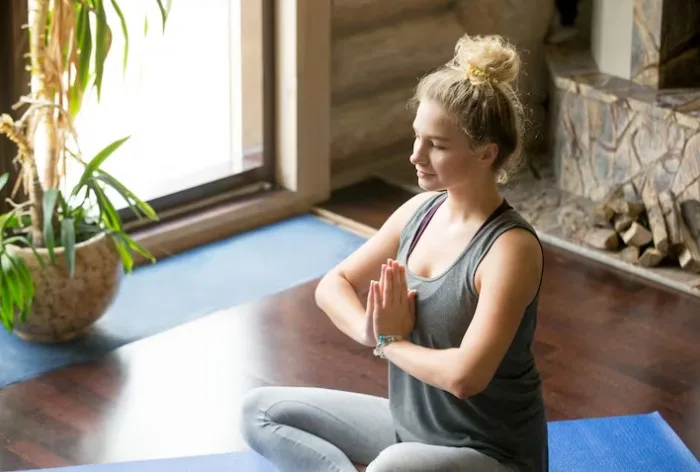
Body scan meditation is a mindfulness technique that involves systematically directing attention through different regions of the body, noticing physical sensations — warmth, tension, tingling, or an absence of sensation — without trying to change or judge what is found. It is a core component of Kabat-Zinn’s MBSR program and one of the most effective techniques for building interoceptive awareness, the capacity to accurately perceive internal bodily states.
The body scan trains attention to move fluidly between narrow, detailed focus and a broader, more spacious awareness — a skill with direct relevance to emotional regulation, since many difficult emotions first announce themselves through physical sensation before they are consciously recognized as a specific feeling. Practicing the body scan regularly builds a stronger, more accurate connection between physical sensation and emotional awareness, often described in clinical contexts as strengthening the mind-body connection.
To practice a body scan:
- Lie down or sit comfortably, closing your eyes and allowing your body to settle into the surface beneath you.
- Take a few breaths to anchor into the present, noticing the rise and fall of your abdomen.
- Begin at one end of the body — commonly the top of the head or the feet — and direct focused attention there.
- Notice whatever sensations are present in that region: pressure, temperature, tingling, tightness, or simply the absence of any distinct sensation.
- Move attention gradually through each region of the body, typically on the exhale, releasing focus on the previous area as you move to the next.
- Observe without labeling sensations as good or bad, practicing pure, non-judgmental observation.
- Conclude by expanding awareness to the whole body, sensing it as a single, breathing whole before gently opening your eyes.
Sessions can range from a brief three-minute check-in to a full thirty- or forty-minute practice, and both are genuinely valuable depending on available time and context. It is also entirely normal to feel drowsy or even fall asleep during a body scan, particularly when practiced lying down; if this happens, taking a deeper breath and gently repositioning can help restore alertness.
Practical takeaway: Try a “micro-scan” during a stressful moment in daily life — pausing for just sixty seconds to notice tension in your shoulders, jaw, or stomach. This brief practice can interrupt escalating stress before it builds further.
How Does Mindful Observation of Thoughts Reduce Emotional Reactivity?
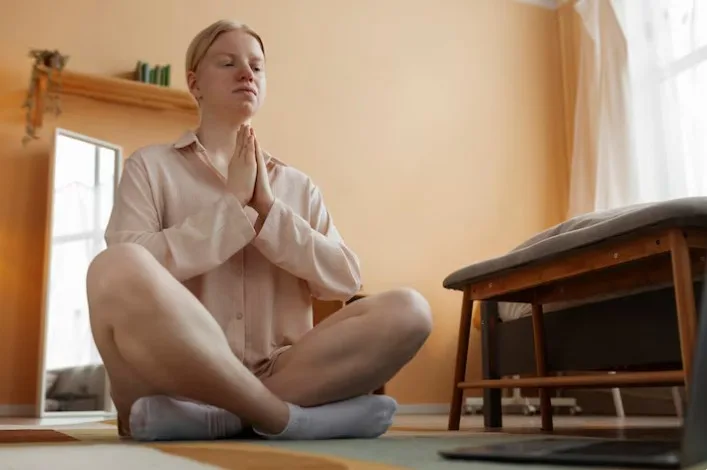
Mindful thought observation is a technique that involves watching thoughts arise and pass through awareness without engaging with their content, arguing with them, or treating them as commands that must be acted upon. This practice directly targets the tendency toward rumination and thought fusion that underlies much of anxiety and depressive thinking.
The technique typically uses a metaphor to support the practice of psychological distance from thought content. Common approaches include imagining thoughts as clouds passing across the sky, leaves floating down a stream, or passengers boarding and disembarking from a train, with the practitioner simply observing them appear and depart rather than climbing aboard each one. This metaphorical distancing supports what Acceptance and Commitment Therapy calls cognitive defusion — recognizing a thought as a mental event (“I am having the thought that I will fail”) rather than a literal fact (“I will fail”).
To practice mindful thought observation:
- Settle into a quiet, comfortable position and take a few grounding breaths.
- Shift attention from the breath to the mind itself, adopting the stance of an observer watching thoughts arise.
- Notice each thought as it appears, without following its content into an extended internal conversation or story.
- Use a mental image — a cloud, a leaf on water, a passing train — to represent each thought moving through and eventually passing out of awareness.
- Gently label the type of thought if helpful (“that’s a worry thought,” “that’s a memory”) without elaborating on its content.
- Return to this observing stance each time you notice you have become absorbed in a thought’s content rather than simply witnessing it.
This technique is particularly useful for managing anxious or ruminative thought patterns, because it builds the capacity to notice a difficult thought arising without immediately being pulled into the emotional intensity or behavioral urgency the thought seems to demand.
Practical takeaway: The next time a distressing thought repeats itself, try silently labeling it: “There’s that worry thought again.” This small act of naming creates psychological distance and can noticeably reduce the thought’s emotional grip.

What Is Loving-Kindness Meditation and What Is It For?
Loving-kindness meditation (known in its traditional form as metta meditation) is a mindfulness practice that deliberately cultivates feelings of warmth, compassion, and goodwill — first toward oneself, then gradually extending outward toward loved ones, acquaintances, difficult people, and eventually all beings. Unlike breath-focused or body scan practices, which emphasize neutral, non-judgmental observation, loving-kindness meditation actively generates a specific emotional quality.
This technique holds particular clinical relevance because self-directed compassion is frequently underdeveloped, especially among people who struggle with self-criticism, perfectionism, or depression. Research on self-compassion, notably the extensive work of Kristin Neff, has documented that cultivating a kinder, more supportive internal stance toward oneself is associated with greater emotional resilience, reduced anxiety and depressive symptoms, and improved capacity to recover from setbacks — outcomes that stand in sharp contrast to the harsh self-criticism that often accompanies psychological distress.
To practice loving-kindness meditation:
- Settle into a comfortable seated position and take a few centering breaths.
- Begin by directing warm wishes toward yourself, silently repeating phrases such as “May I be safe, may I be at ease, may I be well.”
- Extend these same phrases toward someone you love easily, picturing them clearly and repeating the same well-wishes on their behalf.
- Extend the practice to a neutral acquaintance — someone you neither strongly like nor dislike — offering the same warmth.
- Gradually extend toward someone you find difficult, if you feel ready, offering the same wishes even amid complicated feelings.
- Conclude by extending the wish outward to all beings, broadening the circle of compassion as far as feels genuine.
This practice is often challenging at first, particularly the step of directing compassion toward oneself, which can feel unfamiliar or even uncomfortable for people accustomed to habitual self-criticism. This discomfort is a normal part of the process rather than a sign of doing the practice incorrectly.
Practical takeaway: If self-directed loving-kindness feels difficult, begin instead by directing the practice toward someone you love easily, and only gradually work toward including yourself as the practice becomes more familiar.
How Can Mindful Eating and Walking Bring Awareness into Daily Life?
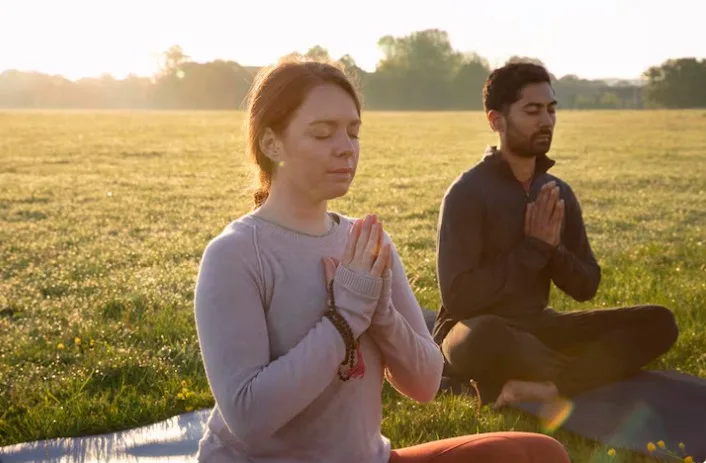
Informal mindfulness practices — mindful eating and mindful walking chief among them — extend the skills built through formal meditation into the ordinary activities that make up most of daily life. These practices are particularly valuable because they demonstrate that mindfulness is not confined to a meditation cushion; it is a quality of attention that can be brought to virtually any moment.
Mindful eating involves bringing full, deliberate attention to the experience of eating — the appearance, aroma, texture, and taste of food, along with the body’s sensations of hunger and fullness — rather than eating automatically while distracted by screens, conversation, or rushing between tasks. This practice has particular relevance for interrupting patterns of emotional or automatic eating, since it rebuilds the connection between eating and genuine physical sensation rather than habit or distraction.
To practice mindful eating:
- Pause before eating to notice the appearance and aroma of the food in front of you
- Eat slowly and without distraction, setting aside phones, screens, or other tasks during the meal
- Notice the texture and flavor of each bite, chewing thoroughly and observing how the taste changes
- Check in periodically with physical hunger and fullness cues, rather than eating until a plate is empty by default
- Notice thoughts or emotions that arise during eating without judgment, simply observing rather than reacting to them
Mindful walking similarly involves bringing full attention to the physical sensations of walking — the contact of feet with the ground, the movement of legs, the rhythm of breath — rather than walking on autopilot while absorbed in thought. This practice is particularly accessible because it can be woven into ordinary transitions throughout the day, such as walking to a car, moving between rooms, or taking a short outdoor break.
Practical takeaway: Choose one routine daily activity — brushing your teeth, walking to your car, washing dishes — and commit to doing it with full mindful attention for one week. This small, consistent practice builds the broader capacity to bring presence into everyday moments, not just formal meditation sessions.

What Is Mindfulness-Based Stress Reduction (MBSR) and How Does It Structure These Techniques?
Mindfulness-Based Stress Reduction (MBSR) is a structured, eight-week clinical program developed by Jon Kabat-Zinn at the University of Massachusetts Medical Center in the late 1970s, combining formal mindfulness meditation practices with elements of gentle yoga to reduce stress and improve psychological and physical wellbeing. MBSR remains one of the most extensively researched mindfulness interventions and served as the direct clinical foundation from which many of the individual techniques described in this article were adapted and popularized.
The MBSR curriculum systematically introduces participants to the core mindfulness techniques in a structured sequence: beginning with body scan practice to build foundational present-moment awareness, progressing to sitting meditation with breath and thought observation, and incorporating mindful movement through gentle yoga sequences designed to bring the same quality of non-judgmental attention into physical movement. The program also includes structured group discussion, allowing participants to process their experience and normalize the common difficulties that arise during practice.
What distinguishes MBSR from simply practicing meditation independently is its structured, progressive, and clinically validated format. Participants commit to daily home practice alongside weekly group sessions over eight weeks, a structure that research has shown supports meaningful skill development in ways that occasional, unstructured practice often does not. MBSR has been studied extensively for stress reduction, chronic pain management, anxiety, and as a complement to treatment for depression, with substantial research support for its efficacy across these applications.
Related structured programs have since built directly on the MBSR model, including Mindfulness-Based Cognitive Therapy (MBCT), developed by Zindel Segal, Mark Williams, and John Teasdale specifically to prevent depressive relapse by combining mindfulness techniques with cognitive therapy principles. This lineage illustrates how the individual mindfulness techniques covered in this article are not isolated exercises but components of larger, evidence-based clinical frameworks.
Practical takeaway: If you are finding it difficult to sustain a mindfulness practice independently, consider seeking out a structured program like MBSR or MBCT, ideally through a qualified instructor. The structure, accountability, and community these programs provide often make a meaningful difference in building lasting practice.
How Often Should You Practice Mindfulness Techniques for Real Benefit?
Meaningful benefit from mindfulness practice depends far more on consistency than on session length. Research and clinical experience with structured programs like MBSR consistently indicate that brief, regular daily practice produces more durable psychological benefit than occasional, longer sessions practiced inconsistently.
| Practice Frequency | Typical Outcome |
|---|---|
| A few minutes daily, consistently | Gradual, cumulative improvement in attention regulation and emotional awareness over weeks |
| Occasional longer sessions, inconsistently | Temporary relaxation benefit without significant lasting change in attentional or emotional skill |
For beginners, starting with three to five minutes of daily practice is far more sustainable and ultimately more effective than attempting twenty- or thirty-minute sessions that feel burdensome and are quickly abandoned. As the practice becomes more familiar and comfortable, session length can be gradually extended, but the underlying principle remains constant: a small, consistent practice builds skill more reliably than an ambitious but inconsistent one.
It is also worth normalizing the reality that mindfulness practice does not always feel calming, especially at first. Sitting quietly with one’s own thoughts can bring restlessness, boredom, or even increased awareness of difficult emotions that were previously being avoided through distraction. This is a normal and, in fact, clinically meaningful part of the process — mindfulness works precisely by increasing our capacity to be present with difficult experience, not by eliminating discomfort altogether.
Practical takeaway: Anchor your mindfulness practice to an existing daily habit — right after brushing your teeth, right before your morning coffee — to build consistency through habit stacking rather than relying on willpower or motivation alone each day.
FAQs about Mindfulness Techniques
What are the main mindfulness techniques used in clinical practice?
The most widely used and clinically validated mindfulness techniques include breath-focused meditation, body scan meditation, mindful observation of thoughts, loving-kindness (metta) meditation, and informal practices like mindful eating and mindful walking. These techniques are often taught together within structured clinical programs such as Mindfulness-Based Stress Reduction (MBSR), developed by Jon Kabat-Zinn, and Mindfulness-Based Cognitive Therapy (MBCT), which builds on MBSR specifically for depression relapse prevention. Each technique targets slightly different aspects of present-moment awareness — some emphasize neutral observation of sensation or thought, while loving-kindness meditation actively cultivates compassion. Most practitioners benefit from learning several techniques and using whichever fits a given moment or need.
How long does it take to see the benefits of practicing mindfulness?
Many people notice subtle shifts — such as a slightly greater capacity to pause before reacting, or brief moments of calm during practice — within the first one to two weeks of consistent daily practice. More substantial and lasting changes in stress reactivity, emotional regulation, and attentional control typically develop over eight weeks or more of regular practice, which is why structured programs like MBSR are designed around this timeframe. Consistency matters considerably more than session length: a few minutes practiced daily tends to produce more durable benefit than occasional longer sessions. Individual results vary based on frequency, consistency, and the specific difficulties a person is working with, and mindfulness works best as a gradually developed skill rather than an instant fix.
Can mindfulness help with anxiety and depression?
Mindfulness-based approaches have a substantial evidence base supporting their use as part of treatment for anxiety and depression, most notably through structured programs like MBSR and Mindfulness-Based Cognitive Therapy (MBCT), which was specifically developed to reduce the risk of depressive relapse. Mindfulness techniques help by building the capacity to observe difficult thoughts and emotions without immediately reacting to or being overwhelmed by them, directly addressing the rumination and thought fusion patterns central to both anxiety and depression. That said, mindfulness is best understood as a valuable complement to, rather than a replacement for, evidence-based treatments like Cognitive Behavioral Therapy or professional psychiatric care, particularly for moderate to severe symptoms. Anyone experiencing significant anxiety or depressive symptoms should consult a mental health professional for a comprehensive treatment plan.
Is it normal for my mind to wander constantly during mindfulness practice?
Yes — an wandering mind is not a sign that you are practicing mindfulness incorrectly; it is, in fact, an expected and completely normal part of the practice itself. The mind’s tendency to drift toward thoughts, plans, and memories is simply how minds work, and the actual skill being built in mindfulness meditation is not preventing this wandering but rather noticing it has happened and gently redirecting attention back to the present moment, without self-criticism. Each time you notice your mind has wandered and you bring it back, you are exercising and strengthening exactly the attentional muscle that mindfulness practice aims to build. Expecting a perfectly quiet, wandering-free mind sets an unrealistic standard that can discourage consistent practice.
What is the difference between mindfulness and meditation?
Mindfulness refers to a quality of attention — present-moment, non-judgmental awareness — that can be cultivated through many different practices and even applied informally during ordinary activities like eating or walking. Meditation is a broader category of formal, structured practices, some of which cultivate mindfulness specifically, while others focus on different goals such as concentration, visualization, or transcendence. In practical terms, most mindfulness techniques are a specific subset of meditation practices, and the terms are often used interchangeably in everyday language, but the distinction matters clinically: mindfulness can be practiced without formal seated meditation at all, simply by bringing deliberate, non-judgmental attention to any present-moment activity throughout the day.
Do I need a teacher or app to practice mindfulness effectively?
A teacher or structured program is not strictly necessary to begin practicing basic mindfulness techniques, and many people successfully build a meaningful practice through self-guided resources, including books, recorded guided meditations, or mindfulness apps. However, structured programs like MBSR, typically led by a trained instructor over an eight-week format, offer meaningful advantages, including accountability, community support, and expert guidance through common challenges that arise during practice. For beginners, starting with guided recordings can be particularly helpful, since following a verbal guide reduces the initial difficulty of knowing exactly what to focus on. If you are managing a specific mental health condition, working with a mental health professional trained in mindfulness-based approaches offers the most personalized and clinically appropriate support.
Bibliography
- Kabat-Zinn, J. (1990). Full Catastrophe Living: Using the Wisdom of Your Body and Mind to Face Stress, Pain, and Illness. Delacorte Press.
- Kabat-Zinn, J. (1994). Wherever You Go, There You Are: Mindfulness Meditation in Everyday Life. Hyperion.
- Hayes, S. C., Strosahl, K. D., & Wilson, K. G. (1999). Acceptance and Commitment Therapy: An Experiential Approach to Behavior Change. Guilford Press.
- Linehan, M. M. (1993). Cognitive-Behavioral Treatment of Borderline Personality Disorder. Guilford Press.
- Segal, Z. V., Williams, J. M. G., & Teasdale, J. D. (2002). Mindfulness-Based Cognitive Therapy for Depression: A New Approach to Preventing Relapse. Guilford Press.
- Neff, K. D. (2011). Self-Compassion: The Proven Power of Being Kind to Yourself. William Morrow.
- Salzberg, S. (1995). Lovingkindness: The Revolutionary Art of Happiness. Shambhala Publications.
- Bishop, S. R., et al. (2004). Mindfulness: A proposed operational definition. Clinical Psychology: Science and Practice, 11(3), 230–241.
- Davidson, R. J., & Kabat-Zinn, J. (2004). Alterations in brain and immune function produced by mindfulness meditation. Psychosomatic Medicine, 66(1), 149–152.
- Alidina, S. (2010). Mindfulness for Dummies. John Wiley & Sons.
Use this citation format to reference the article clearly and help readers find the original source.
PsychologyFor. (2026). Main Mindfulness Techniques: How to Practice Them?. PsychologyFor. https://psychologyfor.com/main-mindfulness-techniques-how-to-practice-them/