

See more of our articles in your search results.
Picture this: it’s 1924, and a three-year-old boy named Peter sits terrified in a room at Columbia University, trembling at the sight of a white rabbit. Most people at the time would have seen this as just childhood fear—something he’d eventually outgrow, or perhaps a sign of deeper psychological disturbance requiring years of psychoanalysis. But a young graduate researcher named Mary Cover Jones saw something entirely different. She saw an opportunity to test a radical idea: what if fears weren’t mysterious manifestations of unconscious conflicts but rather learned responses that could be systematically unlearned? What happened next would change psychology forever. Through patient, methodical work combining pleasant experiences with gradual exposure to the feared object, Jones successfully eliminated Peter’s phobia. This wasn’t just a clinical success story—it was a revolutionary demonstration that would lay the foundation for modern behavior therapy and establish techniques still used today to treat anxiety disorders affecting millions of people worldwide.
Yet for decades, Mary Cover Jones’s groundbreaking contribution remained largely forgotten, buried in academic journals while male colleagues received credit for similar work developed years later. It wasn’t until the 1960s and 70s, when prominent behavioral therapist Joseph Wolpe rediscovered her research, that she was finally recognized and dubbed “the mother of behavior therapy”—a title richly deserved but shamefully delayed. Her story isn’t just about scientific achievement; it’s about perseverance in a field that systematically marginalized women, about the patient accumulation of knowledge across a career spanning seven decades, and about work that transformed from being dismissed and forgotten to becoming foundational to an entire therapeutic approach. Beyond her famous work with Peter, Jones spent over 40 years conducting longitudinal research through the Oakland Growth Study, publishing more than 100 papers examining how childhood and adolescent experiences shape adult development. She studied the psychological effects of early versus late puberty, the developmental antecedents of drinking problems, and the long-term behavioral trajectories of children followed into their 70s. She created the first television course in child development psychology, specifically designed to bring education to women confined to homes by domestic responsibilities. She served as president of the American Psychological Association’s Division of Developmental Psychology and received the prestigious G. Stanley Hall Award for lifetime achievement. She maintained personal relationships with research participants across six decades, demonstrating a humanistic approach to science that was revolutionary for its time. This article explores the full arc of Mary Cover Jones’s remarkable life and career—from her early inspiration hearing John B. Watson lecture, through her pioneering clinical work that would influence generations of therapists, to her extensive contributions to developmental psychology that continued well into her 80s. Her story deserves to be told not just as a footnote in the history of behaviorism but as a central narrative about scientific innovation, persistence against institutional barriers, and work that continues shaping how we understand and treat human psychology today.
Early Life and Education
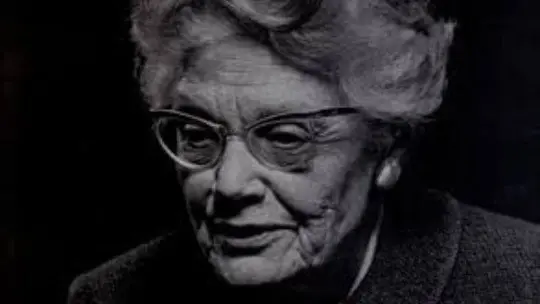
Mary Cover was born on September 1, 1897, in Johnstown, Pennsylvania, into a world where women’s intellectual pursuits were barely tolerated, much less encouraged. Growing up in the late Victorian and early Edwardian era, she would have been expected to pursue marriage and domesticity rather than higher education and scientific research. Yet somehow—whether through family support, innate determination, or both—she made her way to Vassar College, one of the prestigious Seven Sisters colleges that provided elite education for women at a time when most universities either excluded women entirely or segregated them into separate programs.
At Vassar, Jones studied psychology during a pivotal moment in the field’s history. Psychology was transitioning from philosophical speculation to experimental science, from introspection and consciousness to observable behavior and learning. She graduated in 1919, the same year that would prove transformative for her career trajectory. Shortly after graduation, she attended a public lecture in New York City by John B. Watson, the charismatic and controversial founder of behaviorism who was revolutionizing psychology with his insistence that only observable behavior—not consciousness or mental states—should be the subject of scientific study.
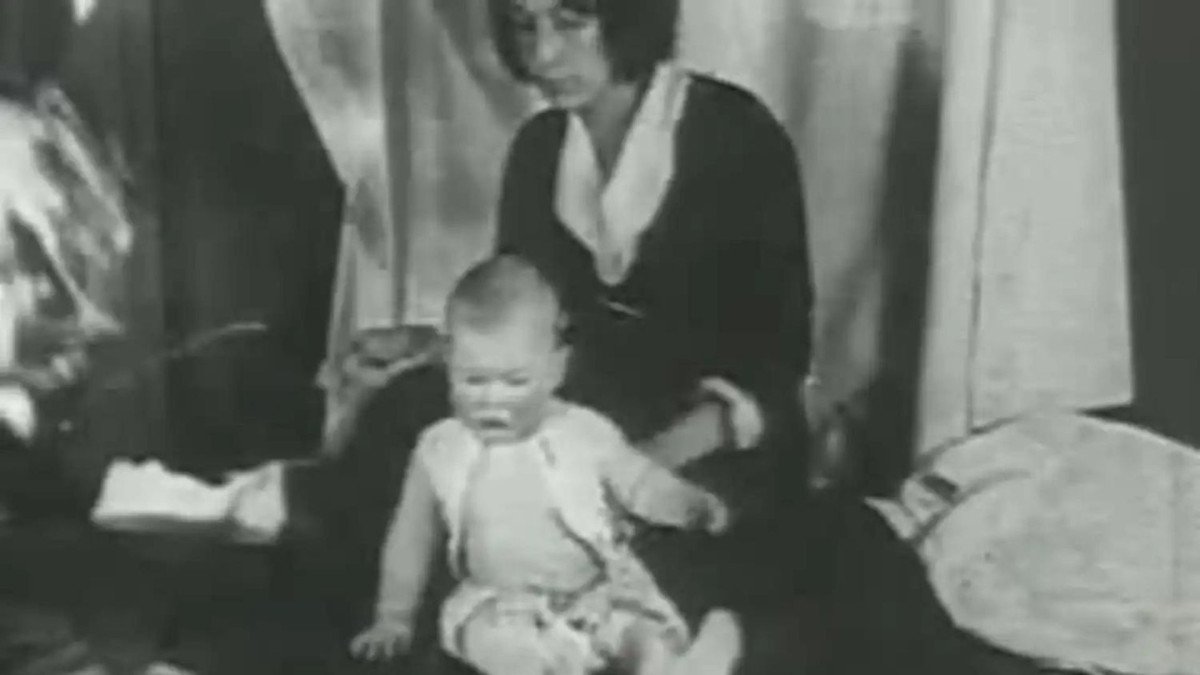
Watson’s lecture captivated Jones, but not in the way he might have expected. While Watson had famously demonstrated how fears could be conditioned—his notorious “Little Albert” experiment showed how a baby could be taught to fear a white rat through association with loud noises—Jones found herself wondering about the other side of the equation. If fears could be learned through conditioning, couldn’t they be unlearned through the same principles? This question, sparked in a single lecture, would drive her most important research contribution and ultimately establish an entirely new therapeutic approach.
How many of these have you been "meaning to read" for months?
- 1
 TarcherThe Artist's Way30th Anniversary EditionListen Free On Audible
 - 2
 New Harbinger PublicationsThe Dialectical Behavior Therapy Skills WorkbookPractical DBT Exercises for Learning Mindfulness, Interpersonal Effectiveness, Emotion Regulation...Listen Free On Audible
 - 3
 New Harbinger PublicationsAdult Children of Emotionally Immature ParentsHow to Heal from Distant, Rejecting, or Self-Involved ParentsListen Free On Audible
Energized by Watson’s ideas and her own intuitions, Jones immediately pursued graduate work at Columbia University, one of the few institutions where women could pursue advanced degrees in psychology. She completed her master’s degree remarkably quickly, finishing in 1920 just a year after beginning. Watson himself became her doctoral advisor, a relationship that would profoundly shape her intellectual development even as it placed her in the shadow of a dominant male figure whose fame would eclipse her own contributions for decades. She would eventually complete her doctoral degree in 1926, though the work that would make her famous was conducted years earlier, during her graduate training.
The Famous Peter Study: Birth of Systematic Desensitization
In 1923, while serving as an associate in psychological research at the Institute of Educational Research at Columbia’s Teachers College, Jones began the work that would define her legacy. She set out to systematically investigate whether children’s fears could be eliminated through conditioning techniques—essentially testing whether Watson’s conditioning principles could be reversed. Her subject was a three-year-old boy named Peter, described as active, curious, and intelligent, but intensely fearful of white rabbits, rats, fur coats, cotton, and other furry objects.
What Jones did next seems simple in retrospect but was revolutionary at the time. Rather than using psychoanalytic techniques to uncover supposed unconscious conflicts causing the fear, or simply waiting for Peter to outgrow it, she developed a systematic procedure combining two key elements. First, she associated the feared object (the rabbit) with a pleasant stimulus (Peter’s favorite food). Second, she did this gradually, through a carefully planned series of steps where the rabbit was brought progressively closer while Peter ate, starting from across the room and eventually having the rabbit right beside him while he enjoyed his meals.
This technique—which Jones called “direct conditioning”—worked. Over the course of treatment, Peter’s fear diminished and eventually disappeared. He went from terror at the mere sight of a rabbit across the room to being able to play with it comfortably, even allowing it to nibble his fingers. Jones carefully documented each stage, creating detailed records of Peter’s reactions and the specific procedures used. She published her findings in 1924 in an article titled “A Laboratory Study of Fear: The Case of Peter,” which appeared in the Pedagogical Seminary (later renamed the Journal of Genetic Psychology).
What made this work so significant wasn’t just that it worked—it was that Jones had demonstrated a systematic, replicable procedure for eliminating fears through principles of learning rather than insight or unconscious exploration. She had essentially invented what would later be called “systematic desensitization” or “graduated exposure therapy,” though those terms wouldn’t be coined for decades. Her work showed that phobias weren’t mysterious neuroses requiring years of analysis but learned responses that could be systematically unlearned through proper conditioning procedures. This was behavior therapy before behavior therapy officially existed as a field.
The Long Silence and Later Recognition
Here’s where the story gets frustrating. Despite publishing this groundbreaking work in a peer-reviewed journal, Jones’s research was largely ignored for nearly four decades. Why? Several factors contributed to this neglect. First, the field of psychology was moving away from behaviorism in the 1930s-50s, with psychoanalysis dominating clinical practice and cognitive approaches beginning to emerge in academic psychology. Second, Jones herself shifted her research focus after moving to California, concentrating on developmental longitudinal research rather than clinical interventions. Third—and this cannot be ignored—she was a woman in a field dominated by men, and women’s contributions were routinely minimized, overlooked, or attributed to male colleagues.
While Jones continued productive research throughout these decades (which we’ll discuss shortly), her fear conditioning work gathered dust in library archives. Meanwhile, male researchers in the 1950s and 60s began developing similar techniques, often without awareness of Jones’s prior work. It wasn’t until Joseph Wolpe, a South African psychiatrist who developed his own systematic desensitization procedures in the 1950s, discovered Jones’s 1924 paper that she received proper recognition. Wolpe was stunned to find that his supposedly novel technique had been demonstrated three decades earlier. To his credit, he became a champion of Jones’s legacy, publicly calling her “the mother of behavior therapy” and ensuring that her contribution was finally acknowledged.
By the 1970s, as behavior therapy coalesced into a formal discipline with professional organizations, training programs, and widespread clinical application, Jones was finally given her due recognition. Colleagues sought her out, honored her at conferences, and ensured that textbooks credited her pioneering work. In 1968, she received the G. Stanley Hall Award from the American Psychological Association, recognizing her lifetime contributions to developmental psychology. The recognition was gratifying but bittersweet—she had lived most of her career without acknowledgment for work that should have made her famous from the start.
Life in California: The Oakland Growth Study
After her early clinical work at Columbia, Jones’s career took a geographic and thematic shift that would consume the rest of her professional life. When her husband Harold Jones was offered a position as Director of Research at the Institute for Child Welfare at the University of California, Berkeley, the family moved west. Mary took a position as Research Associate at the same institute and soon became deeply involved in what would become one of the most important longitudinal studies in developmental psychology: the Oakland Growth Study.
Launched in 1932—right at the beginning of the Great Depression—the Oakland Growth Study initially recruited about 200 adolescents from Oakland, California, to examine normal adolescent development. The timing made the study inadvertently crucial for understanding how economic hardship affects development, as these participants came of age during one of America’s most challenging economic periods. But what made the study truly extraordinary was its duration and Jones’s commitment to it. She would follow these participants not just through adolescence but across their entire adult lives—into their 70s. This required maintaining relationships with participants for over four decades, tracking them as they married, had children, changed careers, moved, and aged.
Jones published more than 100 papers from data generated by the Oakland Growth Study alone, addressing an remarkable range of questions about human development. Her research examined the psychological effects of early versus late physical maturation in adolescence—work that revealed that timing of puberty had profound and lasting effects on self-esteem, social adjustment, and personality. She studied developmental antecedents of drinking problems, identifying personality and behavioral factors in adolescence that predicted problematic alcohol use in adulthood. She tracked how early behavior patterns evolved across the lifespan, contributing fundamental knowledge about personality stability and change.
What distinguished Jones’s approach was her holistic, humanistic orientation toward her participants. At a time when research subjects were often treated as data points, Jones developed genuine personal relationships with the people she studied. She knew their families, their struggles, their triumphs. Participants trusted her and maintained contact across decades largely because she treated them as whole people rather than just research subjects. This approach was revolutionary for its time and likely explains why the Oakland Growth Study maintained unusually low attrition despite its extraordinary length—people didn’t drop out because Mary Jones made them feel valued as individuals, not just useful as data sources.
Television Course and Educational Innovation
In 1952, Mary and Harold Jones collaborated on creating something completely novel: the first television course in child development psychology. This might not seem revolutionary now, but in 1952, television itself was still relatively new in American homes, and the idea of using it for education was innovative. What made the project particularly meaningful to Mary Jones was its intended audience and purpose.
Jones was acutely aware that many intelligent, educated women were confined to their homes by domestic responsibilities and social expectations. The post-World War II era had seen many women pushed out of wartime employment back into full-time homemaking. Jones saw an opportunity to bring university-level education to these women who couldn’t attend traditional classes. The television course allowed women caring for children at home to access psychological knowledge about child development that had previously been available only on college campuses.
This wasn’t just educational programming—it was a feminist act at a time when feminism as a political movement barely existed. Jones understood that knowledge was power, that education was liberation, and that women deserved access to both. The television course reflected her broader commitment to child welfare and women’s wellbeing that extended beyond her formal research. Throughout her career, Jones served on numerous committees related to child welfare, dedicating substantial time and energy to causes that improved children’s and families’ lives beyond what her research directly addressed.
Professional Recognition and Later Career
Despite facing systematic sexism throughout her career—being paid less than male colleagues, struggling for promotion, seeing her contributions minimized—Jones persisted and eventually achieved significant professional recognition. In 1959, she became a full professor at Berkeley, a position she had earned decades earlier but had been denied due to her gender. In 1960, she served as president of the Division of Developmental Psychology of the American Psychological Association, a leadership role recognizing her stature in the field.
That same year, 1960, brought profound personal loss when her husband Harold died of a heart attack during their retirement. Rather than withdrawing from professional life, Jones continued her work, maintaining her commitment to the Oakland Growth Study participants she had followed for nearly 30 years by that point. She conducted final interviews with participants when she was in her 80s—a testament to both her dedication and the longitudinal ambition of the research.
The 1968 G. Stanley Hall Award from the APA represented the profession’s acknowledgment of her lifetime contributions to developmental psychology. By the 1970s, when behavior therapy emerged as a major clinical approach and Jones’s early work was rediscovered, she received the recognition she deserved for her pioneering clinical contributions as well. Joseph Wolpe’s designation of her as “the mother of behavior therapy” in 1974 finally gave her proper credit for work done 50 years earlier.
Jones remained intellectually active and engaged well into her 80s, attending conferences, mentoring younger scholars, and reflecting on her career’s arc. She died on July 22, 1987, at age 89, having witnessed her early work transform from forgotten research to foundational principles of an entire therapeutic discipline. She lived long enough to see systematic desensitization become one of the most empirically supported treatments for anxiety disorders, to see her techniques taught in every clinical psychology program, and to receive the recognition that should have been hers from the beginning.
Legacy and Impact on Modern Psychology
Mary Cover Jones’s impact on psychology is difficult to overstate, even though her name remains less familiar than male contemporaries who contributed less. Her 1924 Peter study directly inspired the development of systematic desensitization, graduated exposure therapy, and broader behavioral treatments for anxiety that have helped millions of people. When you hear about someone successfully treating a phobia through gradual exposure combined with relaxation—whether it’s fear of flying, social anxiety, or PTSD—you’re witnessing the application of principles Jones first demonstrated a century ago.
Modern cognitive-behavioral therapy, the most empirically validated psychotherapy approach, incorporates exposure techniques descended directly from Jones’s work. Her insight that fears are learned and can be systematically unlearned through conditioning principles revolutionized how we conceptualize and treat anxiety. Before Jones, phobias were seen as mysterious symptoms of unconscious conflicts requiring years of psychoanalysis. After Jones, they could be understood as learned associations that could be modified through specific, time-limited interventions. This shift saved countless people from unnecessary suffering and unnecessary therapy costs.
Her longitudinal research through the Oakland Growth Study contributed foundational knowledge about human development across the lifespan. Her findings about the effects of puberty timing, the development of personality, and the antecedents of adult problems informed developmental psychology, education policy, and clinical practice. Her humanistic approach to research participants—treating them as whole people deserving respect and care—established standards for ethical research conduct that were ahead of her time.
Perhaps equally important is her role as inspiration and model for women in psychology. Though she faced discrimination and had her contributions minimized during her active career, she persisted, maintained her integrity and compassion, and ultimately received recognition for groundbreaking work. Her story reminds us how many women’s contributions to science have been erased or attributed to men, and why actively recovering these histories matters for current and future generations of women in science.
FAQs About Mary Cover Jones
Who was Mary Cover Jones and why is she important?
Mary Cover Jones was an American developmental psychologist born in 1897 who made two major contributions to psychology. First, in 1924 as a graduate student at Columbia University, she conducted groundbreaking research demonstrating that childhood fears could be systematically eliminated through conditioning techniques, essentially inventing what later became known as systematic desensitization or graduated exposure therapy. Her famous study with a three-year-old boy named Peter showed that his fear of rabbits could be eliminated by pairing the feared object with pleasant experiences (food) and gradually decreasing the distance between Peter and the rabbit while he ate. This work laid the foundation for modern behavior therapy and established principles still used today to treat anxiety disorders and phobias affecting millions worldwide. Second, she spent over 40 years conducting longitudinal research through the Oakland Growth Study, following participants from adolescence into their 70s and publishing more than 100 papers examining developmental questions including effects of puberty timing, antecedents of drinking problems, and personality development across the lifespan. Despite making these pioneering contributions, her work was largely ignored for decades due to shifts in psychology away from behaviorism and sexism in the field. Joseph Wolpe rediscovered her research in the 1960s and dubbed her “the mother of behavior therapy,” finally giving her appropriate recognition. She received the G. Stanley Hall Award from the APA in 1968 for lifetime contributions to developmental psychology.
What was the Peter study and why was it revolutionary?
The Peter study was Mary Cover Jones’s 1924 research demonstrating that childhood fears could be systematically eliminated through conditioning, published as “A Laboratory Study of Fear: The Case of Peter.” Peter was a three-year-old boy with intense fear of white rabbits, rats, fur coats, cotton, and other furry objects. Rather than using psychoanalytic techniques popular at the time or simply waiting for him to outgrow the fear, Jones developed a systematic procedure called “direct conditioning” that combined two elements: associating the feared object with pleasant stimuli (Peter’s favorite foods) and doing this gradually through carefully planned stages where the rabbit was brought progressively closer while Peter ate, starting from across the room and eventually having the rabbit beside him. Over the course of treatment, Peter’s fear diminished until he could comfortably play with the rabbit. This was revolutionary for several reasons. First, it demonstrated that fears weren’t mysterious neuroses requiring years of psychoanalysis but learned responses that could be systematically unlearned through conditioning principles. Second, it provided a replicable procedure that could be tested and refined—genuine science rather than speculation. Third, it essentially invented systematic desensitization decades before that term existed, establishing principles that became foundational to behavior therapy. The study showed that therapeutic change could happen relatively quickly through targeted behavioral interventions rather than lengthy insight-oriented treatment, fundamentally changing assumptions about treating anxiety and phobias.
Why was Mary Cover Jones’s work ignored for so long?
Several interconnected factors contributed to Jones’s work being largely ignored from 1924 until the 1960s-70s. First, timing and theoretical shifts in psychology: she conducted her groundbreaking fear conditioning research during the early behaviorist period, but by the 1930s-50s, American psychology was dominated by psychoanalysis in clinical practice while academic psychology was moving toward cognitive approaches. Behaviorism fell out of favor, and conditioning-based treatments weren’t valued. Second, Jones herself shifted focus after moving to California in the 1930s, concentrating on longitudinal developmental research through the Oakland Growth Study rather than continuing clinical intervention work, so she wasn’t actively promoting her early findings. Third—and this cannot be overlooked—systematic sexism in academic psychology meant women’s contributions were routinely minimized, overlooked, or attributed to male colleagues. Jones worked in Watson’s shadow despite her independent innovations. Women faced barriers to publication, promotion, and recognition regardless of work quality. Fourth, the formal establishment of behavior therapy as a discipline didn’t occur until the 1950s-60s; before then, there was no organized community actively looking for historical precedents. When Joseph Wolpe developed his own systematic desensitization procedures in the 1950s and later discovered Jones’s 1924 paper, he recognized her priority and actively championed her recognition. By the 1970s, as behavior therapy coalesced and historians examined the field’s foundations, Jones finally received appropriate credit. Her case illustrates how women’s scientific contributions have been systematically erased throughout history, a pattern still being corrected through historical recovery work.
What was the Oakland Growth Study?
The Oakland Growth Study was one of the most ambitious and long-running longitudinal research projects in developmental psychology, launched in 1932 at the Institute for Child Welfare at the University of California, Berkeley, where Mary Cover Jones worked as Research Associate and later full professor. The study initially recruited approximately 200 adolescents from Oakland, California, to examine normal adolescent development. What made it extraordinary was its duration—participants were followed from adolescence into their 70s, spanning over 40 years. Jones published more than 100 papers from this study alone, addressing diverse developmental questions including the psychological and behavioral effects of early versus late physical maturation in adolescence (showing that puberty timing had lasting effects on self-esteem and adjustment), developmental antecedents of drinking problems (identifying adolescent personality factors predicting adult alcohol issues), and long-term trajectories of personality development. The timing made it inadvertently important for understanding how the Great Depression affected development, as participants came of age during severe economic hardship. The study’s success owed much to Jones’s approach—she maintained genuine personal relationships with participants across decades, treating them as whole people rather than just data points, which created trust and loyalty that kept attrition remarkably low. Her holistic, humanistic orientation toward participants was revolutionary for its time. Jones conducted final interviews with participants when she was in her 80s, demonstrating extraordinary commitment. The Oakland Growth Study contributed foundational knowledge about human development and established standards for conducting ethical, respectful longitudinal research.
How did Mary Cover Jones influence modern therapy techniques?
Mary Cover Jones’s 1924 Peter study directly established principles that became foundational to modern anxiety treatment and behavior therapy broadly. Her demonstration that fears could be systematically eliminated through gradual exposure combined with pleasant stimuli (counterconditioning) invented what later became known as systematic desensitization, now one of the most empirically supported treatments for anxiety disorders and phobias. Modern exposure therapy—whether for specific phobias, social anxiety, PTSD, or OCD—uses principles Jones first demonstrated: gradual, systematic exposure to feared stimuli in safe contexts where anxiety can decrease through habituation or new learning. Her work showed that therapeutic change doesn’t require years of insight-oriented analysis but can occur through targeted behavioral interventions addressing learned fear responses. This shifted how clinicians conceptualize and treat anxiety, from seeing it as mysterious symptom of unconscious conflict to understanding it as learned association that can be modified through specific procedures. Joseph Wolpe’s systematic desensitization in the 1950s directly built on Jones’s work, as did subsequent exposure-based treatments developed in the 1960s-80s that became central to cognitive-behavioral therapy. Current treatments like prolonged exposure for PTSD, exposure and response prevention for OCD, and graduated exposure for phobias all descend from principles Jones established. Her insight that combining exposure with positive experiences or relaxation enhances treatment effectiveness remains central to modern protocols. Beyond specific techniques, she established that psychological treatments could be studied scientifically, with clear procedures that could be tested, replicated, and refined—a standard for evidence-based practice.
What challenges did Mary Cover Jones face as a woman in psychology?
Mary Cover Jones faced systematic sexism throughout her career despite pioneering contributions that should have brought immediate recognition and advancement. She worked in a field heavily dominated by men throughout the 20th century, where women’s intellectual contributions were routinely minimized or attributed to male colleagues. Despite conducting groundbreaking research in 1924 that established foundational principles for behavior therapy, she remained in her male advisor John B. Watson’s shadow, with her independent innovations overlooked. She struggled to obtain promotions and adequate compensation—not becoming full professor until 1959, despite decades of productive research that would have earned male colleagues advancement much earlier. Her revolutionary clinical work went largely unrecognized for 40 years while male researchers later developing similar techniques received immediate acclaim, partly because the field devalued contributions from women. She created the first television course in child development psychology in 1952 partly to provide education to women confined to homes by domestic responsibilities, showing awareness of gendered barriers to education and professional development. Throughout her career, she had to navigate expectations that women would prioritize family over career, yet she managed to maintain both productive research and family life. When she finally received recognition in the 1960s-70s, it came only after male colleague Joseph Wolpe championed her work—highlighting how women often needed male validation to be taken seriously. Despite these barriers, Jones persisted with integrity, produced groundbreaking research across seven decades, mentored younger scholars, and eventually received honors including APA Division presidency and the G. Stanley Hall Award. Her story exemplifies both the systematic discrimination women faced in science and the resilience required to overcome it, while reminding us how many women’s contributions have been erased from scientific history.
What is systematic desensitization and how does it work?
Systematic desensitization is a behavioral therapy technique for treating anxiety disorders and phobias that Mary Cover Jones pioneered in 1924 and Joseph Wolpe later systematized in the 1950s. It works by gradually exposing clients to feared stimuli while they’re in a relaxed state, based on the principle that anxiety and relaxation are incompatible responses—you can’t be fully relaxed and anxious simultaneously. The procedure has three components: First, the client learns relaxation techniques like progressive muscle relaxation or deep breathing. Second, therapist and client create a “fear hierarchy”—a ranked list of situations related to the fear from least to most anxiety-provoking (for someone with fear of dogs, this might range from “seeing a picture of a small dog” to “petting a large unfamiliar dog”). Third, systematic exposure proceeds through the hierarchy, starting with the least frightening situation. The client imagines or actually encounters each situation while maintaining relaxation. Once they can handle one level without significant anxiety, they progress to the next level. The process continues until they can manage the most feared situation. This works through several mechanisms: habituation (repeated exposure without the feared consequence reduces anxiety over time), counterconditioning (pairing feared stimulus with relaxation creates new positive associations), and learning (clients learn that feared outcomes don’t actually occur). Modern versions include in vivo exposure (real-life situations) and virtual reality exposure. Systematic desensitization is highly effective for specific phobias, social anxiety, panic disorder, and PTSD. Research consistently shows it produces lasting anxiety reduction, often in relatively brief treatment (10-20 sessions). Jones’s original insight that fears are learned and can be systematically unlearned through gradual exposure combined with positive experiences remains the foundation of this widely-used, empirically-supported treatment approach.
What recognition did Mary Cover Jones receive during her lifetime?
Mary Cover Jones received significant recognition during her lifetime, though most came late in her career after decades of her pioneering work being overlooked. In 1960, she served as president of the Division of Developmental Psychology of the American Psychological Association, recognizing her stature in developmental research. In 1959, she finally achieved the rank of full professor at the University of California, Berkeley—a position she had earned much earlier but was denied due to gender discrimination. In 1968, she received the prestigious G. Stanley Hall Award from the APA, which recognizes outstanding contributions to developmental psychology across a career. This honored both her groundbreaking fear conditioning research and her extensive longitudinal work through the Oakland Growth Study. In 1974, prominent behavior therapist Joseph Wolpe publicly designated her “the mother of behavior therapy” at a conference, giving her appropriate credit for pioneering work done 50 years earlier that had been largely forgotten. Throughout the 1970s and 80s, as behavior therapy established itself as a major therapeutic approach, Jones was increasingly honored at conferences, sought out for her perspective, and properly credited in textbooks and historical accounts. She was invited to reflect on her work’s significance and its relationship to modern treatment approaches. While this late recognition was meaningful and she lived to see her techniques become widely used evidence-based treatments, it came after spending most of her career without acknowledgment for groundbreaking contributions that should have brought immediate fame. The delay in recognition reflected systematic sexism in psychology that minimized women’s contributions. Nevertheless, Jones lived long enough—dying in 1987 at age 89—to witness her early work transform from forgotten research to foundational principles of an entire therapeutic discipline, and to receive the professional honors her pioneering contributions deserved.
Use this citation format to reference the article clearly and help readers find the original source.
PsychologyFor. (2025). Mary Cover Jones: Biography of the Psychologist Who Promoted Systematic Desensitization. PsychologyFor. https://psychologyfor.com/mary-cover-jones-biography-of-the-psychologist-who-promoted-systematic-desensitization/