

See more of our articles in your search results.
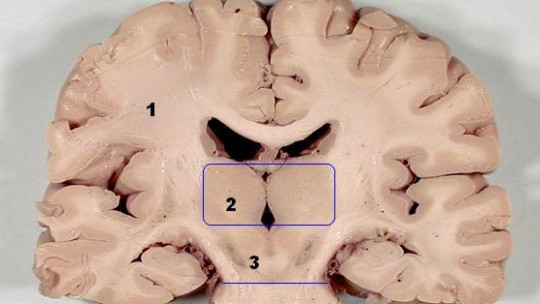
The midbrain, also known as the mesencephalon, is a vital part of the brain located between the forebrain and the hindbrain. Despite its relatively small size, the midbrain plays crucial roles in sensory processing, motor control, and regulating various bodily functions. This article will explore the characteristics, parts, and functions of the midbrain, shedding light on how it contributes to overall brain function and behavior.
What is the midbrain?
The midbrain is one of the parts of the brain stem. It is located in its upper area, above the pons (or pons), and just below the diencephalon, composed mainly of the thalamus and hypothalamus. It is the part of the brain stem closest to the center of the brain, while the pons and medulla oblongata are more oriented toward the spinal cord.
Furthermore, the midbrain is crossed by a narrow canal called the Silvio aqueduct, through which cerebrospinal fluid flows from the third ventricle to the fourth. This liquid has the function of isolating and protecting various structures of the nervous system.
Characteristics of the Midbrain
The midbrain is located in the central part of the brainstem, positioned above the pons and beneath the thalamus and hypothalamus. It acts as a crucial relay center for signals between the brain and the spinal cord. The midbrain is involved in several key processes related to sensory input and motor output, making it a fundamental structure for overall brain function.
- Size and Position: The midbrain is the smallest of the three sections of the brainstem (the other two being the pons and medulla oblongata). It measures about 2-4 cm in length and is located centrally in the brain, making it strategically placed to process and relay information from various regions of the body.
- Structure: The midbrain is composed of both gray matter and white matter. The gray matter contains the cell bodies of neurons, while the white matter consists of myelinated axons that transmit nerve signals rapidly.
- Connection to Other Brain Regions: The midbrain connects the forebrain (which includes structures like the cerebrum and thalamus) to the hindbrain (which includes the cerebellum, pons, and medulla). It also links sensory and motor pathways, allowing for communication between the body and brain.
Parts of the Midbrain
The midbrain consists of several important structures that are involved in sensory processing, motor control, and autonomic functions. These parts include:
How many of these have you been "meaning to read" for months?
- 1
 MajostaLearning To Love MyselfListen Free On Audible
 - 2
 THOUGHT CATALOGThe Mountain Is YouTransforming Self-Sabotage Into Self-MasteryListen Free On Audible
 - 3
 Spiegel & GrauCodependent No MoreHow to Stop Controlling Others and Start Caring for Yourself (Revised and Updated)Listen Free On Audible
1. Tectum
The tectum is located on the dorsal (upper) side of the midbrain and is involved in processing sensory information. It contains two primary structures known as the superior colliculus and the inferior colliculus.
- Superior Colliculus: This structure plays a critical role in visual processing. It helps coordinate eye movements and visual reflexes. The superior colliculus integrates sensory information from the eyes and enables the brain to orient to visual stimuli.
- Inferior Colliculus: The inferior colliculus is involved in auditory processing. It receives input from the ears and helps localize sound, process auditory reflexes, and integrate sound information for higher processing in the auditory cortex.
2. Tegmentum
The tegmentum is located beneath the tectum and is involved in a variety of functions related to motor control and sensory processing. It contains several important structures, including:
- Substantia Nigra: The substantia nigra is a crucial structure involved in the regulation of movement. It produces dopamine, a neurotransmitter that is essential for controlling fine motor skills. The degeneration of neurons in the substantia nigra is associated with Parkinson’s disease, a neurodegenerative disorder characterized by motor difficulties.
- Red Nucleus: The red nucleus plays a role in motor coordination. It is involved in controlling limb movements, particularly in relation to posture and balance.
- Reticular Formation: The reticular formation is a network of neurons that extends through the tegmentum and other parts of the brainstem. It plays a key role in regulating alertness, attention, and consciousness. It is also involved in controlling sleep-wake cycles and filtering sensory information that is not relevant for immediate attention.
3. Cerebral Peduncles
The cerebral peduncles are large bundles of nerve fibers that serve as a conduit for motor signals traveling from the cerebral cortex to the brainstem and spinal cord. They are located on the ventral (front) side of the midbrain and are responsible for transmitting information related to voluntary motor control.
4. Aqueduct of Sylvius (Cerebral Aqueduct)
The cerebral aqueduct is a narrow channel that runs through the midbrain, connecting the third and fourth ventricles of the brain. This structure allows the circulation of cerebrospinal fluid (CSF), which cushions and protects the brain and spinal cord. Blockages in the cerebral aqueduct can lead to a condition called hydrocephalus, where CSF accumulates and causes pressure within the brain.
Functions of the Midbrain
The midbrain is involved in a wide range of critical functions, ranging from sensory processing to motor control and autonomic regulation. Some of the primary functions of the midbrain include:
1. Sensory Processing
The midbrain processes sensory input from the environment, primarily through the superior colliculus (vision) and inferior colliculus (hearing). These structures help integrate sensory signals and enable reflexive responses. The midbrain is essential for the brain’s ability to orient to visual and auditory stimuli, allowing an individual to respond to changes in their surroundings.
2. Motor Control
Motor control is a key function of the midbrain, facilitated by structures such as the substantia nigra and red nucleus. These regions are involved in regulating voluntary movements and motor coordination. The midbrain helps maintain posture, balance, and fine motor skills, which are crucial for performing tasks such as walking, reaching, and grasping objects.
The substantia nigra, through its dopamine-producing neurons, is especially important for motor control. Dysfunction in this area, such as the loss of dopamine-producing cells, leads to the characteristic motor symptoms of Parkinson’s disease.
3. Regulation of Sleep and Wakefulness
The reticular formation in the midbrain plays a major role in regulating sleep and wakefulness. It is responsible for maintaining alertness, attention, and consciousness. The reticular formation also filters out irrelevant sensory information, allowing the brain to focus on stimuli that require attention.
4. Eye Movement and Reflexes
The superior colliculus is instrumental in coordinating eye movements and controlling visual reflexes. It helps individuals quickly direct their gaze toward an object of interest, such as a moving car or a sudden sound. The midbrain also coordinates reflexive eye movements in response to visual stimuli, ensuring that the eyes can rapidly adjust focus and position.
5. Autonomic Function Regulation
The midbrain plays a role in regulating certain autonomic functions, such as heart rate, respiration, and blood pressure. These processes are controlled through connections with other brainstem regions and the hypothalamus.
Associated diseases and injuries
Any injury that affects the lower areas of the brain can reach the midbrain. The consequences of this type of accident are almost always very serious, producing coma or death.
The reason is that the midbrain is a section of the nervous system whose importance is crucial for coordinating basic physiological functions of the organism, and also serves for various types of nervous impulses to reach the groups of higher neurons. Like the midbrain acts as a link between many areas, the presence of anomalies in this area affects many others.
Regarding diseases that affect these structures of the brain, the most common are Alzheimer’s disease and Parkinson’s disease. Both are neurological disorders that interfere with the functioning of large areas of the nervous system, including the midbrain, and can lead to mobility and cognition problems.
The midbrain, despite its small size, is an essential structure in the brain that performs a variety of crucial functions related to sensory processing, motor control, attention, and autonomic regulation. Its parts, including the tectum, tegmentum, and cerebral peduncles, each contribute to different aspects of brain function, from visual and auditory processing to motor coordination and consciousness. The midbrain’s role in controlling motor functions, such as posture and balance, as well as regulating sleep-wake cycles, highlights its importance in maintaining everyday activities and overall health.
Understanding the characteristics, parts, and functions of the midbrain can provide insight into various neurological disorders, such as Parkinson’s disease, that affect motor control and cognitive functions. As research into brain structures continues, the midbrain remains a central area of study for scientists seeking to unravel the complexities of the human brain.
Use this citation format to reference the article clearly and help readers find the original source.
PsychologyFor. (2025). Midbrain: Characteristics, Parts and Functions. PsychologyFor. https://psychologyfor.com/midbrain-characteristics-parts-and-functions/