

See more of our articles in your search results.
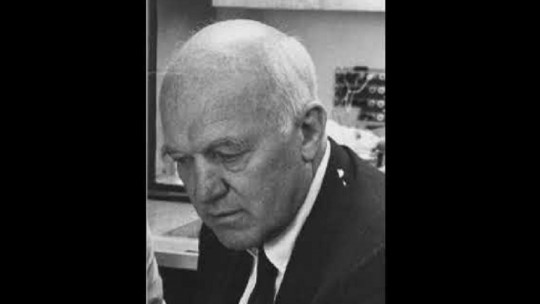
Few psychologists moved as fluently between theories of learning, psychoanalysis, physiology, and clinical practice as Neal E. Miller. His work challenged a stubborn assumption in twentieth-century science: that the body’s automatic functions were beyond voluntary influence. Through experiments on learning, motivation, and biofeedback, Miller helped create a bridge between behaviorism, neuroscience, and behavioral medicine that still shapes psychology today.
His career is especially interesting because it refuses an easy label. Miller was a rigorous experimentalist, but he also took questions from psychoanalysis seriously; he studied rats and laboratory conditioning, yet his findings later influenced approaches to stress, pain, anxiety, and self-regulation in people. That broad intellectual range made him one of the most influential figures in modern experimental psychology, even though many readers now know his work mainly through the later development of biofeedback.
So how did a psychologist studying learning become a pioneer of mind-body research?
This biography traces Neal E. Miller’s education, major theories, partnership with John Dollard, biofeedback experiments, professional influence, and enduring legacy. It also places his accomplishments in the context of behavioral medicine and contemporary psychology.
Who Was Neal E. Miller?
Neal Elgar Miller was an American experimental psychologist born in Milwaukee, Wisconsin, in 1909, whose research transformed the study of learning, motivation, physiological regulation, and biofeedback. He is widely remembered as a major figure in twentieth-century psychology and neuroscience.
How many of these have you been "meaning to read" for months?


Miller’s work repeatedly returned to a central question: how do learned responses shape behavior, emotion, and bodily functioning? Rather than treating thoughts, drives, physical reactions, and learned habits as separate topics, he investigated their connections. This approach helped produce a more integrative psychology, linking laboratory learning principles to clinical and medical questions.
He received his bachelor’s degree from the University of Washington in 1931, completed a master’s degree at Stanford University in 1932, and earned his doctorate from Yale University in 1935. His early training brought him into contact with major currents in behaviorism and psychoanalysis, two traditions often treated as incompatible. Miller was unusually willing to test psychoanalytic ideas through experimental methods.
Over a long career, he worked at Yale University, Rockefeller University, and later returned to Yale as a research affiliate. He also served as president of the American Psychological Association and received major honors, including the National Medal of Science, for work that influenced learning theory, health psychology, and neuroscience.
What Was Neal E. Miller’s Early Life and Education Like?
Neal E. Miller’s early education prepared him for an unusually interdisciplinary career, combining interests in psychology, biology, behavior, and scientific measurement. His academic path gave him both theoretical range and the technical discipline needed for laboratory research.
Miller was born on August 3, 1909, into a family with strong academic interests. His father, Irving Elgar Miller, was an educational psychologist and administrator, which exposed Neal to intellectual life early. This background did not determine his career, but it placed psychological questions close to home and likely made academic work feel like a possible life path.
At the University of Washington, Miller developed a serious interest in psychology and research. His move to Stanford expanded his exposure to experimental traditions, while Yale became the institution most closely associated with his early professional identity. At Yale, he studied under influential figures and became increasingly interested in whether emotional behavior could be examined with the same precision used in animal learning research.
After completing his doctorate, Miller spent time at the Vienna Psychoanalytic Institute. This experience exposed him directly to psychoanalytic thought at a time when Freud’s theories were highly influential but difficult to test scientifically. Miller did not simply accept or reject psychoanalysis; instead, he asked whether concepts such as fear, conflict, repression, and motivation could be translated into testable behavioral questions.
How Did Neal Miller Connect Psychoanalysis and Behaviorism?
Neal E. Miller connected psychoanalysis and behaviorism by attempting to explain emotional conflicts and personality patterns through learning principles such as drive, reinforcement, conditioning, and habit. His approach helped make psychological theories about emotion more experimentally approachable.
At the time, psychoanalysis often focused on unconscious conflict and childhood experience, while behaviorism focused on observable actions and learning histories. The two traditions used very different language. Miller believed that this divide could be narrowed if psychoanalytic ideas were reformulated in ways that allowed them to be studied through controlled experiments.
One important conclusion from his early work was that fear could be learned. If fear functions as a drive, then behavior aimed at reducing fear may become reinforced. This helped explain avoidance: a person may avoid a feared situation because avoidance produces immediate relief, and that relief strengthens the avoidance behavior even when it causes long-term problems.
This reasoning remains important in modern cognitive behavioral therapy. Exposure-based treatments often work by helping people stay in feared situations long enough to learn that avoidance is not necessary for safety. Miller’s work did not create modern exposure therapy by itself, but it contributed to the learning-theory foundation behind later behavioral treatments.
What Did Neal Miller and John Dollard Work On Together?
Neal E. Miller and John Dollard developed influential theories of social learning, personality, frustration, aggression, and imitation. Their collaboration attempted to explain complex human behavior through the interaction of drives, cues, responses, and reinforcement.
Dollard came from sociology, while Miller was trained as an experimental psychologist. Their different backgrounds became a strength. They were interested in how cultural expectations, emotional needs, and learned behavior could be studied without reducing human experience to either pure biology or vague speculation.
In Frustration and Aggression, published with other Yale researchers, Dollard and Miller proposed that frustration creates a tendency toward aggression. The theory was later revised and criticized because human behavior is more complex than a simple frustration-aggression chain. Still, the work became central to debates about anger, violence, displacement, and emotional regulation.
In later books such as Social Learning and Imitation and Personality and Psychotherapy, they argued that personality develops through learned patterns shaped by reinforcement, social cues, and emotional drives. Their work helped create a foundation for social learning approaches later associated with psychologists such as Albert Bandura.
What Was Miller’s Theory of Drives and Learning?
Miller’s learning theory emphasized that behavior is shaped by drives, cues, responses, and rewards. In this framework, people and animals learn behaviors that reduce discomfort, meet needs, or produce rewarding outcomes, gradually forming patterns that can become highly persistent habits.
| Concept | Meaning in Miller’s Learning Framework |
| Drive | An internal state that energizes behavior, such as hunger, fear, or tension |
| Cue | A signal in the environment that guides which response is likely |
| Response | The action a person or animal performs |
| Reward | An outcome that strengthens the response in future situations |
Fear was especially important in Miller’s work. He argued that fear could motivate avoidance, and that avoidance could become reinforced because it provides relief. A child who avoids a classroom presentation may feel better immediately, for example, but that relief can strengthen the long-term avoidance pattern.
This model has practical implications far beyond laboratory research. It helps explain compulsive checking, substance use, procrastination, reassurance-seeking, and many other behaviors that bring short-term relief while creating long-term difficulty. The person does not necessarily enjoy the behavior; they may be responding to a learned system in which relief has become a powerful reward signal.
Miller’s contribution was not to reduce all human life to simple conditioning. Rather, he demonstrated that learning principles could illuminate emotional behavior that had previously seemed too private or complex for scientific study. That insight helped psychology develop more precise models of motivation and behavior change.
How Did Neal Miller Help Create Biofeedback?
Neal E. Miller became a pioneer of biofeedback by showing that some autonomic bodily functions, once thought to be entirely involuntary, could be modified through conditioning and feedback. This finding had major implications for behavioral medicine and self-regulation research.
The autonomic nervous system regulates functions such as heart rate, blood pressure, digestion, and sweating. For many years, psychologists assumed these processes could not be voluntarily influenced in the way a person can move an arm or choose a word. Miller questioned that assumption and designed animal studies to test whether visceral responses could be shaped through instrumental conditioning.
His experiments suggested that animals could learn to alter certain internal physiological responses when those changes were connected to rewards. This work was controversial because it challenged deeply held beliefs about the division between voluntary behavior and automatic bodily function. Miller persisted, refining methods and arguing that the evidence justified a new scientific approach to physiological learning.
Biofeedback later developed into clinical techniques that provide people with real-time information about bodily activity, such as muscle tension, heart rate variability, skin temperature, or brainwave patterns. While biofeedback is not a cure-all, it has become a useful complementary tool in some approaches to chronic pain, stress, anxiety, migraine, pelvic floor rehabilitation, and relaxation training.
Why Was Biofeedback Controversial?
Biofeedback was controversial because Miller’s claims appeared to challenge the long-standing idea that autonomic functions could not be influenced through learning. Some researchers questioned whether his findings could be replicated, while others debated how broadly the results should be applied to human health.
Scientific skepticism was reasonable. Extraordinary claims about bodily control require rigorous evidence, particularly when researchers might be tempted to overgeneralize from animal findings to people. Miller’s work became part of a broader debate about replication, measurement, and the difference between demonstrating a physiological effect in a laboratory and creating a reliable clinical treatment.
Over time, the field of biofeedback became more sophisticated. Researchers developed standardized methods, clearer physiological measures, and more careful clinical applications. The original debate helped improve the science because it forced researchers to ask which kinds of feedback work, for whom, and under what conditions.
Miller’s lasting contribution was not that every autonomic process can be controlled at will. It was the demonstration that the boundary between mind, behavior, and body is more flexible than earlier psychology assumed. That idea became foundational for behavioral medicine and later mind-body research.
What Was Miller’s Role in Behavioral Medicine?
Miller played a major role in behavioral medicine by showing how learning, stress, physiology, and behavior interact. His work encouraged psychologists and physicians to view health not only through disease processes but also through behavioral and emotional factors.
Behavioral medicine examines how habits, stress responses, beliefs, and social environments affect physical health. Miller’s biofeedback research provided a scientific basis for taking these interactions seriously. If physiological responses can be influenced by learning and feedback, then treatment may benefit from addressing both the body and the behavior that shapes it.
His work influenced later research on stress, pain, cardiovascular health, immune functioning, and psychological interventions for medical conditions. It also helped support the idea that patients can participate actively in managing some symptoms through skills such as relaxation, paced breathing, attention training, and self-monitoring.
This perspective was especially important because it resisted a false choice between “physical” and “psychological” explanations. Miller’s research suggested that a symptom can be physically real while also being influenced by learning, stress, and behavior. This integrated view remains central to modern approaches to health psychology.
What Professional Roles and Honors Did Neal Miller Receive?
Neal E. Miller held major academic and professional roles throughout his career, including senior positions at Yale and Rockefeller University, and received some of the highest honors available in American science and psychology for his contributions to learning, physiology, and behavior.
Miller spent approximately three decades associated with Yale University, eventually becoming the first James Rowland Angell Professor of Psychology. In 1966, he moved to Rockefeller University, where he continued research on brain-behavior relationships and biofeedback. Later, he returned to Yale as a research affiliate.
He served as president of the American Psychological Association from 1960 to 1961. He also served in leadership roles connected to neuroscience and behavioral medicine, reflecting the unusual breadth of his influence across fields that were becoming increasingly specialized.
Among his many awards were the APA Distinguished Scientific Contribution Award, the APA Award for Outstanding Lifetime Contributions to Psychology, and the National Medal of Science. These honors recognized not one isolated discovery but a long career of experimental work that changed how psychologists think about learning and physiology.
How Did Neal Miller Influence Modern Psychology?
Neal Miller influenced modern psychology by helping establish the idea that emotions, behavior, learning, and physiology can be studied together. His work shaped later research in behavioral therapy, health psychology, biofeedback, motivation, and neuroscience.
His learning theories helped researchers understand how avoidance, fear, reward, and reinforcement affect behavior over time. These ideas became part of the intellectual background for behavioral interventions that target anxiety, addiction, obsessive-compulsive patterns, and other problems maintained by short-term relief-seeking.
His biofeedback research also helped make self-regulation scientifically credible. Today, people use physiological feedback in clinics, sports training, rehabilitation, and research laboratories. The methods have changed substantially since Miller’s early experiments, but the underlying question remains closely connected to his work: how much can people learn to influence their own bodily responses?
Miller’s career offers a broader lesson for psychology. Important progress often comes from refusing false boundaries, between body and mind, laboratory and clinic, theory and measurement. His willingness to investigate difficult questions through careful experimentation remains one of his most durable legacies.
What Can Students Learn From Neal E. Miller’s Career?
Students can learn from Miller’s career that scientific progress often requires intellectual flexibility, careful experimentation, and a willingness to test ideas from very different traditions. His work shows that interdisciplinary thinking becomes valuable when it is paired with rigorous method.
- Question inherited assumptions, especially assumptions about what can or cannot be measured scientifically.
- Translate broad theories into testable questions rather than accepting or rejecting them only on philosophical grounds.
- Learn across disciplines, since useful insight can come from psychology, biology, medicine, sociology, and neuroscience.
- Accept scientific criticism as part of developing stronger methods and more reliable conclusions.
Miller’s example also shows that a scientific career can evolve. He did not spend his entire life studying one narrow question. His interests moved from psychoanalysis and learning theory toward physiology, biofeedback, behavioral medicine, and neuroscience, while maintaining a consistent focus on how behavior is learned.
That adaptability matters for students today. A field may change, methods may improve, and old theories may need revision. What remains valuable is the ability to ask clear questions, tolerate uncertainty, and follow evidence even when it leads beyond your original intellectual comfort zone.
FAQs about Neal E. Miller
Who was Neal E. Miller?
Neal E. Miller was an American experimental psychologist who lived from 1909 to 2002. He is known for influential work on learning, motivation, fear, biofeedback, behavioral medicine, and the connection between physiological responses and behavior. Miller studied at the University of Washington, Stanford University, and Yale University, where he earned his doctorate in 1935. He later held major academic positions at Yale and Rockefeller University. His research helped show that bodily processes once believed to be entirely involuntary could sometimes be influenced through learning and feedback. He also collaborated with John Dollard on influential theories of social learning, personality, aggression, and reinforcement. Miller’s work remains important in psychology, neuroscience, health psychology, and behavioral medicine.
What is Neal Miller best known for?
Neal Miller is best known for pioneering research related to biofeedback and for his efforts to connect learning theory with emotional and physiological processes. His experiments challenged the belief that autonomic bodily functions, such as certain internal physiological responses, were completely outside the influence of learning. This work helped lay the groundwork for biofeedback techniques that give people information about bodily functions in real time. He is also known for collaborating with John Dollard on social learning theory and for helping explain fear, avoidance, aggression, and personality through reinforcement and conditioning principles. His broad influence reflects his ability to connect laboratory research with questions relevant to clinical psychology and medicine.
What did Neal Miller discover about biofeedback?
Miller’s research suggested that some autonomic or visceral bodily responses could be modified through instrumental conditioning. In simple terms, he showed that if changes in an internal bodily process were followed by reinforcement, animals could sometimes learn to alter that response. This challenged the older assumption that people and animals could not learn to influence bodily processes outside direct conscious control. His findings became part of the foundation for biofeedback, a clinical and research technique that provides real-time information about functions such as muscle tension, heart rate, skin temperature, or brain activity. Modern biofeedback methods are more refined than Miller’s original experiments, but his work helped establish the core idea that learning can influence physiology.
How did Neal Miller work with John Dollard?
Neal Miller and John Dollard collaborated on major theories about learning, personality, imitation, aggression, and motivation. They attempted to explain complex human behavior through drives, cues, responses, and reinforcement, combining elements of psychoanalysis, sociology, and behaviorism. Their books, including Social Learning and Imitation and Personality and Psychotherapy, argued that people learn behavior patterns through rewards, social observation, and the reduction of emotional drives such as fear. Their work helped create a bridge between traditional behaviorist research and later social learning approaches. Although some of their specific theories were revised by later research, their broader effort to explain personality and emotion through testable learning principles had a long-lasting influence on psychology.
Was Neal Miller a behaviorist?
Miller was strongly influenced by behaviorism and experimental learning theory, but describing him as only a behaviorist misses the breadth of his work. He was interested in psychoanalysis, motivation, emotion, physiology, stress, and behavioral medicine, and he repeatedly tried to bring ideas from these areas into experimental psychology. Rather than treating behaviorism as a complete explanation for all human experience, he used learning principles as tools for studying problems that other psychologists often approached through clinical theory or introspection. His work on fear, avoidance, and biofeedback showed how behavioral methods could be used to investigate emotional and bodily processes, making his career more interdisciplinary than a simple behaviorist label suggests.
What was the frustration-aggression hypothesis?
The frustration-aggression hypothesis, associated with Dollard, Miller, and their colleagues, proposed that frustration creates a tendency toward aggression. In its original form, the theory was more absolute than later research supported, and psychologists eventually revised it substantially. Modern research recognizes that frustration can increase the likelihood of anger or aggressive behavior but does not automatically produce aggression in every situation. People may respond to frustration through problem-solving, withdrawal, sadness, anxiety, or other behaviors depending on personality, social norms, emotional regulation, and context. Even though the original theory was simplified, it was historically important because it encouraged researchers to study the relationship between blocked goals, emotion, and behavior through systematic evidence rather than speculation alone.
What awards did Neal E. Miller receive?
Neal E. Miller received many major professional honors during his career. He received the American Psychological Association’s Distinguished Scientific Contribution Award in 1959 and later the APA Award for Outstanding Lifetime Contributions to Psychology in 1991. He also received the National Medal of Science in 1964, one of the highest scientific honors in the United States. Beyond awards, Miller held prominent professional leadership roles, including serving as president of the American Psychological Association from 1960 to 1961. These honors reflected his broad contribution to psychology, learning theory, neuroscience, biofeedback, behavioral medicine, and research on the relationship between brain processes and behavior.
Why is Neal Miller still important today?
Miller remains important because many contemporary fields continue to build on the questions he helped establish. Behavioral therapy still uses learning principles to understand fear, avoidance, reinforcement, and habit change. Health psychology and behavioral medicine continue to examine how stress, behavior, and physiological processes influence health. Biofeedback has evolved into a more sophisticated set of clinical and research tools, but it still reflects Miller’s central insight that people may learn to influence aspects of their own bodily functioning. His career also remains a model of interdisciplinary science, showing that important advances can emerge when researchers connect ideas from psychology, medicine, neuroscience, and clinical practice rather than treating those fields as separate worlds.
Bibliography
- Coon, E. E. (2004). Neal E. Miller: A Biographical Memoir. National Academy of Sciences.
- Dollard, J., Doob, L. W., Miller, N. E., Mowrer, O. H., & Sears, R. R. (1939). Frustration and Aggression. Yale University Press.
- Dollard, J., & Miller, N. E. (1941). Social Learning and Imitation. Yale University Press.
- Dollard, J., & Miller, N. E. (1950). Personality and Psychotherapy. McGraw-Hill.
- Miller, N. E. (1969). Learning of Visceral and Glandular Responses. Science, 163(3866), 434-445.
- Miller, N. E. (1978). Biofeedback and Visceral Learning. Annual Review of Psychology, 29, 373-404.
- American Psychological Association. (2002). Neal Miller: A Giant in American Psychology. APA Monitor.
- Yale University Library. (2024). Neal E. Miller Papers. Yale Archives.
Use this citation format to reference the article clearly and help readers find the original source.
PsychologyFor. (2026). Neal E. Miller: Biography of This Psychologist. PsychologyFor. https://psychologyfor.com/neal-e-miller-biography-of-this-psychologist/