


See more of our articles in your search results.
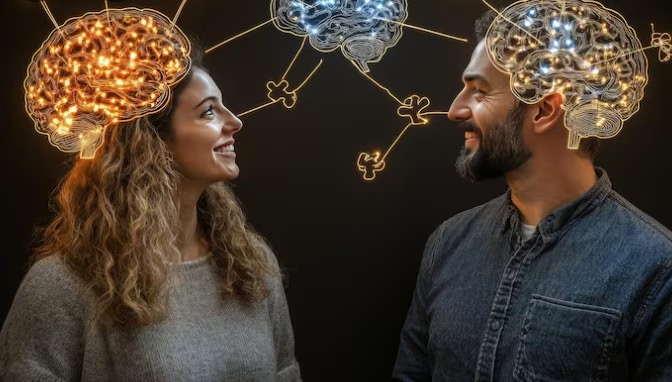
When you think about your brain, you might imagine it as a biological organ determined primarily by genetics—a fixed piece of hardware running the software of your thoughts and behaviors. When you think about culture, you might consider it something external that influences you but exists separately from your biology. Neuroanthropology challenges both these assumptions by revealing that your brain and your culture are not separate entities but deeply intertwined processes that continuously shape each other. This emerging interdisciplinary field examines how cultural practices, beliefs, and environments literally reshape neural structure and function, while simultaneously exploring how our evolved nervous systems constrain and enable the cultural worlds we create.
The questions neuroanthropology addresses are both profound and practical: Why do meditation practices change brain structure differently in experienced practitioners than in novices? How does learning to read rewire visual processing regions that evolved long before written language existed? Why do people from different cultures literally perceive and attend to the world differently at a neural level? How does chronic stress in poverty alter developing brains, and what does this mean for educational interventions? These aren’t just academic curiosities—they have direct implications for education, mental health treatment, social policy, and our understanding of what it means to be human.
Throughout my work as a psychologist, I’ve become increasingly aware that we cannot fully understand the mind by studying either biology or culture alone. A teenage brain developing in contemporary Tokyo faces different environmental demands and develops different neural patterns than one developing in rural Kenya or urban São Paulo, even though the genetic blueprints are fundamentally similar. The meditation practitioner’s brain shows measurably different activation patterns and structural changes compared to non-practitioners, not because of genetic differences but because of sustained cultural practices that literally reshape neural tissue. These observations demand an approach that refuses to separate nature from nurture, biology from culture, brain from environment.
Neuroanthropology emerged in the early 2000s as anthropologists and neuroscientists recognized the limitations of studying either culture or brain in isolation. Traditional anthropology sometimes treated culture as if it operated independently of biological constraints, while neuroscience often studied brains as if they developed and functioned identically across all human populations. Both approaches missed crucial aspects of human experience. Neuroanthropology bridges this divide by insisting that brains are fundamentally cultural organs—shaped from conception onward by the specific cultural environments they develop within—and that cultures are fundamentally neural phenomena, existing only through the embodied practices of neurally-enabled humans. This bidirectional, dynamic relationship between brain and culture represents the core insight that makes neuroanthropology both revolutionary and essential for understanding human nature in the 21st century.
The Foundational Concepts of Neuroanthropology
At its core, neuroanthropology rests on several key theoretical foundations that distinguish it from both traditional neuroscience and classical anthropology. The first foundational concept is neuroplasticity—the brain’s ability to reorganize itself by forming new neural connections throughout life in response to experience, learning, and environmental demands. While neuroscience has long recognized plasticity, neuroanthropology extends this understanding by demonstrating that cultural practices represent some of the most powerful forces shaping neural plasticity. Learning to read, play musical instruments, practice martial arts, meditate, or engage in any sustained cultural activity literally reshapes brain structure and function.
How many of these have you been "meaning to read" for months?
- 1
 William MorrowThe StepsA MemoirListen Free On Audible
 - 2
 Thomas NelsonMaking Peace with What I Can’t ControlFind Relief from the Exhaustion of Overthinking, Trying to Fix Others, and Wanting to Figure It A...Listen Free On Audible
 - 3
 Harper InfluenceThe Angels Among UsHow God’s Messengers Play a Role in HealingListen Free On Audible
The second crucial concept is embodiment—the recognition that cognition isn’t just something that happens in the brain but emerges from the entire body’s interaction with its environment. Our thoughts, emotions, and cultural knowledge are grounded in bodily experience and sensorimotor patterns. Different cultural practices create different embodied skills and different ways of being in the world that have neural correlates. A Japanese tea ceremony master has developed not just cognitive knowledge but deeply embodied skills involving precise movements, aesthetic sensibilities, and emotional states that engage specific neural networks developed through years of practice.
Enculturation represents the third foundational concept—the process by which individuals acquire the cultural knowledge, practices, and patterns characteristic of their society. Neuroanthropology examines enculturation as a fundamentally neural process. From infancy, cultural practices shape neural development. The languages you’re exposed to shape auditory processing. The foods you eat influence taste perception. The social structures you navigate mold emotional regulation circuits. Enculturation isn’t just learning culture; it’s the physical molding of neural tissue according to cultural patterns.
The concept of “brain-culture interaction” or “neuroanthropological synthesis” emphasizes that causation flows in both directions. Culture shapes brains through developmental and experiential plasticity, but brains also constrain what kinds of cultures are possible. Our evolved neural architecture enables language, but specific languages then shape how linguistic areas develop. Our social brain structures make complex societies possible, but specific social organizations then influence how social cognition develops. This bidirectional causation distinguishes neuroanthropology from simplistic biological determinism or cultural relativism.
Distributed cognition represents another important concept—the recognition that thinking doesn’t happen only inside individual skulls but is distributed across bodies, tools, and social groups. When you navigate using GPS, remember something by checking your phone, or solve problems collaboratively, you’re engaging in distributed cognition. Neuroanthropology studies how cultural tools and practices create cognitive systems that transcend individual brains, while also examining how using these tools reshapes the brains that employ them. The medieval scholar memorizing texts developed different hippocampal structures than the modern student Googling information.
Finally, developmental perspectives are crucial to neuroanthropology. The human brain undergoes prolonged development, remaining plastic and culturally shapeable far longer than other species. This extended neural plasticity allows humans to become functional members of radically different cultures, but it also means that early cultural experiences have profound and lasting neural impacts. Developmental neuroanthropology examines how cultural practices during sensitive periods shape trajectories that influence lifelong functioning.

Research Methods in Neuroanthropology
Neuroanthropology’s interdisciplinary nature requires integrating research methods from neuroscience, anthropology, psychology, and other fields. This methodological pluralism represents both a strength—allowing rich, multifaceted understanding—and a challenge requiring researchers to develop expertise across traditionally separate domains. The most characteristic neuroanthropological research combines ethnographic fieldwork with neuroscientific measurement, though the specific methods vary widely depending on research questions.
Ethnographic observation and participation remain foundational methods borrowed from anthropology. Neuroanthropologists spend extended time in communities, participating in daily life and cultural practices while making detailed observations. This immersive fieldwork provides the deep cultural understanding necessary for formulating meaningful questions about brain-culture relationships. You cannot design a useful neuroimaging study of martial arts expertise without understanding the cultural context, training practices, philosophical frameworks, and lived experience of martial artists. Ethnography provides this essential contextualization.
Neuroimaging techniques allow researchers to examine brain structure and function. Functional MRI measures brain activity by detecting blood flow changes, revealing which brain regions activate during specific tasks or experiences. Structural MRI examines brain anatomy, detecting differences in gray matter volume, white matter connectivity, and regional thickness. EEG measures electrical activity with excellent temporal resolution, tracking rapid neural dynamics. Neuroanthropologists use these tools to compare brain patterns between people with different cultural backgrounds, training histories, or experiential expertise.
The power of neuroanthropology emerges when these methods combine. Researchers might conduct ethnographic fieldwork with Tibetan monks, understanding meditation practices deeply, then invite monks and meditation-naive controls to participate in neuroimaging studies examining brain activity during meditation. Or they might study literacy across cultures, using ethnography to understand how different writing systems are taught and used, combined with neuroimaging revealing how learning alphabetic versus logographic scripts differently reorganizes visual processing regions.
Behavioral experiments adapted from cognitive psychology provide quantitative data on perception, attention, memory, and reasoning. Cross-cultural comparisons using standardized tasks reveal how cultural background influences cognitive processes. For example, research shows that people from individualistic Western cultures show different attention patterns—focusing on focal objects—compared to people from collectivistic East Asian cultures who attend more to contextual relationships. These behavioral differences correlate with measurable differences in neural activation patterns.
Longitudinal designs track how brains change as individuals acquire cultural skills. Following music students as they learn instruments, meditation novices as they develop practices, or children as they become literate reveals how cultural learning progressively reshapes neural structure and function. These developmental studies provide crucial evidence about causation—showing that cultural practices cause neural changes rather than just correlating with pre-existing differences.
Intervention studies take this further by experimentally manipulating cultural experience. Researchers might randomly assign participants to learn meditation versus a control activity, then measure resulting neural changes. Such experimental designs provide the strongest evidence for causal relationships between cultural practices and neural outcomes. However, they’re limited by practical and ethical constraints—you can’t experimentally assign people to grow up in different cultures.
Comparative approaches examine the same phenomena across multiple cultural contexts. Instead of just comparing “Western” versus “Eastern” populations, sophisticated neuroanthropological research examines variation across many specific cultural groups, seeking to identify which cultural variables predict which neural differences. This moves beyond simplistic binaries toward more nuanced understanding of culture-brain relationships.
Physiological measures beyond neuroimaging complement brain-focused methods. Measuring stress hormones, immune markers, cardiovascular function, and other bodily systems reveals how cultural experiences shape not just neural functioning but whole-body physiology. The emerging field of cultural physiology examines these broader biological impacts of culture.
Qualitative methods including interviews and life histories provide first-person perspectives on cultural experiences and practices. Understanding how practitioners themselves experience and conceptualize their practices enriches interpretation of neural and behavioral data. A meditation practitioner’s description of their subjective experience helps researchers interpret what brain activation patterns might mean.

Classic Studies and Key Findings
Several landmark studies illustrate neuroanthropology’s insights and methods. Research on meditation expertise provides compelling examples of cultural practice shaping brains. Studies comparing long-term Buddhist meditation practitioners to controls reveal structural differences including increased cortical thickness in regions involved in attention and sensory processing, changes in amygdala structure related to emotional regulation, and altered default mode network function. Longitudinal studies show that even brief meditation training—eight weeks—produces measurable brain changes in novices, while practitioners with 10,000+ hours show dramatic neural reorganization.
Literacy research demonstrates how cultural invention reshapes the brain. Reading is too recent in human evolution for dedicated reading circuits to have evolved, yet literate brains show a remarkably consistent “visual word form area” in left occipitotemporal cortex that responds preferentially to written words. Neuroanthropological research reveals that this region is actually repurposed from circuits originally evolved for object recognition. The specific characteristics of different writing systems—alphabetic, syllabic, logographic—shape how this region develops and functions. Chinese readers show different activation patterns than English readers because the cultural tools they’re mastering differ.
Research on navigational expertise in different cultures reveals how cultural practices shape spatial cognition and its neural substrates. Indigenous Australians who use absolute (cardinal direction) reference frames show different behavioral strategies and different hippocampal activation patterns compared to people who use relative (left/right) frames. Taxi drivers in London, who must learn complex city layouts, show enlarged posterior hippocampi compared to controls. Cultural navigation practices literally reshape the brain’s spatial mapping systems.
Studies of musical expertise demonstrate domain-specific plasticity. Musicians show enhanced auditory cortex response to musical sounds, enlarged motor cortex representations of fingers for their instrument, and structural changes in corpus callosum. Notably, these changes are experience-dependent rather than reflecting pre-existing differences—the younger training begins and the more hours practiced, the greater the neural reorganization. Cultural practices like musical training that require sustained attention, motor precision, and auditory discrimination create corresponding neural specializations.
Cross-cultural research on emotional expression and perception reveals culturally variable neural patterns. While some basic emotions show universal expression and recognition patterns suggesting evolved foundations, culture significantly modulates these processes. East Asian and Western participants show different patterns of eye movement when viewing faces—East Asians attend more to contextual cues while Westerners focus on facial features—and these different attention strategies correlate with different neural activation patterns in face processing regions and attention networks.
Research on pain perception demonstrates cultural modulation of seemingly biological processes. While pain involves universal neural systems, cultural factors influence pain experience dramatically. Cultural beliefs about pain, learned pain responses, and cultural practices like meditation or religious devotion measurably alter pain processing. Neuroimaging reveals that cultural expertise in pain regulation—whether through meditation, religious practice, or other means—engages prefrontal control regions that modulate pain-processing networks.
Studies comparing hunter-gatherer, agricultural, and industrialized populations reveal how different subsistence strategies and social organizations correlate with cognitive and neural differences. While all humans share basic cognitive architecture, specific patterns of attention, memory, social cognition, and other functions show cultural variation. This research demonstrates that contemporary Western, educated, industrialized, rich, democratic (WEIRD) populations represent unusual outliers rather than human universals, challenging psychology’s historical bias toward treating WEIRD samples as representative of humanity.

Applications to Education and Learning
Neuroanthropological insights transform understanding of education and learning. The recognition that cultural practices physically reshape developing brains means that educational experiences during childhood and adolescence have lasting neural impacts. This isn’t just about learning facts but about how the brain’s fundamental architecture organizes itself in response to specific learning environments and practices. Different pedagogical approaches—lecture-based versus experiential, individual versus collaborative, verbal versus visual—engage different neural systems and promote different types of neural development.
The concept of embodied cognition suggests that learning isn’t just about putting information into brains but about developing skilled ways of bodily being in the world. Mathematical understanding involves not just abstract symbolic manipulation but spatial reasoning, finger counting, and other embodied practices that ground mathematical concepts. Science education benefits from hands-on experimentation that engages sensorimotor systems, not just verbal instruction. Physical education and arts aren’t decorative additions but core disciplines developing crucial neural capacities.
Understanding that different writing systems engage neural networks differently has implications for literacy instruction. Alphabetic literacy requires phonological awareness—mapping letters to sounds—engaging left hemisphere language regions. Logographic systems like Chinese require more visual-spatial analysis, engaging bilateral visual regions more extensively. Optimal literacy instruction must account for these differences, and increasingly multilingual education requires understanding how learning multiple scripts with different neural demands impacts development.
The recognition of sensitive periods for neural plasticity suggests that timing matters in education. Language learning is easiest during childhood when auditory and linguistic systems are maximally plastic. Musical training’s neural benefits are greatest when begun early. However, the adult brain remains plastic, meaning that it’s never too late to learn new skills, though the neural mechanisms and optimal instructional approaches may differ across the lifespan.
Cultural differences in learning styles and cognitive patterns suggest that “one size fits all” educational approaches are problematic. Students from different cultural backgrounds may benefit from different instructional methods reflecting their culturally shaped cognitive patterns. Individualistic cultures that emphasize personal achievement may respond to competitive structures, while collectivistic cultures emphasizing group harmony may thrive in collaborative learning environments. Effective education requires cultural responsiveness that accounts for students’ diverse neural-cultural starting points.
Technology’s impact on learning represents a crucial neuroanthropological concern. Digital technologies are creating new cognitive practices—reading on screens, multitasking with devices, navigating information through search rather than memory—that reshape developing brains in ways we’re only beginning to understand. While moral panic about technology damaging brains is likely overblown, understanding how these new cultural practices influence neural development allows informed decisions about technology in education.
Implications for Mental Health and Clinical Practice
Neuroanthropology profoundly impacts understanding and treating mental health conditions. The recognition that culture shapes brains means that mental health cannot be understood through purely biomedical models that treat psychiatric conditions as brain diseases independent of cultural context. Simultaneously, purely social models that ignore neurobiology are incomplete. Mental health conditions emerge from brain-culture interactions, and effective treatment must address both.
Cultural differences in symptom expression mean that psychiatric diagnoses developed in Western contexts may not map neatly onto experiences in other cultures. Depression involves different symptom patterns across cultures—Western depression emphasizes psychological symptoms like sadness while Asian depression often presents through physical complaints. Neuroanthropology examines whether these different presentations reflect cultural variation in expression of similar underlying neural processes or whether culture shapes distinct forms of depression with different neural substrates.
The placebo effect demonstrates culture’s power over biology. Neuroimaging reveals that placebo treatments activate genuine pain-relief and reward circuits in the brain. Cultural beliefs and expectations literally change neural function and symptom experience. This doesn’t mean symptoms are “fake”—the neural changes are real—but rather that cultural meaning influences biological processes. Effective treatment harnesses this brain-culture interaction through therapeutic alliance, cultural meaning-making, and expectancy effects.
Culture-bound syndromes—mental health conditions specific to particular cultures—challenge universal models of psychopathology. Ataque de nervios in Latino cultures, taijin kyofusho in Japan, or koro in Southeast Asia represent culturally specific ways that distress manifests. Neuroanthropology examines whether these reflect culturally shaped expressions of universal neural vulnerabilities or whether culture creates distinct neural patterns of distress. Either way, effective treatment requires cultural competence that understands these conditions within their cultural contexts.
Trauma impacts brains universally through stress systems, but cultural factors influence how trauma is experienced, expressed, and healed. Cultures with strong community support and meaningful healing rituals may facilitate better recovery. Individualistic cultures that emphasize personal resilience while offering limited communal support may complicate healing. Evidence-based treatments developed in Western contexts may require cultural adaptation when applied elsewhere, not just translating words but adapting therapeutic processes to align with different cultural understandings of suffering and healing.
Meditation and mindfulness-based interventions demonstrate how incorporating culturally developed practices into clinical treatment can produce measurable neural changes. These interventions work partly through neuroplasticity—repeated practice literally reshaping emotion regulation circuits—but their effectiveness also depends on cultural context and meaning. Secularized Western mindfulness differs from Buddhist meditation, engaging somewhat different neural processes and serving different purposes. Understanding these differences allows more effective and culturally sensitive clinical applications.
Stigma around mental illness varies dramatically across cultures and influences treatment seeking and recovery. In cultures where mental illness carries intense shame, people may avoid treatment until conditions are severe, leading to worse outcomes. Cultural interventions addressing stigma operate partly by changing neural patterns—reducing amygdala activation in response to mental illness concepts, altering prefrontal cognitive control processes involved in social judgment. Mental health advocacy is partly a project of cultural neuroscience.
Critiques and Limitations
Like any emerging field, neuroanthropology faces important critiques and limitations. One major concern involves the risk of neuro-reductionism—explaining away cultural phenomena by reducing them to brain processes. Critics worry that invoking neuroscience might suggest that culture is “nothing but” neural activity, losing sight of culture’s emergent properties, historical contingency, and political dimensions. Responsible neuroanthropology recognizes that neural explanations complement rather than replace cultural analysis. Finding neural correlates of cultural practices doesn’t reduce culture to biology; it reveals mechanisms through which culture operates.
Methodological challenges include the difficulty of conducting rigorous neuroscientific research in diverse cultural settings. Neuroimaging requires expensive equipment typically available only in wealthy countries. Bringing participants from remote communities to labs may not be feasible or ethical. Even when possible, laboratory settings may not capture culturally embedded practices authentically. Neuroanthropology must develop creative methodologies that maintain scientific rigor while respecting cultural contexts and accessibility.
Sample sizes in neuroimaging research are often small due to cost and logistics, limiting statistical power and generalizability. Cross-cultural comparisons frequently compare only two groups—typically Americans and one other population—which provides limited insight into the full range of human cultural diversity. More nuanced research examining variation across many cultures is necessary but resource-intensive. Replication challenges plague both neuroscience and anthropology, and their combination doesn’t automatically solve these problems.
The question of what qualifies as a cultural difference worthy of neural investigation raises complex issues. Comparing broadly defined cultures like “Western” versus “Eastern” risks oversimplifying enormously diverse populations. But examining very specific practices—Tibetan Buddhist meditation versus Zen meditation—yields findings that may not generalize. Finding the right level of analysis for cultural categories remains an ongoing challenge.
Ethical concerns include the risks of biological essentialism—using neural differences to argue that cultural groups are fundamentally different in ways that might justify discrimination or inequality. Finding neural differences between cultural groups could be misused to naturalize social hierarchies. Neuroanthropology must explicitly reject such interpretations, emphasizing that neural differences reflect plasticity and experience rather than fixed biological categories, and that diversity represents adaptation to different environments rather than hierarchy.
The field’s terminology sometimes creates confusion. Terms like “the social brain” or “cultural brain” risk reifying what are actually complex, distributed processes. Brain regions don’t have single functions—the same neural substrate participates in many processes depending on context. Cultural practices don’t map onto discrete brain areas but involve complex networks. Neuroanthropology requires careful language that avoids oversimplification.
Finally, the relationship between neural and cultural levels of analysis remains theoretically complex. Even when we identify neural correlates of cultural phenomena, questions about causation, emergence, and explanation persist. Does finding neural correlates of cultural practices explain those practices, or simply describe them at a different level? How do we integrate neural and cultural explanations into coherent frameworks? These theoretical questions will likely occupy neuroanthropologists for decades.
The Future of Neuroanthropology
Neuroanthropology is rapidly evolving, with several promising directions for future research. Expansion beyond WEIRD populations represents a crucial priority. Most neuroscience research studies Western, educated, industrialized, rich, democratic populations that represent only a small fraction of human diversity. Conducting neuroscientific research in more diverse cultural settings—indigenous communities, non-Western societies, marginalized populations—will reveal the full range of human brain-culture interactions and challenge assumptions based on limited samples.
Developmental neuroanthropology examining how cultural practices shape neural development from conception through aging remains underdeveloped. Longitudinal studies tracking individuals as they acquire cultural competencies provide crucial evidence about neuroplasticity and sensitive periods. Understanding how early cultural experiences establish trajectories influencing lifelong functioning has profound implications for childcare, education, and policy.
Integration with genetics and epigenetics promises deeper understanding of nature-culture interactions. Gene-culture coevolution research examines how cultural practices create selection pressures influencing genetic evolution, while epigenetics reveals how environmental and cultural experiences influence gene expression. Culture doesn’t just interact with a fixed biological substrate but influences which genes are active, creating multiple levels of brain-culture interaction.
Application to global challenges including mental health disparities, educational inequality, and social conflict represents important applied directions. Understanding how poverty, discrimination, and trauma shape developing brains informs interventions addressing inequality. Examining how cultural practices promote wellbeing suggests approaches for addressing mental health crises. Understanding neural bases of cultural identity and group conflict might inform reconciliation and peacebuilding efforts.
Methodological innovations including mobile neuroimaging, improved analysis techniques, and creative integration of diverse data types will enable more ecologically valid research. Rather than only studying culture in laboratory settings, emerging technologies may allow examining neural processes during authentic cultural practices in natural settings. Advances in data science and computational modeling permit integrating ethnographic, behavioral, and neural data into comprehensive models of brain-culture systems.
Theoretical development remains essential. Neuroanthropology needs robust frameworks explaining how neural and cultural levels of analysis relate, how to integrate evidence from multiple disciplines, and how to avoid reductionism while maintaining scientific rigor. Dialogue with philosophy of mind, cognitive science, and social theory will enrich conceptual foundations.
Greater attention to power, politics, and inequality represents an important evolution. Early neuroanthropology sometimes focused narrowly on cultural difference without adequately addressing how social structures, power dynamics, and historical forces shape both brains and cultures. Future neuroanthropology must examine how colonialism, capitalism, racism, and other systems of power create unequal developmental environments that shape brains unequally, while avoiding biological determinism that might naturalize inequality.
Public engagement and science communication about neuroanthropology will grow in importance. Findings about brain-culture interactions have profound implications for policy, education, and public understanding of human nature. Communicating these findings responsibly—emphasizing plasticity, diversity, and context-dependence while avoiding oversimplification and biological determinism—represents a crucial responsibility for the field.
FAQs About Neuroanthropology
Is neuroanthropology trying to prove that culture is biologically determined?
No, quite the opposite. Neuroanthropology explicitly rejects biological determinism by demonstrating that brains are not fixed biological machines but highly plastic organs continuously shaped by cultural experience. Rather than reducing culture to biology, neuroanthropology shows that biology and culture are inseparable, mutually constituting systems. The finding that cultural practices reshape brain structure demonstrates culture’s power over biology, not biological determinism. Neuroanthropology reveals that human nature is fundamentally cultural—our evolved capacity for neural plasticity enables us to become functional members of radically different cultural worlds. This understanding challenges both biological determinism (which treats behavior as genetically fixed) and extreme cultural relativism (which ignores biological constraints), instead revealing the deep integration of biological and cultural processes.
Can neuroanthropology explain all aspects of culture?
No, and it doesn’t attempt to. Neuroanthropology provides one important lens for understanding culture but cannot and should not replace other forms of cultural analysis. Cultural phenomena have historical, political, economic, and symbolic dimensions that neural explanations don’t address. Knowing the neural correlates of religious experience doesn’t explain why particular religious forms emerge in specific historical contexts, what social functions they serve, or how power operates through religious institutions. Neuroanthropology works best alongside rather than replacing traditional anthropological, historical, and sociological approaches. It answers certain types of questions—about how cultural practices are learned, how they shape perception and cognition, what enables their transmission—while other questions require different analytical frameworks. The goal is interdisciplinary integration, not reductionist replacement of cultural analysis with neuroscience.
If culture shapes brains, does that mean people from different cultures have different types of brains?
Yes and no. All humans share the same basic brain architecture evolved over millions of years—the same major structures, same neurotransmitter systems, same fundamental capacities. Cultural differences don’t create different “types” of brains in the way that different species have different brains. However, within this shared architecture, cultural experiences shape the specific patterns of connectivity, regional development, and functional organization. It’s more accurate to say that culture creates variation in how universal neural systems develop and function rather than creating categorically different brain types. The differences are matters of degree and pattern rather than kind. Importantly, these culturally shaped neural differences reflect plasticity and experience, not fixed biological categories. Someone raised in one culture who moves to another can develop new neural patterns through enculturation in the new environment, demonstrating flexibility rather than rigid biological determination.
What are the ethical implications of discovering neural differences between cultural groups?
This is a crucial concern requiring careful consideration. Neural differences between cultural groups could potentially be misused to justify discrimination, claiming that certain groups are biologically inferior or that social inequalities are natural rather than socially constructed. Neuroanthropologists must explicitly reject such interpretations and communicate clearly that neural differences reflect plastic adaptation to different cultural environments rather than fixed hierarchies of capacity. Finding that meditation experts have different brain structures than novices doesn’t mean experts are “better brains”—it means their brains have adapted to their sustained practice. Similarly, neural differences related to literacy, language, or other cultural skills reflect learning and experience, not inherent superiority. The ethical responsibility includes studying diverse populations respectfully, ensuring communities benefit from research, avoiding deficit framing of non-WEIRD populations, and communicating findings in ways that celebrate human diversity while acknowledging universal capacities.
How does neuroanthropology differ from cultural neuroscience?
These terms are sometimes used interchangeably, but subtle differences exist. Cultural neuroscience typically involves neuroscientists applying their methods to questions about cultural variation, often using cross-cultural comparisons of brain function. Neuroanthropology typically involves deeper ethnographic engagement and anthropological theory, emphasizing extended fieldwork and holistic cultural understanding alongside neuroscience. Cultural neuroscience might compare American and Japanese participants’ neural responses to specific stimuli, while neuroanthropology might involve extended fieldwork in Japan understanding cultural practices, then designing neuroscience studies informed by that deep cultural knowledge. The distinction isn’t absolute—many researchers integrate both approaches—but neuroanthropology tends to emphasize anthropological methods and theory more heavily. Both fields share the commitment to understanding brain-culture interactions and often collaborate productively. The choice between terms sometimes reflects disciplinary background (anthropology versus psychology or neuroscience) more than fundamental differences in approach.
Use this citation format to reference the article clearly and help readers find the original source.
PsychologyFor. (2025). Neuroanthropology: What it is and How it is Researched. PsychologyFor. https://psychologyfor.com/neuroanthropology-what-it-is-and-how-it-is-researched/