

See more of our articles in your search results.
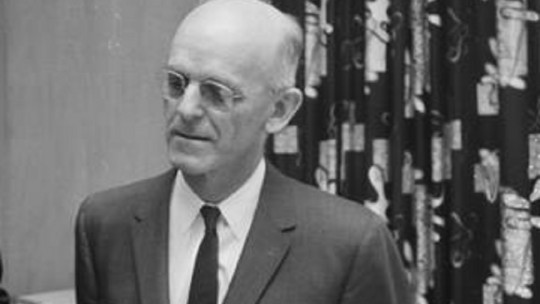
Most people have never heard of Orval Hobart Mowrer, but if you’ve ever been in therapy, taken a psychology course, or even heard someone talk about facing their fears to overcome anxiety, you’ve encountered his ideas. This is the man who fundamentally changed how we understand learning, fear, and the treatment of mental health conditions. Yet his story is far more complex and tragic than the typical narrative of scientific triumph.
Mowrer wasn’t just another academic psychologist publishing papers from an ivory tower. He was someone who wrestled with his own demons, battled severe depression, and ultimately took his own life at age 75. What makes his story particularly compelling is how his personal struggles informed his professional work, and how his theoretical innovations emerged from a deep understanding of human suffering—both his own and that of his patients.
Born in 1907 in Unionville, Missouri, Mowrer grew up during a time when psychology was still finding its footing as a legitimate science. Behaviorism dominated the field, with its focus on observable actions rather than internal mental states. But Mowrer saw the limitations of this approach early on. He recognized that to truly understand human behavior, you had to account for the role of emotions, cognition, and personal responsibility—concepts that many of his contemporaries dismissed as unscientific.
His most famous contribution to psychology is probably the two-factor theory of learning, which explained how fears develop and persist. But that’s just one piece of a much larger puzzle. Mowrer also developed groundbreaking treatments for bedwetting in children, challenged the therapeutic establishment with his integrity theory, and spent the latter part of his career advocating for a more humanistic approach to mental health treatment that emphasized personal responsibility and moral integrity.
What struck me most when I first learned about Mowrer’s work was how ahead of his time he was. While the field was rigidly divided between behaviorists who ignored mental processes and psychoanalysts who focused on unconscious drives, Mowrer was developing integrated approaches that considered behavior, emotion, and cognition together. His ideas about the importance of taking responsibility for one’s actions and making amends for past wrongs sound remarkably similar to concepts we see in modern cognitive-behavioral therapy and acceptance-based treatments.
How many of these have you been "meaning to read" for months?


But Mowrer’s life wasn’t just about professional achievements. His personal struggles with depression and guilt profoundly shaped his theoretical work, particularly his later emphasis on the role of guilt and conscience in mental health. This wasn’t abstract theorizing—it was a man trying to understand his own psychological pain and find a way forward. In many ways, his entire career can be seen as an extended attempt to develop a psychology that could address the kinds of suffering he knew intimately.
Early Life and the Making of a Revolutionary Thinker
Orval Hobart Mowrer was born on January 23, 1907, in the small town of Unionville, Missouri, to parents who instilled in him a strong moral foundation that would later influence his psychological theories. His father was a farmer and businessman, while his mother came from a family that valued education and intellectual pursuits. This combination of practical, hardworking values and intellectual curiosity would characterize Mowrer throughout his life.
Growing up in rural Missouri during the early 1900s meant witnessing a society in transition. Traditional values were being challenged by rapid social change, and young Mowrer seems to have been acutely aware of the tensions between old and new ways of thinking. This sensitivity to moral and social conflicts would later manifest in his professional interest in guilt, responsibility, and ethical behavior.
As a student, Mowrer showed exceptional promise. He was the kind of young person who questioned everything, never satisfied with simple answers to complex problems. His teachers recognized his intellectual gifts early, but they also noted something else: an intensity and seriousness that set him apart from his peers. Even as a teenager, Mowrer seemed to carry the weight of the world on his shoulders.
After high school, Mowrer attended the University of Missouri, where he initially planned to study English literature. However, he soon discovered psychology and found it offered a more systematic way to explore the questions about human nature that had always fascinated him. His undergraduate professors were impressed by his analytical mind and his ability to see connections between seemingly unrelated phenomena.
The 1920s were an exciting time to be studying psychology. The field was young and dynamic, with competing schools of thought battling for supremacy. Behaviorism, led by figures like John B. Watson, argued that psychology should focus only on observable behaviors. Psychoanalysis, following Freud’s lead, emphasized unconscious drives and early childhood experiences. Mowrer found elements of truth in both approaches but was dissatisfied with their limitations.
During his undergraduate years, Mowrer began to develop what would become a lifelong pattern: the tendency to synthesize different theoretical approaches rather than commit to any single school of thought. His professors sometimes found this frustrating, wishing he would pick a side in the ongoing theoretical debates. But Mowrer’s refusal to fit neatly into any single category would ultimately become one of his greatest strengths as a researcher and theorist.
After graduating from the University of Missouri in 1929, Mowrer went on to pursue graduate studies at Johns Hopkins University, one of the premier psychology programs in the country. It was there that he would encounter the mentors and ideas that would shape his revolutionary approach to understanding human behavior and mental health.

Academic Journey and the Birth of Two-Factor Theory
At Johns Hopkins, Mowrer worked under Knight Dunlap, a psychologist who was known for challenging conventional wisdom and encouraging his students to think independently. Dunlap’s influence on Mowrer cannot be overstated—he taught the young graduate student that scientific progress comes from questioning assumptions, not from blindly following established authorities.
Mowrer’s doctoral dissertation focused on learning theory, but even in this early work, you can see hints of the innovations that would make him famous. While his contemporaries were content to study simple behaviors in controlled laboratory settings, Mowrer was already thinking about how learning principles might apply to complex human emotions like fear and anxiety.
After completing his PhD in 1932, Mowrer accepted a position at Yale University, where he would spend some of the most productive years of his career. Yale in the 1930s was a hotbed of psychological research, with luminaries like Clark Hull developing mathematical models of learning and behavior. But Mowrer was already beginning to chart his own course.
It was during his time at Yale that Mowrer developed his most famous contribution to psychology: the two-factor theory of learning and avoidance. The theory emerged from his attempts to understand why fears and phobias are so persistent and difficult to overcome. Traditional learning theory suggested that unreinforced behaviors should gradually disappear, but phobias often seemed to get stronger over time rather than weaker.
Mowrer’s insight was revolutionary in its simplicity. He proposed that avoidance learning involves two distinct processes: first, classical conditioning creates the fear response, and second, operant conditioning maintains the avoidance behavior. When someone encounters a traumatic situation, they learn to fear not just the original stimulus but also the situations and cues associated with it. Then, by avoiding these feared situations, they never have the chance to learn that they’re actually safe.
This wasn’t just abstract theorizing. Mowrer tested his ideas through carefully designed experiments, often using himself as a subject. In one famous study, he conditioned himself to fear a particular tone by pairing it with electric shock, then studied how his own avoidance behaviors developed and persisted. This willingness to use himself as a research subject reflected both his scientific rigor and his personal courage.
The implications of two-factor theory were enormous. It provided the first convincing explanation for why phobias persist and suggested new approaches to treatment. If avoidance maintains fear, then the key to overcoming phobias might be to prevent avoidance and allow people to learn that their fears are unfounded. This insight would later form the basis for exposure-based treatments that are still used today.
But Mowrer wasn’t content to rest on his theoretical laurels. He was always looking for ways to apply his ideas to real-world problems, and one of his most practical innovations came from an unexpected source: his work with children who suffered from bedwetting.
The Bell and Pad Method and Practical Applications
In the 1930s and 1940s, bedwetting was considered a sign of psychological disturbance, and children who suffered from it were often subjected to harsh punishments or lengthy psychoanalytic treatments. Mowrer saw this as both cruel and ineffective, and he set out to develop a more humane and scientific approach to the problem.
Working with his wife Willie Mae, who was also a psychologist, Mowrer developed what became known as the “bell and pad” method. The device was elegantly simple: a special pad was placed under the child’s sheet, connected to a bell or buzzer. When the child began to urinate during sleep, the moisture would complete an electrical circuit and sound the alarm, waking the child so they could finish urinating in the bathroom.
The method was based on Mowrer’s understanding of classical conditioning. The idea was that over time, the child would learn to associate the sensation of a full bladder with waking up, even without the alarm. It was a practical application of learning principles that didn’t require years of therapy or invasive medical interventions.
What made this innovation particularly remarkable was its humanitarian aspect. At a time when children with bedwetting problems were often shamed and punished, Mowrer offered a treatment that was both effective and respectful of the child’s dignity. He insisted that parents approach the problem with patience and understanding rather than blame and frustration.
The bell and pad method proved to be remarkably effective, with success rates often exceeding 80%. More importantly, it demonstrated Mowrer’s ability to translate theoretical insights into practical solutions for human suffering. This wasn’t psychology for its own sake—it was psychology in service of helping people live better lives.
The success of the bell and pad method also reinforced Mowrer’s belief in the importance of taking personal responsibility for change. The treatment required active participation from both the child and the parents, and Mowrer emphasized that success depended on commitment and persistence rather than passive reception of treatment from an expert.
This emphasis on personal responsibility would become increasingly important in Mowrer’s later work, particularly as he began to develop his ideas about the role of guilt and moral behavior in psychological health. But first, his career would take an unexpected turn that would challenge many of his assumptions about human nature and the causes of mental illness.
Personal Struggles and the Development of Integrity Theory
Despite his professional success, Mowrer’s personal life was marked by periods of severe depression that began in the 1940s and continued throughout his career. These weren’t just temporary mood slumps—they were debilitating episodes that left him unable to work and questioning everything he believed about psychology and human nature.
What made Mowrer’s depression particularly difficult was that it seemed to contradict his own theoretical understanding of mental health. According to the prevailing wisdom of the time, depression was caused by either biological factors or unconscious conflicts from childhood. But Mowrer’s depression didn’t seem to fit these explanations, and traditional treatments were largely ineffective for him.
It was during one of his most severe depressive episodes in the 1960s that Mowrer began to develop what he called “integrity therapy.” This approach represented a radical departure from both psychoanalytic and behavioral treatments of the time. Instead of focusing on unconscious drives or learned behaviors, integrity therapy emphasized the role of guilt, responsibility, and moral behavior in psychological health.
Mowrer’s central insight was that much mental illness, particularly depression and anxiety, stems from violations of one’s moral code—what he called “real guilt” as opposed to neurotic guilt. According to this theory, people become depressed not because of chemical imbalances or repressed memories, but because they have acted in ways that violate their own values and have failed to take responsibility for these actions.
This was a controversial idea that challenged the fundamental assumptions of modern psychotherapy. Most therapists were trained to help clients overcome feelings of guilt, viewing such feelings as obstacles to mental health. Mowrer argued the opposite: that guilt often serves an important moral function and that trying to eliminate it without addressing its underlying causes could actually make people sicker.
The treatment implications of integrity therapy were equally radical. Instead of helping clients understand their past or change their thinking patterns, integrity therapists encouraged people to acknowledge their wrongdoings, make amends where possible, and commit to living more ethically in the future. This approach shared some similarities with religious confession and twelve-step programs, but it was grounded in psychological theory rather than spiritual doctrine.
Mowrer’s personal experience with depression profoundly influenced his development of integrity theory. He came to believe that his own depressive episodes were related to actions and omissions in his life that violated his moral principles. This wasn’t self-blame or pathological guilt—it was what he saw as a realistic assessment of the connection between behavior and psychological well-being.
The reaction to integrity therapy from the psychological establishment was mixed at best. Many colleagues viewed it as a regression to moralistic approaches that psychology had worked hard to leave behind. Critics argued that Mowrer was conflating moral and psychological issues and that his approach risked shaming people rather than helping them heal.
Challenging the Therapeutic Establishment
Mowrer’s advocacy for integrity therapy put him at odds with much of the psychological establishment, but he was never one to shy away from controversy. Throughout the 1960s and early 1970s, he became increasingly vocal in his criticism of traditional psychotherapy, arguing that it was not only ineffective but actually harmful in many cases.
His critique was multifaceted and devastating. First, he argued that psychotherapy’s emphasis on understanding the past and exploring unconscious motivations distracted people from taking responsibility for their current behavior. By encouraging clients to see themselves as victims of their circumstances or unconscious drives, traditional therapy actually undermined personal agency and responsibility.
Second, Mowrer criticized the professional distance maintained by most therapists. He argued that the traditional therapeutic relationship, with its emphasis on neutrality and non-judgment, prevented the kind of honest moral confrontation that he believed was necessary for genuine healing. In integrity therapy, therapists were encouraged to share their own struggles and moral failures, creating a more egalitarian relationship based on mutual honesty.
Third, Mowrer questioned the effectiveness of individual therapy altogether. He became a strong advocate for group therapy, arguing that healing happens best in the context of community. In his integrity groups, members were encouraged to share their moral struggles openly and to hold each other accountable for positive change.
These ideas put Mowrer at the center of heated debates about the nature and purpose of psychotherapy. Supporters saw him as a courageous voice challenging a profession that had lost its way, while critics viewed him as a dangerous radical who was undermining decades of scientific progress in mental health treatment.
The controversy intensified when Mowrer began to argue that many mental health professionals were themselves psychologically unhealthy and were using their positions to avoid confronting their own moral failures. This was not a popular message in a profession that prided itself on scientific objectivity and therapeutic expertise.
Despite the criticism, Mowrer’s ideas attracted a devoted following, particularly among practitioners who had become disillusioned with traditional approaches to therapy. Integrity therapy groups sprang up around the country, and several training programs were established to teach Mowrer’s methods.
What made Mowrer’s challenge to the establishment particularly powerful was that it came from someone with impeccable scientific credentials. This wasn’t an outsider attacking psychology from the margins—it was one of the field’s most respected researchers arguing that the profession had fundamentally misunderstood the nature of mental illness and recovery.
Later Career and Continued Innovation
In 1948, Mowrer moved from Yale to the University of Illinois, where he would spend the remainder of his academic career. The move marked a new phase in his professional development, as he became increasingly interested in applying his theoretical insights to practical problems in education and social reform.
At Illinois, Mowrer continued to refine his learning theories while expanding his focus to include broader questions about human nature and social organization. He became involved in various educational innovations, arguing that schools could be more effective if they applied sound psychological principles to the learning process.
One of his most interesting contributions during this period was his work on what he called “neurotic paradox.” Mowrer observed that many psychological symptoms seem to persist despite being clearly harmful to the individual. Why, he wondered, do people continue to engage in behaviors that cause them suffering?
His answer drew on both his learning theory and his integrity therapy concepts. Mowrer argued that neurotic behaviors often serve to avoid even more painful confrontations with one’s moral failures. A person might remain depressed, for example, because depression provides an excuse for not taking the difficult steps necessary to address the real sources of their guilt and shame.
This insight led Mowrer to develop innovative treatment approaches that focused on helping people face their fears and take constructive action rather than simply reducing symptoms. He became an early advocate for what we now call behavioral activation—the idea that mood often improves when people engage in meaningful, value-driven activities rather than waiting to feel better before taking action.
Throughout the 1970s, Mowrer continued to write prolifically and speak at conferences around the world. His later works showed increasing integration of his various theoretical contributions, presenting a comprehensive vision of human psychology that combined rigorous scientific method with deep concern for moral and ethical development.
He also became increasingly interested in the social and political implications of his work. Mowrer argued that many of society’s problems stemmed from the same kinds of moral failures that he saw in individual psychological distress. He called for a “new morality” based on scientific understanding of human nature rather than religious doctrine or social convention.
Despite his continued productivity, Mowrer’s personal struggles with depression persisted. Colleagues noted that he seemed to carry a heavy burden of sadness even during periods of professional success. His commitment to integrity therapy principles meant that he was constantly examining his own moral failings, which may have intensified his psychological pain even as it informed his theoretical work.
Legacy and Influence on Modern Psychology
Orval Hobart Mowrer’s influence on psychology extends far beyond his specific theoretical contributions. His willingness to challenge established thinking and integrate insights from different traditions helped pave the way for the more eclectic and flexible approaches that characterize modern psychotherapy.
The two-factor theory of avoidance learning remains one of the most important concepts in understanding anxiety disorders and phobias. Modern exposure-based treatments for anxiety, including systematic desensitization and flooding techniques, can trace their theoretical roots directly to Mowrer’s insights about the role of avoidance in maintaining fear.
His work on bedwetting revolutionized the treatment of childhood enuresis and demonstrated the power of applying learning principles to practical problems. The bell and pad method is still used today, and it has served as a model for developing behavioral treatments for other childhood problems.
Perhaps more importantly, Mowrer’s emphasis on personal responsibility and moral behavior anticipated many developments in contemporary psychology. His integrity therapy shares important features with modern approaches like Acceptance and Commitment Therapy, which emphasizes values-based living and psychological flexibility.
The growing interest in positive psychology, with its focus on character development and human flourishing, also reflects themes that Mowrer explored throughout his career. His argument that mental health requires more than just the absence of symptoms resonates with current efforts to understand what makes life worth living.
Mowrer’s critique of traditional psychotherapy also proved prescient in many ways. His concerns about the effectiveness of insight-oriented treatments have been supported by decades of outcome research showing that behavioral and cognitive-behavioral approaches are often more effective than purely psychodynamic treatments.
His advocacy for group therapy and peer support anticipated the current emphasis on community-based mental health treatment and the recognition that healing often happens best in relationships rather than in isolation. Many modern therapeutic communities and self-help groups embody principles that Mowrer articulated decades ago.
Even his controversial ideas about the role of guilt in mental health have found new relevance in recent research on moral psychology and the relationship between ethical behavior and well-being. While few modern therapists would embrace integrity therapy in its original form, many now recognize that issues of meaning, values, and moral identity are central to psychological health.
Tragically, Mowrer was never able to fully resolve his own psychological struggles. On February 18, 1982, at the age of 75, he took his own life at his home in Galesburg, Illinois. His death was a profound loss to the field of psychology and a reminder of the complex relationship between professional expertise and personal well-being.
The Enduring Questions Mowrer Raised
More than four decades after his death, Orval Hobart Mowrer’s work continues to raise important questions about the nature of psychological health and the proper goals of mental health treatment. His career serves as a reminder that psychology is not just an academic discipline but a field with profound implications for how people live their lives.
One of the most enduring questions Mowrer raised concerns the relationship between scientific psychology and moral philosophy. Can psychology be truly value-neutral, or does effective treatment inevitably involve judgments about what constitutes a good life? Mowrer’s integrity therapy suggested that mental health professionals cannot avoid moral questions, even if they pretend to maintain scientific objectivity.
His work also highlighted the tension between symptom reduction and character development as goals of treatment. While most modern therapies focus on eliminating specific symptoms like depression or anxiety, Mowrer argued that lasting psychological health requires broader changes in how people live and relate to others.
The question of personal responsibility in mental health treatment remains controversial today. How much should individuals be held accountable for their psychological problems and their recovery? Mowrer’s emphasis on responsibility was sometimes criticized as victim-blaming, but he saw it as empowering—the idea that people have more control over their psychological well-being than they typically realize.
Perhaps most importantly, Mowrer’s life and work raise profound questions about the nature of expertise in psychology. His own struggles with depression despite his professional knowledge serve as a humbling reminder that understanding human behavior intellectually is very different from living a psychologically healthy life.
These questions don’t have easy answers, but they reflect the kind of deep thinking that characterized Mowrer’s approach to psychology throughout his career. He was never satisfied with simple solutions or comfortable theories that ignored inconvenient facts. His willingness to follow his ideas wherever they led, even when it meant challenging established authorities or confronting uncomfortable truths about himself, exemplifies the kind of intellectual courage that advances scientific understanding.
Today’s psychology students and practitioners can learn much from Mowrer’s example, not just about specific theories or techniques, but about the importance of integrating scientific rigor with genuine concern for human welfare. His legacy reminds us that psychology at its best is both a science and a calling—a systematic effort to understand human nature in service of reducing suffering and promoting human flourishing.
FAQs About Orval Hobart Mowrer
What is Orval Hobart Mowrer most famous for?
Mowrer is best known for his two-factor theory of learning and avoidance, which explains how fears and phobias develop and persist. He’s also famous for developing the bell and pad method for treating bedwetting in children and for his later work on integrity therapy, which emphasized personal responsibility and moral behavior in mental health treatment.
How did Mowrer’s personal struggles influence his professional work?
Mowrer’s own battles with severe depression profoundly shaped his theoretical development, particularly his integrity therapy. His personal experience led him to believe that much mental illness stems from violations of one’s moral code, and he developed treatment approaches that emphasized taking responsibility for one’s actions and making amends for past wrongs.
What was revolutionary about the two-factor theory?
The two-factor theory explained why phobias persist even when people know their fears are irrational. Mowrer showed that avoidance learning involves two processes: classical conditioning creates the fear, and operant conditioning maintains the avoidance behavior. This insight became the foundation for modern exposure-based treatments for anxiety disorders.
How did the bell and pad method work?
The device used classical conditioning principles to treat bedwetting. A moisture-sensitive pad placed under the child’s sheet was connected to an alarm that would wake the child when urination began. Over time, the child learned to associate bladder fullness with waking up, eliminating the bedwetting problem in about 80% of cases.
What was integrity therapy and why was it controversial?
Integrity therapy emphasized the role of guilt and moral responsibility in mental health. Mowrer argued that much depression and anxiety stems from “real guilt” over moral violations rather than neurotic guilt from unconscious conflicts. The approach was controversial because it challenged the field’s movement away from moralistic interpretations of mental illness.
How did Mowrer challenge traditional psychotherapy?
Mowrer criticized traditional therapy for encouraging people to see themselves as victims of their circumstances rather than taking responsibility for their behavior. He argued that the emphasis on exploring the past distracted from making positive changes in the present, and he advocated for group therapy and peer support over individual treatment.
What influence does Mowrer have on modern psychology?
Mowrer’s work influenced exposure therapy for anxiety disorders, behavioral treatments for childhood problems, and the development of more integrated approaches to psychotherapy. His emphasis on values and personal responsibility anticipates modern approaches like Acceptance and Commitment Therapy and positive psychology.
Why did Mowrer move from Yale to the University of Illinois?
Mowrer joined the University of Illinois in 1948, where he spent the remainder of his academic career. The move allowed him to expand his focus beyond learning theory to include broader applications of psychological principles to education and social reform, while continuing to develop his integrity therapy approach.
How did Mowrer’s work contribute to our understanding of guilt?
Mowrer distinguished between “real guilt” from actual moral violations and neurotic guilt from unconscious conflicts. He argued that real guilt serves an important function in psychological health and that trying to eliminate it without addressing underlying moral issues could be harmful. This perspective influenced modern research on moral psychology and ethical behavior.
What was tragic about Mowrer’s personal life?
Despite his professional achievements and deep understanding of human psychology, Mowrer struggled with severe depression throughout his career. He was never able to fully resolve his own psychological difficulties and ultimately died by suicide in 1982 at age 75, highlighting the complex relationship between professional expertise and personal well-being.
How did Mowrer’s rural upbringing influence his psychology?
Growing up in rural Missouri instilled in Mowrer strong moral values and an appreciation for personal responsibility that would later influence his integrity therapy. His background also gave him a practical, no-nonsense approach to psychology that emphasized real-world applications over abstract theorizing.
What made Mowrer different from other learning theorists of his time?
While most learning theorists focused purely on observable behaviors, Mowrer recognized the importance of emotions and cognition in understanding human behavior. He was willing to integrate insights from different theoretical traditions rather than committing to any single approach, making him more flexible and innovative than many of his contemporaries.
How did Mowrer’s work anticipate modern therapeutic approaches?
Mowrer’s emphasis on values, personal responsibility, and behavioral change anticipated many features of modern cognitive-behavioral and acceptance-based therapies. His focus on group treatment and peer support also foreshadowed the community mental health movement and the recognition that healing often happens in relationships rather than in isolation.
What can modern psychology learn from Mowrer’s example?
Mowrer’s career demonstrates the importance of intellectual courage, theoretical integration, and genuine concern for human welfare in psychological research and practice. His willingness to challenge established thinking and follow his ideas wherever they led, even when it meant personal or professional difficulty, exemplifies the kind of commitment that advances scientific understanding.
Use this citation format to reference the article clearly and help readers find the original source.
PsychologyFor. (2025). Orval Hobart Mowrer: Biography of This Psychologist and Researcher. PsychologyFor. https://psychologyfor.com/orval-hobart-mowrer-biography-of-this-psychologist-and-researcher/