

See more of our articles in your search results.
Maybe you’ve watched a loved one recover from a stroke and noticed something genuinely strange: they can speak clearly, recognize faces without issue, yet they consistently bump into furniture on one side of a room as though that entire side of space simply doesn’t exist for them anymore. Or perhaps you’ve experienced a version of this yourself, momentarily unable to tell your left hand from your right, or reaching for a cup and somehow missing it entirely despite looking directly at it. These deeply disorienting experiences point to one specific, fascinating region of the brain: the parietal lobe, a structure that quietly does the work of stitching together everything you feel, see, and sense into one coherent understanding of where you are in the world.
Understanding this brain region matters far beyond academic curiosity, because when it’s damaged, the resulting symptoms can be genuinely bewildering for both patients and the people caring for them. A person might lose the ability to recognize their own hand by touch alone, struggle to copy a simple drawing, or develop a condition where they sincerely deny that one side of their body belongs to them at all. These symptoms often get misread as confusion, stubbornness, or even psychological denial, when they actually reflect a very specific, measurable disruption in how the brain integrates sensory information. Recognizing the parietal lobe’s role helps families, caregivers, and patients themselves make sense of experiences that would otherwise feel frighteningly inexplicable.
So what exactly does this region do, and how does it accomplish something as complex as building your sense of space?
This article explores the parietal lobe, covering its location, structure, and the wide-ranging functions it performs in everyday perception and cognition.
Where is the parietal lobe located, and what is its basic structure?
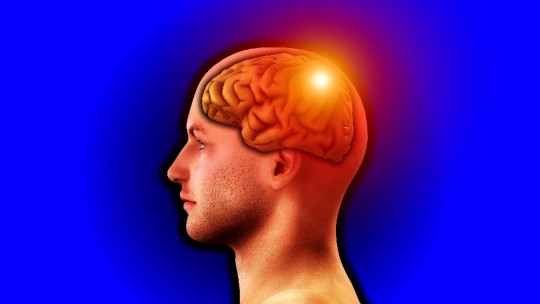
The parietal lobe sits in the upper, rear portion of the brain, positioned between the frontal lobe toward the front and the occipital lobe toward the back, occupying roughly one-fifth of each cerebral hemisphere’s total volume.
How many of these have you been "meaning to read" for months?
- 1
 S&S/Simon ElementProtocolsAn Operating Manual for the Human BodyListen Free On Audible
 - 2
 Undercover Publishing HouseStop Letting Everything Affect YouHow to break free from overthinking, emotional chaos, and self-sabotage.Listen Free On Audible
 - 3
 Grand Central PublishingIn the Shadow of EightSurviving the Reality of My ChildhoodListen Free On Audible
Anatomically, this lobe is bounded by two significant landmarks: the central sulcus, a deep groove separating it from the frontal lobe, and the parieto-occipital sulcus, which marks its boundary with the occipital lobe toward the back of the head. Just behind the central sulcus lies the postcentral gyrus, home to the primary somatosensory cortex, the specific strip of tissue responsible for initially receiving sensory information from across the entire body. This anterior region functions almost like a switchboard, receiving raw sensory signals before the rest of the parietal lobe gets involved in interpreting and integrating that information into something meaningful.
Beyond this primary sensory strip, the parietal lobe contains several other well-studied subregions, including the superior and inferior parietal lobules, the supramarginal gyrus, and the angular gyrus, each contributing to slightly different aspects of sensory processing, language, and spatial reasoning. Researchers often divide the parietal lobe conceptually into an anterior zone, focused primarily on direct somatosensory processing, and a posterior zone, sometimes called the posterior parietal cortex, which handles more complex, higher-order integration of multiple sensory streams simultaneously. This structural division helps explain why damage to different parts of this lobe produces such distinctly different symptoms depending on exactly which subregion is affected.
| Parietal Subregion | Primary Role |
|---|---|
| Postcentral gyrus | Houses the primary somatosensory cortex, receiving direct touch signals. |
| Superior parietal lobule | Supports spatial orientation and sensorimotor integration. |
| Supramarginal gyrus | Contributes to language processing and phonological awareness. |
| Angular gyrus | Involved in number processing and semantic language integration. |
What are the primary functions of the parietal lobe?
The parietal lobe’s primary functions center on processing touch-related sensations, integrating information from multiple senses simultaneously, and constructing the brain’s overall sense of spatial orientation, allowing you to understand not just what you’re sensing but precisely where it’s happening relative to your own body.
The most fundamental of these functions involves somatosensory processing, the brain’s handling of touch, temperature, pressure, and pain signals arriving from across the entire body. The postcentral gyrus contains what neuroscientists call a sensory homunculus, a detailed, point-by-point map where specific body regions correspond to specific locations along this strip of cortex, with more sensitive body areas, like fingertips and lips, occupying disproportionately larger sections of this cortical map. This mapping allows the brain to precisely localize exactly where on your body a particular sensation originates, distinguishing a touch on your elbow from one on your knee without needing to look at either.
Beyond basic touch processing, the parietal lobe performs the genuinely remarkable task of integrating information across different senses simultaneously, combining visual input, touch sensations, and proprioceptive signals about limb position into one unified, coherent perception of your surroundings. This multisensory integration is what allows you to reach accurately for a coffee cup while looking at your phone, since your brain seamlessly combines where your eyes last registered the cup’s location with ongoing feedback about your arm’s position in space. The posterior parietal cortex specifically handles this higher-order integration, drawing on inputs from the visual system, the somatosensory cortex, and motor planning regions to construct a working, moment-to-moment spatial map of your entire environment.
- Somatosensory processing, handling touch, temperature, pressure, and pain signals from across the entire body.
- Multisensory integration, combining visual and touch input into one coherent perception of your surroundings.
- Spatial orientation and navigation, helping you understand your body’s position relative to nearby objects.
- Attention allocation, particularly regarding where in space your focus should be directed at any given moment.
- Contribution to language and number processing, particularly within the dominant, typically left hemisphere.

How does the parietal lobe support spatial awareness and body perception?
The parietal lobe constructs your ongoing sense of spatial awareness by continuously integrating visual, tactile, and proprioceptive information into a working mental map, allowing you to navigate physical space and maintain an accurate, real-time sense of your own body’s position and boundaries.
This function relies heavily on what researchers describe as the dorsal visual stream, a pathway running through the posterior parietal cortex that processes visual information specifically related to location and movement, distinct from a separate pathway handling object identification. This dorsal stream essentially answers the question “where is it” rather than “what is it,” which is precisely why it plays such a central role in guiding physical actions like reaching, grasping, or navigating through a crowded room without consciously calculating every movement. When this system functions well, these calculations happen so automatically that you rarely notice the underlying complexity involved.
Body perception represents a closely related but distinct function, involving the parietal lobe’s ongoing construction of what’s sometimes called a body schema, an internal, continuously updated representation of your body’s current position, size, and boundaries. This explains phenomena like the rubber hand illusion, where carefully timed visual and tactile stimulation can temporarily trick the brain into incorporating a fake hand into its body schema, demonstrating just how much this sense of bodily ownership depends on active, ongoing neural construction rather than simply reflecting some fixed, unchanging biological fact. Interestingly, the right parietal lobe tends to play a particularly significant role in this body-related spatial processing, often more so than the left hemisphere, which helps explain some notable asymmetries seen in parietal lobe damage.
What happens when the parietal lobe becomes damaged?
Damage to the parietal lobe, whether from stroke, traumatic brain injury, tumors, or degenerative disease, produces a range of distinct symptoms depending heavily on which hemisphere and specific subregion is affected, generally falling into categories involving sensory loss, spatial disorientation, or language and mathematical difficulties.
One of the most striking and well-studied consequences of parietal damage, particularly affecting the right hemisphere, is a condition called hemispatial neglect. People with this condition genuinely fail to notice or attend to one entire side of space, typically the left side following right parietal damage, sometimes to a startling degree; they might eat only from the right half of a plate, shave only the right side of their face, or draw a clock missing all the numbers on its left side, all without any awareness that anything is amiss. This isn’t a vision problem in the traditional sense; the eyes work perfectly well, but the brain’s attention system, centered heavily in the parietal lobe, simply fails to allocate awareness to that neglected side.
Damage to the left, typically dominant parietal lobe tends to produce a different symptom cluster, often centered on language and number processing difficulties. This can include acalculia, significant difficulty performing basic mathematical calculations, agraphia, trouble writing despite intact speech, and a specific combination of symptoms sometimes called Gerstmann syndrome, involving difficulty distinguishing left from right, identifying individual fingers, writing, and performing calculations, all occurring together following damage to a specific left parietal region. Bilateral parietal damage, affecting both hemispheres simultaneously, can produce an even more striking condition called Balint syndrome, characterized by an inability to perceive more than one object at a time, difficulty coordinating eye and hand movements, and trouble voluntarily shifting visual gaze between objects.
- Hemispatial neglect following right parietal damage, causing unawareness of one entire side of space.
- Acalculia and agraphia following left parietal damage, affecting mathematical and writing abilities.
- Astereognosis, or difficulty recognizing objects by touch alone, following somatosensory cortex damage.
- Balint syndrome following bilateral damage, disrupting the ability to perceive multiple objects simultaneously.
- Constructional apraxia, causing difficulty copying simple drawings or assembling basic spatial arrangements.
How does hemispheric specialization shape parietal lobe function?
The two parietal lobes, left and right, tend to specialize in noticeably different functions, with the dominant hemisphere, typically the left in most people, handling language and mathematical processing, while the non-dominant right hemisphere focuses more heavily on spatial cognition and body awareness.
This hemispheric division helps explain why damage to seemingly similar brain regions can produce such dramatically different symptom profiles depending on which side is affected. Left parietal damage more commonly disrupts language-related functions, including reading comprehension and the ability to understand or produce written symbols, alongside the mathematical processing difficulties described earlier. This connection to language partly reflects the left parietal lobe’s proximity to and interaction with Wernicke’s area, a region traditionally associated with language comprehension located nearby in the temporal lobe, with which the parietal lobe maintains significant functional connections.
Right parietal damage, by contrast, more typically produces the spatial and body-awareness deficits discussed throughout this article, including hemispatial neglect, difficulty with constructional tasks like drawing or assembling objects, and problems with dressing or other tasks requiring an accurate sense of one’s own body in space. This specialization isn’t absolute; both hemispheres contribute to some degree to most parietal functions, and considerable individual variation exists in exactly how strongly lateralized these functions become. Still, this general pattern of specialization provides clinicians with valuable diagnostic information, since the specific pattern of symptoms following brain injury often helps pinpoint quite precisely which hemisphere, and sometimes which specific subregion, has sustained damage.
FAQs about the Parietal Lobe
What is the main difference between the parietal lobe and the other brain lobes?
The parietal lobe’s defining characteristic, compared to the frontal, temporal, and occipital lobes, is its specialized role in processing touch sensation and integrating multiple sensory streams into a coherent spatial understanding of the world. While the frontal lobe primarily handles planning, decision-making, and movement initiation, and the occipital lobe focuses specifically on visual processing, the parietal lobe serves as more of an integration hub, combining touch, visual, and proprioceptive information together. This integrative function is precisely why parietal damage often produces symptoms involving confused spatial awareness or difficulty combining sensory information, rather than the more isolated deficits sometimes seen with damage to other, more specialized lobes.
Can parietal lobe damage be reversed or treated?
Treatment and recovery prospects depend heavily on the underlying cause and severity of the damage. For stroke-related parietal damage, early intervention and structured rehabilitation, including occupational therapy focused on spatial awareness exercises and sensory retraining, can produce meaningful improvement, particularly within the initial months following injury. The brain’s capacity for neuroplasticity, its ability to reorganize and adapt following injury, means some recovery is often possible even in cases of significant damage, though the extent of recovery varies considerably based on injury severity, the person’s age, and how promptly rehabilitation begins. Some symptoms, particularly with degenerative conditions, may prove more persistent despite treatment efforts.
Why do some people with parietal damage deny they have a problem?
This phenomenon, called anosognosia, occurs specifically because the very brain region responsible for accurately perceiving and integrating information about one’s own body and surroundings is the same region that’s been damaged. In cases of right parietal damage causing left-side neglect, for instance, the person genuinely cannot perceive that anything is missing from their awareness, since the damaged system that would normally detect and flag this gap is itself compromised. This creates a genuinely difficult clinical situation, since the person may resist rehabilitation efforts or safety precautions, sincerely believing nothing is wrong, which requires specialized therapeutic approaches that account for this lack of self-awareness directly.
Does the parietal lobe play any role in mathematical ability?
Yes, particularly the angular gyrus and surrounding regions within the dominant, typically left parietal lobe, which contribute significantly to number processing and basic arithmetic calculation. Damage to this specific area can produce acalculia, a notable difficulty performing mathematical operations that were previously routine, even when general intelligence and other cognitive functions remain largely intact. This connection between the parietal lobe and mathematics reflects the region’s broader role in spatial and symbolic processing, since many mathematical concepts, particularly involving quantity and magnitude, appear to draw on the same neural machinery originally evolved for spatial reasoning and object manipulation.
How is the parietal lobe involved in attention?
The parietal lobe, particularly the posterior parietal cortex, plays a genuinely central role in directing and allocating visual attention, helping determine where in your visual field your focus gets directed at any given moment. This function becomes strikingly apparent when it fails, as seen in hemispatial neglect, where attention simply cannot be directed toward one side of space despite the visual system itself functioning normally. Researchers studying attention networks have found that this parietal attention system works closely alongside frontal lobe regions, together forming a broader network responsible for both voluntarily directing attention and automatically orienting toward sudden, unexpected stimuli in the environment.
Are there any conditions besides stroke that commonly affect the parietal lobe?
Yes, several conditions beyond stroke can affect parietal lobe function, including traumatic brain injury, particularly from falls or accidents impacting the upper rear portion of the skull, brain tumors growing within or compressing this region, and certain neurodegenerative conditions. Posterior cortical atrophy, for instance, is a specific neurodegenerative condition that preferentially affects parietal and occipital brain regions, often producing progressive visuospatial difficulties as an early symptom, sometimes preceding more widespread cognitive decline. Additionally, certain seizure disorders originating in or near the parietal lobe can produce transient sensory disturbances or spatial perceptual distortions during seizure activity itself.
Bibliography
- Kandel, E. R., Schwartz, J. H., & Jessell, T. M. (2013). Principles of Neural Science. McGraw-Hill Education.
- Vallar, G., & Perani, D. (1986). The anatomy of unilateral neglect after right-hemisphere stroke lesions: A clinical/CT-scan correlation study. Neuropsychologia.
- Cleveland Clinic. (2023). Parietal Lobe: What It Is, Function, Location and Damage. Cleveland Clinic.
- Goodale, M. A., & Milner, A. D. (1992). Separate visual pathways for perception and action. Trends in Neurosciences.
- National Institute of Neurological Disorders and Stroke (NINDS). (2023). Brain Basics: Know Your Brain. National Institutes of Health.
Use this citation format to reference the article clearly and help readers find the original source.
PsychologyFor. (2026). Parietal Lobe: Characteristics and Functions. PsychologyFor. https://psychologyfor.com/parietal-lobe-characteristics-and-functions/