

See more of our articles in your search results.
The headline lands in your feed at 7:40 a.m. while you wait for the kettle: “Study finds left-wing people are more intelligent.” You feel two things in quick succession. Maybe a flicker of vindication, if that’s your side of the aisle. Or a hot little spike of irritation, if it isn’t. Within minutes the comment section has sorted itself into two camps, each armed with its own anecdote, its own genius uncle, its own idiot cousin. Nobody has opened the study. Almost nobody ever does, which is a pity, because the study is both more interesting and much less flattering to anyone’s team than the headline suggests.
Here is the short version. Researchers across several countries have indeed found that higher scores on intelligence tests are, on average, linked with more socially liberal and less authoritarian attitudes. The link is real, it shows up in large samples, and it is also small, messy and easy to misread. It says nothing about any individual you meet, nothing about worth, and surprisingly little about who is “right.”
Headlines turn averages into verdicts, and a verdict is what gets clicked. The average itself, patiently measured in tens of thousands of people, is a quieter and more interesting creature.
This article explains what the studies behind “people on the left are more intelligent” actually measured, how big the effects are, what they can’t show, and why smart people on every side are still skilled at fooling themselves.
You’ll also get a short guide to reading political-psychology headlines without losing your temper or your judgment.
How many of these have you been "meaning to read" for months?
- 1
 TarcherThe Artist's Way30th Anniversary EditionListen Free On Audible
- 2
 Undercover Publishing HouseStop Letting Everything Affect YouHow to break free from overthinking, emotional chaos, and self-sabotage.Listen Free On Audible
- 3
 MajostaDon't Believe Everything You ThinkWhy Your Thinking Is The Beginning & End Of Suffering (Beyond Suffering)Listen Free On Audible
What do studies actually say about intelligence and political beliefs?
They find a modest average association between higher cognitive ability and socially liberal, less authoritarian attitudes, with the strength depending heavily on how “left” and “right” are defined. The best summary is a 2015 meta-analysis, not a single dramatic study.
Psychologist Emma Onraet and colleagues pooled the literature in European Journal of Personality. Across 67 studies with 84,017 participants, they found an average correlation of r = -0.20 between cognitive ability and right-wing ideological attitudes. In 23 studies with 27,011 participants, the correlation with prejudice was about -0.19. The relationship was strongest for authoritarianism and ethnocentrism and weaker for plain conservatism. It did not vary much across different kinds of cognitive ability or types of samples.
Notice the wording. The studies measured “right-wing ideological attitudes” and prejudice, not the whole of conservatism or the whole of the left. The strongest links involve a desire for rigid social order, deference to authority and suspicion of outgroups. Economic attitudes show a different and much murkier picture, and a later analysis found a very small positive correlation between intelligence and fiscally conservative beliefs. In other words, the finding is not “left equals smart.” It is closer to “people who score lower on tests of cognitive ability tend, on average, to score a bit higher on authoritarian and ethnocentric attitudes.”
Three more points belong in the first paragraph of any fair summary:
- Intelligence tests measure particular skills: reasoning, vocabulary, speed, pattern recognition. They don’t measure wisdom, empathy, honesty or judgment.
- “Cognitive ability” correlates with education, and education shapes attitudes in ways separate from raw IQ.
- The studies are mostly from Western countries, where “left” and “right” have particular meanings that don’t transfer neatly elsewhere.
Imagine two friends, Dana and Marcus, 34 and 36, who argue at a barbecue about taxes. Dana, who leans left, scores high on a vocabulary test. Marcus, who leans right, works as an engineer and scores higher on number puzzles. If you ran the meta-analysis on this pair you would learn nothing, which is the point. A correlation of -0.20 describes a faint tilt across tens of thousands of people, not a pair of neighbors.
So the claim in the headline is a distortion of a real finding. The real finding is worth understanding on its own terms.
What did the British cohort study find about bright children?
It followed one generation for decades and found that children with higher measured intelligence grew into adults with more liberal social attitudes. The paper, “Bright Children Become Enlightened Adults,” is one of the most cited studies in this area, and its design avoids a common problem: it measured intelligence before the attitudes existed.
Psychologist Ian J. Deary and colleagues analyzed data from the 1970 British Cohort Study, a representative sample of people born in Britain in a single week in April 1970. They looked at 7,070 people who had completed intelligence tests at age 10 and later answered questions about their attitudes at age 30. A general trait emerged that combined antiracist, pro-working-women, socially liberal and trusting-of-the-democratic-system attitudes. Higher intelligence at 10 predicted more liberal and anti-traditional attitudes at 30, and the results were very similar in men and women.
The authors tested why. The association was partly mediated by educational qualifications: brighter children tended to stay in school longer, and more schooling was linked with more liberal social attitudes. It was not mediated by adult occupational social class. That finding suggests that education, with its exposure to different people and ideas, is a major pathway.
Several limits matter. The sample was British, and the questions concerned social attitudes at a particular moment in history. “Liberal” in 2000 Britain does not map perfectly onto “left” in 2026 anywhere. The study also tells us about averages in a cohort, not about causes in individuals. Educated parents, neighborhoods and schools could have shaped both a child’s test score and their later beliefs. Deary’s design reduces reverse causation, since beliefs can’t have caused a test score taken 20 years earlier, but it does not rule out confounding.
One more nuance. The study’s measure of attitudes was explicitly social, covering racism, gender roles and trust in democracy, not economics. Nothing in it says that intelligent people favor a particular tax system. Economic ideology is the area where the connection to intelligence is weakest and most disputed.
Consider Hannah, 41, who grew up in a small town where nearly everyone she knew voted the same way. A scholarship took her to a university where she shared a kitchen with people from six countries. Her views changed. Whether it was her test scores, her teachers or her housemates is a question no study can answer for one person.

Does intelligence cause political beliefs, or is something else going on?
Nobody knows for sure, and anyone who tells you the question is closed is overselling. The correlation is established. The direction of cause is contested, and several third factors (education, upbringing, personality, social environment) could be doing much of the work.
Social psychologist Gordon Hodson and Michael A. Busseri analyzed two British birth cohorts in a 2012 paper in Psychological Science, “Bright minds and dark attitudes.” They reported that lower general intelligence in childhood predicted greater racism in adulthood, and that this link was largely mediated by socially conservative ideology and, to a lesser degree, by lower educational attainment. Their model suggests that people with lower cognitive ability may gravitate to ideologies that offer structure and simplicity, which in turn are linked with prejudice. Because the intelligence scores came first in time, the design is stronger than a snapshot survey.
The paper has attracted serious criticism. Some researchers argue that prejudice is not unique to conservatives, that the measures used capture prejudice against particular groups (for instance, groups that are low in status and not themselves conservative targets), and that results change when the target groups include those that liberals might dislike. Others note that mediation models cannot prove causal chains. The authors have responded to these critiques, and the debate remains alive.
More recent work tried to get closer to causation. A 2024 study published in the journal Intelligence examined more than 300 biological and adoptive families, using measured IQ and polygenic scores for cognitive performance and educational attainment. Within families, siblings who scored higher tended to hold more socially liberal and less authoritarian views, even after controlling for socioeconomic variables, and the authors suggested this provides some of the strongest causal evidence to date that intelligence influences political beliefs. They also stressed that the relationship likely depends on environment and culture, and that there is no law saying intelligent people must always hold particular beliefs.
That caution is sensible. Polygenic scores capture many things beyond intelligence, including factors related to education and personality, and family studies of this kind use modest samples. Findings from one era and country may not hold in another. The honest reading is that intelligence probably nudges attitudes, indirectly through education, curiosity and exposure to diverse people, with many other nudges pulling in other directions.
Think of Ravi, 28, who grew up in a conservative household and now votes differently from his parents. Was it his reading, his friends, his job in a diverse city or his reasoning style? All of them, likely, in proportions he could not state. Causation in real lives is rarely a single arrow.
How big is the difference, really?
Small. A correlation of about -0.20, the average in the large meta-analysis, means that cognitive ability statistically accounts for roughly 4 percent of the differences between people in right-wing attitudes. The other 96 percent is everything else: upbringing, culture, religion, personality, economic interests, friends, experiences and luck.
To make that concrete, think of the two groups as overlapping crowds. If you took everyone in a country and split them into those who lean left and those who lean right, the average intelligence-test score of the two groups would differ by a small amount, and the distributions would overlap almost entirely. You would find brilliant and struggling people on both sides, and you could not guess a stranger’s politics from their test scores much better than by chance.
| What the data show | What the data do not show |
|---|---|
| A small average link between higher test scores and more socially liberal, less authoritarian attitudes | That left-leaning people are smarter as individuals |
| The strongest link is with authoritarianism and ethnocentrism | That conservatism as a whole reflects low ability |
| Education partly accounts for the association | That IQ alone determines political views |
| Results from mostly Western samples | That the pattern is the same in all cultures and eras |
| Average differences across large groups | Anything useful about a person you meet |
Statisticians distinguish between statistical significance and practical significance. With tens of thousands of participants, even tiny effects become statistically significant. The meta-analysis shows that the effect is reliably different from zero. It does not show that it is large enough to matter in daily life.
A second feature is the difference between group averages and individuals. People tend to hear “average differences” as “everyone in group A is X.” Taller people on average weigh more, but you can’t tell a stranger’s weight from their height. Similarly, knowing someone’s political label tells you very little about their reasoning ability, and knowing their reasoning ability tells you little about their label.
It is also worth remembering the limits of IQ tests themselves. They predict school performance, some job outcomes and health reasonably well, but they measure a slice of cognition and are influenced by schooling, health and opportunity. They are not a measure of human worth, and treating them as such has a bad history.
Take Elena, 55, who reads this and wonders whether the finding means she should feel smug or defensive. Neither, really. If a million people were measured, her neighbor and she would likely sit well inside the overlap, and nothing about their ballots would tell you who solved the crossword.
Is “left” versus “right” a single scale, and does intelligence line up with it?
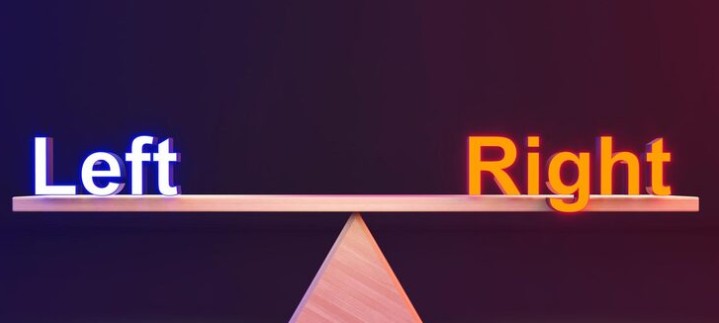
No. Political attitudes are multidimensional, and the relationship with intelligence changes depending on which dimension you look at. Social attitudes (about race, gender, sexuality, tradition, authority) and economic attitudes (about taxes, markets, welfare, regulation) are only loosely correlated, and many people are liberal on one and conservative on the other.
Researcher Noah Carl examined this in a 2015 paper in Personality and Individual Differences using a nationally representative sample of American adults. He found that the relationship between cognitive ability and political beliefs differed by dimension: for some measures of leftism the relationship was U-shaped, for others slightly U-shaped, and for still others it ran in one direction. The pattern echoed an earlier argument that people with very high cognitive ability tend to be more left-wing than those with merely high ability, which could partly reflect the political leanings of academia and other elite professions. The details are debated, and the data depended on how political beliefs were scored.
These findings counsel against any single-line story. In some datasets, higher ability is associated with socially liberal and economically conservative or libertarian views, a combination that fits neither major party in many countries. In others, the link with economic leftism is weak or absent. The common finding, replicated across samples, is the one with social liberalism and lower authoritarianism.
The definition of “left” also changes by country and decade. A voter who is on the left in one nation might be a centrist in another. Historically, political positions have shifted: policies once seen as radical become mainstream, and parties swap their coalitions. Comparing “left” across eras is like comparing weather in different centuries.
And then there is the matter of labels versus attitudes. Many people who identify with a side hold a mix of beliefs, and party loyalty often follows family, region, religion and identity more than reasoned positions. Research that asks people to place themselves on a left-right scale captures all of that noise.
Picture Tomás, 47, a small-business owner who supports wide social freedoms but wants lower taxes, and his sister Lucia, 44, a nurse who wants strong public services but is wary of rapid cultural change. A tidy scale puts them in the same middle square. Their reasoning is not alike, and neither of their positions follows from a test score.
When a headline says “the left,” ask which left, and about what.
Do smarter people reason more fairly about politics?
Not reliably. Intelligence helps you build arguments; it does not make you more willing to follow them where they lead. A considerable body of research suggests that people with stronger reasoning skills can be better at defending the views their group already holds.
Legal scholar and psychologist Dan M. Kahan and colleagues tested this in a 2017 paper on what they called motivated numeracy. Participants were asked to interpret a data table. When the data concerned a neutral topic (the effectiveness of a skin cream), people with higher numeracy skills did better. When the same style of data was framed as a politically charged question (the effect of a gun-control ban on crime), the pattern changed: more numerate participants were more likely to read the data in line with their ideology, and polarization between liberals and conservatives grew with numeracy. In short, skill amplified bias.
An earlier paper by Kahan, in 2013, found something similar with the Cognitive Reflection Test, a short quiz that measures a tendency to override intuitive but wrong answers. Participants who scored higher on reflection did not show less ideological bias in a politically charged task; in some conditions they showed more.
The studies have been debated. Replications have found the effect in some conditions and not in others, and critics argue that the tasks are artificial. But the overall idea fits what social psychologists have long suspected: reasoning can be used as a lawyer as well as a scientist, and being a good lawyer for your side is not the same as being right.
This puts the “left is smarter” claim in an awkward position even if the small correlation holds. Higher ability could mean more accurate beliefs, or it could mean more sophisticated defenses of whichever beliefs you started with. Intelligence tests measure reasoning power, not the motivation to apply it impartially.
It also helps explain why highly educated people on opposite sides of an issue can read the same evidence and walk away more convinced of their original positions. Each can cite studies. Each can detect flaws in the other’s. The skill is genuine; the neutrality is not guaranteed.
Imagine Nia, 39, and Owen, 41, both trained statisticians, who fall out over a policy report. Each finds the other’s data choices suspicious. Both are right that choices were made. Neither notices that they only inspect the choices that cut against them.
An uncomfortable question for any reader: when did you last examine evidence for your own side as hard as you examine the other side’s?
Is political bias a problem of the left, the right or both?
Both. Across a large set of experiments, liberals and conservatives show similar tendencies to evaluate information more favorably when it supports their political side. Psychologist Peter H. Ditto and colleagues published a 2019 meta-analysis in Perspectives on Psychological Science titled “At least bias is bipartisan,” which combined 51 experimental studies with more than 18,000 participants. They found clear evidence of partisan bias in both liberals and conservatives, with no significant difference in its magnitude between the two groups.
The meta-analysis addressed a common claim, often framed in terms of conservatives’ supposed cognitive rigidity, that bias is mainly a feature of the right. Ditto’s team found that the studies supporting this claim often used topics that were more threatening or relevant to one side, such as scientific findings that challenged one group more than the other, and that when content was balanced, bias appeared on both sides. They concluded that people on both sides are motivated to protect their group’s beliefs.
The finding is not a verdict that the two sides are identical. They differ in values, priorities and in the issues on which each is likelier to deny evidence: in the United States, for example, conservatives are more likely to doubt climate science and liberals are more likely to resist evidence on certain technologies. Specific cases can be lopsided, even if the underlying tendency to rationalize is shared.
Two cautions apply. Meta-analyses of this kind depend on which studies exist, and much of the research has focused on US samples and on certain topics. And “partisan bias” in a lab task is a narrow behavior; it does not capture the whole range of how people think about politics.
The finding has practical consequences. If you believe that only the other side is irrational, you will tend to dismiss correct points they make and to leave your own side’s errors unexamined. If you accept that bias is bipartisan, you gain a useful, humbling default: assume that your side’s favorite studies were selected partly because they agree with you.
It also tempers the use of intelligence research in political fights. If the less able are more prone to certain attitudes but the more able are no less prone to bias, then neither group has a claim to purely rational politics.
Think of two neighbors, Shira, 52, and Kenji, 49, who each share articles on a community group chat. Shira posts a study, Kenji replies with a debunking. A year later, each remembers the other’s posts as sloppy. Their memories are a small, human version of the meta-analysis.
What does mental flexibility have to do with politics?
Quite a lot, and the link seems to depend more on how intensely people hold their views than on which direction they lean. Neuroscientist Leor Zmigrod and colleagues at the University of Cambridge tested this with 743 American adults. In a paper in the Journal of Experimental Psychology: General, they reported that the strength of people’s attachment to a political party predicted lower cognitive flexibility on three objective tests: a word-association task, a card-sorting task in which rules change, and a creative uses-of-objects task.
The key result was that mental rigidity appeared at both ends of the political spectrum. Compared with moderates, people who identified intensely with either the Democratic or Republican party showed less cognitive flexibility, and self-described independents showed more than both. Other cognitive traits, such as originality and fluency of thought, were not related to partisan intensity, which suggests that the specific contribution comes from the ability to switch between concepts and rules.
This points toward a different question from “which side is smarter.” The more relevant variable may be how tightly a belief is bound up with identity. When a political label becomes part of the self, challenges to it may feel like attacks on the person, and the mind’s flexibility narrows. The authors treated the finding as an association, not proof that rigidity causes extremism or the other way around. The sample was recruited online and the effect sizes were modest.
A related line of research on belief updating shows how identity can slow revision. In a 2026 brain-imaging study in Poland, participants with strongly held left-wing views barely changed their ratings when shown counterarguments against political statements, though they revised ordinary factual beliefs. The researchers emphasized that the study did not compare left and right and could not show that one group is more resistant, only that political convictions seem to be tied to identity in the brain.
Taken together, these studies suggest a more useful reading of the whole topic. Cognitive ability, cognitive flexibility, personality and identity all contribute to political thinking, and they interact in ways that don’t flatter any camp. The mind that scores well on an IQ test may still be rigid about its tribe.
Consider Beatriz, 60, a lifelong party member and a brilliant puzzle solver. She can switch strategies in a game within seconds but, in debates about her party, she has not changed a view in twenty years. Both facts are part of her.
The practical question is less “How smart am I?” than “How flexible am I on the issues I care most about?”

Why do the links between education, personality and politics get confused with intelligence?
Because they overlap and travel together. Education, openness to experience, social environment and personality are all correlated with intelligence scores and with political attitudes, so it is hard to isolate any one of them. Several explanations have been proposed, and researchers disagree about their relative weight.
- Education: more years in school mean more exposure to diverse people, abstract ideas and questioning of tradition. In the British cohort, qualifications partly mediated the link between childhood intelligence and adult attitudes.
- Openness to experience: this personality trait, which includes curiosity and interest in novelty, is correlated with both intelligence and liberal attitudes.
- Need for structure: some theories propose that people who find ambiguity uncomfortable are drawn to ideologies that offer clear rules, and that cognitive ability affects how well people tolerate complexity.
- Social and economic environment: where people live, what jobs they hold, and whom they meet shape both opportunities to develop skills and political identities.
- Measurement: intelligence tests and attitude questionnaires reflect cultural assumptions, and different instruments yield different effect sizes.
Each explanation has weaknesses. Education effects could reflect selection, as students who go to university may differ before they arrive. Personality theories can be circular. Environment accounts struggle to explain results from within-family studies. A blended view is most plausible: a small tendency linked to cognitive style, filtered through education, culture and identity.
Media amplification adds its own distortion. News outlets favor findings that are surprising or flattering to one audience. Headlines convert “a small average correlation in a Western sample” into “the left is smarter,” and social media shares the headline without the caveats. The stories spread because they feed group identity, which is itself a nice demonstration of motivated reasoning.
The same machinery works in reverse. Studies suggesting that conservatives are happier, more generous or more resilient are shared in much the same spirit by the other side. Every group likes research that confirms its self-image and doubts research that doesn’t.
Picture Daniel, 33, who sees the headline and screenshots it for the family chat. His uncle replies with a study on charitable giving that favors the right. Both are quoting real papers. Neither has read past the abstract.
What would change your mind about this topic? If the answer is “nothing,” that may be the more interesting finding.
How can you read political-psychology headlines without being misled?
Ask a few plain questions before you share, argue or feel anything. Most misleading headlines survive only because nobody checks the size, the sample or the claim.
- How big is the effect? Look for numbers such as correlations or percentage differences. A correlation near 0.2 is small, and one near 0.1 is tiny.
- Who was studied? A university sample, one country, one decade? Results from British or American participants may not apply elsewhere.
- What exactly was measured? “Intelligence” may mean one test of reasoning, and “left” may mean one questionnaire about authoritarian attitudes, not an entire ideology.
- Is it correlation or cause? Longitudinal and family designs are better than snapshots, but even they leave room for other explanations.
- Who benefits from the story? If a result flatters your side, apply extra scrutiny. If it insults your side, notice your irritation and read the methods before replying.
A few conversational habits help too. Separate people from averages: “On average, in this study” is a different claim from “People like that.” Avoid using intelligence as an insult or a trophy. It’s not a measure of moral worth, and the history of using intelligence tests to rank groups is ugly. And when you disagree with someone, argue about the issue, not their IQ.
For those who teach, parent or manage teams, the research offers a gentler lesson. Cognitive skills, education and flexible thinking can be nurtured, and exposure to different perspectives tends to support them. Intellectual humility, the willingness to say “I might be wrong,” is a skill that can be practiced regardless of where you stand, and it predicts more accurate judgment in a number of studies.
If political arguments are damaging your relationships or your mood, it’s reasonable to set limits: take a break from certain feeds, agree not to discuss certain topics at dinner, or talk with a counselor if conflict with family or friends is causing distress.
Imagine Rosa, 46, who used to forward every study that confirmed her views. After a family argument, she started a rule: read the full abstract, and name one weakness before sharing. She shares less now. She also argues less, and her family has noticed.
The better question than “Which side is smarter?” is “What would I look for if I wanted to find out?”
FAQs about the Claim That People on the Left Are More Intelligent
Is it true that people on the left are more intelligent?
Not as a blanket statement. Studies find a small average link between higher cognitive test scores and more socially liberal, less authoritarian attitudes. A major 2015 meta-analysis of 67 studies found a correlation of about -0.20 between cognitive ability and right-wing ideological attitudes, strongest for authoritarianism and ethnocentrism. That is a modest statistical tilt across large groups, not a statement about individuals. It cannot tell you anything useful about a person’s intelligence from their politics, and it does not mean that conservatism as a whole reflects lower ability.
How big is the difference in intelligence between left and right?
It is small. A correlation of -0.20 means cognitive ability explains roughly 4 percent of the differences between people in right-wing attitudes. The distributions of test scores for left-leaning and right-leaning people overlap almost completely, so brilliant and struggling people are found on every side. The size of the effect also depends on what is measured: it is larger for authoritarianism and ethnocentrism and smaller or unclear for economic conservatism. A later analysis even found a very small positive correlation between intelligence and fiscally conservative beliefs.
Does intelligence make people liberal?
Possibly in part, but nobody has proved it. A British study that followed more than 7,000 people found that intelligence at age 10 predicted more liberal social attitudes at 30, partly through education. A 2024 family study published in Intelligence found that siblings with higher IQ or polygenic scores tended to hold more socially liberal and less authoritarian views, which suggests a causal role. Still, education, openness, upbringing and culture are all tangled up with intelligence, and the authors themselves noted that the relationship likely depends on environment and era.
Are conservatives less intelligent, then?
No. The research does not support that claim. The associations concern average differences on specific attitudes, mainly authoritarianism and ethnocentrism, not conservatism as a whole, and they are small. Many conservatives are highly intelligent, and many liberals are not. Intelligence tests measure reasoning skills, not wisdom, morality or judgment. Also, studies show that people on both sides engage in motivated reasoning when interpreting politically charged evidence, so neither camp can claim a monopoly on rational thinking.
Do smart people have less biased political opinions?
Not necessarily. Research by Dan Kahan and colleagues found that people with stronger numeracy skills were more, not less, likely to misread data in a way that fit their political identity when the topic was politically charged. Their skill appeared to help them defend their side. A meta-analysis by Peter Ditto and colleagues also found similar levels of partisan bias in liberals and conservatives. Being clever helps you build arguments, but fairness depends on motivation as well as ability, which is why humility matters.
Is political extremism linked to how flexibly people think?
Evidence suggests that it can be. A study of 743 Americans by Leor Zmigrod and colleagues found that stronger attachment to a political party predicted lower cognitive flexibility on three objective tests, and that this rigidity appeared at both ends of the spectrum. Independents were more flexible than partisans. The study shows an association, not cause and effect, and the sample was recruited online. It suggests that how tightly beliefs are tied to identity may matter more than which direction they point.
Why do headlines say that one political side is smarter?
Because simple, flattering or provocative claims spread faster than careful ones. A small correlation in mostly Western samples becomes a slogan that supports one group’s self-image and annoys the other, which drives shares and comments. Headlines also drop caveats about effect size, the type of attitudes measured and the limits of intelligence tests. The same dynamic works for findings that favor the other side. Reading the abstract, noticing the numbers and asking who was studied are the quickest defenses.
Should I use these findings in political arguments?
It is usually unwise. The effects are small, the definitions of left and right vary, and the studies describe groups, not the person in front of you. Using intelligence as a weapon tends to harden positions and damage relationships, and it risks repeating the ugly history of ranking people by test scores. If you want to persuade someone, engage with their reasons and evidence. If you are curious about the research, treat it as an interesting puzzle about how minds work, not as a trophy.
Bibliography
- Carl, N. (2015). Cognitive ability and political beliefs in the United States. Personality and Individual Differences, 83, 245-248.
- Deary, I. J., Batty, G. D., & Gale, C. R. (2008). Bright children become enlightened adults. Psychological Science, 19(1), 1-6.
- Ditto, P. H., Liu, B. S., Clark, C. J., Wojcik, S. P., Chen, E. E., Grady, R. H., Celniker, J. B., & Zinger, J. F. (2019). At least bias is bipartisan: A meta-analytic comparison of partisan bias in liberals and conservatives. Perspectives on Psychological Science, 14(2), 273-291.
- Hodson, G., & Busseri, M. A. (2012). Bright minds and dark attitudes: Lower cognitive ability predicts greater prejudice through right-wing ideology. Psychological Science, 23(2), 187-195.
- Kahan, D. M. (2013). Ideology, motivated reasoning, and cognitive reflection. Judgment and Decision Making, 8(4), 407-424.
- Kahan, D. M., Peters, E., Dawson, E. C., & Slovic, P. (2017). Motivated numeracy and enlightened self-government. Behavioural Public Policy, 1(1), 54-86.
- Onraet, E., Van Hiel, A., Dhont, K., Hodson, G., Schittekatte, M., & De Pauw, S. (2015). The association of cognitive ability with right-wing ideological attitudes and prejudice: A meta-analytic review. European Journal of Personality, 29(6), 599-621.
- Zmigrod, L., Rentfrow, P. J., & Robbins, T. W. (2020). The partisan mind: Is extreme political partisanship related to cognitive inflexibility? Journal of Experimental Psychology: General, 149(3), 407-418.
Use this citation format to reference the article clearly and help readers find the original source.
PsychologyFor. (2026). People “on the Left” Are More Intelligent, According to Study. PsychologyFor. https://psychologyfor.com/people-on-the-left-are-more-intelligent-according-to-study/