

See more of our articles in your search results.
Phronesis is a term that holds great significance in ancient Greek philosophy, representing a unique and essential human virtue. Often translated as “practical wisdom” or “prudence,” phronesis is not just an intellectual pursuit but a deeply practical and moral quality that guides individuals in making the right decisions in complex, real-life situations. Unlike theoretical knowledge (episteme) or technical skill (techne), phronesis involves the ability to apply wisdom to everyday life, balancing reason, emotion, and context.
In this article, we will explore the concept of phronesis, its importance in Greek thought, and how it is applied in both personal and societal contexts. Through the perspectives of key Greek philosophers such as Aristotle, Plato, and others, we will examine how phronesis contributes to living a virtuous and meaningful life.
What is phronesis?
Phronesis (from Φρόνησις, “phronēsis”) is a very widespread concept in Greek philosophy. It was especially developed by Aristotle in his “Nichomachean Ethics”, where he considered it to be one of the great virtues of the human being. The ancient Greeks thought that phronesis was part of the arts of good living and that anyone who had this property would be able to function in different life situations with complete success.
At its core, phronesis is the ability to make sound, ethical decisions that lead to the well-being of oneself and others. It is often described as a virtue that involves both intellectual and moral dimensions. While it requires an understanding of the world and the ability to reason logically, phronesis is also deeply tied to the cultivation of good character and the pursuit of moral excellence.
The term “phronesis” comes from the Greek root “phron,” meaning “mind” or “understanding,” and it reflects a particular type of wisdom that enables a person to act in a way that is not only wise but also morally good. In the context of Greek philosophy, phronesis is concerned with making decisions that consider the complexities of human life, including relationships, emotions, social norms, and the potential consequences of one’s actions.
How many of these have you been "meaning to read" for months?
- 1
 TarcherThe Artist's Way30th Anniversary EditionListen Free On Audible
 - 2
 Spiegel & GrauCodependent No MoreHow to Stop Controlling Others and Start Caring for Yourself (Revised and Updated)Listen Free On Audible
 - 3
 TarcherperigeeSet Boundaries, Find PeaceA Guide to Reclaiming YourselfListen Free On Audible
There is no exact translation for phronesis into our language, some of the proposals being “practical wisdom” and “prudence”, with the opposite meaning to “hibris” or “excessity”. Regardless of how you prefer to translate, phronesis and prudence are two related ideas. In fact, the Spanish word “prudence” comes from the Latin “prudentia” which, in turn, derives from “phrónesis”.
It would also be related to the word “phroneo” (to understand) and the Latin “providentia” (to anticipate). Thomas McEvilley proposed that it be translated as “full consciousness” or “mindfulness.”
The first great philosopher to talk about phronesis was Socrates, who considered it a kind of sum of all the virtues of the human being. Later, Plato also made reference to phronesis in his work “Meno”, where he defines it as “moral understanding” and considers it the most important attribute of all those that could be learned. But Plato also clarifies that phronesis cannot be taught, but rather is the result of a deep knowledge of oneself.
Phronesis in the Philosophy of Aristotle
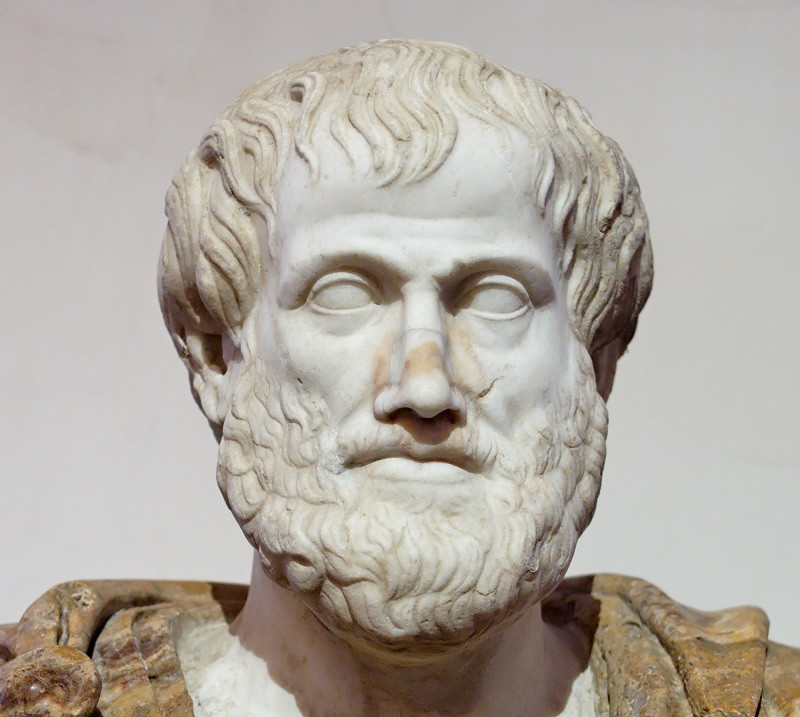
Aristotle is perhaps the philosopher most closely associated with the concept of phronesis. In his Nicomachean Ethics, Aristotle defines phronesis as one of the intellectual virtues, alongside others like scientific knowledge (episteme) and artistic skill (techne). However, unlike the other virtues, phronesis is unique in that it directly pertains to human action and decision-making.
For Aristotle, phronesis is the virtue that allows individuals to live a good life. It is central to his ethical theory, as it helps guide people to make choices that lead to eudaimonia, or flourishing—the ultimate goal of human life. Aristotle sees phronesis as a practical form of wisdom that requires experience, reflection, and a deep understanding of the specific context in which decisions must be made.
Key Points from Aristotle’s View:
- Practical Wisdom for Virtuous Action: Aristotle believes that phronesis helps a person act in accordance with virtue, ensuring that actions are neither excessive nor deficient, but balanced.
- Informed by Experience: Unlike theoretical knowledge, phronesis is developed through experience and the process of learning from past actions. It is not simply about knowing what is good but knowing how to achieve it in practice.
- Moral and Intellectual Integration: For Aristotle, phronesis integrates both moral and intellectual virtues. It requires reasoning about the right course of action while considering the particularities of the situation at hand.
Phronesis in Plato’s Philosophy
Although Aristotle is most closely associated with the concept of phronesis, Plato also discusses a related concept in his works, particularly in The Republic. While Plato does not use the term phronesis as explicitly as Aristotle, he emphasizes the importance of wisdom in both individual and societal contexts.
In The Republic, Plato outlines a vision of a just society, where wisdom (phronesis) is one of the cardinal virtues necessary for the harmony and functioning of the whole. He argues that those who possess wisdom, or practical knowledge, are best suited to govern, as they understand the true nature of justice and are capable of making decisions that benefit society as a whole.
Key Points from Plato’s View:
- Wisdom as the Guiding Virtue: Plato believes that wisdom (phronesis) is the highest virtue, followed by courage, moderation, and justice. It is the philosopher-kings in his ideal society who possess wisdom and are best suited to rule.
- Ruling with Knowledge: In Plato’s vision, wisdom is the ability to know what is truly good for individuals and society. This knowledge allows the wise to make decisions that promote justice and harmony, both individually and collectively.
Phronesis in Socratic Thought
Socrates, the great teacher of both Plato and Aristotle, also explored the idea of practical wisdom, though in somewhat different terms. Socrates’ method of inquiry, known as the Socratic method, was centered on questioning assumptions and seeking to understand the essence of moral virtues. He believed that true knowledge could only be attained through constant questioning and reflection, which is closely related to the development of phronesis.
For Socrates, the pursuit of virtue and wisdom was inseparable. He famously stated that “an unexamined life is not worth living,” highlighting the importance of self-reflection and the search for knowledge. Although Socrates did not provide a formal definition of phronesis, his emphasis on the need for practical and ethical wisdom in daily life aligns closely with Aristotle’s later development of the concept.
Key Points from Socratic Thought:
- The Importance of Reflection: Socrates viewed wisdom as an ongoing process of self-examination and dialogue, which aligns with the idea that phronesis is gained through experience and thoughtful reflection.
- Virtue as Knowledge: Socrates believed that all virtues, including phronesis, are based on knowledge. Thus, one can act virtuously only if they truly understand what is good and just.
Phronesis and ethics
In relation to ethics, Aristotle pointed out that there are three ways to appeal to character or “ethos”. This word means “custom” or “conduct” in ancient Greek and refers to the way of being, specifically moral behavior. The three components of this ethos would be phronesis, areté and eunoia.
The areté is the will to excellence. It would be what people have who are trained to think, speak and act successfully. In turn, the areté was determined by three virtues:
As for eunoia, this word referred to good will toward the source. It could be seen as a synonym for nobility and, in more modern terms, empathy.
Finally, in this theory we have phronesis, which would not be the result of good character formation as would be the case of areté and eunoia, but would be the result of experience. It is for this reason that Aristotle believed that phronesis could not be present in a young person, since they have not lived long enough as to have acquired it.
An intellectual virtue
Aristotle indicated that phronesis was a virtue of intelligence, which would allow one to properly decide between right and wrong things, with the purpose of achieving personal and collective happiness. It was an intellectual attribute that was present in concrete facts, not in potentials. It involves the mobilization of knowledge, but not universal, but contextual, based on the demands of the moment and place. It is, ultimately, an intelligent and contextual use of what is known, of experience.
While areté allows us to establish noble goals and high purposes, phronesis allows us to choose the right means and carry out what is necessary to achieve them. It would not be a skill because that is a talent or skill, something that involves doing things sufficiently and that has been perfected. Phronesis involves making a sharp reflection before daring to do something and is not repetitive.
Aristotle thought that phronesis was a necessary condition to be happy and a fundamental characteristic to have social credibility, to be followed by the crowds and respected too. It implies having a trained, lucid mind, but practical at the same time and with a high dose of common sense. It is the virtue of leaders and people with a high power of persuasion.
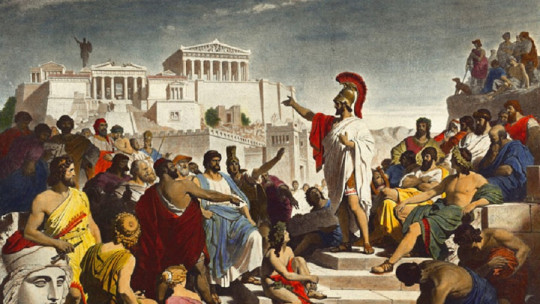
Phronesis made man: Pericles
One of the most important figures of Classical Antiquity was the Athenian hero Pericles. This almost mythological character is the living embodiment of what phronesis is, so much so that his name in classical Greek means “surrounded by glory.” And it is not surprising because he was everything: lawyer, magistrate, general, politician and orator, all in one of the most culturally and militarily critical moments in the history of Athens.
His life is legendary, highlighting his participation in two of the most important conflicts of classical Greece: the Persian Wars and the Peloponnesian Wars. He managed to perform heroically in a war campaign and was very active in the life of his city thanks to the fact that he served as a great ruler. His power of persuasion and intellect, combined, made anyone follow him with blind faith. Through his words and cunning, he achieved everything he set out to do. He was the prototype of what a wise man should be, phronesis made man.
Phronesis and Modern Applications
Although phronesis originated in ancient Greek philosophy, its relevance extends to modern contexts, particularly in areas like psychology, ethics, leadership, and education. The virtue of practical wisdom is still considered essential for navigating the complexities of modern life, where individuals are often faced with difficult decisions that require a balance of knowledge, emotional intelligence, and moral consideration.
Phronesis in Leadership:
In leadership, phronesis is essential for making sound decisions that not only reflect the leader’s values but also take into account the well-being of others. A leader with phronesis is able to assess situations carefully, consider the needs of their team, and make decisions that foster growth, trust, and ethical behavior.
Phronesis in Education:
In the field of education, teachers and educators who possess phronesis are better equipped to address the diverse needs of students, considering both their academic and emotional development. Practical wisdom allows educators to adapt their approaches and cultivate an environment where learning thrives.
Phronesis in Everyday Life:
On a personal level, cultivating phronesis can help individuals navigate everyday challenges with wisdom and compassion. It allows one to act thoughtfully in relationships, make responsible decisions, and live in alignment with one’s values.
FAQs about Phronesis
What is the difference between phronesis and other types of knowledge?
Phronesis differs from other types of knowledge, such as theoretical knowledge (episteme) or technical skill (techne), in that it is specifically concerned with practical and ethical decision-making. It is about knowing how to act wisely in real-life situations, considering context and morality.
How does phronesis contribute to a virtuous life?
Phronesis contributes to a virtuous life by helping individuals make decisions that promote personal and communal well-being. It enables one to act in accordance with virtue, ensuring that actions are morally sound and beneficial in the long run.
Can phronesis be developed over time?
Yes, phronesis is developed through experience, self-reflection, and continuous learning. It requires individuals to reflect on their actions, learn from past mistakes, and adjust their behaviors accordingly.
Why is phronesis important in leadership?
In leadership, phronesis allows leaders to make ethical decisions that consider the well-being of others and the broader impact of their choices. It helps guide leaders in navigating complex situations and maintaining moral integrity.
How can I cultivate phronesis in my own life?
Cultivating phronesis involves regularly reflecting on your actions, learning from your experiences, and striving to make decisions that are not only wise but also aligned with your ethical values. Practicing mindfulness and engaging in thoughtful dialogue can also help develop this virtue.
Phronesis remains an essential concept in both ancient philosophy and contemporary life. It represents a unique form of wisdom that goes beyond intellectual knowledge, guiding individuals to live with virtue, moral clarity, and practical understanding in an ever-complex world.
Use this citation format to reference the article clearly and help readers find the original source.
PsychologyFor. (2025). Phronesis: What is This Human Virtue According to the Greek Philosophers?. PsychologyFor. https://psychologyfor.com/phronesis-what-is-this-human-virtue-according-to-the-greek-philosophers/