


Although Halloween is a holiday of Celtic origin that is celebrated on the night of October 31, mainly in the United States, Canada, the United Kingdom and Ireland, practically everyone knows it, and like many other holidays, in Spain it has come to be established. little by little each year.
Basically, this party combines, on the one hand, visual elements (especially costumes) related to the emotion of fear and, on the other hand, sweets and treats, associated with pleasure. Furthermore, laughter and humor are favored as contrasting emotions with fear, since we know that the “terrifying” costumes are, in reality, false. And, as a way of feeling life, human beings actively seek emotional reactions.
Costumes also allow us to hide physical characteristics, give anonymity to our behaviors and assume a new identity for one night to enjoy, which can generate a feeling of liberation from emotions, feelings and desires that social taboos, norms and customs tend to repress, which could provide us with an attenuating effect on our daily stress levels.
Furthermore, we usually don’t dress up to sit at home alone, but to provoke a response in others, since the costume we choose usually says something about us, in addition to requiring imagination and creativity, so we could consider costumes as a means of communication and social connection.
Halloween and the Psychology of Fear
The emotional response to fear can be very different from one person to another in certain situations such as Halloween or watching a horror movie, some may consider fear fun, even stimulating, while other people react negatively and try at all costs to avoid situations that provoke fear.
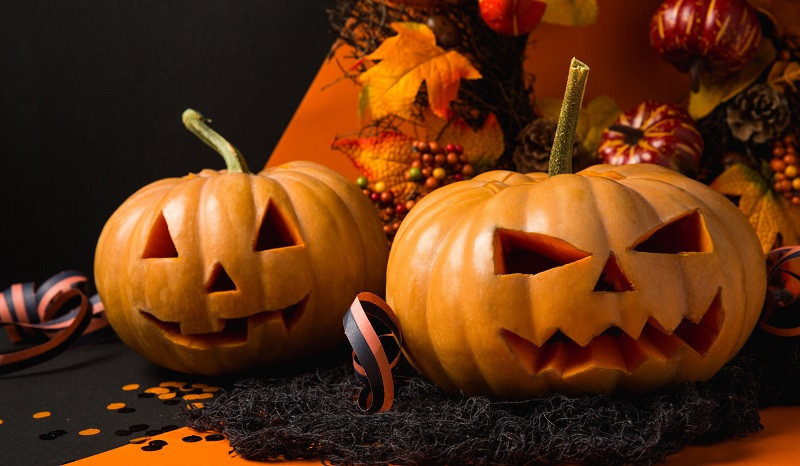
However, fear is a natural human emotion and an essential survival mechanism. When faced with a dangerous or threatening situation, we feel fear, which warns us of imminent physical or psychological damage. Our brain reacts biochemically by secreting dopamine automatically, which physically prepares us to “fight or flight” (sweating, increased heart rate…).
However, our brain also secretes dopamine in stimulating situations, activating our reward system, closely related to happiness, which is why some people experience a certain type of “almost addictive” excitement in the face of terrifying situations. Thus, when the emotion of fear is linked to the awareness of safety, like on Halloween, we tend to enjoy it.
What happens to children’s fear at Halloween?
During the first years of life, a wide variety of situations can generate fear in children (darkness, monsters, nightmares…), which are usually evolutionary and adaptive, since they have a protective function. That is, when experiencing this type of unpleasant sensations at a low level, they develop a learning and survival function that teaches them to remove themselves from dangerous situations
Being aware and knowing that there is an emotion called fear is the first step in learning to manage it. Thus, Halloween represents a great opportunity for our little ones’ fears to come to light in a context of safety, since they know that the costumes and masks are not real, which is why they generate neutralized and tolerable fear reactions.
Besides, Laughing at what scares them and accompanying it with sweets can also be useful in learning to cope with the emotion of fear and endure fear without suffering it. However, it is important not to force children, to measure appropriately and not to exaggerate the jokes and scares.
For one day, let’s accompany our little ones in their scary experiences with lots of laughter and sweets.
By citing this article, you acknowledge the original source and allow readers to access the full content.
PsychologyFor. (2024). Psychology and Halloween: a Terrifying Emotional Experience?. https://psychologyfor.com/psychology-and-halloween-a-terrifying-emotional-experience/