

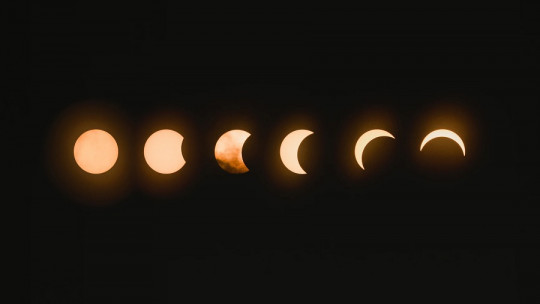
The Moon is the queen of the night, who is accompanied by her thousands of vassals, the stars, or, at least, more than one artist has seen her that way.
Selenophilia, that is, the attraction to the Moon is a word used by those who are fascinated by this night star, although, perhaps, unaware of the possible confusion that can be caused by using the ending ‘philia’ in the field of psychopathology.
Is selenophilia a disorder? Should I worry about seeing the beauty of the Moon? What symptoms does it present? All these questions will be answered throughout this article.
What is selenophilia?
Selenophilia (from the Greek ‘Selene’, Moon, and ‘philia’, love) is the more striking than usual attraction to the Moon. Although its name may imply that people who feel this particular attraction towards the only satellite on Earth have some type of sexual perversion, the truth is that does not refer to a psychological disorder.
It should not be thought that selenophilia and selenophiles should be classified in the same group as other types of unusual attractions, such as pedophilia, zoophilia and necrophilia. These three examples cited here are true paraphilic behaviors and, in all three, someone or something is harmed. In the case of selenophilia, it is simply a certain intellectual and artistic attraction towards the Moon, not a sexual desire towards this satellite.
Characteristics
In no diagnostic manual does the word ‘selenophilia’ appear as if it were a paraphilic disorder. It does not meet the characteristics to be considered a disorder of any kind and, if you try to find symptoms, you cannot see any particularly worrying ones. What it is possible to talk about is a series of characteristics that selenophilic people have.
Usually, selenophilic people are the ones who use this label, using it to refer to themselves and only with the intention of differentiating themselves from the rest of people who do not feel this special attraction towards the Moon. Selenophiles are often bohemian people, who like to go to sleep late at night contemplating the dark sky illuminated by the pale star. Many of them consider themselves nyctophiles as well, that is, attracted by the enveloping darkness of the night.
The Moon has always inspired, and there are many artistic works that have been dedicated to it. And, in fact, selenophiles are people who tend to express themselves through art. To give just a few examples: From the Earth to the Moon (1865), book by Jules Verne, Moonlight (1801), sonata by Ludwig van Beethoven or Fly me to the moon (1956), song by Frank Sinatra and ending of Neon Genesis Evangelion. The Moon, as we can see, has always been a beautiful star that has been the muse of great artists.
Although this cannot be completely assured, it is not uncommon to find that people who feel this aesthetic desire for the Moon are rather introverted individuals, who prefer to contemplate the night sky in their solitude. They also consider themselves people with above-average intelligence and a deeper capacity for reflection.
Possible causes
As we have seen before, selenophilia is not a disorder, so we cannot talk about pathological causes that explain it. As the saying goes, for tastes, colors, and in terms of attraction to things, there is everything. Humans present individual differences, which give humanity a wide spectrum of variety, shown in the form of traits, opinions and, as in the case of selenophilia, tastes.
Yes indeed, Presenting certain personality traits can be related to this peculiar attraction to the Moon. In fact, as we saw before, it seems that introverted people with a particular capacity for reflection feel this interest in the only satellite of the Earth.
Also, although it is a lot to assume, having above-average intellectual abilities seems to be related to selenophilia. What can be assured is that people with marked artistic interests They are fascinated by how this star decorates the night sky.
Consequences
Since it is a preference and not a disorder, it is difficult to find negative consequences of selenophilia.
However, it is worth saying that those people who stay up late in the morning contemplating the Moon may be depriving themselves of hours of sleep, which negatively affects their circadian cycles. So, disrupting normal sleep cycles the individual could appear tired and irritated the next day, or fall asleep in broad daylight, and may neglect tasks that must be done during the day such as work, devoting time to their studies or taking care of their relationships with family and friends.
On the other hand, the fascination with the Moon has been something that has contributed significantly to art and culture, given that all over the world attention has been devoted, in one way or another, to this satellite. Also, From more philosophical and religious perspectives, he has dedicated himself to meditating on this satellite allowing us to get to know the nature of the world more closely.
Does selenophilia require treatment?
Since it is not a real paraphilic disorder, it does not require treatment either. As we were already commenting, philicism is understood as any attraction towards something that represents a real pathological problem, that is, a type of sexual preference that implies harm either to the person who feels it or to the person who performs it, such as pedophilia.
Selenophiles are unlikely to see their lives deteriorate for feeling a strong attraction towards the Moon. They value the beauty of the Moon more significantly than other people, without this touching sexual desire or wanting to commit perversions against this star. There is no suffering either for those who have selenophilia or for the object of their attraction, the Moon.
What would require treatment are sleep disorders that may be caused by taking this fascination with the Moon to the extreme. As we have seen, prioritizing observing the Moon at night and not going to sleep when it is convenient can negatively affect a person’s health. In that case, you should go to a professional to treat this behavior and, if necessary, take medication to readjust your circadian cycles.
Bibliographic references:
By citing this article, you acknowledge the original source and allow readers to access the full content.
PsychologyFor. (2024). Selenophilia: What is it and How is the Fascination with the Moon Expressed?. https://psychologyfor.com/selenophilia-what-is-it-and-how-is-the-fascination-with-the-moon-expressed/