

See more of our articles in your search results.
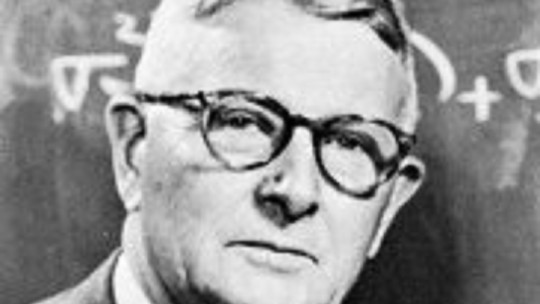
There are authors whose work has represented a leap for their field of knowledge. This is the case of Sewall Wright and his studies on genetics.
We are going to review the most important events in the life of this researcher as well as describe some of his most relevant contributions to the science of genetics, through a biography of Sewall Wright in summary format.
Brief Biography of Sewall Wright
Sewall Green Wright was born in the city of Melrose, Massachusetts, United States, in 1889 He was the son of Elizabeth and Phillip. It so happened that his parents were first cousins, an interesting fact that would have importance for Sewall Wright’s curiosity about inbreeding and its implications, as would later be reflected in some of his research.
When Sewall was very young, the family moved to Galesburg, Illinois, since his father had obtained a teaching position at Lombard College. The atmosphere in the Wright house was very intellectual, which encouraged Sewall Wright to become interested very early in sciences such as mathematics or biology, which would later be fundamental in his education. He first studied at Galesburg High School, until 1906, when he graduated.
He would then enter Lombard College itself, the university where his father taught. He studied mathematics, but he was also lucky enough to receive classes from Wilhelmine Entemann Key, who was one of the first female doctors in the field of biology, a true pioneer. This author was key to the training of Sewall Wright and his interest in the field of genetics.
How many of these have you been "meaning to read" for months?


In turn, Wright earned his doctorate, at Harvard University no less. Precisely in this institution he began his work as a researcher, working for the Bussey Institute. It was in this center where had the opportunity to collaborate with William Ernest Castle, one of the first American geneticists whose research focused on the study of the tones in the fur of mammals and the factors that made them hereditary.
It was at this time that Sewall Wright also met Louise Lane Williams, whom he would marry in 1921. Three descendants would be born from this marriage, two men, Richard and Robert, and a woman, Elizabeth. The happy couple would share a lifetime until Louise’s death in 1975.
After his time at the Bussey Institute, Sewall Wright began collaborating with the United States Department of Agriculture In 1925 he moved to the University of Chicago to work as a researcher in the Department of Zoology. This would be his last destiny, as he would spend no less than three decades and finally retire, already in 1955.
Sewall Wright ended his days in the city of Madison, Wisconsin, where he finally died in 1988, at the age of 98.
Studies in population genetics
Once we have taken a tour of Sewall Wright’s biography, it is time to review his greatest contributions to the field of genetics, which were not few.
The first branch of genetics in which Sewall Wright excelled was population genetics Within this field he carried out research that had to do with endogamy, in part, as we have already seen, motivated by the case of his own parents, and how the fact of being first cousins could genetically affect his offspring.
In conjunction with these works, he also investigated both genetic drift and the mating systems of different species. Thanks to Sewall Wright and other authors such as John Burdon Sanderson Haldane or Sir Ronald Aylmer Fisher, population genetics experienced a very important advance. In fact, Wright is considered the father of the neo-Darwinian synthesis, also called the modern synthesis of evolution.
Sewall Wright also discovered some of the keys to understanding population genetics and being able to work with this concept in a mathematical way. One of them would be the consanguinity coefficient, which gives us information about the probability that an individual’s parents have a common ancestor depending on the arrangement of the alleles of a specific gene.
The other tool created by Sewall Wright would be the F statistics or fixation indices, which tell us about the level of heterozygosity of a population, or what is the same, the disparity or genetic similarity between the individuals of that specific population.
Continuing contributions to population genetics, thanks to Sewall Wright The mathematical basis that explains the genetic drift of species was established In fact, this concept can also be found written as the Sewall Wright effect. Genetic drift explains the factors that cause successive generations of a given species to experience changes in the genetic sequence.
He also developed the concept of effective population size, that is, the minimum size of a fictitious population that we would need to be able to make inferences that adapt to the circumstances of the total number of individuals in the total population studied. To do this, a series of simplifications are used that statistically should not significantly alter the conclusions reached.
Evolution theory studies
Sewall Wright also studied in depth the relationship between genotype/phenotype and biological fitness, which refers to the estimated offspring that a given individual will have during his or her lifetime. For it tells us about evolutionary landscapes hypothetical scenarios in which, depending on height, the organism is more likely to reproduce.
According to genetic drift, the species will occupy the local peak and to reach a higher one it will have to pass through a valley area in which its probabilities will decrease before rising again, this time with greater force. This theory is valid for populations that are not too large. If they were older, they could be divided into smaller groups, of which some would manage to travel to the highest peak.
If there was also genetic flow between both groups, the changes achieved by one of them could be shared with the rest, finally reaching the entire population. This mechanism is another of the approaches of Sewall Wright and It is known as shifting equilibrium theory However, this is a controversial approach, since many evolutionists question whether the conditions for this to happen usually exist.
In fact, this issue led to a clash of positions with his colleague Sir Ronald Aylmer Fisher, since he proposed that populations would have to be smaller than the majority are for the theory proposed by Sewall Wright to fit, since the effects of genetic drift would be diluted due to such large populations.
Path analysis or route analysis is another of Sewall Wright’s contributions. It consists of a statistical system, created in 1921 by this author and which has since been used in a variety of scientific disciplines due to its great usefulness. Through a graphic model, path analysis shows the researcher the causal relationships between different variables
Study with guinea pigs
Sewall Wright tried to investigate possible methods to somehow improve the characteristics of some species of animals and plants. To do this, he carried out an ambitious experiment with a population of 80,000 guinea pigs. He established a group in which mating would be carried out between sibling individuals, while in the other half of the population the crossings would be random.
The results were the basis that allowed him to define the theory of changing equilibrium, which we have already mentioned previously. According to this concept, Sewall Wright stated that the adaptive evolution of a certain group of individuals could occur more easily if these groups were made smaller and thus the possibility of gene flow was restricted.
These studies were a great success among their students, which also proposed new research to continue advancing in the field of genetics. One of those who most appreciated Sewall Wright’s contributions was Jay Lush, who would ultimately become a reference in quantitative genetics studies.
For all these works and many more, Sewall Wright He is considered today one of the most important geneticists in history ay received a whole series of awards that attest to his importance in this field of knowledge.
Use this citation format to reference the article clearly and help readers find the original source.
PsychologyFor. (2024). Sewall Wright: Biography of This American Geneticist. PsychologyFor. https://psychologyfor.com/sewall-wright-biography-of-this-american-geneticist/