


See more of our articles in your search results.
Synthetic drugs — also known as designer drugs or drugs of synthesis — are psychoactive substances created artificially in laboratories through the chemical manipulation of compounds, designed to mimic or intensify the effects of natural drugs such as cannabis, cocaine, or heroin. Unlike plant-derived substances, synthetic drugs are engineered at a molecular level, which makes them both highly variable in composition and extraordinarily dangerous: their potency is frequently far greater than the natural substances they imitate, their effects are less predictable, and their legal status often lags behind their proliferation, allowing them to circulate in open markets under misleading labels such as “bath salts,” “plant fertilizers,” or “research chemicals.” According to the United Nations, the rapid spread of illicit synthetic drugs represents one of the most serious public health threats of our era — and in the United States alone, synthetic opioids are responsible for approximately 150 deaths per day from overdose. Understanding what synthetic drugs are, how they are classified, what they do to the body and the brain, and what risks they carry is no longer a niche concern — it is essential knowledge for anyone working in health, education, law enforcement, or simply living in a world where these substances are increasingly accessible.
The category of synthetic drugs is not a single, unified pharmacological class. It is an umbrella that covers an enormously diverse range of substances — stimulants, cannabinoids, opioids, hallucinogens, dissociatives, entactogens, and sedatives — united not by a common mechanism of action but by a common mode of production: they are synthesized, not extracted. What they share, beyond their laboratory origins, is a pattern of development that deliberately exploits regulatory gaps. When a synthetic drug is classified as illegal, manufacturers alter its molecular structure just enough to create a new compound that is chemically distinct from the prohibited substance but pharmacologically similar — sometimes more powerful — and therefore temporarily legal. This chemical arms race between manufacturers and regulators is one of the defining features of the synthetic drug landscape and one of the reasons why the harm they cause is so difficult to contain.
What follows is a comprehensive, evidence-based overview of the principal types of synthetic drugs, their mechanisms of action, their short- and long-term effects on physical and mental health, and the specific risk profiles that make them, as a category, among the most dangerous substances currently circulating. Whether you are a health professional, an educator, a concerned parent, or a researcher, this article provides the foundational knowledge needed to understand a problem that is, by virtually every available measure, getting worse rather than better.
What Makes a Drug “Synthetic”
The distinction between synthetic and natural drugs is chemical rather than moral: a natural drug is derived, directly or with minimal processing, from a plant or other biological source — opium from the poppy, cocaine from coca leaves, THC from cannabis. A synthetic drug is produced entirely or substantially through chemical synthesis, either replicating a naturally occurring compound (as synthetic fentanyl replicates the structure of naturally derived opioids) or creating an entirely new molecule designed to interact with the same receptor systems as a known psychoactive substance. A third category — semi-synthetic drugs, such as heroin, which is derived from morphine through chemical processing — occupies an intermediate position.
The significance of the synthetic origin goes beyond taxonomy. Because synthetic drugs are manufactured rather than grown, their potency can be engineered to levels far beyond what nature produces. Synthetic fentanyl, for example, is approximately 50 to 100 times more potent than morphine. Synthetic cannabinoids activate the same brain receptors as natural cannabis but with an affinity that produces effects four or more times more intense. Synthetic cathinones can be 10 to 50 times more potent than cocaine. This engineered potency, combined with the absence of quality control in illicit manufacturing, means that the margin between an intoxicating dose and a lethal dose is dramatically narrower for synthetic drugs than for most natural substances.
How many of these have you been "meaning to read" for months?
- 1
 TarcherThe Artist's Way30th Anniversary EditionListen Free On Audible
 - 2
 New Harbinger PublicationsThe Dialectical Behavior Therapy Skills WorkbookPractical DBT Exercises for Learning Mindfulness, Interpersonal Effectiveness, Emotion Regulation...Listen Free On Audible
 - 3
 New Harbinger PublicationsAdult Children of Emotionally Immature ParentsHow to Heal from Distant, Rejecting, or Self-Involved ParentsListen Free On Audible
A further complication is the issue of adulterants and contamination. Illicitly manufactured synthetic drugs frequently contain impurities from the synthesis process, residual reagent chemicals, or deliberately added adulterants — including, in some documented cases, fentanyl added to substances that users do not expect to contain it. The user of a synthetic drug rarely knows with any precision what they are actually consuming, at what dose, or in combination with what other compounds — a degree of pharmacological uncertainty that has no equivalent in most other categories of substance use.
Principal Types of Synthetic Drugs
The synthetic drug landscape is vast and continuously evolving, with hundreds of compounds currently identified by monitoring agencies. The following categories represent the major pharmacological classes within which most synthetic drugs are organized.
Synthetic Cannabinoids
Synthetic cannabinoids — marketed under brand names such as Spice, K2, or Black Mamba — are chemical compounds designed to bind to the same cannabinoid receptors in the brain as delta-9-tetrahydrocannabinol (THC), the primary psychoactive component of natural cannabis. Despite this functional similarity, synthetic cannabinoids are chemically unrelated to THC and interact with cannabinoid receptors with far greater affinity and potency — producing effects four or more times more intense than smoked cannabis. They are typically sprayed onto dried plant material and smoked, though they are also available in liquid form for electronic cigarettes.
The effects include euphoria, altered perception, relaxation, and mild hallucinations, but also — and more dangerously — confusion, severe agitation, nausea, vomiting, elevated heart rate, and, in serious cases, acute kidney injury, seizures, and cardiac events. Unlike natural cannabis, synthetic cannabinoids carry a documented risk of life-threatening cardiac complications, including heart attack, even in young and otherwise healthy users. The variability of potency between batches makes dosing essentially impossible to control, significantly increasing overdose risk.
Synthetic Cathinones (Bath Salts)
Synthetic cathinones are stimulant compounds derived from cathinone, a naturally occurring substance found in the khat plant (Catha edulis), which has been used as a mild stimulant in East Africa and the Arabian Peninsula for centuries. Synthetic versions — including mephedrone, MDPV (methylenedioxypyrovalerone), and alpha-PVP (“flakka”) — are dramatically more potent than their natural precursor. MDPV has been estimated to be 10 to 50 times more potent than cocaine. These compounds are sold as “bath salts,” “plant food,” or “research chemicals” — labels designed to circumvent drug regulations rather than to describe their actual composition.
Synthetic cathinones produce intense stimulant effects — euphoria, increased energy, heightened sociability, and enhanced sexual drive — but their risk profile is severe. They are associated with extreme paranoia, violent behavior, hallucinations, and psychotic episodes that can persist well beyond the acute intoxication period. Hyperthermia, cardiovascular stress, and the extreme psychological states they produce have been involved in numerous emergency presentations and deaths. Their addiction potential is high, and withdrawal can be intensely dysphoric.
Synthetic Opioids
Synthetic opioids represent, by most public health metrics, the most acutely lethal category of synthetic drug currently in circulation. Fentanyl — originally developed as a medical anesthetic and analgesic — is approximately 50 to 100 times more potent than morphine and 50 times more potent than heroin. Illicitly manufactured fentanyl and its analogues (carfentanil, acetylfentanyl, furanylfentanyl) are now the primary drivers of overdose mortality in North America, responsible for the majority of the more than 70,000 opioid overdose deaths recorded annually in the United States in recent years.
The lethality of synthetic opioids derives from their potency and the precision required to avoid a fatal dose. A lethal dose of fentanyl is measurable in micrograms — quantities invisible to the naked eye and impossible to estimate without laboratory equipment. Contamination of other illicit drug supplies with fentanyl — including cocaine, MDMA, and counterfeit prescription pills — means that many people who overdose on synthetic opioids were not aware they were consuming them. Naloxone (Narcan) can reverse opioid overdose if administered promptly, but the speed and severity of fentanyl-induced respiratory depression means the window for successful intervention is extremely narrow.
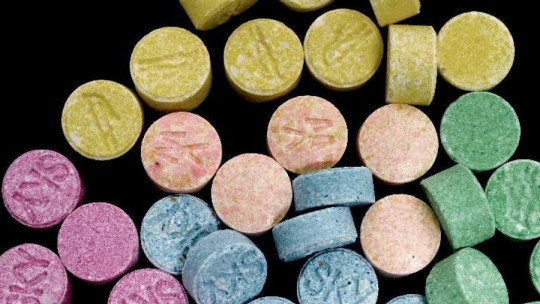
MDMA (Ecstasy)
MDMA (3,4-methylenedioxymethamphetamine) — known as ecstasy, molly, or XTC — is a synthetic entactogen and empathogen with combined stimulant and mild hallucinogenic properties. It produces pronounced feelings of emotional closeness, empathy, enhanced sociability, euphoria, and increased energy, primarily through the massive release of serotonin, dopamine, and norepinephrine in the brain. It became widely known in the 1980s and 1990s as a fixture of rave and electronic music culture, and it remains one of the most widely used synthetic drugs globally.
MDMA’s risk profile, while distinct from more immediately lethal synthetic drugs, is nonetheless significant. Hyperthermia — dangerous overheating of the body — combined with physical exertion and inadequate hydration in rave environments has been responsible for numerous deaths. The massive serotonin release it produces is followed by a period of serotonin depletion that produces depression, anxiety, and cognitive impairment lasting days to weeks — the phenomenon colloquially known as the “comedown.” Regular use is associated with long-term impairment of serotonergic systems and cognitive functions including memory. Adulteration of street MDMA with other substances — including methamphetamine, synthetic cathinones, and fentanyl — substantially increases its risk profile.
Methamphetamine
Methamphetamine — also known as crystal meth, ice, or tina — is a powerful synthetic stimulant of the amphetamine class that produces intense and prolonged euphoria through the release of large amounts of dopamine in the brain’s reward circuits. It can be smoked, injected, snorted, or swallowed. Its effect on the dopamine system is more intense than that of cocaine, its duration of action is considerably longer, and its addiction potential is among the highest of any illicit substance. Illicitly manufactured methamphetamine has surged in global availability over the past two decades, driven by the relative simplicity of its synthesis from commercially available precursors.
The neurological consequences of chronic methamphetamine use are among the most severe of any synthetic drug. Imaging studies consistently show significant reductions in dopamine transporter density and dopamine receptor availability in the brains of chronic users — changes associated with profound impairments in memory, attention, executive function, and emotional regulation that may take years to partially recover and in some cases appear irreversible. The psychological sequelae of heavy use include paranoia, hallucinations, and a persistent psychosis indistinguishable from schizophrenia — methamphetamine-induced psychotic disorder — that can persist indefinitely after cessation of use.
Dissociatives: Ketamine and PCP
Dissociative synthetic drugs — most prominently ketamine and phencyclidine (PCP, or “angel dust”) — produce their psychoactive effects primarily through antagonism of NMDA receptors, creating a characteristic dissociation between sensory experience and conscious awareness, distortions of time and space, out-of-body experiences, and analgesia. Ketamine was developed as a veterinary and human anesthetic and has legitimate medical uses, including recently approved applications in treatment-resistant depression. PCP was similarly developed as an anesthetic but was withdrawn from human use due to its severe dysphoric and psychotomimetic effects.
Both substances carry significant risks beyond the acute dissociative experience. PCP in particular is associated with extreme agitation, violent behavior, and a profound psychosis that emergency medicine providers have described as among the most difficult to manage clinically. Ketamine at high doses or with chronic use produces significant cognitive impairment and, in a substantial proportion of frequent users, severe urological damage — ketamine-associated cystitis — that in serious cases requires surgical intervention including cystectomy.
GHB and GBL
Gamma-hydroxybutyrate (GHB) and its precursor gamma-butyrolactone (GBL) are central nervous system depressants that produce sedation, euphoria, and, in sub-anesthetic doses, disinhibition and mild hallucinations. Synthetically produced GHB became a fixture of nightlife and bodybuilding subcultures in the 1990s and has been used as a date rape drug due to its colorless, odorless presentation in liquid form, its rapid onset, and the profound amnesia it produces at higher doses. The therapeutic window for GHB is extremely narrow — the difference between an intoxicating dose and a dose that produces unconsciousness and respiratory depression is small — and this margin narrows dramatically when GHB is combined with alcohol or other central nervous system depressants, a combination responsible for a disproportionate number of GHB-related deaths.
Synthetic Hallucinogens: NBOMes and Novel Tryptamines
The synthetic hallucinogen category encompasses a range of compounds designed to mimic the effects of classical hallucinogens such as LSD and psilocybin. The NBOMe series — including 25I-NBOMe, 25C-NBOMe, and 25B-NBOMe — are particularly potent partial agonists at serotonin 5-HT2A receptors, active at doses measurable in micrograms and frequently sold as LSD on blotter paper. Novel tryptamines (including AMT, 5-MeO-DMT, and foxy-methoxy) produce effects similar to DMT or psilocybin through related serotonergic mechanisms. NBOMes in particular carry a high risk of fatal toxicity: unlike classical LSD, NBOMes can cause fatal hyperthermia, seizures, and cardiovascular collapse at doses not dramatically above those producing psychedelic effects.
General Effects on the Body and Mind
Despite the pharmacological diversity of synthetic drugs, their effects on the body and brain converge around several common patterns that reflect their shared capacity to profoundly disrupt normal neurochemical function.
| Timeframe | Effects on Mental Health | Effects on Physical Health |
|---|---|---|
| Short-term | Euphoria, anxiety, paranoia, hallucinations, psychotic episodes, panic attacks, aggressive behavior, memory loss | Tachycardia, hypertension, hyperthermia, dry mouth, sweating, jaw clenching, tremors, seizures, loss of appetite, insomnia |
| Long-term | Depression, chronic anxiety, psychotic disorders, cognitive impairment, memory deficits, suicidal ideation, severe addiction | Permanent neurological damage, cardiovascular disease, renal and hepatic insufficiency, stroke, thrombosis, cerebral hemorrhage |
| Acute risk | Acute psychosis, violent or self-harmful behavior, complete loss of behavioral control | Hyperthermia, cardiac arrhythmia, respiratory depression, multi-organ failure, death by overdose |
Why Synthetic Drugs Are Particularly Dangerous
Beyond the specific risk profiles of individual substances, synthetic drugs as a category share several features that make them, in aggregate, more dangerous than most other classes of psychoactive substance. Understanding these structural features is as important as understanding the pharmacology of specific compounds.
- Unknown composition: the user rarely knows the precise identity, purity, or dose of what they are consuming — illicitly manufactured synthetic drugs are not produced under quality control conditions and frequently contain adulterants, impurities, or entirely different substances from those expected
- Regulatory lag: manufacturers systematically exploit the gap between the production of new synthetic compounds and their legal prohibition, creating a continuous stream of substances that are temporarily legal and therefore more accessible, with risk profiles that are essentially unknown at the time of their introduction
- Extreme potency: many synthetic drugs are engineered to be dramatically more potent than the natural substances they imitate, reducing the margin between an intoxicating dose and a lethal one to levels that are impossible to manage without laboratory measurement
- Rapid addiction potential: the intense dopamine surges produced by stimulant synthetic drugs — particularly methamphetamine and synthetic cathinones — can produce addiction after very few uses, with a speed and severity that exceeds most natural drugs
- Unpredictable psychological effects: the novelty of many synthetic compounds means that their psychological effects are poorly characterized; psychotic reactions, violent behavior, and prolonged dissociative states have occurred after single-use exposures to substances whose risks were not anticipated
- Interaction risks: combining synthetic drugs with alcohol, prescription medications, or other illicit substances — a common pattern in recreational use settings — dramatically multiplies risk in ways that are difficult to predict even for pharmacologists
- Fentanyl contamination of the supply chain: the presence of illicitly manufactured fentanyl and its analogues in a wide range of other drug supplies means that users of other synthetic drugs face the risk of inadvertent opioid overdose without knowing it
The Global Public Health Dimension
The United Nations Office on Drugs and Crime (UNODC) has repeatedly identified the rapid proliferation of synthetic drugs as one of the most pressing global drug policy challenges. The number of new psychoactive substances (NPS) monitored by the UNODC has grown from a handful in the early 2000s to over 1,000 distinct compounds identified by 2023. Unlike traditional drug supply chains rooted in agricultural production — which are geographically constrained and vulnerable to disruption — synthetic drug manufacturing requires only basic chemical precursors, laboratory equipment, and technical knowledge, all of which are increasingly accessible globally. This means that synthetic drug production cannot be effectively addressed through the crop eradication and supply chain interdiction strategies that have been the cornerstone of drug control policy for decades.
The public health consequences are correspondingly severe. The opioid overdose crisis in North America — driven overwhelmingly by illicitly manufactured fentanyl and its analogues since approximately 2016 — represents the most lethal drug epidemic in American history, with cumulative overdose deaths exceeding those of the Vietnam War, HIV/AIDS at its peak, and every previous drug epidemic combined. Europe, Australia, and parts of Asia are experiencing comparable growth in synthetic drug harms, though the specific substances involved vary by region. Harm reduction approaches — including the availability of naloxone for opioid overdose reversal, drug checking services that allow users to identify adulterants including fentanyl, and safe consumption facilities — have demonstrated effectiveness in reducing mortality and are increasingly supported by public health evidence, even where political and regulatory obstacles to their implementation remain substantial.
Addiction, Dependence, and Treatment
Addiction to synthetic drugs follows the same neurobiological pathways as addiction to other psychoactive substances — primarily the dysregulation of dopaminergic reward circuits through repeated exposure to substances that produce supraphysiological dopamine signaling — but frequently develops more rapidly and produces more severe dependence than most natural drugs. The methamphetamine user, the synthetic opioid user, and the synthetic cannabinoid user who have developed dependence face a combination of intensely dysphoric withdrawal symptoms, powerful conditioned craving responses, and — in many cases — significant neurological impairment of the prefrontal systems responsible for impulse control and decision-making. This neurobiological reality is why willpower alone is rarely sufficient for sustained recovery from synthetic drug addiction, and why evidence-based treatment integrating pharmacological, psychological, and social support components is the standard of care recommended by major clinical and public health organizations.
Treatment approaches vary depending on the specific substance. For synthetic opioid dependence, medication-assisted treatment with methadone or buprenorphine has the strongest evidence base, reducing mortality, criminality, and the risk of overdose more effectively than abstinence-only approaches. For stimulant dependence — including methamphetamine and synthetic cathinones — no pharmacological treatment has yet achieved regulatory approval, though several compounds are in clinical trials; the strongest current evidence supports contingency management alongside motivational interviewing and cognitive-behavioral therapy. Across all categories, long-term support, relapse prevention work, and treatment of co-occurring mental health conditions are critical components of sustainable recovery.

A Note on Prevention and Seeking Help
Prevention of synthetic drug use is most effective when it is grounded in accurate, non-sensationalized information — the kind that acknowledges real risks without resorting to exaggeration that erodes credibility with the populations most at risk. Young people, in particular, are more responsive to evidence-based education that respects their intelligence and addresses their actual decision-making context than to abstinence-only messaging that fails to engage with their lived reality. Open, honest conversations about the specific risks of specific substances — the unpredictability of composition, the extreme potency relative to natural drugs, the irreversibility of some long-term neurological consequences — are more protective than categorical warnings that carry no credibility with people who have already encountered these substances in their social environment.
For anyone currently using synthetic drugs, or concerned about their own or another person’s use, the most important step is connecting with professional support without delay. The harms associated with synthetic drug use are dose-dependent and cumulative: earlier intervention produces substantially better outcomes. If you are in a situation involving an acute overdose or medical emergency related to synthetic drug use, call emergency services immediately — most jurisdictions have Good Samaritan laws that provide legal protection to people who call for help in overdose situations, and no drug-related legal consequence is comparable in severity to the preventable death of someone waiting for help that could have been summoned.
FAQs About Synthetic Drugs
What are synthetic drugs and how do they differ from natural drugs?
Synthetic drugs are psychoactive substances produced entirely or substantially through chemical synthesis in a laboratory, rather than being extracted from plants or other biological sources. They are designed to mimic, replicate, or intensify the effects of natural drugs such as cannabis, cocaine, or opioids. The key differences from natural drugs are their engineered potency — which can be many times greater than the natural substances they imitate — their highly variable composition in illicit markets, and the systematic exploitation of regulatory gaps through molecular modification that allows new compounds to be introduced faster than they can be prohibited. They are also frequently mislabeled and sold under false descriptions specifically to circumvent drug laws.
Why are synthetic cannabinoids more dangerous than natural cannabis?
Synthetic cannabinoids bind to the same cannabinoid receptors in the brain as natural THC but with a much higher affinity and potency — producing effects that are four or more times more intense than smoked cannabis, with an unpredictable profile that natural cannabis does not share. Unlike natural cannabis, synthetic cannabinoids have been associated with life-threatening cardiac events, acute kidney injury, and severe psychotic episodes even in first-time users. The composition of synthetic cannabinoid products varies enormously between batches and brands, making consistent dosing essentially impossible. Natural cannabis, while not without risks, has a substantially more predictable pharmacological profile and a much wider margin between intoxicating and dangerous doses.
What is fentanyl and why is it so lethal?
Fentanyl is a synthetic opioid originally developed as a medical anesthetic and analgesic, now predominantly encountered in illicit drug markets in illegally manufactured form. It is approximately 50 to 100 times more potent than morphine and 50 times more potent than heroin, meaning that a lethal dose is measurable in micrograms — quantities that are invisible to the naked eye and impossible to estimate without laboratory equipment. Illicitly manufactured fentanyl is frequently added to other drug supplies, including cocaine, MDMA, and counterfeit prescription pills, meaning that users who do not intend to consume opioids are regularly exposed to it unknowingly. The combination of extreme potency, invisible quantities, widespread adulteration of other drug supplies, and the narrow window between intoxicating and lethal doses makes illicitly manufactured fentanyl the primary driver of drug overdose mortality in North America.
What are “bath salts” and why are they dangerous?
Bath salts is a colloquial term for synthetic cathinones — stimulant drugs chemically related to cathinone, a naturally occurring compound in the khat plant. They are sold under the label “bath salts” and other innocuous descriptions specifically to avoid drug regulations. The most potent synthetic cathinones, including MDPV and alpha-PVP, are 10 to 50 times more potent than cocaine and carry an extremely high risk of overdose. Their effects include intense stimulation, euphoria, and increased energy, but also severe paranoia, hallucinations, violent behavior, and psychotic episodes. Several high-profile cases of extreme violence and self-harm associated with their use have been documented in emergency medicine literature. Their addiction potential is high, and the acute intoxication they produce is among the most difficult to manage clinically.
Can synthetic drug use cause permanent mental health damage?
Yes — several synthetic drugs are associated with irreversible or long-lasting neurological and psychiatric consequences. Chronic methamphetamine use produces documented reductions in dopamine transporter density and receptor availability that are associated with persistent impairments in memory, attention, and executive function; a methamphetamine-induced psychotic disorder indistinguishable from schizophrenia can persist indefinitely after stopping use. Synthetic cannabinoids and synthetic cathinones have been associated with prolonged psychotic disorders. Chronic MDMA use is associated with long-term impairment of serotonergic systems and cognitive functions including memory consolidation. The extent of reversibility depends on the substance, the duration and intensity of use, the age at first use, and individual neurobiological factors — but the evidence is clear that some consequences of heavy synthetic drug use are permanent or extremely slow to recover.
What should I do if someone is experiencing a synthetic drug overdose?
Call emergency services immediately. Do not wait to see if the person “sleeps it off” — synthetic drug overdoses can progress rapidly to respiratory depression, cardiac arrest, or hyperthermia with fatal consequences. If the person is unconscious and an opioid is suspected (including fentanyl contamination of other substances), administer naloxone (Narcan) if available — it can reverse opioid-induced respiratory depression within minutes and is available without prescription in many jurisdictions. Place an unconscious person in the recovery position to prevent aspiration. Do not leave them alone. Most jurisdictions have Good Samaritan laws providing legal protection to people who call emergency services during a drug-related emergency — do not allow fear of legal consequences to delay calling for help.
Are synthetic drugs ever used medically?
Yes — several substances that circulate illicitly as synthetic drugs have legitimate medical applications in controlled clinical settings. Fentanyl is a widely used surgical anesthetic and analgesic for severe pain management. Ketamine has established veterinary and human anesthetic uses and has recently received regulatory approval in intranasal form for treatment-resistant depression. MDMA is currently in advanced clinical trials as an adjunct to psychotherapy for post-traumatic stress disorder. GHB in pharmaceutical form (sodium oxybate) is an approved treatment for narcolepsy. The distinction between medical and illicit use lies in dose, purity, clinical supervision, and the specific therapeutic context — conditions entirely absent in recreational or dependent use of illicitly manufactured versions of these compounds.
How can someone get help for synthetic drug addiction?
The first step is contacting a healthcare provider, addiction specialist, or mental health professional for a comprehensive assessment — many people with synthetic drug use disorders also have co-occurring mental health conditions that need to be identified and addressed simultaneously for treatment to be effective. For synthetic opioid dependence specifically, medication-assisted treatment with methadone or buprenorphine is the most evidence-based pharmacological approach, dramatically reducing overdose risk and supporting sustained recovery. For stimulant dependence, contingency management combined with motivational interviewing and cognitive-behavioral therapy has the strongest current evidence. In most countries, addiction treatment services are available through national health systems, and crisis lines can provide immediate guidance on local resources. Reaching out for professional support is not a sign of weakness — it is the most effective first step toward recovery from a condition with a strong neurobiological basis that willpower alone is rarely sufficient to overcome.
Use this citation format to reference the article clearly and help readers find the original source.
PsychologyFor. (2026). Synthetic Drugs: Their Main Types, Effects and Characteristics. PsychologyFor. https://psychologyfor.com/synthetic-drugs-their-main-types-effects-and-characteristics/