


You picked up a Žižek quote on social media, felt genuinely provoked by it, and then discovered you had absolutely no idea where to start with his actual books. Slavoj Žižek’s bibliography spans more than fifty titles that blend Lacanian psychoanalysis, Hegelian dialectics, and Marxist critique into a style that is equal parts philosophy lecture and stand-up comedy, and that combination can feel disorienting the first time you try to read him seriously.
This disorientation is not a personal failing. Žižek deliberately writes across registers that most readers have never been asked to hold together at once — a joke about a Hollywood film sits two paragraphs away from a technical reading of Hegelian dialectics, and a passage on ideology critique can pivot without warning into a close analysis of a Lacanian formula. Readers who approach him expecting a linear introductory textbook often give up within twenty pages, not because the ideas are inaccessible, but because nobody told them which book to start with or why the order matters.
So where do you actually begin with Slavoj Žižek’s books?
This guide walks through the ten most essential works in his catalog, in an order designed to build your understanding step by step, so you can move from his foundational theory of ideology all the way to his most demanding engagement with Hegel.
Top 10 Slavoj Žižek Books
Verified Top Picks- 1
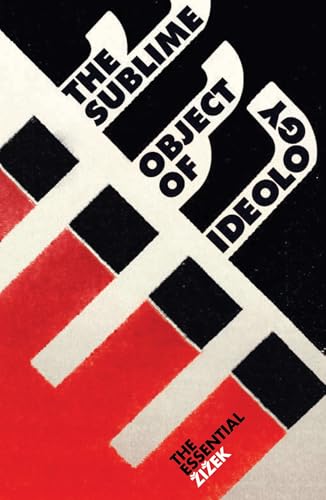 Slavoj Žižek The Sublime Object of Ideology Foundational theory of ideology and desireCHECK TODAY'S PRICE
 - 2
 Slavoj Žižek Violence: Six Sideways Reflections Subjective, systemic, and symbolic violenceCHECK TODAY'S PRICE
 - 3Slavoj Žižek The Parallax View Contradiction as a structural feature of realityCHECK TODAY'S PRICE
- 4Slavoj Žižek Living in the End Times Capitalism's terminal crisis through five stages of griefCHECK TODAY'S PRICE
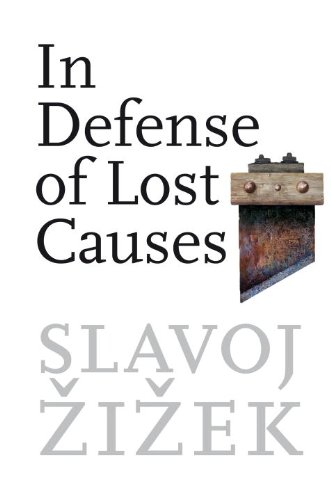
- 5Slavoj Žižek In Defense of Lost Causes Rehabilitating idealism in failed revolutionsCHECK TODAY'S PRICE
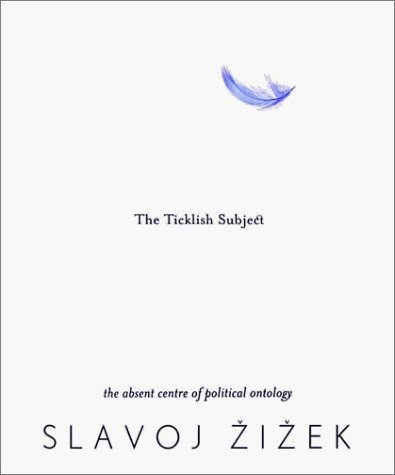
- 6Slavoj Žižek The Ticklish Subject Rebuilding the subject after poststructuralismCHECK TODAY'S PRICE
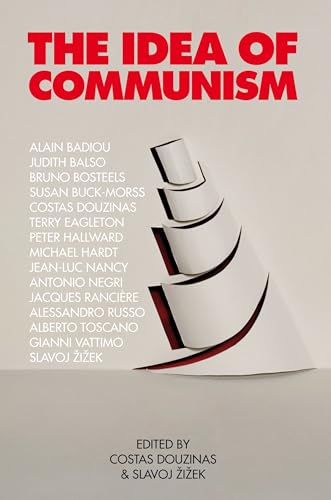
- 7Douzinas & Žižek The Idea of Communism Reopening a foreclosed political vocabularyCHECK TODAY'S PRICE
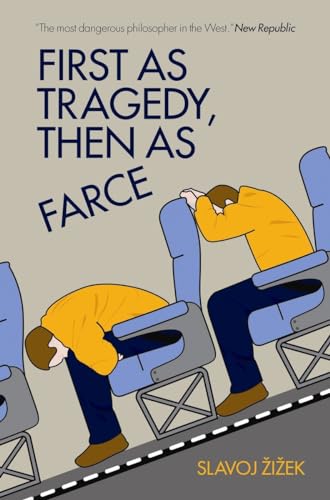
- 8Slavoj Žižek First as Tragedy, Then as Farce Reading the 2008 crash through MarxCHECK TODAY'S PRICE
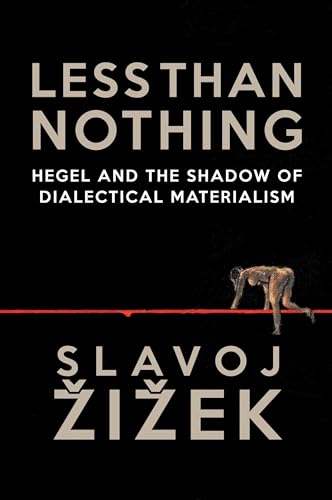
- 9Slavoj Žižek Less Than Nothing Žižek's most ambitious reading of HegelCHECK TODAY'S PRICE
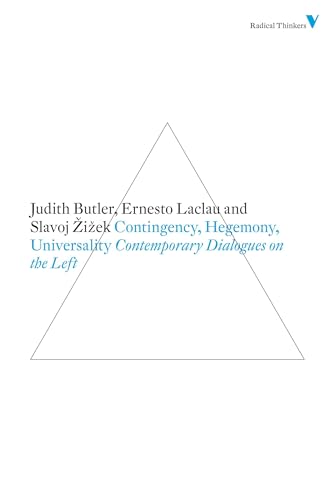
- 10Butler, Laclau & Žižek Contingency, Hegemony, Universality A three-way debate on psychoanalysis and politicsCHECK TODAY'S PRICE



1. The Sublime Object of Ideology Introduces Žižek’s Theory of Ideology (1989)
The Sublime Object of Ideology is the book that made Žižek’s international reputation, and it remains the correct starting point because it lays out his theory of ideology in a form he would spend the next three decades refining. Written while global socialism was visibly cracking apart, the book argues that ideology survives not because people are tricked by false beliefs, but because ideology is woven into the structure of desire itself.
Žižek builds this argument on the psychoanalytic framework of Jacques Lacan, whose concepts of the Real, the symbolic order, and fantasy give Žižek the tools to explain why exposing an ideology as false rarely dissolves its grip on people. His central claim is that ideology functions cynically — we already know capitalism is exploitative, we already know the system’s promises are hollow, and yet we act as if we did not know, because the fantasy structuring our subjectivity operates beneath conscious belief.
The book also introduces Žižek’s reading of Marxist theory through a psychoanalytic lens, treating commodity fetishism not as a simple mistake in perception but as a structural feature of how capitalist society organizes collective fantasy. This is dense material, but Žižek moves through it with concrete examples — Titanic, anti-Semitic propaganda, everyday bureaucratic rituals — that keep the theory tethered to recognizable experience.
- The book’s account of the sublime object shows how ideology attaches itself to objects that promise an impossible wholeness.
- Its reading of cynical distrust explains why rational argument alone rarely changes ideological commitment.
- Its integration of Lacanian psychoanalysis with political theory became the methodological template for nearly everything Žižek wrote afterward.
2. Violence: Six Sideways Reflections Reframes What Counts as Violent (2008)

Violence: Six Sideways Reflections is the most approachable entry point in Žižek’s catalog, and it earns that accessibility by starting from a single provocative claim: the violence that dominates headlines is not the most consequential violence in modern society. Žižek distinguishes subjective violence — the visible acts committed by identifiable individuals — from systemic violence, the quieter harm baked into economic and political structures that produces suffering without ever appearing as an event.
This reframing matters because it changes what a reader is trained to notice. A riot gets covered on the news; the decades of economic policy that produced the conditions for that riot generally do not. Žižek argues that focusing exclusively on subjective violence — terrorism, riots, individual crime — actually functions ideologically, distracting attention from the systemic violence that sustains everyday life for those who benefit from it.
He also develops the idea of symbolic violence, the harm embedded in language and social categorization itself, drawing on linguistic philosophy to show how naming and framing can wound before any physical act occurs. Because the book is organized as six short, self-contained reflections rather than one continuous argument, it works well as a first Žižek book for readers who want the provocations without committing to four hundred pages of dense theory.
- The distinction between subjective and systemic violence reorients how readers interpret news coverage of conflict.
- The discussion of symbolic violence connects the book to broader debates in critical theory about language and power.
- Its short, essay-length chapters make it the most beginner-friendly title on this list.
3. The Parallax View Applies Hegelian Dialectics to Contradiction (2006)

The Parallax View takes its title from an optical phenomenon — the way an object appears to shift position depending on the observer’s viewpoint — and turns it into a philosophical method for handling contradictions that cannot be resolved by choosing one side. Žižek calls this irreducible gap the parallax gap, and he uses it to argue that certain oppositions in philosophy and politics are not problems to be solved but structural features of reality itself.
The book is Žižek’s most sustained engagement with Hegelian dialectics up to that point, and it positions him against both strict materialists and postmodern relativists by insisting that contradiction is generative rather than simply confusing. Where many readers expect dialectics to resolve into a tidy synthesis, Žižek insists the gap persists, and that persistence is precisely what makes genuine political and philosophical thought possible.
This is one of the more academically demanding books on this list, assuming some familiarity with continental philosophy before you start. But for readers who want to understand the intellectual scaffolding underneath Žižek’s later, more topical work, The Parallax View is the text that makes the scaffolding visible.
- The concept of the parallax gap reframes contradiction as structural rather than accidental.
- The book’s critique of philosophical materialism distinguishes Žižek’s position from more conventional Marxist readings.
- Its treatment of subjectivity and objectivity connects directly to the arguments developed later in Less Than Nothing.
4. Living in the End Times Diagnoses a Terminal Capitalist Crisis (2010)

Living in the End Times structures its argument around the five stages of grief, applying that psychological framework to how Western societies are collectively responding to what Žižek calls a terminal crisis of global capitalism. The book moves through denial, anger, bargaining, depression, and acceptance as a way of mapping the emotional and political responses to economic instability, ecological collapse, and rising social unrest.
What distinguishes this book from more conventional economic critique is its insistence that ideology does most of its work at the level of unconscious fantasy rather than explicit argument. Žižek is less interested in proving capitalism is failing on economic grounds than in showing how people psychologically manage the awareness that it already is failing, often through elaborate denial mechanisms that let daily life continue as if nothing is wrong.
The book also extends Žižek’s engagement with ecological catastrophe, treating climate change not as a separate crisis from capitalism but as one expression of the same underlying structural failure. Readers looking for a Žižek text that speaks directly to contemporary anxieties about economic precarity and environmental collapse will find this one of his most urgent works.
- The five-stages-of-grief structure gives the book an unusually clear organizing device for dense material.
- Its treatment of ecological collapse links environmental crisis directly to capitalist ideology rather than treating it separately.
- The book’s account of revolutionary change asks what genuine transformation would require beyond reform.
5. In Defense of Lost Causes Rehabilitates Revolutionary Idealism (2008)

In Defense of Lost Causes makes a case that will strike many readers as deliberately uncomfortable: Žižek argues that revolutionary movements typically dismissed as historical failures — including some of the twentieth century’s most catastrophic political experiments — contain a kernel of idealism worth taking seriously rather than simply condemning outright.
This is not an endorsement of authoritarian violence. Žižek is explicit that he is examining what these movements were reaching for, not defending what they became. His larger target is contemporary liberalism and neoliberalism, which he accuses of foreclosing genuine political imagination by treating the current economic order as the only realistic option available to humanity.
The book’s method involves close readings of historical revolutionary rhetoric alongside contemporary political philosophy, and it draws explicitly on Alain Badiou’s concept of fidelity to an emancipatory event — the idea that genuine political commitment requires sustained loyalty to a moment of rupture rather than pragmatic accommodation to existing conditions. Readers should approach this book expecting to be provoked rather than reassured.
- The book’s central argument for idealism in politics challenges readers to separate aspiration from historical outcome.
- Its critique of neoliberalism targets the assumption that no alternative to current capitalism is thinkable.
- The engagement with radical political change draws directly on debates with contemporary political philosophy.
6. The Ticklish Subject Reconstructs the Political Subject After Poststructuralism (1999)

The Ticklish Subject: The Absent Centre of Political Ontology takes on a task that much of late-twentieth-century theory had abandoned: defending the coherence of the subject as a category, at a moment when poststructuralist thought had largely dissolved subjectivity into language, discourse, and social construction.
Žižek argues that the Cartesian subject is not simply an outdated fiction to be discarded but an ontological gap that persists beneath every social and ideological formation — what he calls the absent centre. He develops this argument in direct dialogue with Hegelian philosophy and Lacanian psychoanalysis, pushing back against both cognitive science’s reduction of mind to mechanism and certain strands of deconstruction that treat the subject as pure effect.
This book is also notable for its extended engagement with the political philosophy debates of the 1990s, including exchanges that would later crystallize in his co-authored volume with Judith Butler and Ernesto Laclau. Readers interested in how Žižek positions himself against feminist and hegemony-theory alternatives to Marxism will find the clearest statement of that positioning here.
- The concept of the absent centre gives Žižek’s account of subjectivity a distinctly Hegelian structure.
- Its critique of liberal individualism challenges assumptions common across both cognitive science and postmodern theory.
- The book’s engagement with political ontology sets up debates Žižek would continue for the rest of his career.
7. The Idea of Communism Reopens a Foreclosed Political Vocabulary (2010)

The Idea of Communism, co-edited with legal philosopher Costas Douzinas, collects essays from a landmark 2009 conference and makes the case that the word “communism” deserves serious philosophical reconsideration rather than reflexive dismissal. Žižek’s contribution argues that treating neoliberal capitalism as the permanent horizon of political possibility is itself an ideological move, not a neutral description of reality.
The book is less a policy proposal than a call to reopen a vocabulary that most mainstream political discourse had declared closed after 1989. Žižek insists that the point is not to resurrect twentieth-century state socialism but to recover communism as a name for the demand that collective goods — the environment, information, biogenetic commons — be organized outside pure market logic.
Because the volume includes contributions from multiple contemporary philosophers beyond Žižek himself, it also functions as a useful map of who else is thinking seriously about radical political alternatives in the twenty-first century, situating Žižek’s own position within a broader intellectual conversation rather than treating him as a solitary provocateur.
- The book’s reconsideration of communism is explicitly conceptual rather than a blueprint for policy.
- Its critique of the political status quo challenges the assumption that current capitalism has no viable alternative.
- The multi-author format situates Žižek’s argument for a new revolutionary politics within a wider contemporary debate.
8. First as Tragedy, Then as Farce Reads the 2008 Crisis Through Marx (2009)

First as Tragedy, Then as Farce takes its title from Marx’s observation that history tends to repeat itself, first as tragedy and then as farce, and applies that framework to the 2008 financial crash and the ongoing conflicts in the Middle East that Žižek was writing about in real time. The book’s central worry is that societies have become skilled at metabolizing genuine crises into manageable spectacle rather than confronting them as occasions for structural change.
Žižek is particularly interested in how the financial crisis was absorbed by governments and media without producing the kind of political rupture that a crisis of that magnitude might have been expected to generate. Bank bailouts proceeded, blame was distributed, and the underlying system continued largely unchanged — which Žižek reads as evidence that modern capitalism has developed sophisticated mechanisms for converting tragedy into farce before it can become genuinely destabilizing.
This is one of the more historically grounded books on this list, engaging directly with specific events rather than staying at a purely theoretical level, which makes it a useful bridge for readers who want to see Žižek’s abstract concepts applied to concrete political situations they may already remember living through.
- The Marx-derived framing of historical repetition gives the book its central analytical device.
- Its account of mainstream political responses to the 2008 crash remains relevant to later financial crises.
- The call for a radical response to ongoing global instability directly extends arguments from Living in the End Times.
9. Less Than Nothing Offers Žižek’s Most Ambitious Reading of Hegel (2012)

Less Than Nothing: Hegel and the Shadow of Dialectical Materialism is Žižek’s magnum opus by sheer scale, running over a thousand pages, and it represents his most systematic attempt to reclaim Hegel from two centuries of philosophy that treated Hegelian dialectics as either naive idealism or a historical dead end.
Žižek argues that Hegel’s dialectical method, properly understood through a Lacanian lens, is far more radical and materialist than either its critics or many of its defenders have recognized. The book moves through quantum physics, theology, and popular culture alongside close textual readings of Hegel’s own writing, insisting that dialectical materialism remains an unfinished project rather than a discredited relic of twentieth-century Marxism.
This is genuinely difficult reading, and Žižek does not soften the difficulty for a general audience. But for readers who have worked through the earlier books on this list and want to see the full theoretical architecture underneath Žižek’s political and cultural criticism, Less Than Nothing is where that architecture is laid bare in its most complete form.
- The reclamation of Hegelian dialectics as a materialist rather than idealist method is the book’s central philosophical wager.
- Its account of ontology and subjectivity synthesizes arguments developed across nearly all of Žižek’s earlier work.
- The sheer scope of the book makes it the definitive reference point for serious students of continental philosophy engaging with Žižek.
10. Where to Go Next After These Nine Books
A note on source accuracy matters here before recommending further reading: an earlier version of this list included a title called “The Broken World: The Impact of Capitalism on Human Life,” attributed to Žižek and dated 2009. That book does not appear in Žižek’s verifiable bibliography or in any library or publisher catalog, and this guide will not link to or recommend a source that cannot be confirmed to exist.
If you are looking for a tenth title to round out serious engagement with Žižek’s thought, Contingency, Hegemony, Universality, co-written with Judith Butler and Ernesto Laclau, is a stronger and fully verifiable choice. The book stages a direct three-way debate over the relationship between psychoanalysis, hegemony theory, and universalist politics, and it clarifies exactly where Žižek’s Lacanian Marxism diverges from Butler’s performative account of identity and Laclau’s discourse-theoretical approach to politics.
Reading that debate after the nine books above gives you something the original list could not: a clear sense of where Žižek’s ideology critique sits relative to the other major currents in contemporary political philosophy, rather than treating his work as a closed system existing in isolation.
- The three-way debate format exposes real disagreements about psychoanalysis and politics rather than presenting Žižek’s views as uncontested.
- Butler’s contribution challenges Žižek’s Lacanian framework from a performative theory of identity.
- Laclau’s contribution offers a discourse-theoretical alternative to both psychoanalytic and classical Marxist readings of politics.
How Žižek’s Books Connect to Each Other Across Three Decades
Reading Žižek in publication order reveals something that reading him piecemeal tends to obscure: a genuine intellectual trajectory rather than a scattered collection of provocations on unrelated topics. The psychoanalytic theory of ideology developed in The Sublime Object of Ideology does not disappear in later books — it becomes the lens through which he reads the 2008 financial crisis, the ecological emergency, and the possibility of communism.
This continuity matters practically for anyone building a reading plan. Skipping straight to Less Than Nothing without the earlier groundwork in Lacanian psychoanalysis and Hegelian dialectics means missing the vocabulary Žižek assumes you already have. Conversely, stopping after the more accessible titles like Violence or First as Tragedy, Then as Farce means never encountering the theoretical depth that makes his political commentary more than just clever cultural criticism.
The clearest throughline across all ten books is Žižek’s insistence that ideology critique cannot stop at exposing false consciousness. Each book, in its own domain, asks what sustains a system’s grip on people even after its contradictions have been intellectually exposed, and each one answers that question by returning to the psychoanalytic structure of fantasy and desire that Žižek first mapped out in 1989.
- Tracking the recurring reference to Lacanian concepts across books shows how consistently Žižek returns to the same theoretical toolkit.
- Noticing where Hegel reappears — in The Parallax View, The Ticklish Subject, and Less Than Nothing — reveals the philosophical spine connecting his more overtly political books.
- Following the shift from abstract ideology critique toward concrete historical analysis after 2008 shows how world events reshaped his priorities without abandoning his core method.
FAQs about the Best Books by Slavoj Žižek
What is the best Žižek book to start with?
Violence: Six Sideways Reflections is generally the easiest entry point because it is short, organized into self-contained essays, and grounded in concrete examples rather than sustained technical argument. The Sublime Object of Ideology is the more traditional starting point because it lays out Žižek’s foundational theory of ideology, but it assumes more patience with psychoanalytic vocabulary. Readers with some background in continental philosophy often prefer to start there since everything else builds on it.
Do I need to know Lacan or Hegel before reading Žižek?
Not strictly, but some familiarity helps considerably. Žižek explains key concepts as he uses them, so a first-time reader can follow the argument without a psychoanalysis degree. That said, books like The Ticklish Subject and Less Than Nothing engage so deeply with Lacanian and Hegelian source material that readers with zero background will likely need to look up terms as they go. Starting with the more accessible titles first builds the vocabulary needed for the denser books later.
Is Žižek’s work considered serious academic philosophy or popular commentary?
Both, and that dual status is part of what makes him distinctive. He holds academic positions and publishes with serious university presses, and books like Less Than Nothing are treated as significant contributions to Hegel scholarship. At the same time, his frequent media appearances, documentary films, and use of pop culture examples have made him one of the most publicly visible philosophers alive, which some academics view skeptically as a departure from purely scholarly work.
What is the difference between Žižek’s early and later books?
His earlier work, particularly The Sublime Object of Ideology, focuses more tightly on developing his psychoanalytic theory of ideology through readings of Lacan. His later books increasingly apply that framework to specific historical events, from the 2008 financial crisis to ecological collapse to debates over communism, while also deepening his engagement with Hegel in works like The Parallax View and Less Than Nothing. The core theoretical commitments remain consistent, but the later work is more explicitly political and historically engaged.
Why does Žižek write about pop culture and movies so much?
He treats films, jokes, and everyday cultural artifacts as genuine sources of philosophical insight rather than mere illustration, arguing that ideology often reveals itself more clearly in popular fiction than in explicit political statements. A Hollywood film’s unconscious assumptions about desire, sacrifice, or social order can expose ideological structures that a policy document would carefully hide. This approach also makes his books more readable than most academic philosophy, since the examples give readers something concrete to hold onto while working through abstract argument.
Which Žižek book is most relevant to understanding capitalism today?
Living in the End Times remains the most directly relevant, since it addresses financial instability, ecological crisis, and social unrest as interconnected symptoms of the same underlying system rather than separate problems. First as Tragedy, Then as Farce offers a more compact companion piece focused specifically on the 2008 crash. Readers interested in alternatives to capitalism rather than just its critique should follow up with The Idea of Communism.
Are there any Žižek books that are considered unreliable or misattributed online?
Yes, and this is worth flagging directly. Because Žižek has published so prolifically across decades, incorrect titles and misattributed books occasionally circulate on book-recommendation sites and social media. Always verify a title against a major publisher’s catalog, a library database, or Žižek’s own bibliography before assuming it exists, since not every list compiled online has been fact-checked against primary sources.
Bibliography
- Žižek, S. (1989). The Sublime Object of Ideology. Verso.
- Žižek, S. (2008). Violence: Six Sideways Reflections. Picador.
- Žižek, S. (2006). The Parallax View. MIT Press.
- Žižek, S. (2010). Living in the End Times. Verso.
- Žižek, S. (2008). In Defense of Lost Causes. Verso.
- Žižek, S. (1999). The Ticklish Subject: The Absent Centre of Political Ontology. Verso.
- Douzinas, C., & Žižek, S. (Eds.). (2010). The Idea of Communism. Verso.
- Žižek, S. (2009). First as Tragedy, Then as Farce. Verso.
- Žižek, S. (2012). Less Than Nothing: Hegel and the Shadow of Dialectical Materialism. Verso.
- Butler, J., Laclau, E., & Žižek, S. (2000). Contingency, Hegemony, Universality: Contemporary Dialogues on the Left. Verso.
- Lacan, J. (1977). The Four Fundamental Concepts of Psycho-Analysis. W. W. Norton & Company.
- Marx, K. (1852). The Eighteenth Brumaire of Louis Napoleon. International Publishers.
- Badiou, A. (2005). Being and Event. Continuum.
Use this citation format to reference the article clearly and help readers find the original source.
PsychologyFor. (2026). The 10 Best Books by Slavoj Žižek. PsychologyFor. https://psychologyfor.com/the-10-best-books-by-slavoj-zizek/