

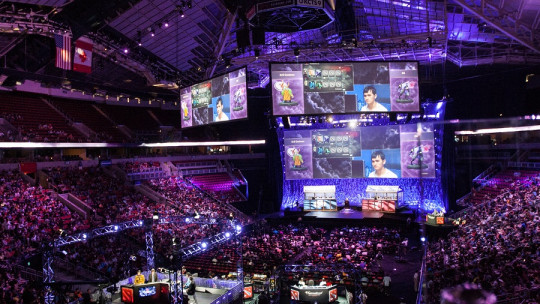
You close a marathon fourteen-hour raid session, controller still warm in your hands, and someone in your life immediately asks whether you have “wasted” another entire evening again. That dismissive question lands harder than it should. Gaming culture has exploded into a multibillion-dollar global industry, professional e-sports arenas now sell out faster than many traditional sporting events, and yet the underlying psychology, history, and cultural weight of games remains poorly understood by people outside the community. It is not merely entertainment for the immature. Rather, it represents a sophisticated intersection of psychology, technology, and competitive human achievement.
Understanding gaming and e-sports at a genuinely serious level requires more than casual playtime; it demands engagement with the histories, psychological frameworks, and cultural criticism that explain why games captivate billions of people worldwide. Gamers and industry professionals alike often struggle to find literature that treats the medium with the same intellectual rigor applied to film, literature, or sport, leaving a real gap for readers who want depth rather than superficial trend pieces. The best writing on this subject blends investigative journalism, developmental psychology, and firsthand industry insight to explain both the artistic ambition and the genuine risks embedded in gaming culture. Building a foundational reading list transforms casual fandom into a rich, historically grounded appreciation.
Which books actually capture the psychological depth and cultural significance of modern gaming and competitive e-sports?
This comprehensive guide details the 10 best books on gaming and e-sports, reviewing landmark journalistic histories, psychological research, industry memoirs, and cultural criticism that explain why games matter far beyond simple entertainment.
10 Best Books on Gaming and E-Sports
Verified Top Picks- 1
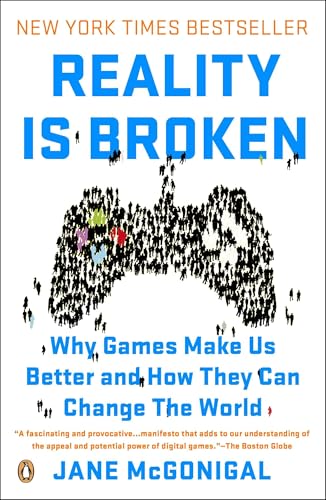 Jane McGonigal Reality Is Broken: Why Games Make Us Better The foundational text on game psychology, motivation, achievable challenge, and real-world problem solvingCHECK TODAY'S PRICE
 - 2
 Jane McGonigal SuperBetter: A Revolutionary Approach Translating game design and CBT resilience principles into personal recovery and life challengesCHECK TODAY'S PRICE
 - 3Ernest Cline Ready Player One The defining pop-culture novel capturing the escapist appeal and immersion of virtual reality gamingCHECK TODAY'S PRICE
- 4Jason Schreier Blood, Sweat, and Pixels Investigative reporting documenting the grueling crunch culture and human cost of video game developmentCHECK TODAY'S PRICE
- 5Blake J. Harris Console Wars: Sega, Nintendo, and the Battle A fast-paced corporate history chronicling the fierce 1990s rivalry that defined modern console gamingCHECK TODAY'S PRICE
- 6David Kushner Masters of Doom The biography of John Carmack and John Romero, the legendary programmers who created Doom and 3D FPS gamingCHECK TODAY'S PRICE
- 7Tom Bissell Extra Lives: Why Video Games Matter A literary critic's thoughtful analysis elevating video games as an emerging art form and cultural narrativeCHECK TODAY'S PRICE
- 8Steven L. Kent The Ultimate History of Video Games (Vol. 1) The definitive reference tracing the industry's evolution from early arcade cabinets to modern consolesCHECK TODAY'S PRICE
- 9Patrick M. Markey & Christopher J. Ferguson Moral Combat: Why the War on Video Games Is Wrong Dismantling sensationalized media panics and evaluating empirical research on gaming and aggressionCHECK TODAY'S PRICE
- 10Steven L. Kent The Ultimate History of Video Games (Vol. 2) Documenting 21st-century console wars, digital distribution, online multiplayer, and competitive e-sportsCHECK TODAY'S PRICE
Why Does Serious Literature on Gaming and E-Sports Matter?
Serious gaming literature matters because the medium has grown into one of the largest entertainment industries on the planet, generating more annual revenue than film and music combined, while remaining chronically under-examined in mainstream cultural criticism. Treating games as worthy of rigorous analysis validates an experience that billions of people already consider central to their lives.
Game designer and researcher Jane McGonigal has spent her career demonstrating that well-designed games activate genuine psychological mechanisms tied to motivation, resilience, and social bonding, not simply mindless escapism. Her research suggests that the emotional engagement gamers feel is not a character flaw but a predictable response to carefully engineered feedback loops and achievable challenge, a finding that reframes gaming as a legitimate object of psychological and behavioral study.
Beyond the psychology, the industry’s own history deserves documentation with the same seriousness historians apply to film studios or record labels. Investigative journalists have spent decades uncovering the human cost behind beloved franchises, the corporate battles that shaped console wars, and the surprisingly literary ambition embedded in game narrative design. That history remains largely invisible to casual players, which is exactly why dedicated gaming journalism fills a genuine cultural gap.
- Gaming generates more global annual revenue than film and music combined, yet remains under-examined in mainstream cultural criticism.
- Well-designed games activate genuine psychological mechanisms tied to motivation, resilience, and social bonding.
- Investigative gaming journalism documents corporate history and human cost with the same rigor applied to film and music industries.
- Treating games as legitimate objects of study validates an experience central to billions of players’ daily lives.
The 10 Best Books on Gaming and E-Sports
The following curated selection represents the ten most essential books on gaming and e-sports, spanning psychological research, investigative journalism, industry history, developer memoirs, and fiction that captures gaming culture.
1. Reality Is Broken: Why Games Make Us Better and How They Can Change the World — Jane McGonigal
Reality Is Broken by game designer Jane McGonigal argues that well-designed games satisfy fundamental human psychological needs, including clear goals, immediate feedback, and meaningful social connection, that everyday reality often fails to provide. McGonigal synthesizes positive psychology research to explain why gamers voluntarily choose difficult challenges within games while avoiding comparable challenges elsewhere.
Rather than dismissing gaming as escapism, McGonigal proposes harnessing game design principles to solve real-world problems and boost collective happiness. It remains the foundational text for understanding the psychology of engagement and motivation in games.
- Explains why games satisfy psychological needs for clear goals and immediate feedback loops.
- Synthesizes positive psychology research to explain voluntary engagement with difficult in-game challenges.
- Proposes applying game design principles to solve genuine real-world social problems.
2. SuperBetter: A Revolutionary Approach to Getting Stronger, Happier, Braver and More Resilient — Jane McGonigal
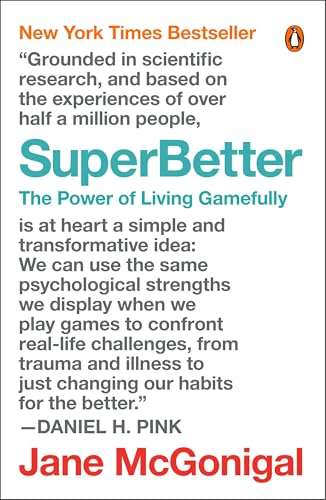
SuperBetter, also by Jane McGonigal, translates game design psychology into a practical personal resilience framework developed after McGonigal used gamification techniques to recover from a severe concussion. The book teaches readers to treat life challenges, from illness to career setbacks, as “quests” with allies, power-ups, and bad guys to defeat.
Grounded in cognitive behavioral principles and McGonigal’s own clinical recovery experience, this book demonstrates concrete, research-backed applications of gaming psychology outside the screen entirely. It remains a genuinely practical companion to Reality Is Broken’s theoretical framework.
- Translates game design psychology into a practical framework for personal resilience building.
- Documents McGonigal’s own recovery from concussion using gamification techniques.
- Applies cognitive behavioral principles to reframe life challenges as achievable in-game quests.
3. Ready Player One — Ernest Cline

Ready Player One by Ernest Cline imagines a near-future dystopia where humanity escapes economic collapse through the OASIS, a massive virtual reality universe saturated with 1980s gaming and pop-culture references. The novel follows a teenage protagonist competing in a global treasure hunt for control of the OASIS itself.
While fictional, the novel captures the genuine emotional intensity, community bonding, and escapist appeal that draws millions of players into massive online gaming worlds. It remains the defining work of gaming culture fiction for a generation of readers.
- Imagines a dystopian future where virtual reality gaming becomes humanity’s primary economic and social refuge.
- Captures the genuine emotional intensity and community bonding found in massive online gaming worlds.
- Established itself as the defining cultural touchstone for an entire generation of gaming enthusiasts.
4. Blood, Sweat, and Pixels: The Triumphant, Turbulent Stories Behind How Video Games Are Made — Jason Schreier

Blood, Sweat, and Pixels by investigative journalist Jason Schreier pulls back the curtain on the notoriously grueling development process behind beloved franchises like Diablo, Destiny, and Uncharted. Schreier interviews dozens of developers to document the routine “crunch” culture, corporate mismanagement, and creative compromises that shape the finished products players eventually enjoy.
Written with genuine narrative tension and empathy for overworked developers, this book remains essential reading for understanding the real human cost behind the modern video game industry.
- Documents the grueling “crunch” culture behind major video game development studios.
- Interviews dozens of developers to reveal the human cost behind beloved gaming franchises.
- Exposes corporate mismanagement and creative compromise within the modern game development pipeline.
5. Console Wars: Sega, Nintendo, and the Battle that Defined a Generation — Blake J. Harris
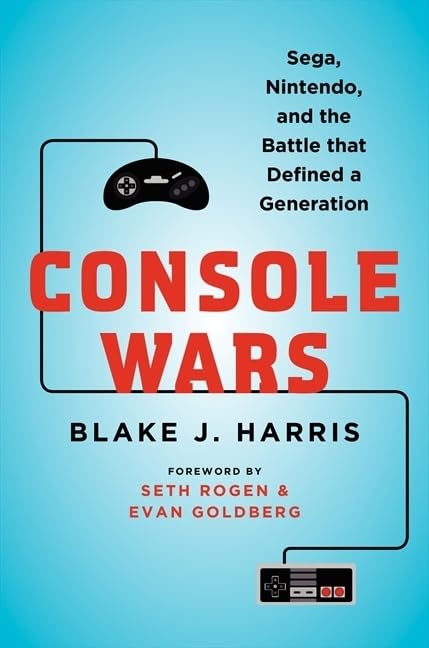
Console Wars by Blake J. Harris chronicles the fierce corporate rivalry between Sega and Nintendo during the early 1990s, a battle that fundamentally shaped the console gaming industry as we know it today. Harris reconstructs boardroom negotiations, marketing gambles, and product launches with novelistic pacing drawn from extensive interviews with key industry executives.
The book captures how aggressive marketing decisions and technological one-upmanship created the console gaming landscape millions of players grew up navigating. It remains the definitive account of the formative console wars era.
- Chronicles the fierce 1990s corporate rivalry between Sega and Nintendo.
- Reconstructs boardroom decisions and marketing strategy through extensive executive interviews.
- Documents how competitive one-upmanship shaped the modern console gaming landscape.
6. Masters of Doom: How Two Guys Created an Empire and Transformed Pop Culture — David Kushner

Masters of Doom by David Kushner tells the story of John Carmack and John Romero, the two programmers whose company id Software created Doom and Quake, games that essentially invented the first-person shooter genre and revolutionized 3D graphics technology. Kushner captures both the technical brilliance and the personal tensions that eventually split the legendary partnership.
Written with genuine narrative momentum, this biography remains a foundational text for understanding how a small team of self-taught programmers reshaped the entire trajectory of modern gaming technology.
- Chronicles the partnership between John Carmack and John Romero at id Software.
- Documents the technical innovations that created the first-person shooter genre.
- Captures the personal tensions that eventually dissolved a legendary programming partnership.
7. Extra Lives: Why Video Games Matter — Tom Bissell

Extra Lives by acclaimed writer Tom Bissell offers a literary critic’s genuinely thoughtful examination of video games as an emerging art form, analyzing titles like Grand Theft Auto IV and BioShock with the same critical seriousness typically reserved for literature or film. Bissell candidly explores his own complicated relationship with gaming, including its intersection with personal struggles.
Blending cultural criticism with vulnerable personal essay, this book elevates video game analysis beyond simple review culture into genuine art criticism and cultural commentary.
- Analyzes major video game titles with the critical seriousness applied to literature and film.
- Explores the author’s personal, sometimes complicated relationship with gaming as an art form.
- Elevates game criticism beyond simple review culture into genuine cultural commentary.
8. The Ultimate History of Video Games: From Pong to Pokémon and Beyond — Steven L. Kent

The Ultimate History of Video Games by journalist Steven L. Kent provides the most comprehensive single-volume chronicle of the industry’s evolution, tracing its path from early arcade machines through home consoles to the dawn of modern gaming. Kent conducted hundreds of interviews with industry pioneers to document technological breakthroughs and corporate power struggles.
Covering everything from Pong’s humble origins to Pokémon’s global phenomenon, this exhaustive reference remains an essential resource for understanding the complete arc of gaming industry history.
- Provides the most comprehensive single-volume chronicle of gaming industry evolution.
- Documents hundreds of interviews with pioneering figures across arcade and console eras.
- Traces technological breakthroughs and corporate struggles from Pong to modern gaming platforms.
9. Moral Combat: Why the War on Violent Video Games Is Wrong — Patrick M. Markey and Christopher J. Ferguson
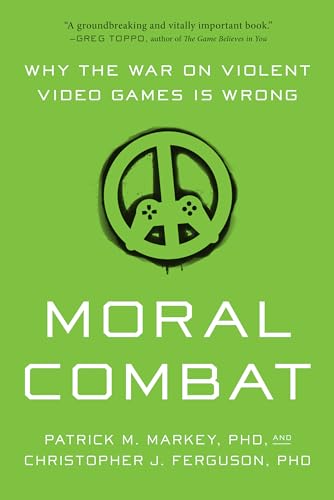
Moral Combat by psychologists Patrick M. Markey and Christopher J. Ferguson systematically examines decades of research on violent video games and aggression, concluding that the popular moral panic linking games to real-world violence lacks robust scientific support. The authors dissect flawed methodology in widely cited studies while presenting more rigorous findings.
Written specifically to counter sensationalized media narratives, this book provides parents, educators, and clinicians with an evidence-based framework for understanding actual research on gaming and aggression.
- Systematically examines decades of research on violent video games and real-world aggression.
- Dissects methodological flaws in widely cited studies linking gaming to violent behavior.
- Provides an evidence-based framework countering sensationalized media moral panic narratives.
10. The Ultimate History of Video Games, Volume 2: Nintendo, Sony, Microsoft, and the Billion-Dollar Battle to Shape Modern Gaming — Steven L. Kent
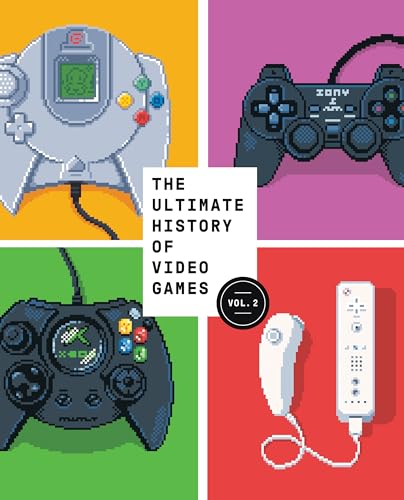
The Ultimate History of Video Games, Volume 2 by Steven L. Kent continues the story into the twenty-first century, documenting the billion-dollar battles between Nintendo, Sony, and Microsoft that shaped the modern console and online gaming landscape. Kent traces the rise of digital distribution, online multiplayer culture, and the explosive growth that eventually gave rise to competitive e-sports.
This continuation captures how gaming transformed from a niche hobby into a dominant global entertainment and competitive industry within a single generation.
- Documents the billion-dollar rivalry between Nintendo, Sony, and Microsoft.
- Traces the rise of digital distribution and online multiplayer culture.
- Explains how gaming’s explosive growth gave rise to modern competitive e-sports industries.
How Video Games Engage Core Psychological Motivation Systems
Understanding why games are so psychologically compelling requires examining the specific motivational mechanisms designers deliberately build into gameplay. This is not accidental; it reflects decades of applied behavioral psychology research.
Games structure clear, achievable goals paired with immediate feedback, a combination that psychologist Jane McGonigal identifies as central to sustained player engagement. Variable reward schedules, similar to those studied in operant conditioning research, create the same anticipatory dopamine response that keeps players returning for “just one more level.” Social gaming environments also satisfy fundamental belonging needs, particularly for players who struggle to find comparable connection in offline social settings.
None of this makes gaming inherently harmful. Quite the opposite, in fact. These same psychological mechanisms explain why games can be leveraged therapeutically, as McGonigal demonstrates in her own concussion recovery, or educationally, when thoughtfully designed around genuine skill development rather than pure engagement metrics.
- Clear goals paired with immediate feedback create the sustained engagement central to gaming’s psychological appeal.
- Variable reward schedules trigger anticipatory dopamine responses similar to those studied in operant conditioning research.
- Social gaming environments satisfy belonging needs, particularly for players seeking meaningful offline connection.
- These same mechanisms can be deliberately leveraged for therapeutic or educational applications.
The Rise of Competitive E-Sports as a Legitimate Career Path
Competitive e-sports has evolved from informal LAN party tournaments into a structured global industry with professional leagues, salaried athletes, and dedicated training facilities. Understanding this evolution requires recognizing how Steven L. Kent’s documented industry history laid the groundwork for today’s competitive infrastructure.
| E-Sports Development Era | Key Characteristics |
|---|---|
| Early Arcade Competition (1980s) | Informal high-score competitions and localized tournaments with minimal structure |
| LAN Party Era (1990s-2000s) | Grassroots community-organized tournaments around games like Quake and StarCraft |
| Streaming and Sponsorship Growth (2010s) | Platform monetization enabled professional salaries and dedicated training organizations |
| Institutional Recognition (2020s) | University scholarships, Olympic committee discussions, and mainstream broadcast deals |
As the table illustrates, e-sports professionalization did not happen overnight. It required the same infrastructure development that traditional sports underwent decades earlier: standardized rules, dedicated training facilities, sponsorship revenue, and institutional legitimacy that took years to establish across the global competitive gaming ecosystem.
Addressing Common Misconceptions About Violent Video Games
Few gaming-related topics generate more public anxiety than the assumed link between violent video games and real-world aggression. Understanding what rigorous research actually shows helps separate genuine concerns from sensationalized media narratives.
Psychologists Patrick M. Markey and Christopher J. Ferguson have extensively documented that methodologically sound, well-controlled studies consistently fail to find meaningful causal links between violent game content and real-world violent behavior. Much of the alarm stems from studies using weak proxy measures for aggression, such as noise-blast intensity in laboratory settings, that do not reliably predict actual violent behavior outside controlled conditions.
That said, this research does not suggest gaming carries zero psychological considerations worth monitoring. Excessive gaming that displaces sleep, physical activity, or in-person relationships can genuinely affect well-being, regardless of content violence level. The distinction matters enormously for parents and educators trying to make informed, evidence-based decisions rather than reacting to moral panic.
- Well-controlled research consistently fails to find meaningful causal links between violent content and real-world aggression.
- Many alarmist studies rely on weak proxy measures that do not reliably predict actual violent behavior.
- Excessive gaming displacing sleep or relationships remains a genuine consideration regardless of content violence level.
- Evidence-based decision-making requires distinguishing legitimate concerns from reactive moral panic.
How the Gaming Industry’s History Shapes Modern Development Culture
The corporate battles and technical breakthroughs documented in books like Console Wars and Masters of Doom did not simply produce entertaining historical anecdotes; they established development practices, marketing strategies, and labor norms that persist within the industry today.
The aggressive marketing culture that emerged from the Sega-Nintendo rivalry, for instance, established competitive brand loyalty patterns still visible in modern console fandom. Similarly, the crunch culture Jason Schreier documents in contemporary studios traces its roots to the scrappy, self-driven work ethic of early programmers like John Carmack, whose personal intensity produced technical breakthroughs but also normalized unsustainable working conditions. Recognizing these historical throughlines helps industry observers understand why certain problematic labor practices persist despite decades of criticism.
- Trace how early corporate rivalries established brand loyalty patterns still visible in modern console fandom.
- Recognize how founder-driven work intensity normalized crunch culture across contemporary development studios.
- Understand how technical innovation and labor exploitation have historically been intertwined within the industry.
- Apply historical awareness when evaluating current industry labor reform efforts and developer advocacy movements.
When Gaming Shifts From Healthy Engagement to Problematic Use
Gaming is a normal, often deeply rewarding form of entertainment and social connection for the vast majority of players. However, for a smaller subset of individuals, gaming can shift into a pattern that genuinely interferes with daily functioning, relationships, and overall psychological well-being.
The World Health Organization has recognized “gaming disorder” as a diagnosable condition characterized by impaired control over gaming, increasing priority given to gaming over other life activities, and continuation despite negative consequences, persisting for at least twelve months. If gaming consistently displaces sleep, employment responsibilities, in-person relationships, or basic self-care for an extended period, this pattern warrants honest self-reflection or professional consultation rather than dismissal as simply enjoying a hobby.
Most critically, if gaming has become intertwined with severe depression, social isolation, or thoughts of self-harm, do not rely on self-management alone. In the United States and Canada, immediately call or text 988 to reach the Suicide & Crisis Lifeline, available twenty-four hours a day, seven days a week, free and completely confidential. Seeking professional support for problematic gaming patterns reflects genuine self-awareness, not a failure of willpower or maturity.
- The World Health Organization recognizes gaming disorder as a diagnosable condition involving impaired behavioral control.
- Gaming that consistently displaces sleep, work, or relationships for extended periods warrants honest self-reflection.
- Severe depression or self-harm thoughts connected to gaming demand immediate contact with crisis support services.
FAQs about Books on Gaming and E-Sports
What is the single best book to start with for someone new to serious gaming literature?
Reality Is Broken by Jane McGonigal is widely recommended as an ideal starting point because it explains the underlying psychology of why games are compelling before diving into specific industry history or criticism. The book is accessible to readers without any gaming background while still offering genuine research depth for those already familiar with the medium. Understanding the psychological framework McGonigal presents makes subsequent reading about gaming history, criticism, or industry practices considerably easier to contextualize and appreciate.
Are these books suitable for readers who do not play video games themselves?
Yes, several books on this list, particularly Reality Is Broken, Extra Lives, and Console Wars, were written with genuinely accessible prose that assumes no prior gaming knowledge. These authors deliberately explain technical and cultural context for general readers, making the books valuable for parents, educators, or journalists seeking to understand gaming culture without requiring personal gameplay experience. The psychological and historical insights translate meaningfully even for readers who have never picked up a controller.
Does research actually support concerns about video game addiction?
Research supports that a genuine but relatively small subset of players experience gaming patterns severe enough to meet clinical criteria for gaming disorder, as recognized by the World Health Organization. However, the vast majority of gamers, including those who play frequently, do not meet these clinical thresholds and experience gaming as a healthy source of entertainment, stress relief, and social connection. The key distinguishing factor is whether gaming consistently displaces essential life functioning rather than simply occupying significant leisure time.
How did e-sports evolve from casual competition into a professional industry?
E-sports evolved gradually from informal arcade high-score competitions in the 1980s through grassroots LAN party tournaments in the 1990s and 2000s, eventually reaching professional status as streaming platforms enabled sponsorship revenue and dedicated training organizations during the 2010s. This progression mirrors the infrastructure development traditional sports underwent decades earlier, including standardized rules, professional salaries, and institutional recognition. Today’s e-sports industry includes university scholarships and mainstream broadcast deals that would have seemed implausible just two decades ago.
Is the moral panic around violent video games scientifically justified?
No, according to extensive research documented by psychologists Patrick M. Markey and Christopher J. Ferguson, methodologically rigorous studies consistently fail to establish meaningful causal links between violent video game content and real-world aggressive behavior. Much of the public concern stems from studies using weak proxy measures for aggression that do not reliably predict actual violence. This does not mean gaming carries zero considerations worth monitoring, but the specific fear about violent content causing real-world violence lacks robust scientific support.
What is the difference between reading about gaming history versus gaming psychology?
Gaming history books, such as those by Steven L. Kent, Blake J. Harris, and David Kushner, focus on documenting the industry’s corporate development, technical innovations, and key historical figures through investigative journalism and interviews. Gaming psychology books, such as those by Jane McGonigal, instead examine the underlying motivational and behavioral mechanisms that make games engaging, drawing on research from positive psychology and behavioral science. Both perspectives complement each other, offering readers a fuller picture of why games matter both as cultural artifacts and psychological experiences.
Bibliography
- Bissell, T. (2011). Extra Lives: Why Video Games Matter. Vintage.
- Harris, B. J. (2014). Console Wars: Sega, Nintendo, and the Battle that Defined a Generation. It Books.
- Kent, S. L. (2001). The Ultimate History of Video Games: From Pong to Pokémon and Beyond. Three Rivers Press.
- Kent, S. L. (2021). The Ultimate History of Video Games, Volume 2: Nintendo, Sony, Microsoft, and the Billion-Dollar Battle to Shape Modern Gaming. Crown.
- Kushner, D. (2004). Masters of Doom: How Two Guys Created an Empire and Transformed Pop Culture. Random House Trade Paperbacks.
- Markey, P. M., & Ferguson, C. J. (2017). Moral Combat: Why the War on Violent Video Games Is Wrong. BenBella Books.
- McGonigal, J. (2011). Reality Is Broken: Why Games Make Us Better and How They Can Change the World. Penguin Press.
- McGonigal, J. (2015). SuperBetter: A Revolutionary Approach to Getting Stronger, Happier, Braver and More Resilient. Penguin Press.
- Schreier, J. (2017). Blood, Sweat, and Pixels: The Triumphant, Turbulent Stories Behind How Video Games Are Made. Harper Paperbacks.
- World Health Organization. (2019). International Classification of Diseases, 11th Revision (ICD-11): Gaming Disorder. WHO Press.
Use this citation format to reference the article clearly and help readers find the original source.
PsychologyFor. (2026). The 10 Best Books on Gaming and E-Sports. PsychologyFor. https://psychologyfor.com/the-10-best-books-on-gaming-and-e-sports/